Week 3 - External flow simulation over an Ahmed body.
Aim:
1) To define ahmed body and it's importance.
2) To conduct external flow simulations over an Ahmed body.
3) To perform grid dependance test and post process the results.
1)Ahmed body:
An Ahmed body is a geometric shape designed to emulate a generic car body. It is simple in shape having car like geometry features. It was created by S.R Ahmed. This body allows us to capture features such pressure and velocity characteristics and drag, lift coefficients that are relevant to bodies in the automobile industry. The simple geometrical shape has a length of 1.044 meters, height of 0.288 meters, and a width of 0.389 meters. It also has 0.5-meter cylindrical legs attached to the bottom of the body and the rear surface has a slant that falls off at 40 degrees. The slant at the rear side of the vehicle causes the separation of flow and also a significant factor for drag forces of Ahmed body.
Importance: To improve the fuel efficiency of automobiles, the aerodynamic drag has to be reduced by optimizing the body shape. The Ahmed body is used in the industry to a validate a numerical model and to set baseline values which can be later used to simulate the actual car models.
2) Negative pressure in wake region:
When the air moves over and around an object it is separated at the rear end. This leaves a large low pressure area. The flow behind an object separates from the surface and creates a highly turbulent region behind the object, called the wake. The pressure inside the wake region remains low as the flow separates and an area of low pressure is developed. In other words, due to the production of pressure drag being produced from flow separation, the pressure in the wake region is low. This is what is causing the vacuum. To fill this vacuum, air moving around the body is sucked in to counteract the negative pressure. This movement of the fluid generates a lot of drag. The wake formation contributes to the pressure drag, which is eventually reduces the vehicle performance.
3)Significance of separation point :
When an fluid flows around an object, forces act between the fluid and the object due to viscocity which causes drag.
The fluid sticks to the oject to a certain surface length and then separates from the body. The separation point is the point where the air stops sticking to an object that is moving through the air. When an object is moving through the air, the air molecules push back on it and resist the object's movement - this resistance is called pressure drag. The separation of the boundary layer takes place at the point where the wall shear stress becomes zero. The fluid particles follow the pressure drop which acts against the main flow direction and it recirculates. After the separation point the flow no longer adheres the surface of the body.
The point of separation helps to identify the start of wake region and thus helps us to make aerodynamic changes in the geometry of the body in order to counteraact this negative pressure.
Geometry Setup:
Since the Ahmed body is symmteric, It was split in half using 'splitbody' command in Spaceclaim to reduce the mesh count and to decrease the simulation time. 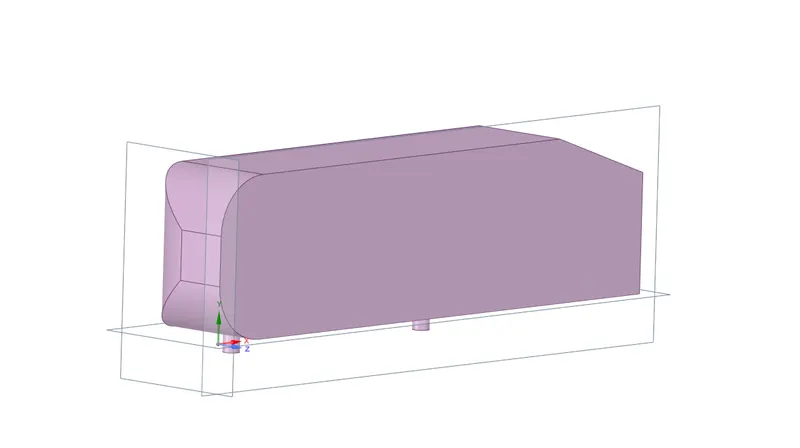
A double enclosure was created around the Ahmed body in order to optimize the mesh.
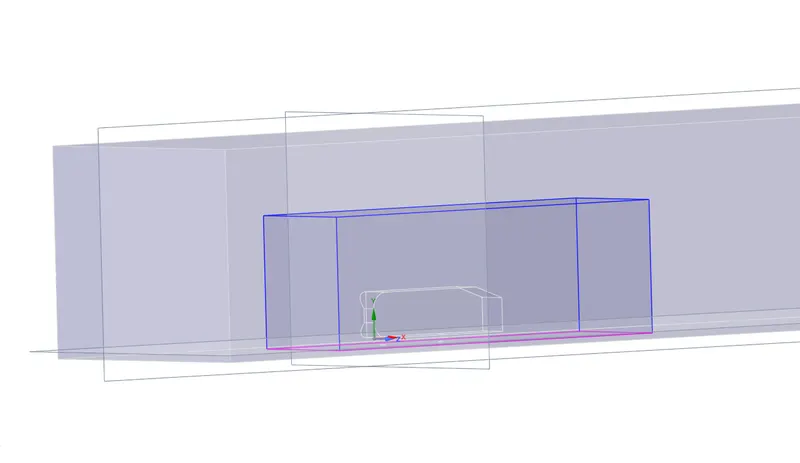
For the ouer enclosure, A Hexa mesh was generated with an element size of 100mm.
For the inner enclouser we choose body sizing method to make more refinement,the element size we use for this is 50mm.
Next an inflation layer was created which helps us in caputuring the flow in finer way and the mesh will also be capture along the body perfectly.I made the number of layers as 6 and total thickness value as 0.0036.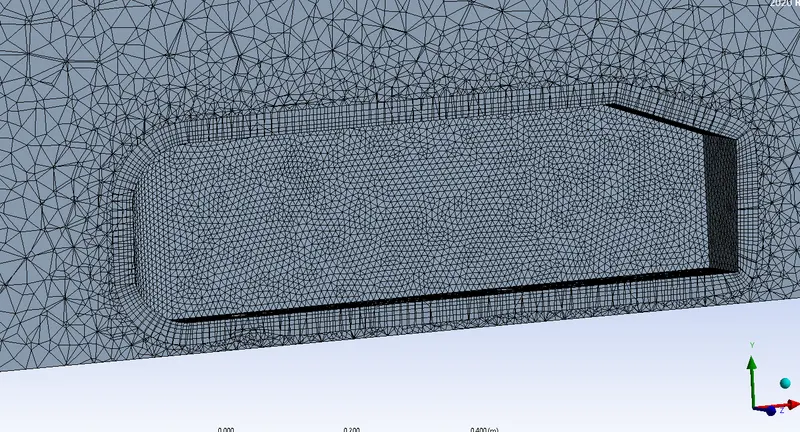
Case 1:
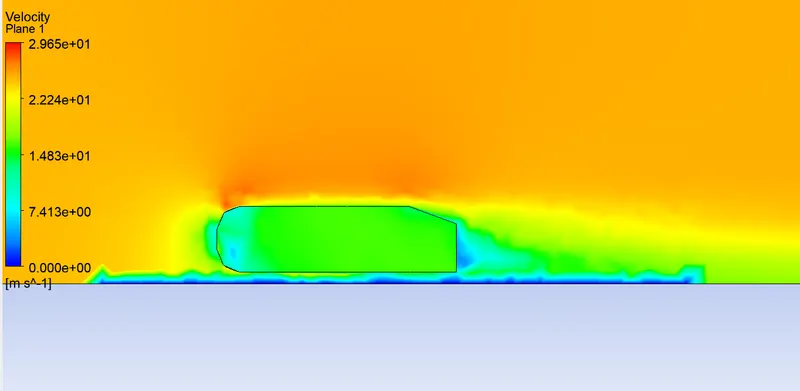
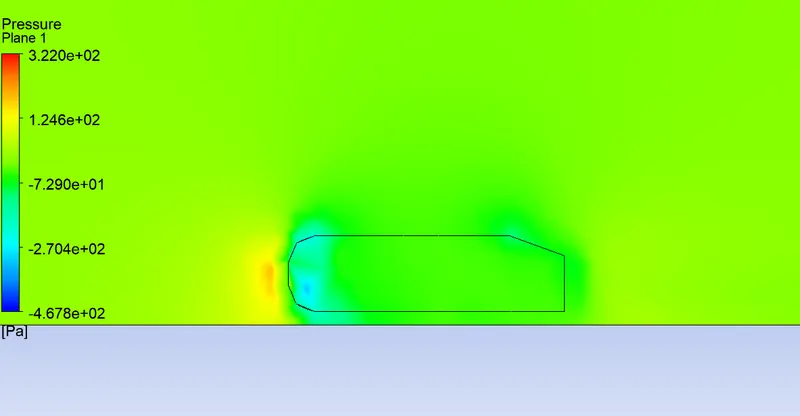
Inlet velocity=25m/s
Nodes : 27895
Elements : 55207
Solver - k-epsilon
Number of iterations - 600
Velocity contour-
Pressure contour-
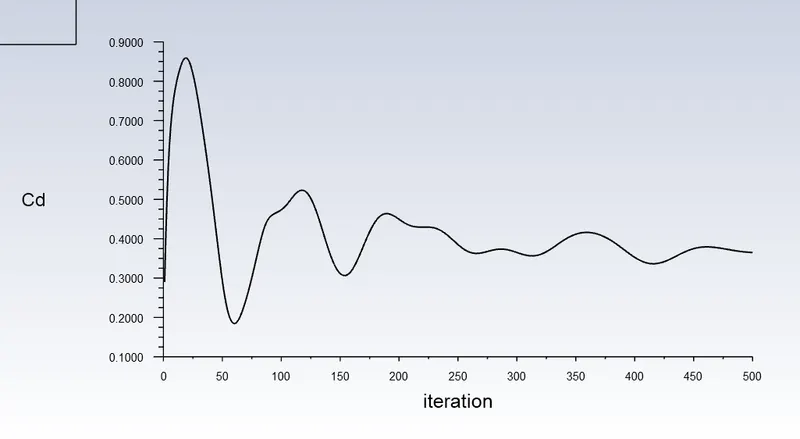
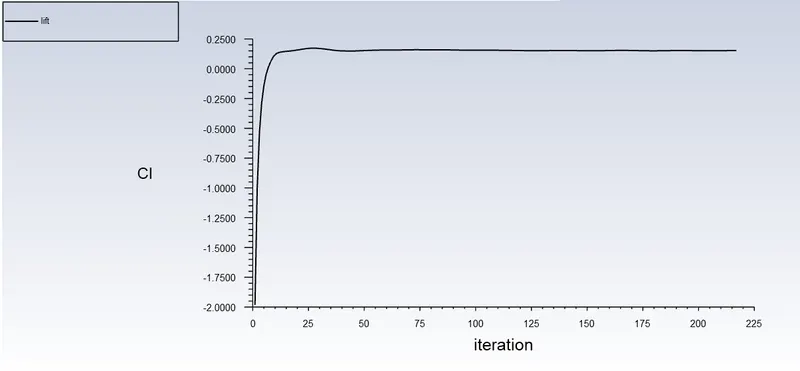
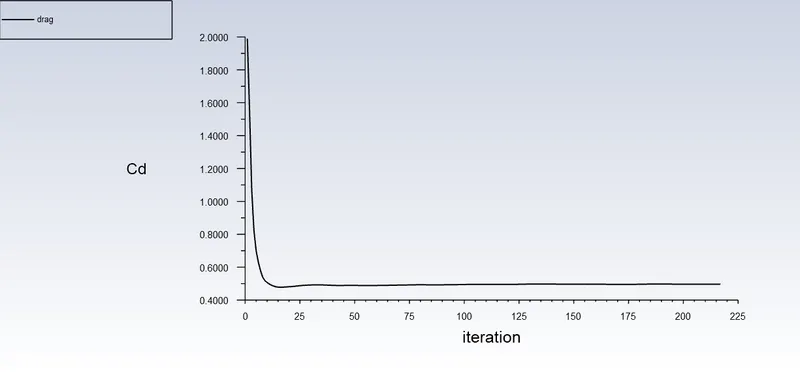
Drag and Lift plots-
lift coefficient value - 0.15323751
drag coefficient value - 0.49615273
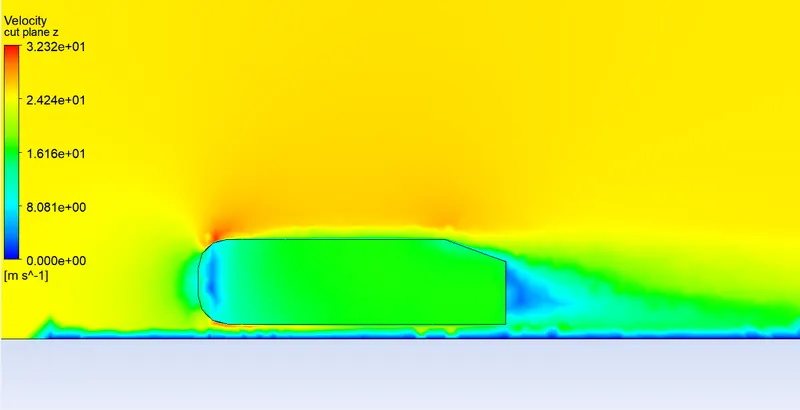
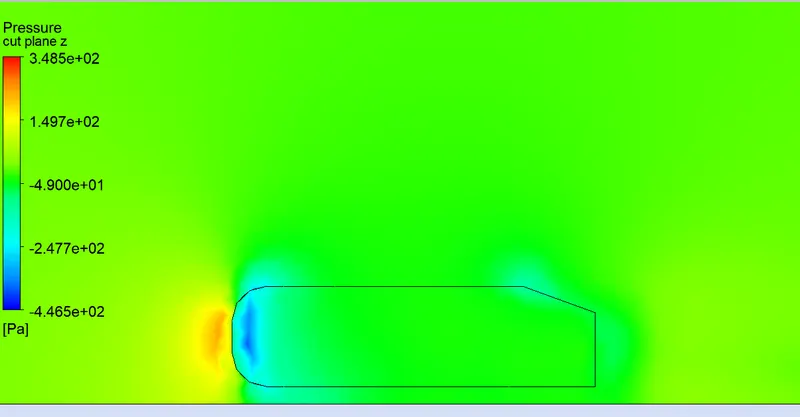
Case 2:
Inlet velocity=25m/s
Nodes : 37828
Elements : 107714
Solver - k-epsilon
Number of iterations - 600
Velocity contour-
Pressure contour-
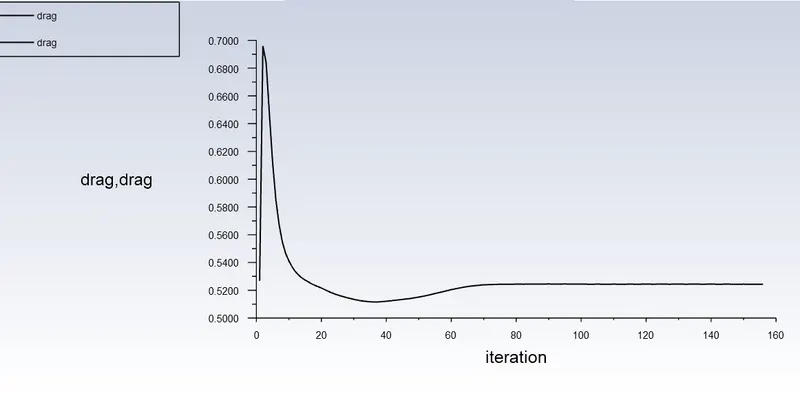
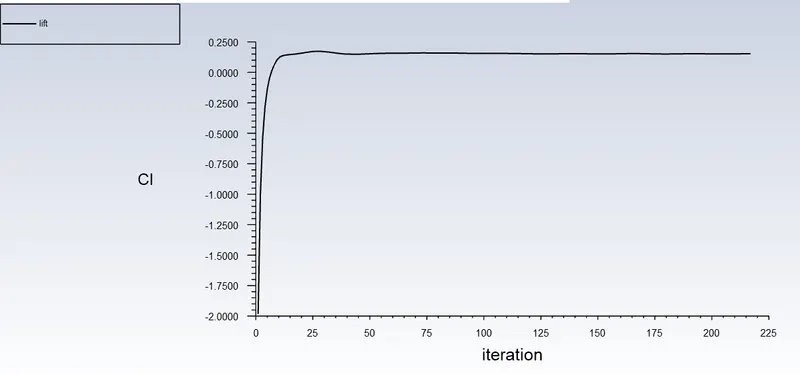
Drag and lift plots-
lift coefficient value - 0.15245317
drag coefficient value - 0.52435156
Case 3:
Inlet velocity=25m/s
Nodes : 37828
Elements : 107714
Solver - k-epsilon
Number of iterations - 600
Velocity contour -
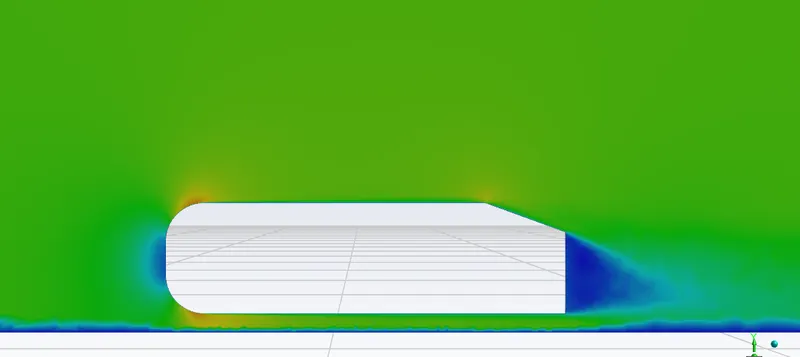
Pressure contour-

Drag and lift plots-
lift coefficient value - 0.19916217
drag coefficient value - 0.35493838