Week 3 - External flow simulation over an Ahmed body.
The aim of this exercise is to conduct a simulation of external flow over an ahmed body model. For that, we need to have the model of ahmed body and set the conditions and parameters accordingly to simulate according to the desired conditions.
An ahmed body is a model used in CFD analysis for the purpose of aerodynamic simulations. It is basically a generic car model, and when under simulation, it can be useful to obtain the data regarding the flow around a car and this can be helpful to set up a carmodel simulation as the ahmed body itself is a benchmark setup. The importance regarding an ahmed body model is that in aerodynamic simulations and flow simulations, this model can be used to obtain important data regarding parameters such as the drag force, lift force and this helps us to create near-streamline bodies in order to reduce the above mentioned parameters and this can be useful in cost reduction as well as save us time.
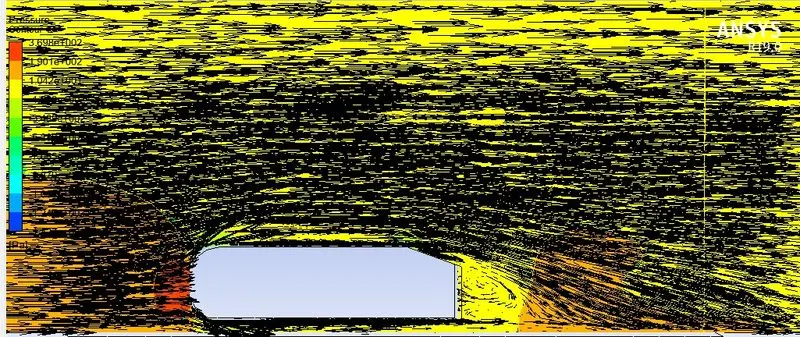
When a car moves, it experiences a vortex in its back region which is the wake region, where flow separation occurs, and the turbulent, low pressure region is known as wake. Therefore, the car experiences drag and this can affect the vehicle adversely in its performance. Since the air moving around the car body is dependent upon the reynold's number and the geometry of the car, the flow separation at the wake region causes pressure drop and this is why there is a negative pressure experienced at this region.
Similarly, in the wake region where flow separation takes place, if the flow is attached to the car for longer period, the visous force increases resulting in drag forces, and the flow separation at the wake region takes place at a point called the point of separation. AT this point, the low pressure or pressure drop due to the flow separation is experienced and in simulation or modelling purposes, it is necessary to find the flow separation point to study the effects due to the vortex in the wake region.
Simulation:
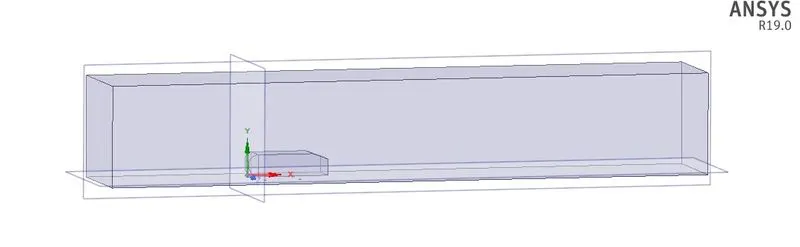
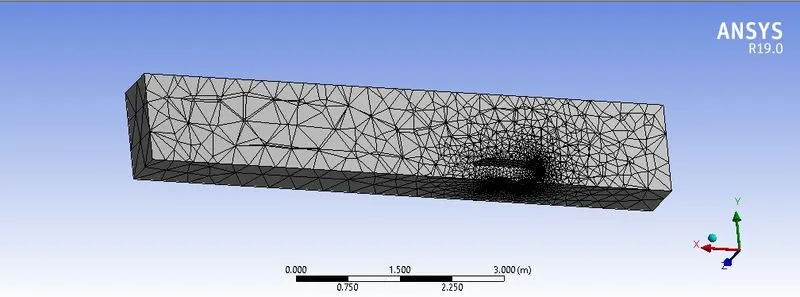
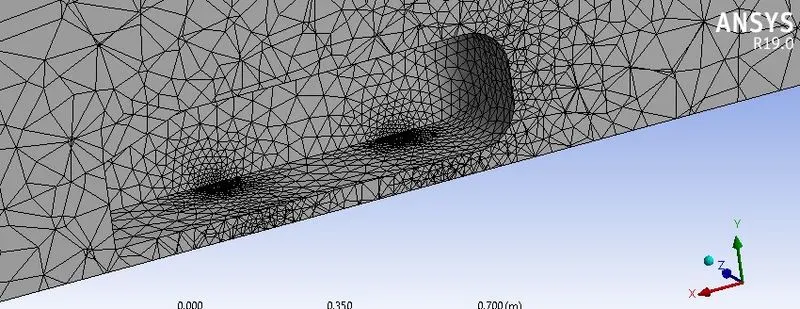
To perform simulation, we have to import the ahmed body in to the space claim where we generate a box around it using enclosure, and then provide the dimensions for the enclosure. AFter that we open meshing where we create named selections for the body and the enclosure, and then specify the mesh size, and other parameters and generate mesh mesh. After that, we use the setup option to inpur the condition parameters and the boundary conditions for the simulation. Here the simulation type, solver type, the velocity and temperature are specified and then the solution is initialized and solved for a specified number of iterations.
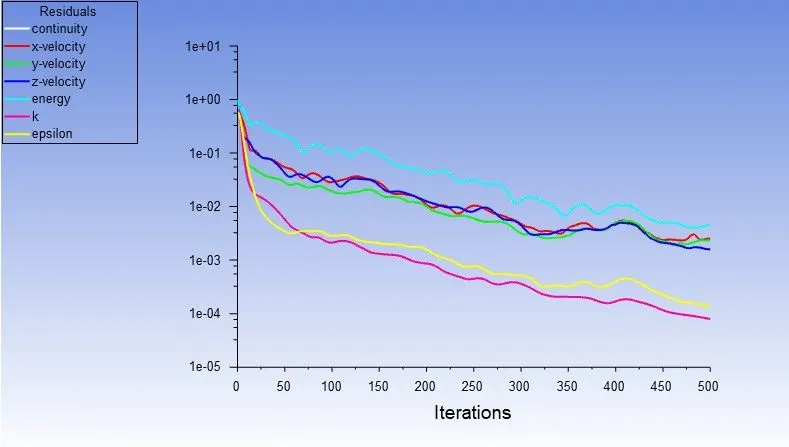
At first, we check the msh for quality, then under setting up physics, we choose steady state desnity based absolute solver. We choose the k-`epsilon`model for this simulation and choose air as the medium. We specify the velocity at the inlet as 25m/s, and temperature as 300K. We use hybrid initialization technique and runthe simulation for 500 iterations.
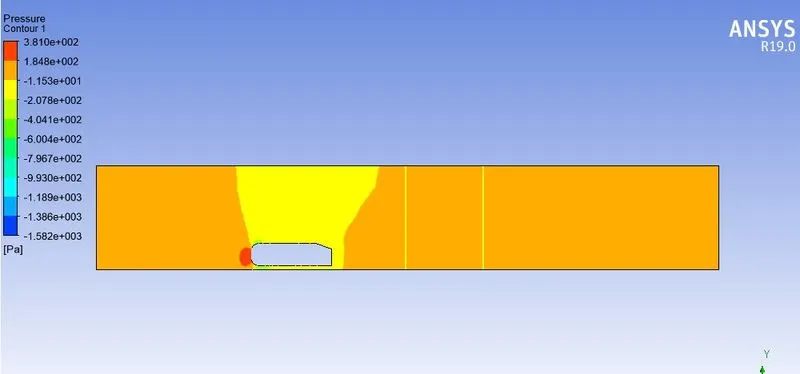
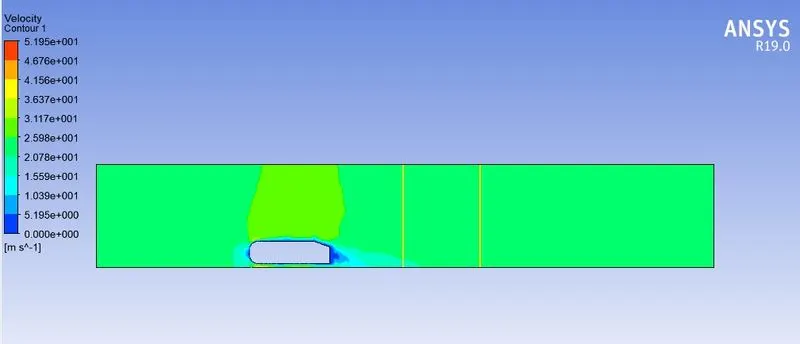
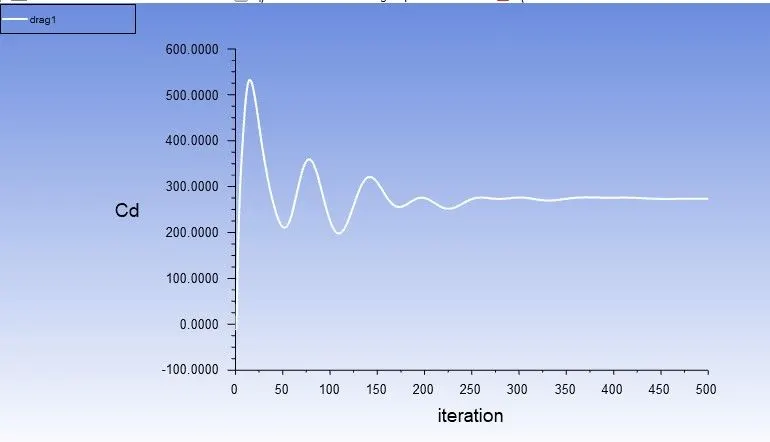
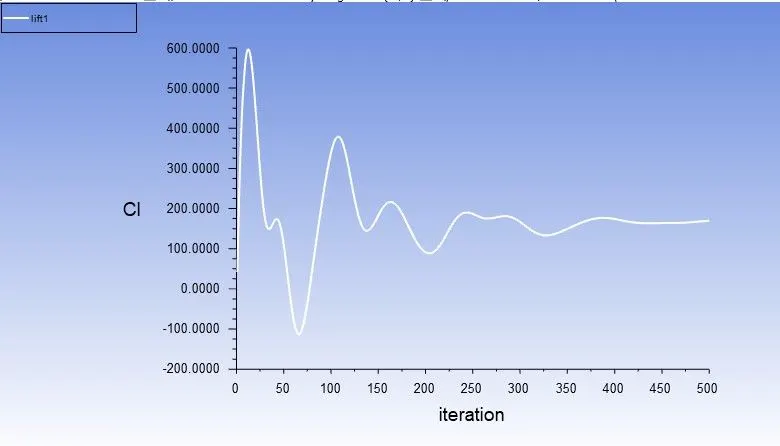
Coarse mesh model with k`-epsilon`model:
Refined model: (k`-omega`sst model)
Now for refined model, we first load the ahmed body, then specify an enclosure within the enclosure, split the whole body in half, use interference to clear the mesh overlapping and then load it into meshing. Then, we specify the individual mesh sizing and mesh types, which is hexahedral in our case, then generate the mesh for simulation.
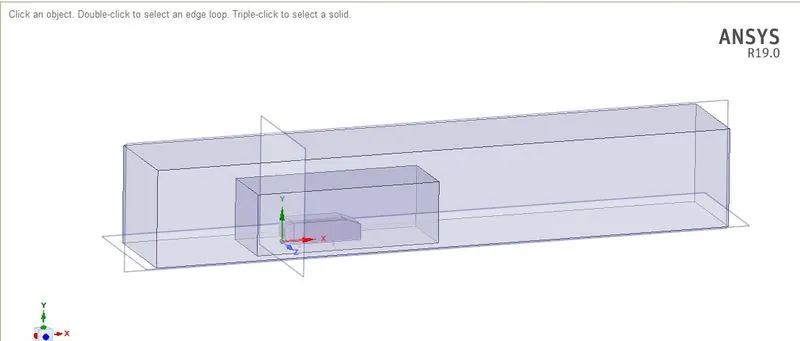
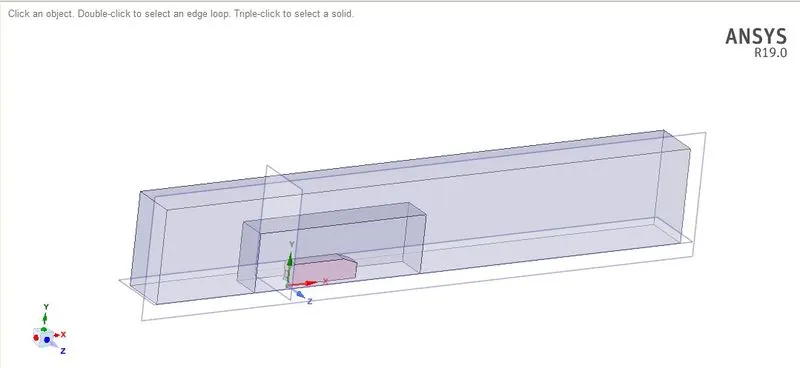
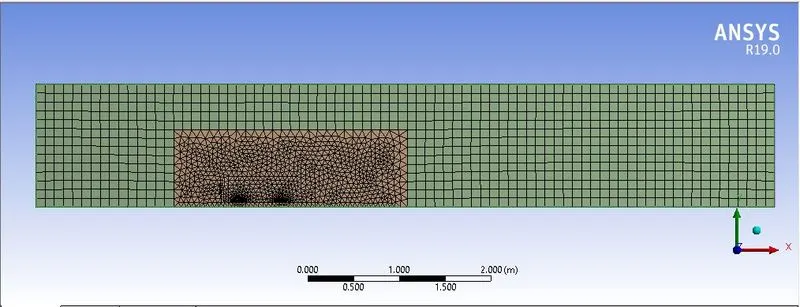
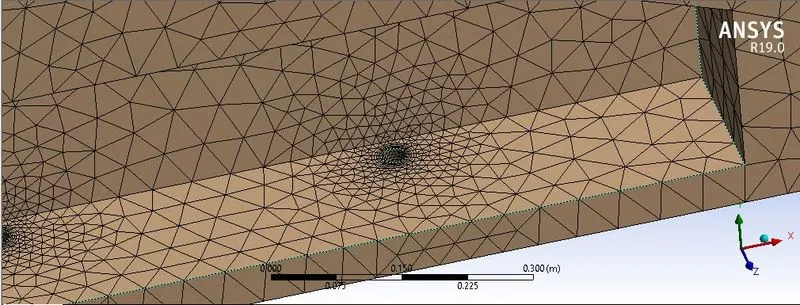
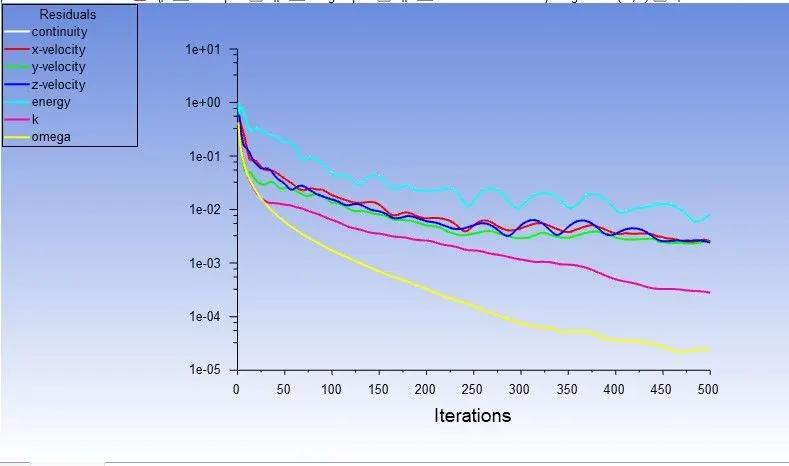
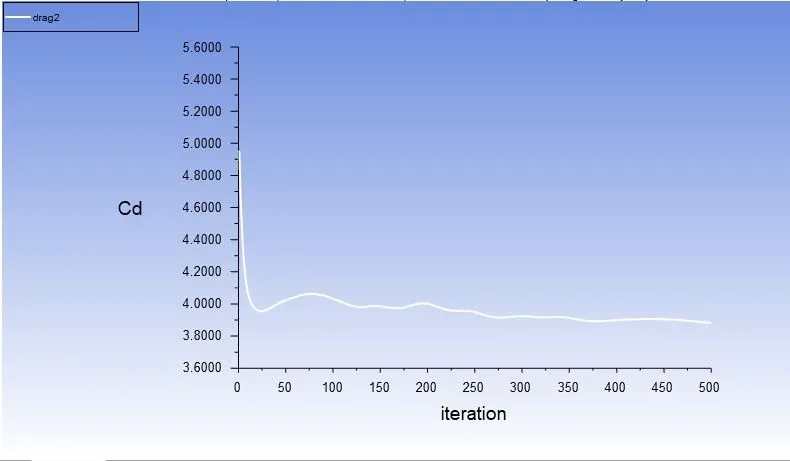

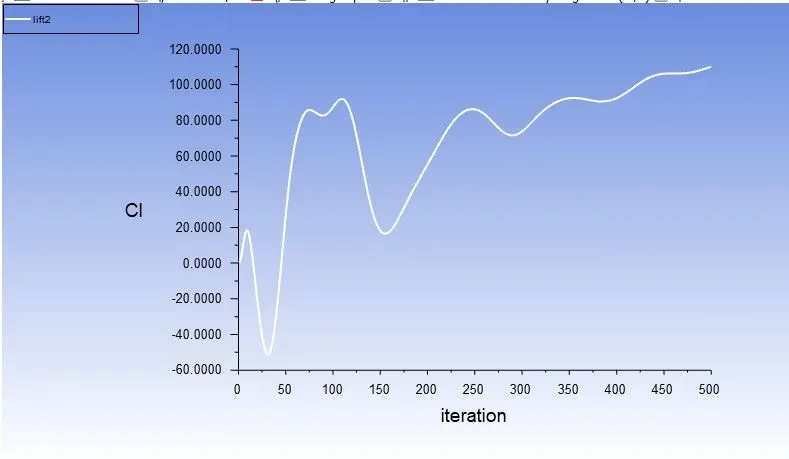

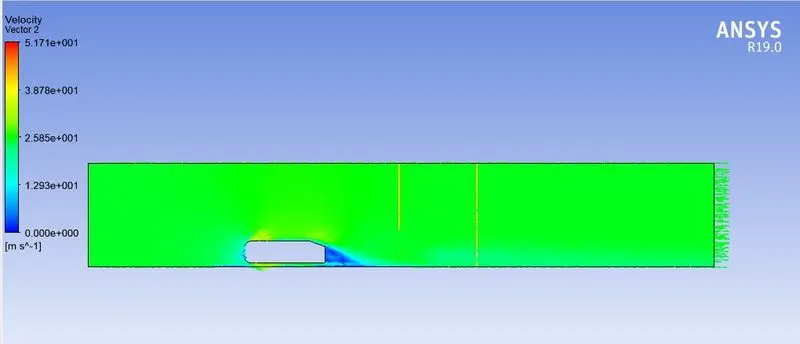
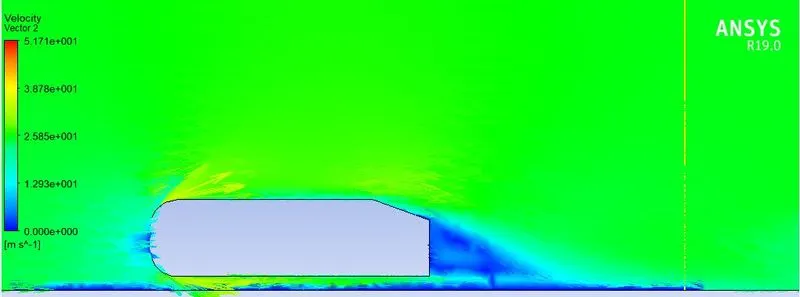
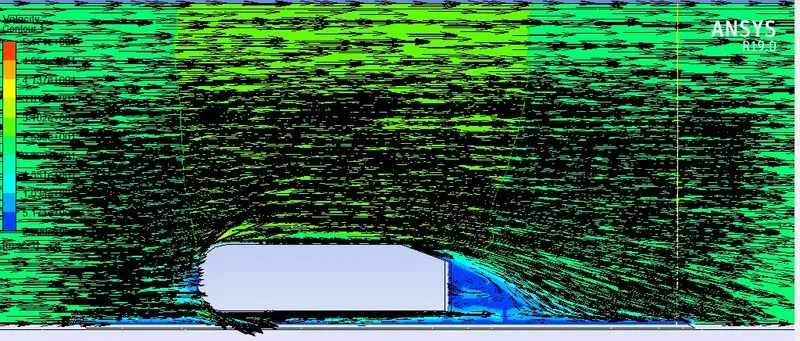
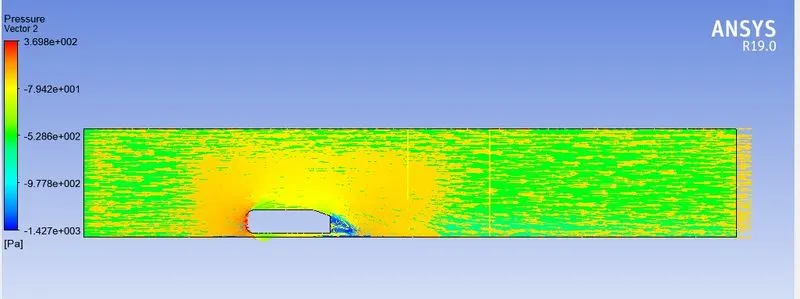
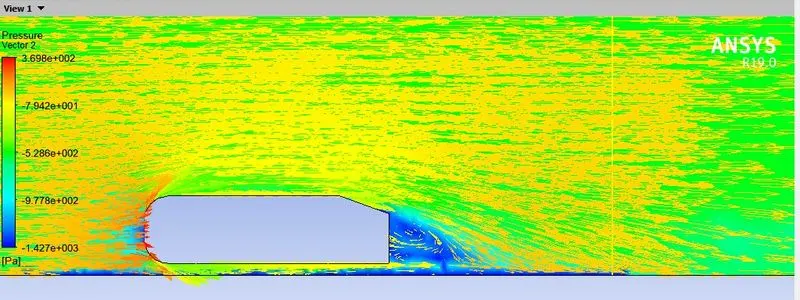
Now, from the above plots, for coarse meshing with k-`epsilon`model, the average drag coefficient is around 0.5 while when the mesh is refined, and with boundary layers added, with the k-`omega`model the average drag coefficient is around 0.39. If the mesh is further refined, the value of drag coefficient can be within the tolerance limit and with finer mesh, the results will be more accurate and convergence can be achieved.
With the refinement, the drag and lift coefficient values decrease and the negative pressure can be observed at the wake region of the model. This is due to the flow separation and there is no flow in that region hence resulting in recirculation. Also, the value of y+ plays a huge role in determining the drag coefficient value. With proper values for y+, appropriate values for drag coefficient can be obtained which will be within the tolerance limit. This simulation hence helps us to understand about the physics of flow over a car model an dthis can help us to save time as well as cost when it comes to cfd analysis.