Week 3 Challenge : CFD meshing on Turbocharger
Objective: The objective of this challenge is perform preprocessing steps carried out on a given geometry model.
* Clean the Topology
* Generate Surface mesh
* Generate Volumetric mesh
The Given specifications of the element size for the surface meshing are as follows
- Blade stage-1 = 1 mm
- Blade stage-2 = 1 mm
- Impeller = 2 mm
- Shaft rotor = 1 mm
- Turbo casing = 5 mm
- Compressor casing = 5 mm
- Inlet casing cover = 5 mm
Section 1: Topology clean up
The following image was captured before topology clean up
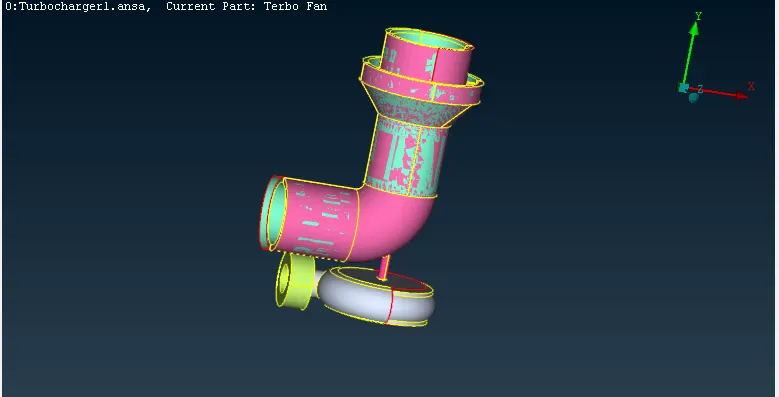
In this geometry model we observe the errors like, Singlle cons, Triple cons and the glicthing indicates
overlap surface, Before generate mesh we need solve all these errors using topology section.
Using universel delete option delete overlap surface using selection of PID region.
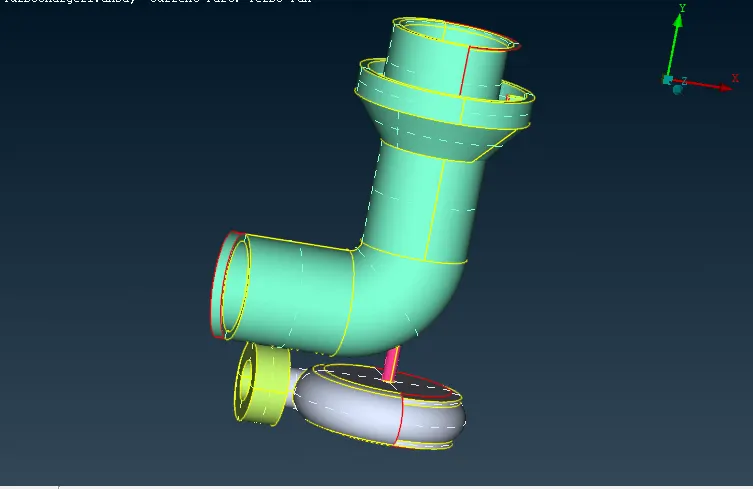
After deleting overlaped surface we need solve geometry using topo, We obeserve some faces do not have
same dimenstion its not able to motch. in this case we create hot points using face option patch the surfaces,
some surface are overcome using intersect option select 1st and 2nd face do intersect and trim overcome face, after match we look like this
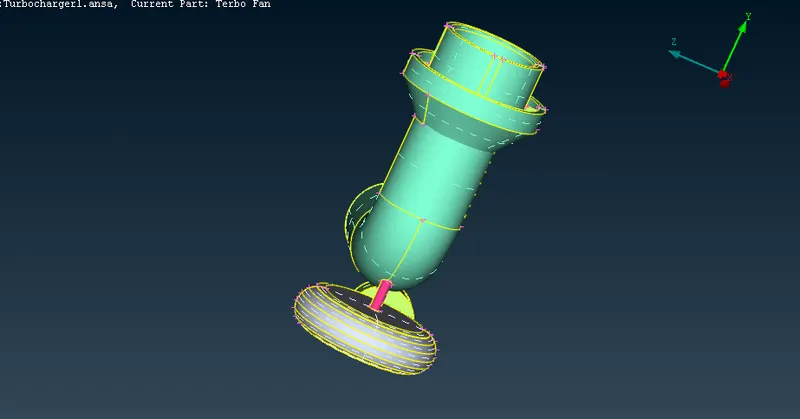
Convert all triple cons into double cons
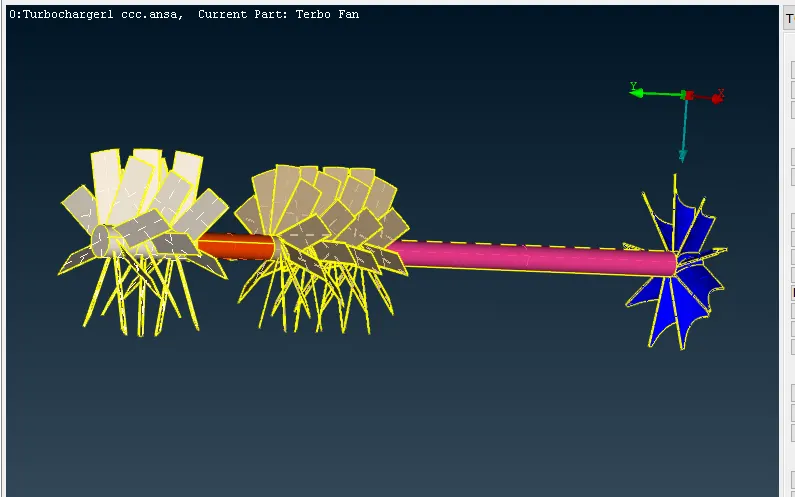
Asign all surfaces into PIDS
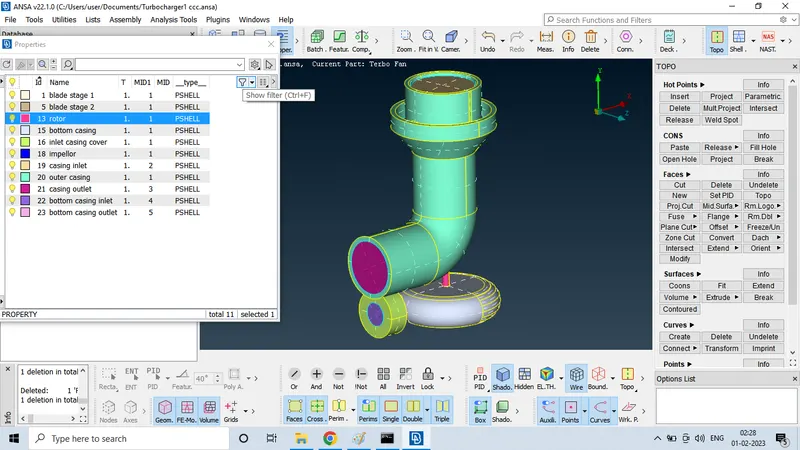
Section 2 Meshing
Start meshing using given parameters
- Blade stage-1 = 1 mm
- Blade stage-2 = 1 mm
- Impeller = 2 mm
- Shaft rotor = 1 mm
- Turbo casing = 5 mm
- Compressor casing = 5 mm
- Inlet casing cover = 5 mm
First we compressor casing along with inlet and outlet with 5mm target length
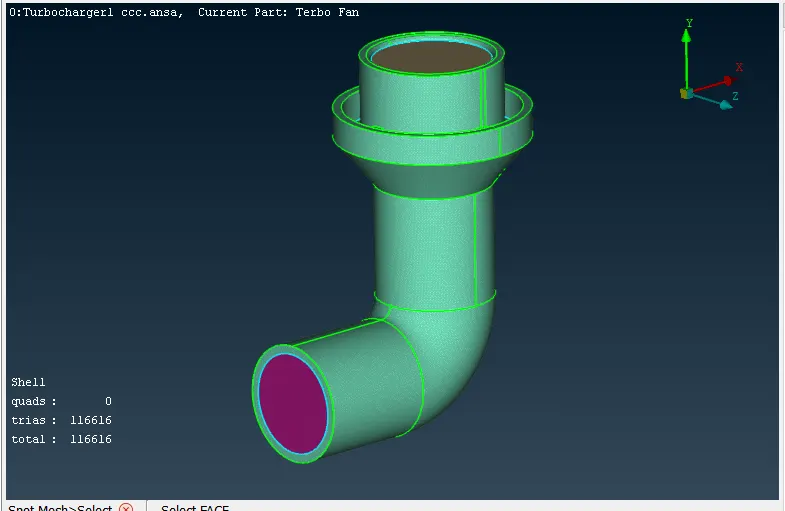
Then generate mesh inlet casing cover and turbo casing target length is 5mm
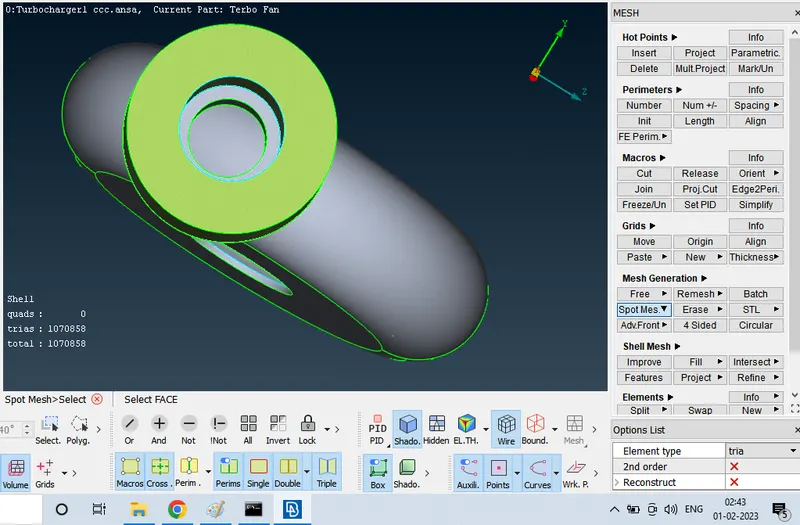
Next we generate impellor mesh using target length is 2mm
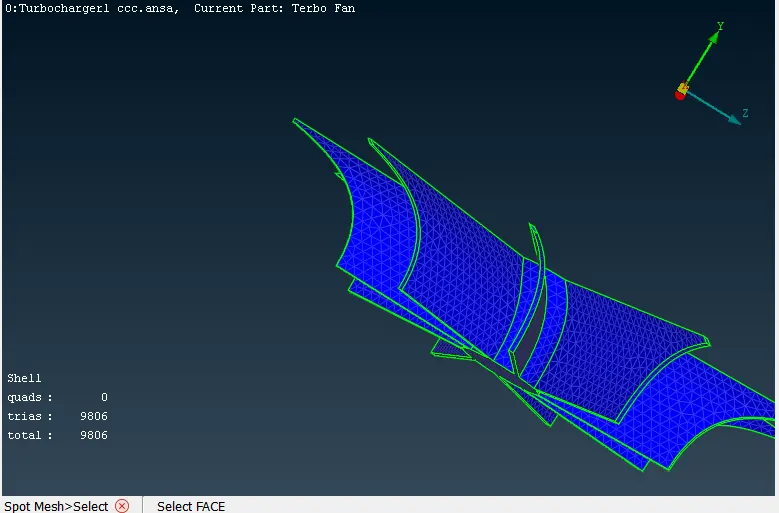
next we generate mesh for shaft with a mesh target lenth is 1mm
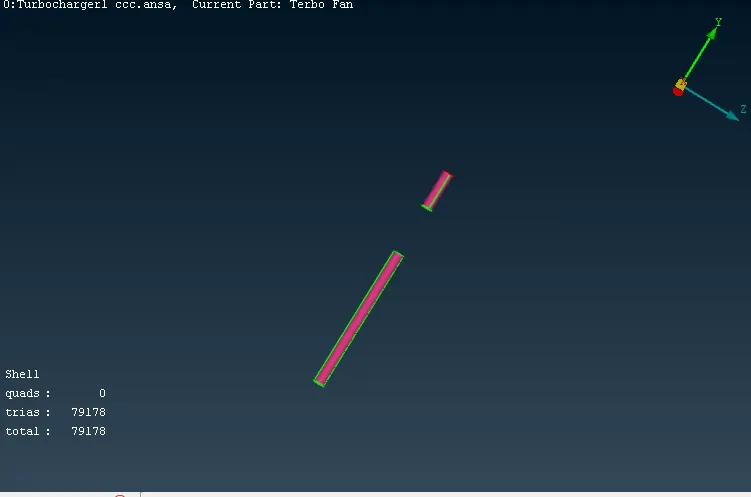
Next generate mesh of blade stage 1 and stage 2 with a mesh length is 1mm
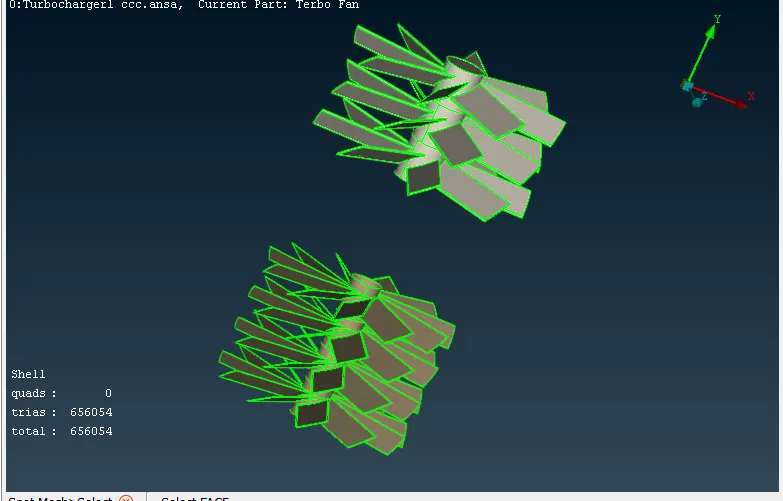
Section 3 Volumetric meshing
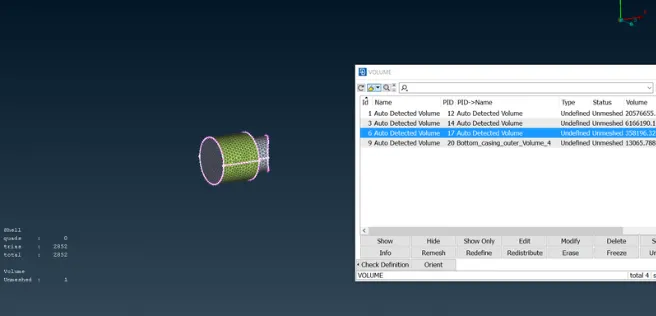
First we need determine the volumes that will be be determine volumetric mesh
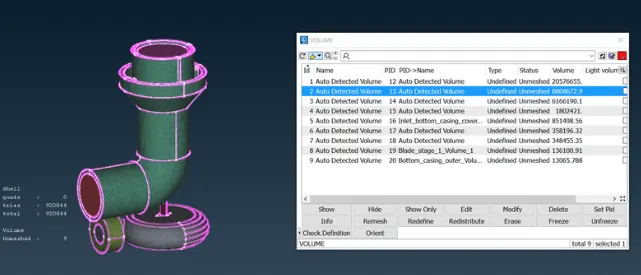
Now we will keep only PIDs which will part of fluid domain
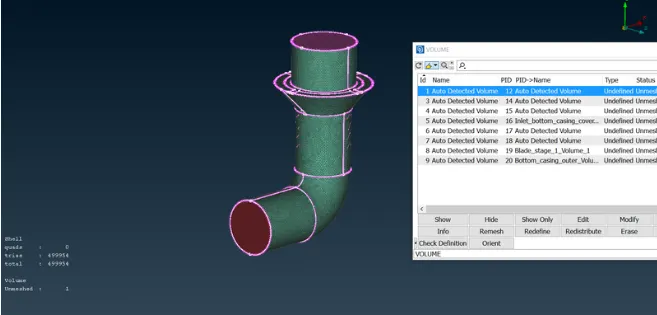
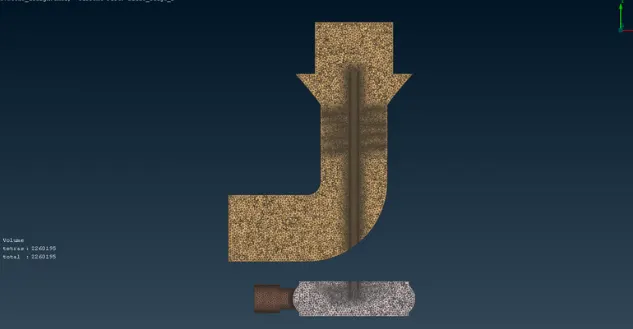
The final view of after volumetric mesh like this
Conclusion:
After solving errors like single, double and triple cons are checked and PIDs are assigned accordingly and Surface mesh generate with given target lengths Then volumetric mesh obtained suuccesfuuly.