Week 3 Challenge : CFD meshing on Turbocharger
Aim : Perform a volumetric mesh on turbocharger.
Objective :
- Remove topological errors ( including intersection and penetration)
- Perform classic mesh
Blade stage 1 = 1mm
Blade stage 2 = 1mm
Impeller = 2mm
Shaft rotor = 1mm
Turbo casing = 5mm
Inlet casing cover = 5mm - Perform Volumetric mesh for the required volumes
- Show the cut sections.
Turbocharger:
In an internal combustion Engine, a turbocharger (often called a turbo) is a forced induction device that is powered by the flow of exhaust gasses. It uses this energy to compress the intake gas, forcing more air into the engine in order to produce more powder for a given displacement.
Like other forced induction devices, a compressor in the turbocharger pressurizes the intake air before it enters the inlet manifold. In the case of a turbocharger, the compressor is powered by the kinetic energy of the engine’s exhaust gases, which is extracted by the turbocharger’s turbine.
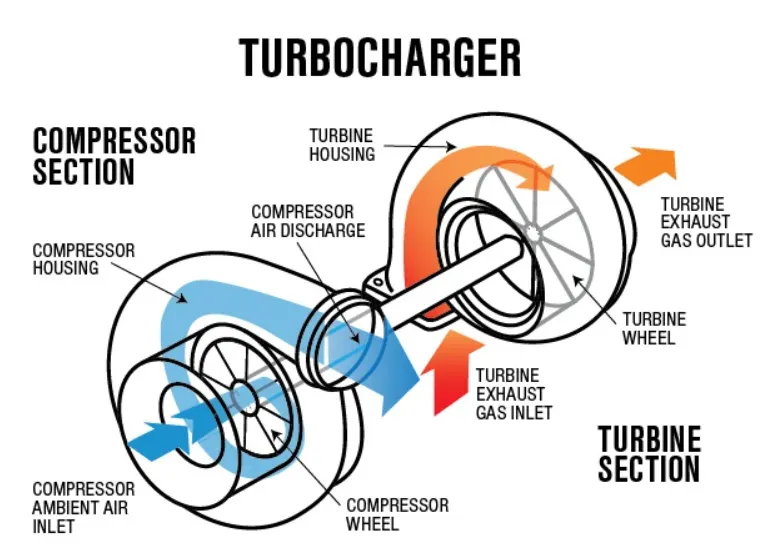
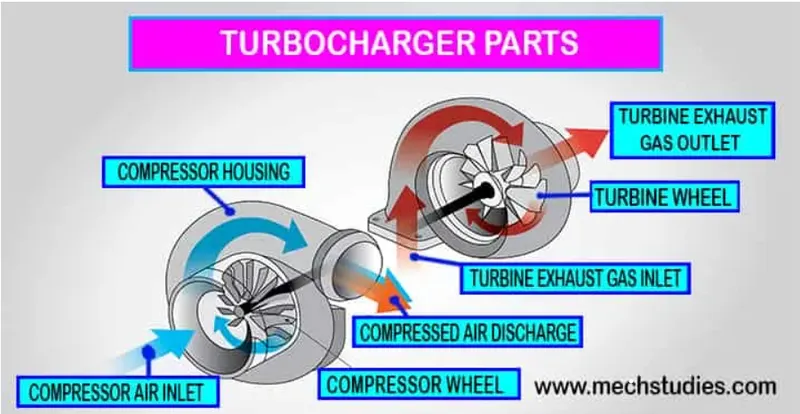
The main components of the turbocharger are:
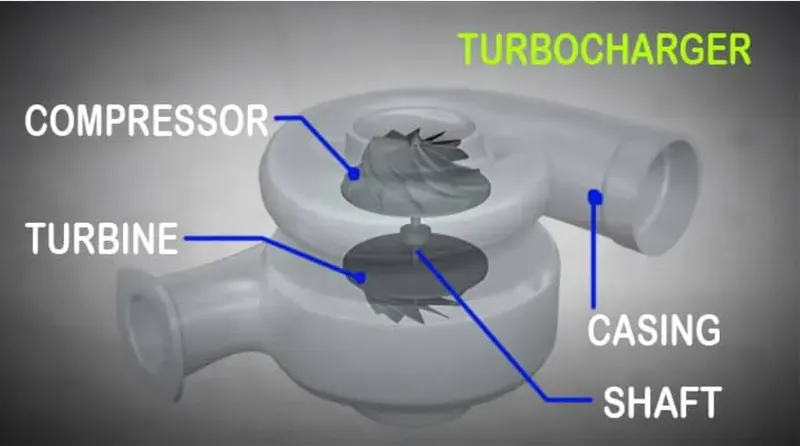
Casing:A turbocharger is having a casing where all others parts are mounted.
Turbine:The exhaust gases passed on to the turbine to drive the compressor.The turbine spins at very high speed(250000 RPM).
- The turbine size and impeller size is deciding factor for lots of aspects in the turbocharger.
- If turbine wheel is big and the compressor is big,then the flow capacity will be large.
- Manufacturers provide various sizes and shapes according to the requirements.
The performance of the turbocharger is closely related with the turbine size.Large turbochargers need more heat and pressure to spin which cause the lag at the start of the engine.Similarly, the smaller turbochargers need less heat and pressure to spin but can't get the performance and acceleration compared to large turbochargers.To avoid this twin-turbo designs are employed.
Twin-turbo Design:
Twin-turbo as the name suggests it has two turbochargers arranged in series or parallel arrangements.
In parallel arrangements, the turbocharger get half- half exhaust Gas Power. whereas in sequential turbochargers,one of them runs at Low speed and the other at a fixed speed according to load.
- The same principle is employed in the two- stage variable twin- turbos design.
- The small turbocharger runs at low speed and the large one at higher speeds.
- These total turbocharges are connected in series so they can multiply by another.
- This configuration helps to avoid the turbo lag to some extent.
Instead of using the one large turbine twin-turbo design is used.
Twin-scroll Design:
This design has two exhaust gas inlets and two nozzles. One of them is smaller and useful for the quick response, other one is the large one used to gain the peak performance.
- This arrangement with the help of camshaft timings is able to open the exhaust valves in the different cylinders at the same time.
- Because of this arrangement,exhaust gas can manage or used efficiently which gives lesser emissions and reduces the turbine lag.
Compressor:
Generally,a centrifugal compressor is used in turbocharging.It has the impeller and constructions same as used in the centrifugal supercharger. But in turbocharging, the compressor will be powered up by the turbine that moves with the help of exhaust gases.
The compressor gets the fresh air and transfers the fresh to the engine manifold.
Hub rotating Assembly:
This hub has the shaft which connects the compressor,impeller and the turbine.
It also consists of bearing systems (trust bearing or ball bearing) to allow the shaft to rotate at high speed with less friction.
Application:
Turbochargers have been used in the following applications:
- Petrol-powered car engines
- Diesel-powered car engines
- Motorcycle engines
- Diesel-powered truck engines
- Aircraft piston engines
- Marine engines
- Locomotive and diesel multiple unit engines for trains
- Stationary/industrial engines
Safety:
- Turbocharger failures and resultant high exhaust temperatures are among the cause of car fires.
- Failure of the seals will cause oil to leak into the cylinders causing blue-grey smoke. In diesel engines, this can cause an over speed, a condition known as diesel engine runaway.
Procedure:
- Open the Ansa software load the geometry.
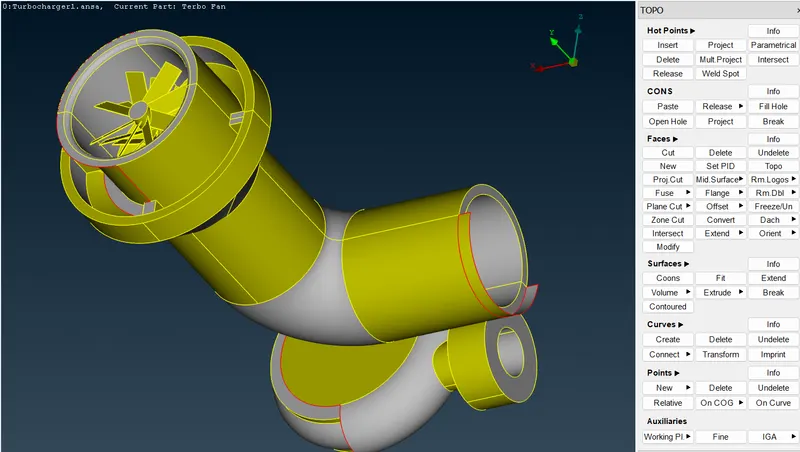
- Switch the wireframes for checking errors.
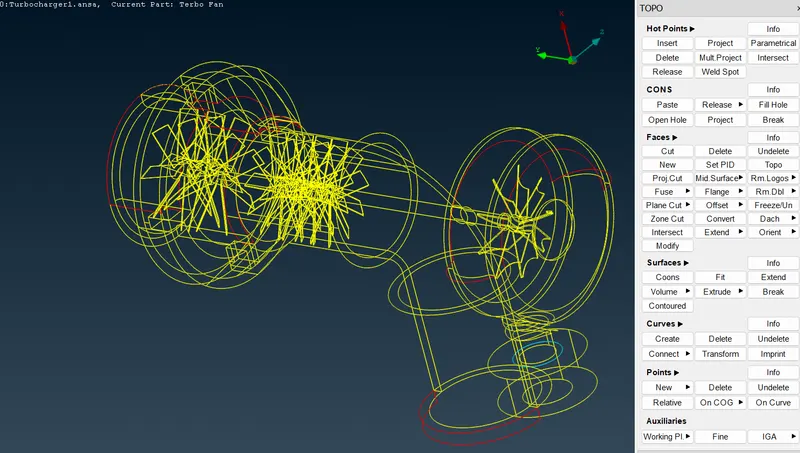
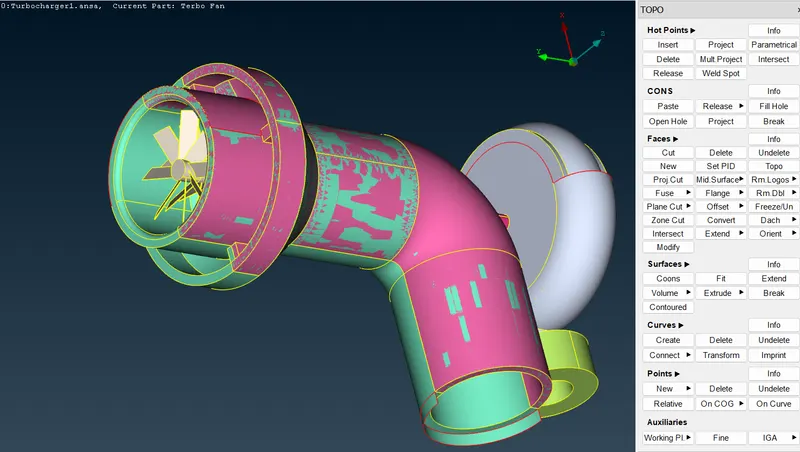
- Checking overlapping surface or wrong PID by turning on PID.
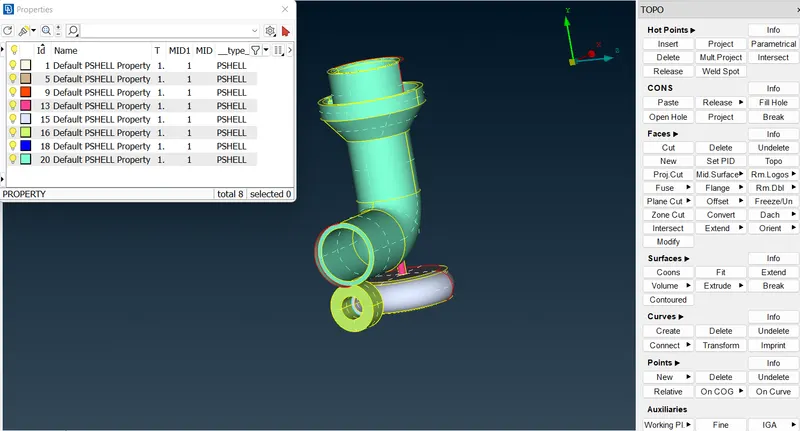
- Deleting overlapping surface and unwanted PID from PID manager.
- Deleting single cons,removing unwanted surfaces.
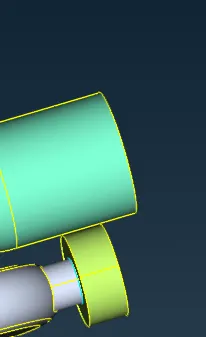
- Now we have this uneven surface.
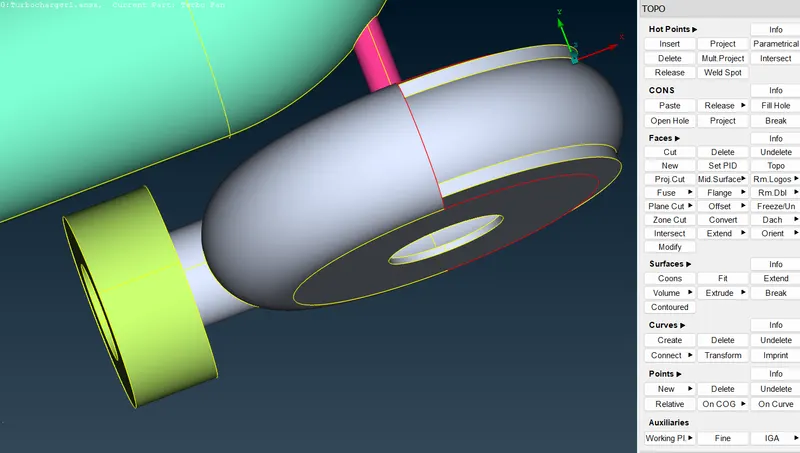
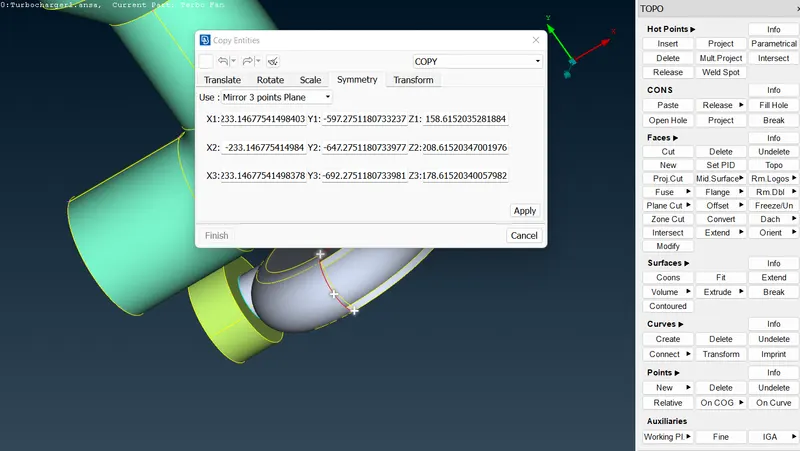
- Lets join three hot points and joint the surface using transform mirror 3 point plane.
- We have this hole in our geometry lets fill this hole using fill option.
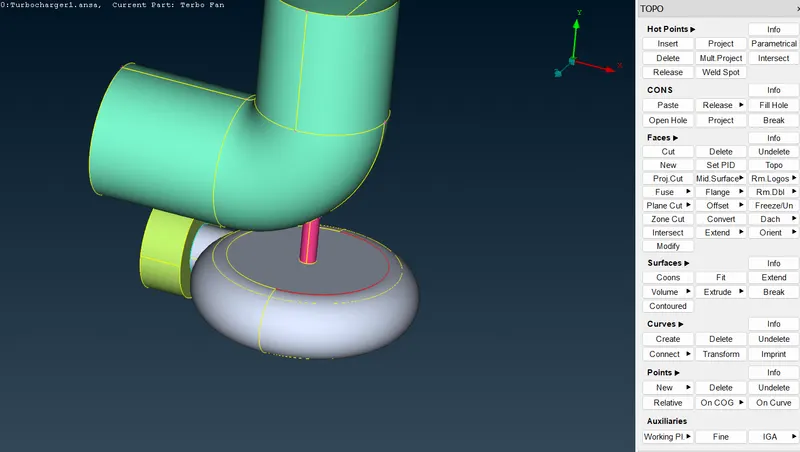
- Remove single cons by using topo.
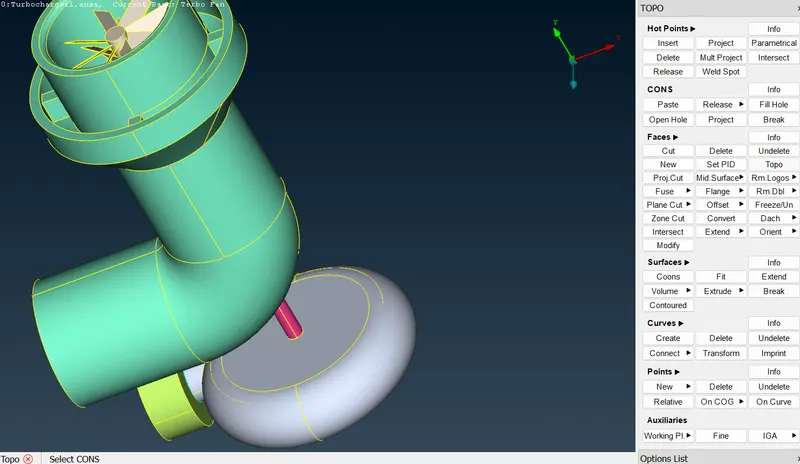
- Image showing zero single cons.
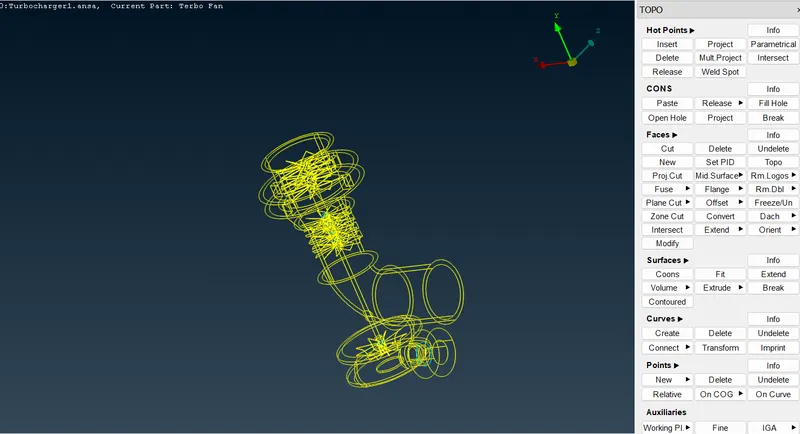
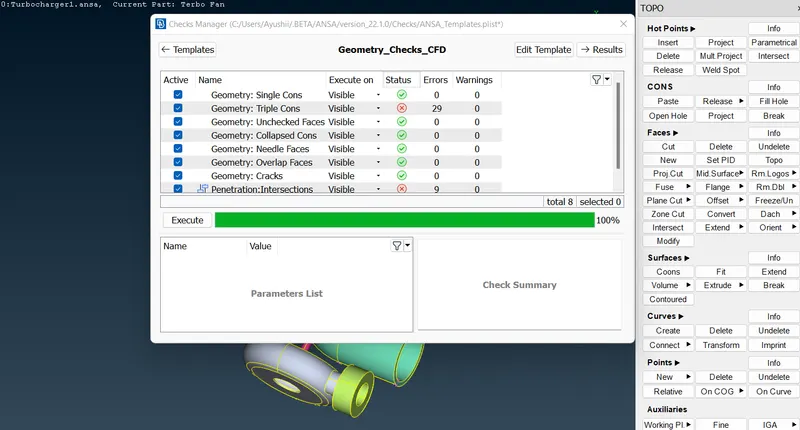
- Checking errors using chech manager.
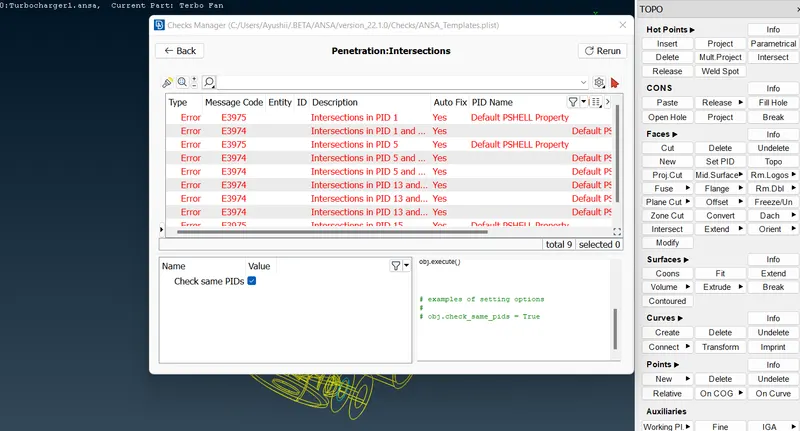
- Eliminating errors an overlapping surface.
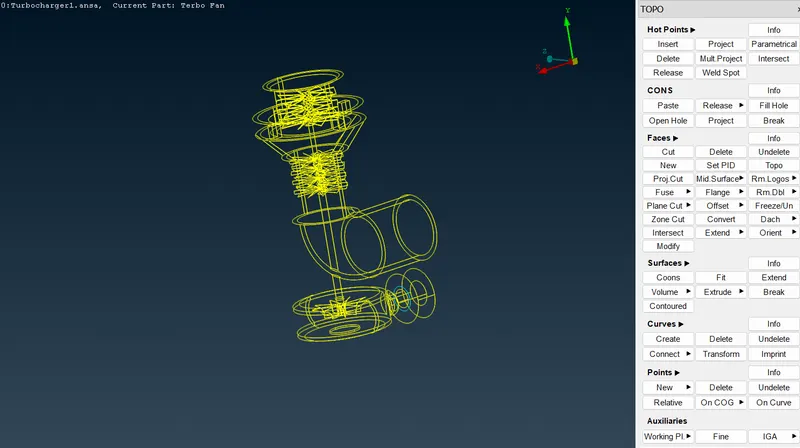
- After removing errors lets check one more time.
- Assigning all the PIDS
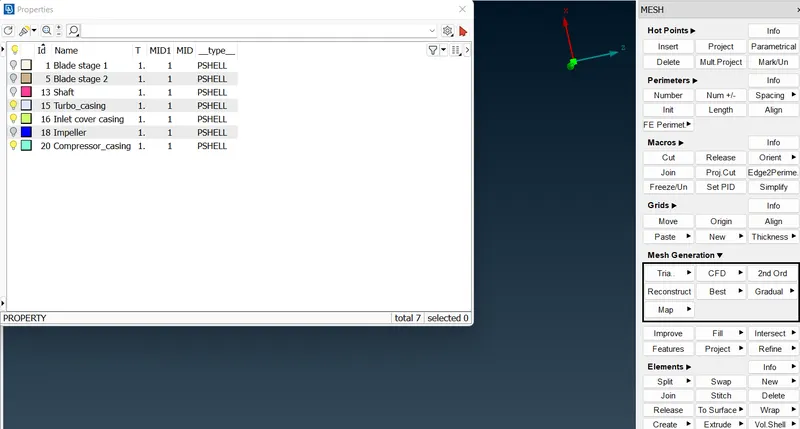
- Everything is done now apply meshing as per given dimensions.
- Mesh length for blade stage 1 is 1mm
- Mesh length for blade stage 2 is 1mm
- Mesh length for shaft is 1mm
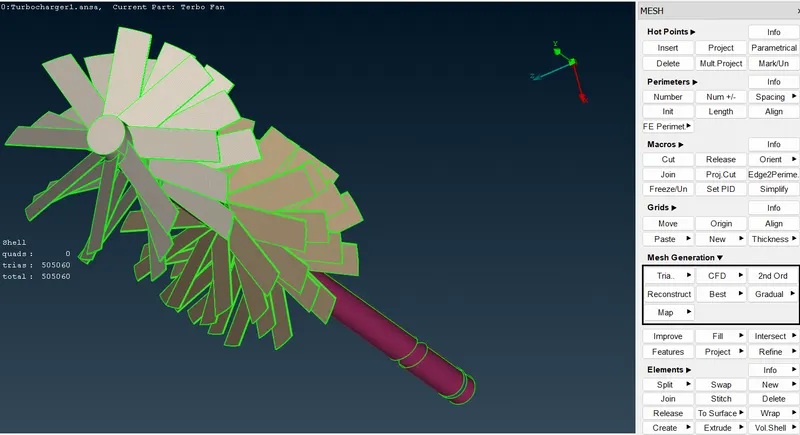
- Mesh length for Impeller is 2mm.
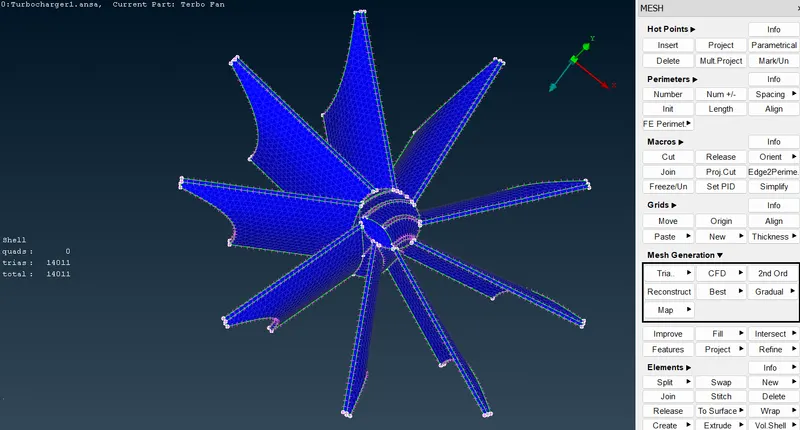
Mesh length for Turbo casing,Compressor casing and Inlet casing cover is 5mm.
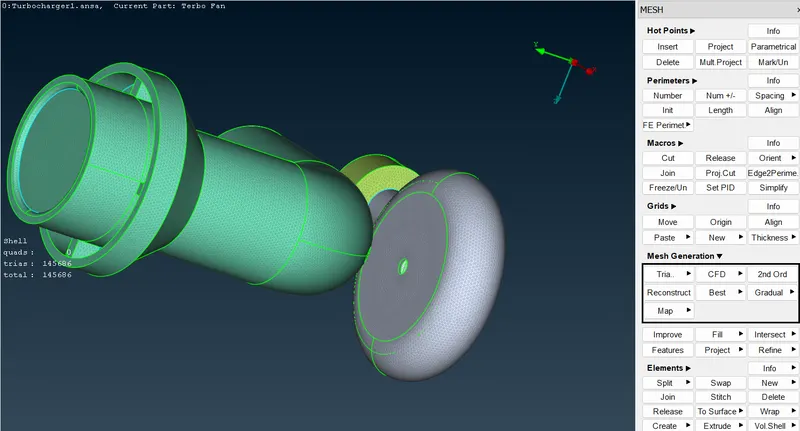
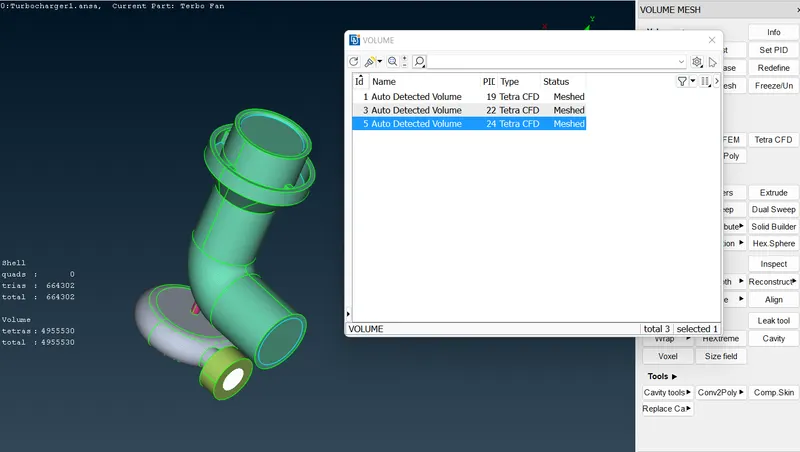
- Applying volumetric mesh
- We have a list of available volumes.
- We get 5 unmeshed element
- From that 2 are external volume n 3 were internal for volumentriic mesh we need internal volume.
- Remeshing of unmeshed elements
- Cut the plane see cut section view.
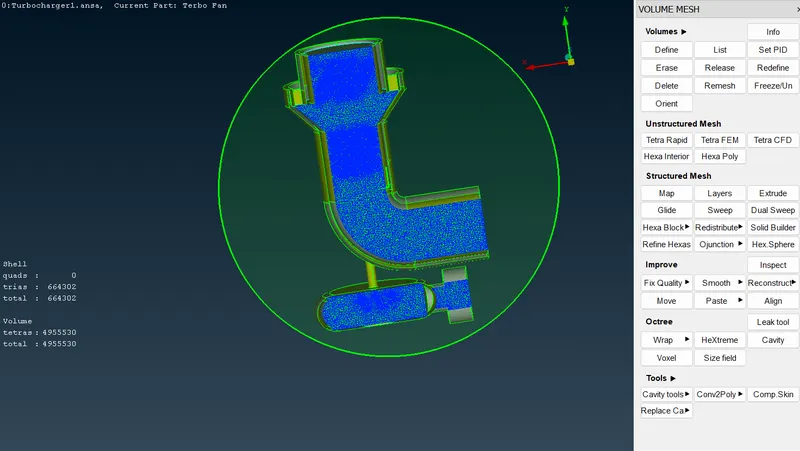
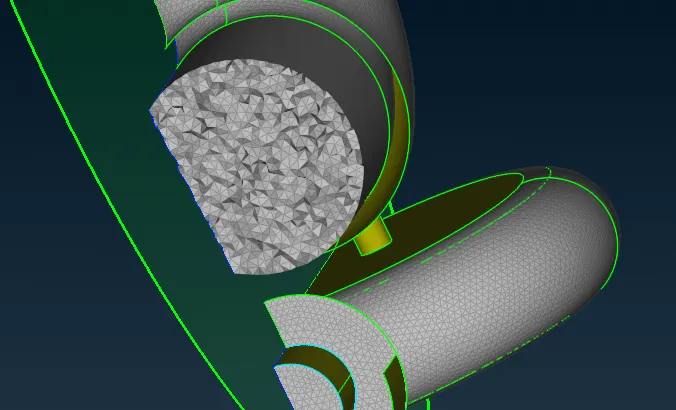
Result:
Learing Outcomes from this challenge:
- Removing topological errors
- Remove unwanted PID and surfaces
- Removing overlappng surface
- Creating surface mesh
- Apply volumetric mesh
- Create cut section views
Google drive link:
https://drive.google.com/file/d/1rZBJgWEOCvLksJkBtgmlyGNM383FCKzR/view?usp=sharing