Week-3 Challenge: ADVISOR Tool
HEV WEEK3 CHALLENGE
ANAYZING ELECTRIC VEHICLE PERFORMANCE USING ADVISOR TOOL:
ADVISOR TOOL:
- ADVISOR tool is Advance Vehicle Simulator tool
- Which used for the rapid analysis of performance and fuel economy of vehicles
- The default parameters values in the tool are experimental value measured in labs
- To access ADVISOR tool in MATLAb ,ADVISOR tool file downloaded and open advisor.m file
- After opening it ,enter advisor in command window
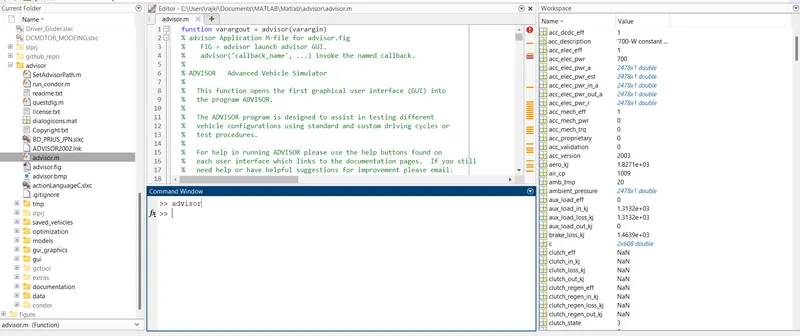
- A dialog box appears as shown below.
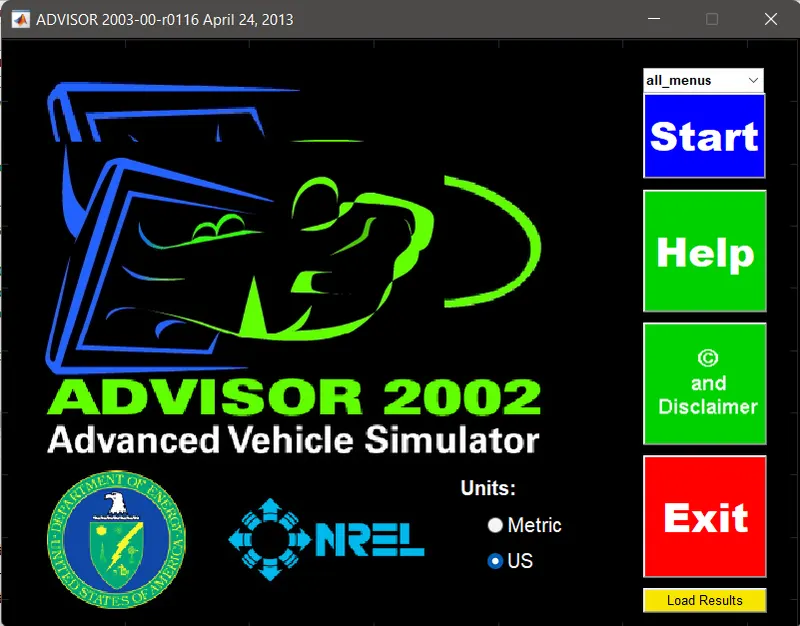
- Click start to enter into the ADVISOR interface.
QUESTION1:
GIVEN CONDITION:
- For a EV_defaults_in file,consider cargo mass is 500kg
- And check whether the vehicle can travel upto 45km with FTP drive cycle.
- Consider all other parameters in their default values
EV DEFAULT MODEL:
- Opening EV_defaults_in file from the advisor tool interface
- The default EV model is shown below
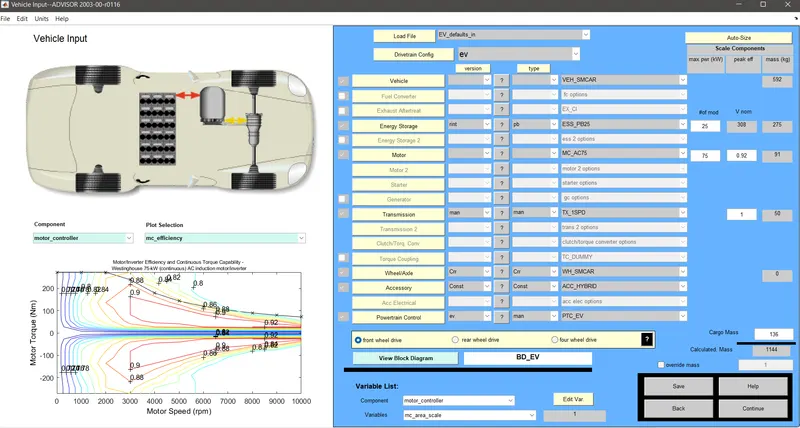
- BY default cargo mass assigned as 136 ,Changing cargo mass to 500kg for our condition
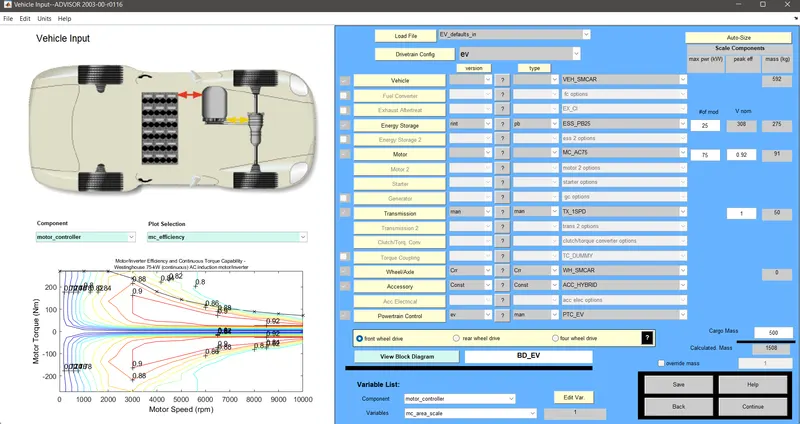
- Select continue option and next interface will appear where we can change the drive cycle
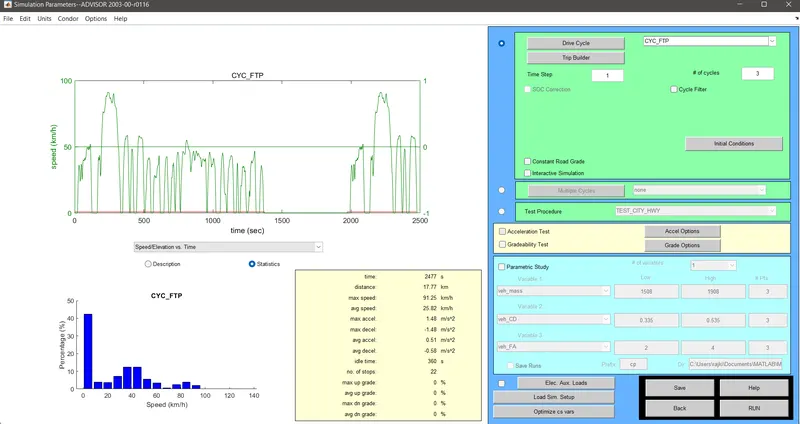
- Select CYC_FTP option in the drive cycle dropdown box and the FTP drive cycle appear as shown below
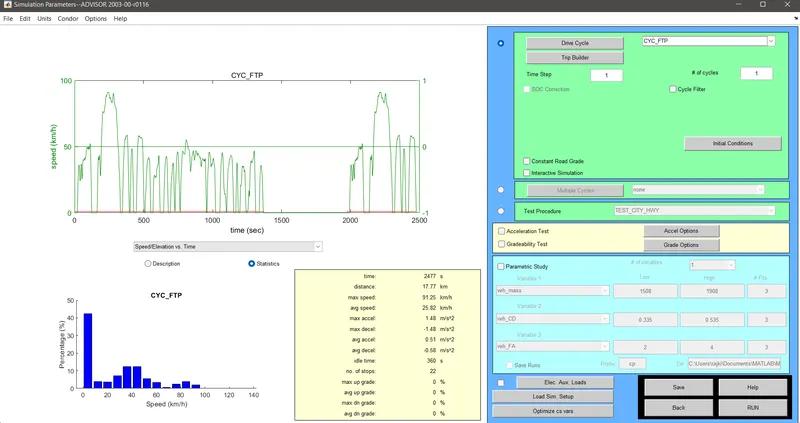
- RUN the model
RESULT:
- The results for the EV default model by considering given conditions is shown below
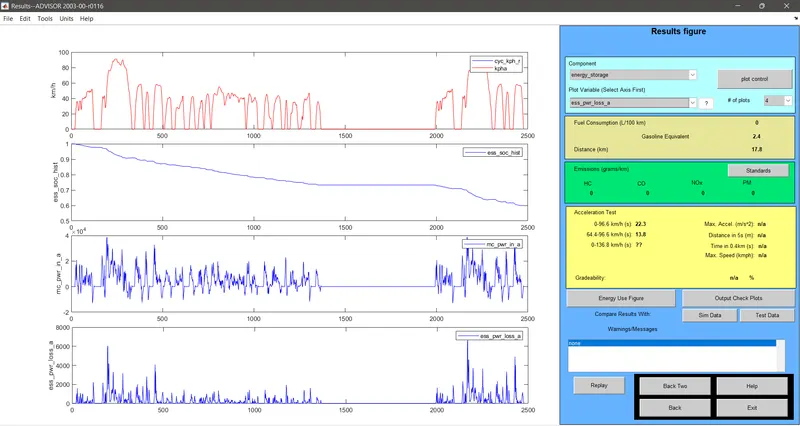
- First graph - The FTP drive cycle
- Second graph - State of charge of power source or battery during the cycle
- Third graph - Motor controller input power during the cycle
- Fourth graph- Power loss for the energy system
- By analysing charts ,the distance travelled is 17.8km for one FTP cycle and Battery is not fully drained
- So three FTP cycle chose and again running the simulation
- The updated results shown below
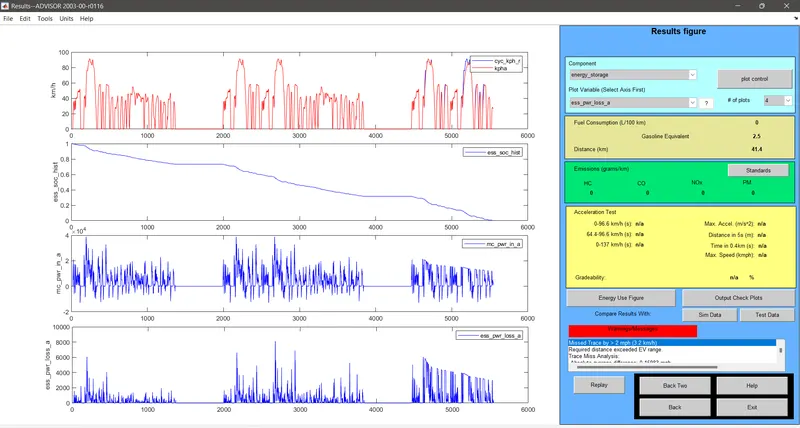
- By analysing the results,with battery fully drained, the total distance vehicle covered is 41.4km
CONCLUSION:
- Performance of the EV default model for the FTP drive cycle is observed
- And it concluded that with given condition this EV vehicle unable to travel for 45km
QUESTION 2:
FOR THE ABOVE CASE CHANGING BATTERY CAPACITY AND RUNING THE SIMULATION:
EV DEFAULT MODEL:
- The default EV model is shown below
- Changing the battery capacity ,by changing number of modules to 50 from default value 25
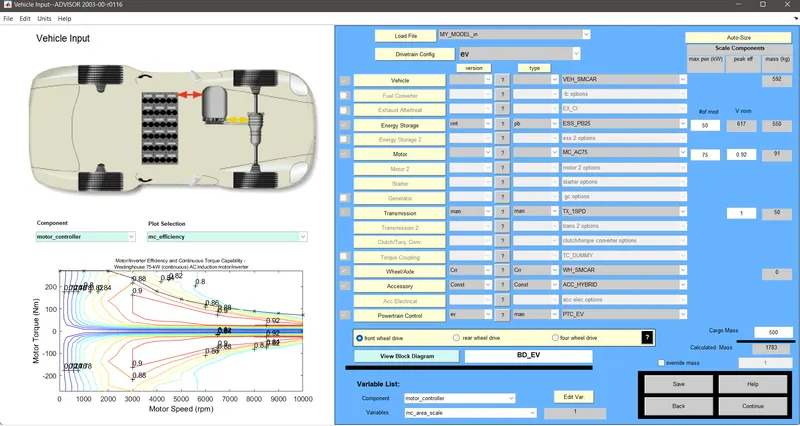
- Now testing the vehicle with 3 cycles of FTP driving cycle
- RUN the model
RESULT:
- The results for the EV default model by considering given conditions is shown below
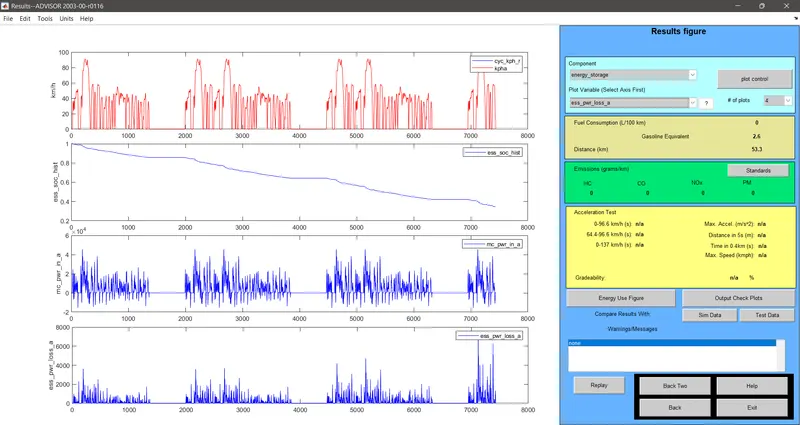
- First graph - The FTP drive cycle
- Second graph - State of charge of power source or battery during the cycle
- Third graph - Motor controller input power during the cycle
- Fourth graph- Power loss for the energy system
- By analysing the results,with battery not fully drained, the total distance vehicle covered is 53.3km
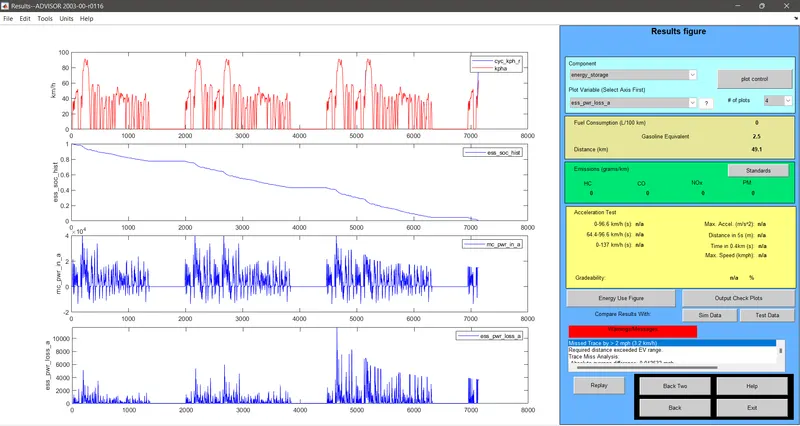
- The same model analysed for 30 modules of battery with same capacity
- And the vehicle travelled for 49km ,fully draining the battery
CONCLUSION:
- Observed the results after adding 50 modules of battery with same capacity
- Its concluded that ,the vehicle can travel more than 45km without fully draining the battery power
- The same observation done for 30 modules of the same battery
- And its concluded that ,vehicle can travel upto 49km by fully draining battery power
QUESTION 3:
GRADEABILITY TEST WITH PRIUS_jpn_defaults_in MODEL:
- Gradeability is defined as the ability of a vehicle to climb the hill represented in percentage or degree
- The model for the PRIUS_jpn is opened in the advisor interface
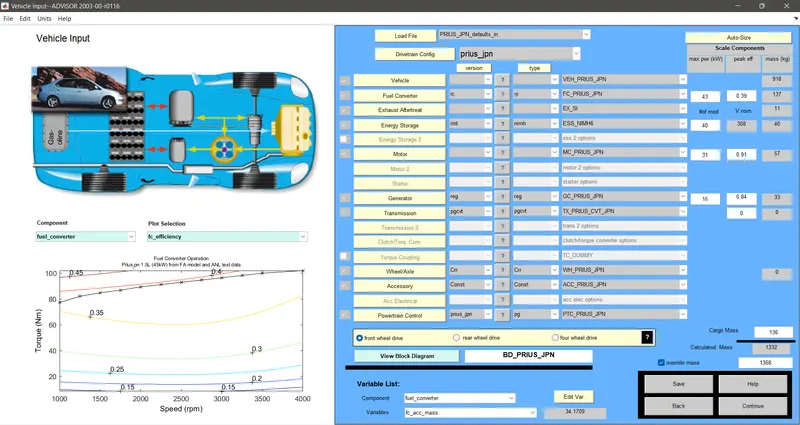
- Click continue and choose the driving cycle in the next interface
- CYC_UDDS driving cyccle used in theis model
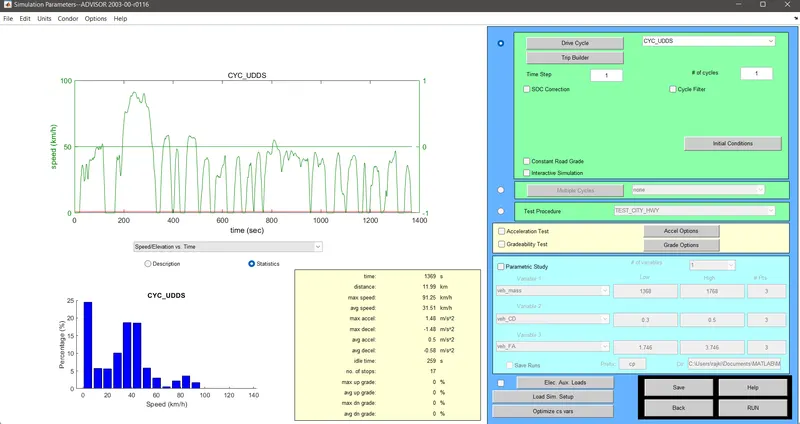
- Click on gradeability test and choose grade option
- A dialog box will appear
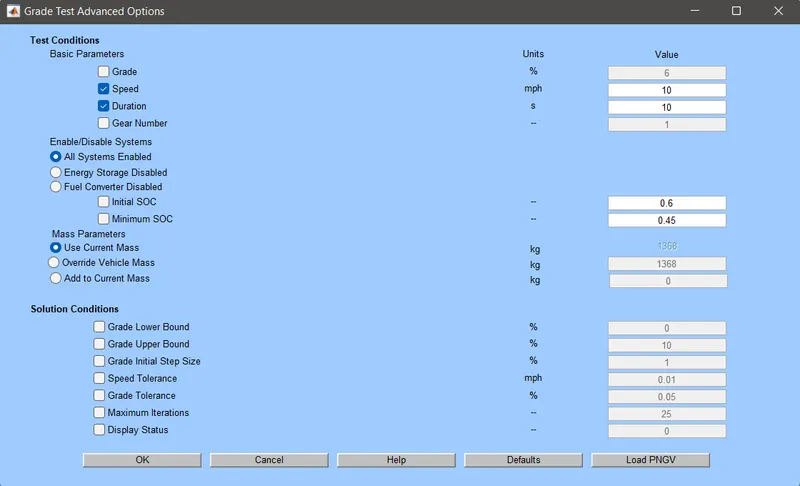
- The gradeability test done for different values to compare the result
- Test start by assigning speed to 10mph and duration to 10s
- RUn the model
RESULT:
- The results of gradeability test of PRIUS model is shown model
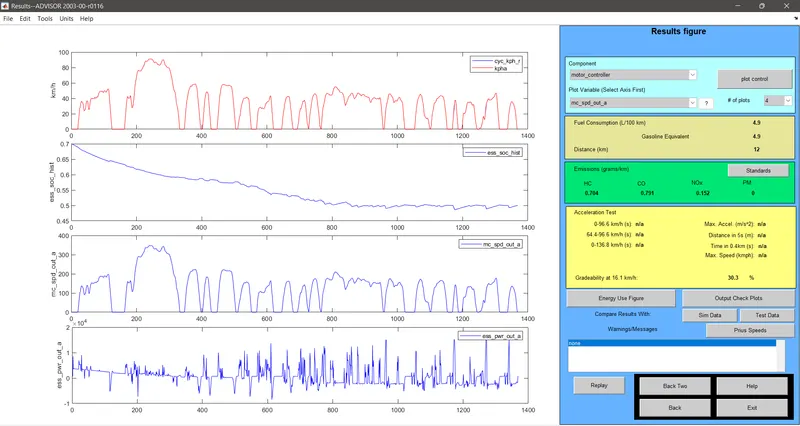
- For 10mph ,the gradeability obtained is 30.3%
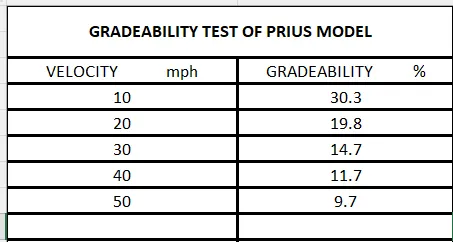
- The simulation done for several speed values and the values entered in a table to compare
CONCLUSION:
- Gradeability test done for the PRIUS model for different speed values
- Its concluded that value of gradeability decreases with increase in the value of velocity
- Vehicle on hill climbing condition need more torque and for a increase in speed after a critical velocity ,torque value falls down
- This results in the decrease in gradeability of a vehicle