ADVISOR Tool
QUESTION 1:
For EV_defaults_in file, if cargo mass is 500 kg with all other default conditions, can the vehicle travel for 45 km with FTP drive cycle? Conclude your observations
- AIM:
The main aim of the challenge is whether the given EV default model will travel 45km under Federal Test Procedure (FTP cycle) with a cargo mass of 500 kg.
- OBJECTIVE:
ADVISOR (Advance Vehicle Simulator) is a set of model,data and script text files for use with MATLAB and SIMULINK . It is designed for rapid analysis of the performance and fuel economy of conventional,electric,and hybrid vehicles. ADVISOR also provides a backbone for the detailed simulation and analysis of user defined drivetrain components, a starting point of verified vehicle data and algorithms from which to take full advantage of the modelling flexibility of simulink and analytic power of MATLAB
ADVISOR tools are mostly empirical,relying on drivetrain components input/output relationships measured in the laboratory and it is quasi-ststic using data collected in steady state tests and correcting them for transient effects such as the rotational inertia of drivetrain components
ADVISOR tool helps in estimating the fuel economy of vehicles that have not yet been built and also evaluate an energy management strategy for hybrid vehicle fuel converter and for minimizing the fuel use and maximize the vehicle performance.
FTP is a heavy duty transient cycle is used for regulatory emmision testing of heavy duty on road engines in the United States.
- ADVISOR TOOL:
STEPS TO OPEN ADVISOR TOOL
- Open the MATLAB software.
- Open the advisor m. file in editor window and run the file.
- ADVISOR tool is opened to run the simulation.
- Load the EV_default file and add the given cargo weight and observe the outputs.
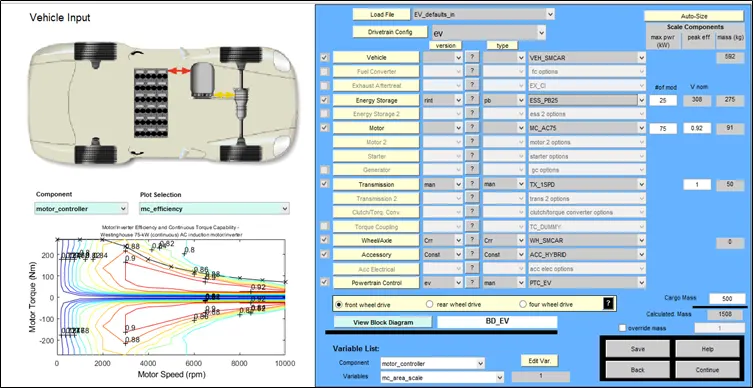
From the above window it is clear that the battery consist of 25 modules and providing 308volts and it is run under FTP cycle.
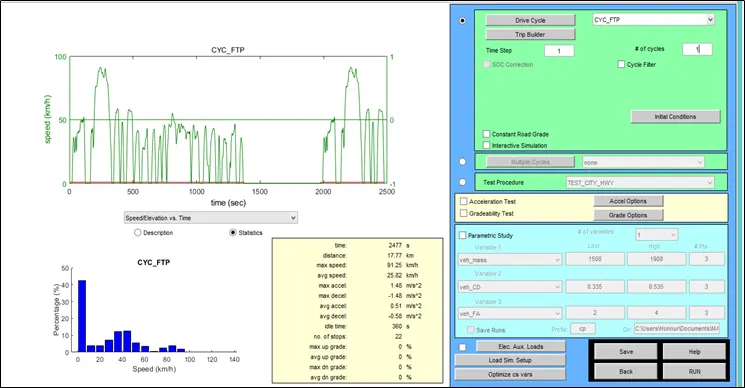
Number of cycle is 1 and distance covered will be 17.77 km
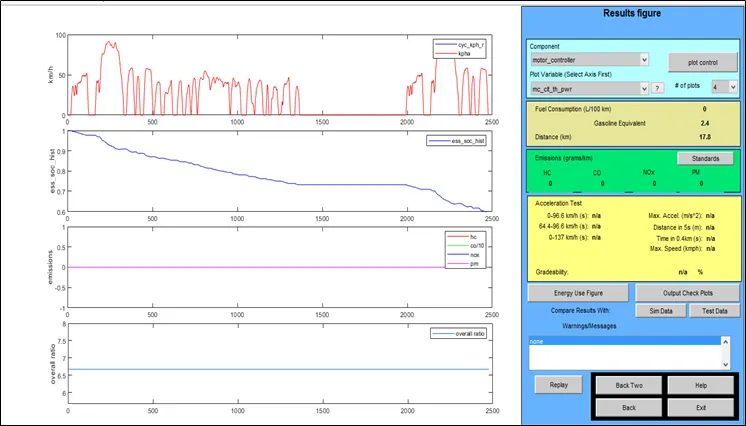
The vehicle covered 17.8km distance with 60% charge remaining in the battery.
In order to cover 45km distance we have to increase the number of cycles which increases the distance travelled by the vehicle.
when number of cycles is increased to 3
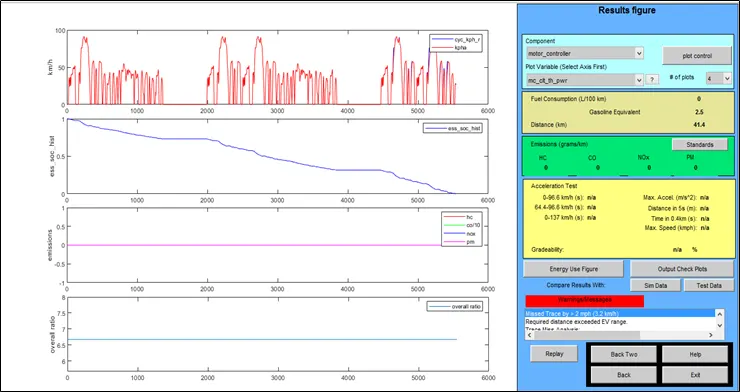
From the above figure it is confirmed that the vehicle will travel maximum to 41.4km from full charge to zero charge under FTP cycle and it will not reach 45 km distance with default value.
QUESTION 2:
In the above case, try changing the battery capacity and repeat the simulation.
Battery capacity can be changed by varying the battery module which affects the voltage provided to the vehicle. When battery module is changed from 25 to 26 its votage capacity also changes to 321v
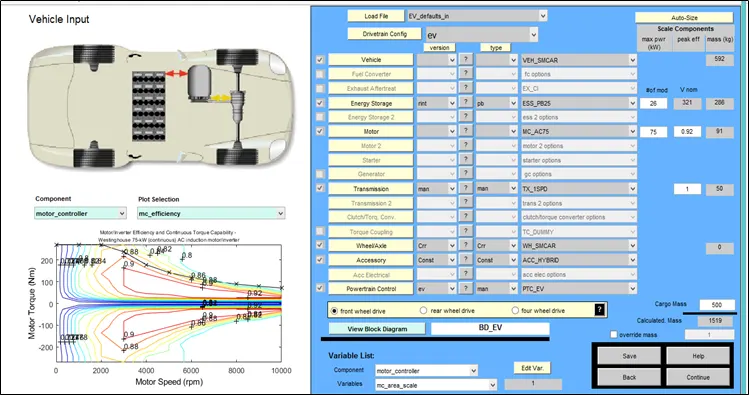
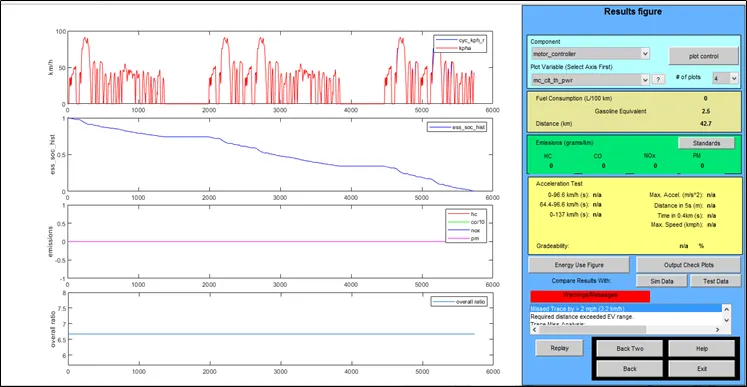
By increasing the battery module we can observe that the distance travelled by the vehicle also increases to 42.7 km which is more than the previous case that is from default value.
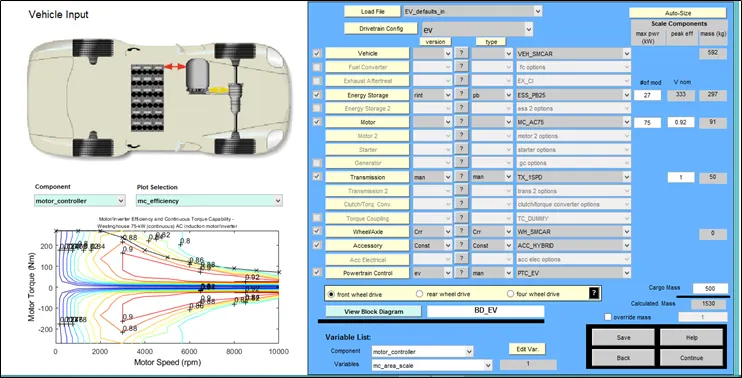
Further increasing the battery module to 27 the voltage provided by the battery is increased to 333v and obivously distance travelled by the vehicle increased.
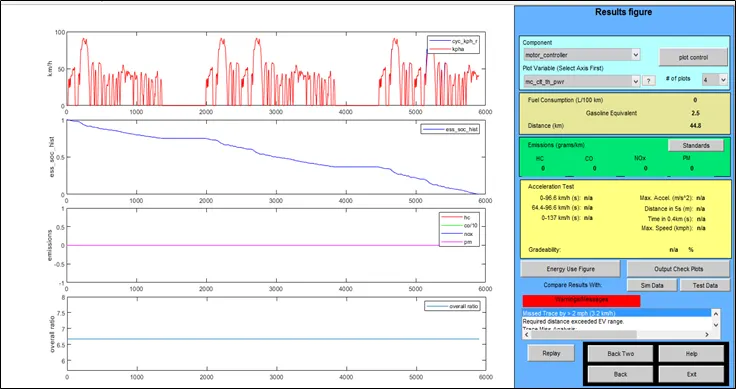
The distance travelled by the vehicle is slightly increased to 44.8 km with 0% charge remaining in the battery and by further increasing the battery module we can achive 45km range .
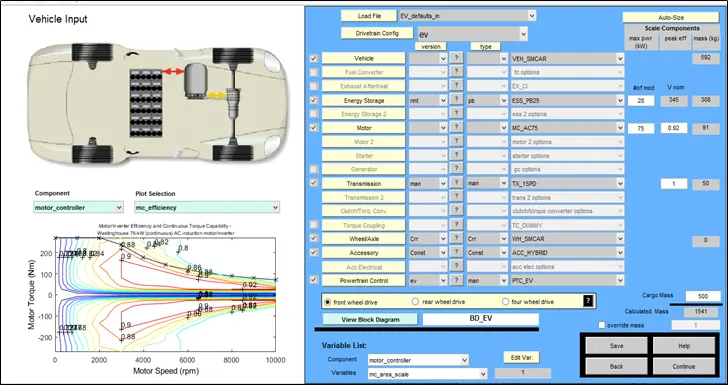
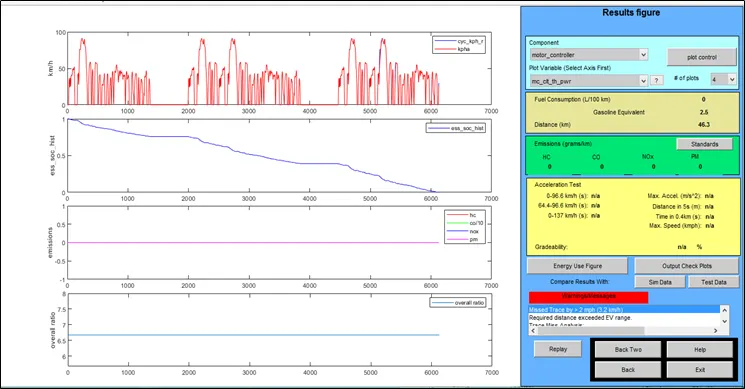
By increasing the number of modules to 28 the voltage also increases to 345v and by which we can achieve 45km range on EV default vehicle.
QUESTION 3:
Perform gradeability test with PRIUS_Jpn_defaults_in file and Compare your results in table and conclude.
- AIM:
To perform the gradeability test with TOYOTA PRIUS japan model and observe the result.
- OBJECTIVE:
Gradeability by defination is the ability of a commercial vehicle to negotiate a grade in Gross Vehicle Weight condition and it can vary from 0% to 45% (maximum). 45% gradient is equivalent to 100% .In other words , gradeability is the highest grade a vehicle can ascend maintaining a particular speed.
- TOYOTA PRIUS MODEL:
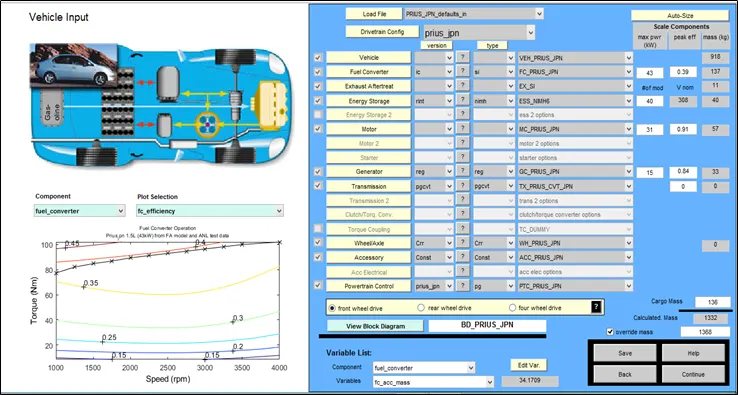
CASE 1:
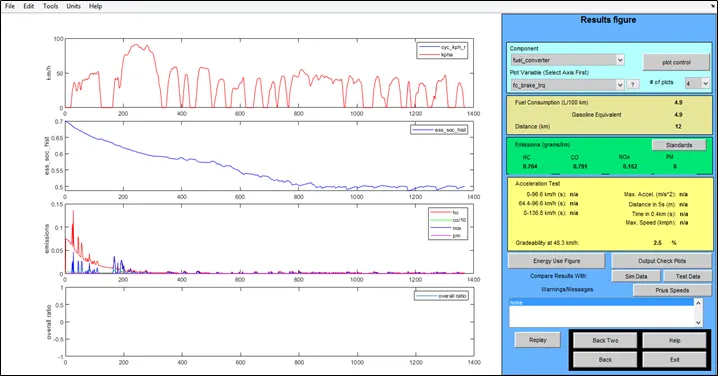
Peforming Gradebality test at 30mph
- Energy storage system is disabled
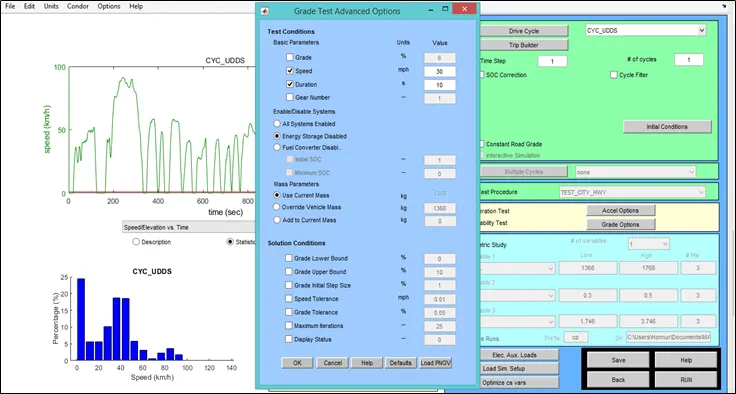
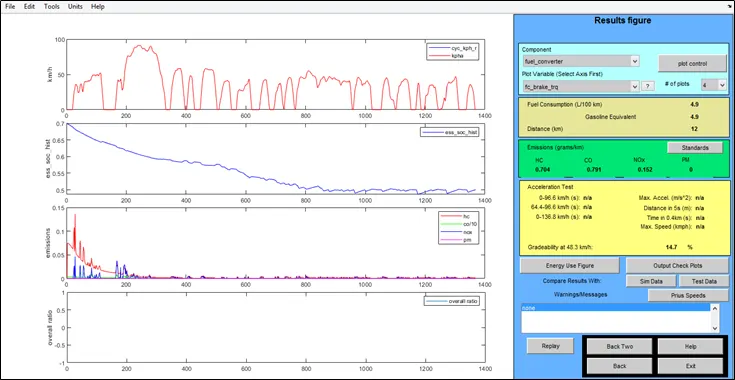
- Fuel converter is disabled
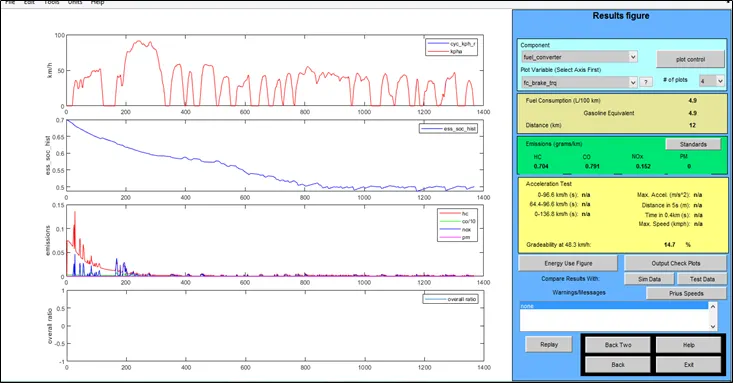
- Hybrid Vehicle
- RESULT:
| TYPE |
SPEED (MPH) |
GRADEBILITY (%) |
| IC ENGINE POWERED VEHICLE |
30 |
2.5 |
| FULL ELECTRIC VEHICLE |
30 |
14.7 |
|
HYBRID VEHICLE |
30 |
14.7 |
- CONCLUSION:
Gradebility of Full EV and Hybrid Vehicle is more because the electic vehicle will get sufficient instantaneous torque.
CASE 2:
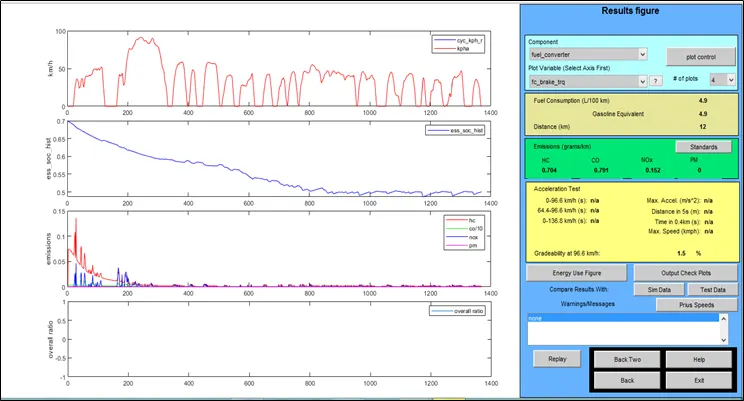
Peforming Gradebality test at 60mph
- Energy storage system is disabled
- Fuel Converter is disabled
- Hybrid Vehicle
| TYPE |
SPEED (MPH) |
GRADEBILITY (%) |
| IC ENGINE POWERED VEHICLE |
60 |
1.5 |
| FULL ELECTRIC VEHICLE |
60 |
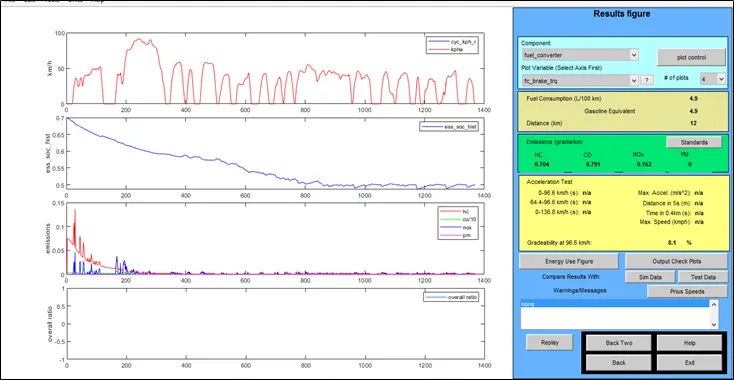
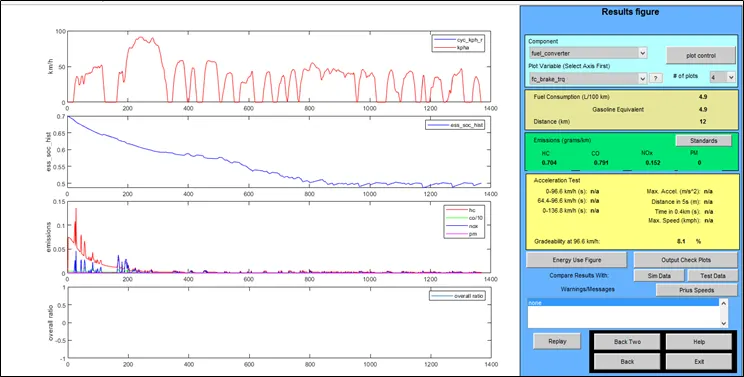
8.1 |
|
HYBRID VEHICLE |
60 |
8.1 |
- CONCLUSION:
When the speed of the vehicle is doubled the gradebility value decreased to nearly half of its value.