Week-3 Challenge: ADVISOR Tool
AIM 1 : Use ADVISOR tool and simulate EV_defaults_in file, if cargo mass is 500 kg with all other default conditions, can the vehicle travel for 45 km with FTP drive cycle? Conclude your observations.
Solution : Here we are asked to use the Advisor tool and simulate the EV_defaults_in file . Typing advisor on the command window gets us the advisor tool GUI .The unit system is set to " metric " system . The below image shows the image of the Advisor GUI with the required file EV_defaults_in loaded in it .
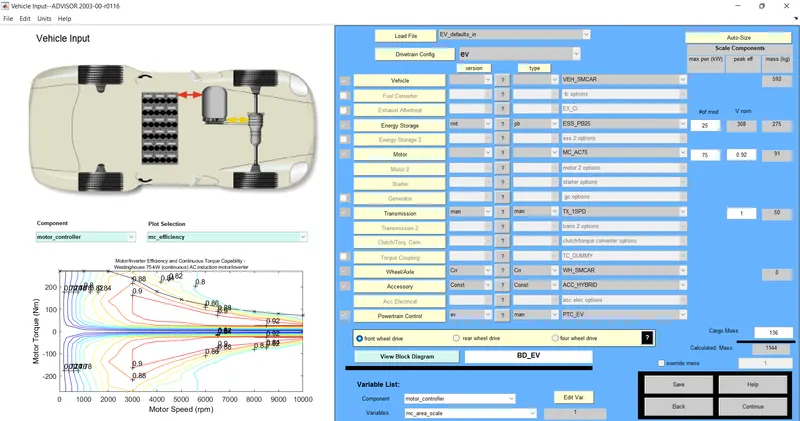
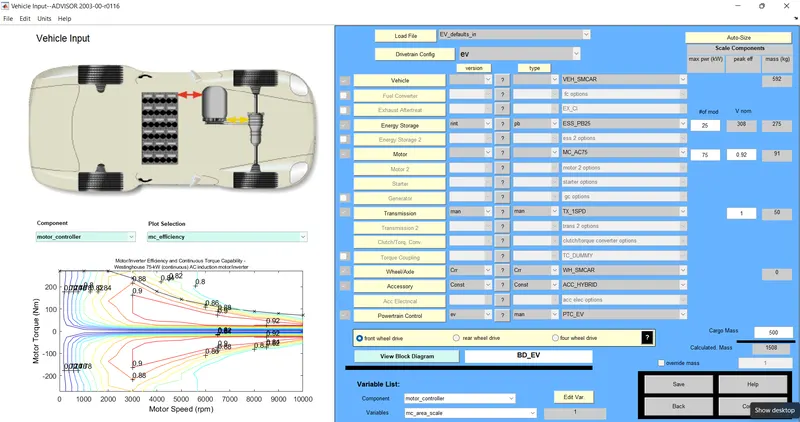
In the given case , we are given that the cargo weight is 500kg and all the other values are the default values only . So we change the cargo weight.
.
On continuing this, we are asked about the type of the cycle . Here we enter it as FTP cycle because we are asked to do that as our objective. Then on running the simulation with drive cycle as 1 we get the following result :
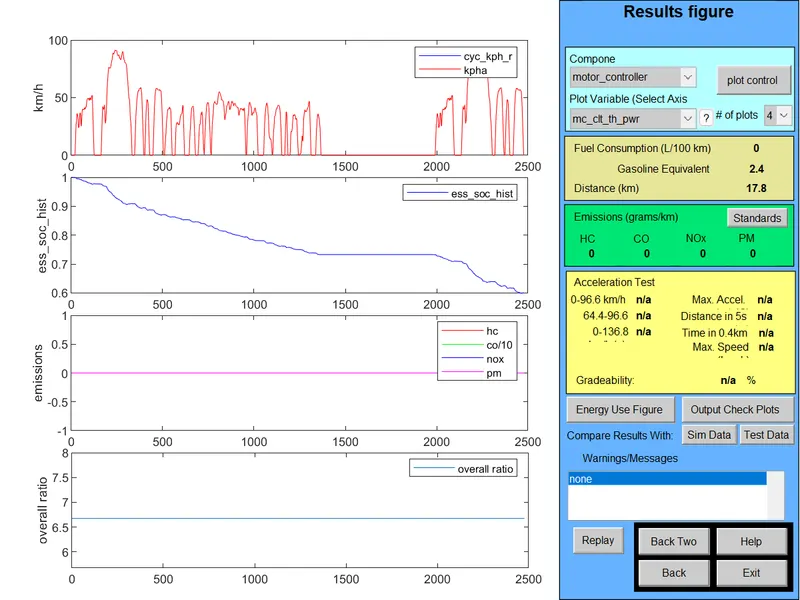
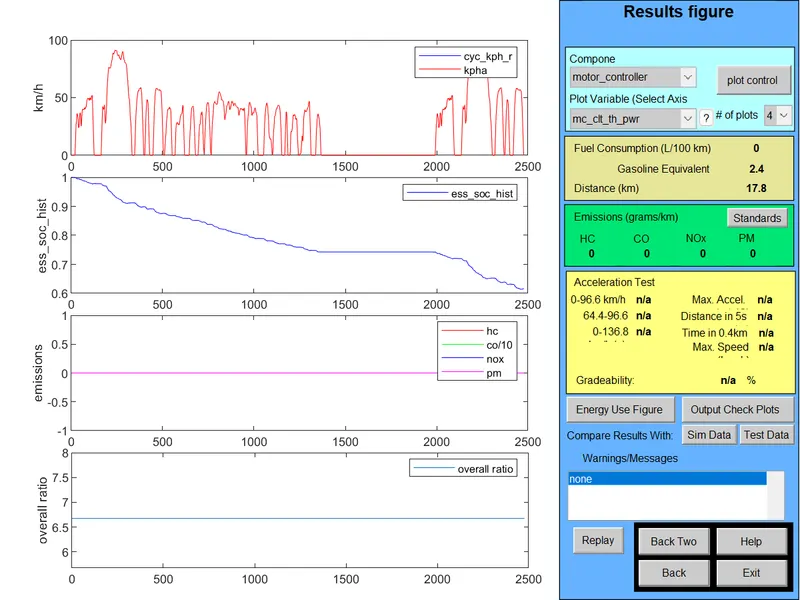
It can be seen that when the drive cycle is 1 , we get the distance travelled as 17.8 km.
Now we go back to change the drive cycle to 2, and on running the simulation we get the following output .
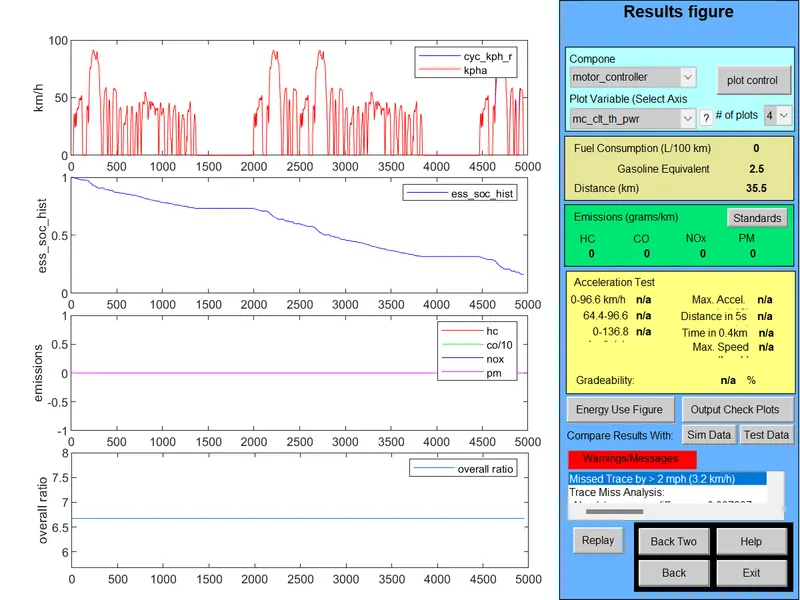
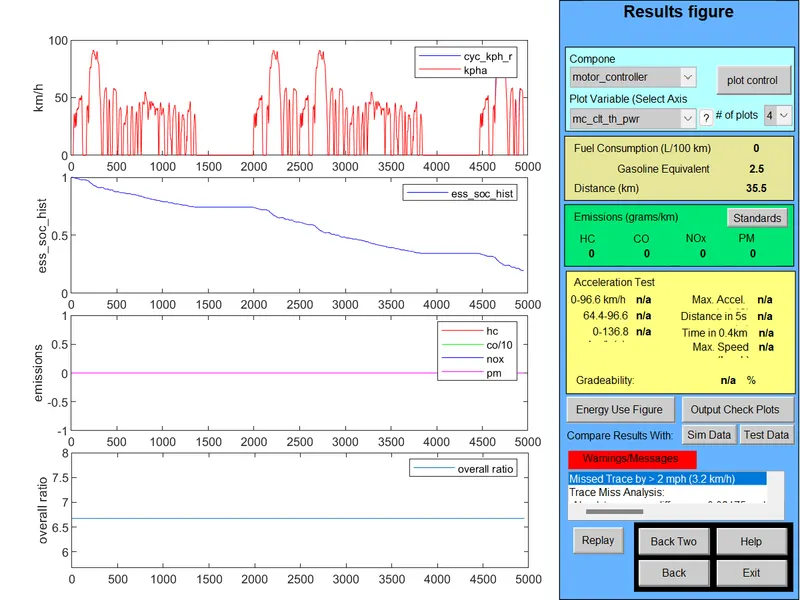
Here the distance travelled can be seen as 35.5 km. Again we go back and run the simulation with drive cycle 3. Here the distance travelled has come to 41,4 km with STATE OF CHARGE at 100%
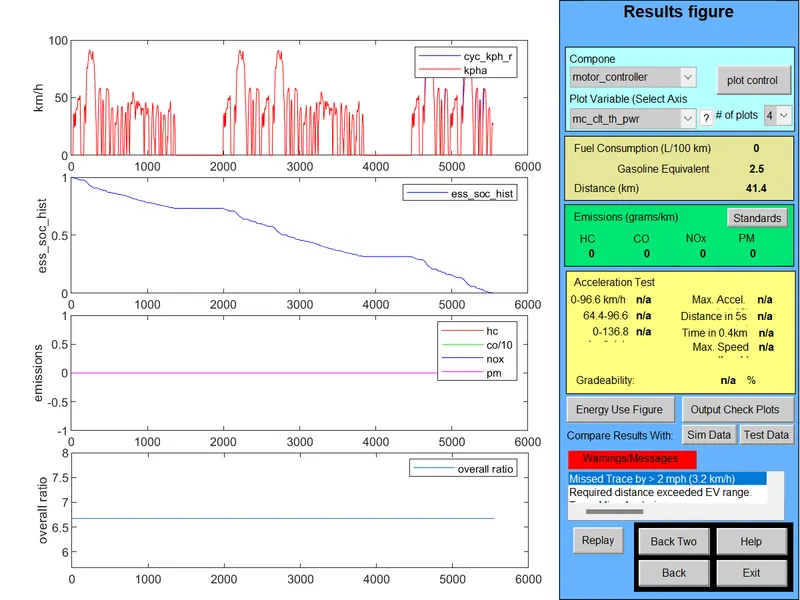
On the 3rd drive cycle we can see from the plot that the SOC is 100 .After the 4th drive cycle also the distance travelled is still 41.4 km
CONCLUSION : SO hereby we can infer that with the given specifications and Cargo mass of 500kg the Vehicle cannot run for a distance of 45km.
AIM 2 : Using advisor tool 2 in the above case, try changing the battery capacity and repeat the simulation.
Solution : Battery capacity is to be changed.
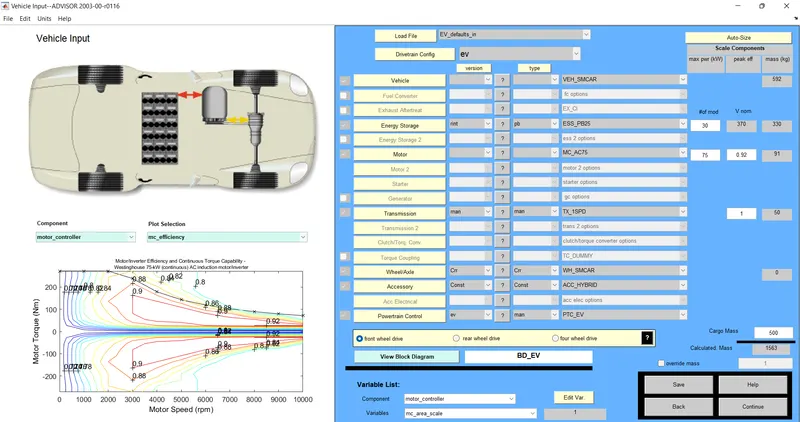
CASE 1 : So initially we employ a 26 module battery and see the situation with different drive cycles :
(a) Number of modules = 26
Drive cycle 1
(b) Number of modules = 26
Drive cycle 2
(c) Number of modules = 26
Drive cycle 3
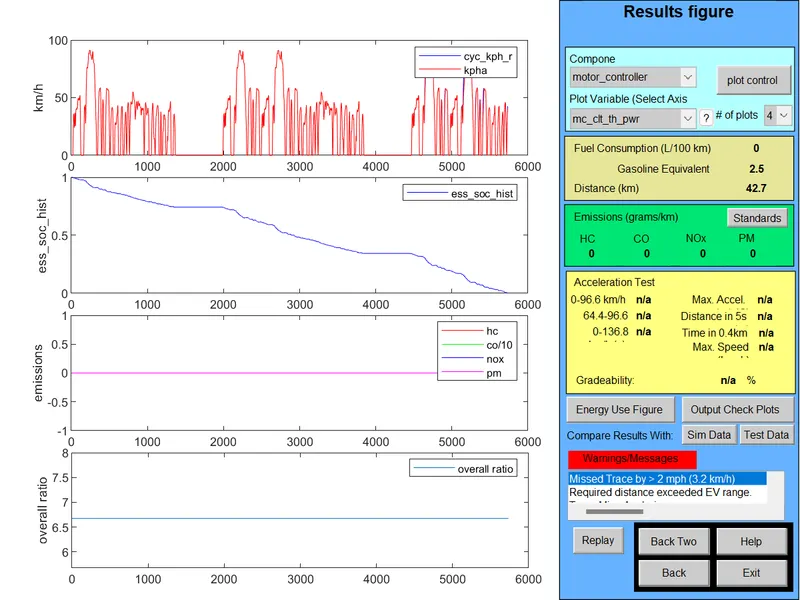
(d) Number of modules = 26
Drive cycle 4
CASE 2 : Now we run the simulation with the same battey but with 26 modules in it .
(a) Number of modules = 30
Drive cycle 1
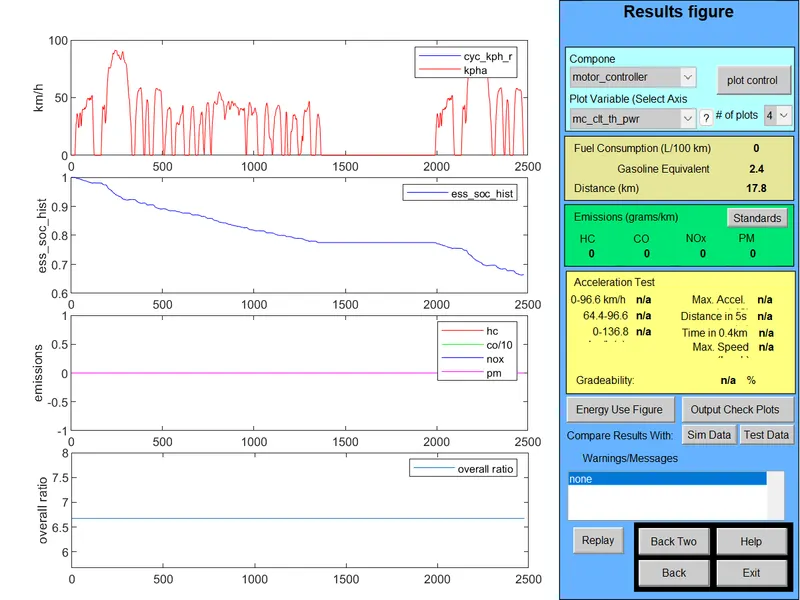
(b)Number of modules = 30
Drive cycle 2
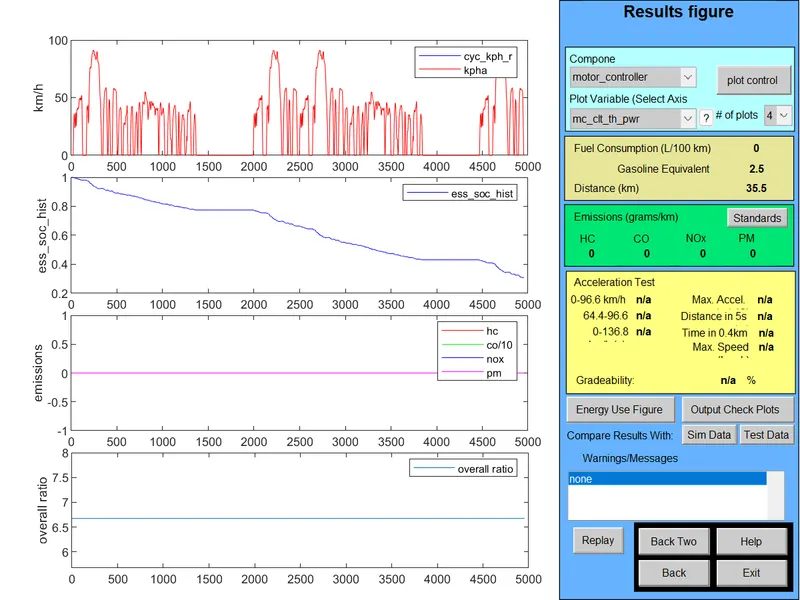
(c)Number of modules = 30
Drive cycle 3
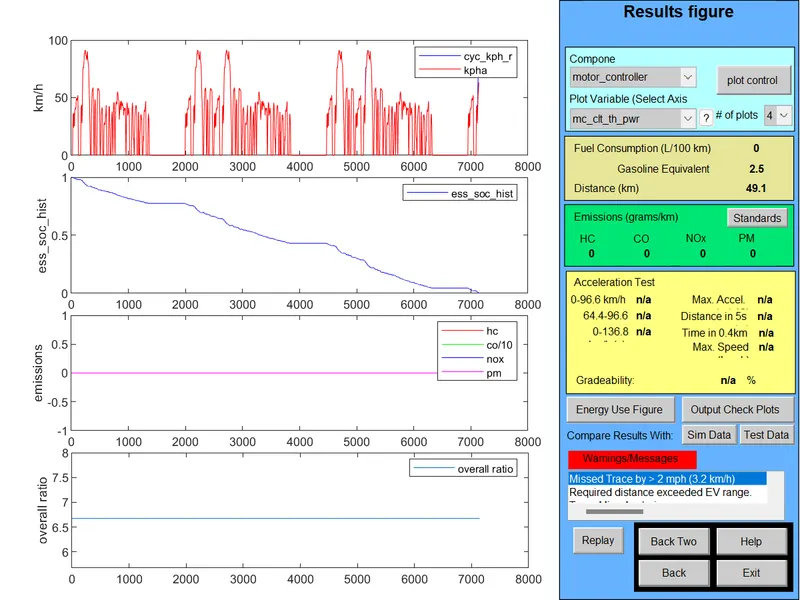
(d)Number of modules = 30
Drive cycle 4
Thus when batter has 30 modules then the maximum distance travelled with the given specifications will be 49.1 km.
| DRIVE CYCLE | SPEED WITH 26 MODULES | SPEED WITH 30MODULES |
| 1 | 17.8 | 17.8 |
| 2 | 35.5 | 35.5 |
| 3 | 42.7 | 49.1 |
| 4 | 42.7 | 49.1 |
On changing the battery capacity by differing the number of modules we get much more distance travelled with the same weight and specifications. So increase in the batttery capacity can be efficiently used for more distance coverage .
The following image shows the simulation results when the drive cycles are changed to 5.
Only after the 5th drive cycle does the vehicle's SOC runs to 0, which is evident from the graph above.
AIM 3 : Use ADVISOR tool and Perform gradeability test with PRIUS_Jpn_defaults_in file
Compare your results in table and conclude. 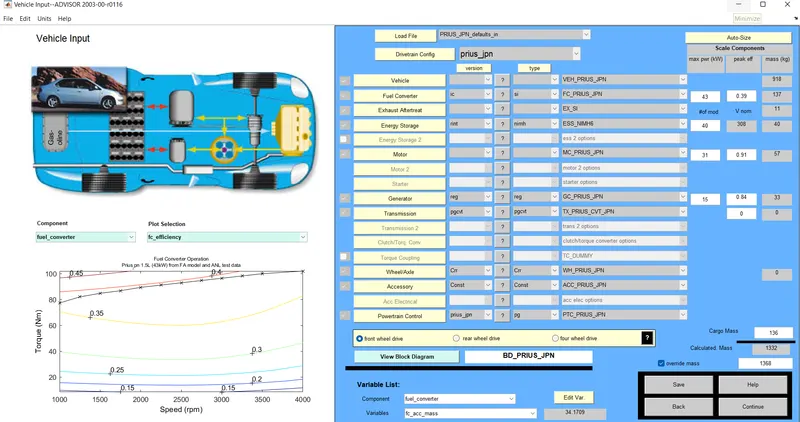
Solution : We are asked to load the PRIUS_Jpn_defaults_in file, in the advisor tool .
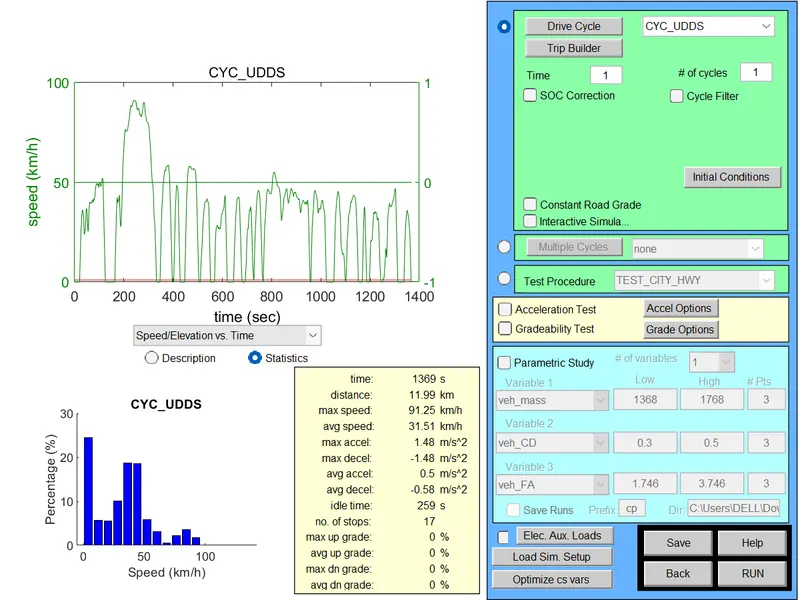
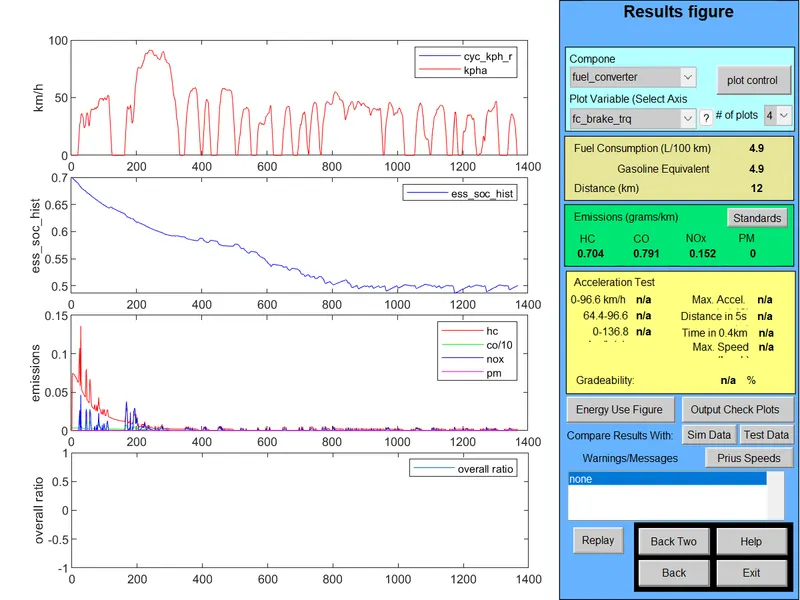
On running this with the drive ycle selected as UDDS , we get the following result.
Now we select the Gradeability test toggle box, changing Speed in mph from default value to 50mph i.e 80.467 km/h , duration as 30 seconds : then we get :-
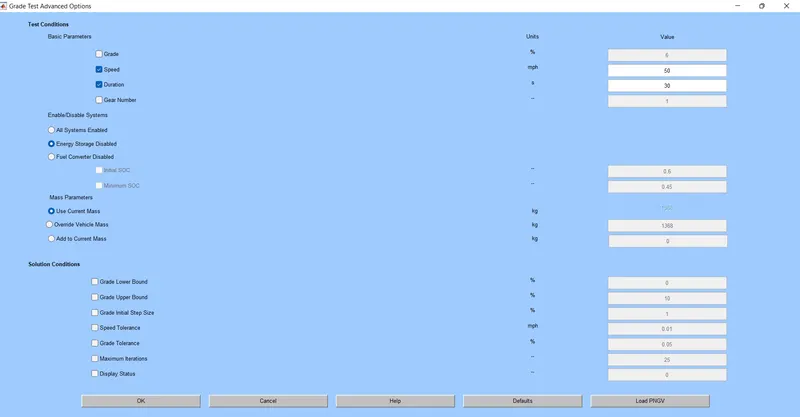
So CASE 1 :
Speed = 30 miles per hour
Duration = 30 seconds
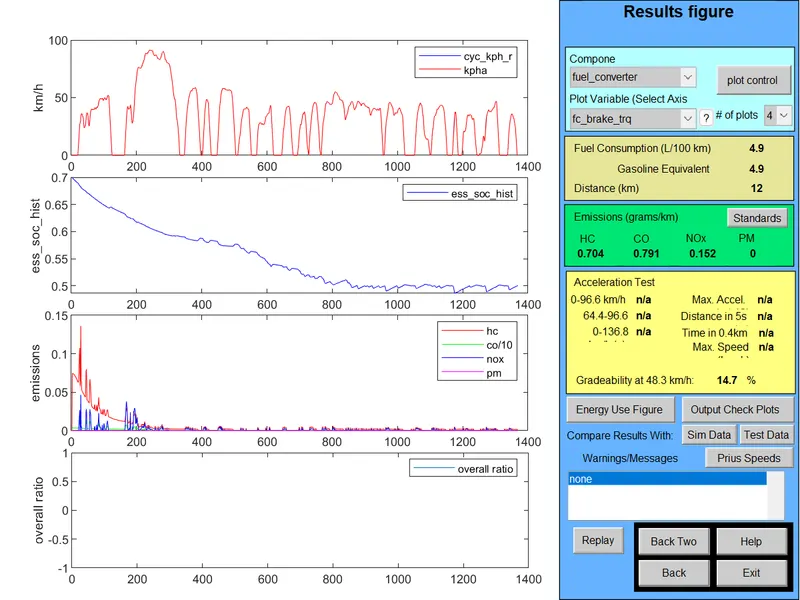
Gradeability at the given speed and drive cycle 1 is 14.7% as shown in the simulation.
Case 2 :
Speed = 40 miles per hour
Duration = 10 seconds
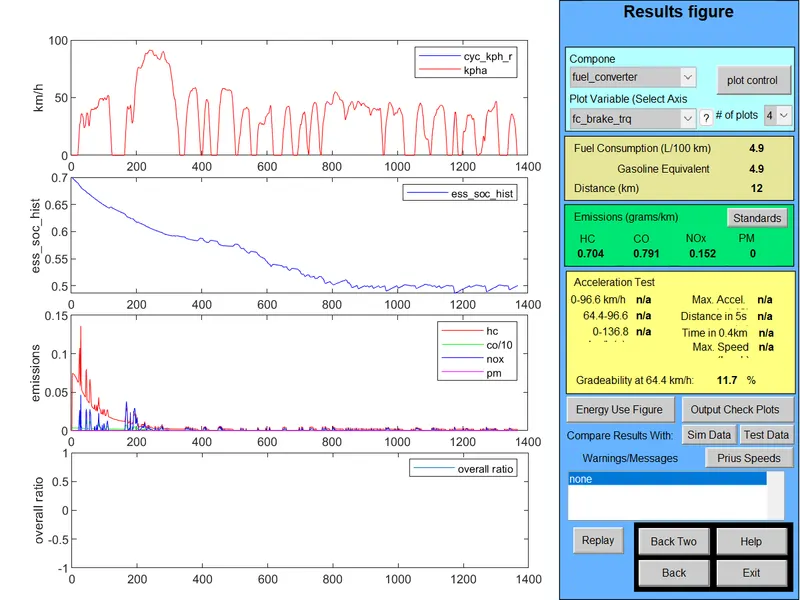
Gradeability at the given speed and drive cycle 1 is 11.7% as shown in the simulation.
Case 3 :
Speed = 50 miles per hour
Duration = 10 seconds
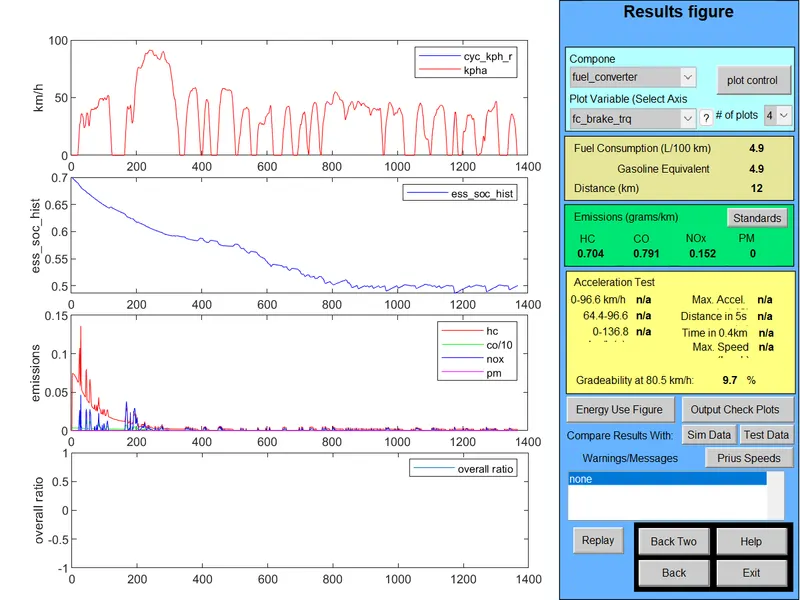
Gradeability at the given speed and drive cycle 1 is 9.7% as shown in the simulation.
Case 4 :
Speed = 100 miles per hour
Duration = 10 seconds
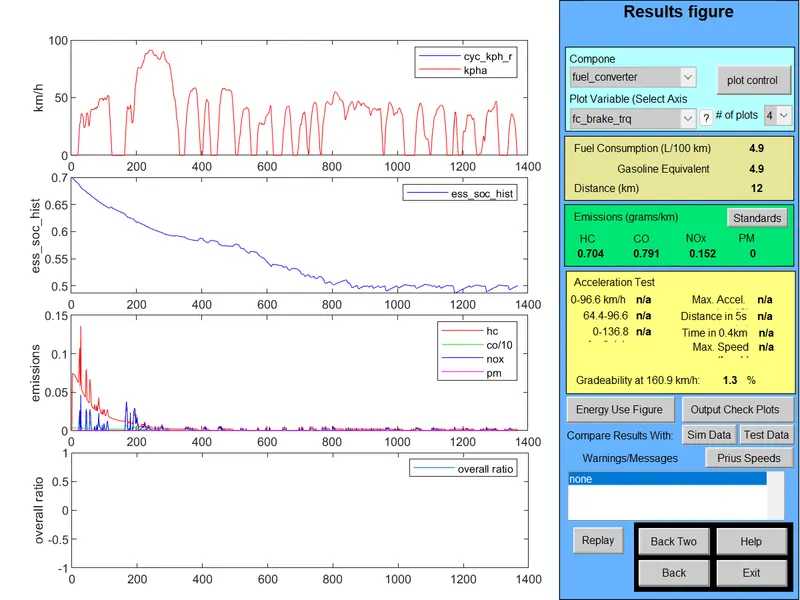
| S .No | Speed in mph | Gradeability in % |
| 1 | 30 | 14.7 |
| 2 | 40 | 11.7 |
| 3 | 50 | 9.7 |
| 4 | 90 | 1.3 |
So we can see here that as speed increases the Gradeability of the vehicle decreases .