Week-3 Challenge: ADVISOR Tool
Aim: To test the vehicle 'EV_defaults_in' can travel for 45 km with FTP drive cycle from the ADVISOR tool if cargo mass is 500 kg with all other default conditions also to repeat the simulation by changing the battery capacity and to perform gradeability test with 'PRIUS_Jpn_defaults_in' file in ADVISOR.
Description:
ADVISOR (Advance Vehicle Simulator)Tool was created by the National Laboratory for Renewable Energy (NREL) & Department of Energy, USA. The development phase was from 1994 to 2004. It is relatively old now but its utility is really important today as well. It gives a rapid analysis of the performance of fuel economy of conventional IC engines, electric and hybrid electric vehicles. This tool uses backward flow(driving cycle to energy storage). There are various models which already have been derived from the laboratory and experiments were performed, so we have the derived data sets for the engine or the motor in the form of 'm' file or the model file. It is very useful to check our own data sets and fit them in the ADVISOR model for the observations.
- To start the ADVISOR tool:
- First download the tool using the link:https://sourceforge.net/projects/adv-vehicle-sim/
- Save the file in the user-defined path directory.
- Type 'advisor' in the command window of MATLAB also select the directory where the ADVISOR file is extracted.
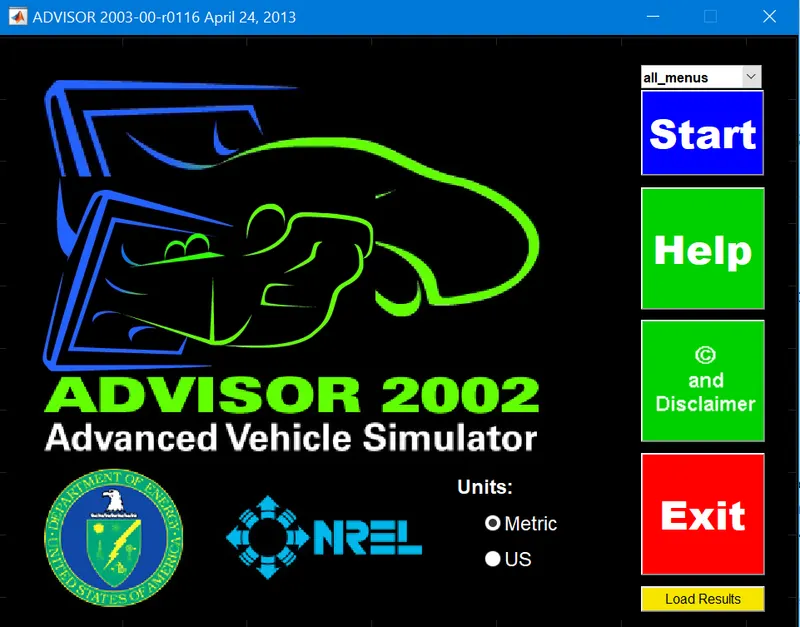
- The 'ADVISOR' GUI will load and select unit -> Metric
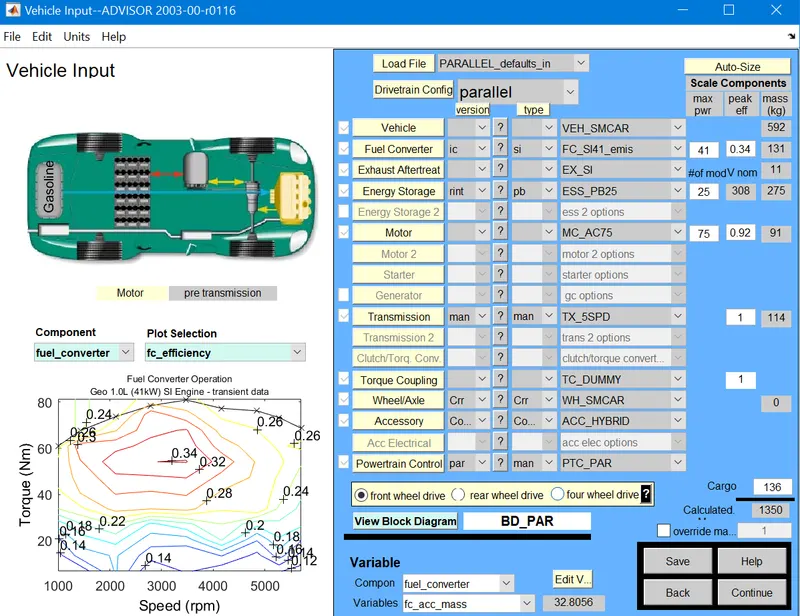
- The GUI will get opened.
#Solution(i):
Observations from 'EV_defaults_in' file, if cargo mass is 500 kg with all other default conditions, using FTP drive cycle.
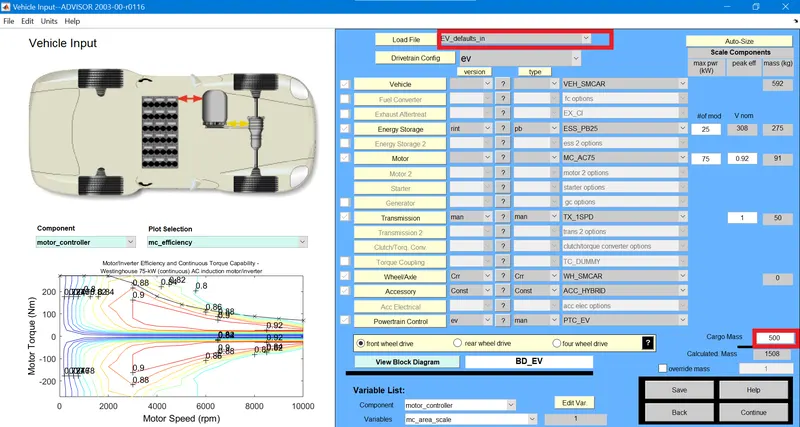
- Selecting FTP cycle
- In 1-cycle, the distance travelled by the vehicle is 17.77 km
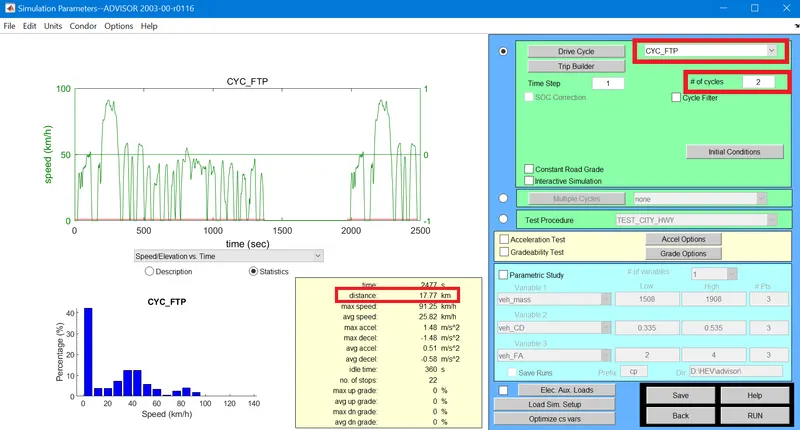
- For 2-FTP cycles, the vehicle travels a distance of 35.5 km
- We can also see the State of Charge (SOC) reaching near around 20% from the graph.
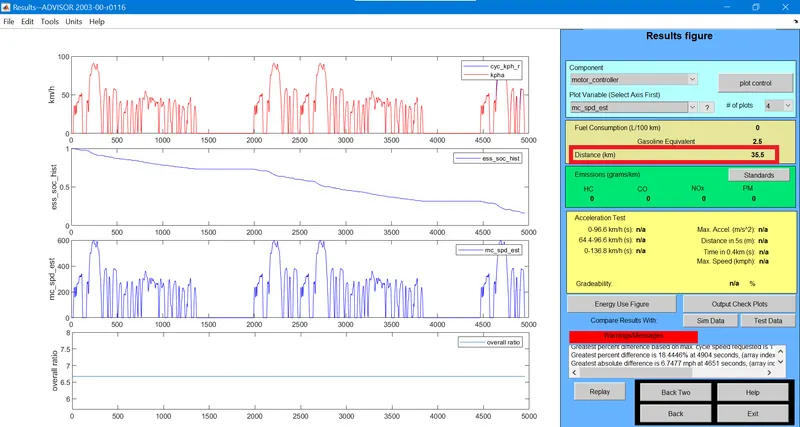
- Again selecting for 3-FTP cycles.
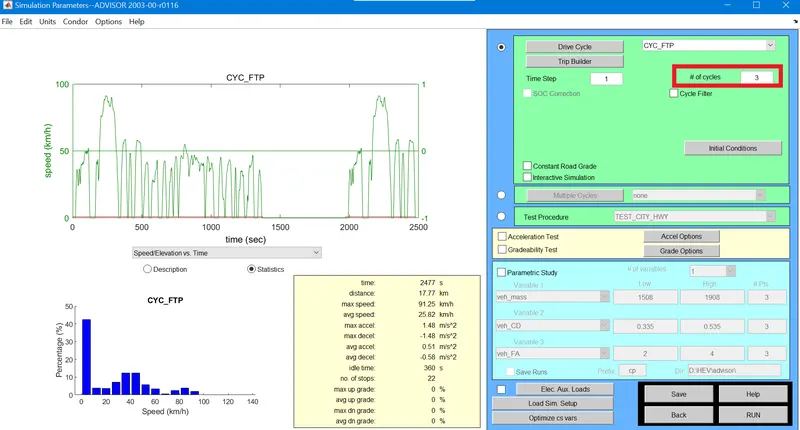
- The vehicle State of Charge (SOC) reached 0% before the three no. of cycle completion.
- 1-FTP cycle = 17.77 km
- For no. of 3-FTP cycles the vehicle has to travel, 17.77 x 3 = 53.31 km
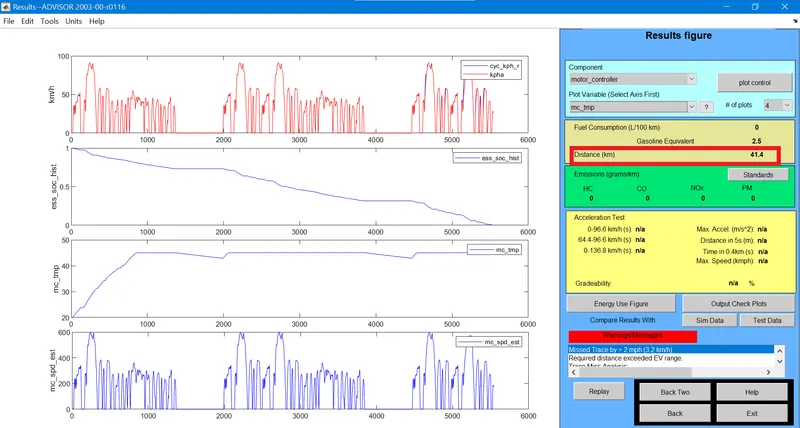
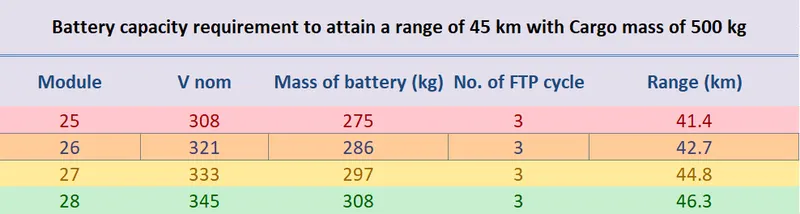
- It is observed that the vehicle can travel a total distance of 41.4 km with a 500 kg cargo mass in the FTP-drive cycle. So as per the conclusion, the vehicle cannot travel a range of 45 km of distance.
#Solution(ii):
Changing the battery capacity in the ADVISOR data file 'EV_defaults_in' with a cargo mass of 500 kg to attain a range of 45 km and keeping all other default conditions.
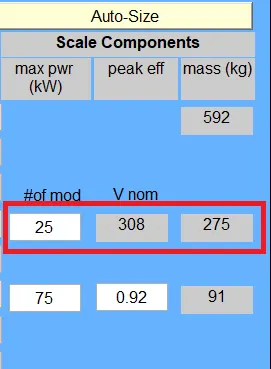
- From above, there are 25-modules (default) for the model file and we are using a lead (Pb) battery.
- A module consists of several cells generally connected in either series or parallel. A battery pack is then assembled by connecting modules together, again either in series or parallel.
- We will change the battery capacity by changing the no. of modules to achieve the range (45 km) results here.
- Nominal voltage is 308 V and mass of the battery is 275 kg.
*Case(i): No. of modules 26 and nominal voltage 321 V :-
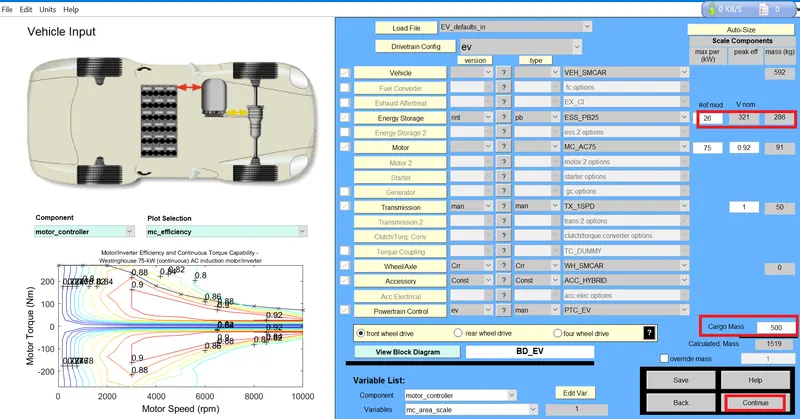
- No. of FTP drive cycles chosen as 3 here.
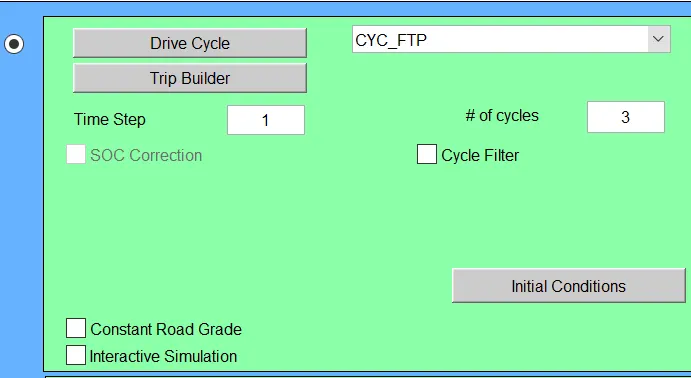
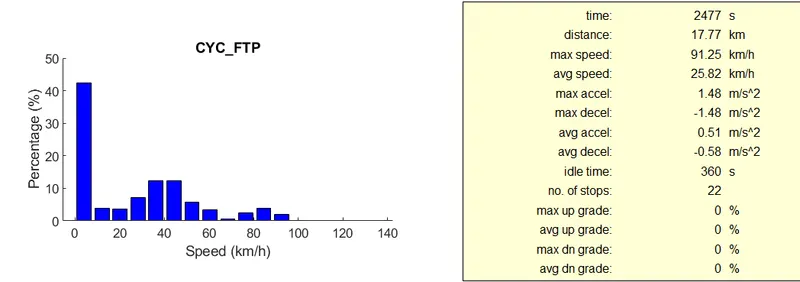
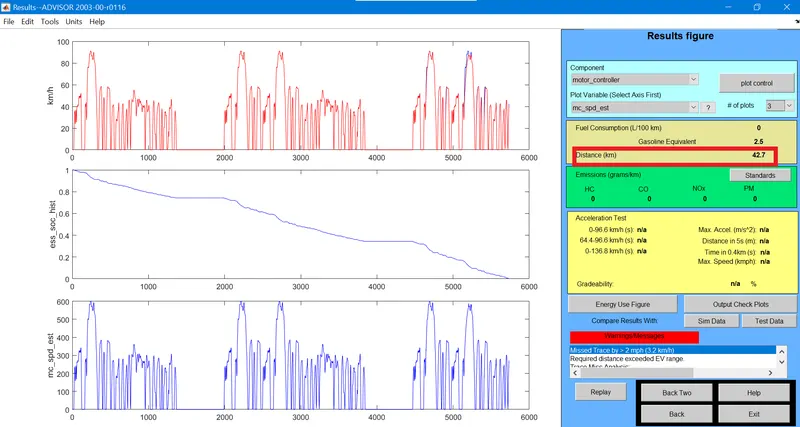
- Distance covered with a battery capacity of modules 26 and nominal voltage 321 V is 42.7 km
- The resulting figure is shown below.
*Case(ii): No. of modules 27 and nominal voltage 333 V :-

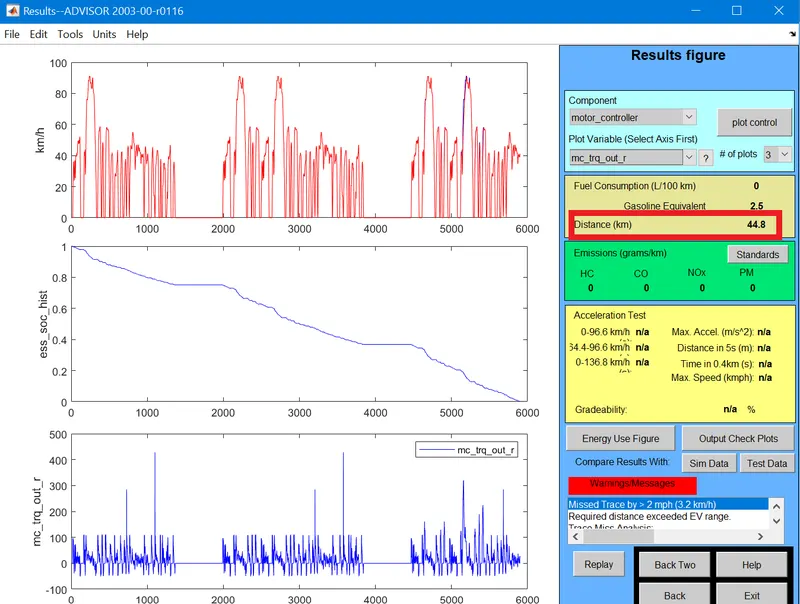
- Distance covered with a battery capacity of modules 27 and nominal voltage 333 V is 44.8 km
- With this battery capacity, the vehicle will not reach 45 kms of range.
*Case(iii): No. of modules 28 and nominal voltage 345 V :-

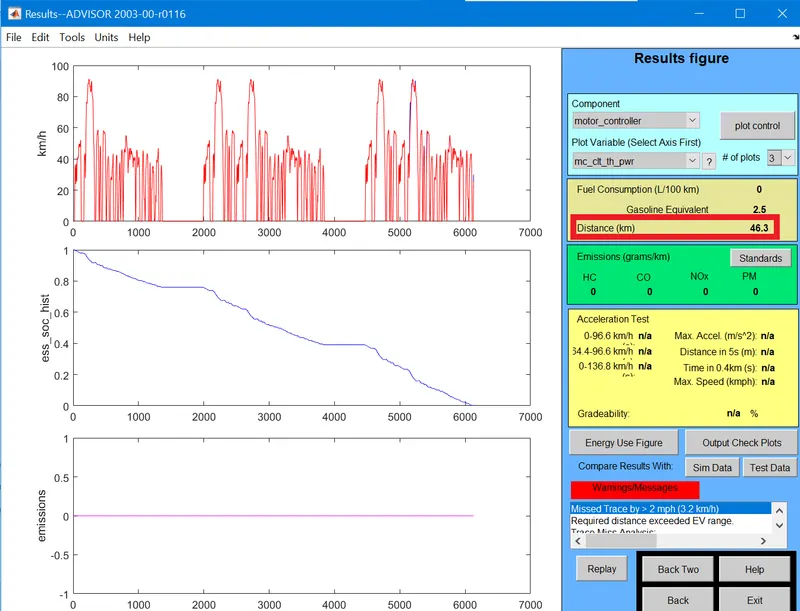
- Distance covered with a battery capacity of modules 28 and nominal voltage 345 V is 46.3 km
- From the below results, the vehicle can attain a range of 45 kms with 28 modules and 345 V of battery capacity which is the best suitable figure for the range which we require.
- Data in table form:
#Solution(iii):
The Toyota Prius is a car built by Toyota which has a hybrid train, combining an IC engine with an electric motor. It was initially offered as a 4-door sedan, it has been produced only as a 5-door since 2003.
The Gradeability test with 'PRIUS_Jpn_defaults_in' file in ADVISOR. First, we will load the PRIUS file in the ADVISOR tool for the gradeability test and the GUI will get open.
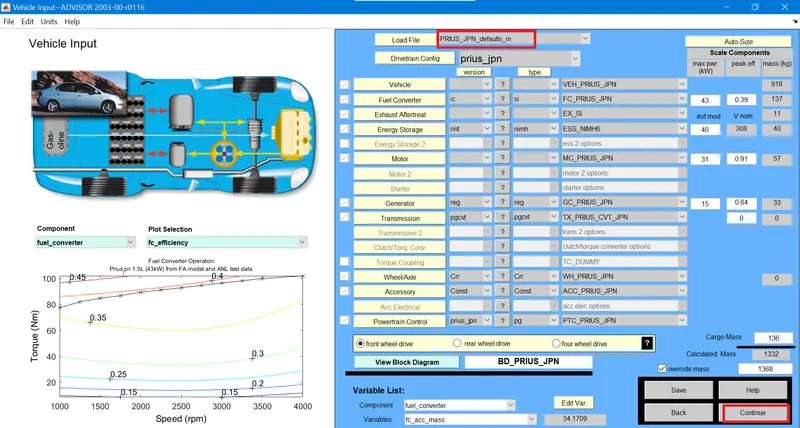
- We are taking 1- UUDS cycle which specifies a distance of 11.99 km in one cycle.
- Select the Gradeability test check box and open the grade options.
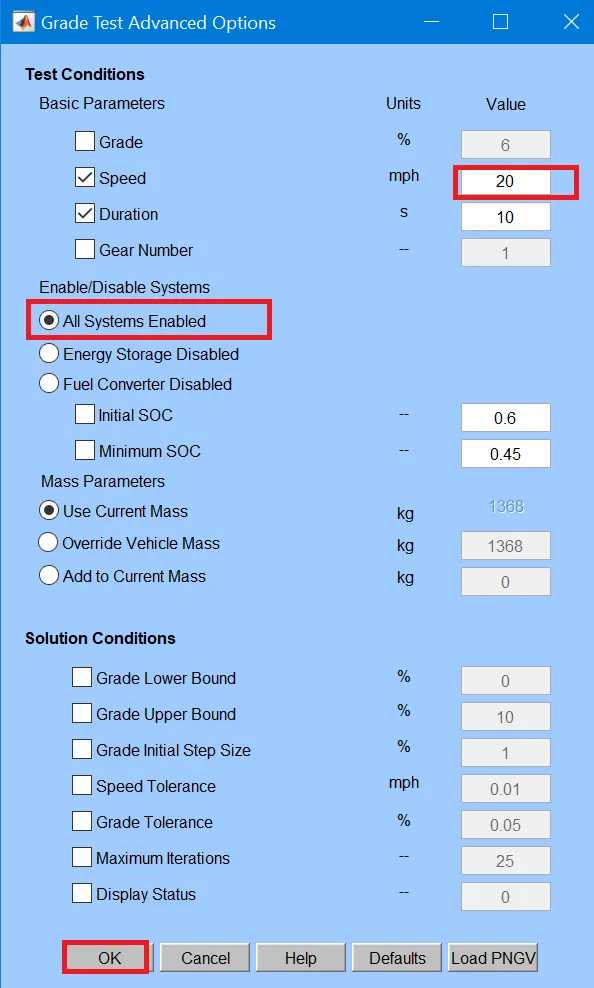
- When we open the grade test advance option, we have to click on 'All System Enabled' option.
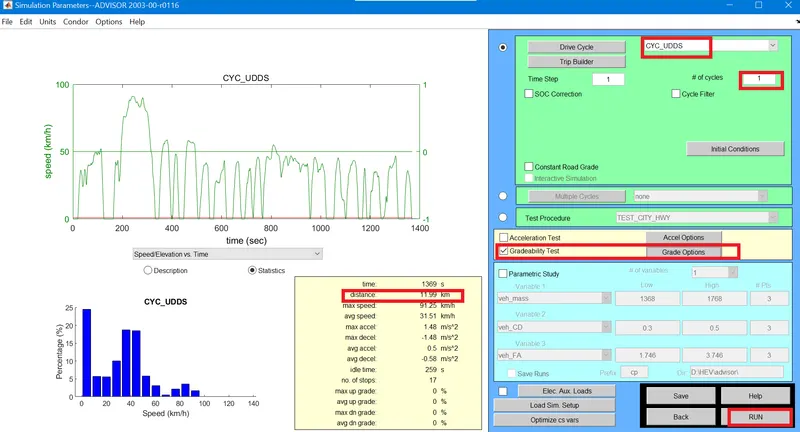
- Change the speed value in 'mph'.
- We are performing the gradeability test for different speeds at [20, 30, 40, 50, 60] in mph.
*Case(i): At speed of 20 mph:-
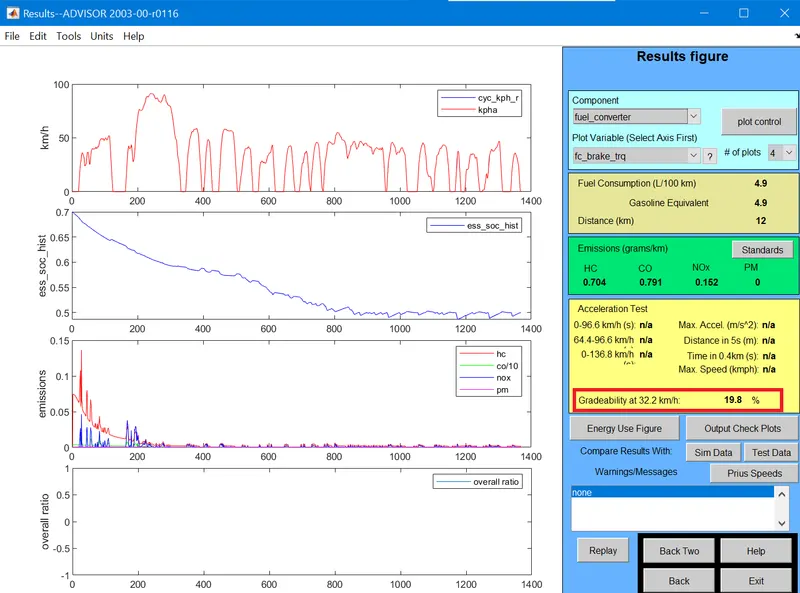
- From the above results, the gradeability of the vehicle is 19.8%
*Case(ii): At speed of 30 mph:-
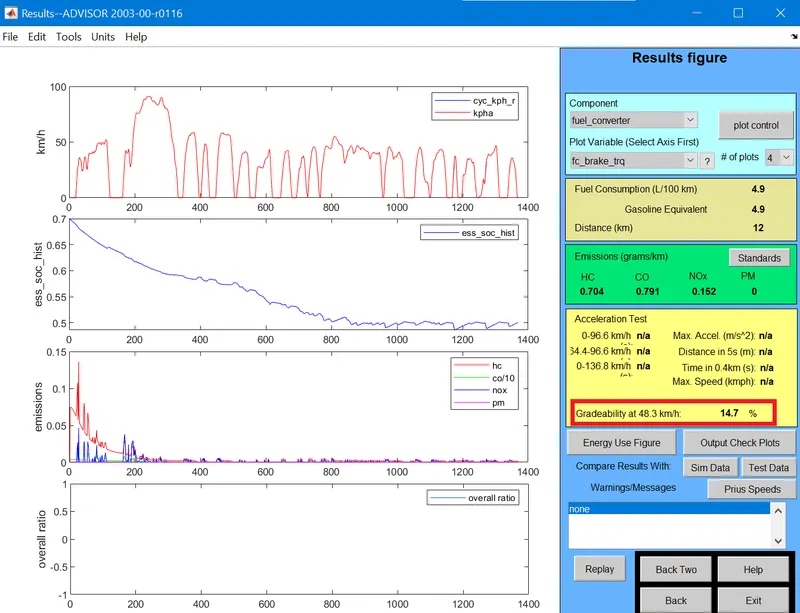
- From the above results, the gradeability of the vehicle is 14.7%
*Case(iii): At speed of 40 mph:-
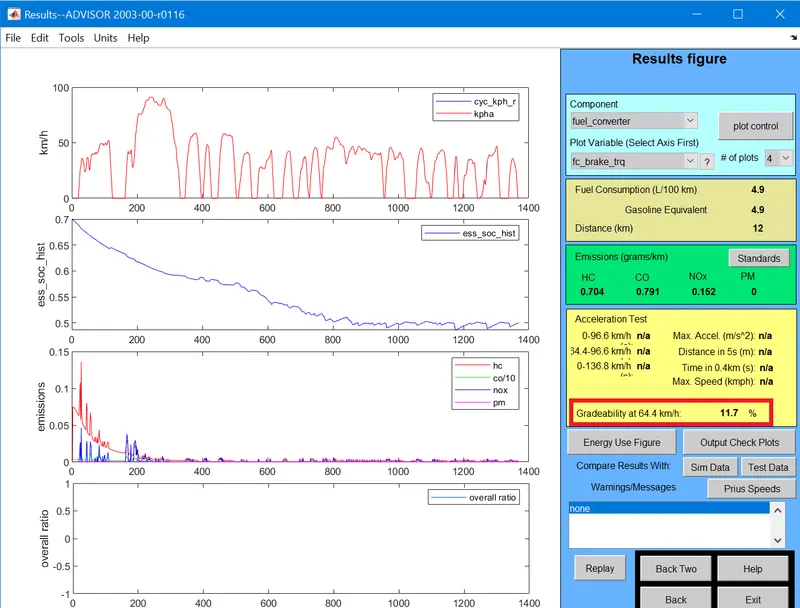
- From the above results, the gradeability of the vehicle is 11.7%
*Case(iv): At speed of 50 mph:-
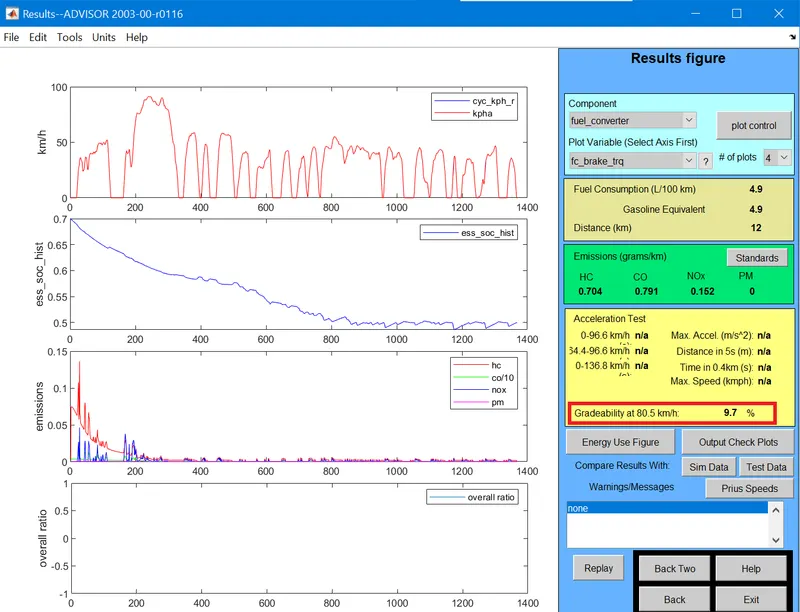
- From the above results, the gradeability of the vehicle is 9.7%
*Case(v): At speed of 60 mph:-
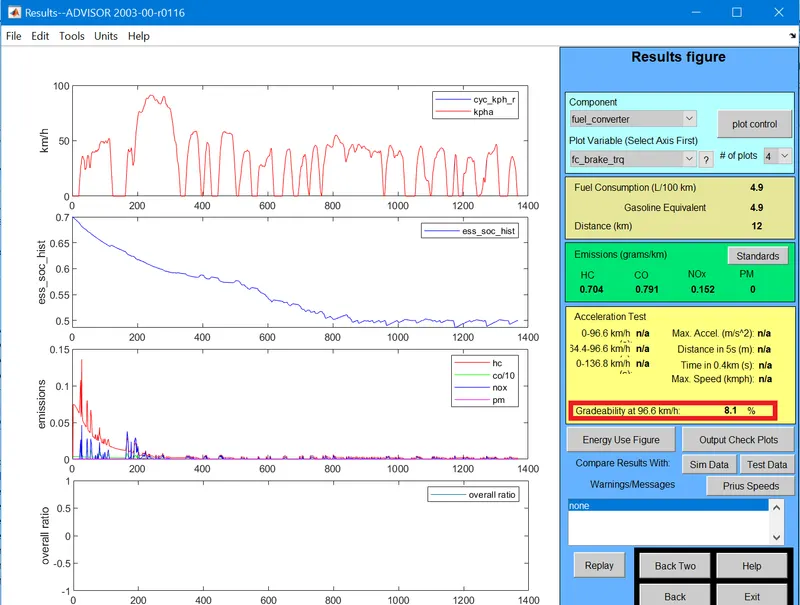
- From the above results, the gradeability of the vehicle is 8.1%
- Results in the form of the table:
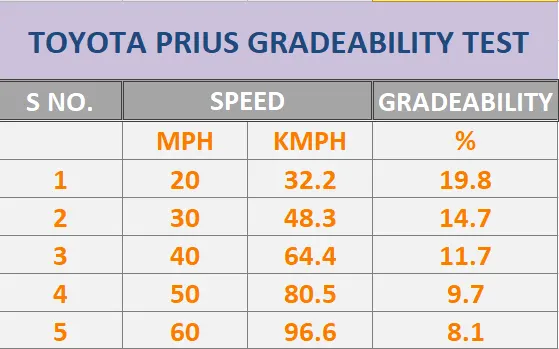
- It is concluded that the gradeability decreases as the vehicle speed increases.
References: