Week-3 Challenge: ADVISOR Tool
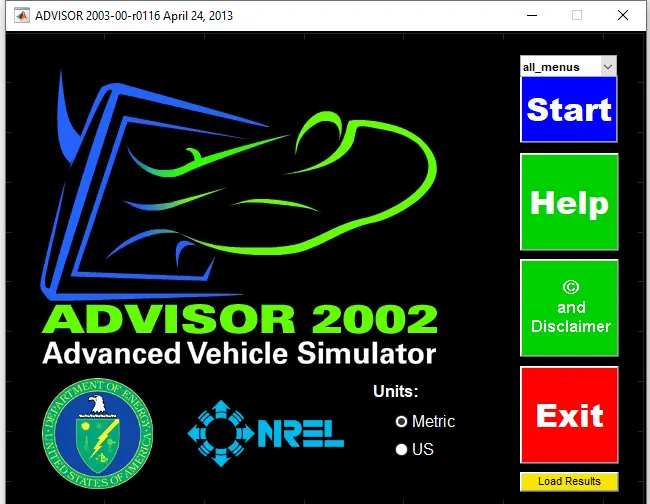
The (ADvanced VehIcle SimulatOR) ADVISOR MATLAB add in tool was used installed and used to respond to questions 1 - 3. The start-up window as shown in Figure 1 is used to access the input data GUI. Note that the metric option is selected in the setup.
Figure 1. ADVISOR start-up screen
Ques 1.
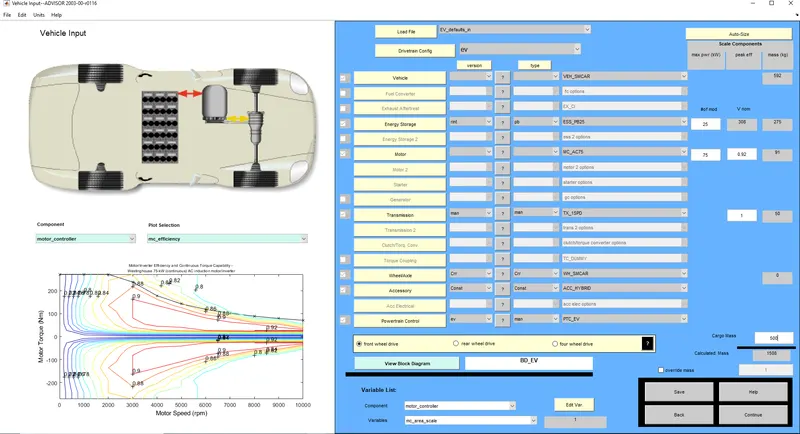
The Vehicle GUI as shown in Figure 2 is used to enter the vehicle type (EV_defaults_in) and cargo load (500 kg) as stated in question 1. All other default parameters remain unchanged for the selected vehicle type. Note that the total mass is updated to 1508 kg.
Figure 2. Vehicle Input GUI
The Drive Cycle GUI as shown in Figure 3 is used to enter the drive cycle (CYC_FTP) as stated in question 1. As noted in Figure 3, the distance travelled for one drive cycle is 17.8 km. Therefore, an updated composite drive cycle is generated using three consecutive cycles of CYC_FTP.
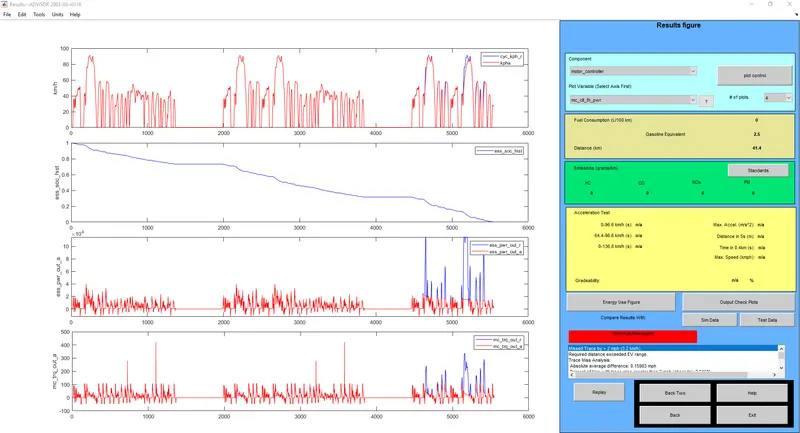
The RUN button is selected to execute the analysis and results viewed per Figure 4.
Figure 3. Drive Cycle GUI
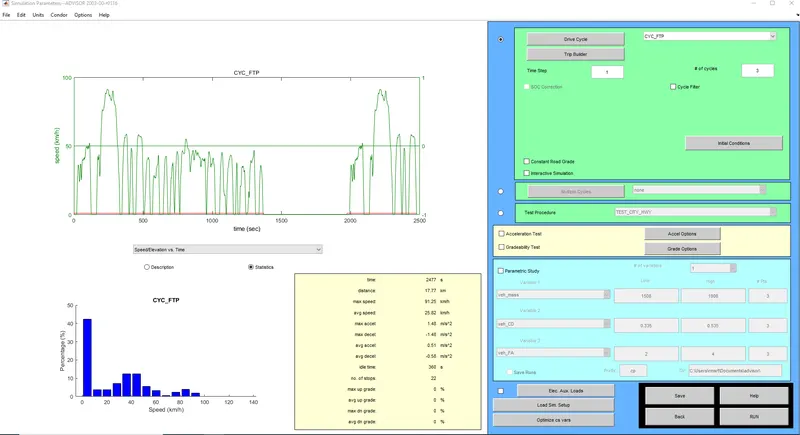
Figure 4. Results GUI
Conclusion
The Results window as shown in Figure 4 shows that for the updated composite drive cycle, the selected electric vehicle with cargo mass of 500 kg only has enough battery capacity to travel 41.4 km, which falls short of the target of 45 km. It was shown that the vehicle cargo mass should be no more than 300 kg to meet the target range of 45 km for the selected drive cycle.
Observe that as the state of charge (SOC) of the battery falls below approximately 30% towards the end of the composite drive cycle and the battery does not have sufficient capacity to meet the vehicle performance requirements. Note that the actual speed deviates from the reference speed towards the end of the composite drive cycle. This is due to the insufficient battery capacity, which results in insufficient power output from the controller and therefore the inability to supply the required torque from the motor. Refer to the plots in Figure 4 for details.
Ques 2.
The battery type in question 1 is replaced with 46 modules of "NIMH" and bank voltage rating maintained at 308 V. This battery bank has a higher capacity, higher energy density and lighter than the battery bank used in question 1. Note that all other vehicle default parameters (as used in question 1) remain unchanged. Refer to Figure 5 for details.
Figure 5. Vehicle Input GUI with increased battery capacity
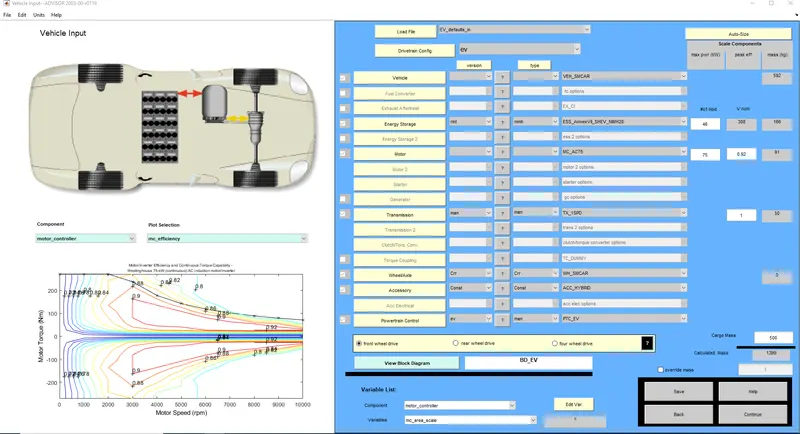
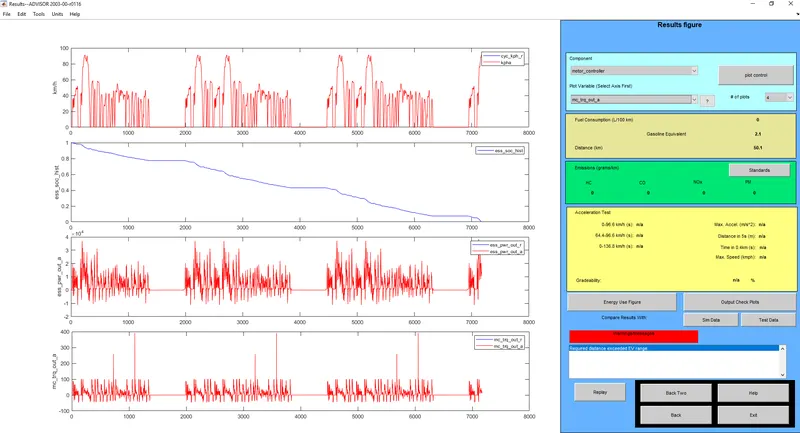
Figure 6. Results GUI with increased battery capacity
Conclusion
The results per Figure 6 show that with the updated battery has the capacity to achieve a range of 50.1 km, which exceeds the targeted range of 45 km. Note that the vehicle cargo mass (500 kg) and the composite CYC_FTP drive cycle are the same as those used in question 1. Observe that the actual speed matches the reference drive cycle speed up to the travelled distance of 50.1 km. Note also, that the updated battery bank can deliver the required power to the vehicle even as the SOC approaches zero.
Ques 3.
The Gradeability of a vehicle is the maximum hill climbing slope or angle that the vehicle can navigate while maintaining a desired speed.
A gradeability test was conducted using the ADVISOR software for the Prius_JPN vehicle model. The Gradeability test was performed using the “TEST_GRADE” test procedure (per Figure 7) and the Grade Options (per Figure 8).
The duration of the Gradeability test is set to 120 seconds and the range of test speeds is from 10 – 80 mph (16.1 – 128.7 km/h). Note that all vehicle systems are enabled for the Gradeability test and the state of charge of the onboard battery bank is initially set at 1.0 with a minimum SOC of 0.4. Additionally, the default vehicle mass is used in the Gradeability test.
Figure 7. Setup for “TEST_GRADE” Gradeability Testing
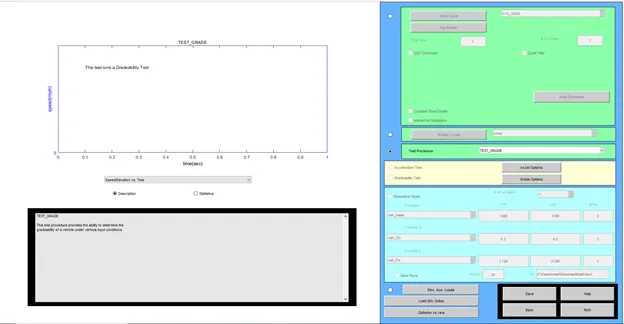
Figure 8. Settings for Grade Options
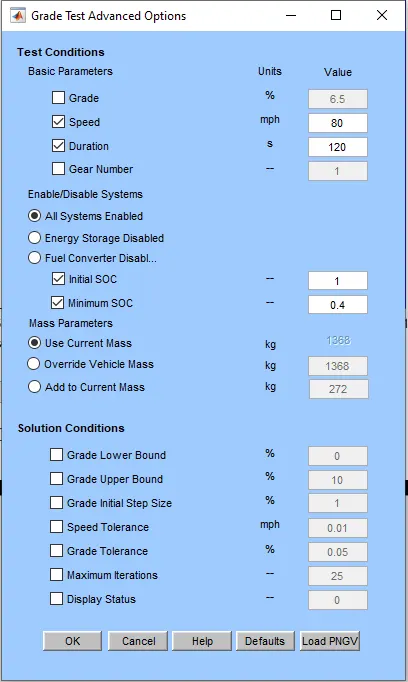
Table 1. Prius_JPN Gradeability Test Results
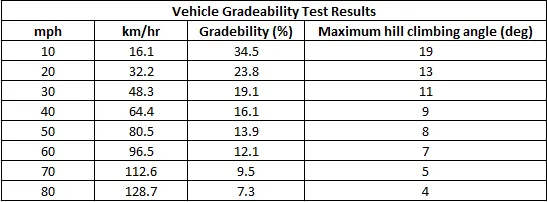
Conclusion
The results of the Gradeability test, per Table 1 for the Prius_JPN vehicle model, show that the vehicle speed is limited by its Gradeability. That is, the higher the hill climbing angle the slower the vehicle must navigate such a slope. On the other hand, as the hill climbing angle is reduced, the faster the vehicle can navigate such a slope.