Week-3 Challenge: ADVISOR Tool
WEEK 3 ASSIGNMENT
AIM:
- For the EV_defaults_in file, if cargo mass is 500 kg with all other default conditions, can the vehicle travel for 45 km with FTP drive cycle? Conclude your observations.
- In the above case, try changing the battery capacity and repeat the simulation.
-
Perform gradeability test with PRIUS_Jpn_defaults_in file. Compare your results in a table and conclude.
THEORY
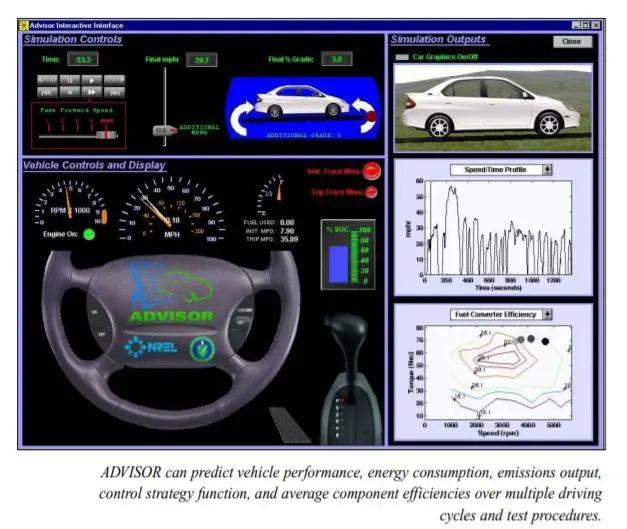
ADVISOR(Advance Vehicle Simulator) is a simulation tool designed by the U.S Department of Energy and the National Renewable Energy Laboratory. This tool is used for sophisticated system analysis performance and answers crucial questions about specific components and vehicle design. This tool is widely used in Matlab and Simulink environments. It can be used to simulate and analyze conventional, advanced light, and heavy vehicle components like batteries,motors, catalytic convertors, climate control systems, etc. The user can alter simulation situations by changing the type of vehicle, size, components, parameters, etc.
Advisor uses basic physics calculations and measured component performance to model conceptual vehicles. The user defines a vehicle with overall vehicle data and prescribes a speed-time graph trace, along with road grade that the vehicle must follow. ADVISOR then puts the vehicle through its paces, making sure it meets the cycle to the best of its ability. It calculates predicted torque, speed, voltage, current, and power passed from one component to another.
BENEFITS OF USING ADVISOR
- reduces testing time to evaluate various vehicle powertrain alternatives.
- Assist the automotive industry to develop fuel-efficient vehicles and components.
RESULTS
In the current study, we use a fully electric model. We keep all the parameters constant except we change the cargo mass to 500 kg. The results are discussed below.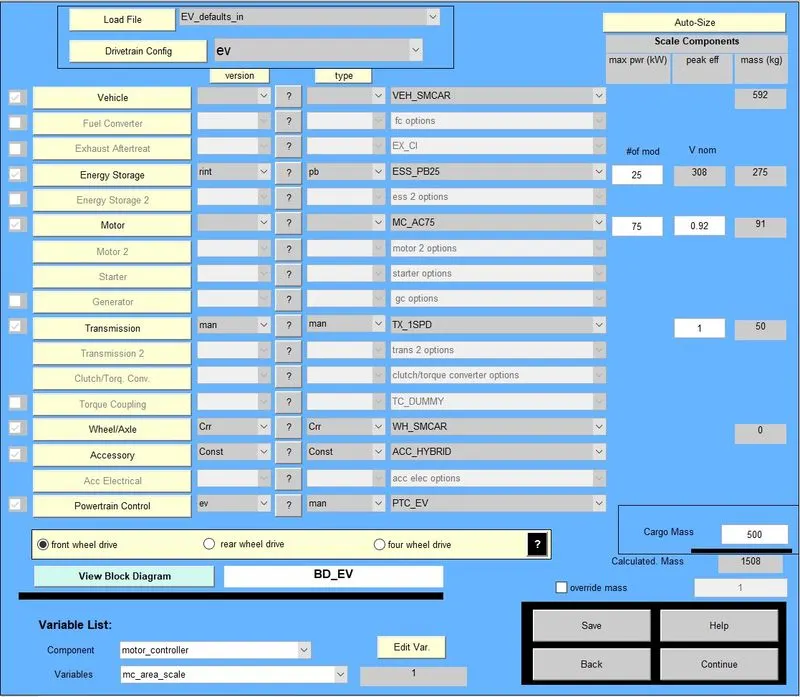
Here we have to check whether the vehicle will travel 45km with a cargo mass of 500kg with the battery. So we perform an analysis by increasing the number of cycles 'n' times and to check whether the vehicle will cover 45km before the battery is used 100 percent.
when n=1(number of cycles):
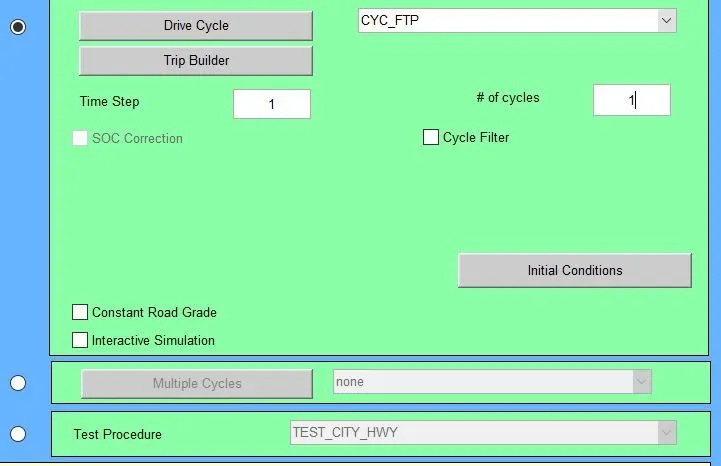
The number of cycles is 1
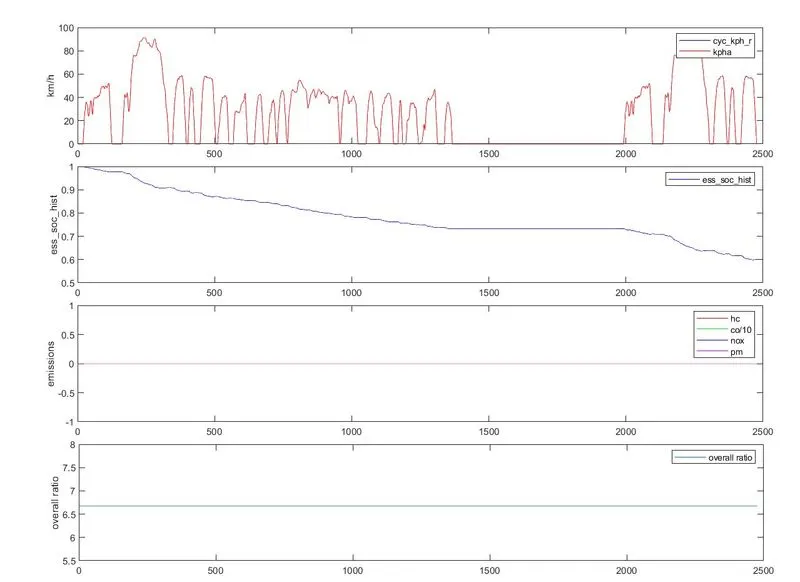
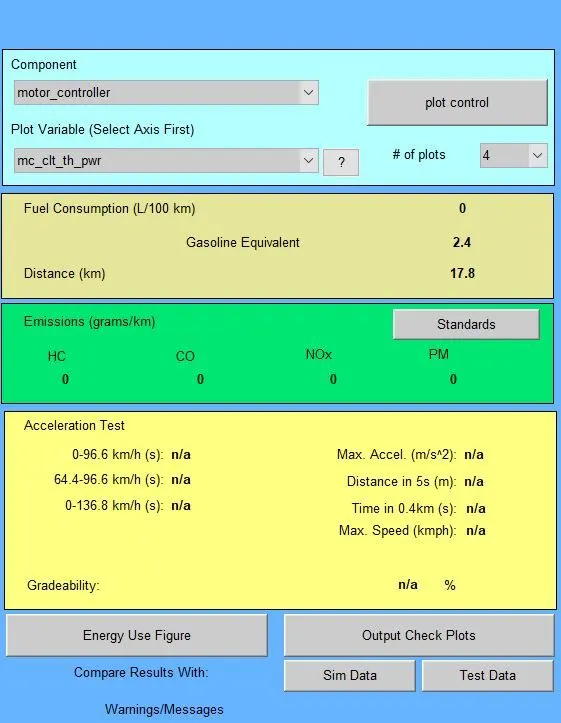
It can be seen that, in the first cycle, 40% percent of the battery has been used and the vehicle covered a distance of 17.8km. Lets the increase the cycle to proceed further.
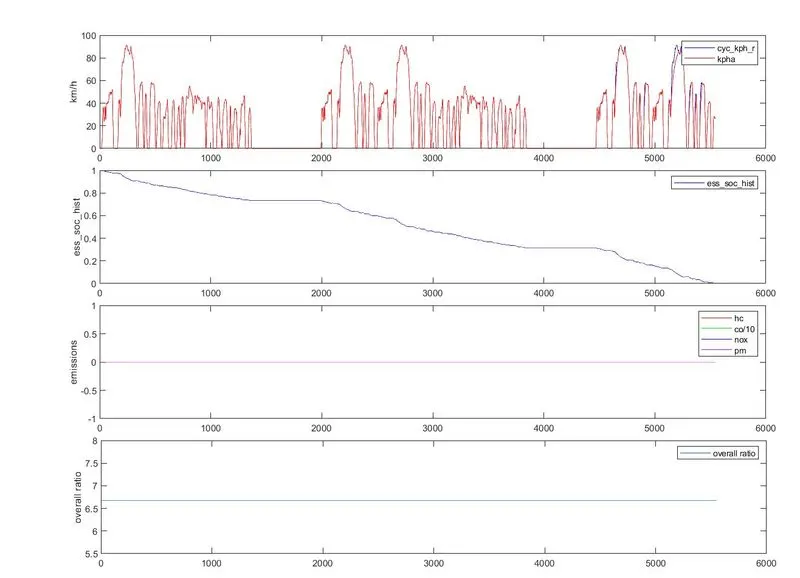
when n=2
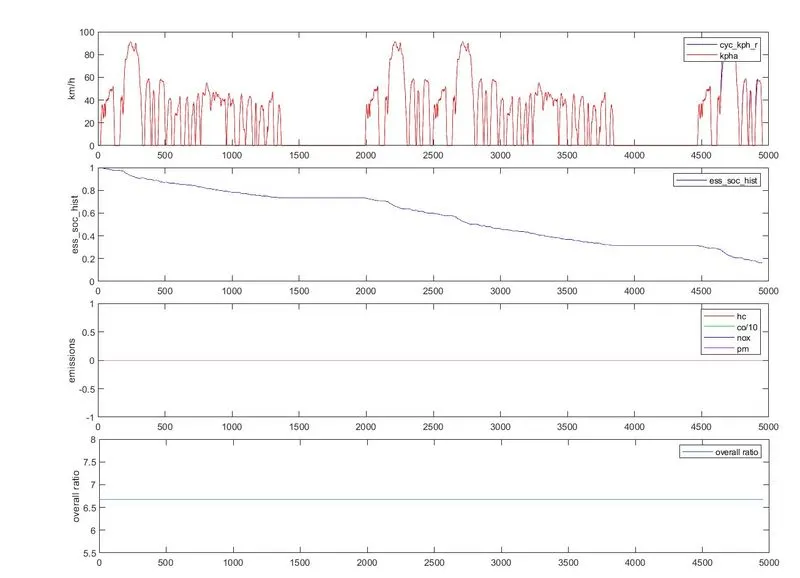
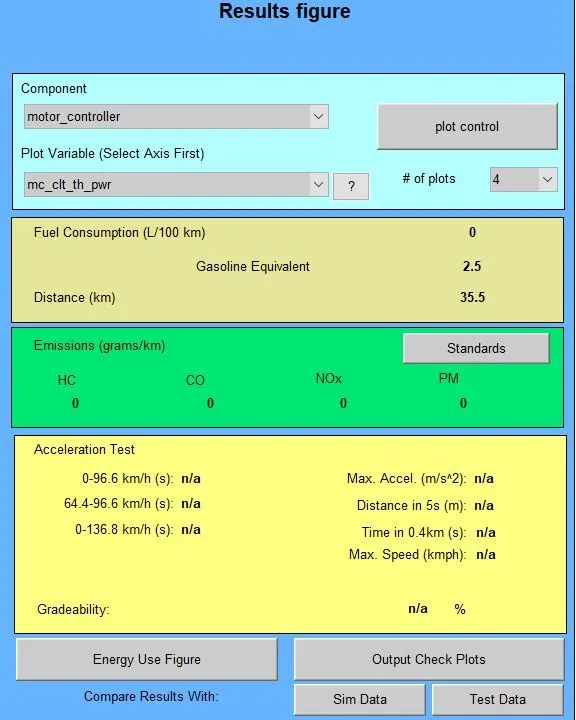
After the second simulation, we can see that the distance travelled is 35.5km with a battery usage of 80%
when n=3
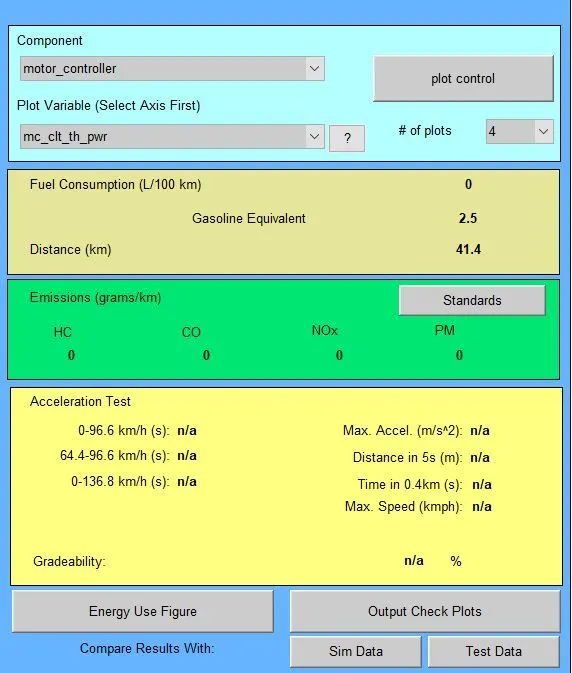
After completing the 3 cycles, SOC is 100 % used and the car travels a distance of 41.4 Km. HENCE it is not possible to cover 45 km with 500 kg cargo mass.
When cargo mass =0,

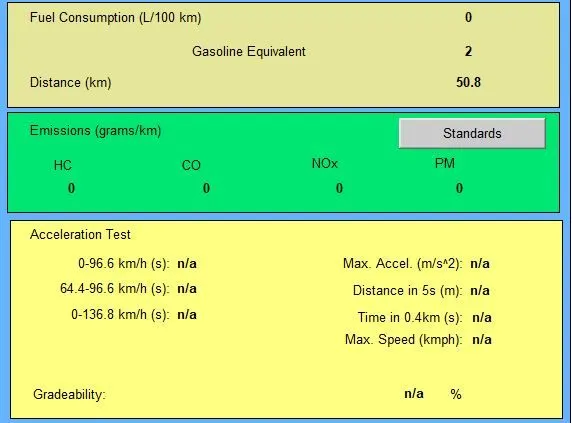
It can be seen that the vehicle can go 50.8 km with cargo mass.
- - - - - - - - - - - - - - - - - - - - - - - - - - - - - - - - - -- - - - - - - - - - - - - - - - - - - - - - - -- - - - - - - - - - - -
2. When the battery capacity is changed
- When the number of modules is increased, the total weight of the vehicle increases.
- The nominal voltage also increases.
Consider the arrangement, the number of modules has been increased from 25 to 40
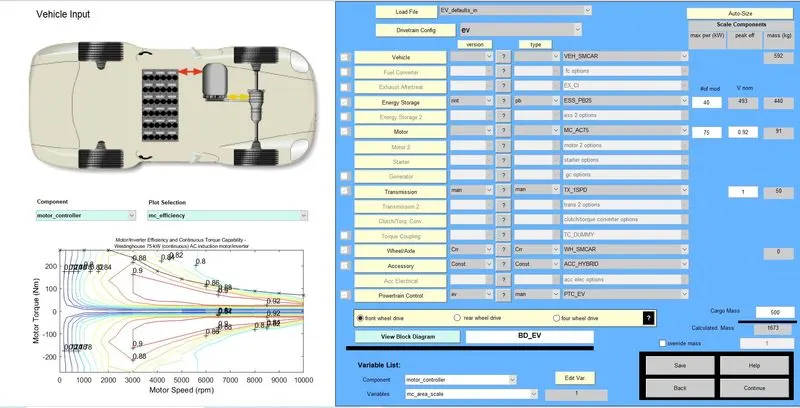
- We can see that number of modules have been increased to 40, the nominal voltage changes
- Also the weight of the vehicle has also increased to 1673 Kg.
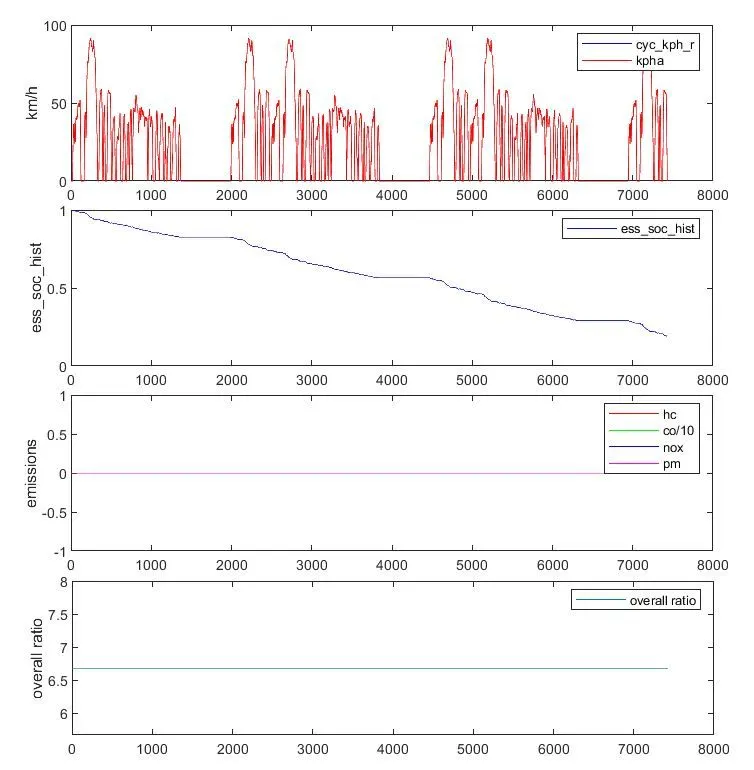
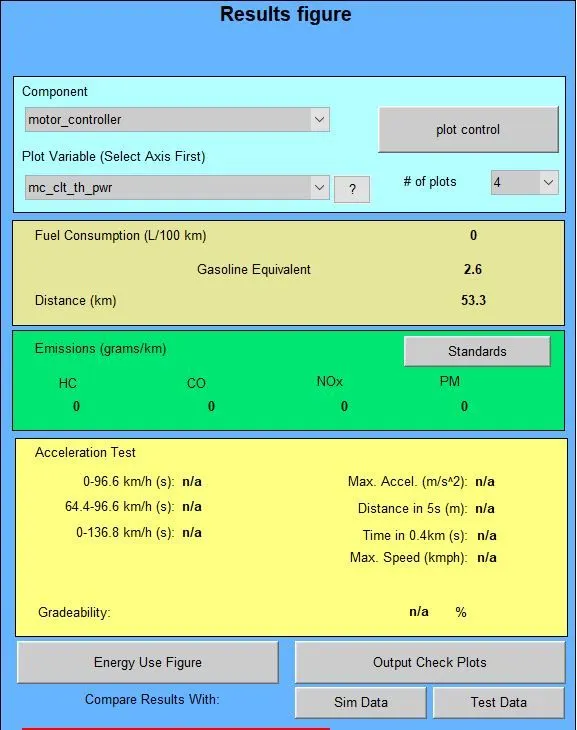
- Results show that the driving range has increased to 54km with an increase in modules.
- There is still a 20 percent battery remaining even after covering 54km
- the emissions are zero as it as a full electric vehicle
CONCLUSION: Increasing the no of modules can:
- increase the weight of the vehicle
- increase the range of the vehicle
---------------------------------------------------------------------------------------------------------------------------
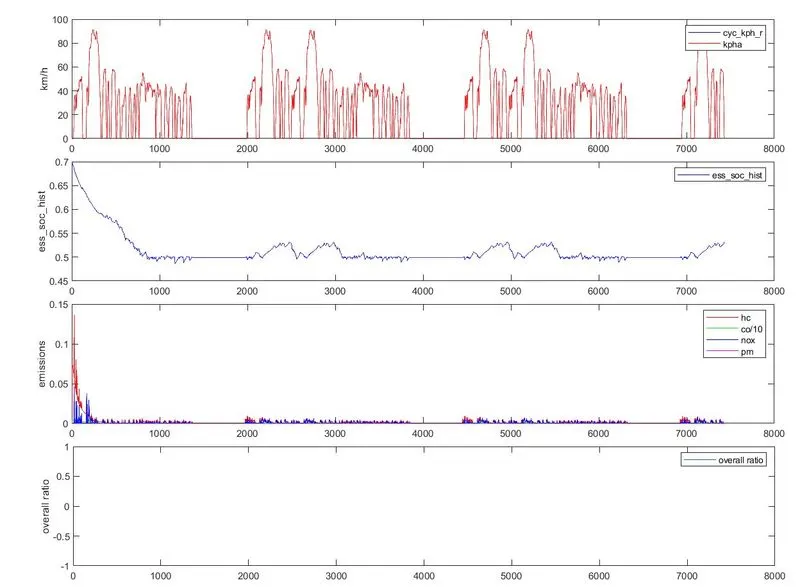
3 . Perform gradeability test with PRIUS_Jpn_defaults_in file
A car's gradability is its ability to climb slopes. Gradability is measured either in degrees or percentage. A 45 degrees gradient is equivalent to 100 percent. Gradability is dependent on engine power, drivetrain type, gear ratio, weight, weight distribution, car's center of gravity, and traction.
The gradability can be measured in 2 ways :
- Keeping time constant and check for different speeds
- keeping the speed constant and checking for different time
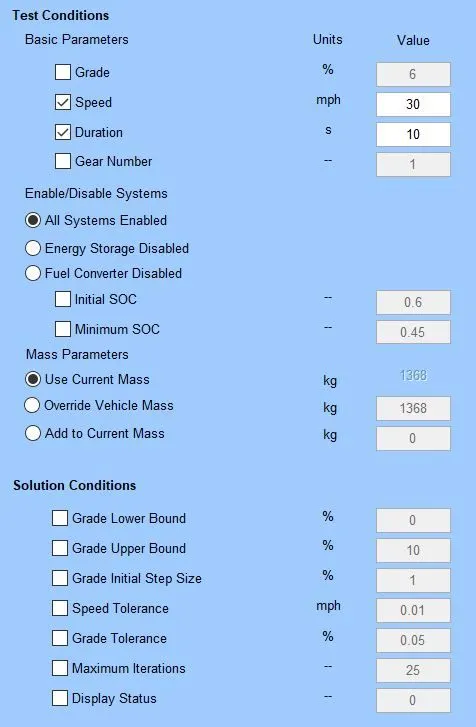
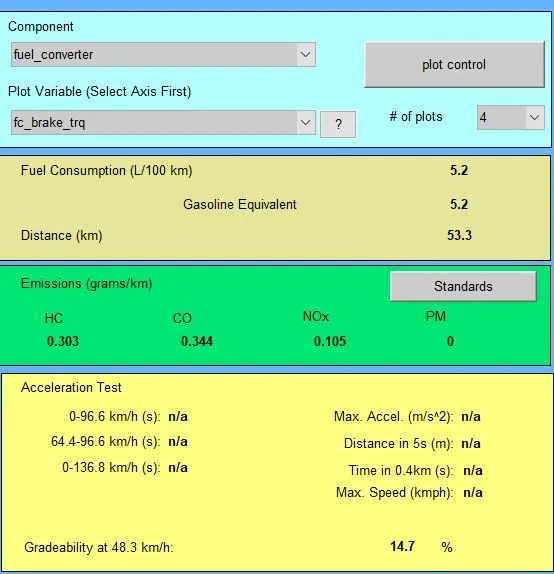
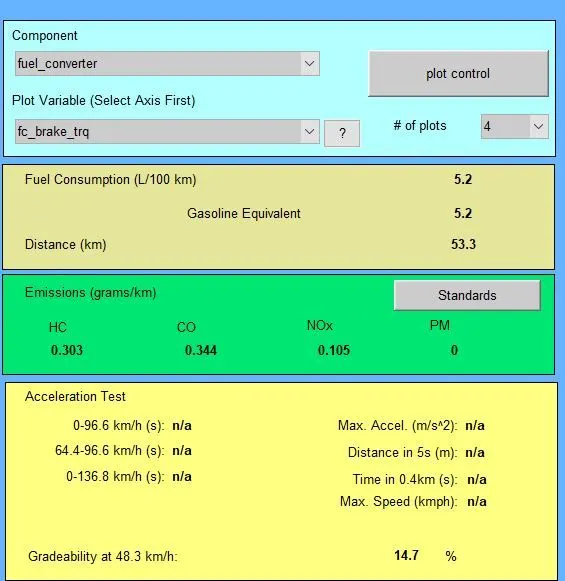
In this, for the first case, we are keeping speed constant as 30 mph and we find for three different times:
1. WHEN TIME IS 10 seconds
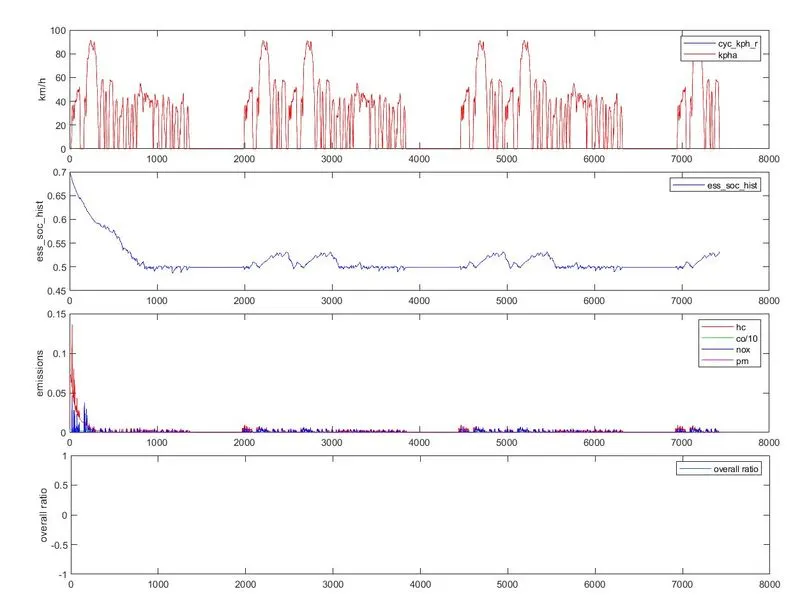
2.WHEN TIME IS 20 seconds
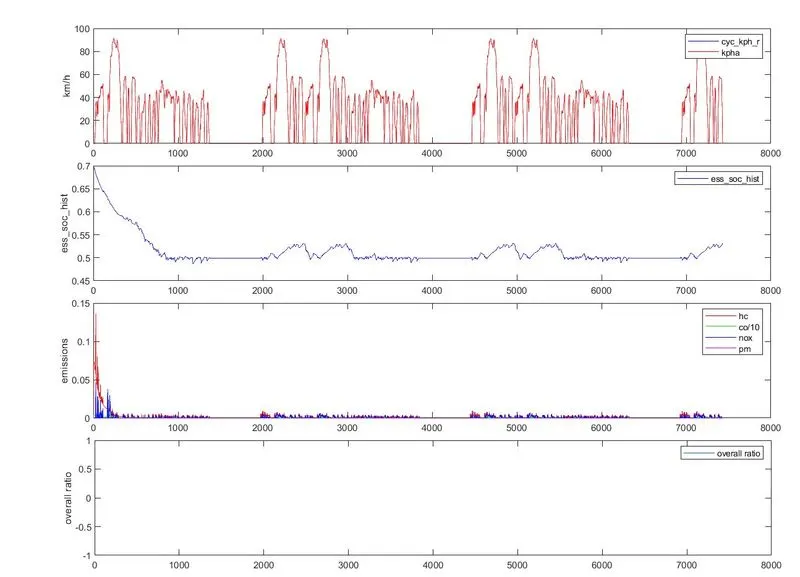
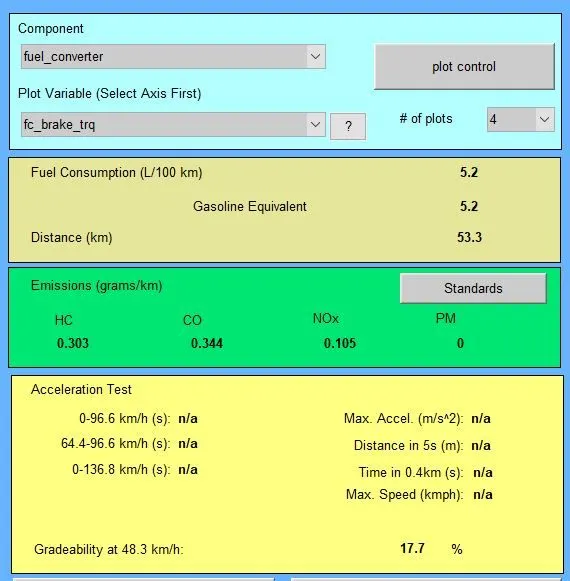
3.WHEN TIME IS 30 seconds
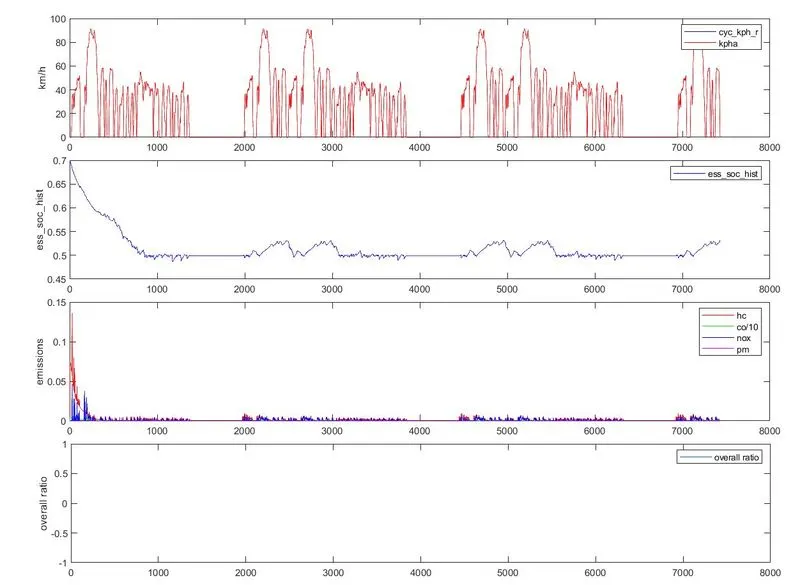
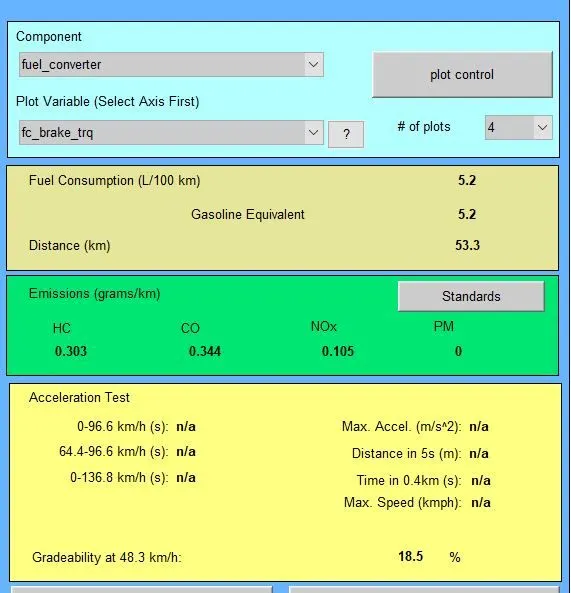
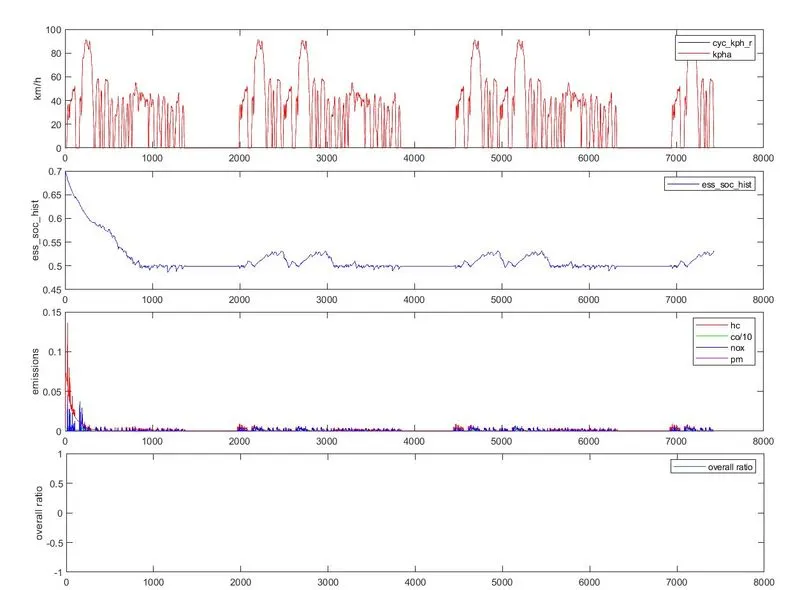
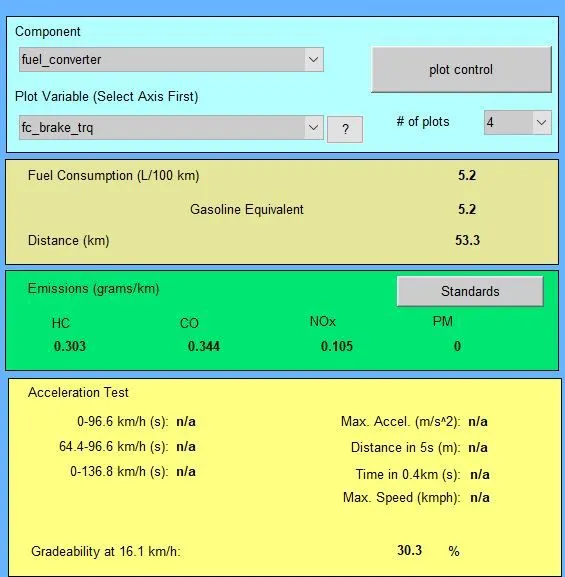
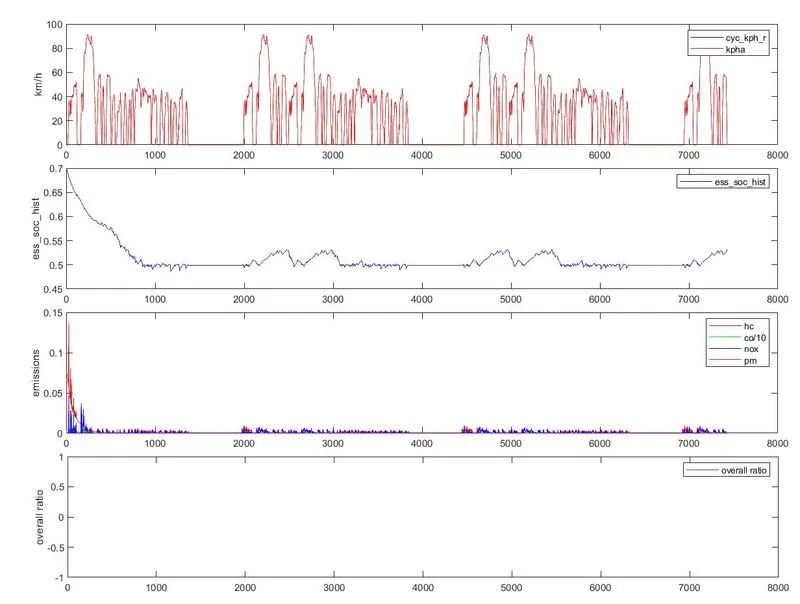
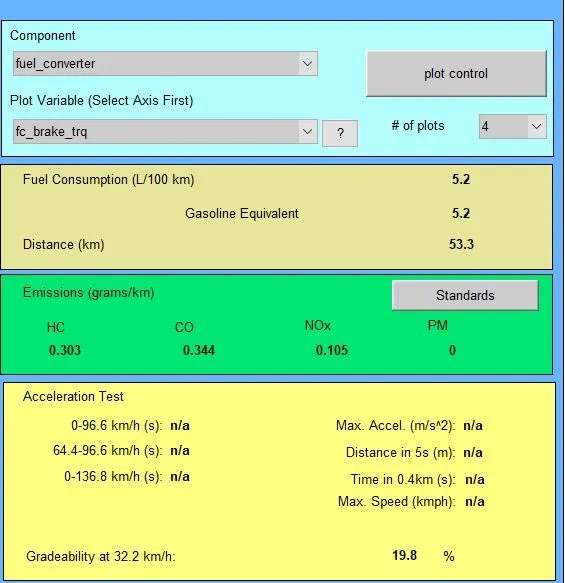
Now, we keep time constant and vary the speed. We take time as 10 sec and vary speed from 10-30 mph.
1.WHEN SPEED IS 10 mph
2.WHEN SPEED IS 20 mph
1.WHEN SPEED IS 30 mph
CONCLUSION
- for the first case, when speed is constant
TIME GRADABILITY(in %)
- 10 14.7
2. 20 17.7
3. 30 18.5
- for the second case, when time is constant
SPEED GRADBILITY(in %)
1 10 30.3
2 20 19.8
3 30 14.7
From the values, we can conclude that:
- As the speed increase for a fixed time, gradability decreases.
- For a fixed speed, as time increases, gradability increases.