Week-3 Challenge: ADVISOR Tool
AIM:
- For EV_defaults_in file, if cargo mass is 500 kg with all other default conditions, can the vehicle travel for 45 km with FTP drive cycle? Conclude your observations.
- In the above case, try changing the battery capacity and repeat the simulation.
- Perform gradeability test with PRIUS_Jpn_defaults_in file Compare your results in table and conclude.
ADVISOR TOOL
Advisor tool is a tool which was developed by NREL (National Renewable Energy Laboratory). It is a set of model, data and script text files which is used for matlab and Simulink. It helps us to carry out rapid analysis of the performance and fuel economy of conventional, electric and hybrid vehicles. It is designed in such a way that different parameters of the vehicle can be changed and allow the use of different fuels, motors, number of batteries, auxiliary systems, alternative fuels and changes are made that may affect the vehicle efficiency, performance and tail – pipe emissions of the vehicle.
BENEFITS OF USING ADVISOR TOOL
It helps us in finding out the fuel economy of the vehicle which has not yet been built, evaluate an energy management strategy for the hybrid vehicle fuel convertor and compare the tailpipe emissions which are produced on different cycles. Gear ratios could be optimized so as to minimize fuel consumption or maximise performance and also get an idea how the energy is gained or lost in conventional, hybrid and electric vehicles during their drive trains.
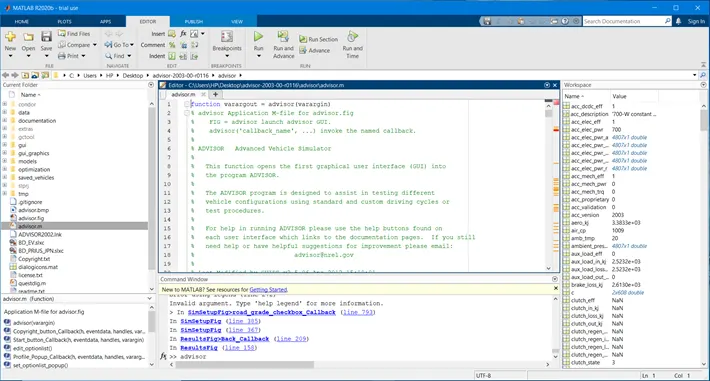
Opening of the advisor tool
- Download the advisor tool from the link provided and change its path to the folder where advisor tool is installed.
- The advisor tool is run by typing “advisor” in the command window.
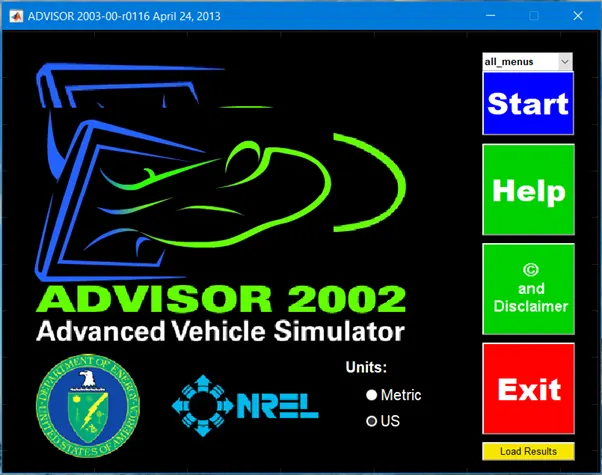
- The units is changed to metric and the tool is started.
Advisor tool
- For EV_defaults_in file, if cargo mass is 500 kg with all other default conditions, can the vehicle travel for 45 km with FTP drive cycle? Conclude your observations.
- Once the advisor tool window is opened click start to open the vehicle input in advisor simulator
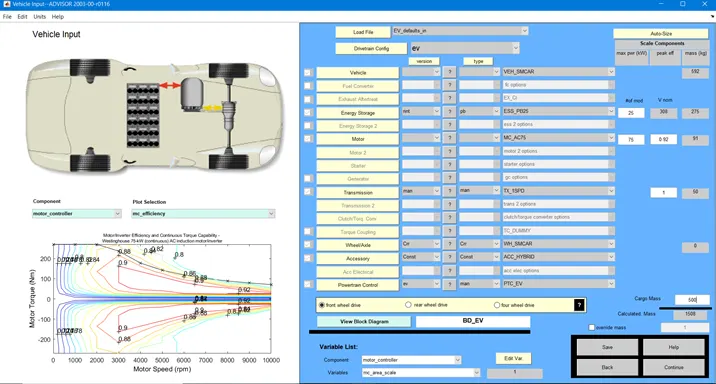
- Then the drive train configuration is selcted to EV and the ‘EV_ default_ in’ is selcted in the load file
- As shown below The advisor tool for the simulation consists of different parameters of vehicle modelling like energy storage, motor, vehicle mass, transmission , wheel axle etc .
- Keeping the default parameters the same in ‘EV_ default_ in’ except that the cargo mass is changed to 500 kg as per the question .
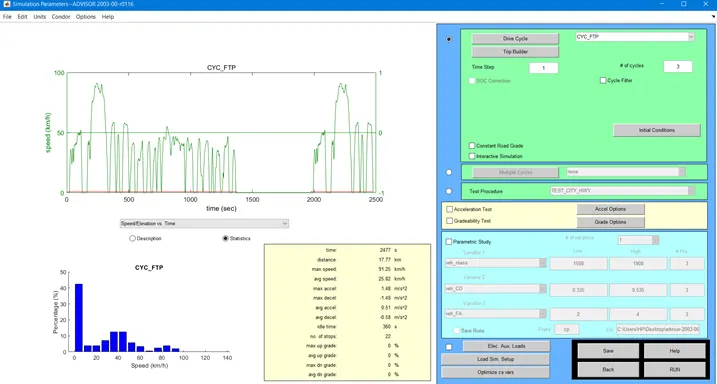
- After clicking on continue a new window is opened which is the simulation parameters which consists of different types of drive cycle and also our own drive cycle can be created by giving different data to the simulation parameters like gradeability test, acceleration test and parametric study etc. .
- As per the given question FTP cycle is chosen as shown below :
- Now , we click on RUN to get the results
RESULTS:
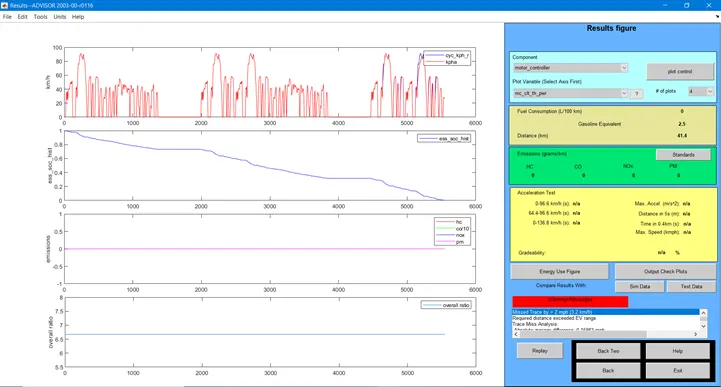
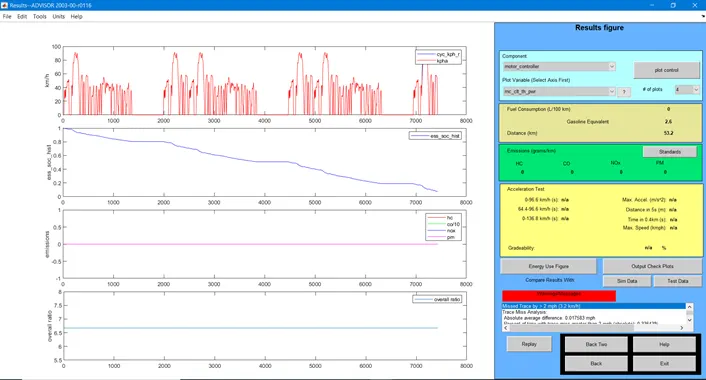
- The maximum distance travelled by an electric car for the FTP CYCLE ( for number of cycle =1) is 17.77 km
- As the number of cycle increases the current state of charge of the battery decreases. It is also observed that when the number of drive cycle =3, the current state of battery charge becomes zero. Since the vehicle is battery dependant, it cannot travel further.
- The maximum distance that can be achieved with FTP DRIVE CYCLE is 41.4 km.
- In the above case, try changing the battery capacity and repeat the simulation.
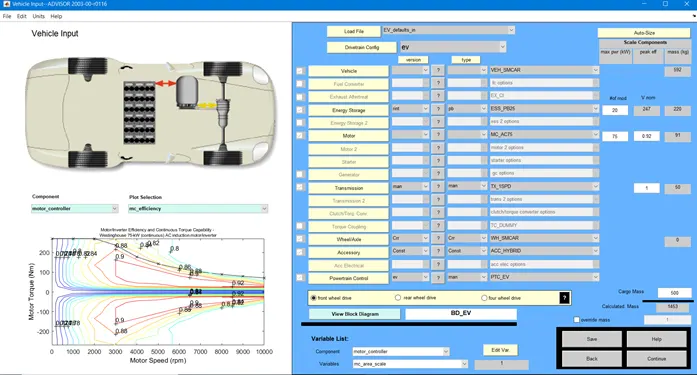
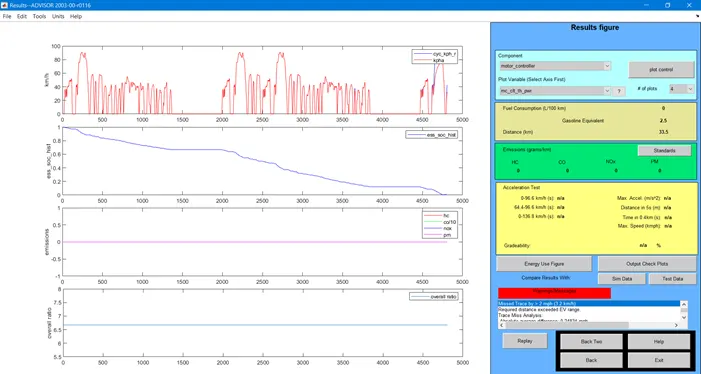
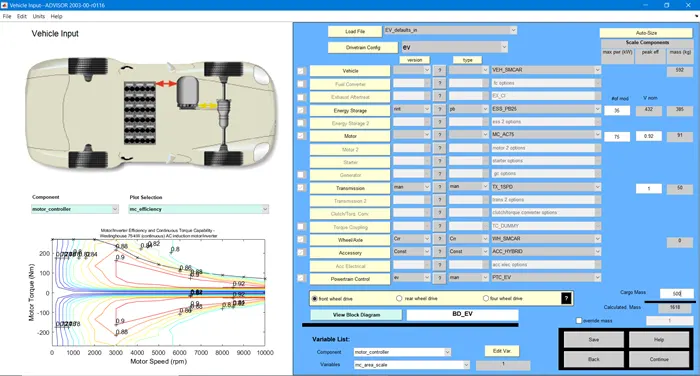
- All the parameters are kept constant as per the previous question, in this case we change the number of modules (battery capacity) to observe the effect it has on the distance travelled.
FIRST CASE :
SECOND CASE :
RESULTS:
- In the first case the number of modules were reduced to 20 and the distance travelled was found to be 33.5 km
- In the second case the number of modules were increased to 35 and the distance travelled was found to be 53.2 km
- Perform gradeability test with PRIUS_Jpn_defaults_in file
Compare your results in table and conclude.
- Once the advisor tool window is opened click start to open the vehicle input in advisor simulator
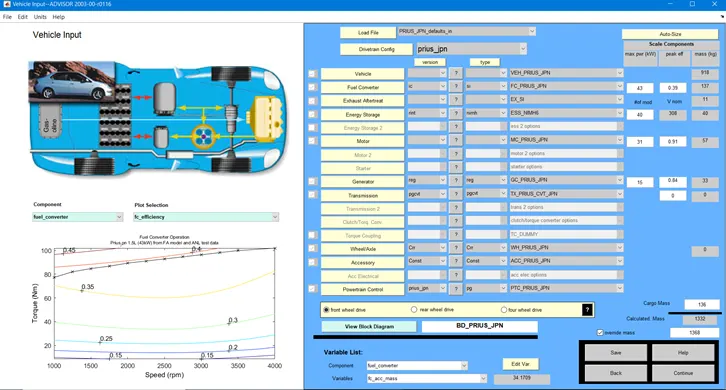
- Then the drive train configuration is selcted to Prius_jpn and the ‘ Prius_jpn _ default_ in’ is selcted in the load file
- As shown below the advisor tool for the simulation consists of different parameters of vehicle modelling like energy storage, motor, vehicle mass, transmission , wheel axle, generator etc .
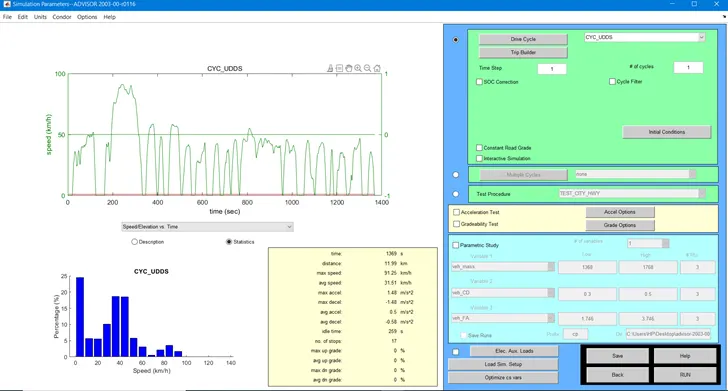
- After clicking on continue a new window is opened which is the simulation parameters which consists of different types of drive cycle and also your own drive cycle can be created by giving different data to the simulation parameters like gradeability test, acceleration test and parametric study etc.
- Now selecting the drive cycle CYC_UDDS
Gradeability:
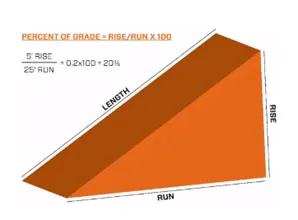
The steepness of a grade that a vehicle is capable of climbing at a particular speed.
As per the range rover article since the vehicle climbs 999 steps at an angle of 45 degree. The gradeability percentage will be 100%
Gradeability is basically the slope
Gradeability = Tan (angle) x 100
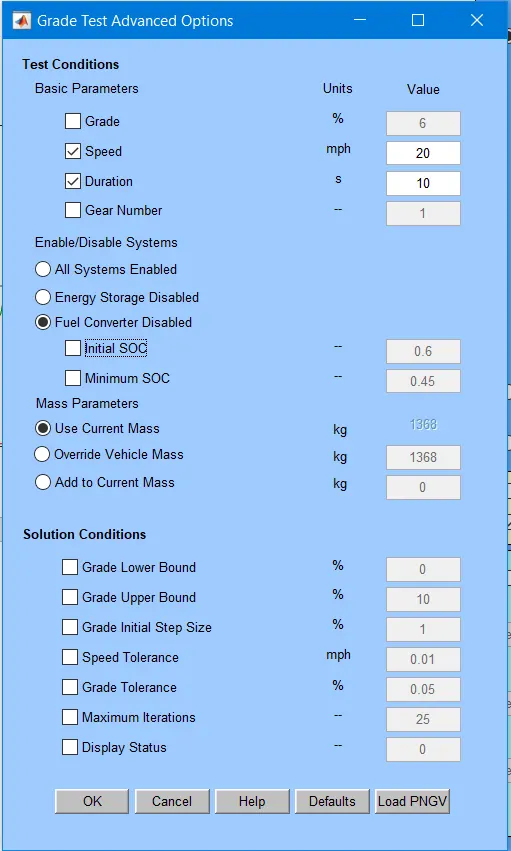
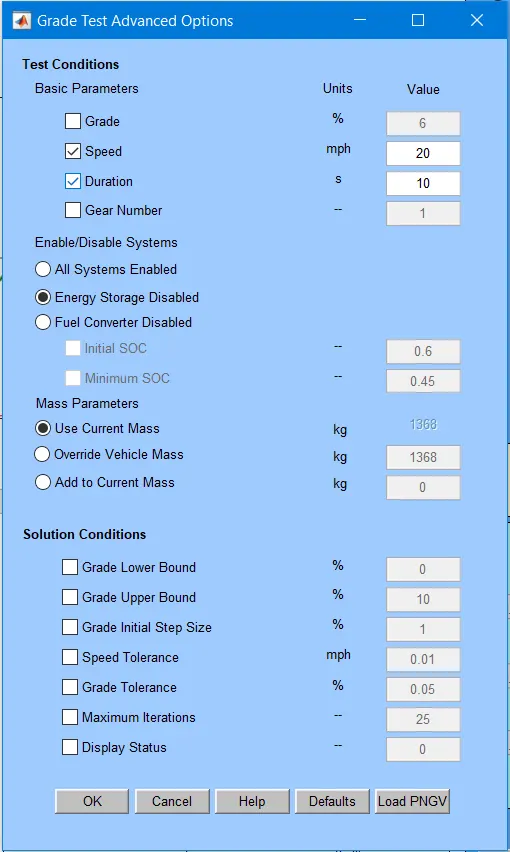
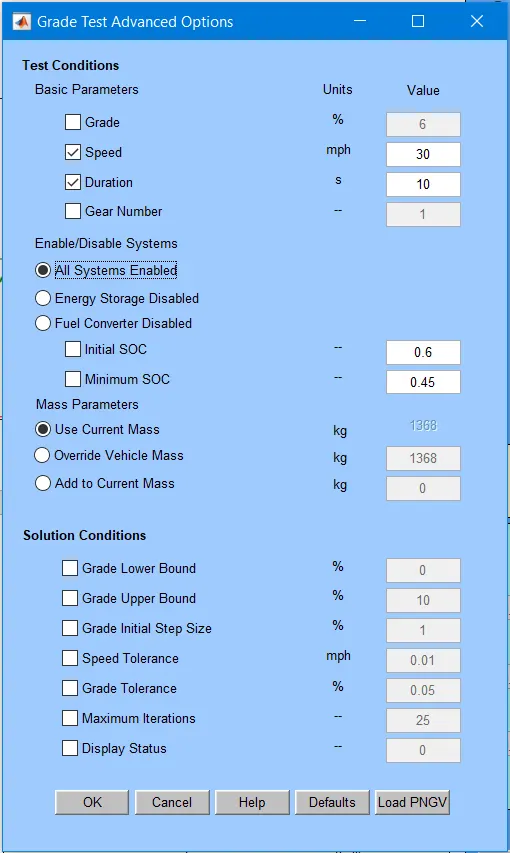
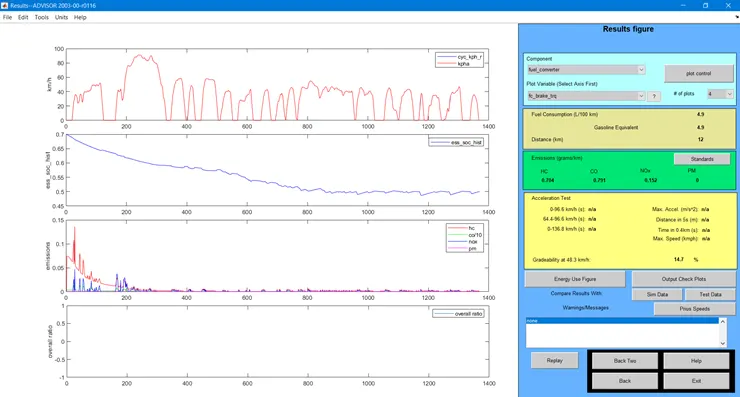
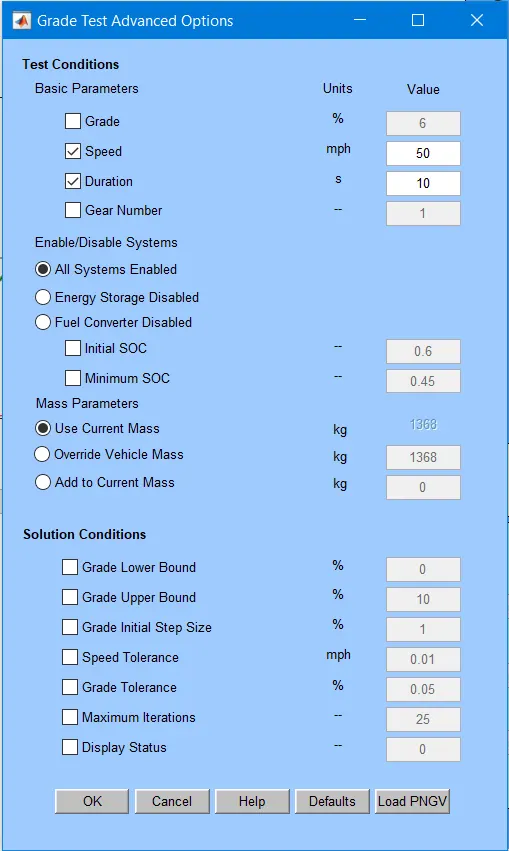
- Now select the gradeability test and then grade options to perform the gradeabilty test of Toyota Prius as shown below :
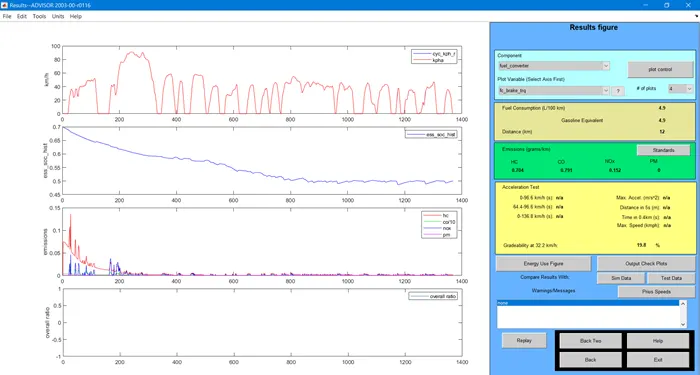
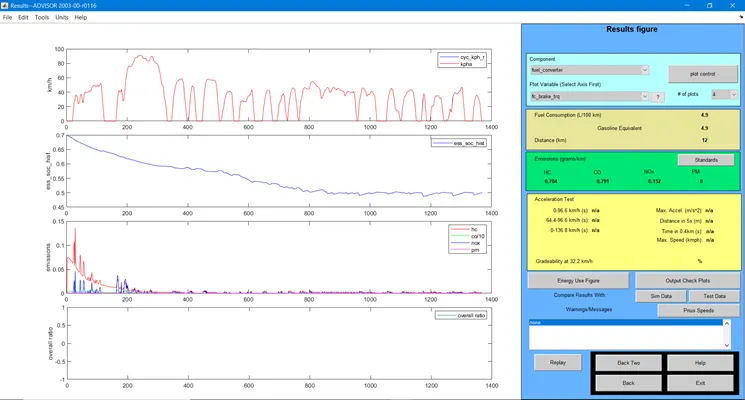
20 mph for 10 seconds
Study for electric motor of Toyota Prius.
Study for IC Engine of Toyota Prius.
Study for hybrid of Toyota Prius.
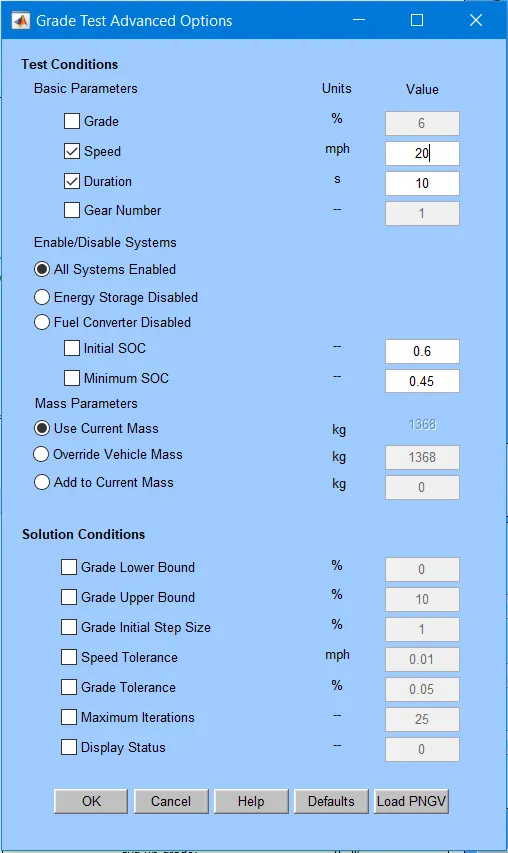
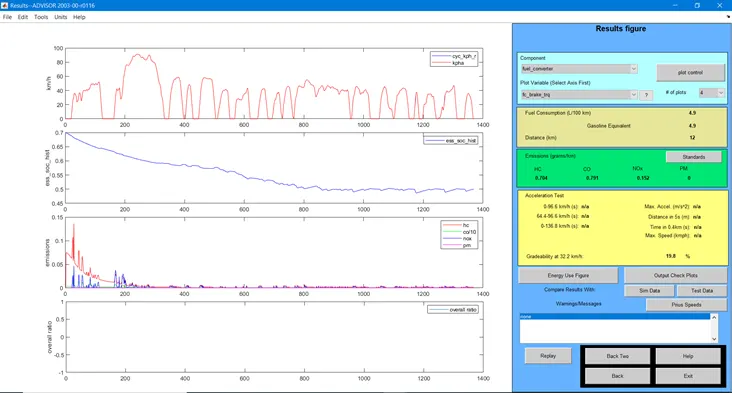
30 mph for 10 seconds
Study for electric motor of Toyota Prius.
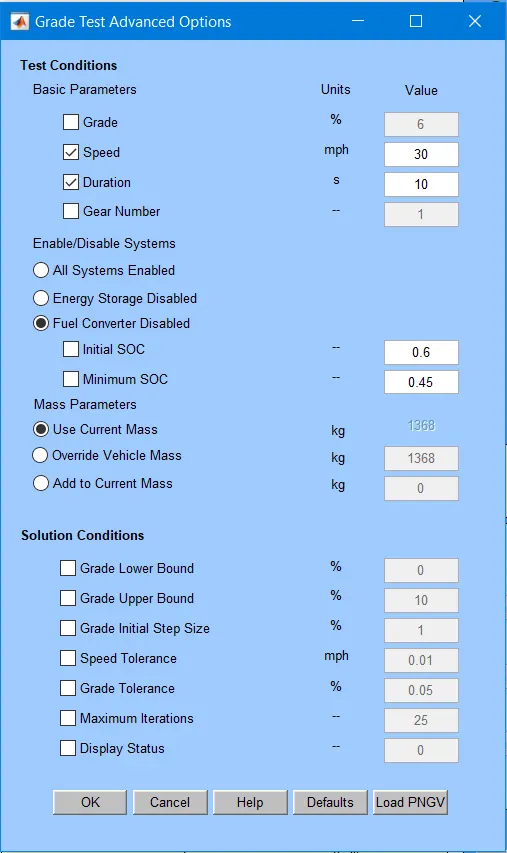
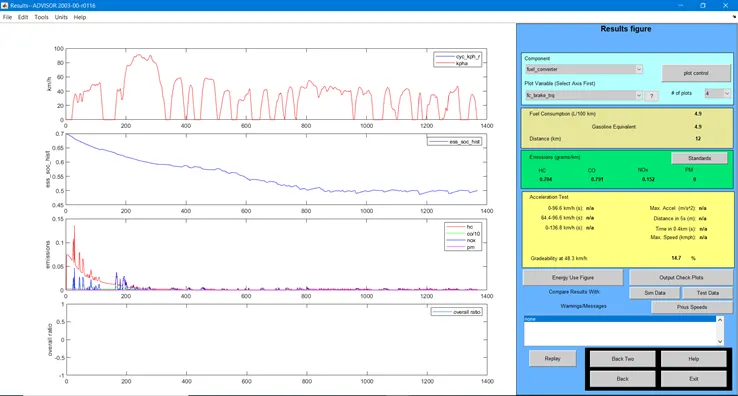
Study for I C Engine of Toyota Prius.
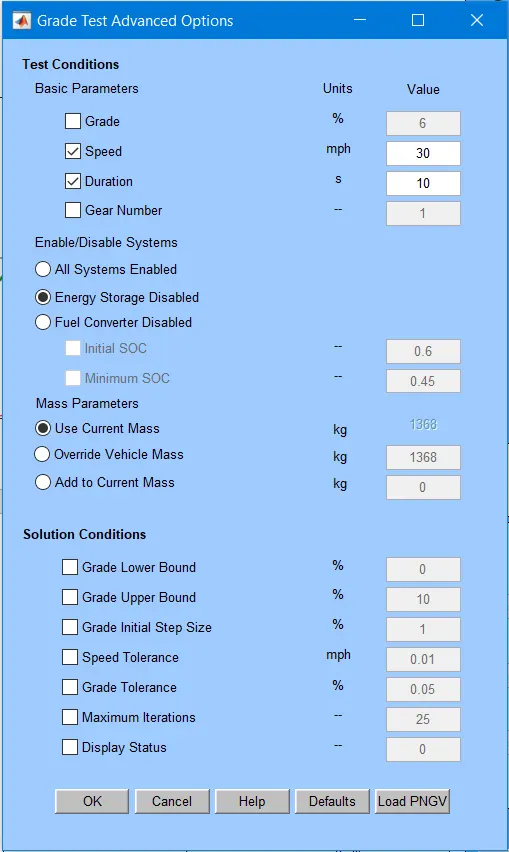
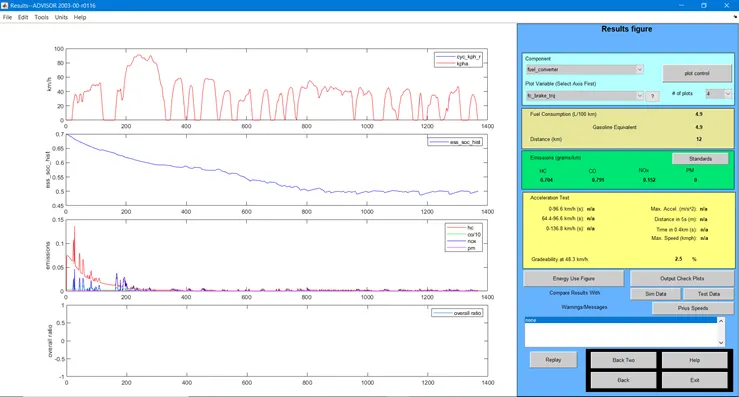
Study for hybrid of Toyota Prius.
50 mph for 10 seconds
Study for electric motor of Toyota Prius.
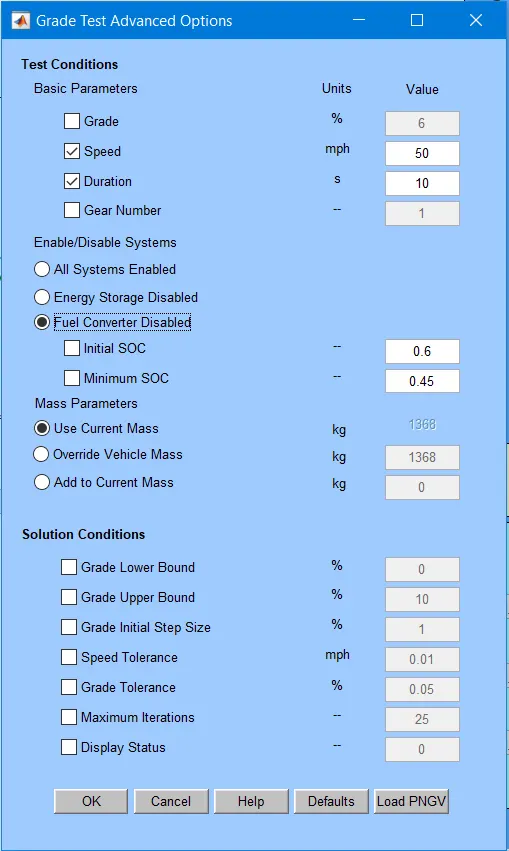
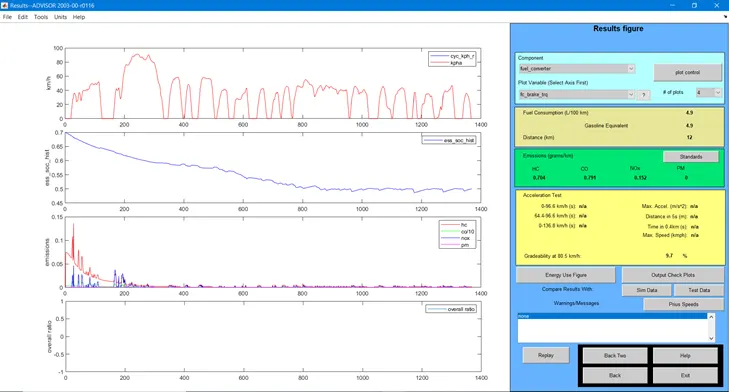
Study for I C Engine of Toyota Prius.
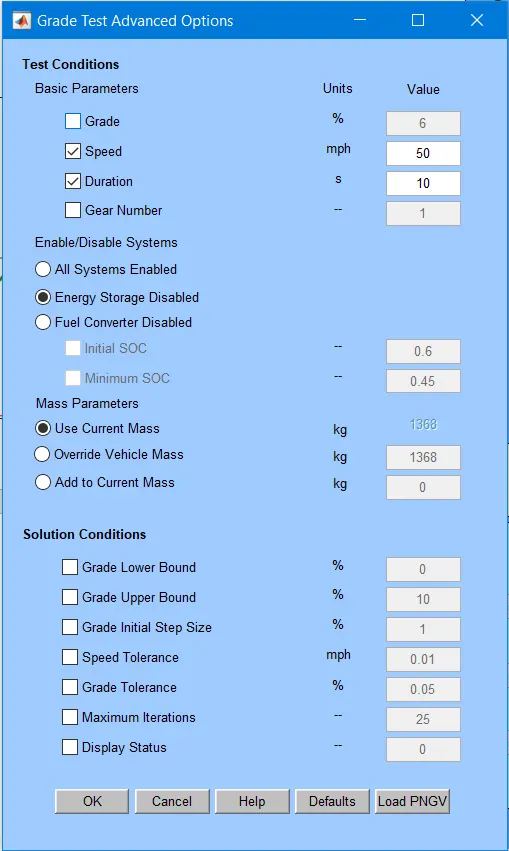
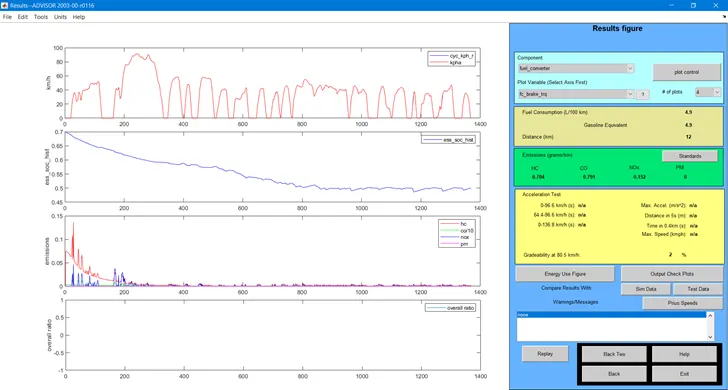
Study for hybrid of Toyota Prius.
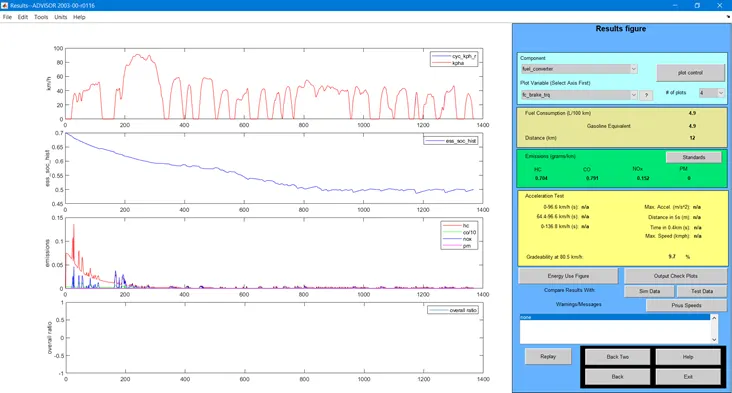
RESULTS (Gradeability test):
|
Time = 10 sec |
|||||
|
Sr.no |
Speed (m/s) |
Speed ( km/hr) |
Gradeability % |
Gradeability % |
Gradeability % |
|
1 |
20 |
32.2 |
19.8 |
19.8 |
0 |
|
2 |
30 |
48.3 |
14.7 |
14.7 |
2.5 |
|
3 |
50 |
80.5 |
9.7 |
9.7 |
2 |
CONCLUSION:
- The vehicle has failed to travel a distance of 45 km under the FTP cycle with a payload of 500 kg
- It is observed that by decreasing the number of modules in the battery the distance travelled is less and by increasing the number of modules the distance travelled is more.
- As the speed increases, the gradeability % decreases.