Week 3.5 - Deriving 4th order approximation of a 2nd order derivative using Taylor Table method
Derivation of 4th order approximation of second order derivative using CENTRAL DIFFERENCING
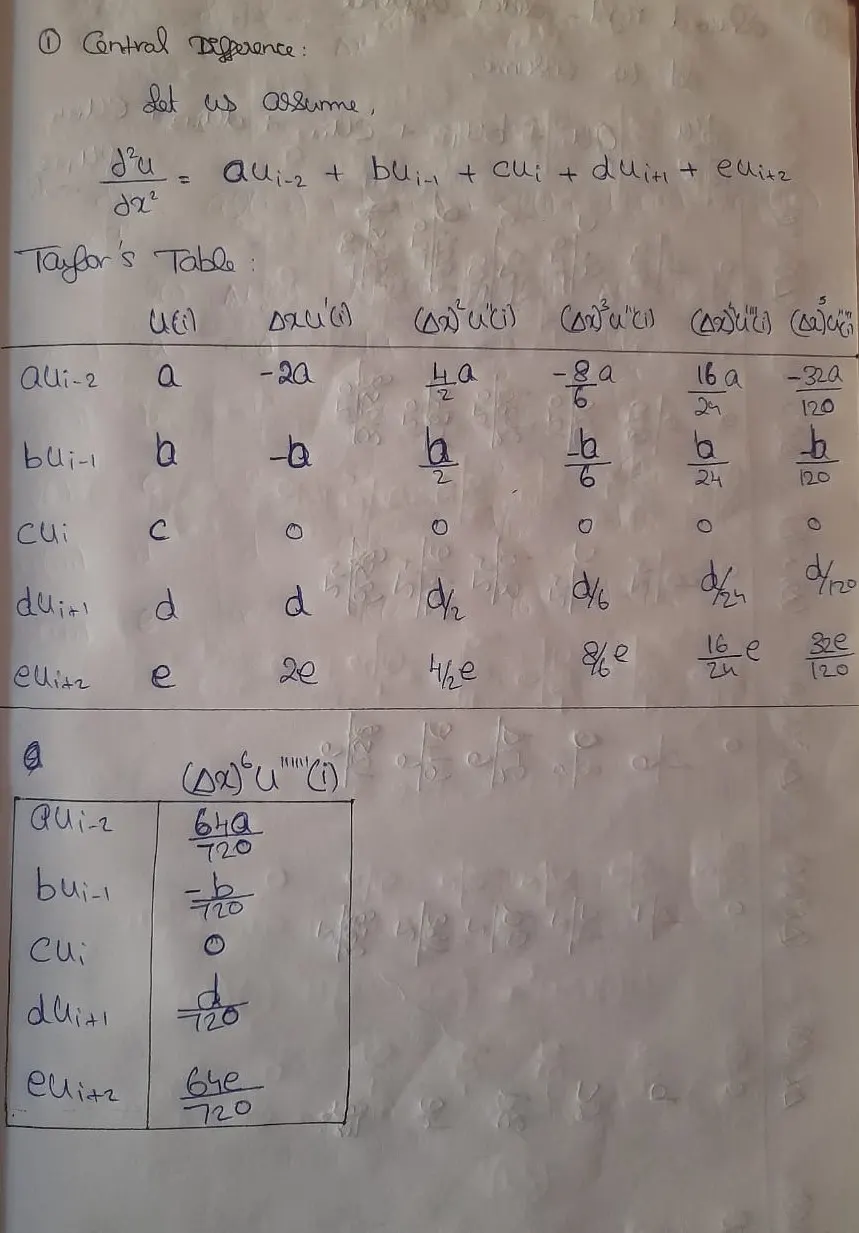
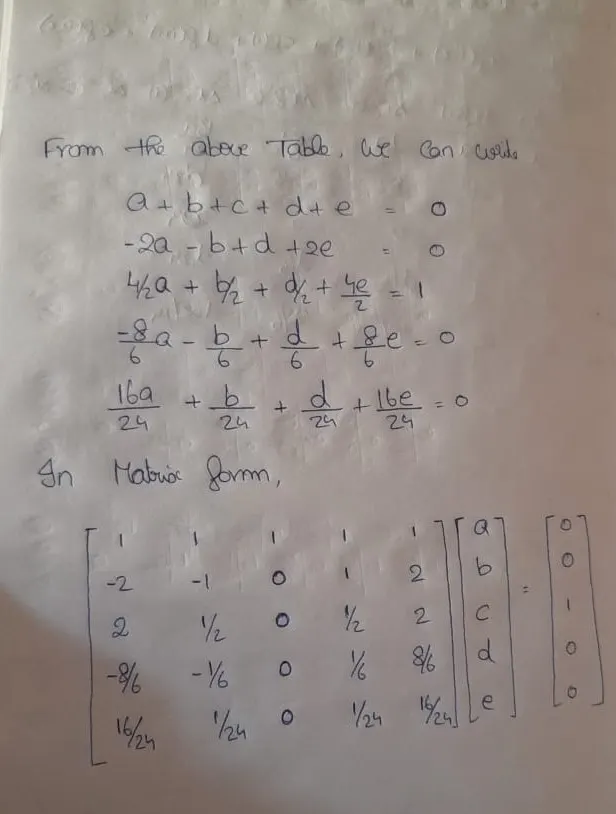
Since, only five unknown exist so, coefficient of Taylor series upto fourth derivative is considered.
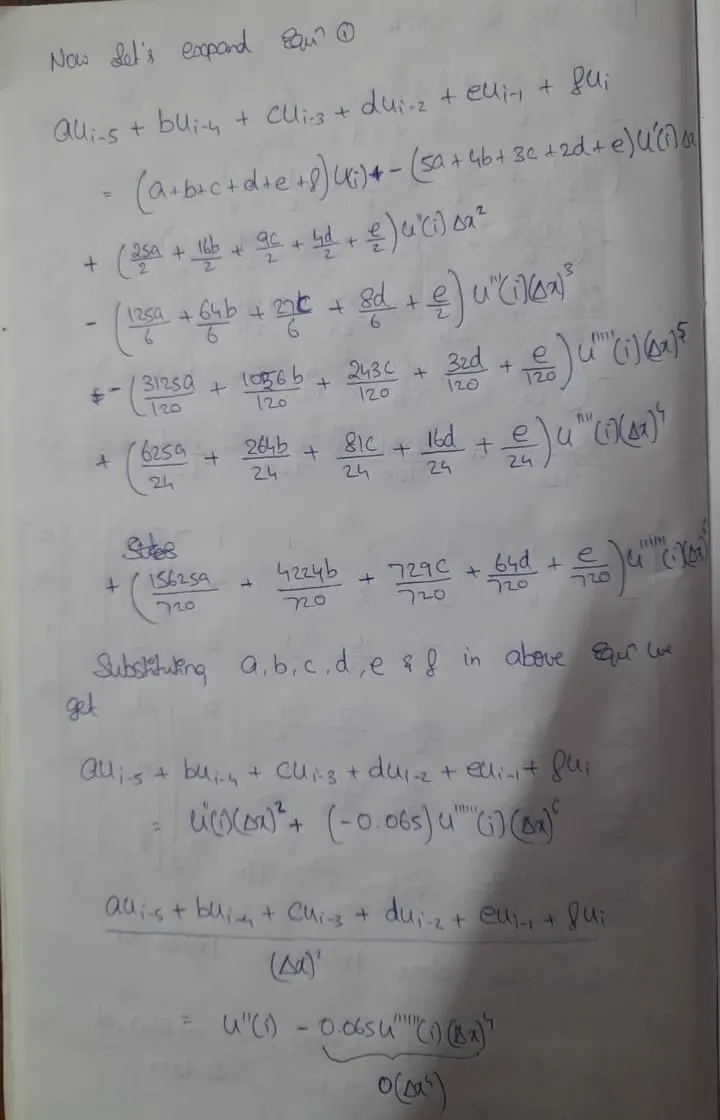
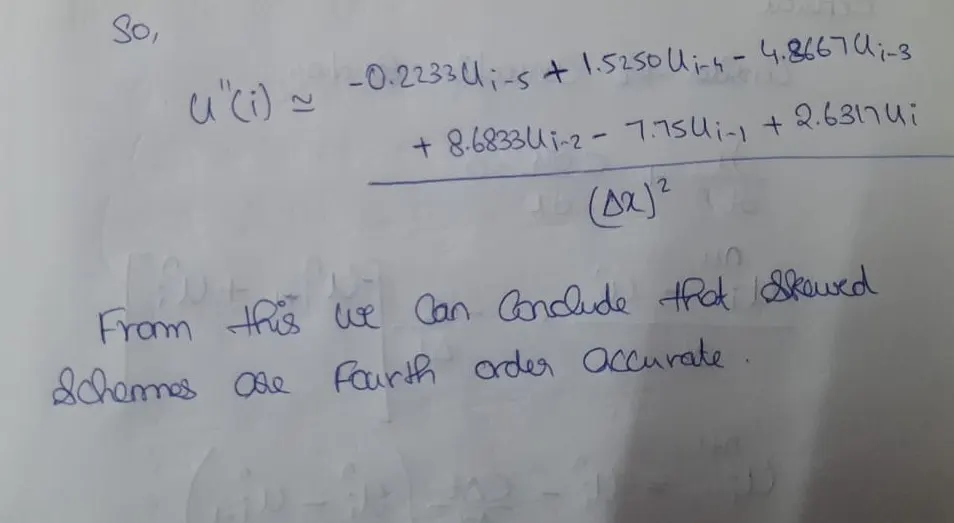
Derivation of 4th order approximation of second order derivative using SKEWED RIGHT-SIDED DIFFERENCE
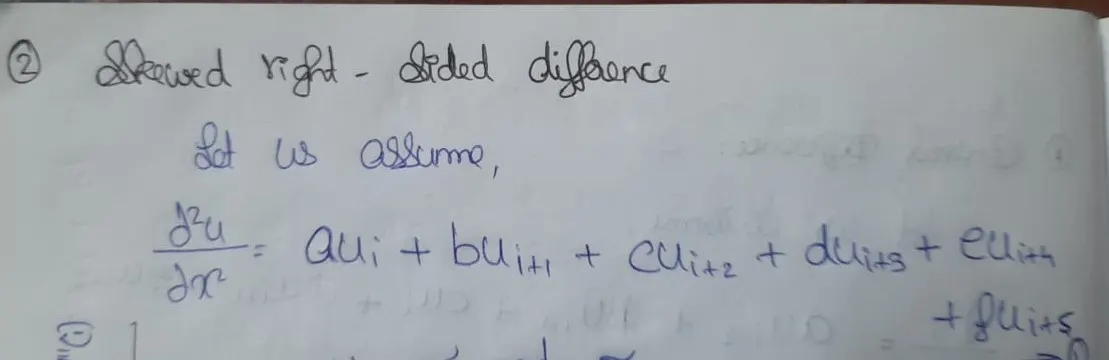
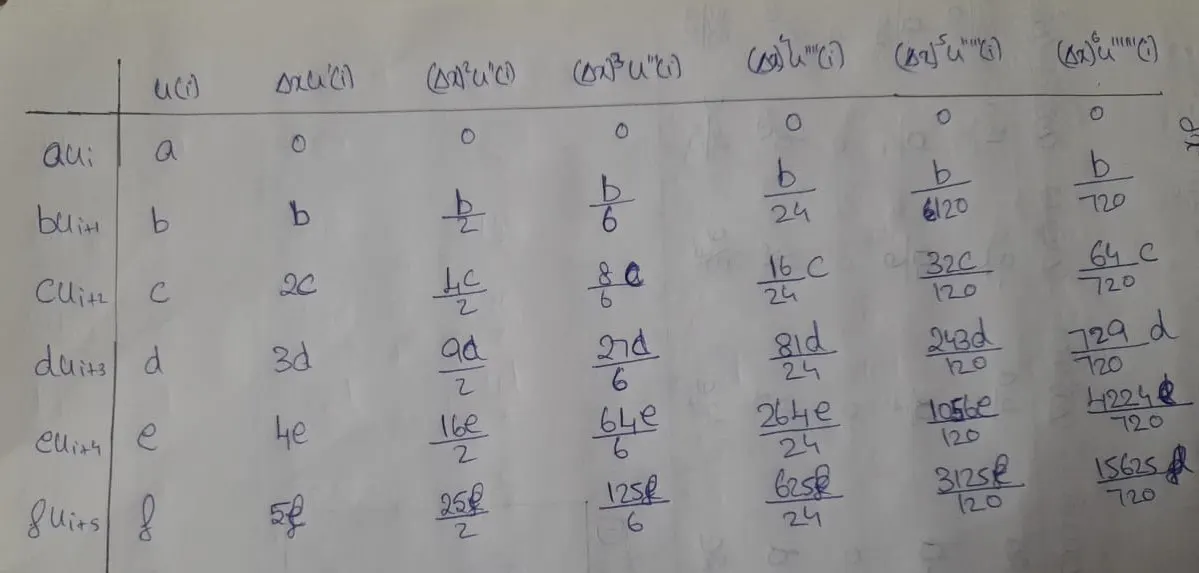
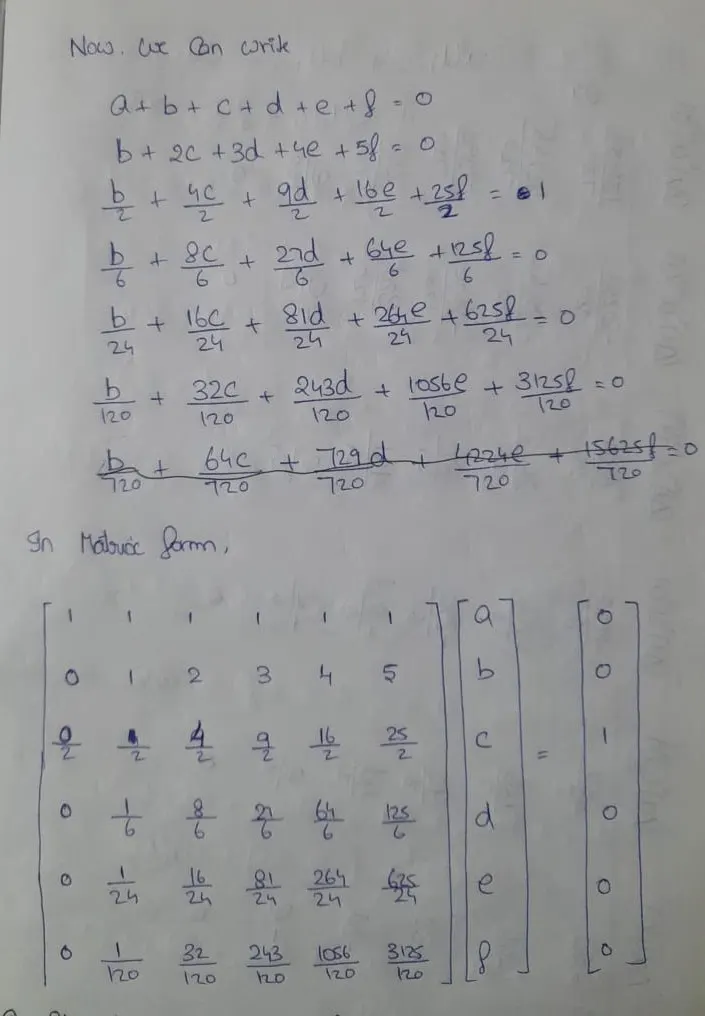
Derivation of 4th order approximation of second order derivative using SKEWED LEFT-SIDED DIFFERENCE
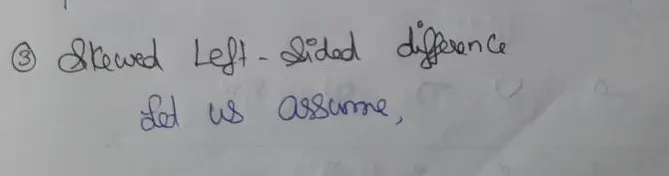

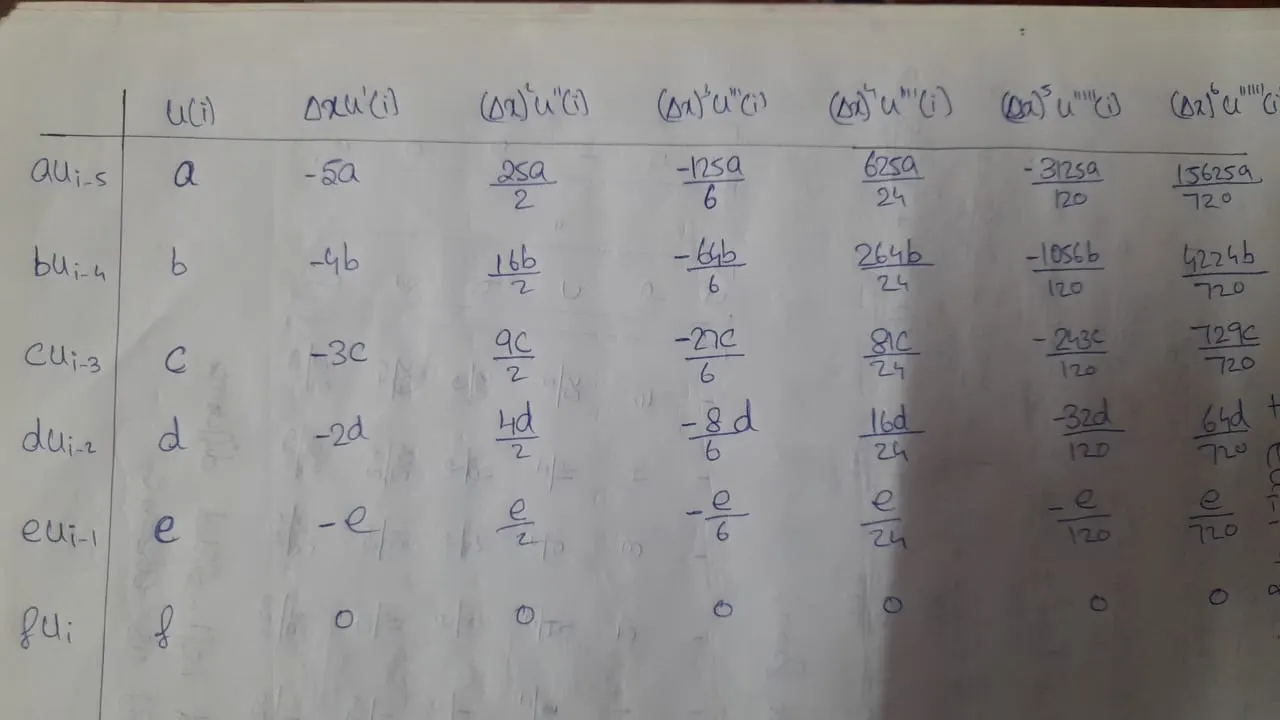
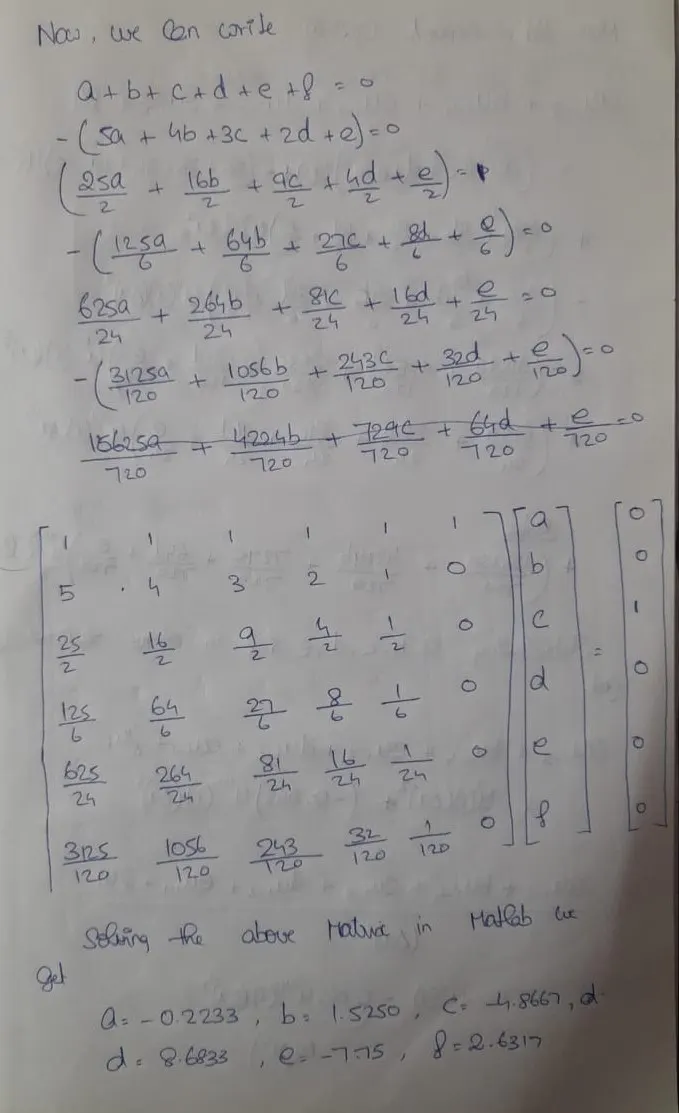
The Proof of Skewed schemes are Fourth order accurate has been continued.
MATLAB CODING:
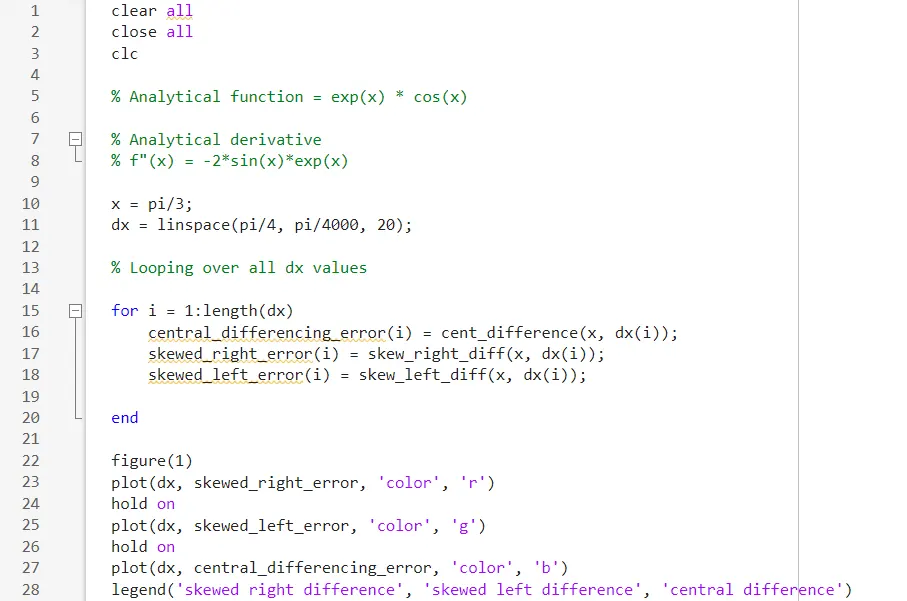
- As per the given Analytical function its second derivative has been found.
- Then value of x and dx array has been created as per my choice.
- A FOR LOOP has been added to loop over dx array.
- Each variable arrays (Matrix) has been assigned with functions which calculates ERROR for each value of dx.
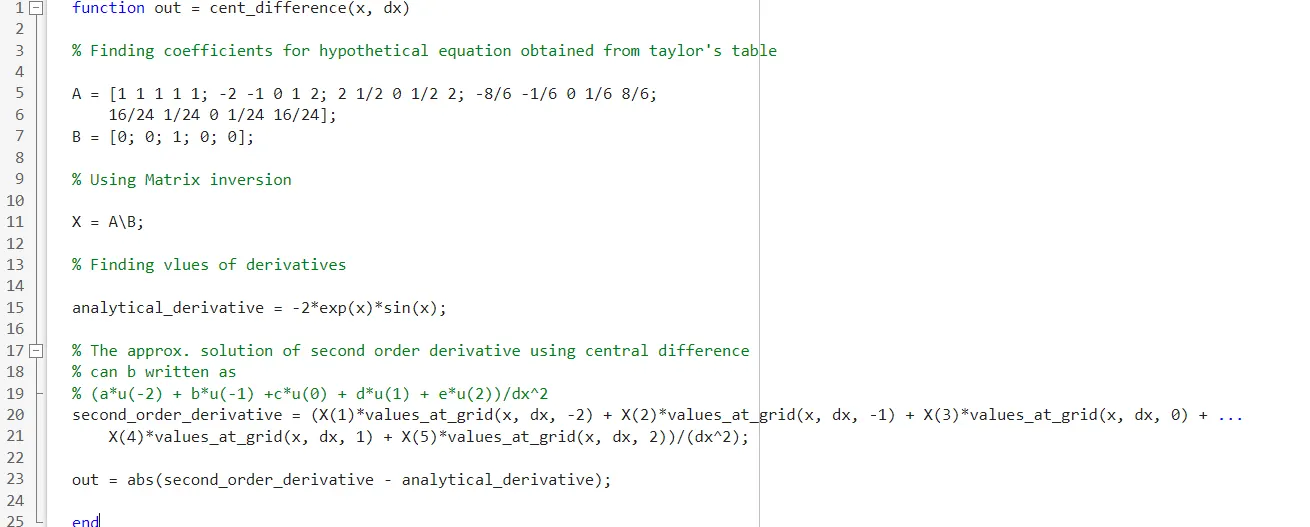
- Whenever a function in FOR LOOP is called it goes to the corresponding function and solve them. The comments in the code explains its function well.
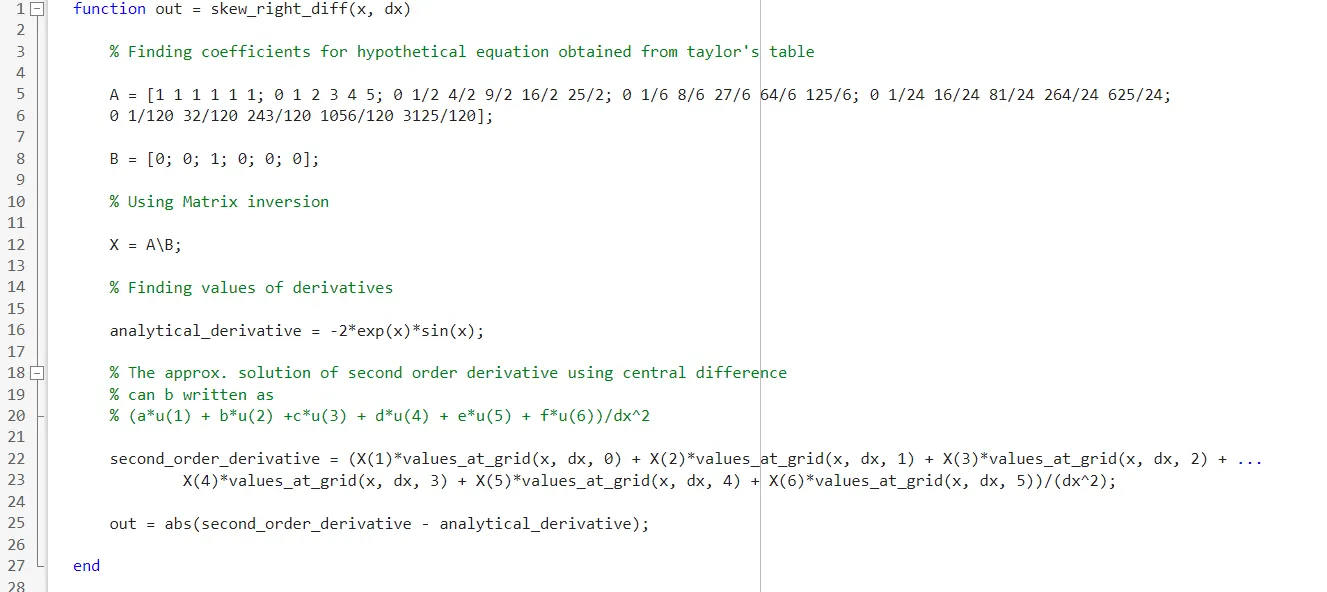
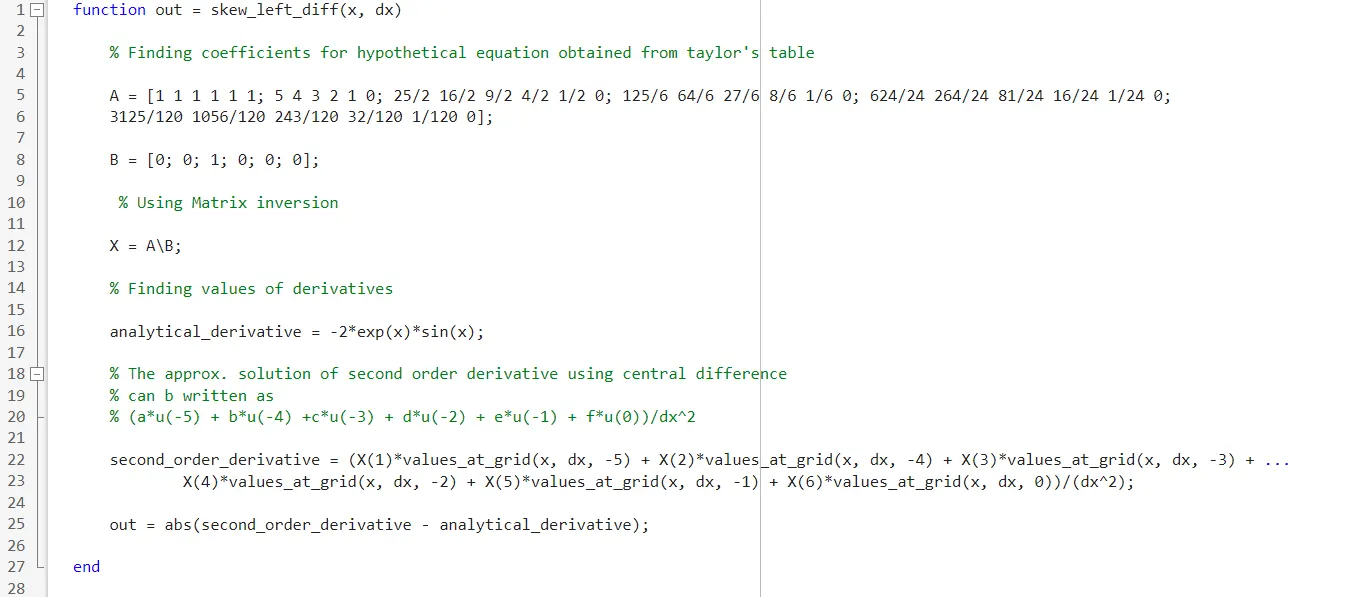
- The values at the grid are calculated by the below function at corresponding grids.
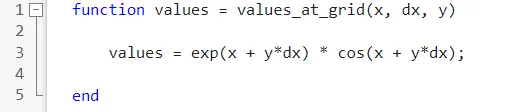
Results:
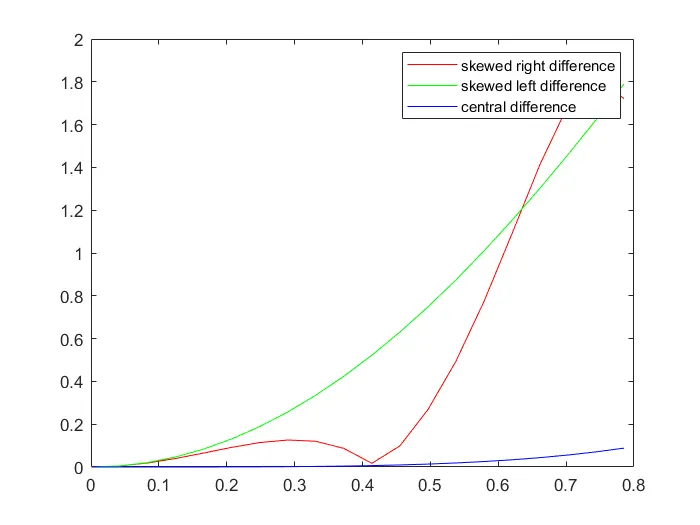
- From the graph it can be seen that Central difference scheme has less error than the other two even though they all are fourth order approximate.
- when compared between skew right and skew left, skew left has less error for larger grid size (dx).
Advantages of skewed schemes:
- Skewed schemes offers high stability for high reynolds number flows.
- it is more robust for complex geometries.