Week 3 - 2D meshing for sheet metal
Aim :-
For the given Hood model, Take the mid surface for all the components after checking the geometrical errors and mesh the mid surface with the given element Quality criteria.
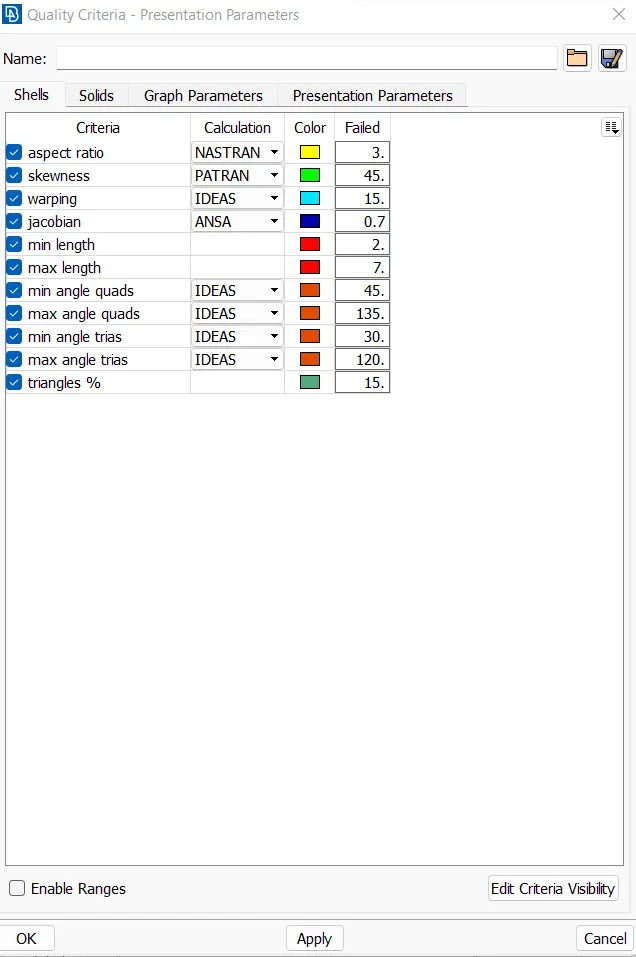
Given Quality Criteria :-
|
S.No |
Quality Criteria |
Value |
|
1 |
Target/Average length |
5 |
|
2 |
Minimum Length |
2 |
|
3 |
Maximum Length |
7 |
|
4 |
Aspect |
3 |
|
5 |
Warpage |
15 |
|
6 |
Skewness |
45 |
|
7 |
Jacobian |
0.7 |
|
8 |
Minimum Quad Angle |
45 |
|
9 |
Maximum Quad Angle |
135 |
|
10 |
Minimum Tria Angle |
30 |
|
11 |
Maximum Tria Angle |
120 |
|
10 |
Tria Percentage |
15 |
Theory :-
1. FEM :- while performing the ananlysis on the component it is generally considered consisting infinite elements, so inorder to performa an analysis and simulate its results, the components are generally divided into finite elements. And on those elemets calculation s are performed to interpolate the results.
2. WARP ANGLE :- The angle between the notmal of two plans formed by bisecting the diagonal of QUADs.
3. ASPECT :- ratio of Max length/ Min length.
4. JACOBIAN :- scale factor rise because of transformaion of coordinate systems
5. SKEWNESS :- min angle formed by the bisectors of each lines.
PROCEDURE :-
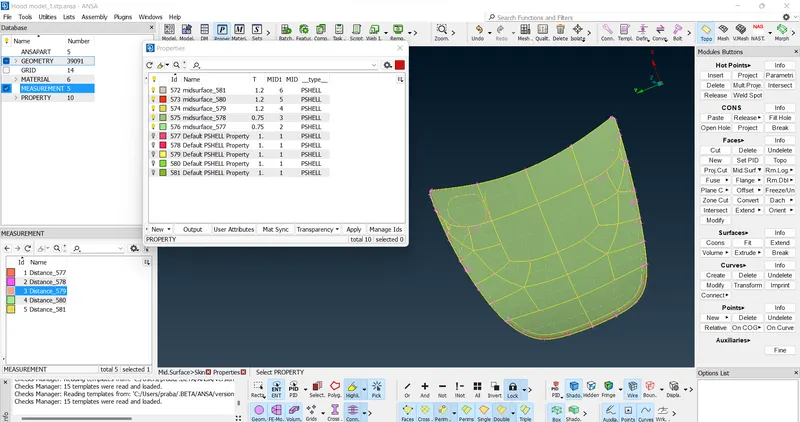
1. The hood model provided was downloaded from the project challenge link. After the scrutiny of the model it was observed that model consist of 5 sub assemblies named as following:-
- PART ID 577
- PART ID 578
- PART ID 579
- PART ID 580
- PART ID 581
Picture of the assemblies and subassemblies
A) Assemblies
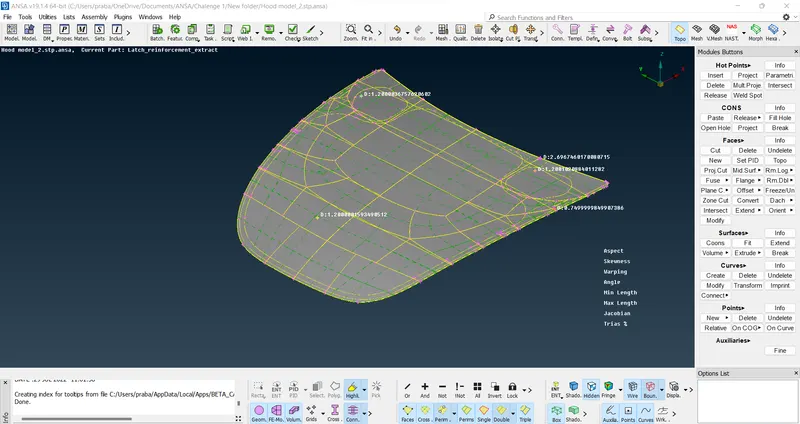
B) Subassemblies
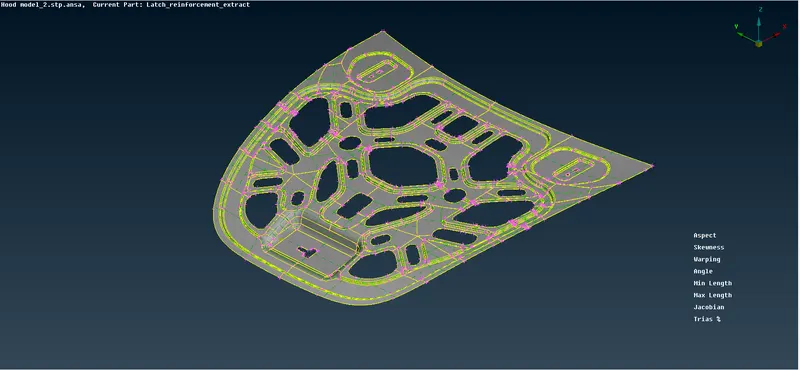
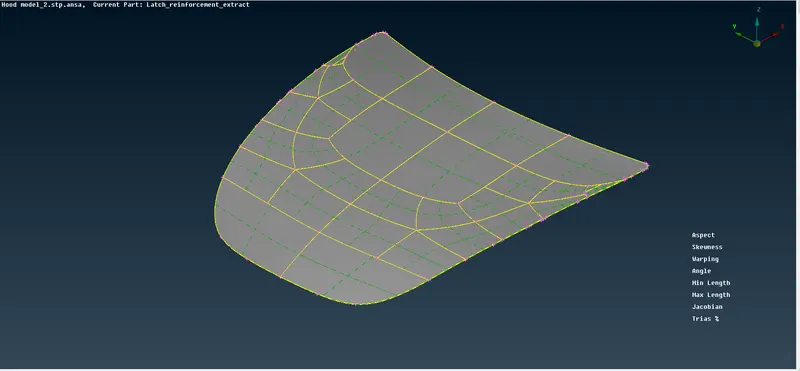
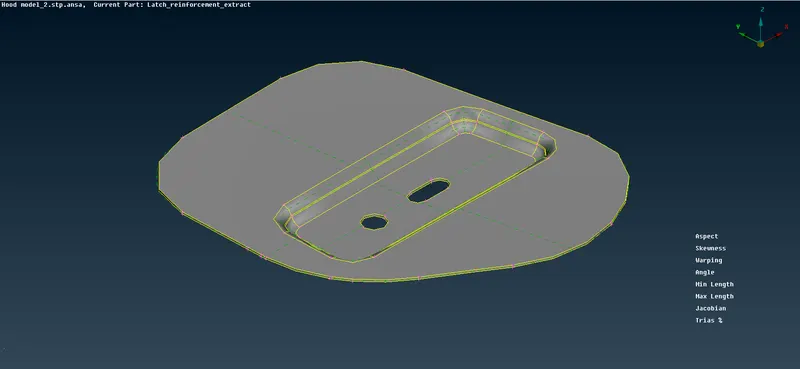
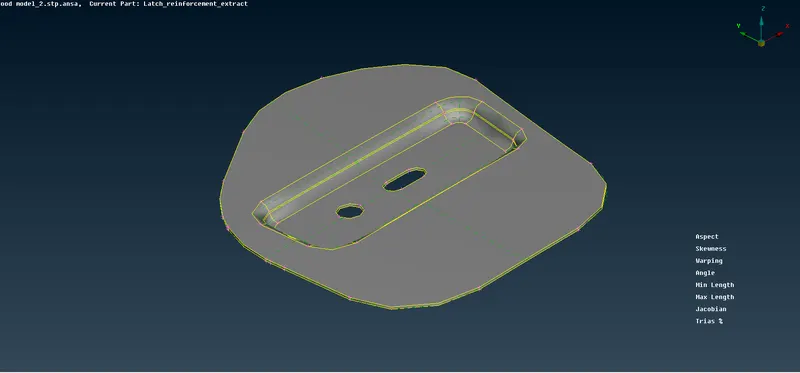
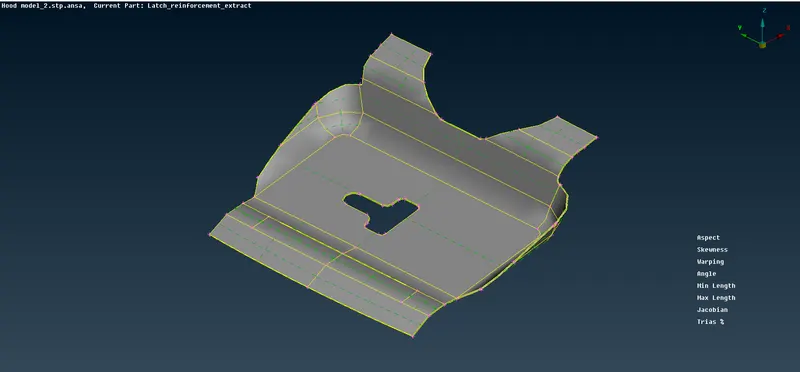
PART ID 577 PART ID 578 PART ID 579 PART ID 580 PART ID 581
2. Post studying the assemblies the dimensioning was given to each entity. This was done to ensure the correctness and precisiveness of the mid surface.
3. Material was then assigned to all the entities given in the model. in the database the material was 'unticked', the same was alotted by clicking on the small box.
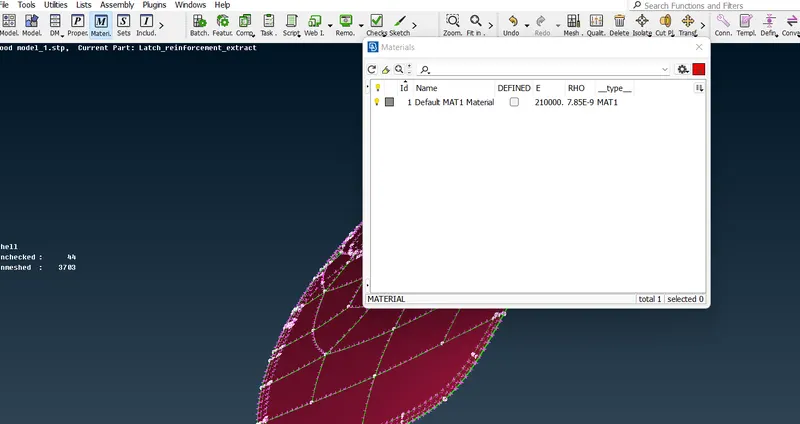
4. After assigning the material to the model, the orientation was matined for each entity given in the model. for example
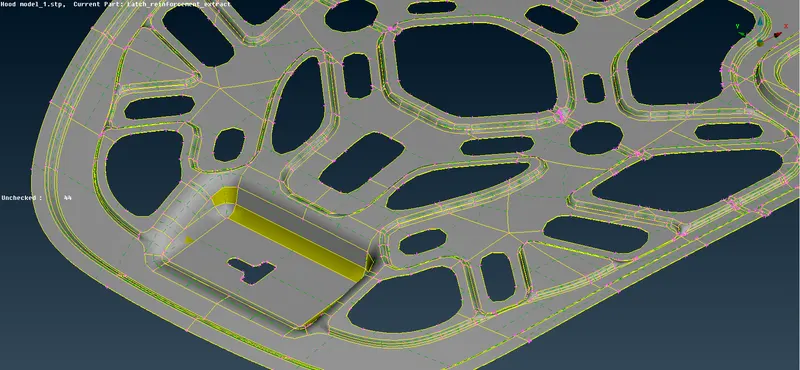
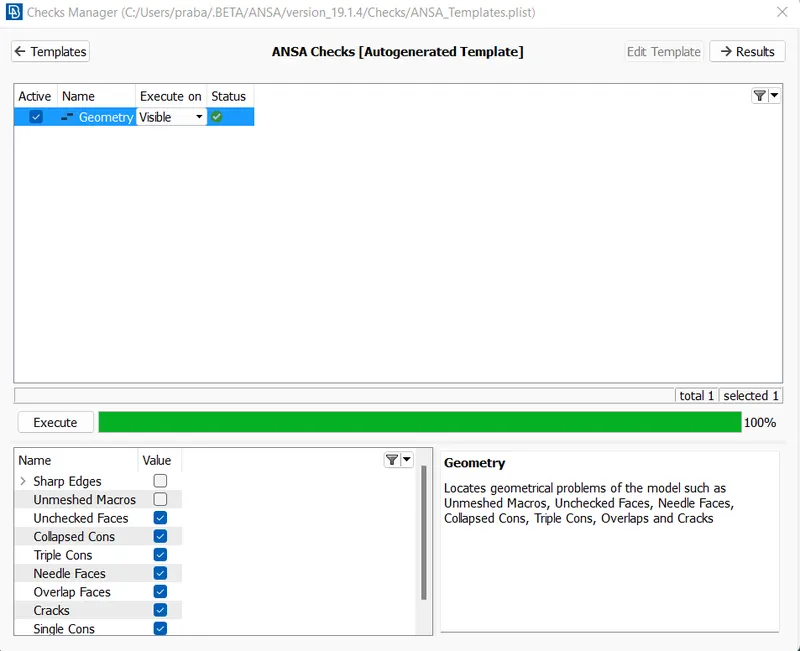
5. Geomety check was performed on the model and no error was observed
6. After this the model was divided in small segments of 5mm length to ensure that the meshing, as given in the challenge was to be maintained with 5mm avg length.
7. Quality criteria and mesh parameters as given in the challenge was assigned in ANSA
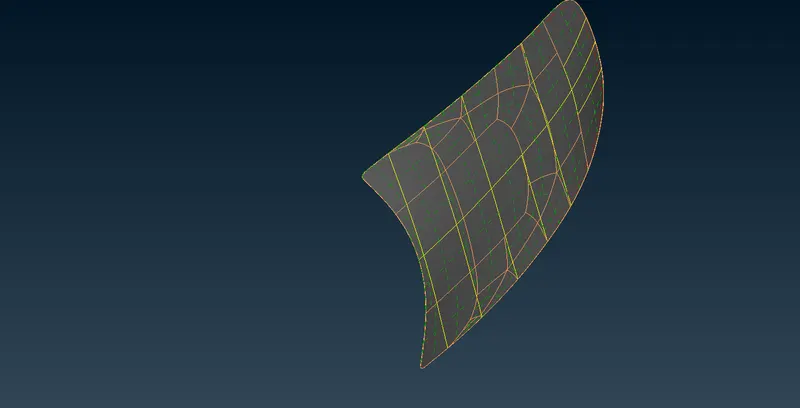
8. post assigning the qulality the mid surface for each element waas generated and particular properties and thickness was given to each elements as follows:-
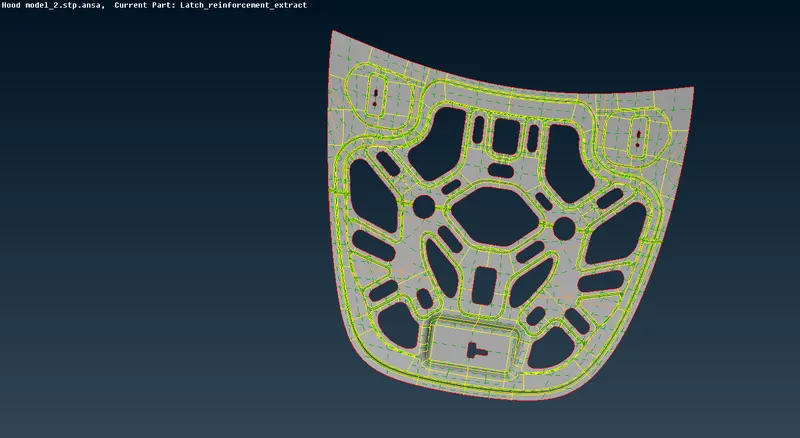
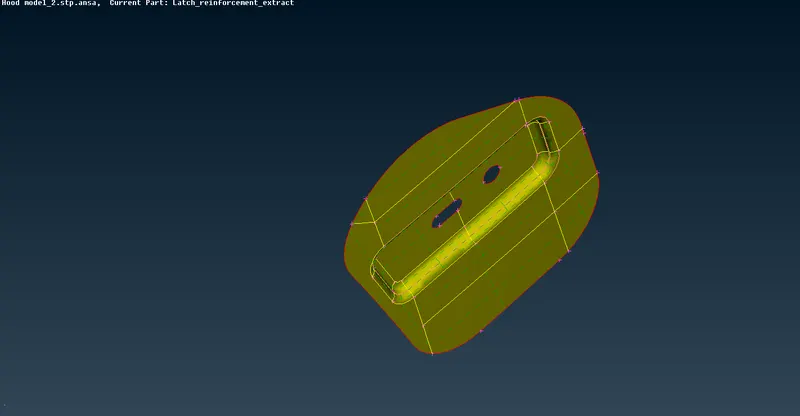
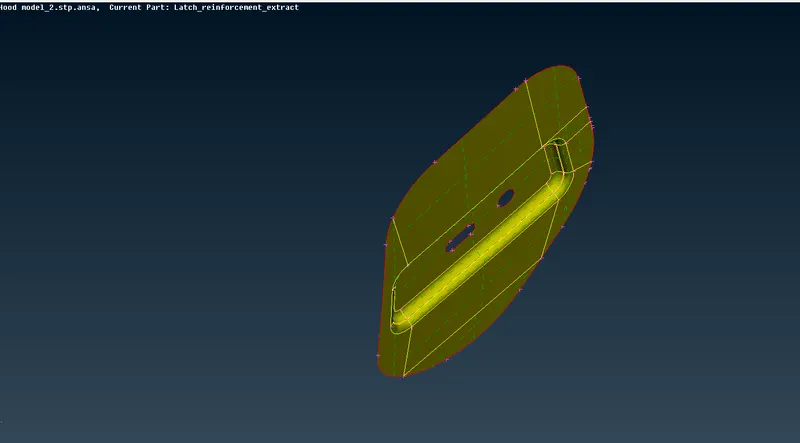
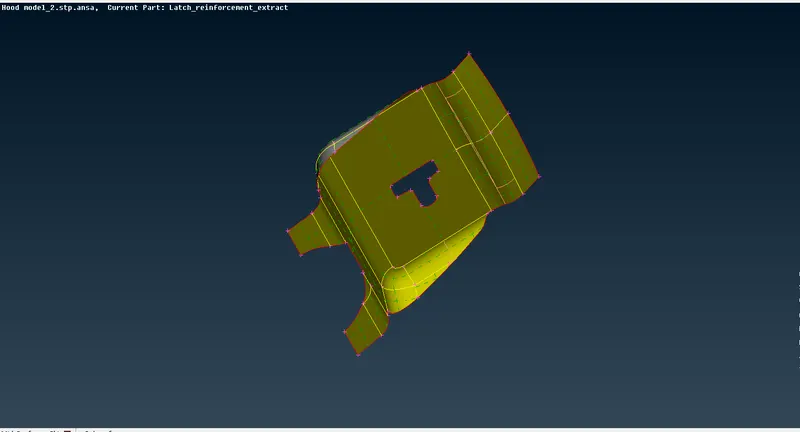
9. Mid surface generated with following commands TOPO>>FACES>>MIDSURFACES>>SKIN>>SELECT ENTITIES. it was made sure that all the entities of the model have red surface on one side greeen suface on other side and blue surface assigend to the perpendicular surface between them.
10. Meshing was then progressed on each elememts sequentially. Part 577 was meshed by dividing in a fragment for example :-
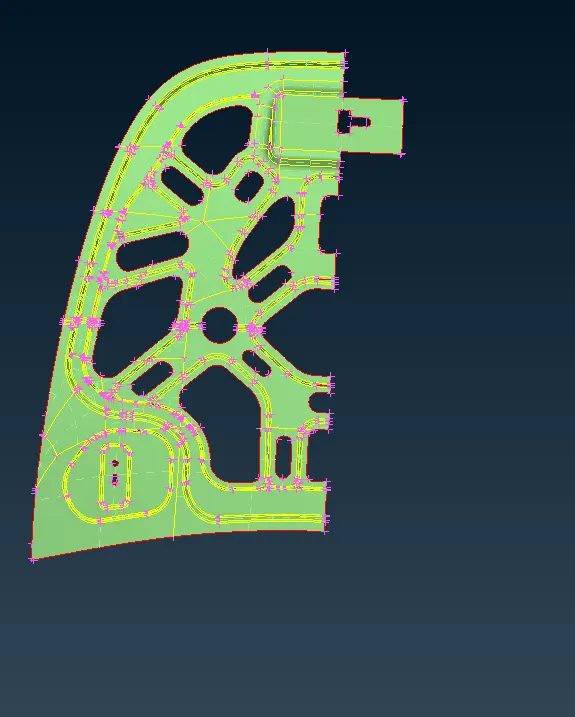
the splitting was done with the help of following commands TOPO>>FACES >DELETE>SELECT ENTITIES. After this the element was subdivided in samaller rectangular elemets so as to maintain the the mesh flow and restricting the trias in a particular section. and after completing the meshing on the elements it was mae sure that the entity was pasted with other half of the entity with following commands TRANSFORM>COPY>>ENTITY>>SYMMETRY>>DEFAULT SYMMETRY PLANE.
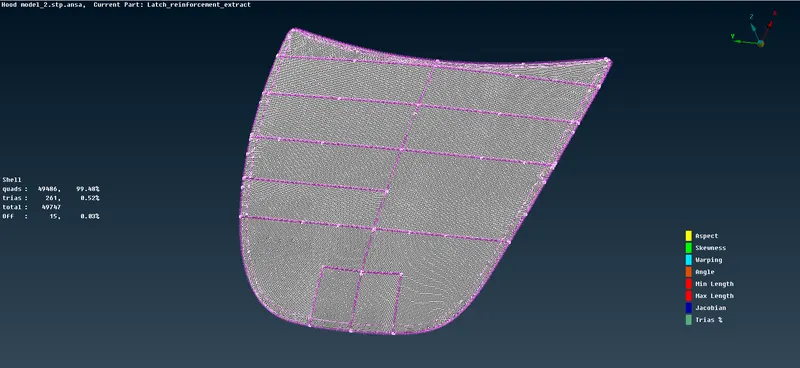
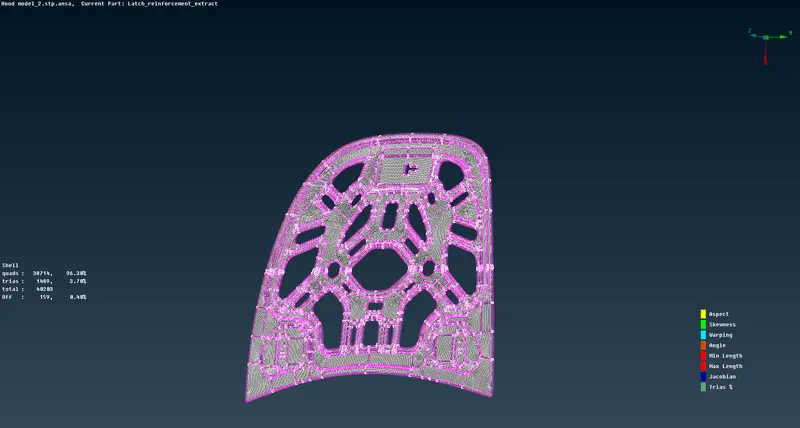
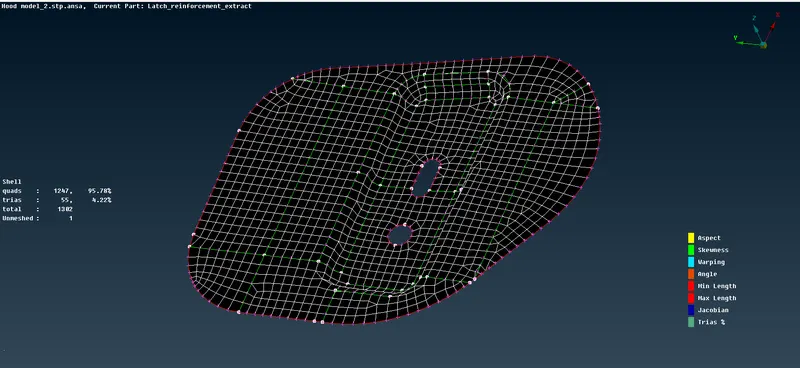
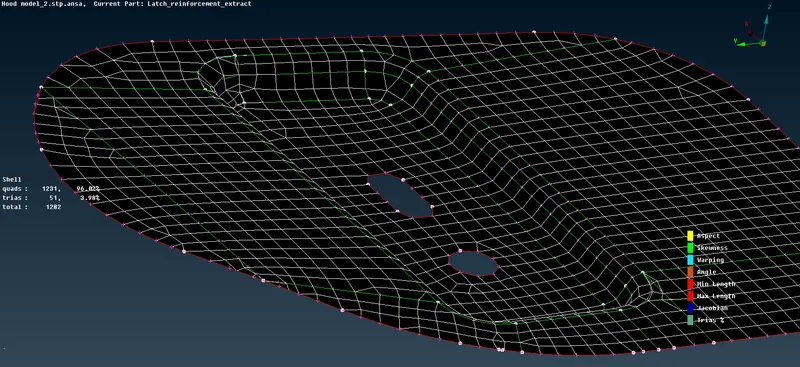
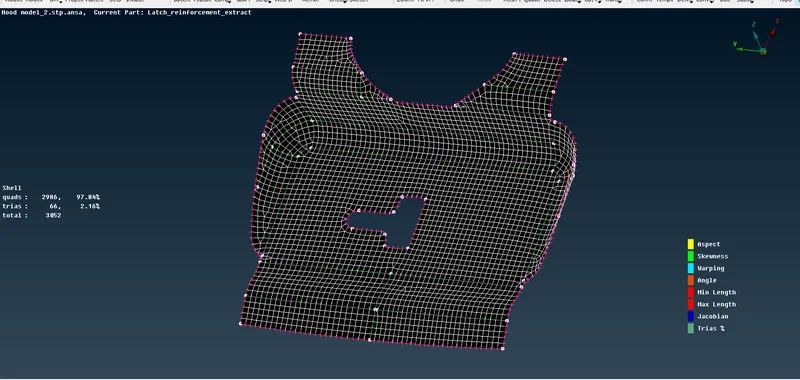
RESULTS :- The meshing was then achieved on all the entities as follows
CONCLUSION :-
1. After completing meshing on all the componenet it is observed that total meshed element are at total of 95586. Out of total no of mesh elements quad elements generated were 93664 (97.99%) in nos and tria elements generated were 1922 (2.01%)in nos,which is well with limit.
2. Quality of the meshing as in reduction in trias can be achieved as per requirements/norms of the user industries.
LEARNING OUTCOMES :-
1.Trias are denser at converging/diverging areas or concave/convex planes.
2. proper clean up on the geometry to be done prior meshing the model.
3. Critical surface to be delt prior simler surface
4. Trias at the edge of the model to be avoided.
LINK FOR THE MODEL :- https://1drv.ms/u/s!Au2Btld-lB2Kp1T0B47SazjkWC-i?e=E83vjs