Week 2 Railwheel and Track
Objective: The objective of this simulation is too compare the results of different bearing loads applied to the rail wheel. loads are 1e+5N and 5e+5N. Also implement a user defined result and calculate the total deformation obtained. Compare it with the result obtained using inbuild ansys for a load of 1e+5N.
Setup: The model consists of a railwheel and track.
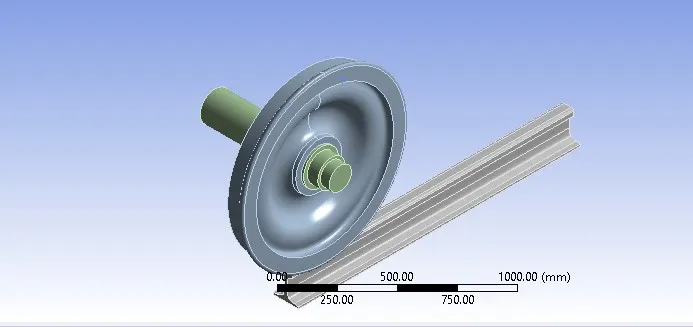
Material: Both the railwheel and the track are made of structural steel .
| Young's modulus | poission ratio | yield strength | ultimate tensile strenght | |
| Structural steel | 200 GPa | 0.3 | 250MPa | 460MPa |
Contacts: there are 2 contact sets. One is between the railwheel and track and the other is the contact between railwheel and shaft.
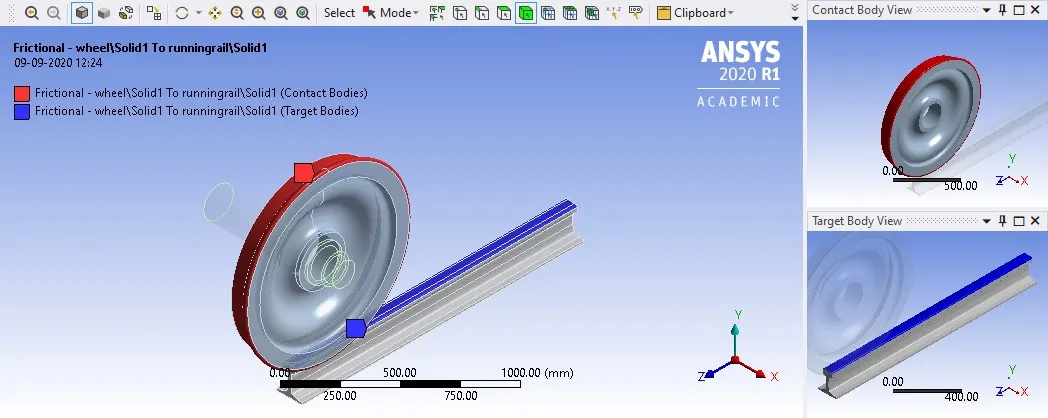 (Between railwheel and track)
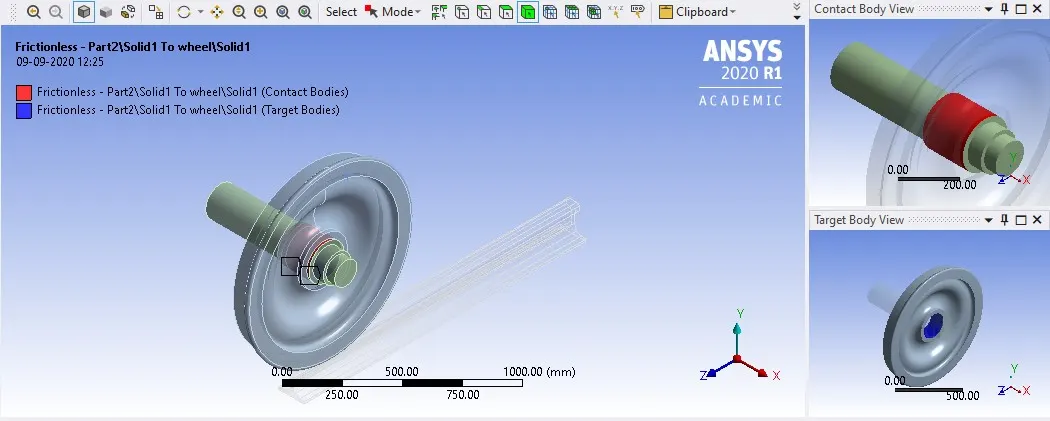 (Between railwheel and shaft)
Joints: Fixed joint: To fix the track along one particular plane.
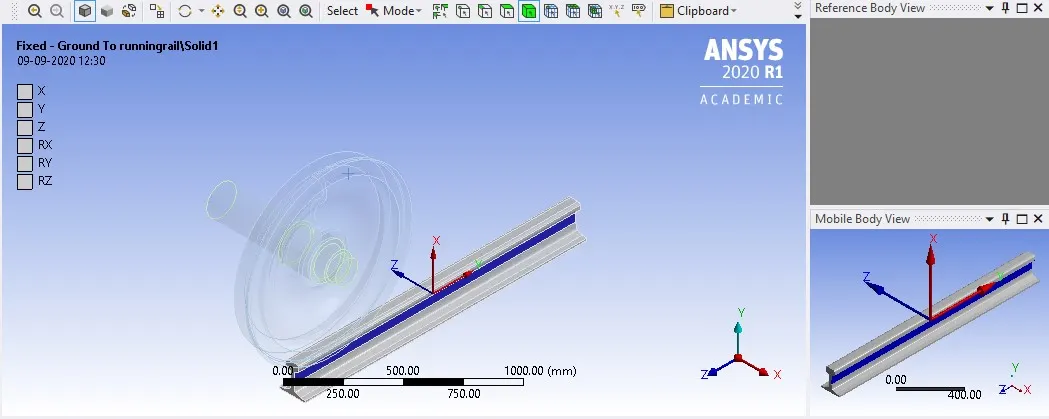
2. Translational joint: Applied to the shaft which rotates and moves a certain distance, hence translational. It causes the railwheel to translate.
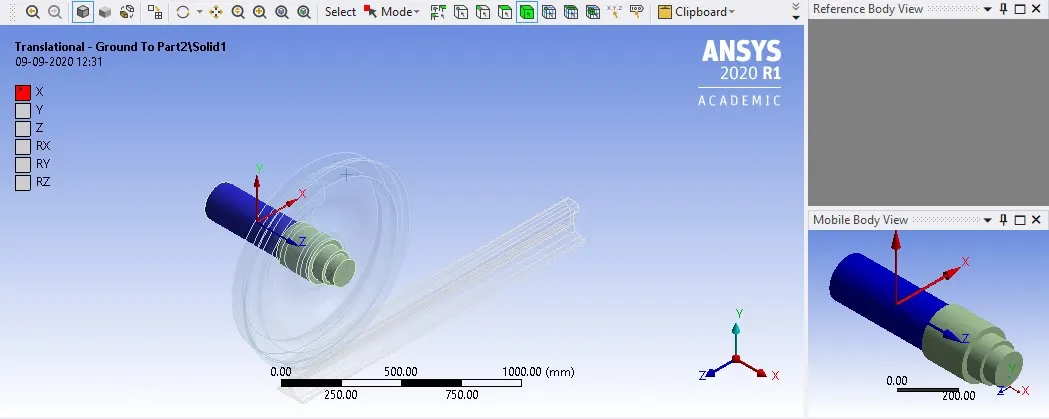
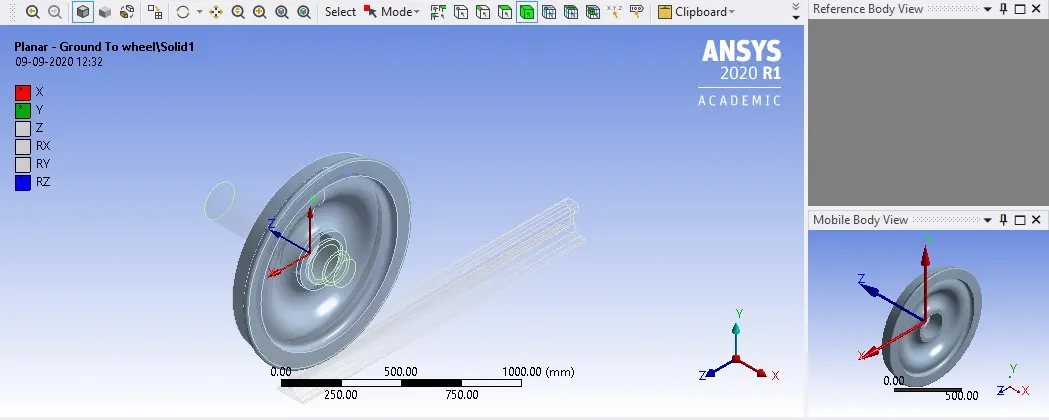
3. Planar joint: Applied to fix the rotation of railwheel along a single plane.
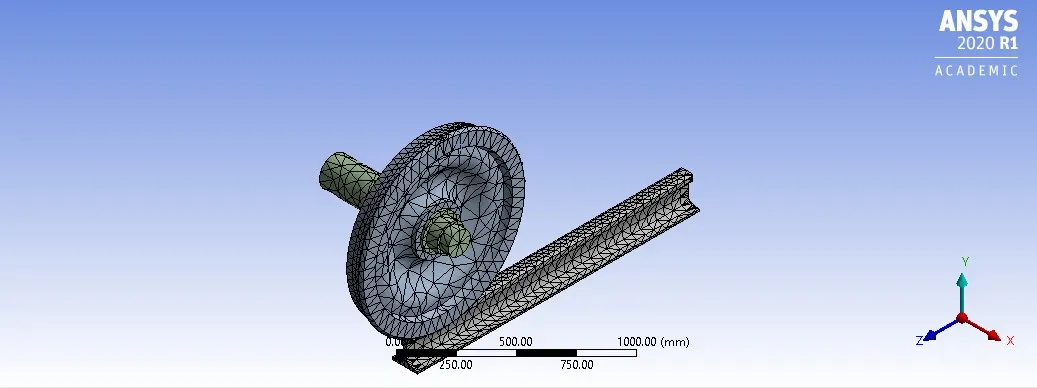
Mesh : The default size is 50mm. The regions in contact with the track have a mesh size of 35mm. The total no of elements is 17323 and 6218.
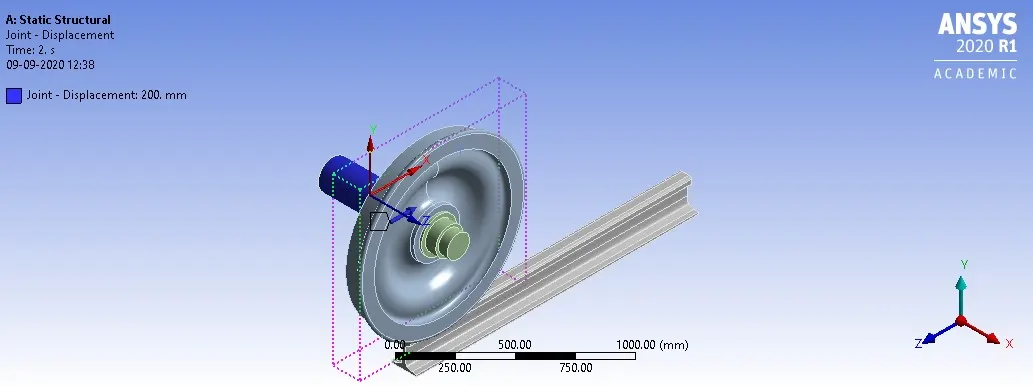
Joint displacement:
Results:
CASE 1:
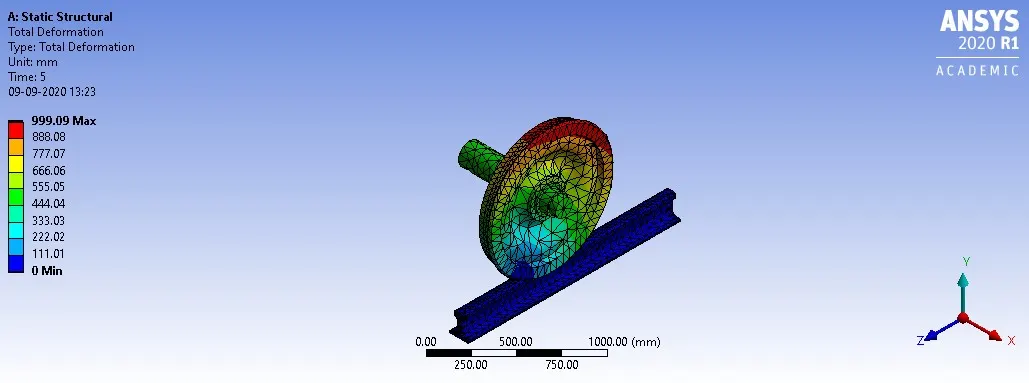
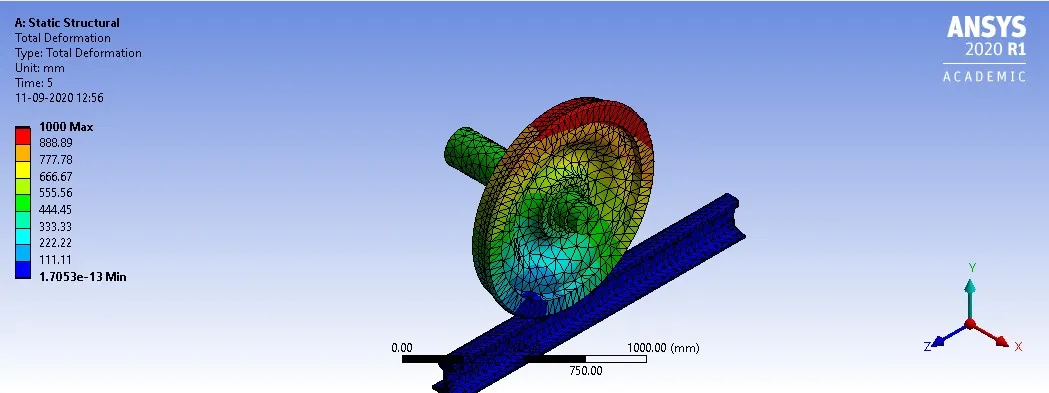
1. Total deformation
a.100000N
b. 500000N
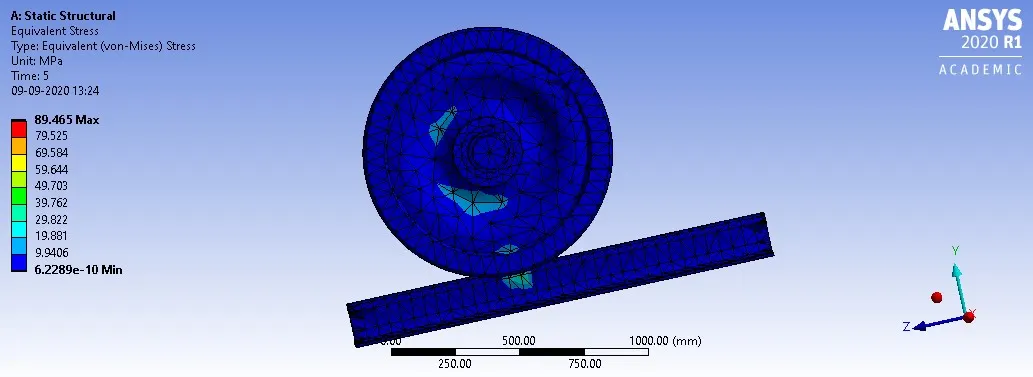
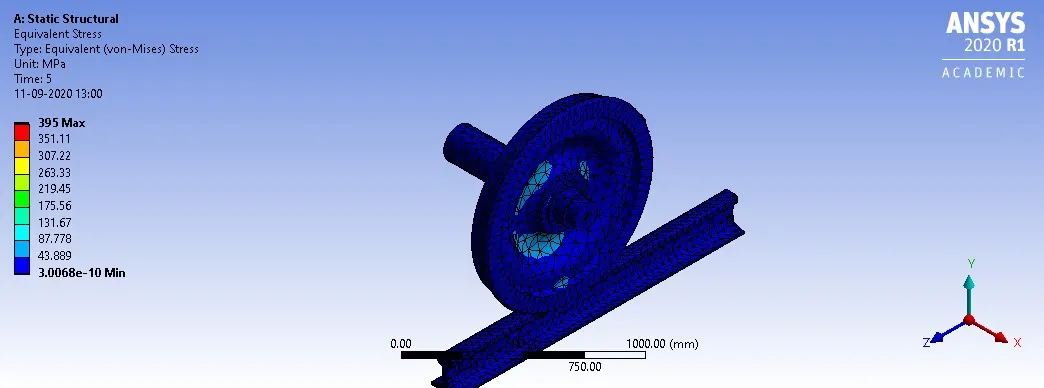
2. Equivalent Stress(Von mises)
a. 100000N
b.500000N
3. Fatigue Life
a. 100000N
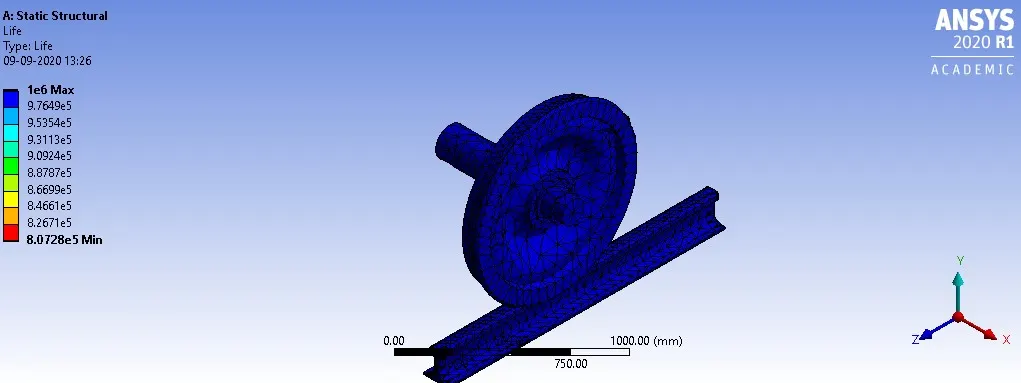
b. 500000N
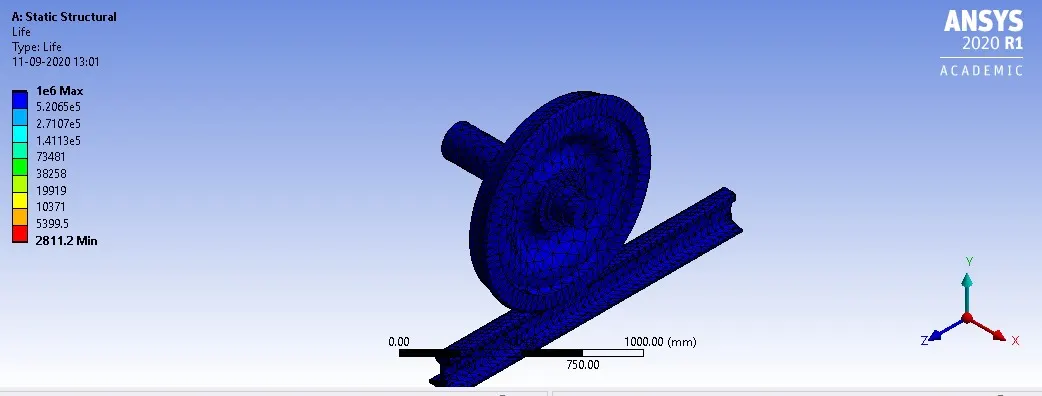
Conclusion: From the above results, it can be concluded that the Fatigue Life is lower in the case where the load is 500000N. The life of a product varies inversely with the load applied.
The deformation and equivalent stress is greater for a laod of 50000N.
CASE 2:
The inbuild ansys value of total deformation for a load of 100000N is 999.09N.
User defined result:
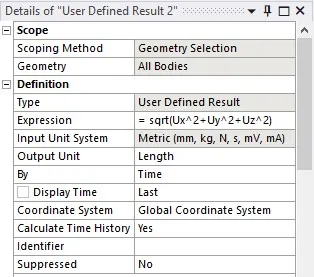
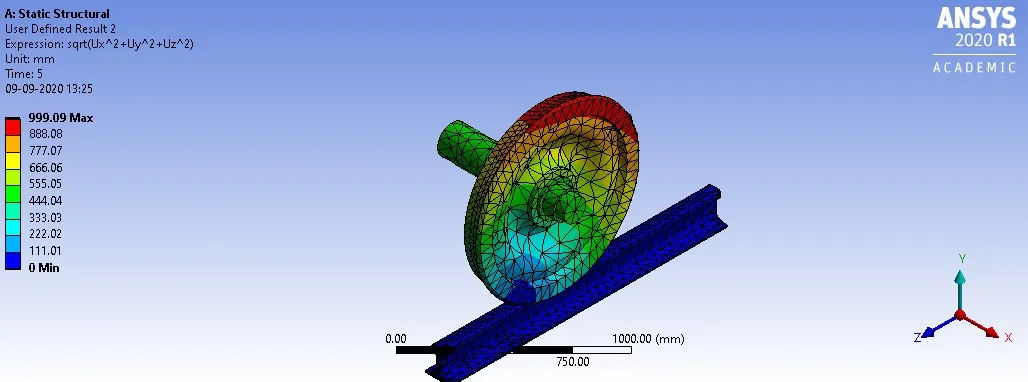
From the results above we can conclude that the values obtained by the inbuild ansys and the user defined result is the same.