Week 1 Spur Gear Challenge
Objective: The objective of this project is to simulate static structural analysis using different materials(such as cast iron (ductile), cast steel and cast bronze) and compare their equivalent stress, total deformation and stress intensity of a spur gear.
| Young' modulus(GPa) | Poission ratio | Yield Strength(MPa) | Ultimate strength(MPa) | |
| case 1: cast iron (ductile) | 171 | 0.275 | 340 | 548 |
| case 2: cast steel | 203 | 0.3 | 341 | 505 |
| case 3: cast bronze | 80 | 0.345 | 144 | 267 |
Geometry:
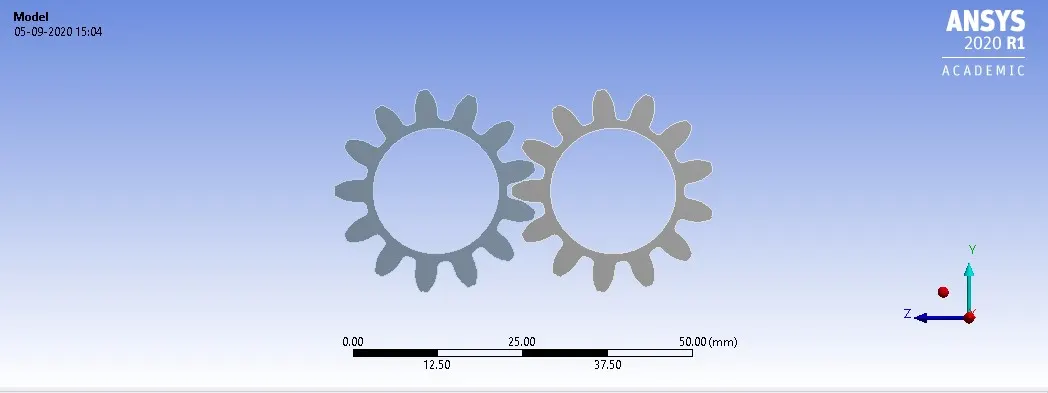
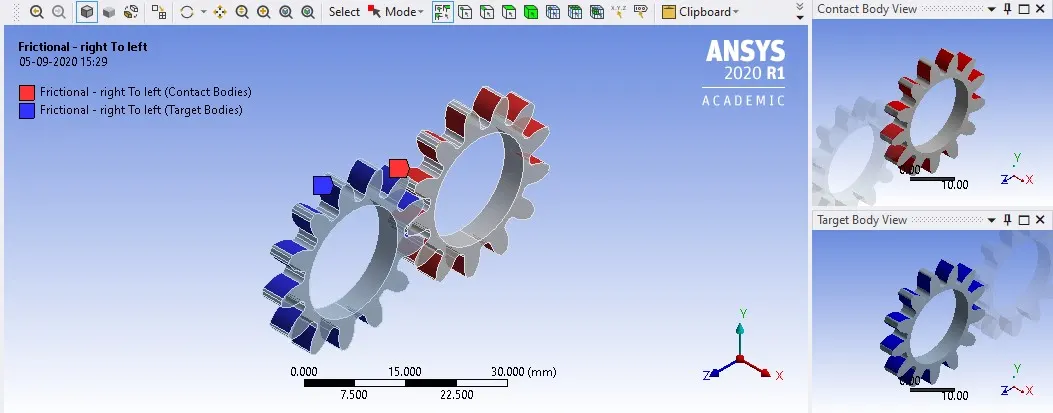
Contact: Contact was set up between 26 faces of both the spur gears. Frictionless contact has been applied between the two gears.
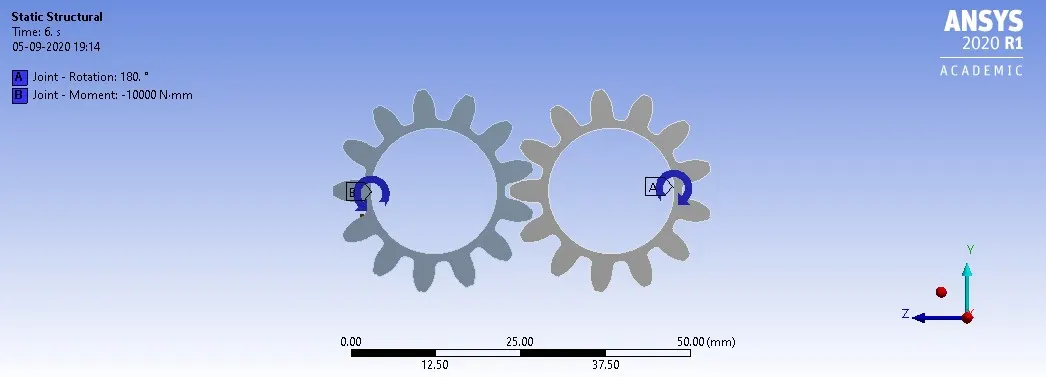
Revolute Joint: Connection for the spur gears is body to ground. For the left gear an rotation has been set at an interval of 30o in the anticlockwise direction. On the Right gear a moment of 10Nm is applied in the couterclockwise direction.
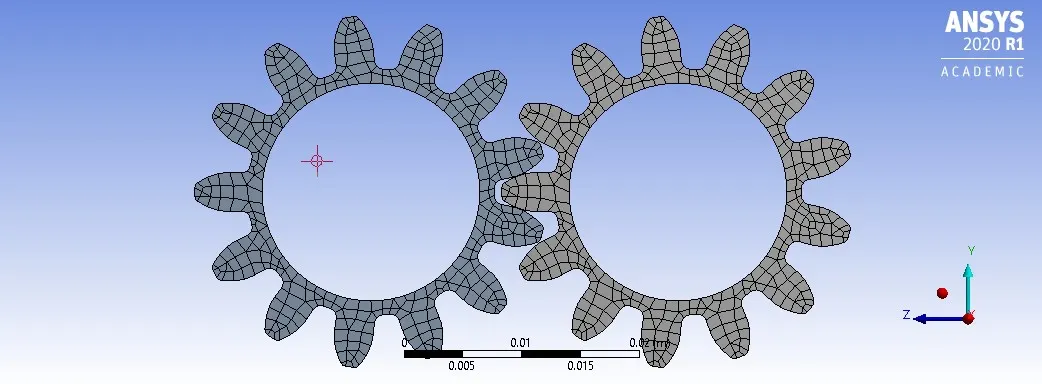
Meshing:
| Element size(mm) | No of elements | Nodes | |
| All cases | 1mm | 17860 | 3088 |
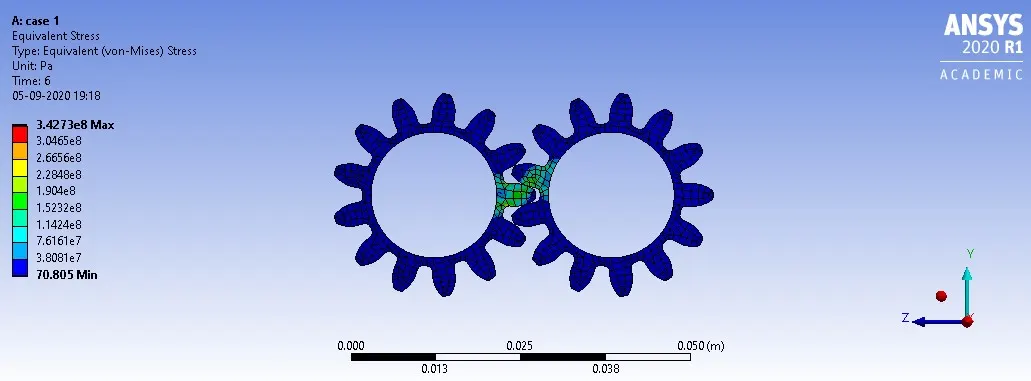
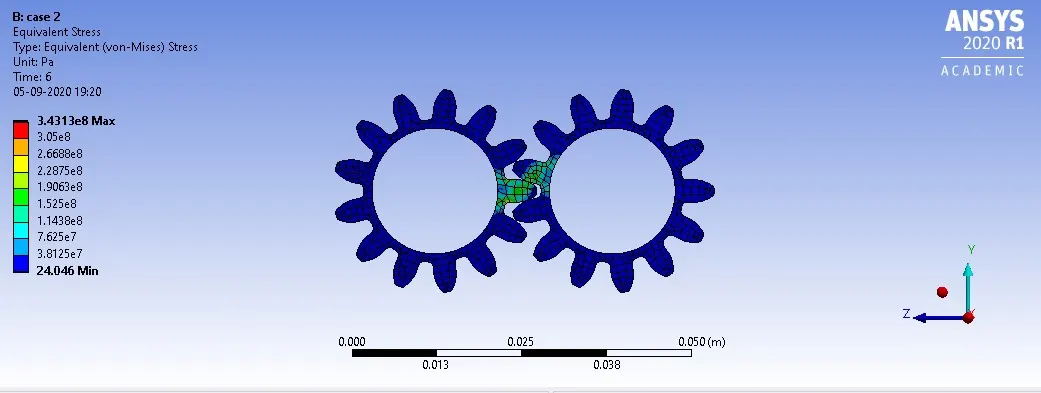
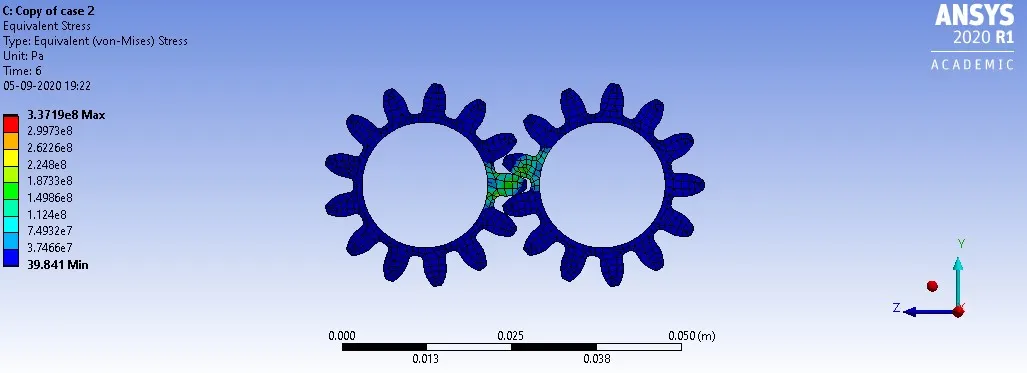
Equivalent Stress(Von mises) Results all cases:
1. Cast Iron (ductile)
2. Cast Steel
3. Cast bronze
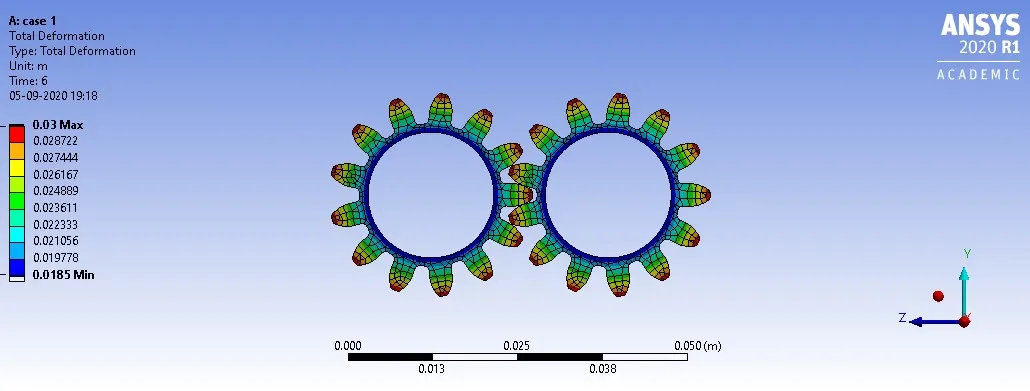
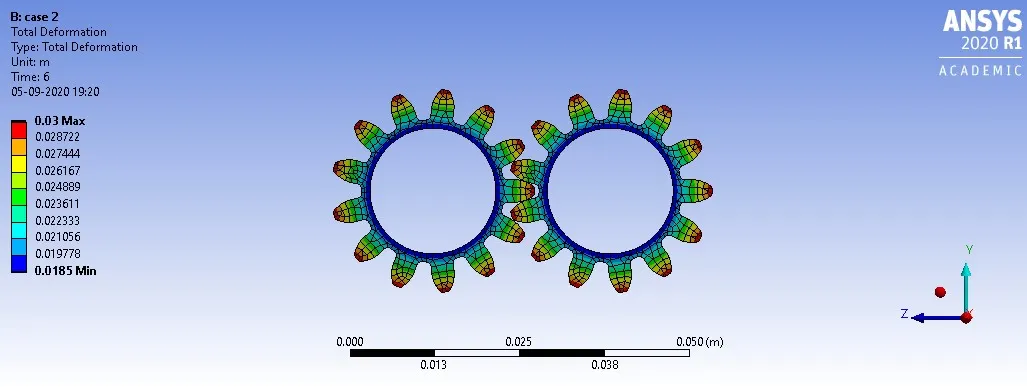
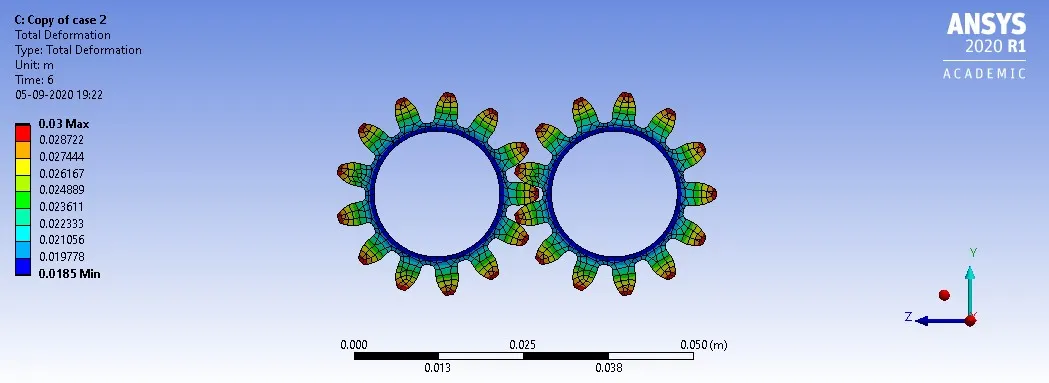
Total deformation for all cases:
1. Cast Iron (ductile)
2. Cast Steel
3. Cast bronze
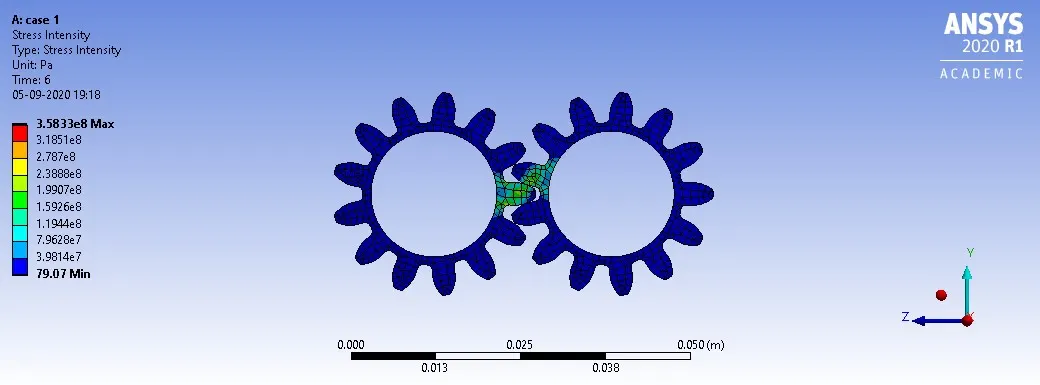
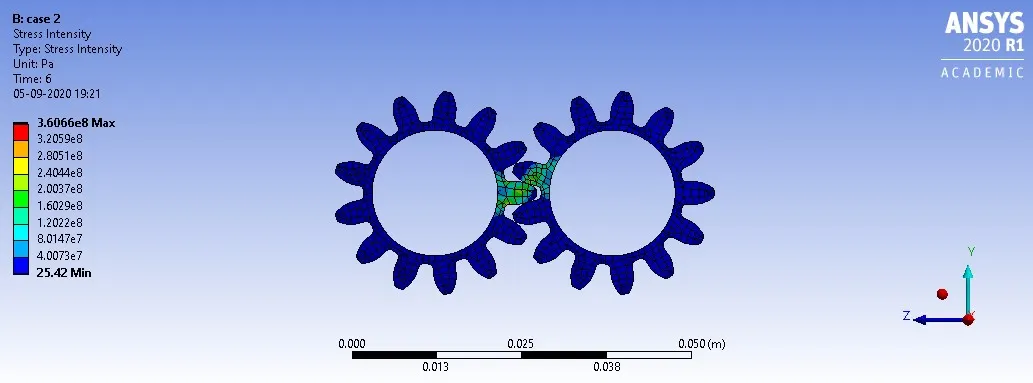
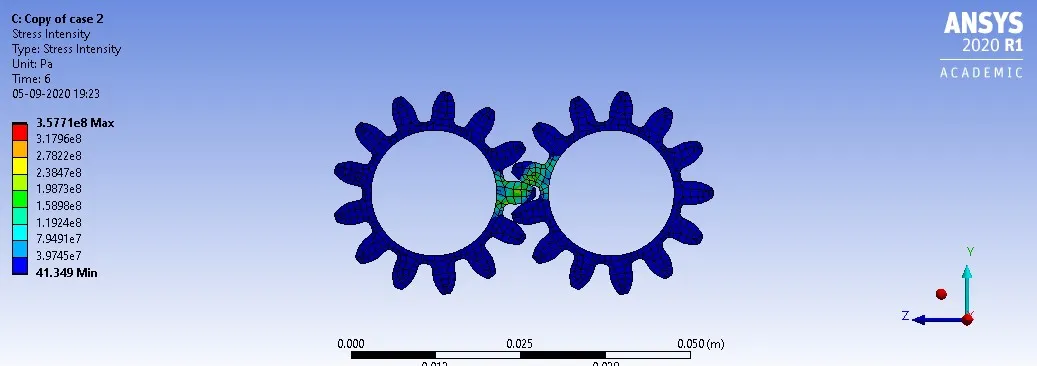
Stress intensity for all cases:
1. Cast iron(ductile)
2. Cast steel
3. Cast bronze
Results:
| Max | Equivalent stress(MPa) | Total deformation(m) | Stress Intensity(MPa) |
| case 1: cast iron (ductile) | 342.7 | 0.03 | 358 |
| case 2: cast steel | 343 | 0.03 | 360 |
| case 3: cast bronze | 337.2 | 0.03 |
357.7 |
Results:
From the results we can conclude that the stress is greater than the yield strength and hence undergo plastic deformation. All the regions of max stress intensity act as sites for crack formation which eventually leads to fracture.