Week 2 - Flow over a Cylinder.
AIM: To simulate the flow over a cylinder and explain the phenomenon of Karman vortex street.
OBJECTIVE:
PART-I
- Simulate the flow with the steady and unsteady case and calculate the Strouhal Number for Re= 100.
PART-II
- Calculate the coefficient of drag and lift over a cylinder by setting the Reynolds number to 10,100,1000,10000 & 100000. (Run with steady solver).
- Discuss the effect of Reynolds number on the coefficient of drag. ( Results should be validated with any standard literature and error should be within 5 %).
THEORY AND EXPLANATION:
Reynolds Number (Re):
Reynolds number for a flow is a measure of the ratio of inertial to viscous forces in the flow of a fluid around a body.
Re = rho*V*d/Dynamic Viscosity
The range of Re values will vary with the size and shape of the body from which the eddies are being shed, as well as with the kinematic viscosity of the fluid. Over a large Re range (47
Strouhal number (St):
Strouhal number is a dimensionless number describing oscillating flow mechanisms.
The Strouhal number is often given as,
St = f*d/u
Where,
f is the frequency of vortex shading,
L is the characteristic length
U is the flow velocity.
Von Karman vortex:
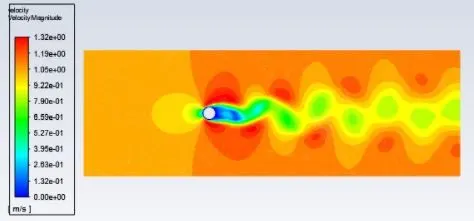
A Karman vortex street (or a von Kármán vortex street) is a repeating pattern of swirling vortices, which is caused by a process known as vortex shedding. It is responsible for the unsteady separation of flow of a fluid flow around the blunt bodies. Von Karman vortices form almost everywhere where the fluid flow is disturbed by an obstruction. And such a regular pattern of vortices called a " Von Karman vortices”. The phenomenon arises under certain flow conditions, expressed commonly by the dimensionless Reynolds number.
ReL= V L / ν
ReL= ρV L / μ
where,
V= the free stream flow velocity (m/s)
L= characteristic length parameter of the body or channel (m)
ρ = the reference fluid density(kg / m^3)
μ = kinematic viscosity (=dynamic viscosity/density = μ/ρ) (m^2 / s)
PROCEDURE:
1. For modelling the approach we are starting with the creation of geometry,
2. First we get into the geometry section where we create the geometry using the space claim.
3. First we select the unit in meters as required dimensions are given we create the geometry using the tools.
4. We remove the extra edges using the deleting construction lines. we use pull command to make it a surface and we remove the circular area to create the cylinder.
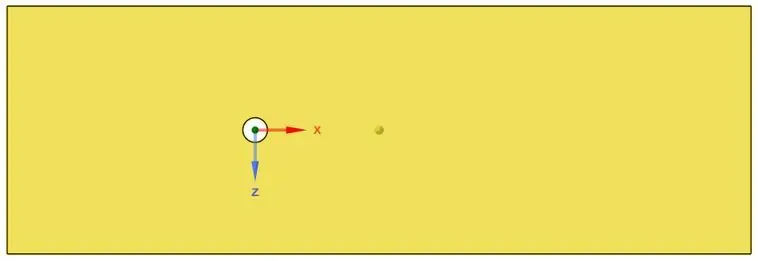
5. We use a meshing tool to mesh the geometry.
6. We create the mesh by giving the element size i.e 0.25 meters.
7. If we are not getting the correct results for this element size , again we change the mesh size to capture solution corretly.
8. After meshing we create the named selections of boundary. we gave the name to each of the faces of the boundaries.
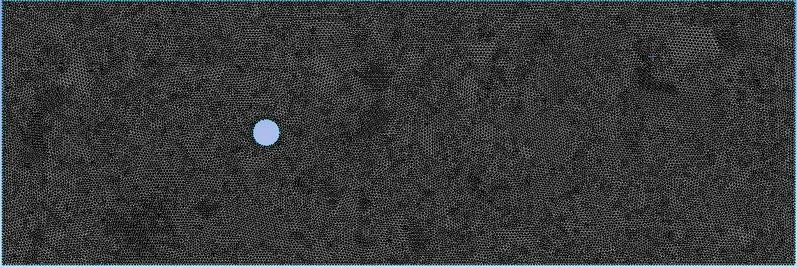
9. But in the meshing nodes, the shape is more quadrilateral than the triangle so we should this by changing the method to the triangle in the insert option.
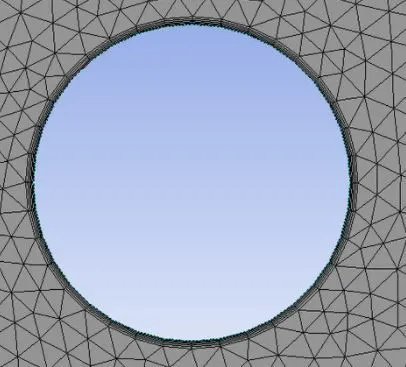
10. After changing the node's shape into triangles we should improve the mesh around the cylinder by sizing in the mesh which is used to control precisely the mesh.
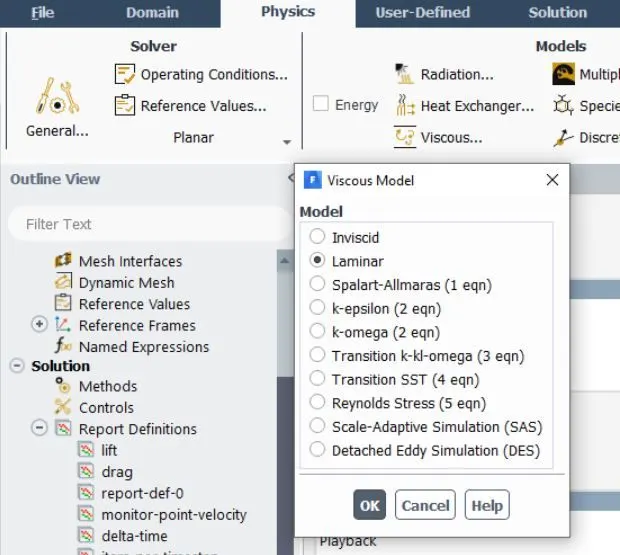
11. Before opening the set up we should update the mesh. Then we should change the viscous flow to laminar.
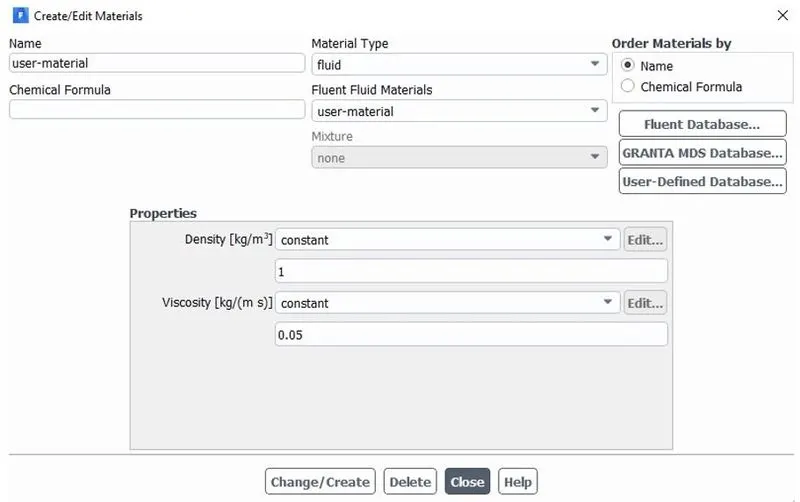
12. Open Materials and create a fluid that is to be used for the simulation for this case, it is air and also inputs the density and kinematic viscosity values.
STEADY STATE SIMULATION:
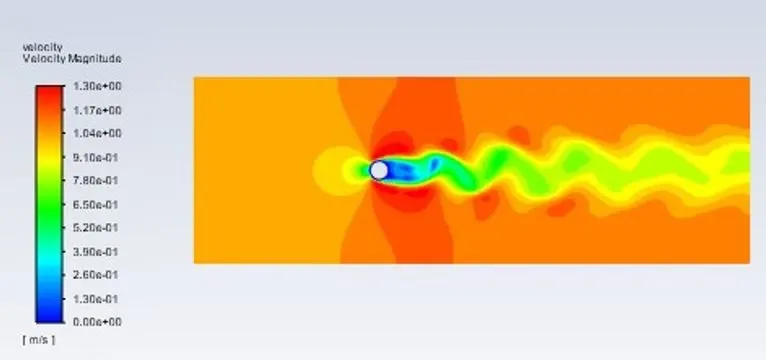
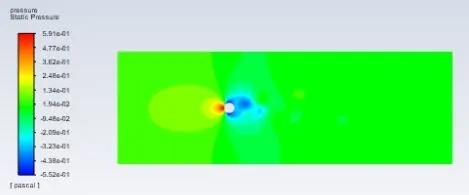
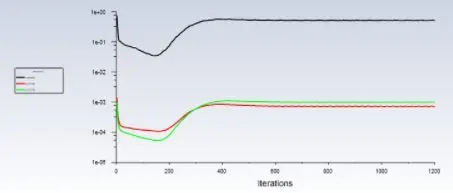
Simulate the flow with the steady case and calculate the Strouhal number for Re=100 and velocity 1m/s:
VELOCITY CONTOUR:
PRESSURE CONTOUR:
RESIDUAL PLOT:
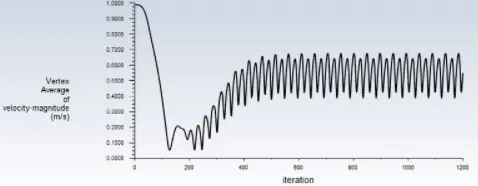
VORTEX AVERAGE VELOCITY PLOT:
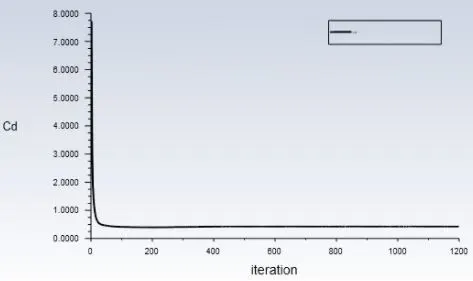
COEFFICIENT OF DRAG PLOT:
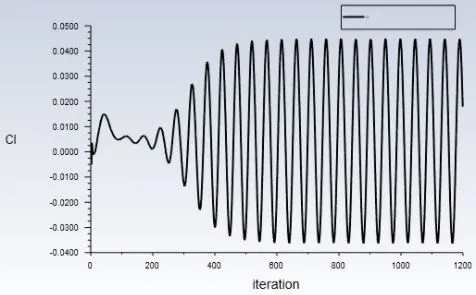
COEFFICIENT OF LIFT PLOT:
TRANSCIENT STATE SIMULATION:
Simulate the flow with the unsteady case and calculate the Strouhal number for Re=100 and velocity 1m/s:
VELOCITY CONTOUR:
PRESSURE CONTOUR:
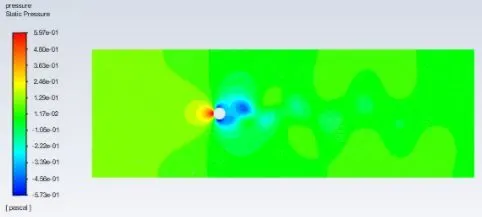
RESIDUAL PLOT:
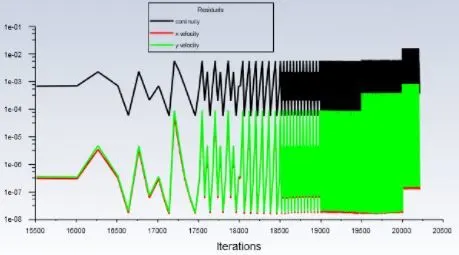
VORTEX AVERAGE VELOCITY PLOT:
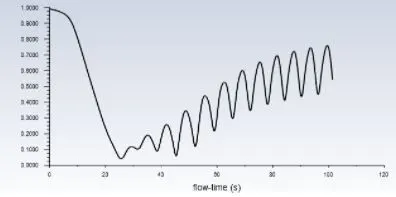
COEFFICIENT OF DRAG PLOT:
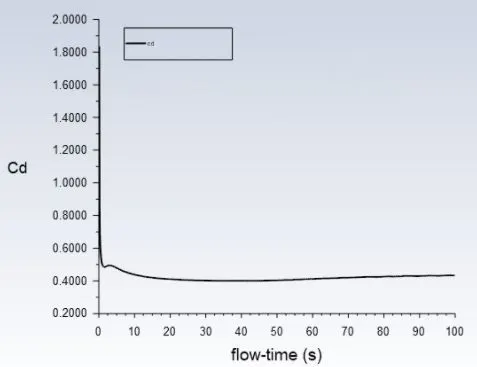
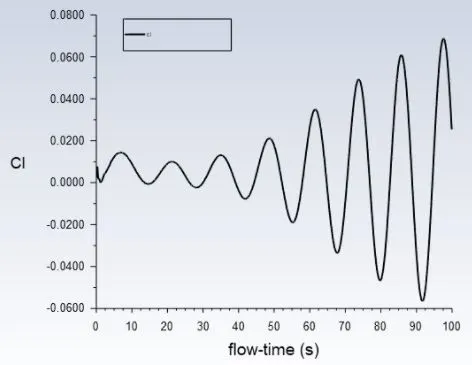
COEFFICIENT OF LIFT PLOT:
STEADY STATE SIMULATION:
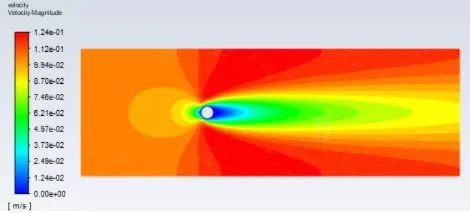
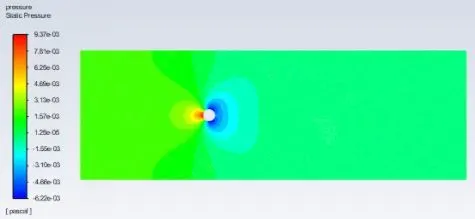
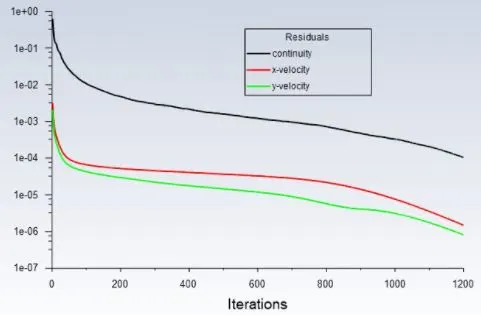
Simulate the flow with the steady case and calculate the Strouhal number for Re=10 and velocity 0.1m/s:
VELOCITY CONTOUR:
PRESSURE CONTOUR:
RESIDUAL PLOT:
VORTEX AVERAGE VELOCITY PLOT:
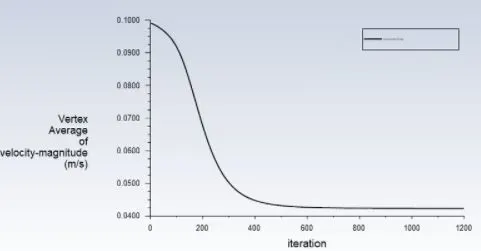
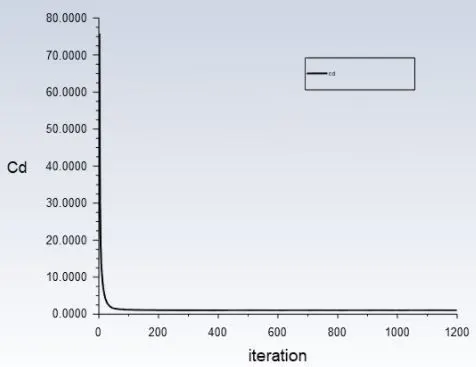
COEFFICIENT OF DRAG PLOT:
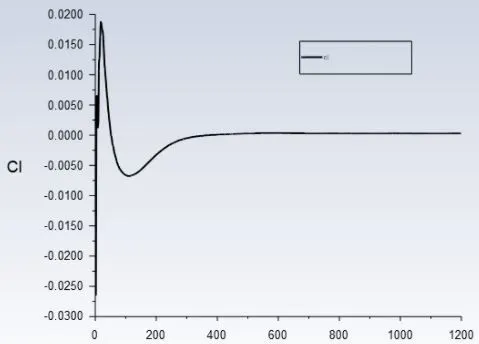
COEFFICIENT OF LIFT PLOT:
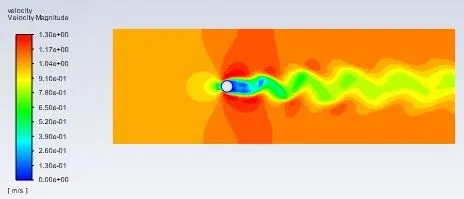
Simulate the flow with the steady case and calculate the Strouhal number for Re=100 and velocity 1m/s:
VELOCITY CONTOUR:
PRESSURE CONTOUR:
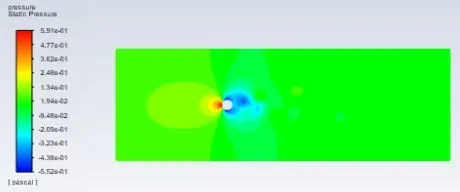
RESIDUAL PLOT:
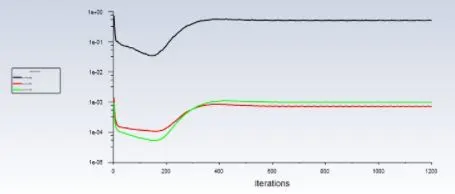
VORTEX AVERAGE VELOCITY PLOT:
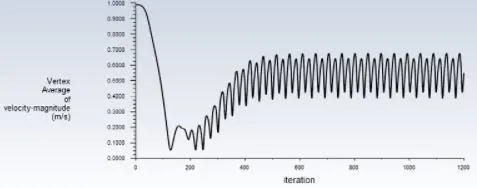
COEFFICIENT OF DRAG PLOT:
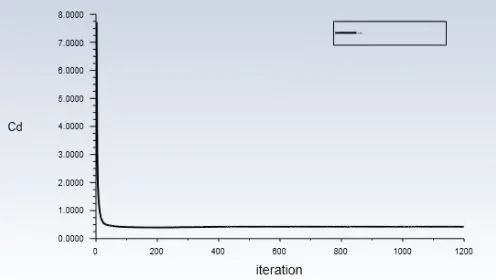
COEFFICIENT OF LIFT PLOT:
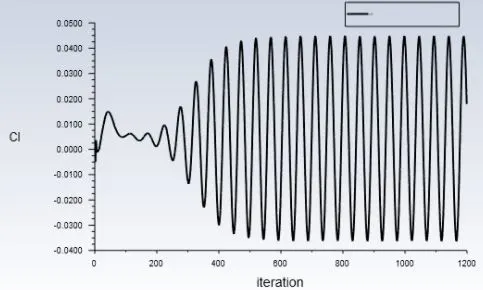
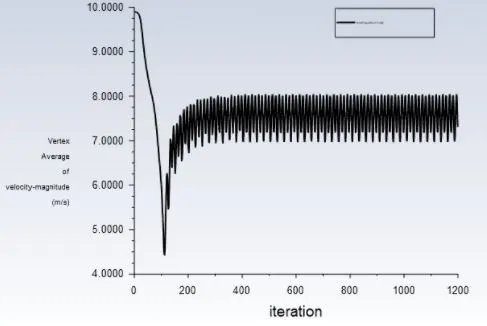
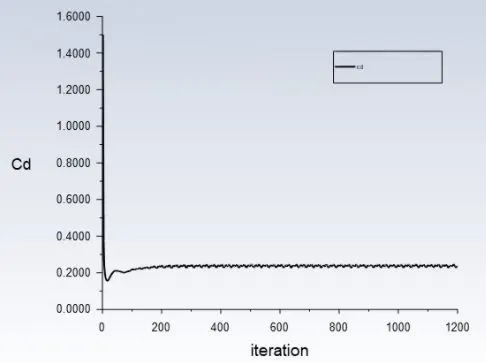
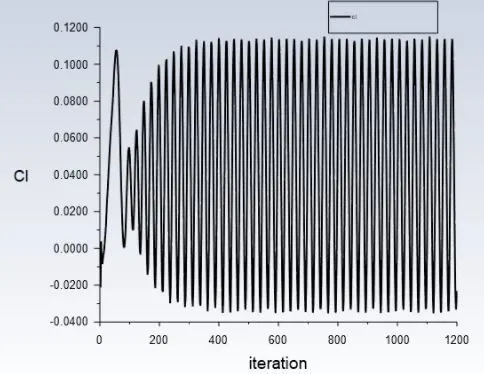
Simulate the flow with the steady case and calculate the Strouhal number for Re=1000 and velocity 10 m/s:
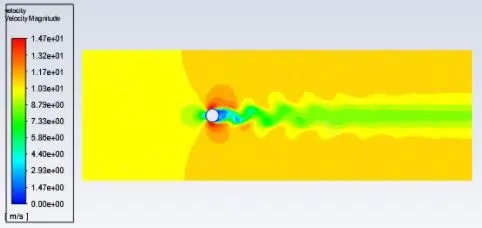
VELOCITY CONTOUR:
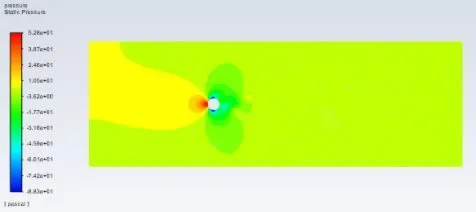
PRESSURE CONTOUR:
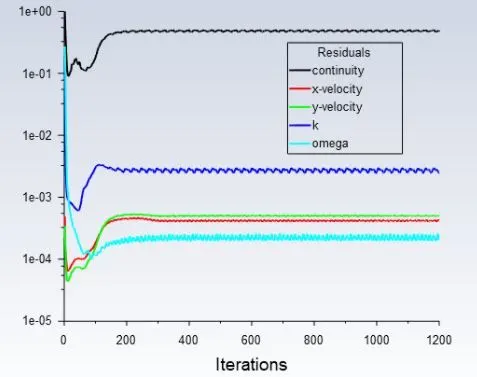
RESIDUAL PLOT:
VORTEX AVERAGE VELOCITY PLOT:
COEFFICIENT OF DRAG PLOT:
COEFFICIENT OF LIFT PLOT:
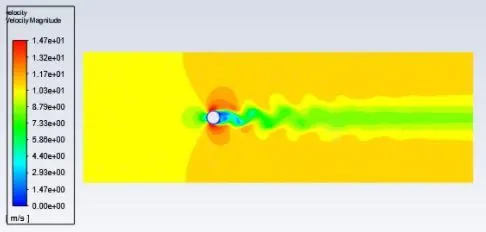
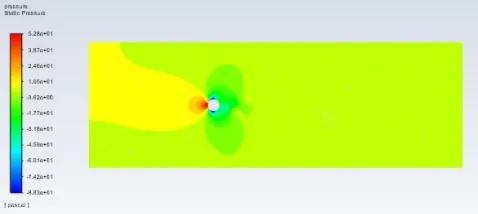
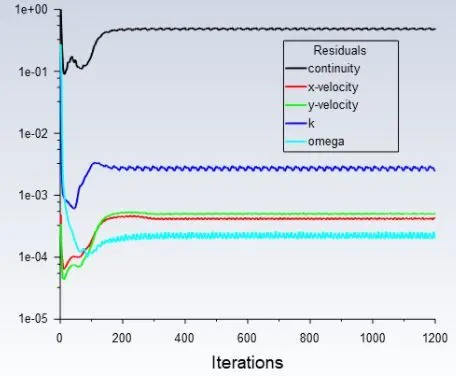
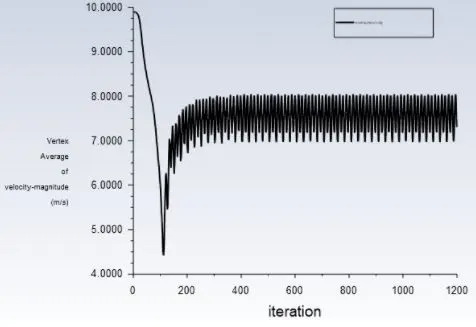
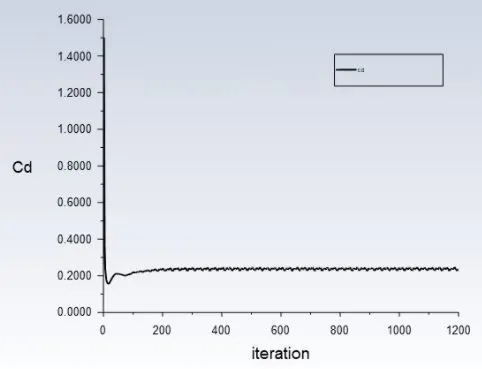
Simulate the flow with the steady case and calculate the Strouhal number for Re=10000 and velocity 100 m/s:
VELOCITY CONTOUR:
PRESSURE CONTOUR:
RESIDUAL PLOT:
VORTEX AVERAGE VELOCITY PLOT:
COEFFICIENT OF DRAG PLOT:
COEFFICIENT OF LIFT PLOT:
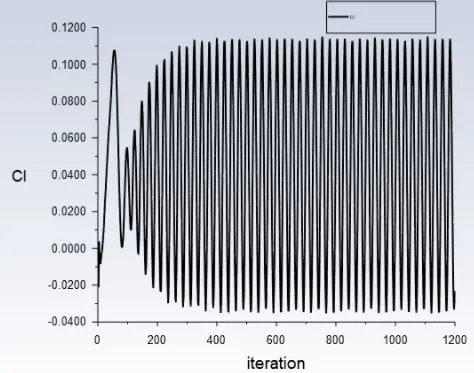
Simulate the flow with the steady case and calculate the Strouhal number for Re=100000 and velocity 1000 m/s:
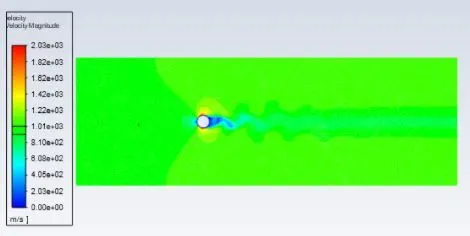
VELOCITY CONTOUR:
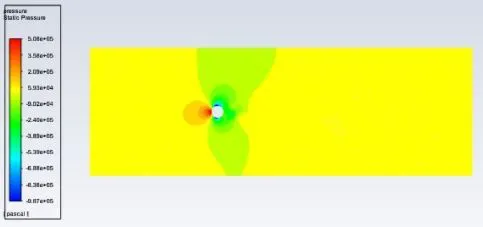
PRESSURE CONTOUR:
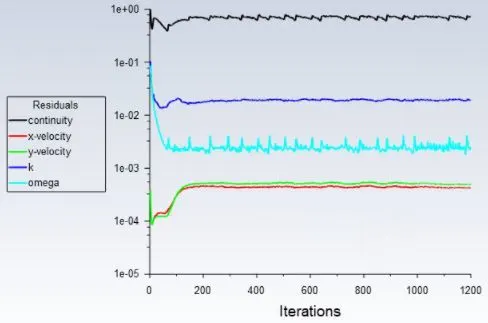
RESIDUAL PLOT:
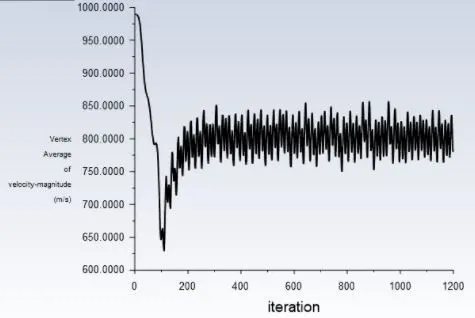
VORTEX AVERAGE VELOCITY PLOT:
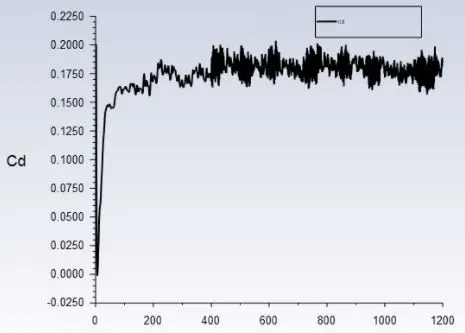
COEFFICIENT OF DRAG PLOT:
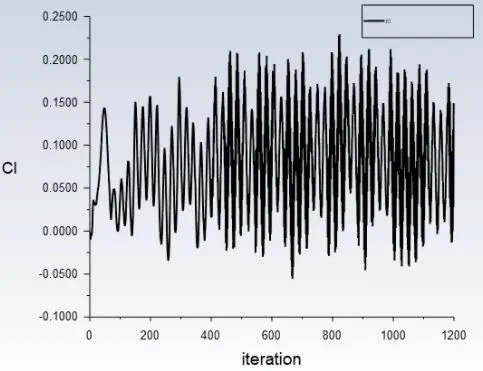
COEFFICIENT OF LIFT PLOT:
|
Reynolds number |
Inlet Velocity (m/s) |
Co-efficient of drag |
Co-efficient of lift |
|
10 |
0.1 |
1.0588 |
0.00029934 |
|
100 |
1 |
0.4260 |
0.0056086 |
|
1000 |
10 |
0.2371 |
0.041297 |
|
10000 |
100 |
0.2465 |
0.1081 |
|
100000 |
1000 |
0.1799 |
0.088114 |
CONCLUSION:
1. When the Reynolds number becomes greater than 1000 the oscillations were found to be increasing.
2. As the Reynolds number increases, inertial forces dominate over viscous forces.
3. The coefficient of drag (Cd) is found to be decreasing and the oscillatory nature of the coefficient of lift is observed.
4. The mean value of Vertex average of Velocity and coefficient of lift is found to be increasing with Reynolds number.
5. From the table, with increase in the Reynolds number Drag coefficient is decreasing coefficient of lift increasing.
6. Finally, we observed that along with an increase in the Reynolds number, the flow becomes more and more unsymmetrical.
7. Increasing velocity eventually brings the turbulent drag up to and even higher than the laminar drag value.