Week 2 - Flow over a Cylinder.
Aim :
Simulate the flow over a cylinder through Ansys software.
Objective:
Simulate the flow with the steady and unsteady case and calculate the Strouhal Number for Re=100.
- Calculate the coefficient of drag and lift over a cylinder by setting the Reynolds number to 10,100,1000,10000 & 100000. (Run with steady solver)
- Discuss the effect of Reynolds number on the coefficient of drag. [ Results should be validated with any standard literature and error should be within 5 %.
Procedure:
- Open Ansys fluent software
Set the Spaceclaims units to change millimetres to meters. - Then start the geometry.
- First, select the axis set the mid point draw the circle 2 m.
- Draw the left-hand side 20 m of the circle and the right side 40 m.
- Then start drawing the rectangle height is 20 m.
- Open Ansys fluent software .
- Finally 2D geometry change to 3D geometry.
Meshing
- After drawing the geometry then start meshing the geometry
- Right-click the mesh option insert and body selection and Quad dominant to a triangle.
- Finally, generate a mesh element size of 2.0m and click generate the mesh option.
- Mesh right click insert and sizing method click geometry click the edge and option type number of division and number of dimensions (36).
- Mesh insert option inflation and select face and inflation option.
- This improves mesh quality. Perfect mesh is created.
Setup
- To view te model and Meshed flow over the cylinder
- Click the on "Double Precision" and set the Solver process to 4.
- After that, you can select the viscous model and choose laminar flow.
- To modify the fluid flow poroperties,select "User Defined Material" and adjust the values for air density and viscosity
- Finally ,make sure to change the inlet velocity values for the boundary condition based on the Reynolds number.
- To compute the referernce values,please provide the inlet condition.
- Finally initialize the boundry condition above 300 iteration
- We get the results Residual plots,Drag coefficient,Lift coefficient.
- This same process will the multiple Reynolds Number.
Results
Reynolds number=10
Drag plot
Lift plot
Reynolds number=100 (Steady Flow)
Lift Plot
Vertex velocity
Drag Plot
Reynolds number =100 (Unsteady Flow)
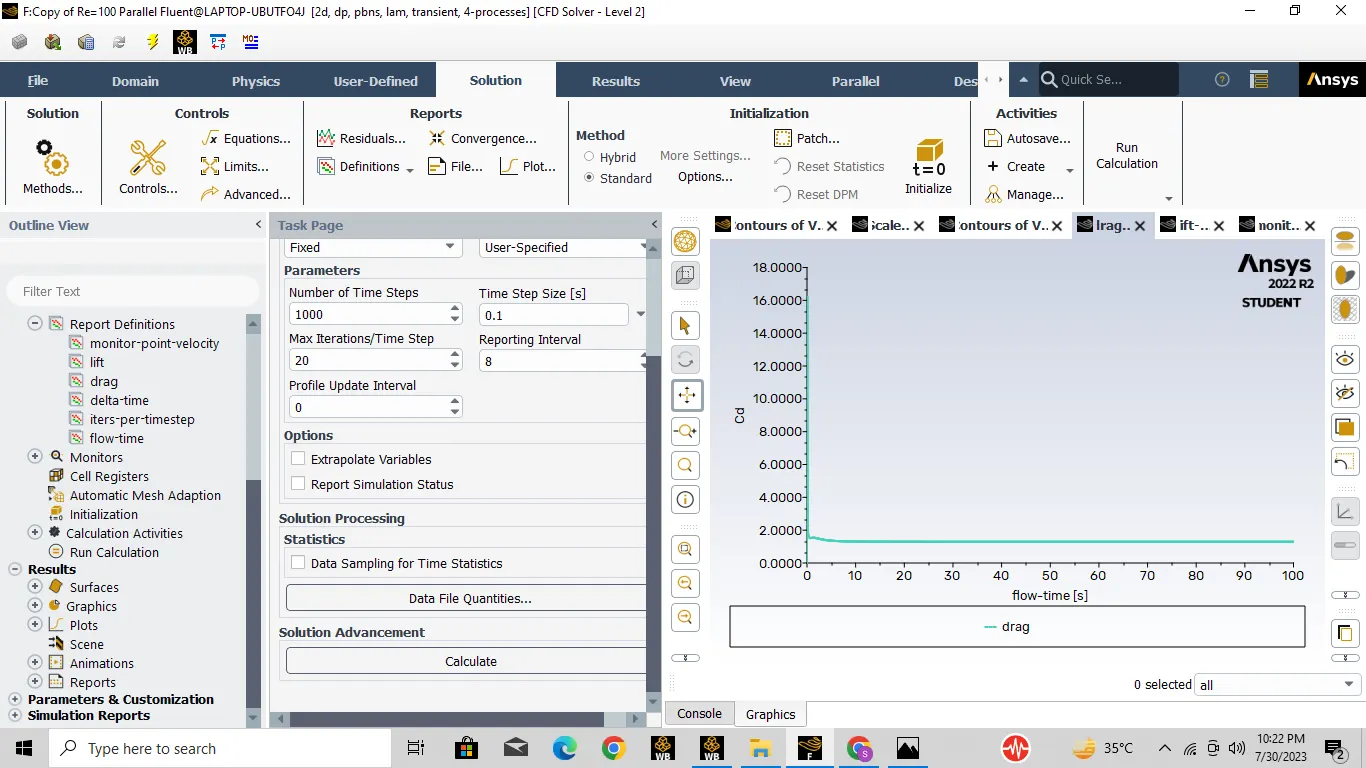
Drag Plot
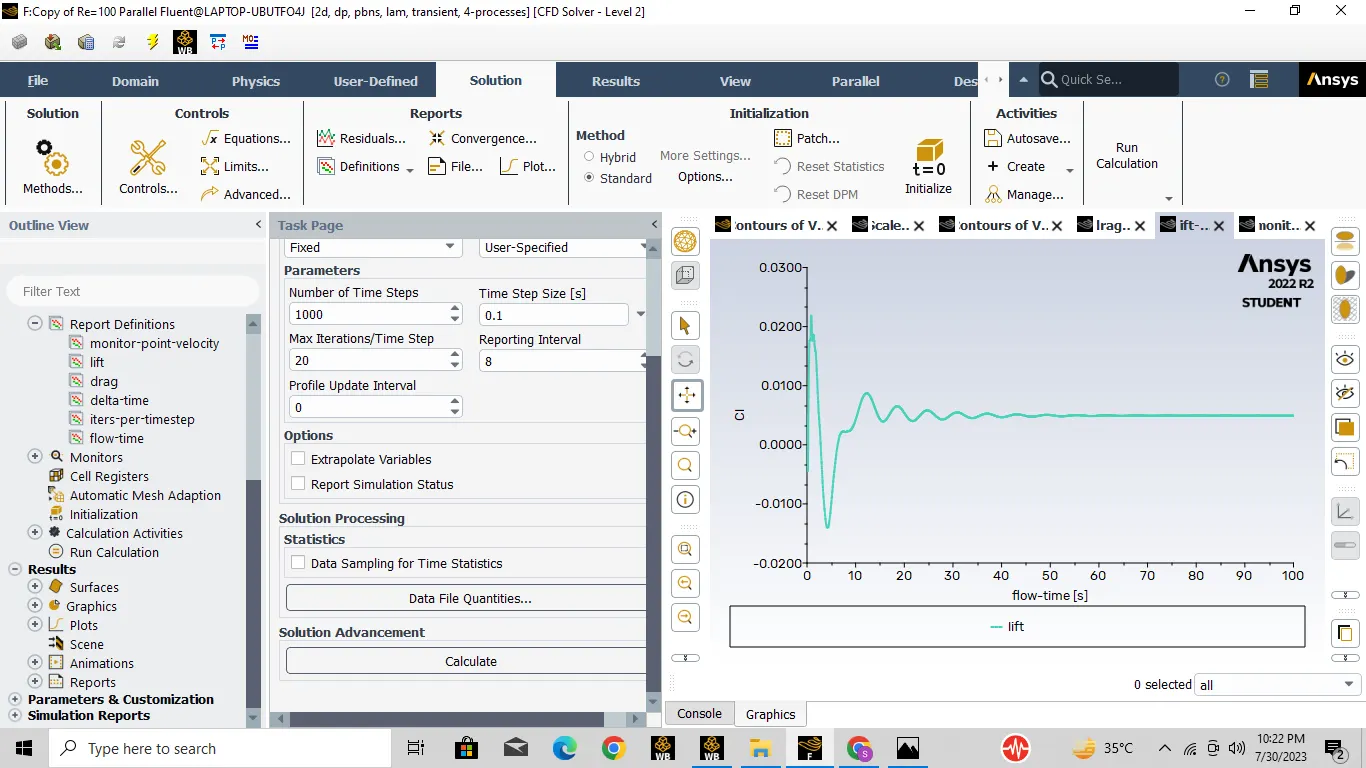
Lift Plot
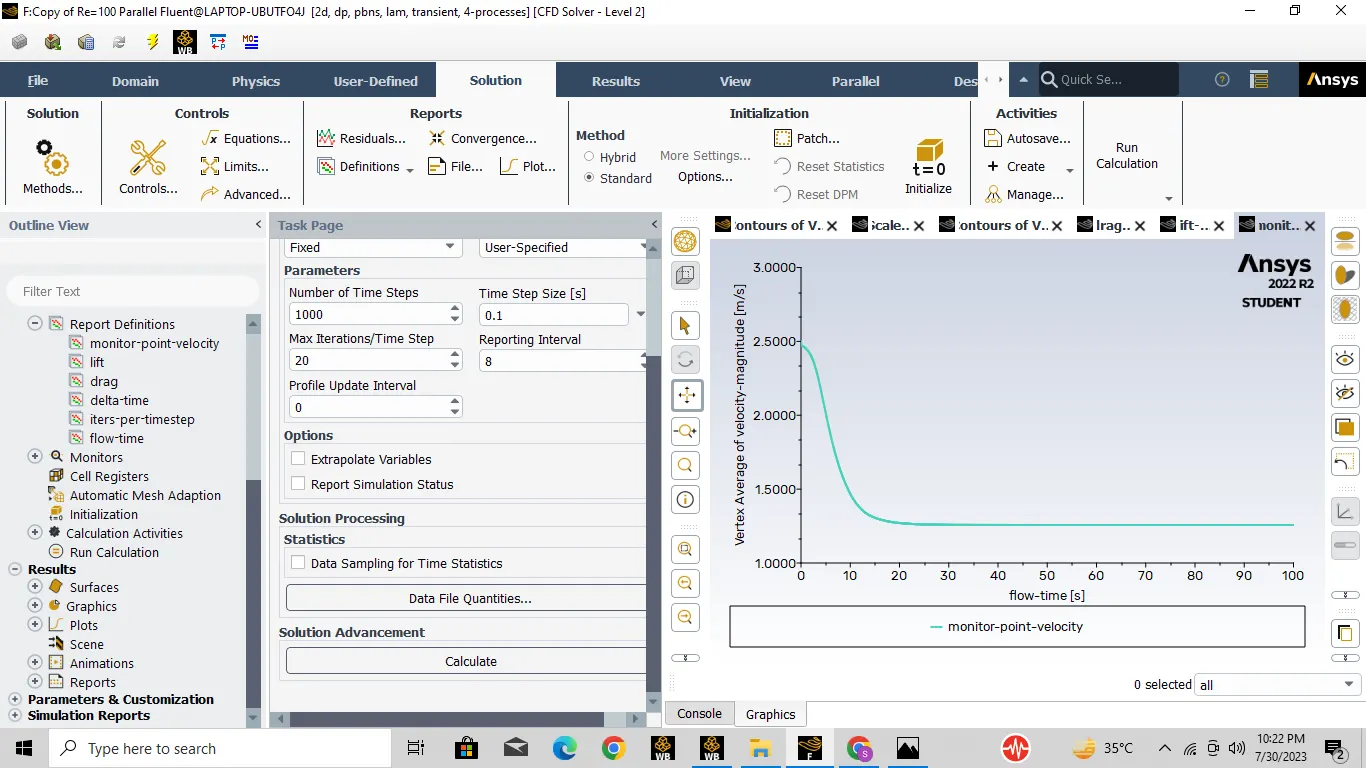
Vertex velocity Transient Stage
Reynolds number =1000
Lift Plot
Drag Plot
Vertex Average Velocity
Reynolds number=10000
Lift Plot
Drag Plot
Vertex Average velocity Plot
Reynolds number =100000
Lift Plot
Drag Plot
Vertex Average Velocity Plot
Part (B)
- Von Vertex Karman Street
- In fluid dynamics, a Karman vortex street (or a von Karman vortex street) is a repeating pattern of swirling vortices, caused by a process known as vortex shedding, which is responsible for the unsteady separation of flow of a fluid around blunt bodies.
- Analysis
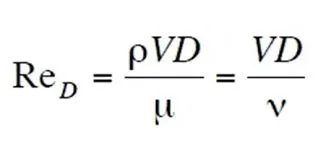
- A vortex street will form only at a certain range of flow velocities, specified by a range of Reynolds numbers (Re), typically above a limiting Re value of about 90. The (global) Reynolds number for a flow is a measure of the ratio of inertial to viscous forces in the flow of a fluid around a body or in a channel, and may be defined as a nondimensional parameter of the global speed of the whole fluid flow:

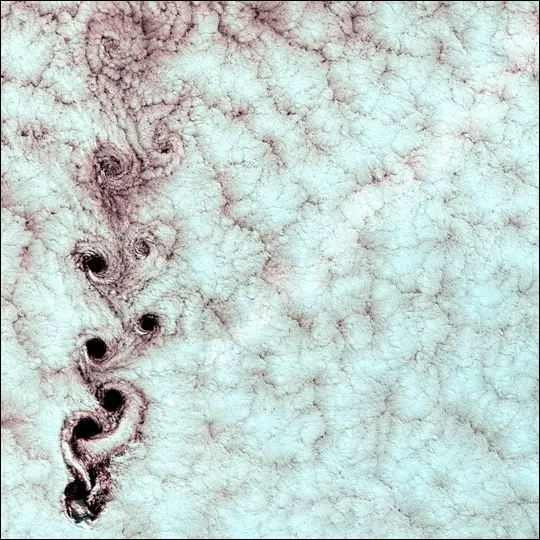
Swirling Cloud
File Link :https://drive.google.com/file/d/19n9EDAutDD0iEXYmQA96c7qPm8aTNMA7/view?usp=drive_link