Week 2 - Flow over a Cylinder.
Aim: To run simulation for flow over cylinder to calculate Strouhal Number for steady and unsteady state and Drag and Lift coefficient for Different Reynold number case.
Procedure:
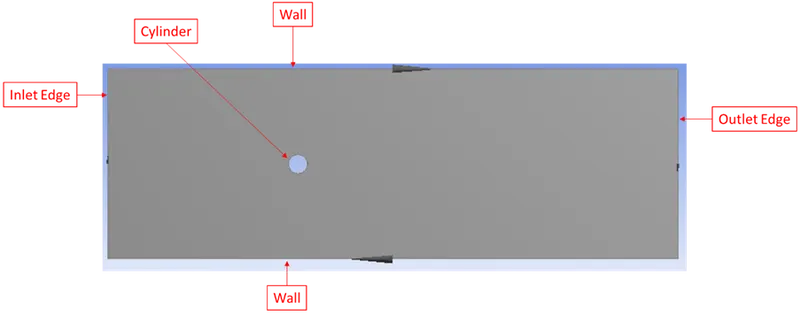
- We need to create Surface such that inlet edge is 10XD away from cylinder centre and outlet edge is 20XD away from cylinder centre. The top and bottom wall are 5XD away from cylinder centre. The surface is created in Space Claim.

- We can start with Meshing now, First I gave names to the edges as it would help while defining boundary condition.
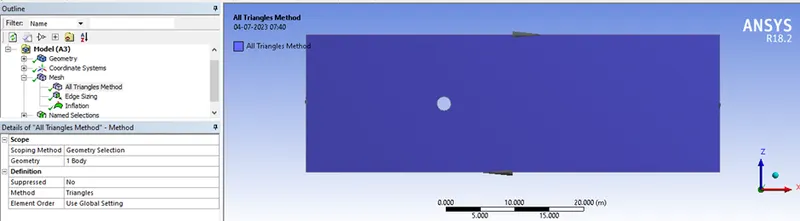
- For meshing, I created a method so that there is triangular meshes in whole geometry and setting mesh length to 0.25 m.
I also created a edge sizing method to retain cylinder shape.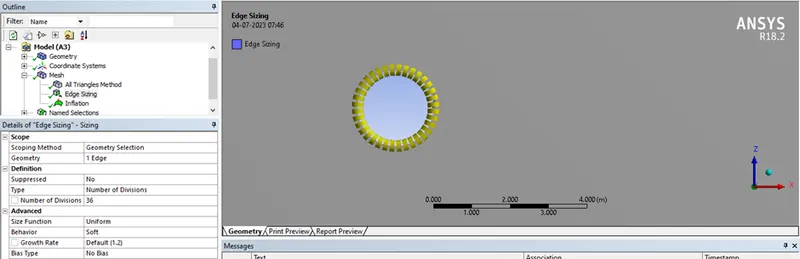
For a better result near the cylinder wall we created inflation layer as well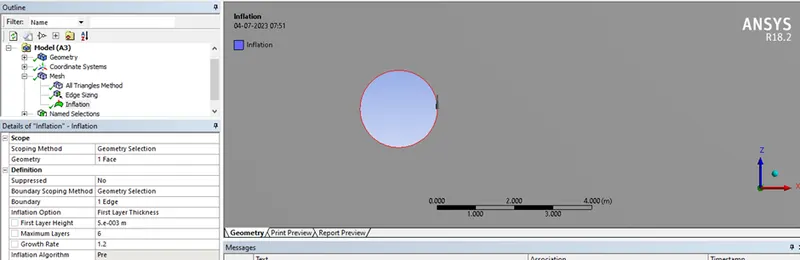
Cases:
Setting up Physics
Time: Steady / Transient
Type: Pressure Based
Velocity Formulation: Absolute
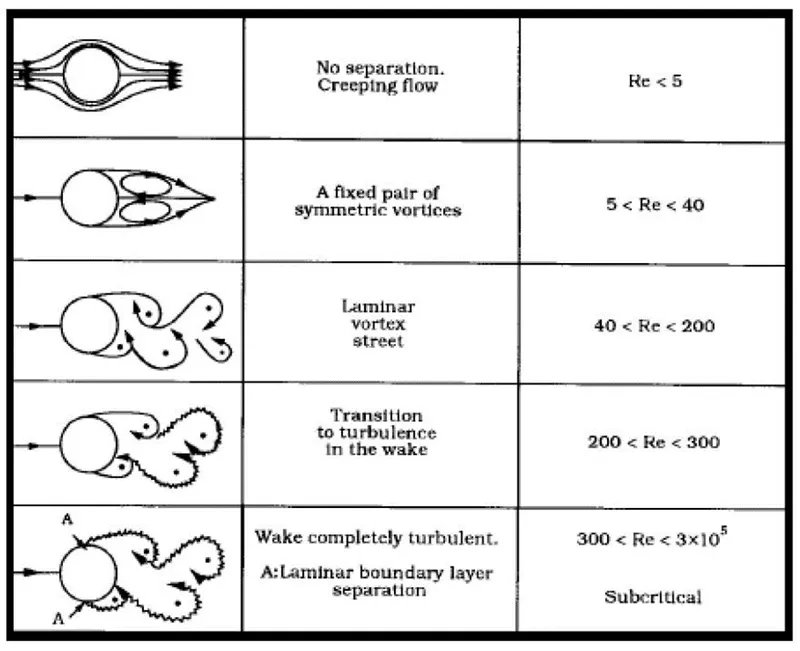
Viscous Model: Laminar for Re 10 and 100, K-epsilon Realizable for 1000, 10000 and 100000
Part 1: We need to find out Strouhal number for steady and unsteady case at Re 100. So, to have a fluid with Re of 100 I created a user material with density of 1 kg/m^3 and viscosity of 0.02.
Case 1: to Calculate Strouhal Number for steady case.
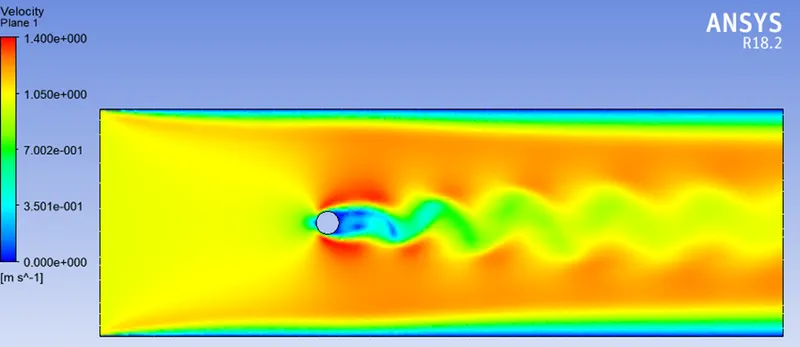
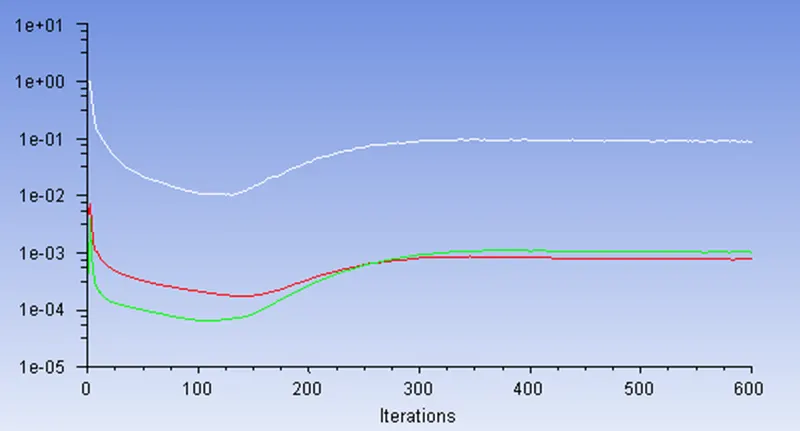
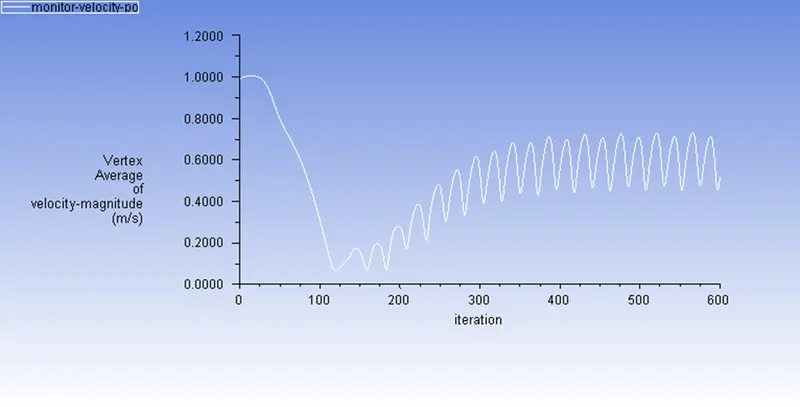
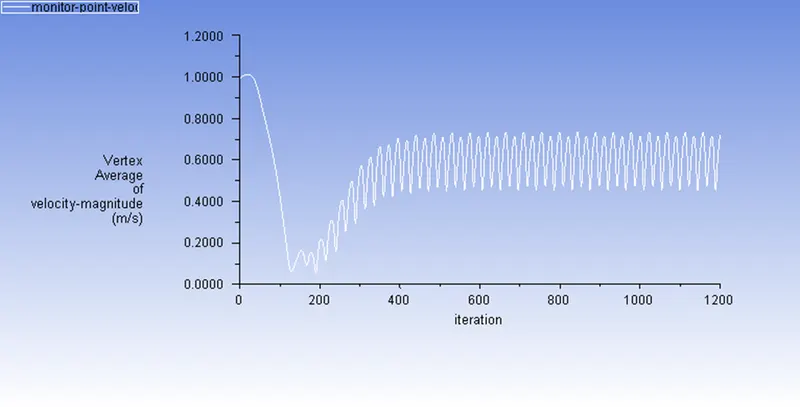
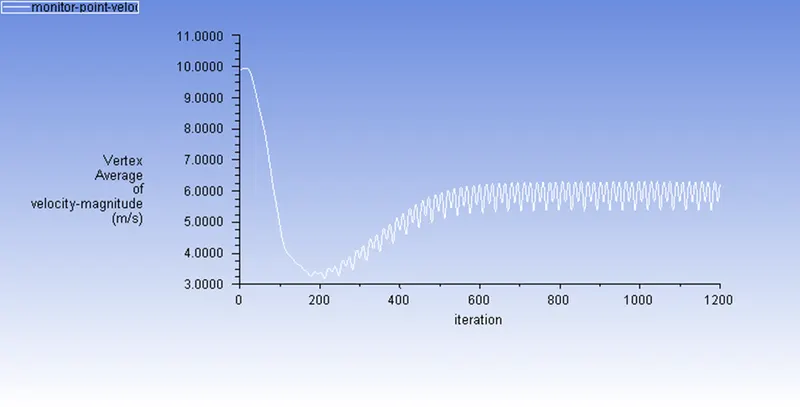
In this case we didn’t find proper convergence looking at residual chart, but when we look at the velocity plot graph, we can say that the solution is converged as it is oscillation is constant.
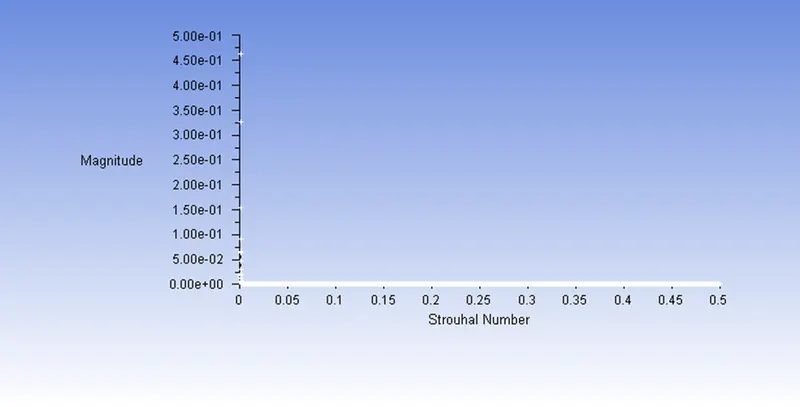
We plotted the graph for Strouhal number in this case, we got a Strouhal number of 0,5.
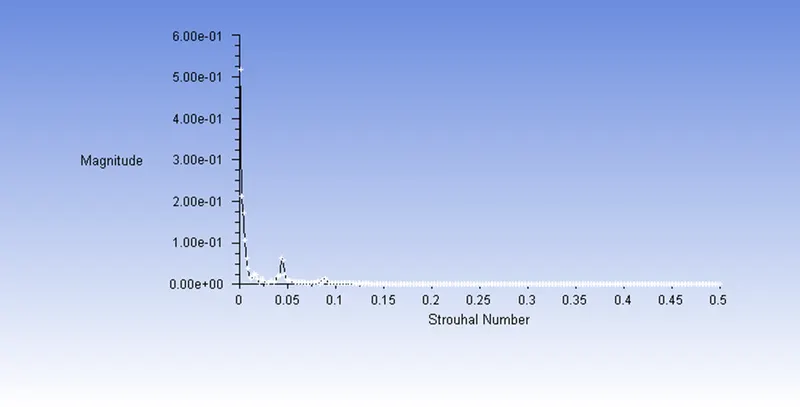
2. Case2: Calculate Strouhal number in unsteady case.
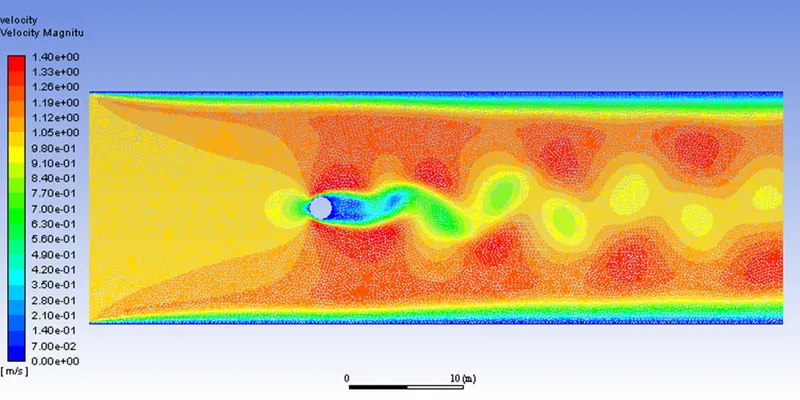
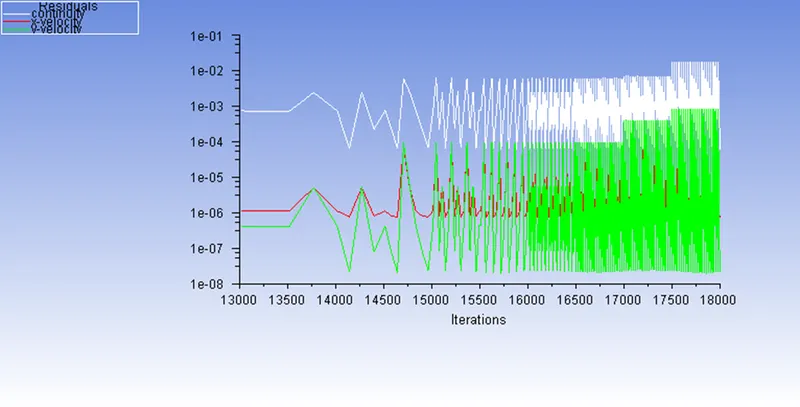
In unsteady case, we find a good convergence graph and so we can say the the solution is converged.
We plotted the graph for Strouhal number in this case, we got a Strouhal number of 0,5.
Part 2: To calculate Coefficient of lift and drag for different reynold’s number and compare it with the standard graph. to ste different Reynold's number we are changing the velocity factor. To calculate velocity based on Re we use below formula
`RE=(rho*V*L)/mu`
1. Case 1: For Reynold’s Number of 10.
We changed velocity to 0.1 m/s so that Reynolds number is 10.
Velocity: 0.1 m/s
Length: 2 m
Viscosity: 0.02 kg/m-s
Density: 1 Kg/m^3
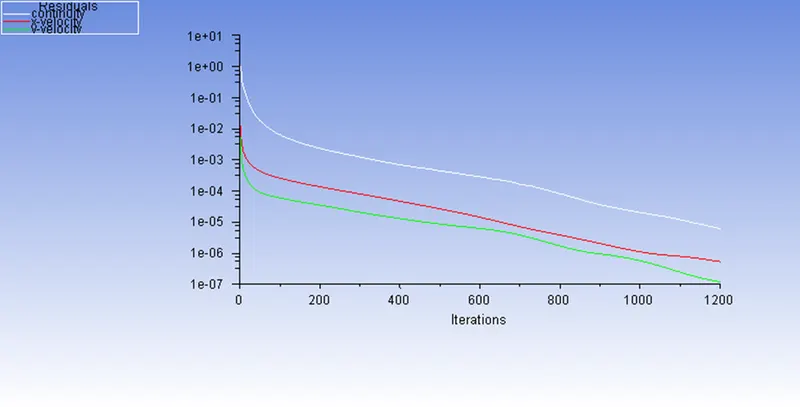
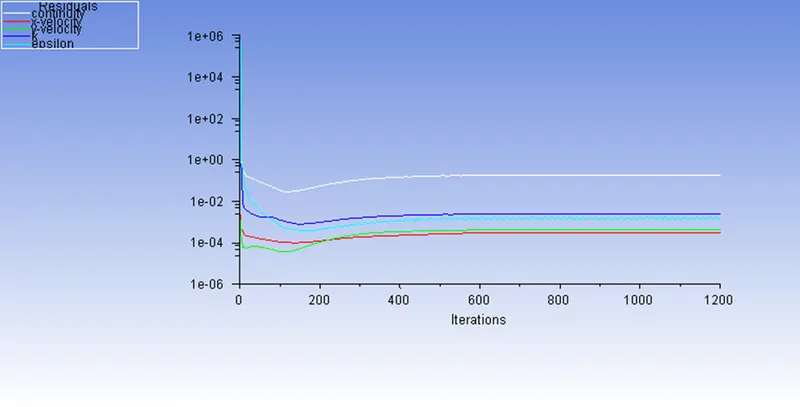
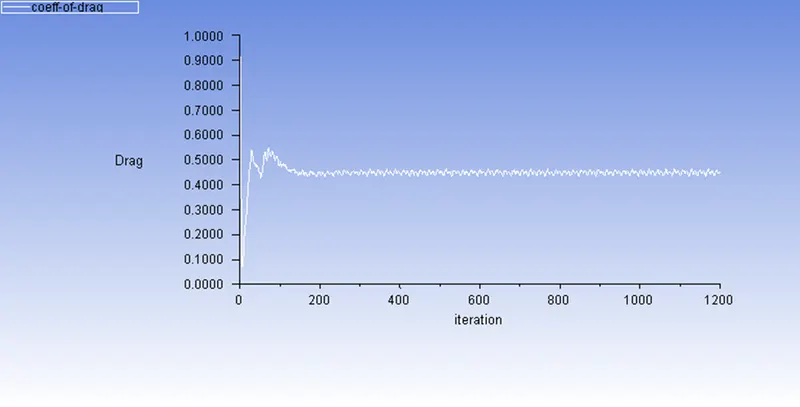
I feel solution is converged as the residual chart went below e-3 and also the velocity chart for monitor point was consistent.
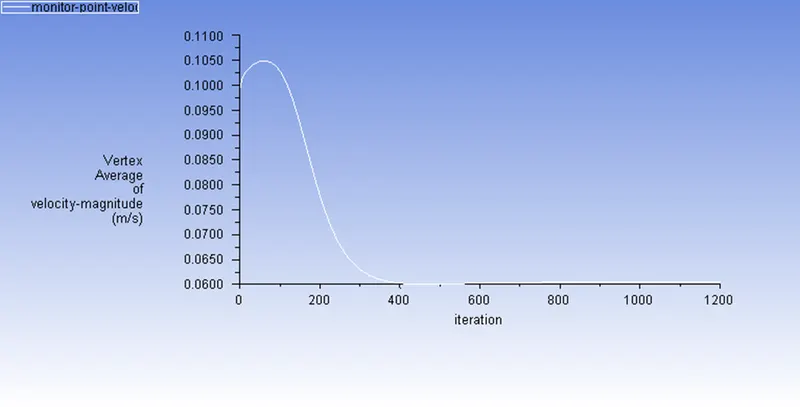
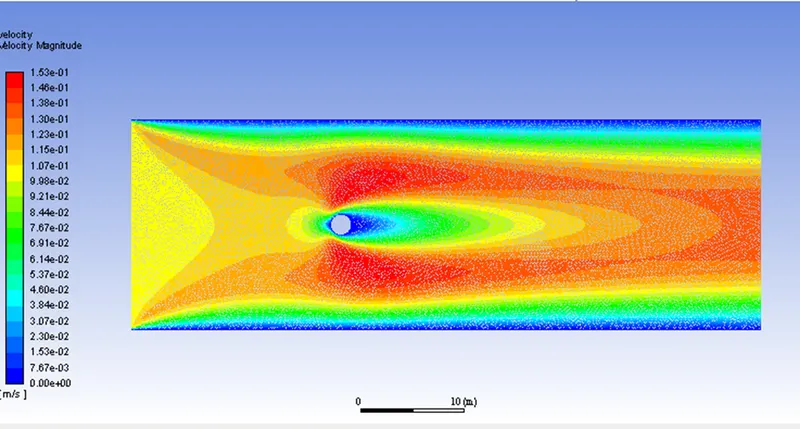
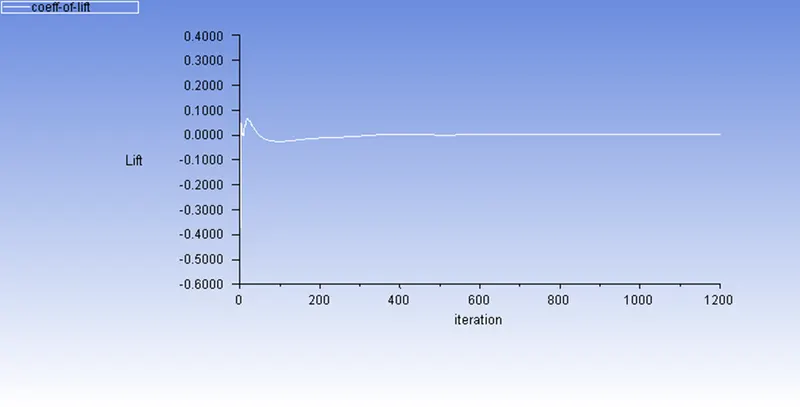
Coefficient of Lift: 0.0021
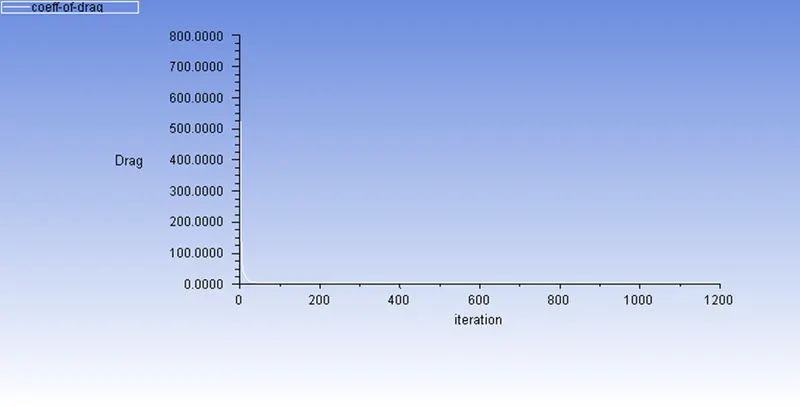
Coefficient of Drag: 4.5942
2. Case 2: For Reynold’s Number of 100.
We changed velocity to 1 m/s so that Reynolds number is 10.
Velocity: 1 m/s
Length: 2 m
Viscosity: 0.02 kg/m-s
Density: 1 Kg/m^3
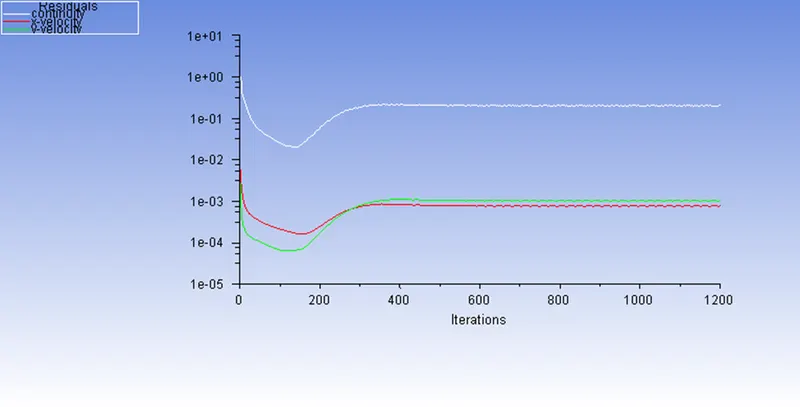
Solution is converged as the residual plot seems to be stabilized.
Coefficient of Lift: 0.1031
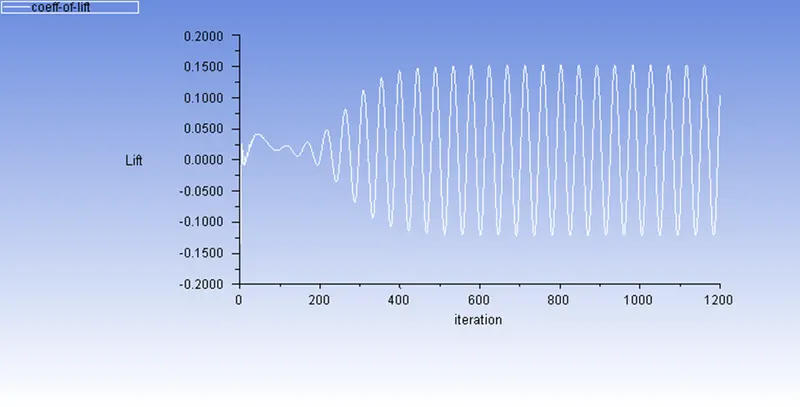
Coefficient of Drag: 1.5053
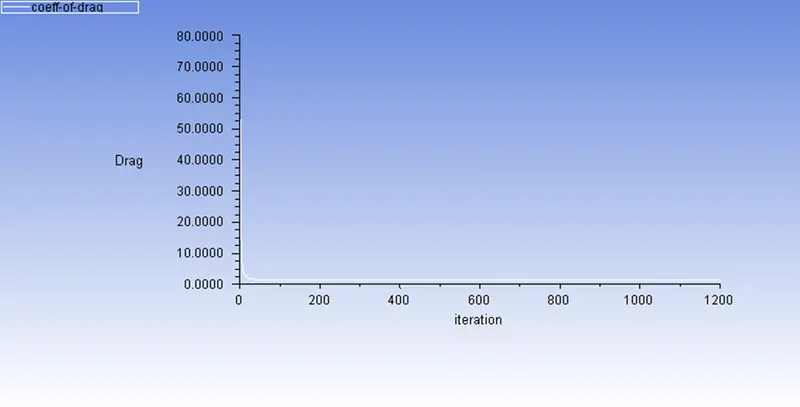
3. Case 3: For Reynold’s Number of 1000.
We changed Velocity to 10 m/s so that Reynolds number is 1000.
Velocity: 10 m/s
Length: 2 m
Viscosity: 0.02 kg/m-s
Density: 1 Kg/m^3
From here we will use K-epsilon realizable model as at Re 1000 the becomes turbulent
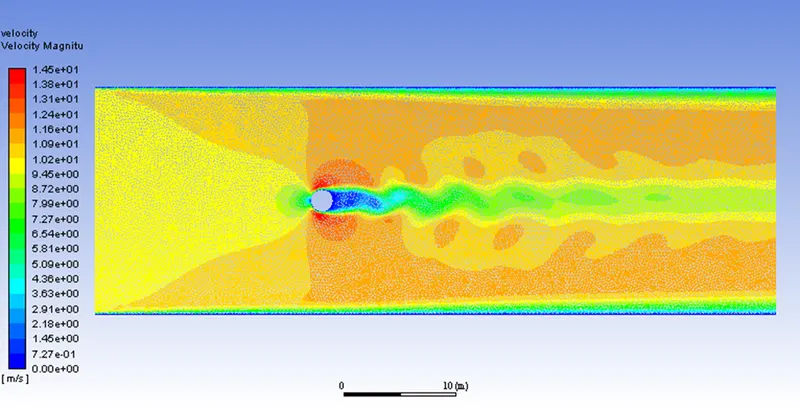
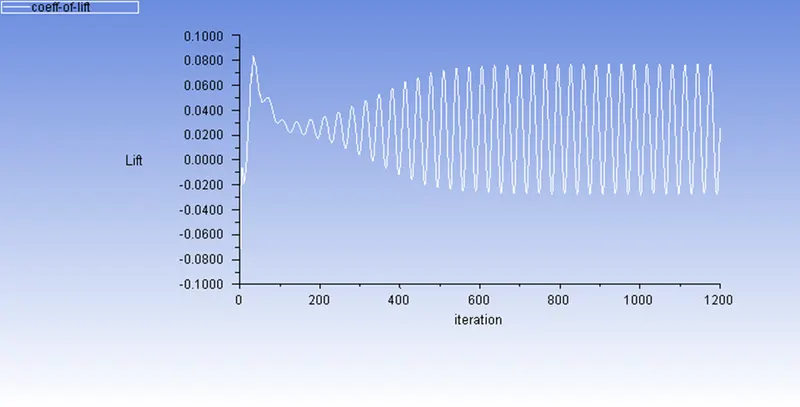
Coefficient of Lift: 0.0254
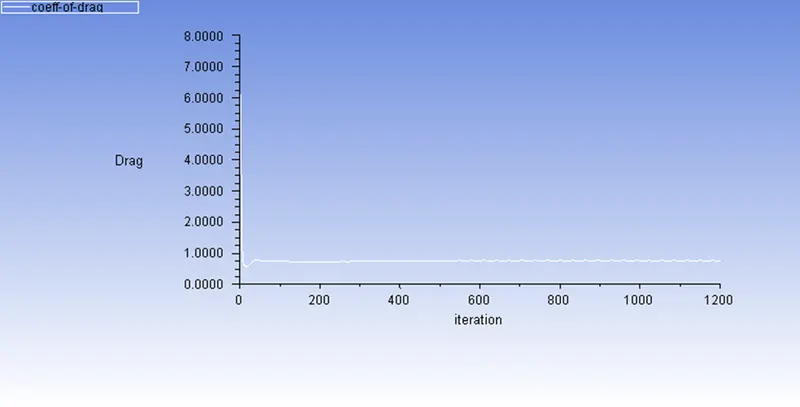
Coefficient of drag: 0.7669
4. Case 4: For Reynold’s Number of 10000.
We changed velocity to 100m/s so that Reynolds number is 10000.
Velocity: 100 m/s
Length: 2 m
Viscosity: 0.02 kg/m-s
Density: 1 Kg/m^3
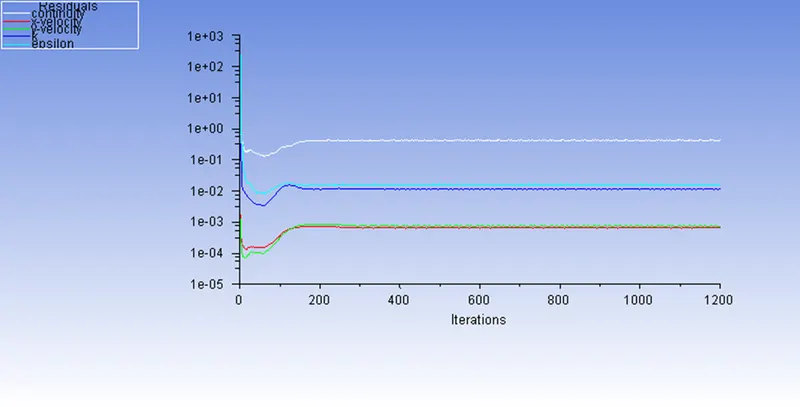
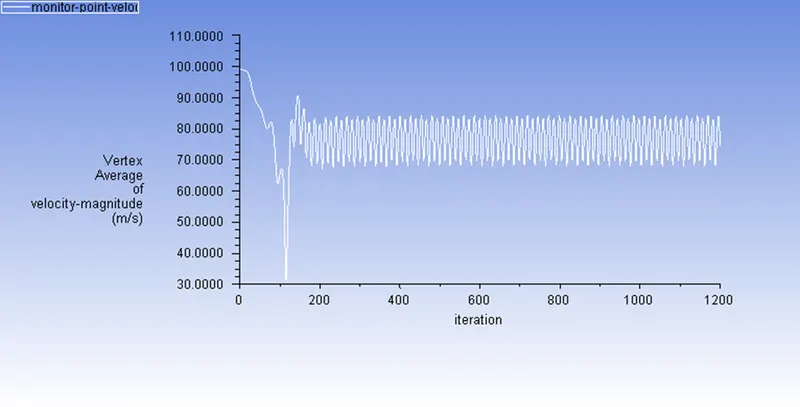
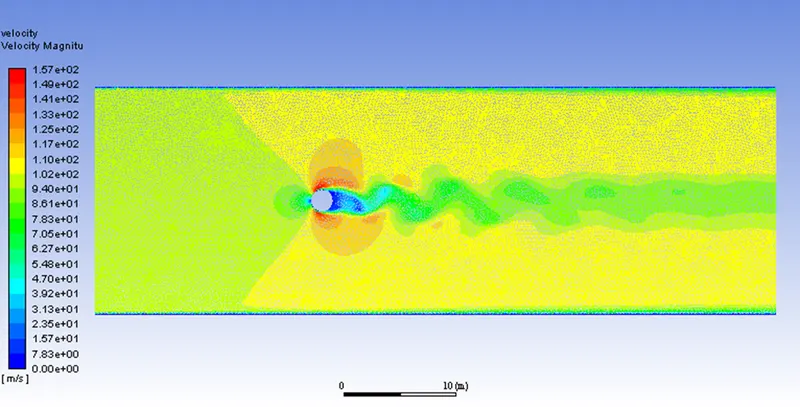
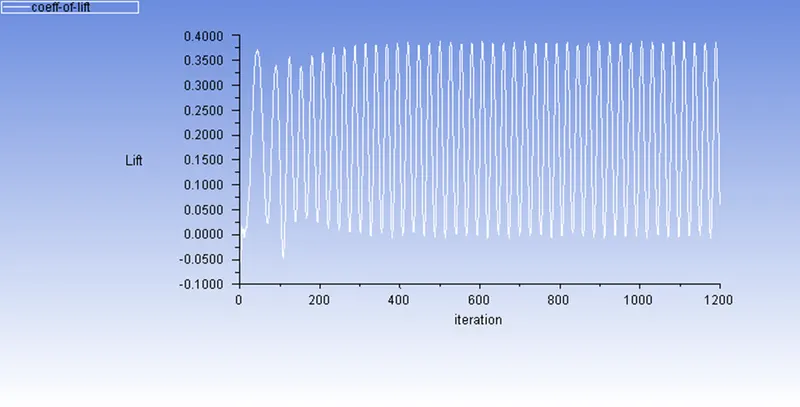
Coefficient of Lift: 0.0613
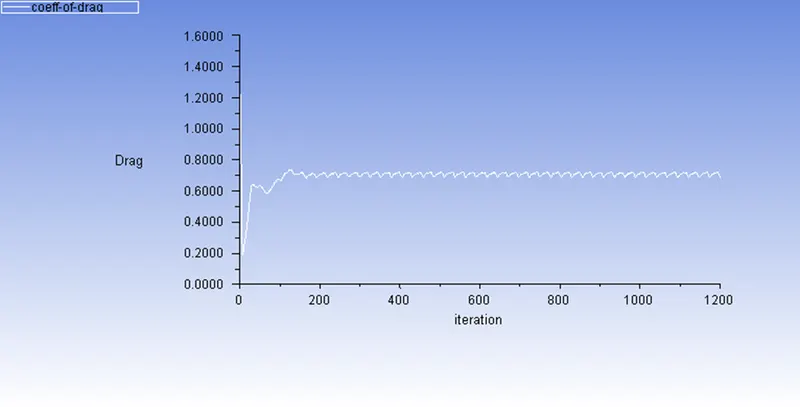
Coefficient of drag: 0.6914
5. Case 5: For Reynold’s Number of 100000.
We changed velocity to 1000m/s so that Reynolds number is 100000.
Velocity: 1000 m/s
Length: 2 m
Viscosity: 0.02 kg/m-s
Density: 1 Kg/m^3
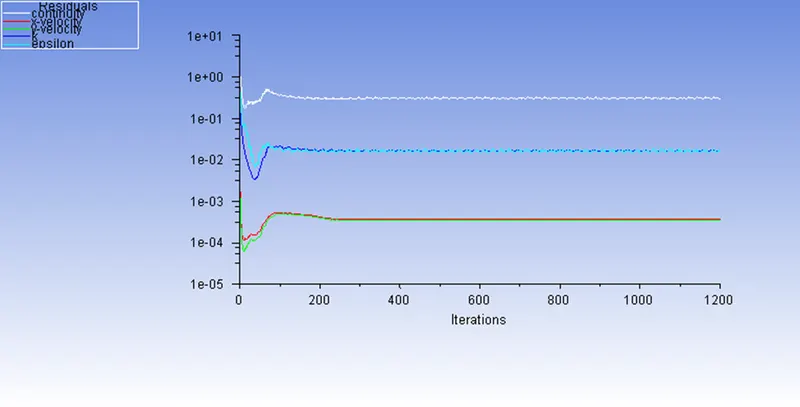
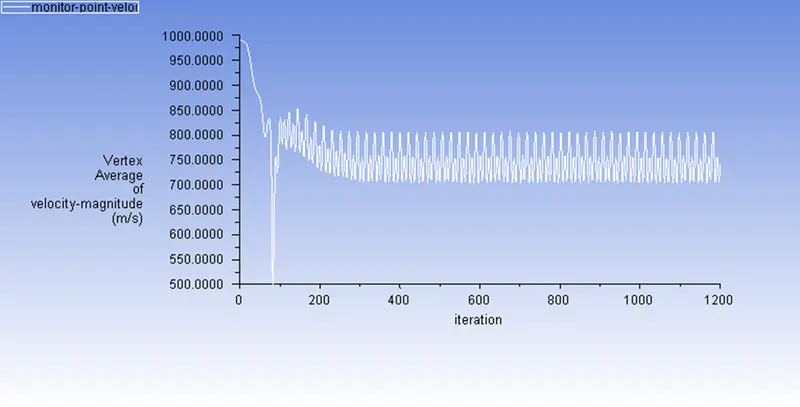
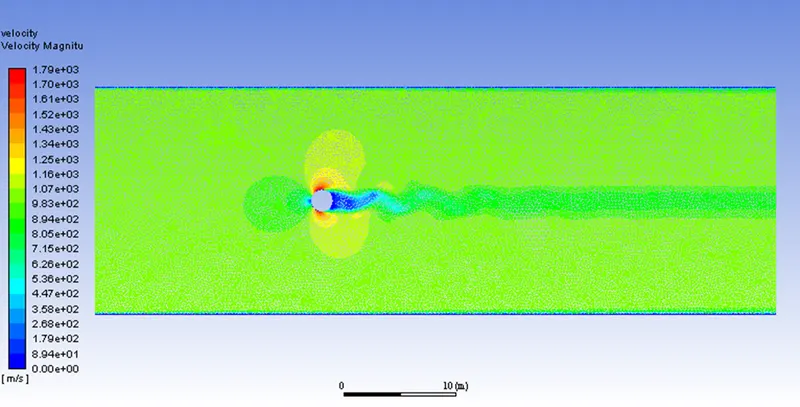
Coefficient of lift: 0.3269
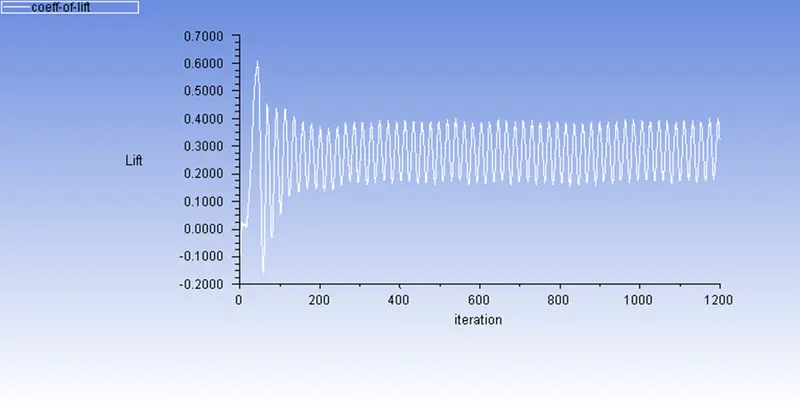
Coefficient of drag: 0.4534
|
Re Number |
Inlet velocity |
Coefficient of drag |
Coefficient of lift |
|
10 |
0.1 |
4.5942 |
0.0021 |
|
100 |
1 |
1.5053 |
0.1031 |
|
1000 |
10 |
0.7669 |
0.0254 |
|
10000 |
100 |
0.6914 |
0.0613 |
|
100000 |
1000 |
0.4534 |
0.3269 |
Conclusion:
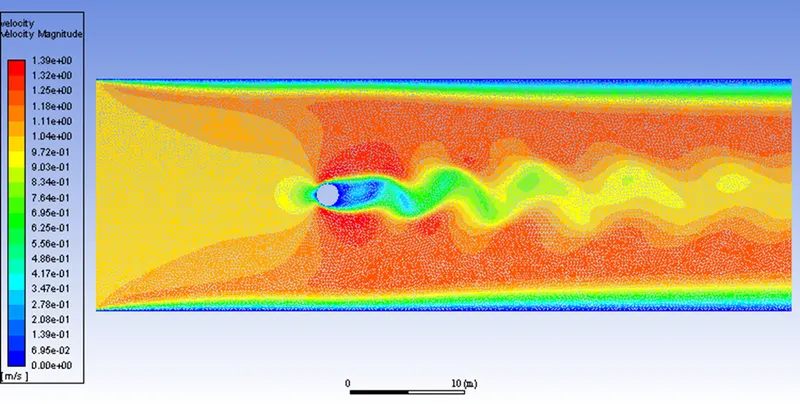
We observe that as the Reynold’s number increases the vortex shedding behind the cylinder becomes more turbulent.
Also, as Reynold’s number increases the drag produced by the cylinder decreases.
For Lift we can see the anomaly that it decreases when Re changes from 100 to 1000 i.e., in transition from laminar to turbulent.
We can confirm that the results for Coefficient of drag and Coefficient of lift is reasonable based on reference material [1] and [2].
Reference material:
[1] B.N. Rajani, S. Majumdar, A. Kandasamy, Numerical simulation of laminar flow past a circular cylinder, Applied Mathematical Modelling 33 (2009) 1228–1247
[2] Mikko Manninen, Veiko Taivassalo, On the mixture model for multiphase flow.