Week 2 Challenge : Surface meshing on a Pressure valve
Aim: To create mesh of a pressure valve, and observe the difference between, 3 different mesh lengths.
Procedure:
- Once the pressure valve is loaded in Ansa first, we must proceed with surface corrections:
- Faces can be created using new option under faces.
- Based on the type of new faces to be created select the CONS.
- As lot of smaller surfaces was created to maintain the shape we must remove those as it might create problems while meshing as target length can be greater than that. So, to remove it use Cut option in faces and select the lines to be removed.
- Once done we use geometry checks to confirm the absence of any openings in the geometry.
- Once done with surface corrections we can move forward with PID creations:
- To create PID we must go to properties-> right click-> New-> Pshell-> Pshell.
- So once PID’s are created right on PID, select apply and then select the faces that you need in particular PID and middle click to confirm.
- Once done with PID creation we can move forward with meshing:
- In order to start we must first enter the target mesh length in the length option under Perimeters in Mesh deck, also we must define target length and element type in Mesh parameters.
- Once defined we can start meshing by enabling the PID one by one and giving spot mest to the visible items.
Learning Outcome:
- Got a deeper understanding of TOPO Deck.
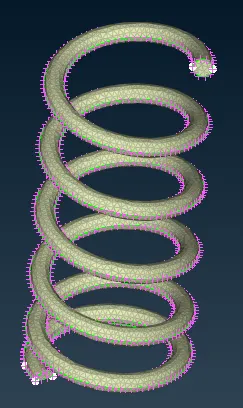
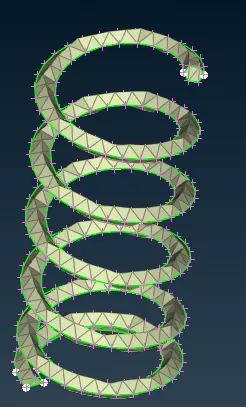
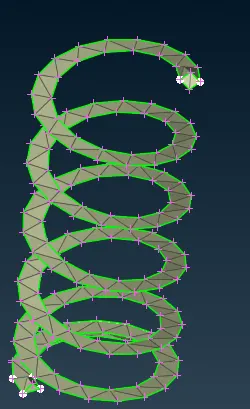
- Got to know the variations we can observe with different Mesh length.
- Small mesh length(1mm): No. of elements increases and shape is retained closer to the original.
- Avg. length (3mm): No. of elements reduces in comparison and shape of smaller objects gets bit distorted.
- Bigger Length: No. of element reduces and shape is not retained for smaller object.
Result:
Smaller mesh lengths will retain the shape of structure and wil give more accurate results, but also the processing for the same may take time, on the other hand larger mesh length will give less accurate results with less processing time, so its better to optimize mesh length based upon the criticality of the parts.
Conclusion:
2nd Week challenge gave an in-depth knowledge of TOPO deck and also set a base for meshing comlex models