Week 2 - Flow over a Cylinder.
Aim: Simulate the flow over a cylinder and explain the phenomenon of Karman vortex street.
PART-I
- Simulate the flow with the steady and unsteady case and calculate the Strouhal Number for Re= 100.
PART-II
- Calculate the coefficient of drag and lift over a cylinder by setting the Reynolds number to 10,100,1000,10000 & 100000.
- Discuss the effect of Reynolds number on the coefficient of drag.
Expected results:-
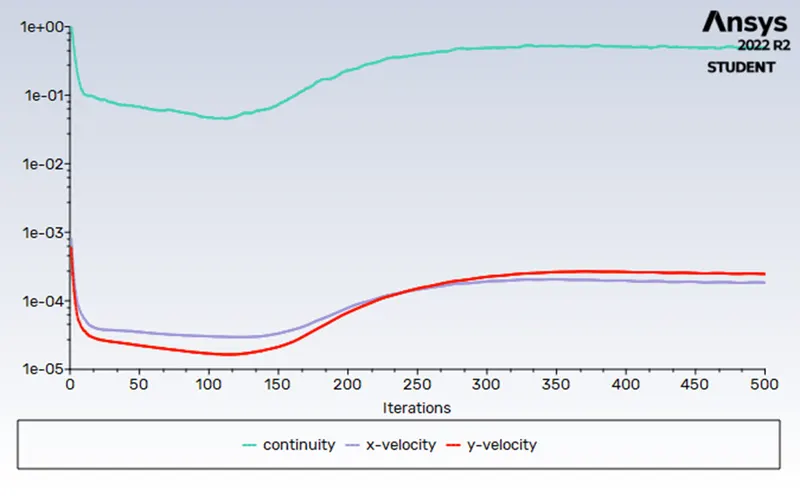
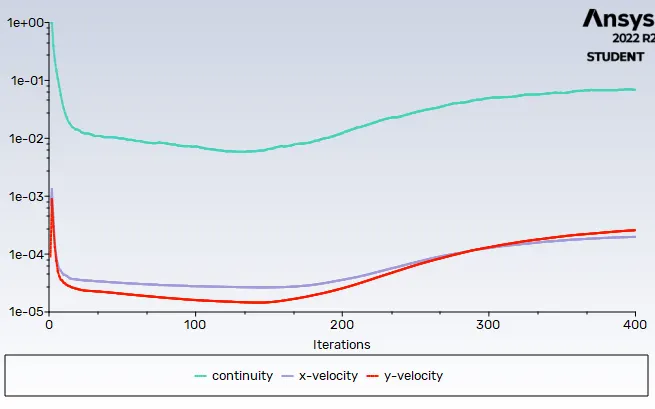
- In both approaches, show that the flow has converged. That is, what quantities or plots need to be looked at to determine that the flow has converged?
- Plots of the coefficient of drag and lift.
- Plots to show vortex shedding behind the cylinder.
Karman Vortex Street
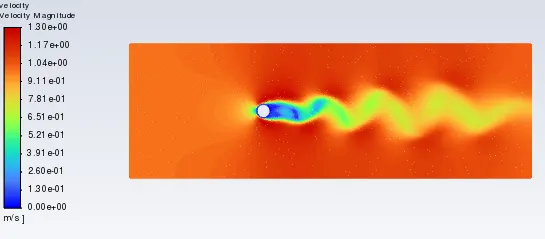
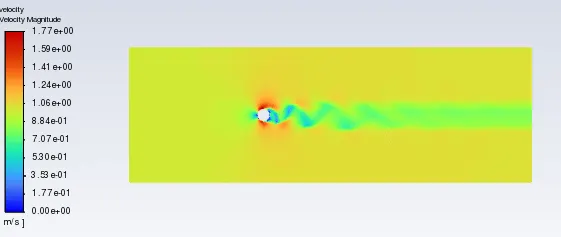
As the fluid is flown over a body streamlines of fluid are developed over the body with the gradient of velocity from the streamline near the body to the one away. To start with, a stagnation point is a point in a flow field where the local velocity of the fluid is zero. Stagnation points exist at the surface of objects in the flow field, where the fluid is brought to rest by the object. stagnation point which is the point at which the fluid meets the body first .behind the body wake region is formed. The flow separation takes place depending on the surface and type of flow(turbulent or laminar).In the wake region vortices are generated. Stream length of vortices increases with increase in Reynolds number. As there is further increase the wake becomes unstable and vortex shedding is initiated. At first one of the vertices breakaway and then the second is shed because of non-symmetric pressure in the wake. The intermittently said what is us from element periodic wake of staggering what is as of opposite sign this phenomenon is called Karman vortex Street.
Reynolds number
The Reynolds number is the ratio of inertial forces to viscous forces within a fluid that is subjected to relative internal movement due to different fluid velocities.
Re=ρuL/μ
L = length of the body
ρ=density of the fluid flowing over the body
μ= Dynamic Viscosity of fluid
Coefficient of Drag: Dynamic drag is a combination of Friction drag and pressure drag .Coefficient of drag is a dimensionless number that depends on the shape, inclination, and flow conditions which affects the dynamic drag.
Coefficient of lift: Coefficient of lift is a dimensionless number that relates the lift generated by a lifting body to the fluid density around the body, the fluid velocity and an associated reference area.
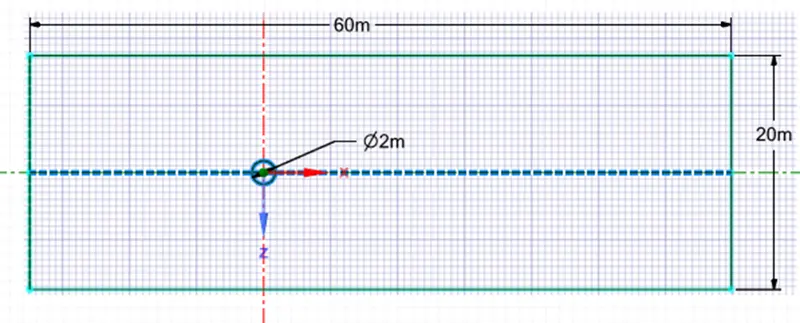
Geometry setup:
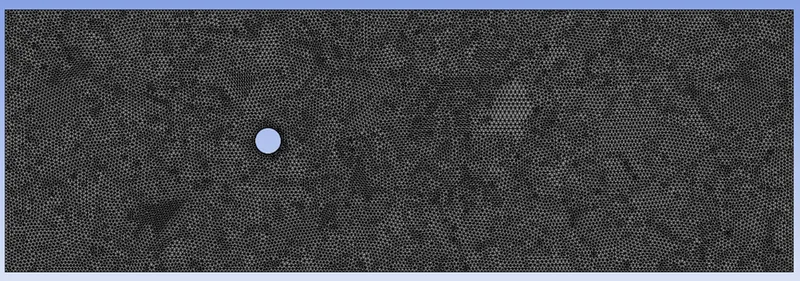
Meshing
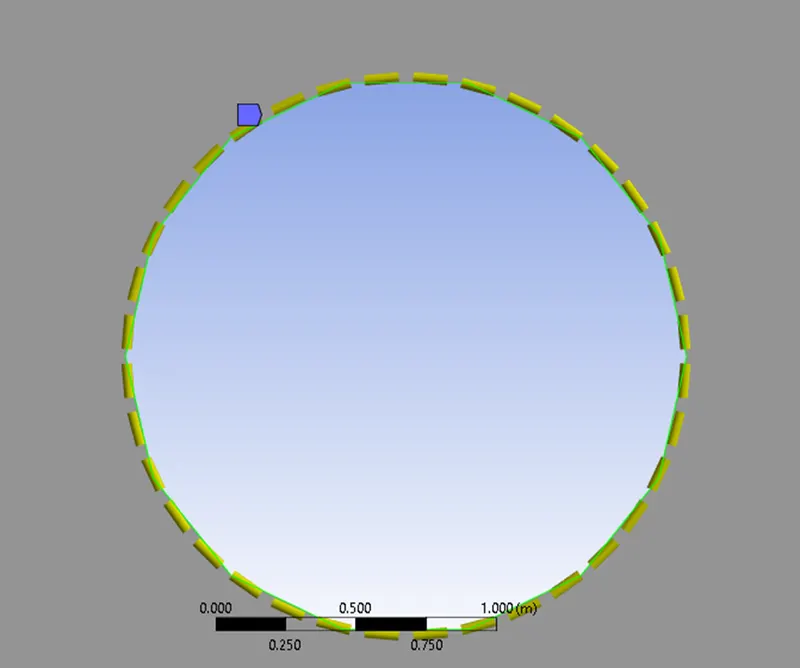
Edge
Using edge sizing increased number edges into 6 to 36
Inflation layer
Using inflation layer tool created 6 inflation layers.

Setup
Steady state
- Change the method to Simple ,Change the material properties to your requirement. Reference values need to be change depending upon case.
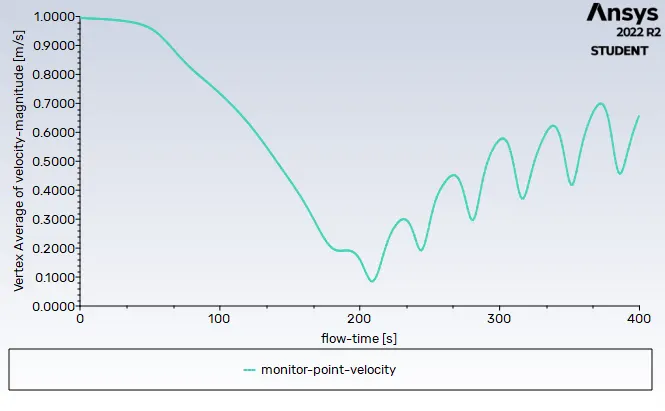
- Monitor point is created behind the cylinder from which we can plot the velocity curve.
- In the definitions we define the velocity plot, lift plot and drag plot.
- Create contours for velocity and pressure
- Initialization is done for 10 iterations and contours for velocity and pressure are create
Density: 1kg/m3
Viscosity: 0.02
Velocity: 1m/s
Reynolds no:100
Residual:
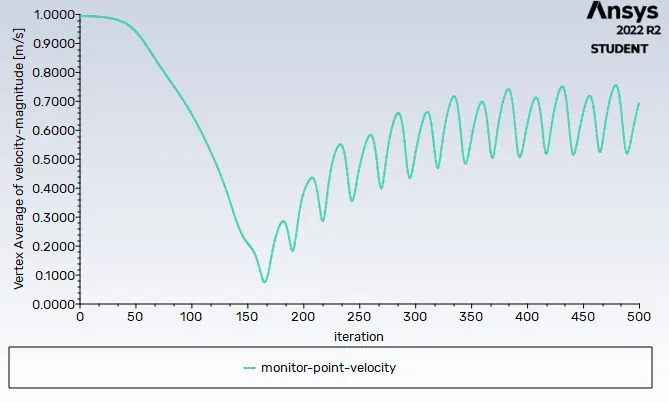
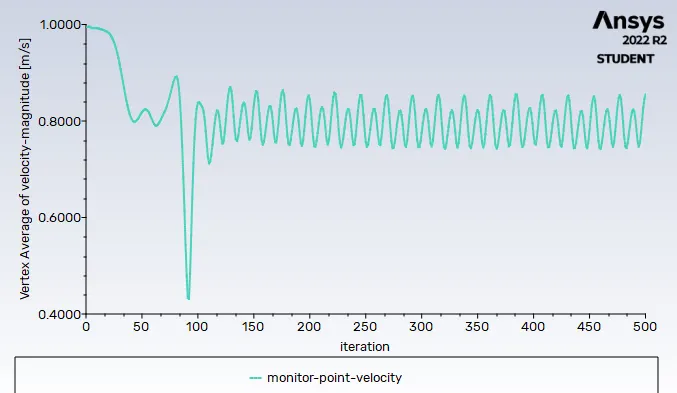
Vertex average
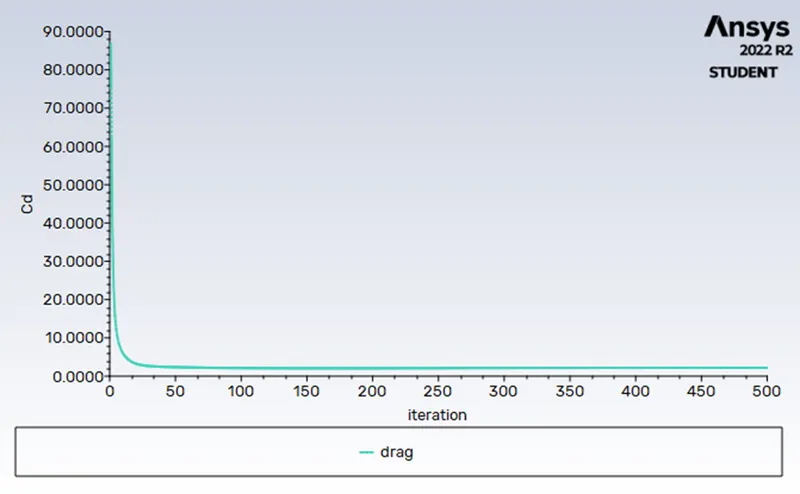
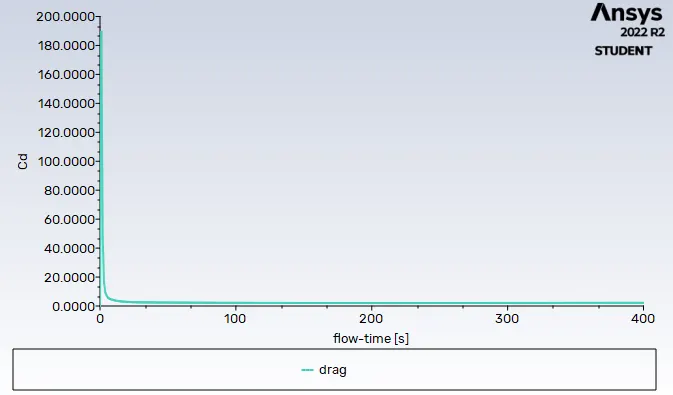
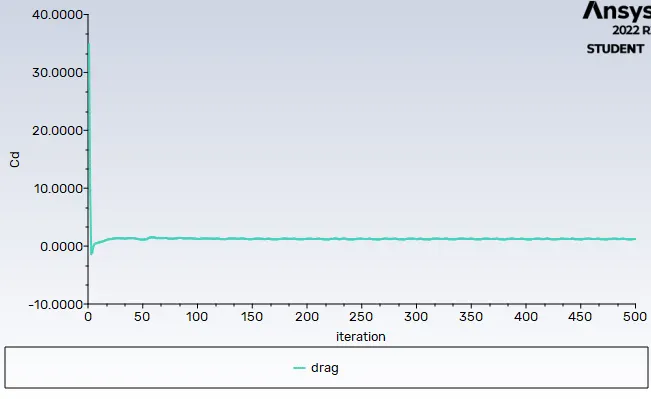
Drag coefficent
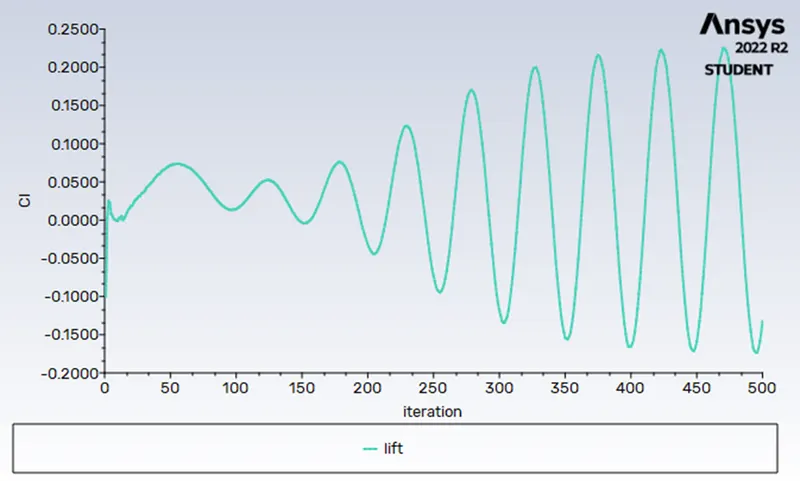
Lift coefficient
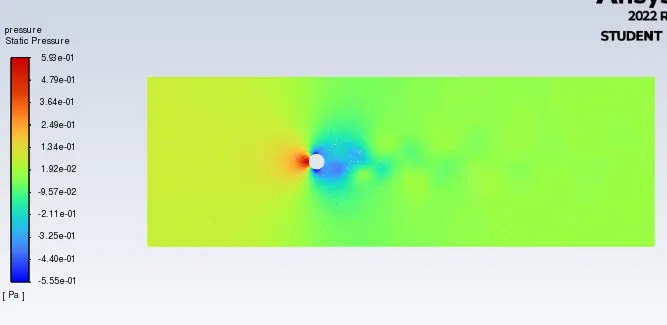
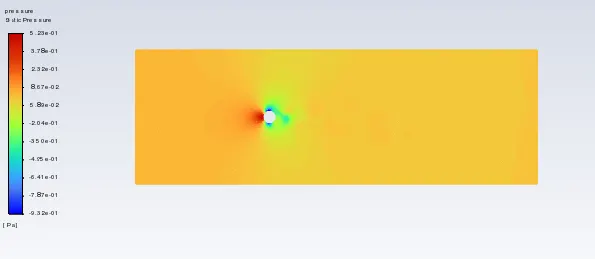
Pressure contour
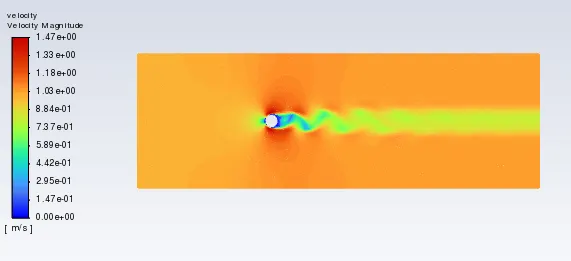
Velocity contour
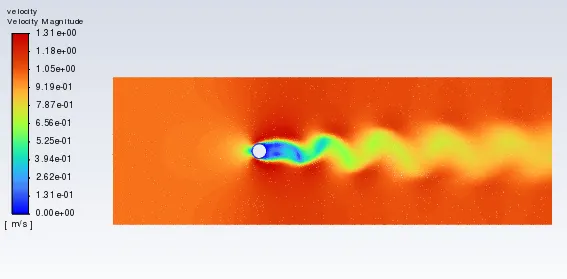
Unsteady state
transient condition used
Residual
Vortex average
Drag cofficient
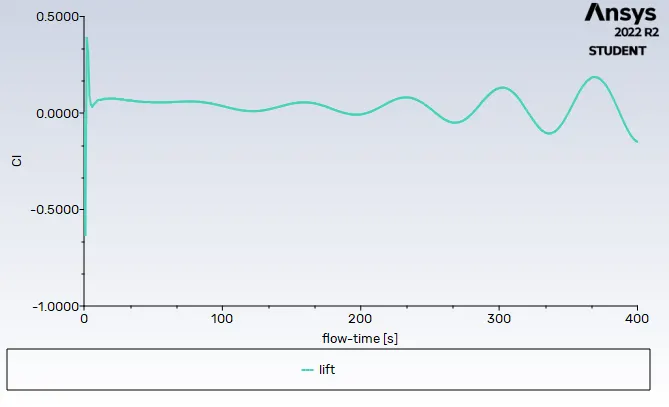
Lift coefficient
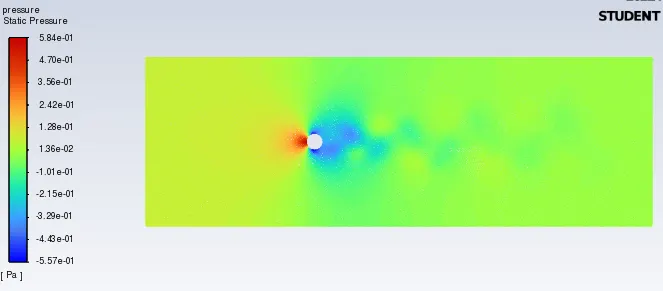
Pressure contour
Velocity contour
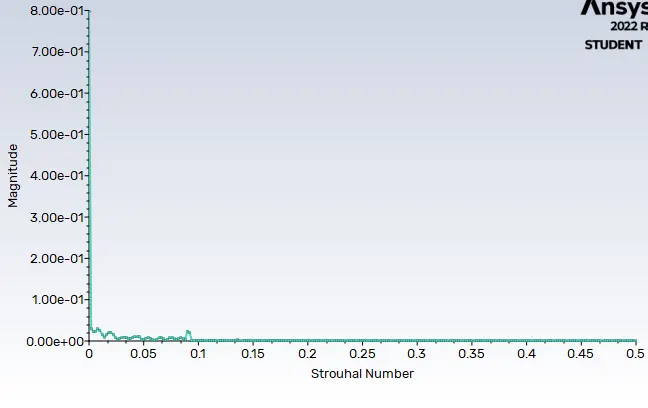
Strouhaul Number:
The Strouhal number is a dimensionless number describing oscillating flow mechanisms.
The Strouhal number represents the ratio of inertial forces due to the local acceleration
of the flow to the inertial forces due to the convective acceleration. At high Strouhal numbers
oscillations dominate the flow while at low Strouhal numbers the oscillations are swept by the fast-moving fluid.
St = (fD)/U
where f is the vortex shedding frequency
D is the diameter of the sphere
U is the free-stream velocity
comparision b/w steady and unsteady state Drag cofficient (cd) and lift coefficient (cl)
steady state
cd=2.174
cl= -0.132
unsteady state
cd=2.152
cl=-0.149
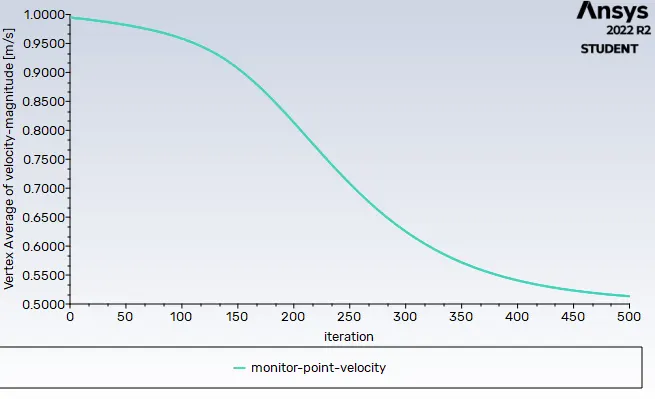
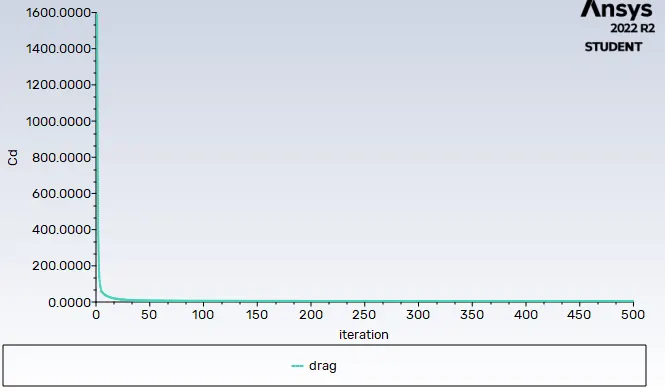
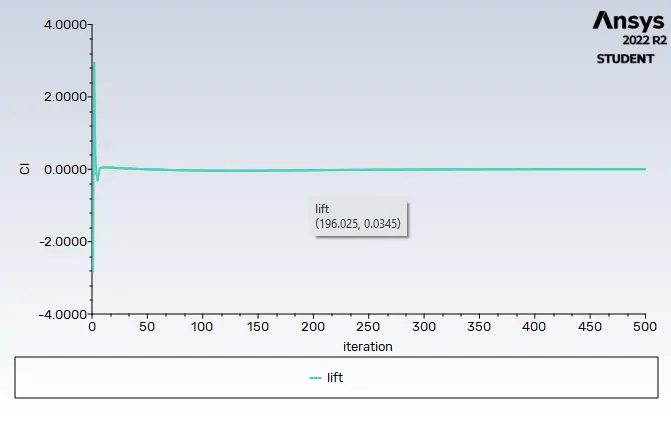
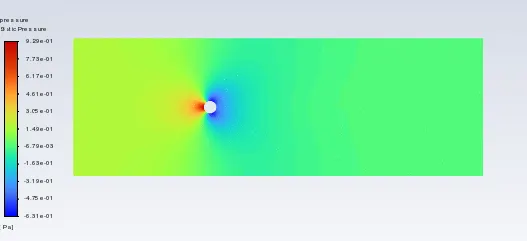
Reynolds number=10
Vertex average
Drag coeficient
Lift coefficient
Pressure contour
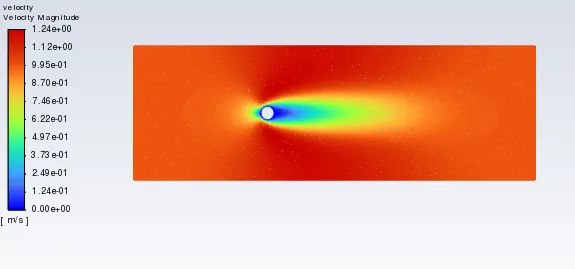
velocity contour
Reynolds number: 100
Vertex average
Drag coefficent
Lift coefficient
Pressure contour
Velocity contour
Reynolds number: 1000
Vertex average
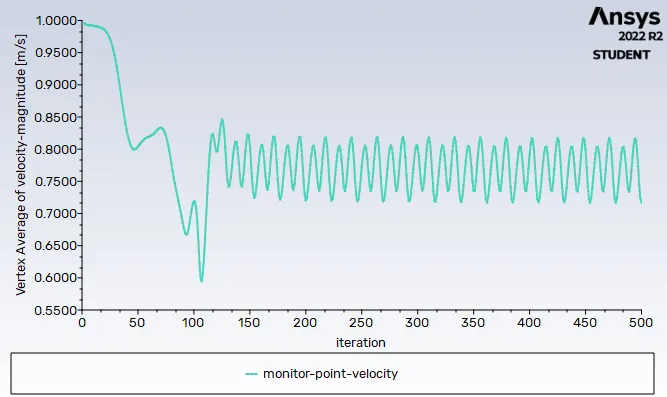
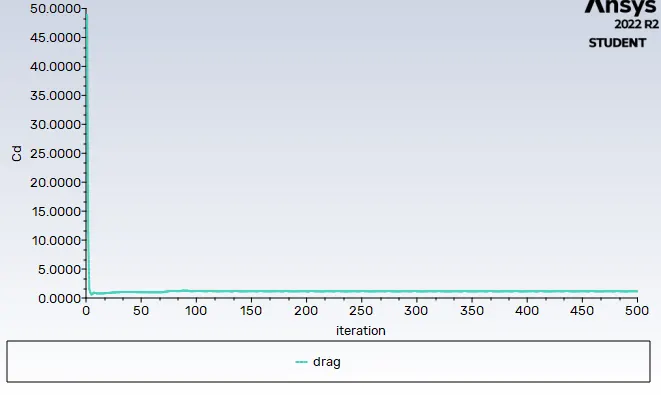
Drag coefficient
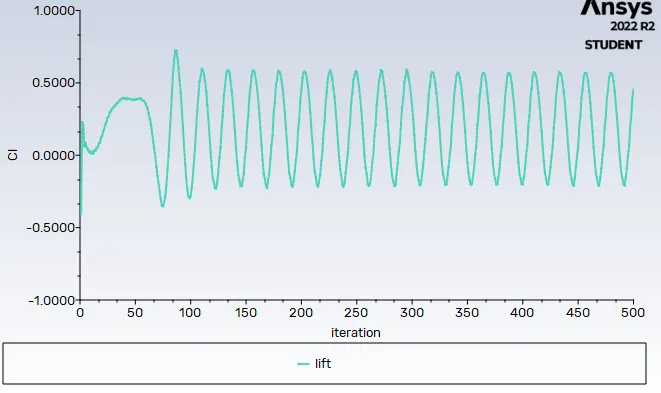
Lift coefficient
Pressure contour
Velocity contour
Reynolds number: 10000
Vertex average
Drag coefficient
Lift coefficient
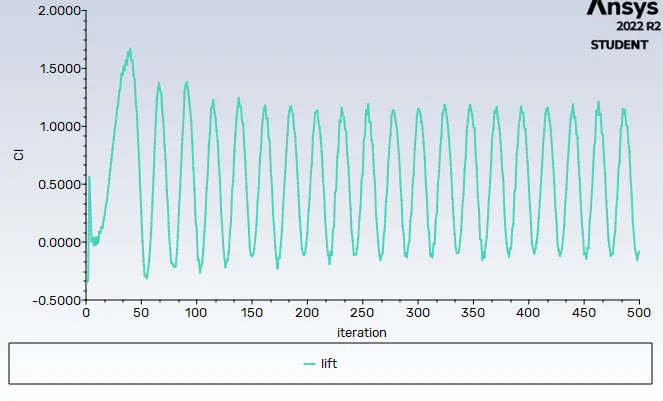
Pressure contour
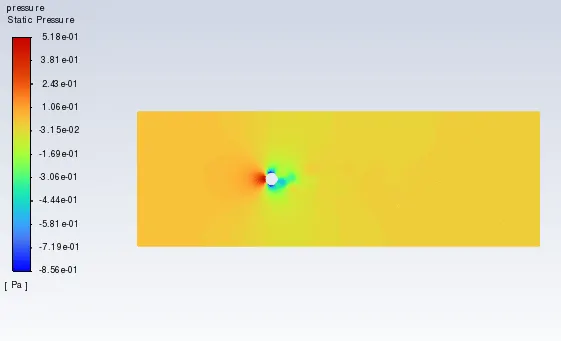
Velocity contour
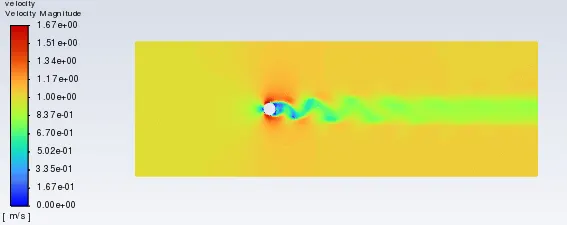
Reynolds number: 100000
Vertex average
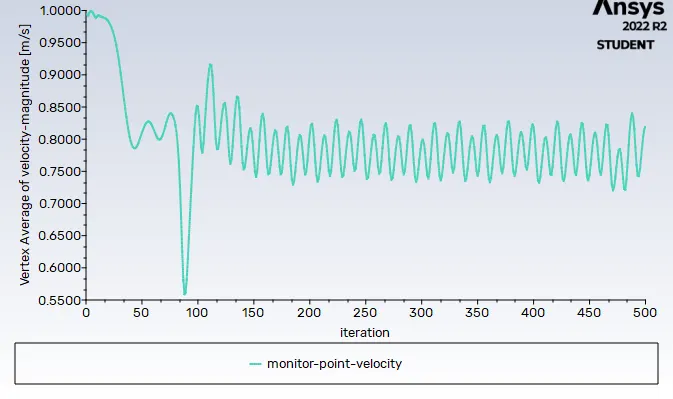
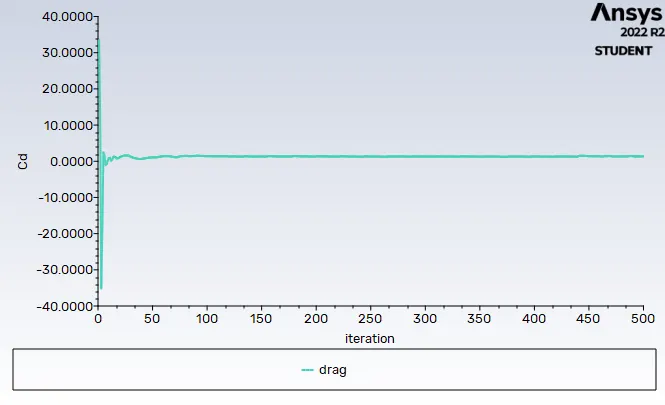
Drag coefficient
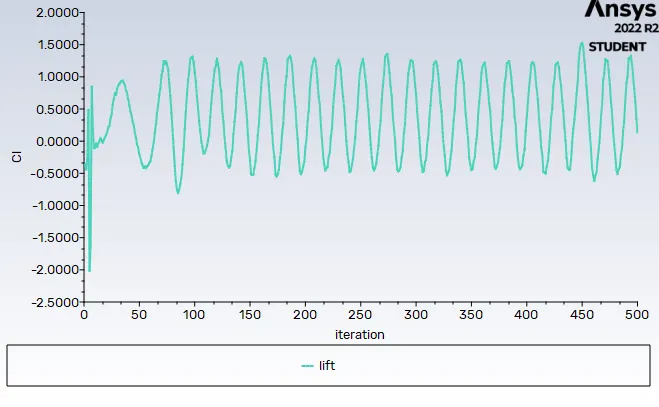
Lift coefficient
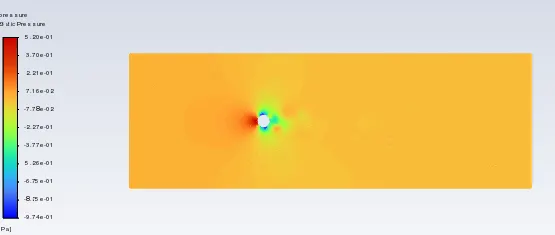
Pressure contour
Velocity contour
Results
comparision of Drag cofficient (cd) and lift coefficient (cl)
| Re No | cd | cl |
| 10 | 5.435 | 0.0016 |
| 100 | 2.152 | -0.149 |
| 1000 | 1.147 | 0.453 |
| 10000 | 1.234 | -0.081 |
| 100000 | 1.346 | 0.124 |
Conclusion
Successfully performed the cfd simulation of flow over a cylinder by using ANSYS FLUENT for the given cases