Week 2 - Flow over a Cylinder.
Flow over a cylinder is important in many industrial application like cooling of iron or cylindrical pipe. Circular pipes have more application in heat exchanger. High temperature flue gases flow over a circular cylinder in a cross flow. Depending on flow rate, fluid properties and size of cylinder, the flow can be laminar, transition and turbulent.
Von Karman Vortex: A Von Karman vortex is a repeating pattern of swirling vortices arising in the wake of the flows around the cylinder. This process can be only seen at a particular critical Reynolds number.
Strouhal number: The Strouhal Number is a dimensionless value useful for analyzing oscillating unsteady fluid flow dynamics problems. It can be important when analyzing unsteady, oscillating flow problems. The Strouhal Number represents a measure of the ratio of inertial forces due to the unsteadiness of the flow or local acceleration to the inertial forces due to changes in velocity from one point to an other in the flow field.
The Strouhal number is defined as
St = fstD/U,
where
fst is the vortex shedding frequency (or the Strouhal frequency),
D is the diameter of the circular cylinder
U is the velocity of the ambient flow
Reynold number: The Reynolds number, referred to as Re, is used to determine whether the fluid flow is laminar or turbulent. The Reynolds number is the ratio of the inertial forces to the viscous forces. This ratio helps to categorize laminar flows from the turbulent ones.

Re reynolds number; 10, 100, 1000, 10,000, 100,000
rho density of the fluid; 1 kg/m3
u flow speed
L characteristic linear dimension; 2 m
mu dynamic viscosity of the fluid; 0.05kgm/s
Run the model with Re 10, 100, 1000, 10,000, 100,000
- If Re is 10, the flow velocity will be 0.25 m/s;
- If Re is 100, the flow velocity will be 2.5 m/s;
- If Re is 1000, the flow velocity will be 25 m/s;
- If Re is 10000, the flow velocity will be 250 m/s;
- If Re is 100000, the flow velocity will be 2500 m/s
Aim: To simulate the flow over a cylinder for the steady and unsteady flow under different Reynolds condition.
Procedure:
Analysis the flow over a cylinder under steady and un steady condition
Calculate the Strouhal number for Re:100
Calculate the coefficient of drag and lift over a cylinder under various Reynolds number to 10,100,1000,10000 & 100000 in steady solver.
Discuss the effect of Reynolds number on the coefficient of drag.
To do the procedure by following steps:
Work flow of the model:
Step 1: Geometry setup
Step 2: Mesh
Step 3: Setup the model
Step 4: Solution
Step 5: Results
Step 1: Geometry setup
Open the Ansys Workbench
Create the 2D cylinder in spaceclaim window
All dimensions in meters; Units--> meters-->ok
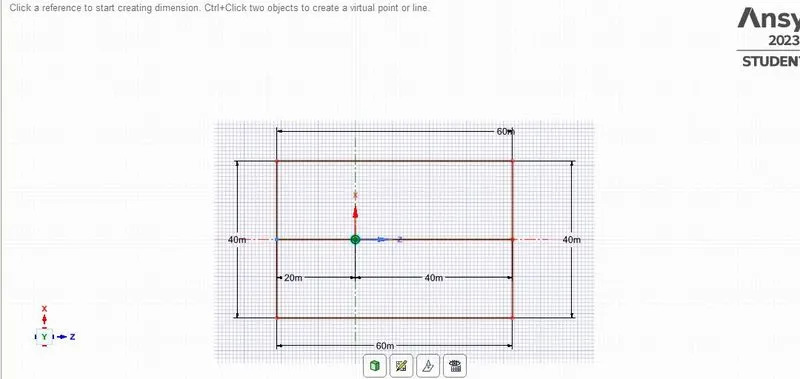
Step 2: Mesh
Initially update the model before opening the mesh.
Mesh---> Edit
Select Mesh--> generate mesh
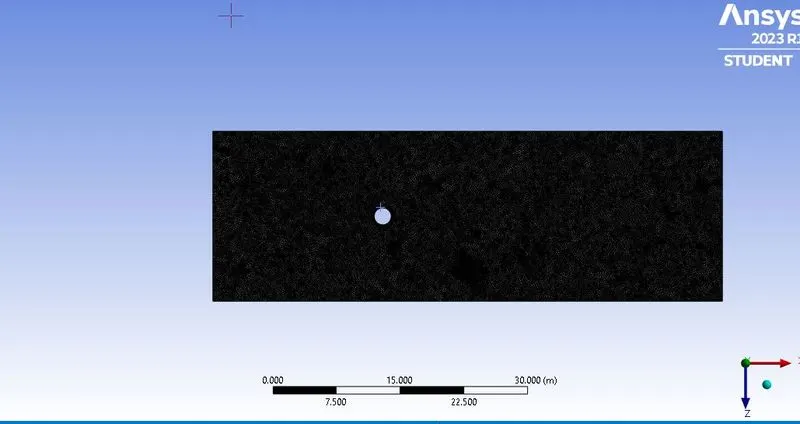
Select the element size, mesh type as triangle, element quality
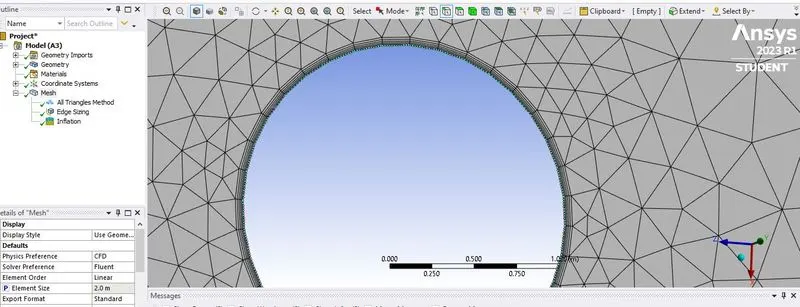
To create the inflation layer click geometry-->select the face-->Apply
boundary--> select the edge--> Apply
Inflation division--> first layer thickness
Thickness-->5e-3m
Inflation-->layers-->6
Create the name of the parts; select each parts separate and save the names as inlet, outlet, symmetry and walls
Close the mesh
Step 3: Fluent
Open the Fluent window
General-->select-->Pressure based solver, steady time
Viscous model--> Laminar
Assign the material as Air (user defined); density as 1, viscosity as 0.05 or 0.02 kgm/s
In boundaries, mention the inlet, outlet and walls boundary conditions
Solution-->Definitions--> select the surface report and force report
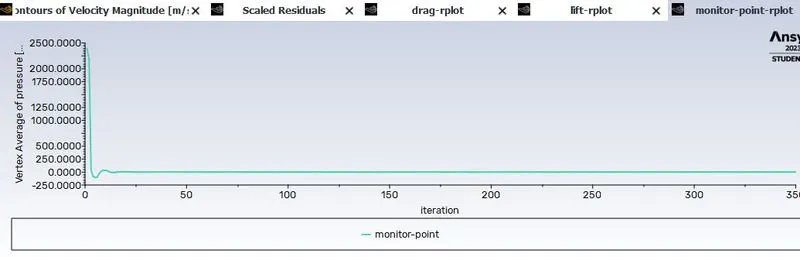
Create the exact monitor points
Initalize the model
Setup the contour plots--> velocity, pressure
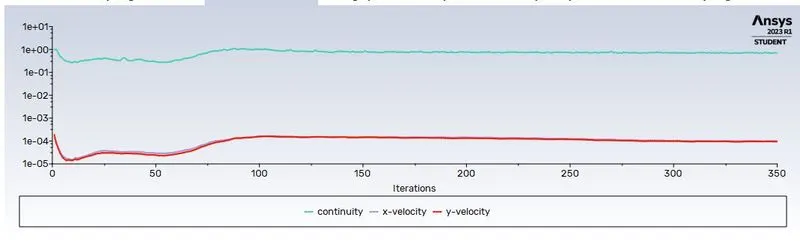
Run the iterations and calculate the model
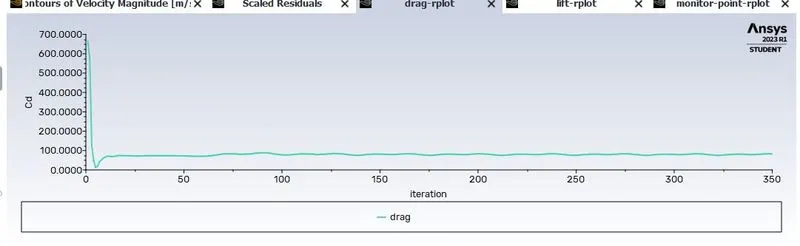
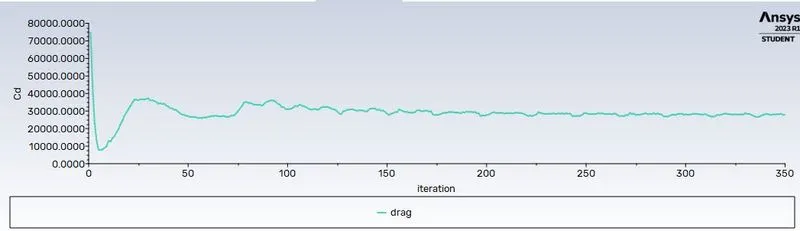
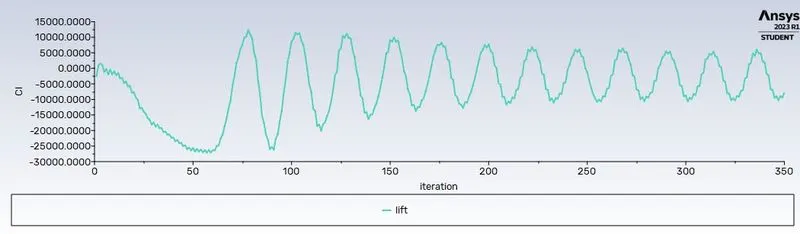
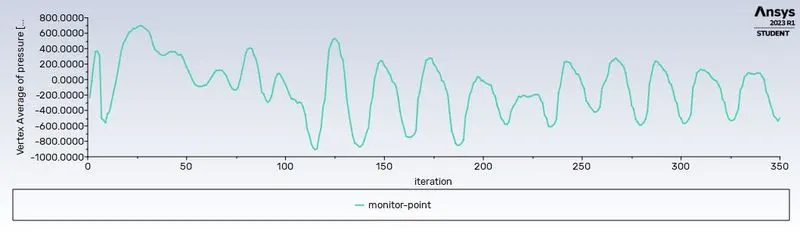
Re is 100, the flow velocity will be 2.5 m/s; steady
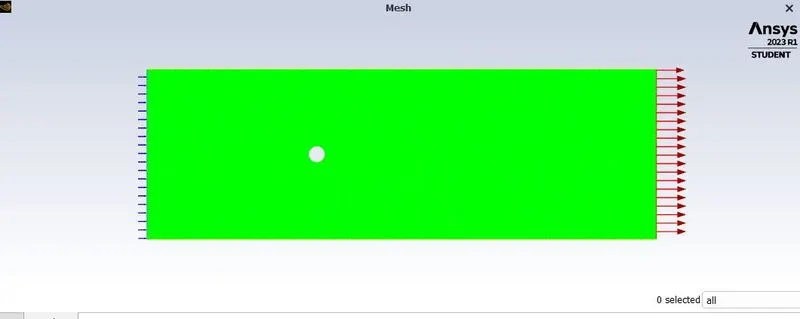
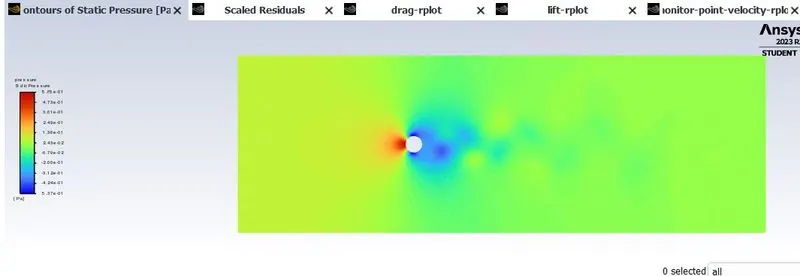
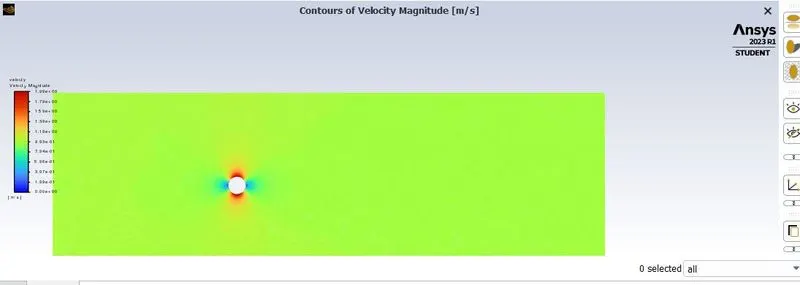
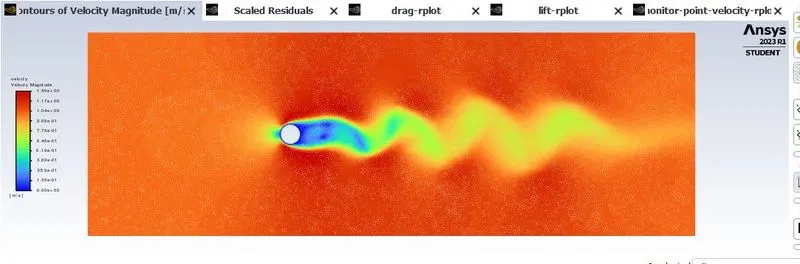
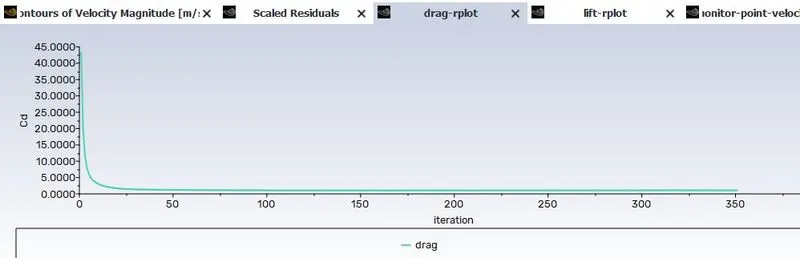
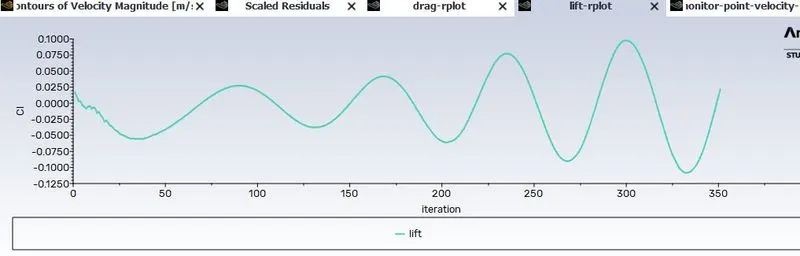
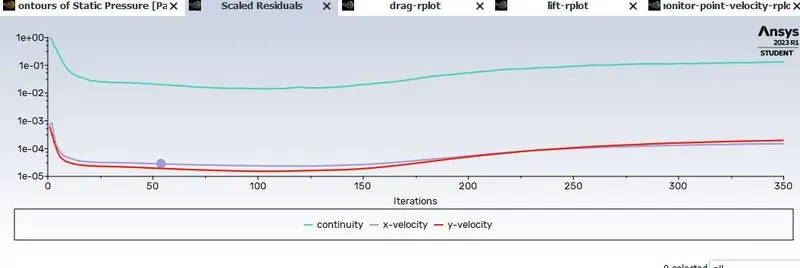
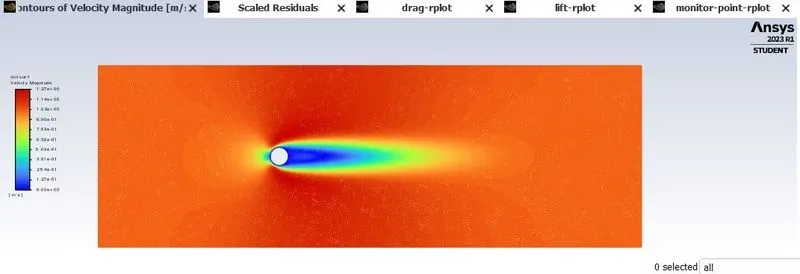
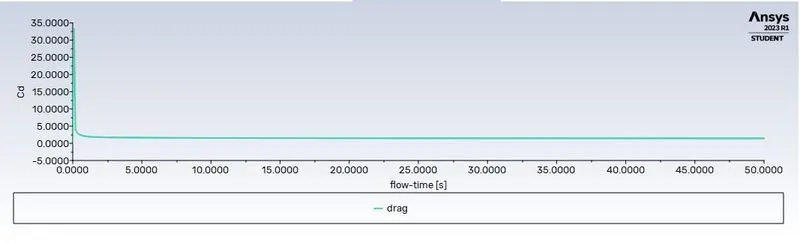
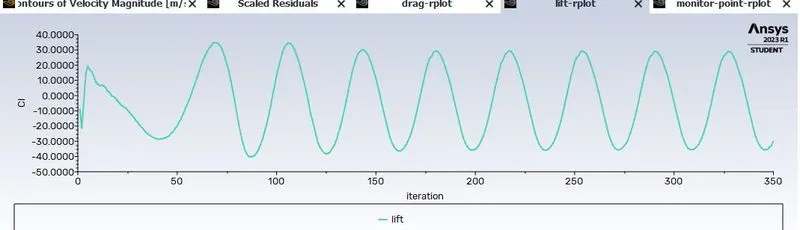
Re is 100, the flow velocity will be 2.5 m/s; transient
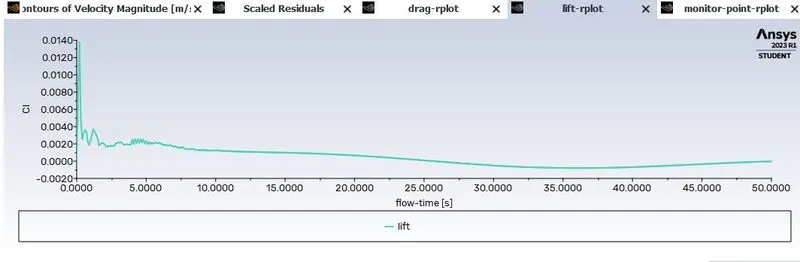
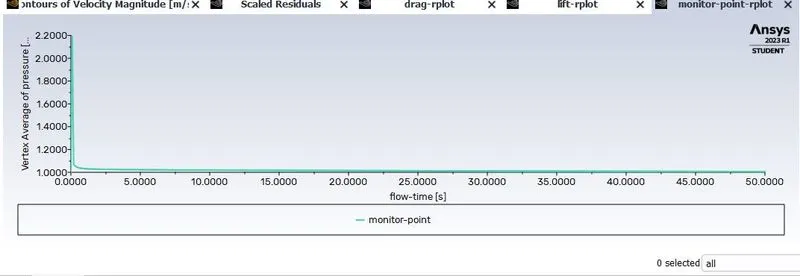
- If Re is 1000, the flow velocity will be 25 m/s; steady
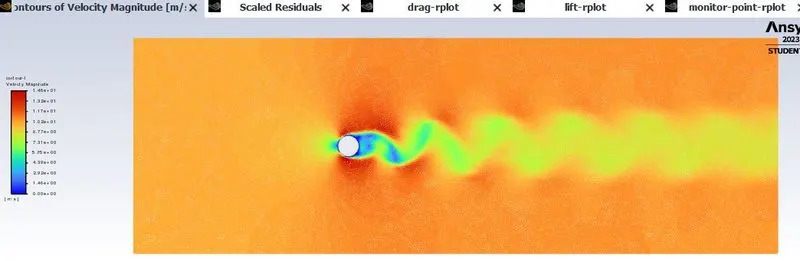
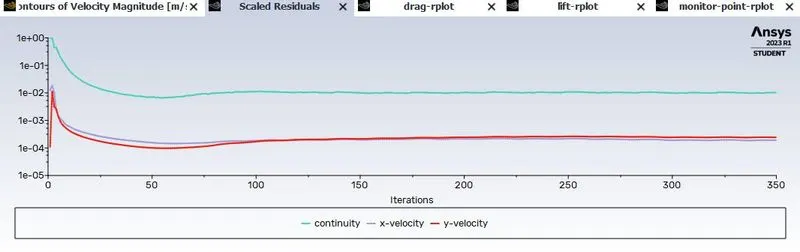
- If Re is 10000, the flow velocity will be 250 m/s;
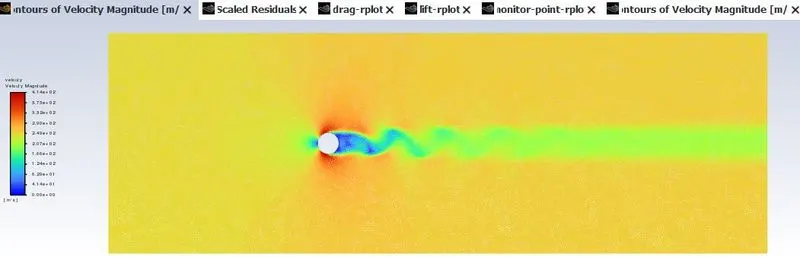
- If Re is 100000, the flow velocity will be 2500 m/s
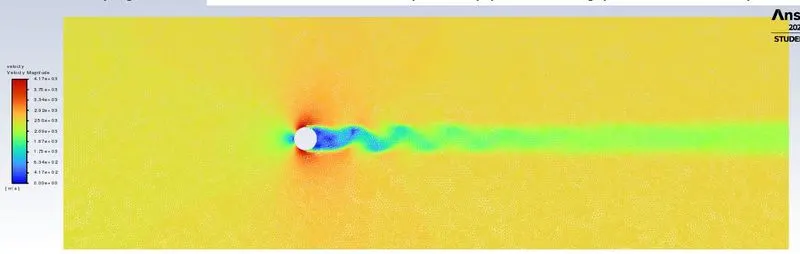
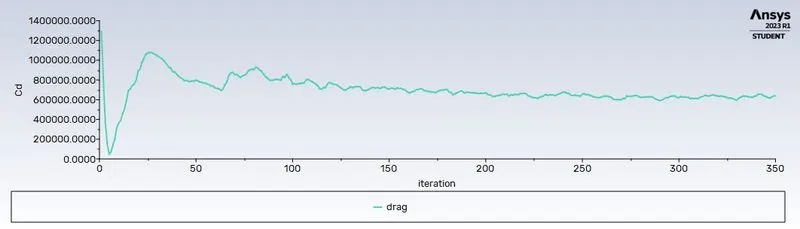
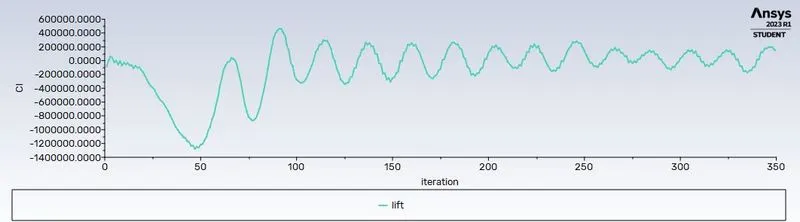
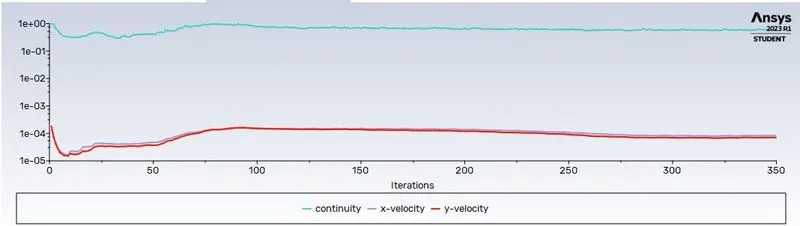
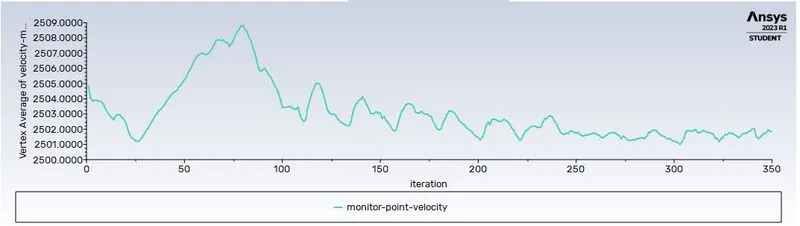
Result
- Analysis of laminar flow over the cylinder can be processed under different Reynolds condition.
- The cylinder subjected to low Reynolds number experiences flow separation, and oscillations in the wake region.
- For very small Reynolds numbers, the flow is completely laminar around the cylinder, with no recirculation and no instability.
- For larger Reynolds numbers, the flow over the cylinder is irregular and successively leave the cylinder to propagate in the wake, to form the so called “Von Karman” vortex street.
- Vortex shedding can be easily seen in the case of both steady and transient simulation. But transient simulation produces better results and more realistic.
- Strouhal Number calculation is only possible in the case of transient simulation as the frequency changes with respect to time.
- As the Reynolds number Increases, The drag Coefficient also Increases.
- The cd and Cl can be compared in all conditions
- For reference: https://reader.elsevier.com/reader/sd/pii/S0307904X08000243?token=F6CF4B459E9B0841998B17FB7B1238D1E5079EA5F3D0B020D256186D25268376E14A454D789730D2358F8EABEE62F0B9&originRegion=eu-west-1&originCreation=20230221181237
- https://cfdflowengineering.com/cfd-modeling-of-flow-over-a-cylinder/