Week 2 - Flow over a Cylinder.
Aim/Objective:- Study of concept of Karman's vortex Shedding streets by using ANSYS Fluent.
Vortex is the phenomeno that the fluid particles are rotates about is own axis while moving in forward direction.
When a flluid flows over any surfaces even the flow is laminar the vortex shedding can occure behind the surface.
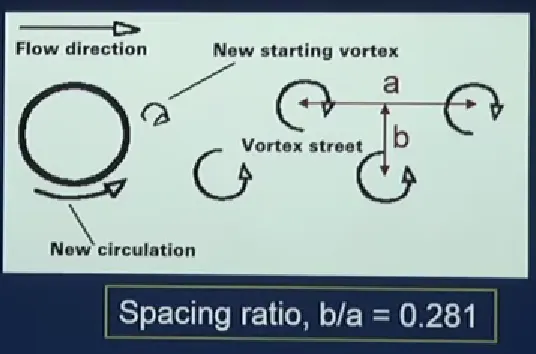
The Physicist Theodore Von Karman is present the vortex shedding phenomeno. The vortex shedding is may be periodic in nature an alternate vortex are formed behind the obstacle. The shape of obstacle may be any shape which separates the sream lines. The formula for spacing ratio is also given in below image.
Strouhal number= fsD/U
Where fs is the vortex shedding frequency.
D= Diameter of cylinder
U= free stream velocity of fluid
Part-I:- Simulating the flow by using steady and unsteady case and calculating Strouhal Number for Re= 100.
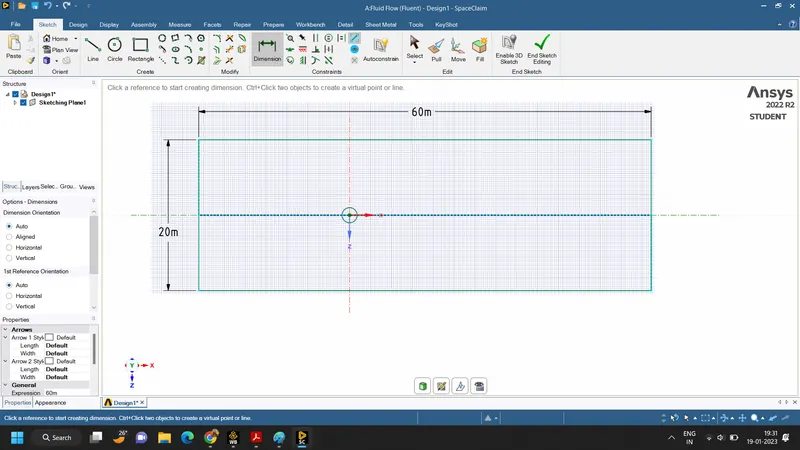
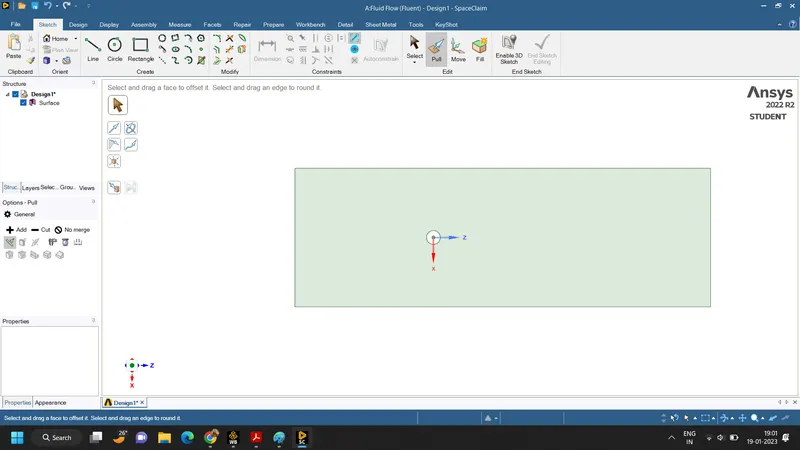
a) First we create a geometry by using spaceclaim. Consider cylinder diameter 2m.
b) Next step is meshing.
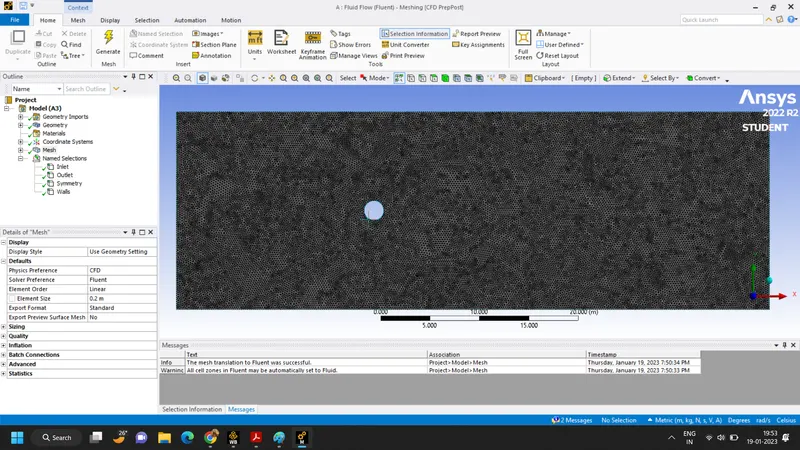
For meshing we use Triangular method. Also we add inflation layer near the cylinder wall.
mesh length= 0.2m
first layer of inflation length=5 mm
Giving name to the edges.
c) Next step is set up and find the solution.
For reynold number 100 first we solve the flow by using steady state equation.
Flow velocity = 1 m/s
dia. of cylinder= 2 m
hence viscocity = 0.02 m2/s
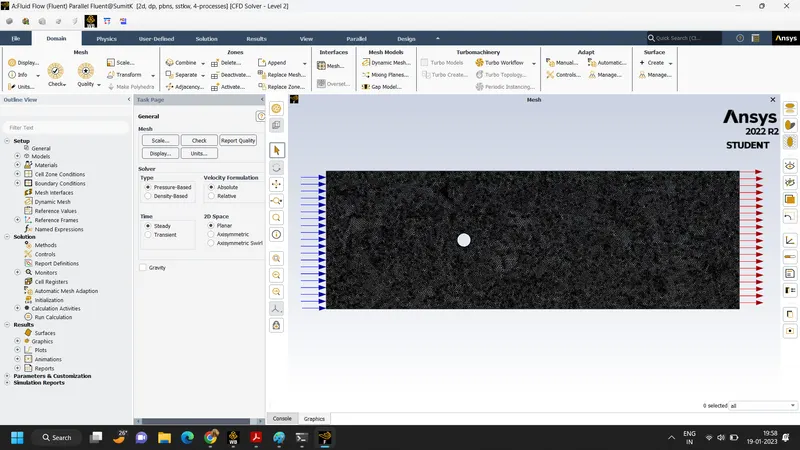
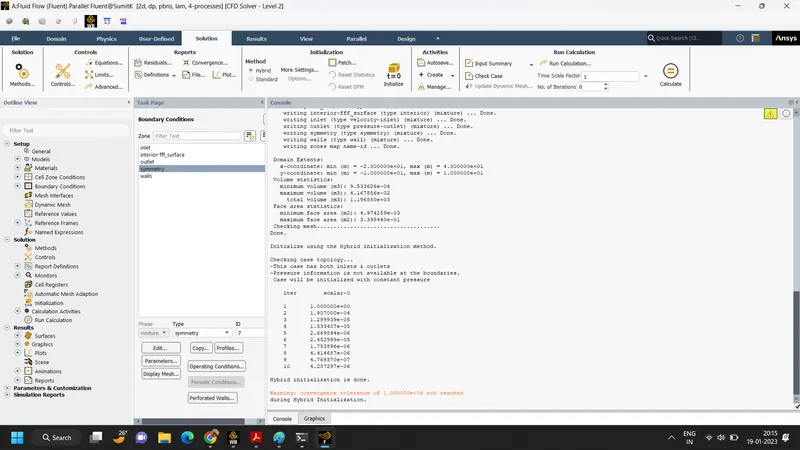
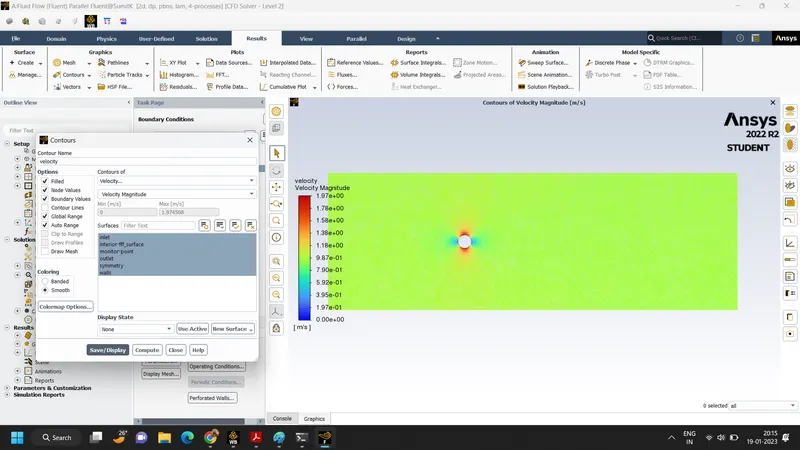
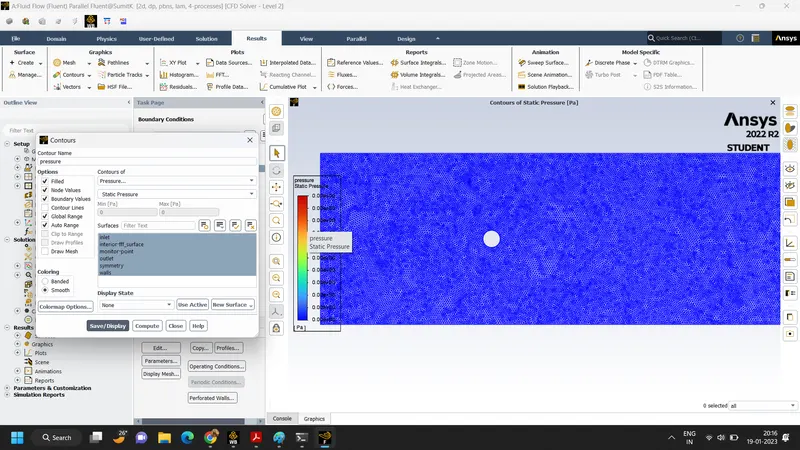
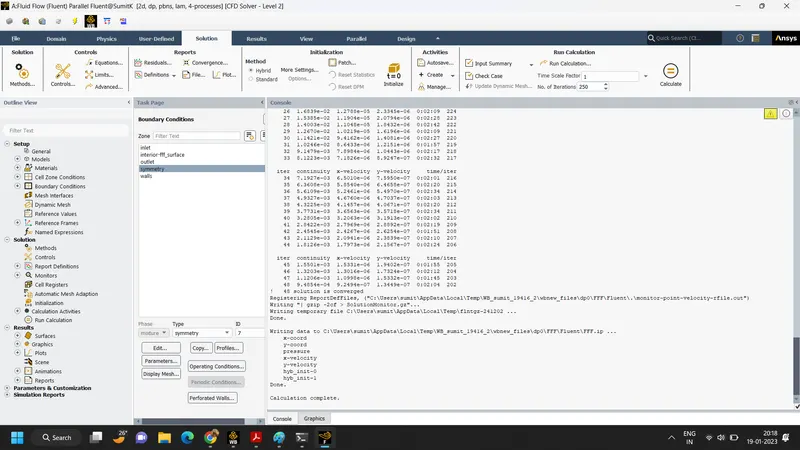
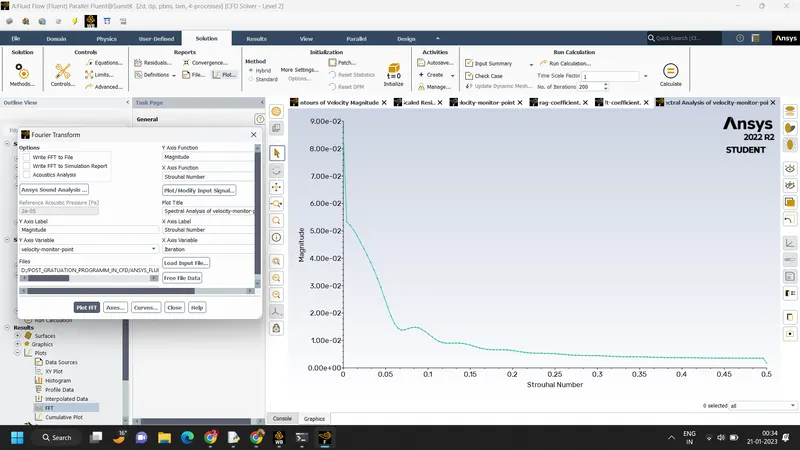
For steady state equation solution is converged at 48 iterations only
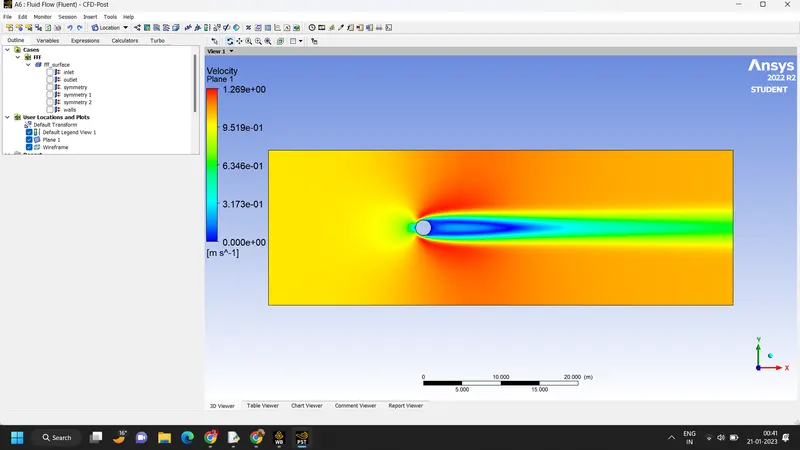
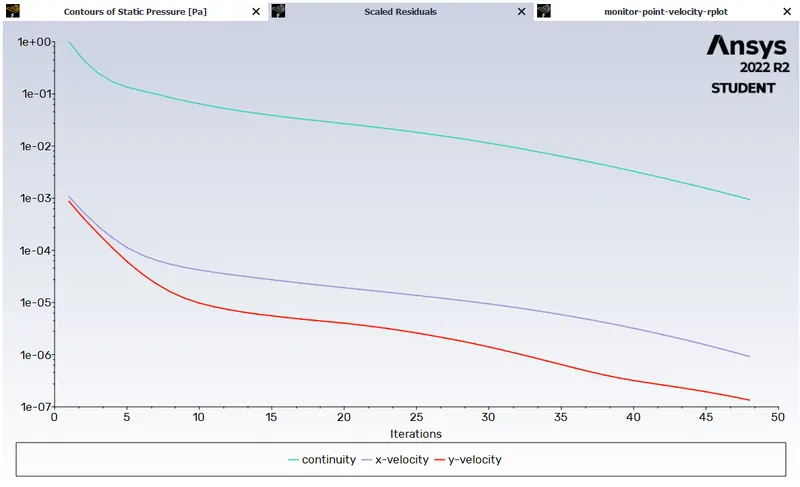
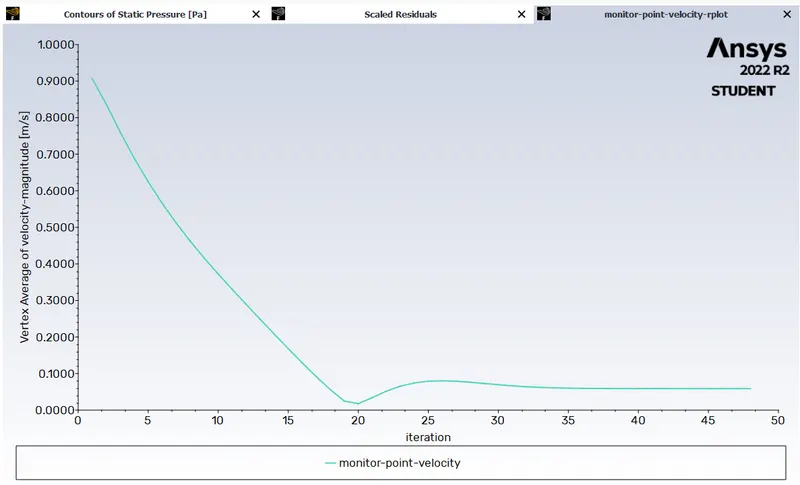
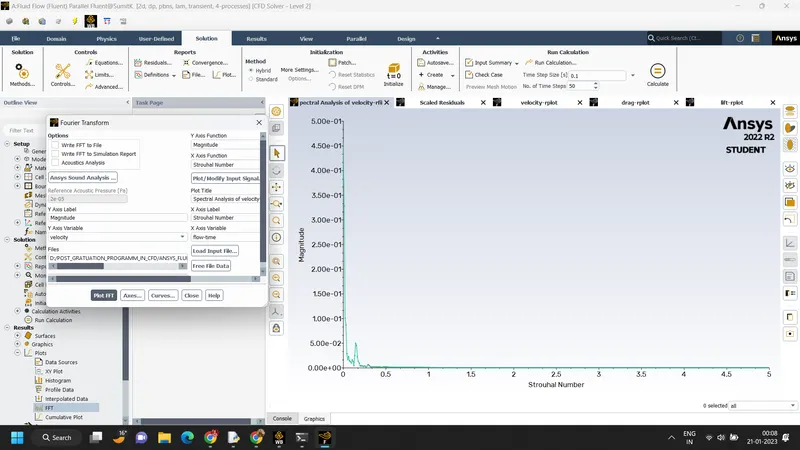
Strouhal Number= 1.672e-3
b) Now for reynold number 100 we solve the flow by using trasient equation.
Flow velocity = 1 m/s
dia. of cylinder= 2 m
hence viscocity = 0.02 m2/s
time step=0.1
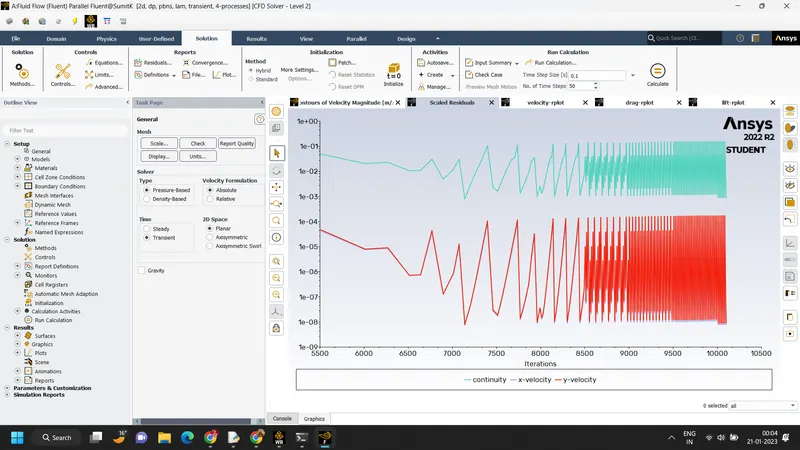
Scaled Residuals:-
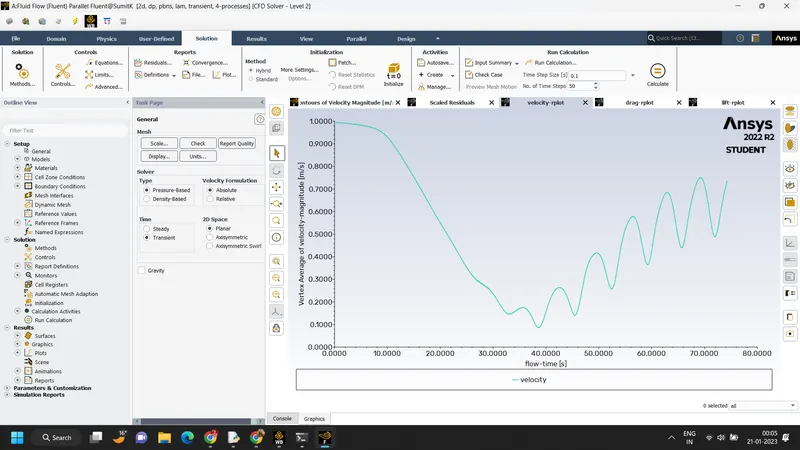
Velocity plot
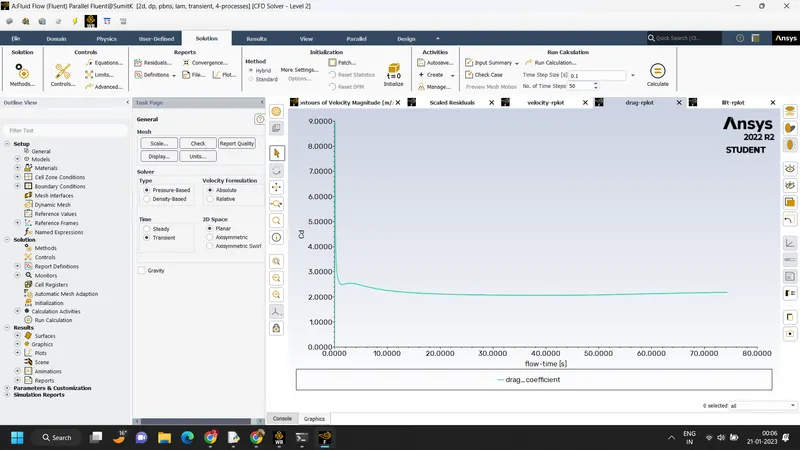
Drag coefficient
Lift Coefficient
Velocity Magnitude
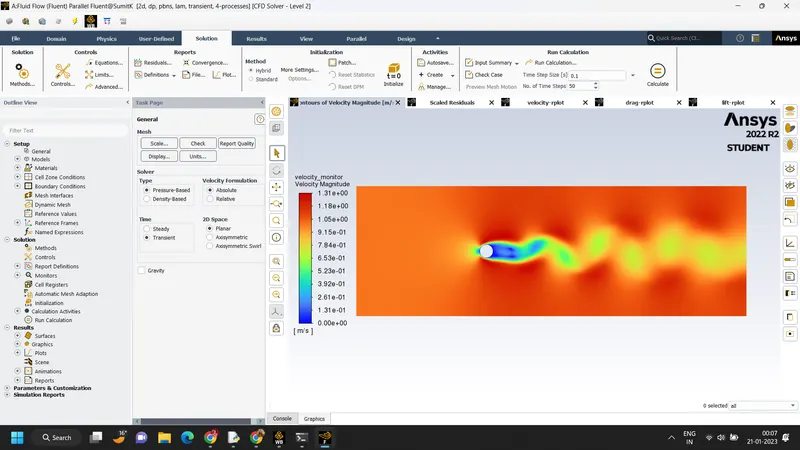
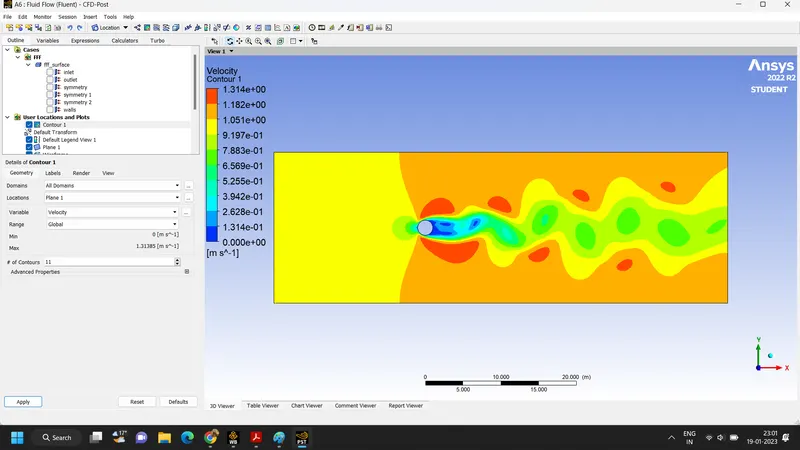
Strouhal number= 1.689e-3
Conclusion for part-I
Both approches gives near about same strouhal number, but the transient solution is more realistic solution than the steady state solution. As it is time dependent.
Part-II
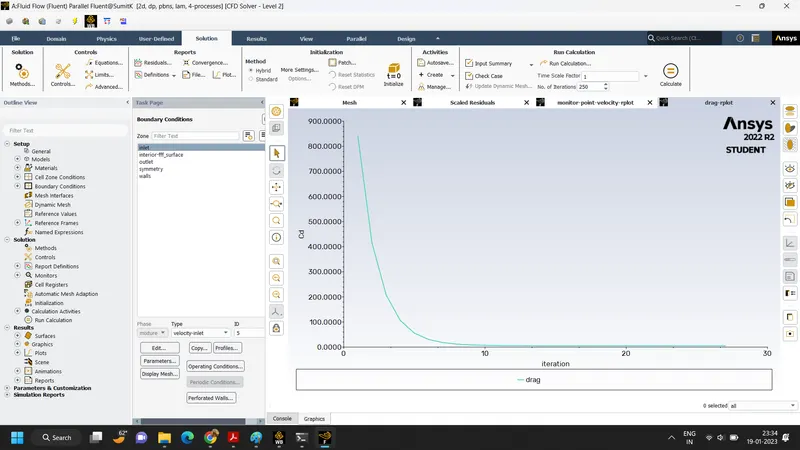
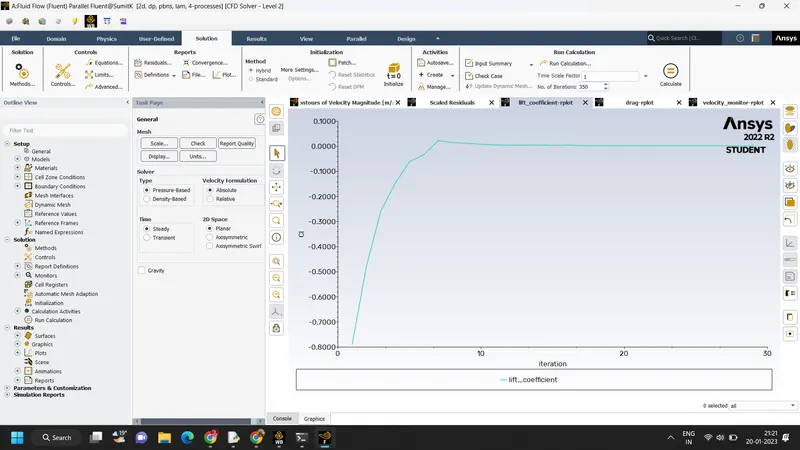
a) at RE =10
drag coefiicient = 3.321
Lift coefficient = 0.002
Velocity
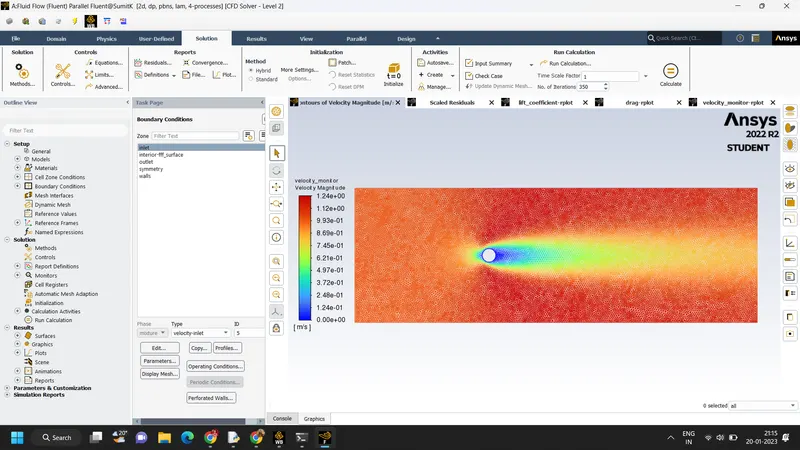
Drag Coefficient
Lift Coefficient
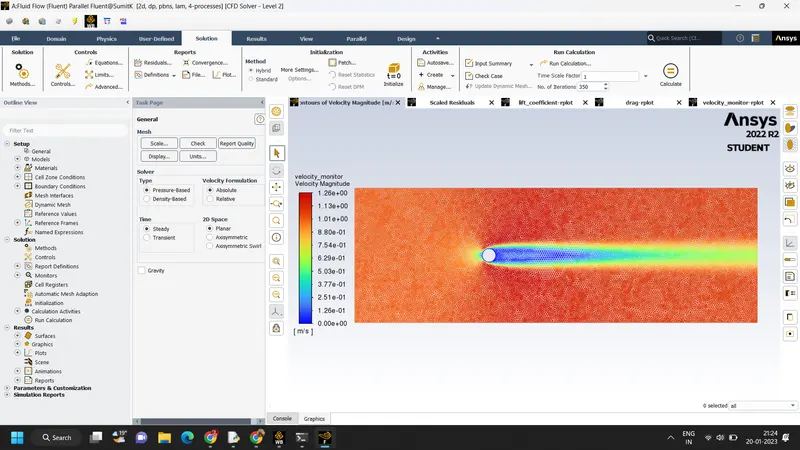
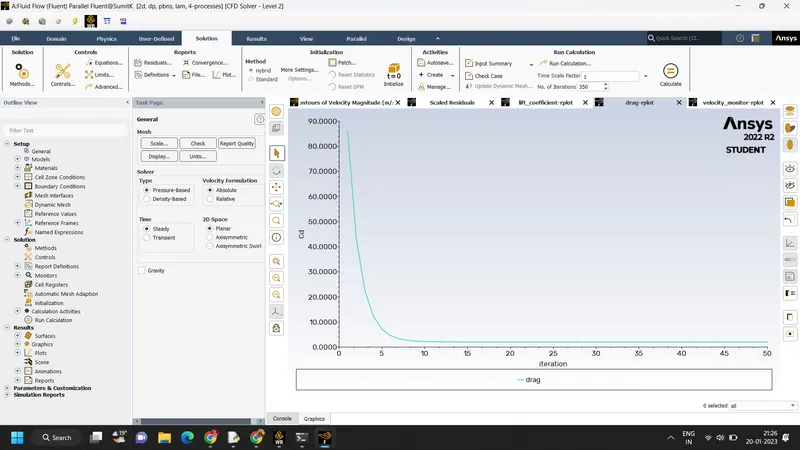
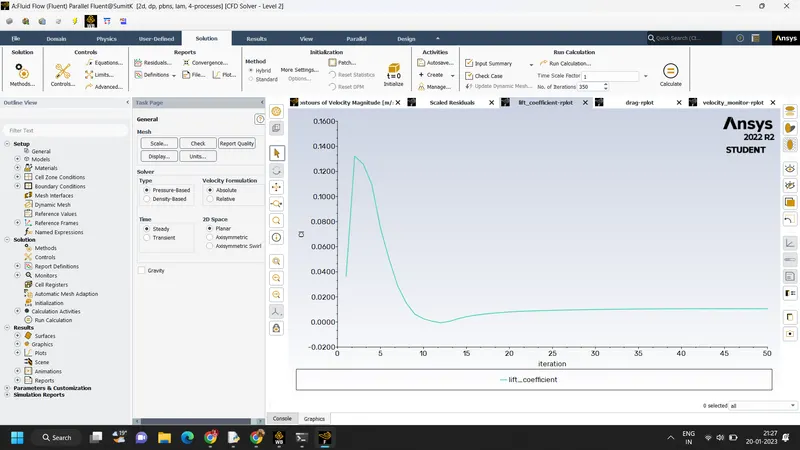
b) At RE= 100
drag coefiicient = 1.8266
Lift coefficient= 0.0102
Solution convrged at 50 iteration
Velocity Magnitude
Drag Coefficient
Lift coefficient.
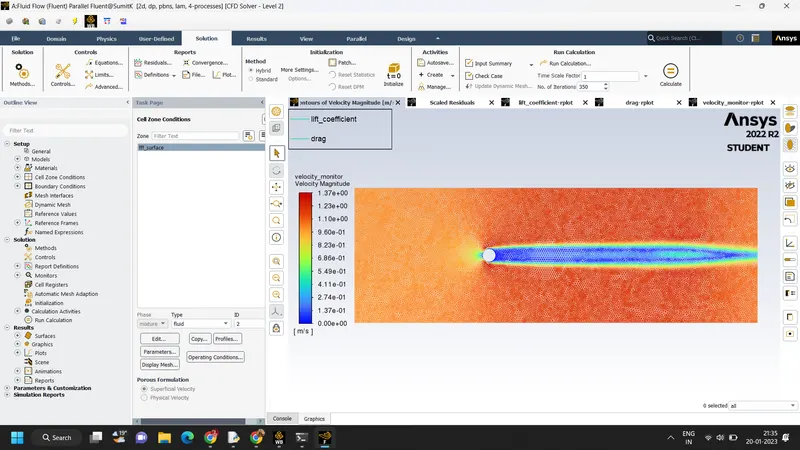
c) At RE =1000
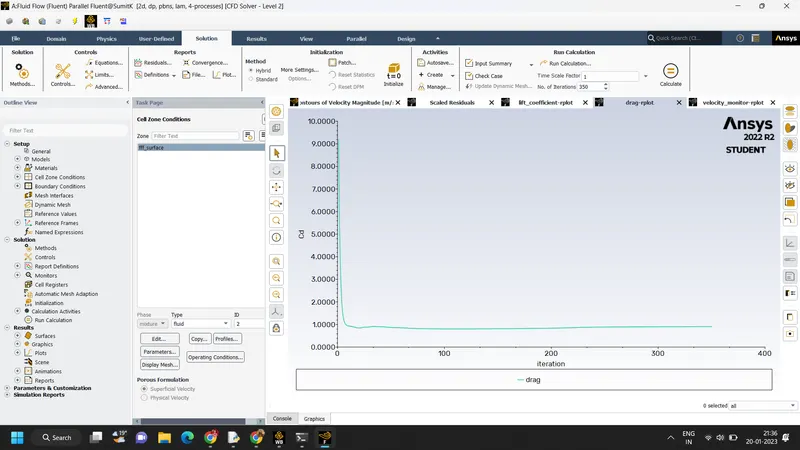
drag coefiicient =0.9410
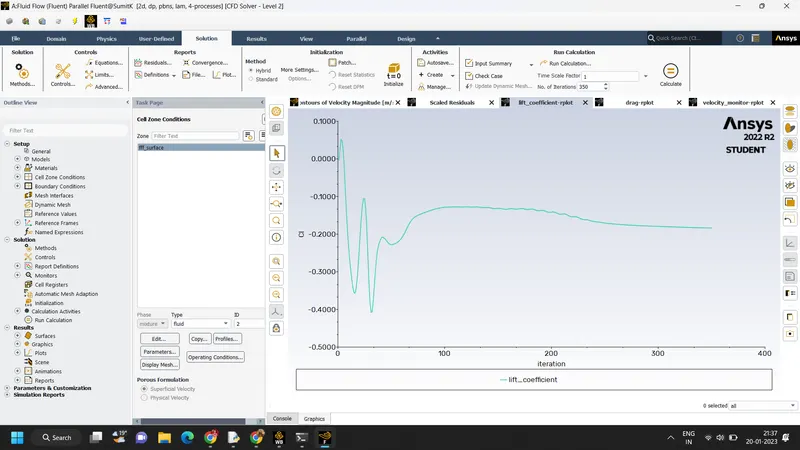
lift coefficient=-0.1823
Velocity Magnitude
Drag Coefficient:
Lift coefficient:
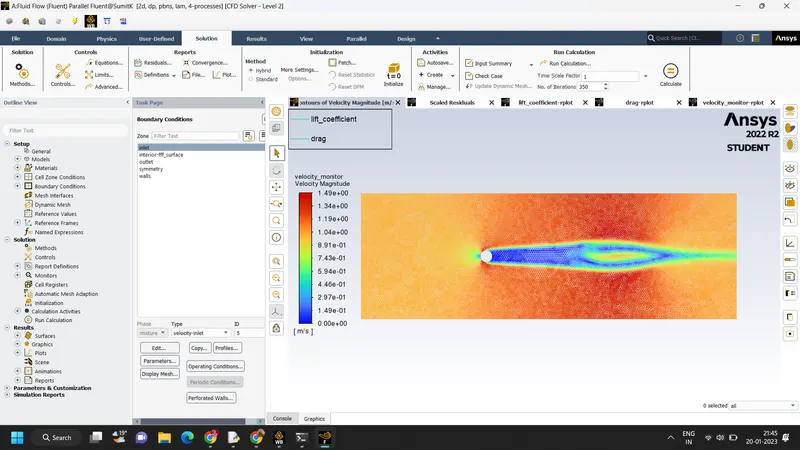
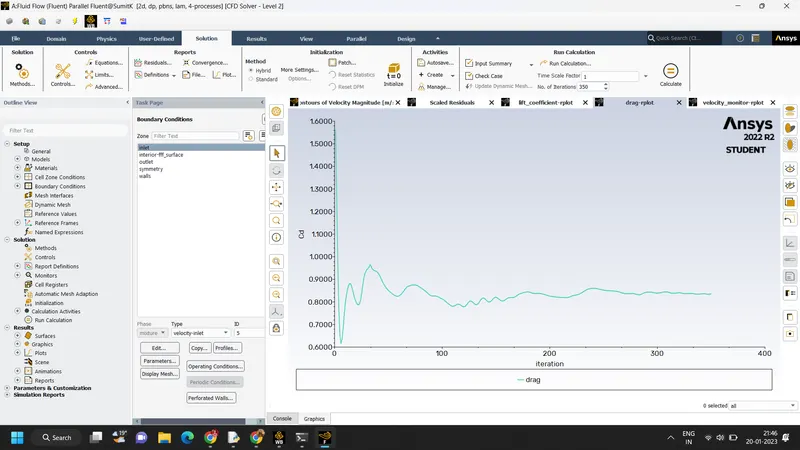
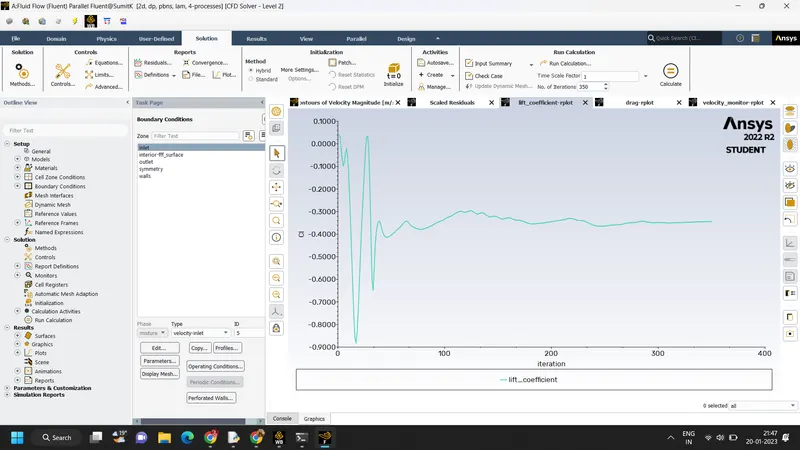
d) At RE=10000
Drag coefficient=0.8325
Lift coefficient= -0.3410
Velocity magnitude
Drag coefficient:
Lift coefficient:
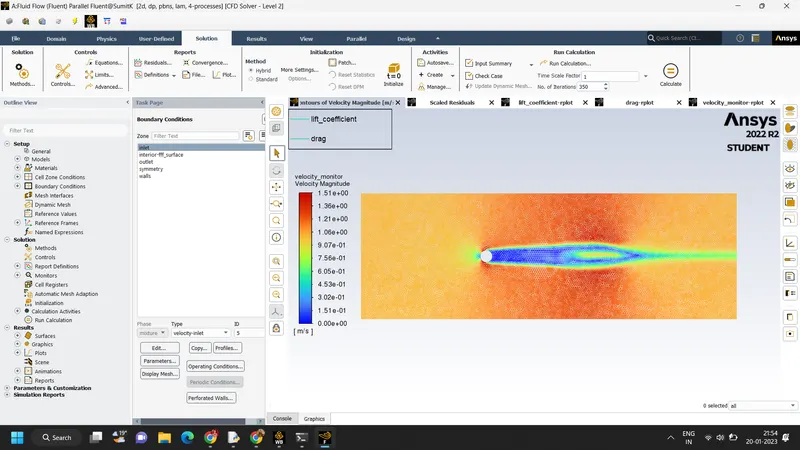
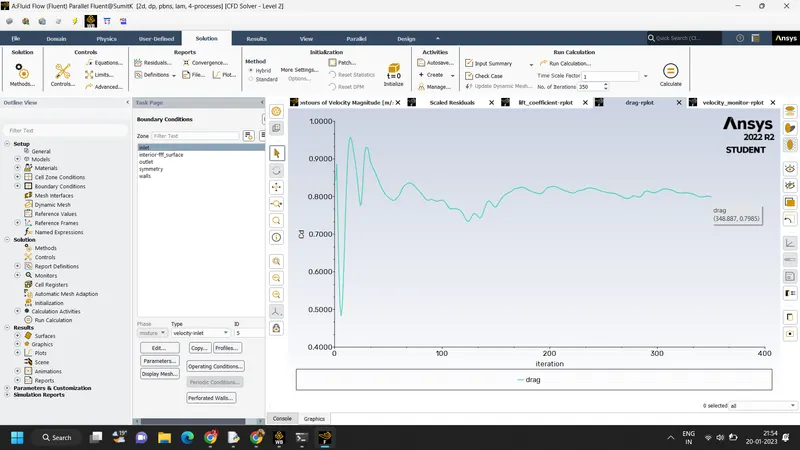
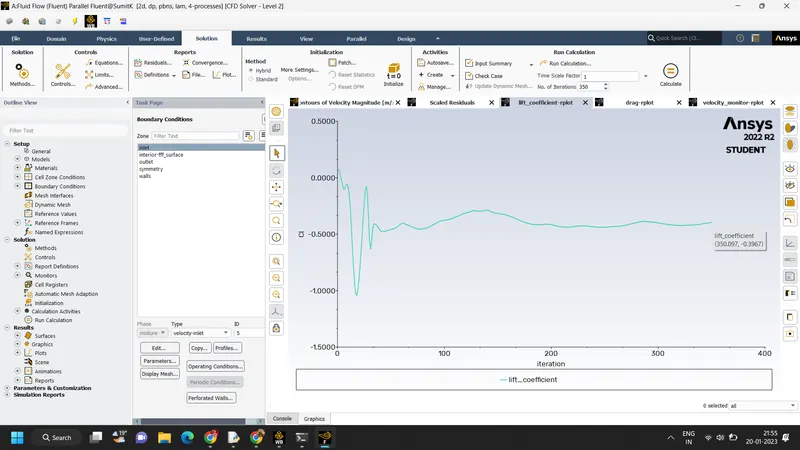
e) At RE=100000
Drag coefficient=0.7996
Lift coefficient= -0.3967
Velocity magnitude
Drag coefficient:
Lift coefficient:
Conclusion for Part-II
As the Reynolds number increases the drag coefficient decreases in steady state approach.