Week 2 - Flow over a Cylinder.
Aim
- To simulate the flow with the steady and unsteady case and calculate the Strouhal Number for Re= 100.
- Calculating the coefficient of drag and lift over a cylinder(steady state) by setting the Reynolds number to 10,100,1000,10000 & 100000.
- To discuss the effect of Reynolds number on the coefficient of drag.
Introduction and Theory
Phenomenon of Karman vortex street
In fluid dynamics, a Karman vortex street (or a von Karman vortex street) is a repeating pattern of swirling vortices, caused by a process known as vortex shedding, which is responsible for the unsteady separation of flow of a fluid around blunt bodies.
Phenomenon of Vortex Shedding
Vortex shedding is a phenomenon, when the wind blows across a structural member, vortices are shed alternately from one side to the other, and where alternating low-pressure zones are generated on the downwind side of the structure giving rise to a fluctuating force acting at right angles to the wind direction
Lift and Drag Force
A fluid flowing around an object exerts a force on it. Lift is the component of this force that is perpendicular to the oncoming flow direction. It contrasts with the drag force, which is the component of the force parallel to the flow direction.
Modelling Approach
The work flow for simulating flow over a cylinder :
- Pre-processing
- Solving
- Post-processing
In pre-processing modelling of the geometry as well as meshing is done.
The steady state and pressure based solver is used for the flow having reynolds number of 10 to 100000.
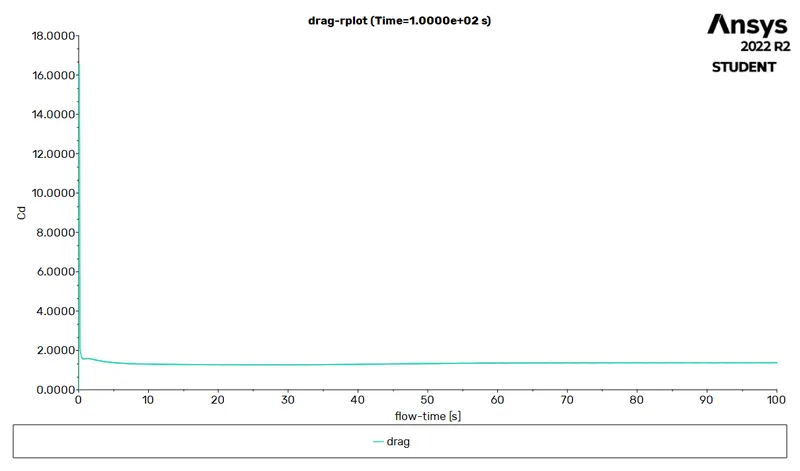
For the reynolds number 100 the transient flow simulation is used and strouhal number is calculated.
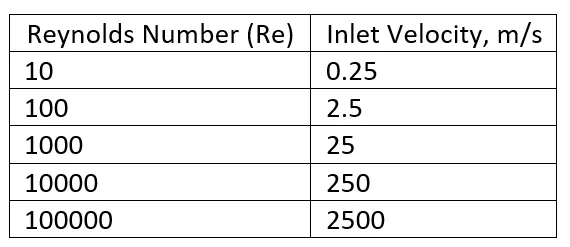
For simulaton the materials properties such as density and viscosity is kept constant and reynolds number is changed by varying inlet flow velocity.
The viscous model with laminar flow is selected.
Geometry
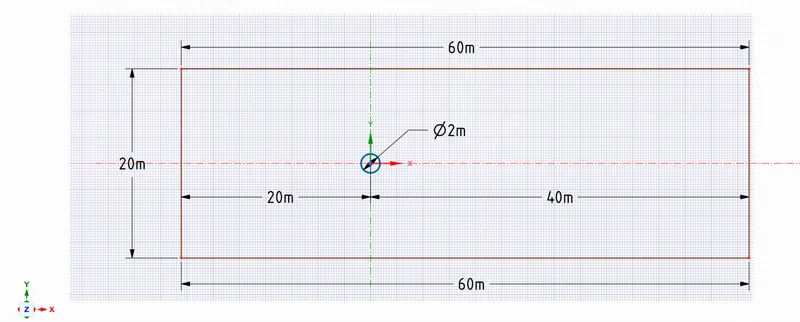
Geometry is modelled using space claim in the ansys workbench.
Dimensions for the geometry is given below.
Mesh
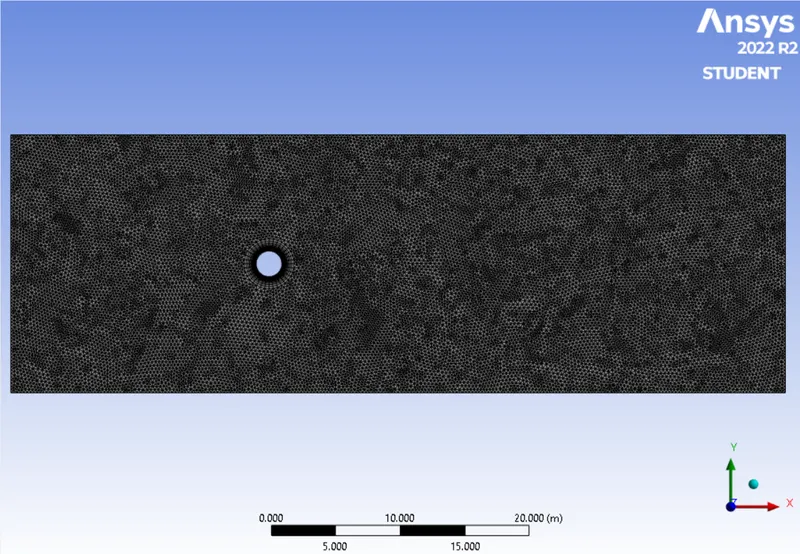
After modelling the geometry is meshed.
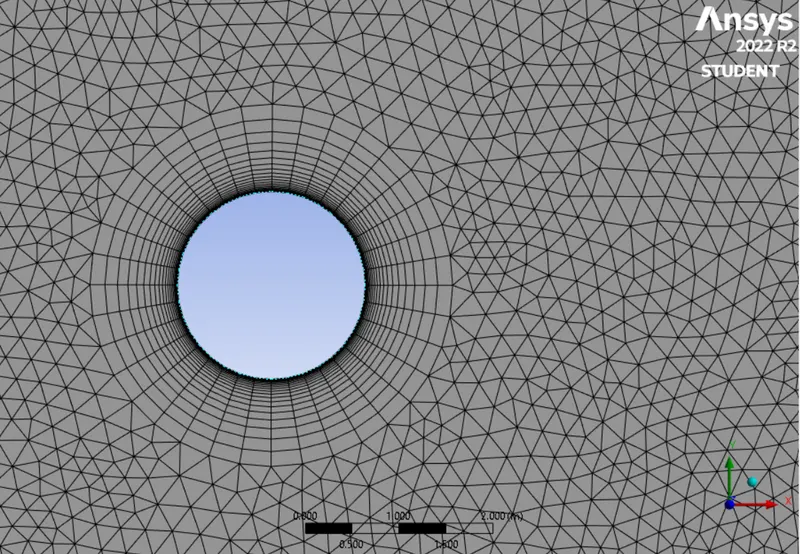
2 Dimensional mesh is generated with triangular elements and inflation layer is generated at the wall.
Inflation Layer
Results
Part l
Steady Flow, Strouhal Number for Re= 100
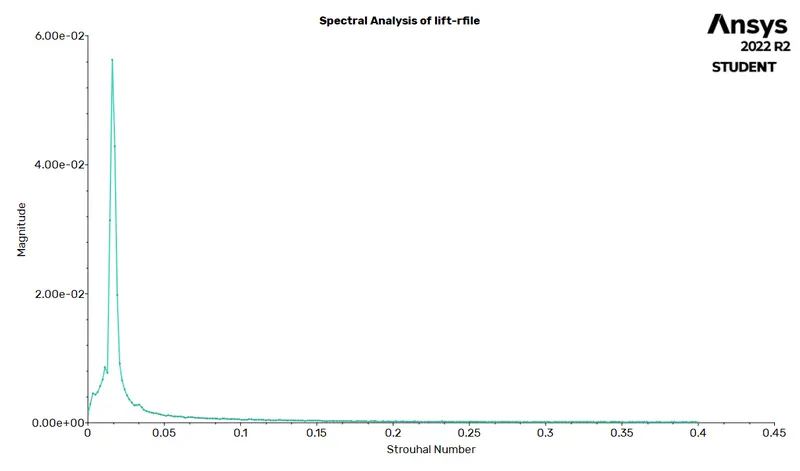
The peak value of the Strouhal number for the steady flow with Reynolds number 100 is 5.63e-02.
unsteady Flow, Strouhal Number for Re= 100
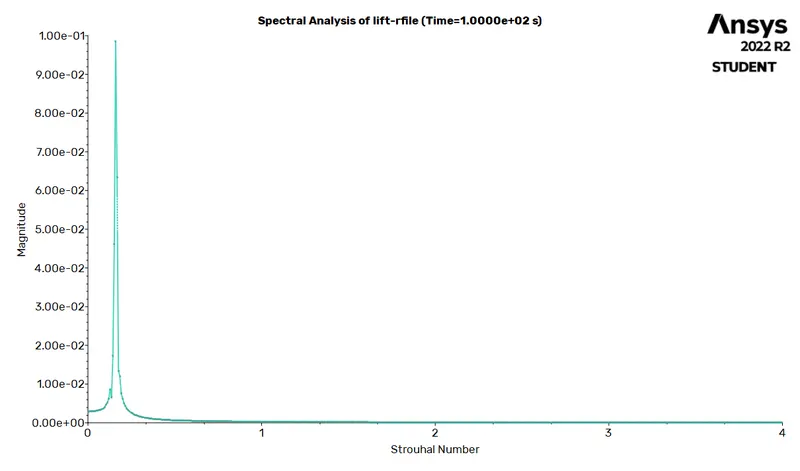
The peak value of the Strouhal number for the unsteady flow with Reynolds number 100 is 9.85e-02.
Part ll
Residuals
Steady flow with Reynolds number, Re = 10
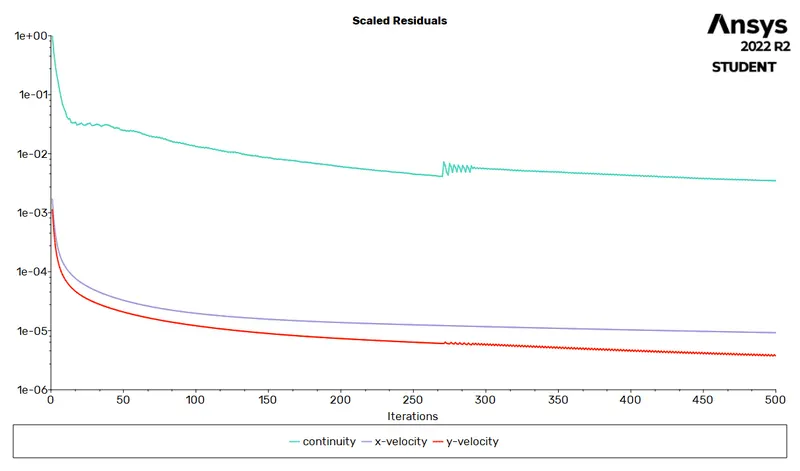
Steady flow with Reynolds number, Re = 100
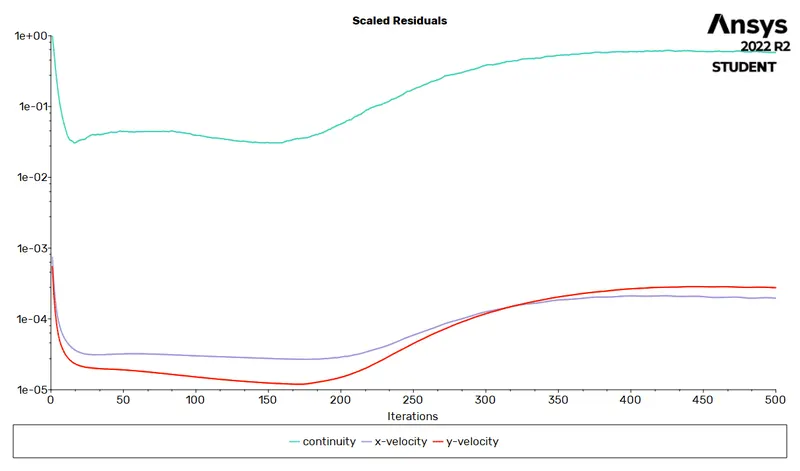
Steady flow with Reynolds number, Re = 1000
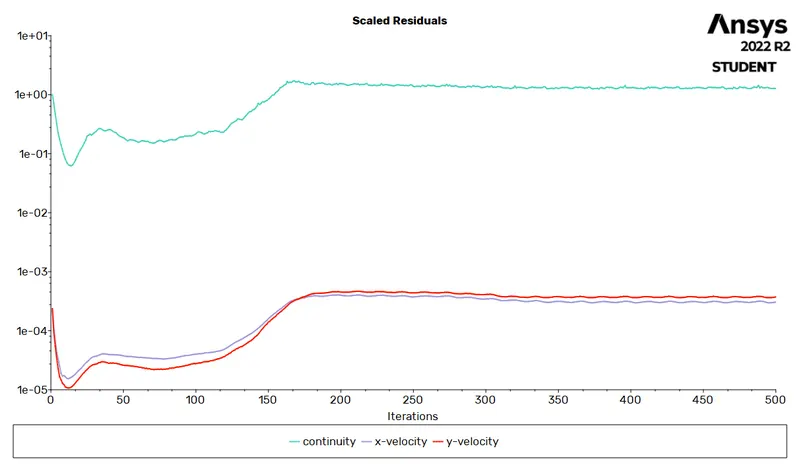
Steady flow with Reynolds number, Re = 10000
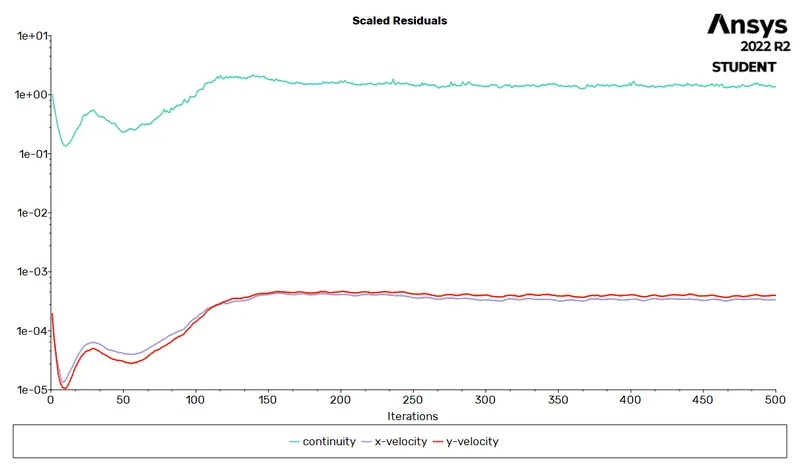
Steady flow with Reynolds number, Re = 100000
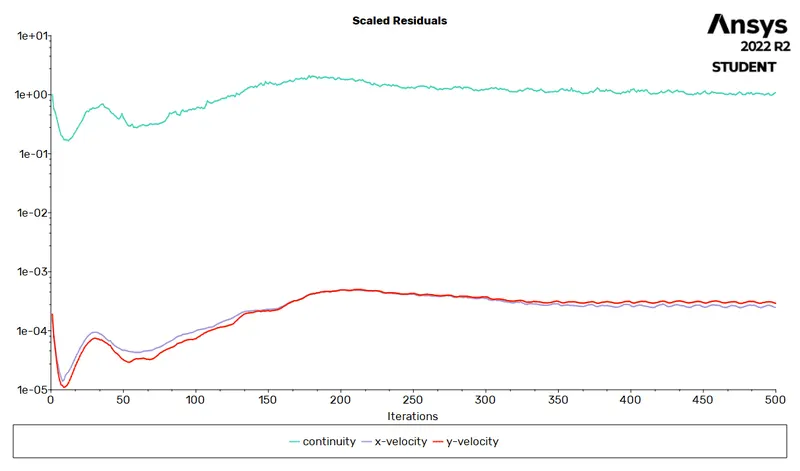
Transient with Reynolds number, Re = 100
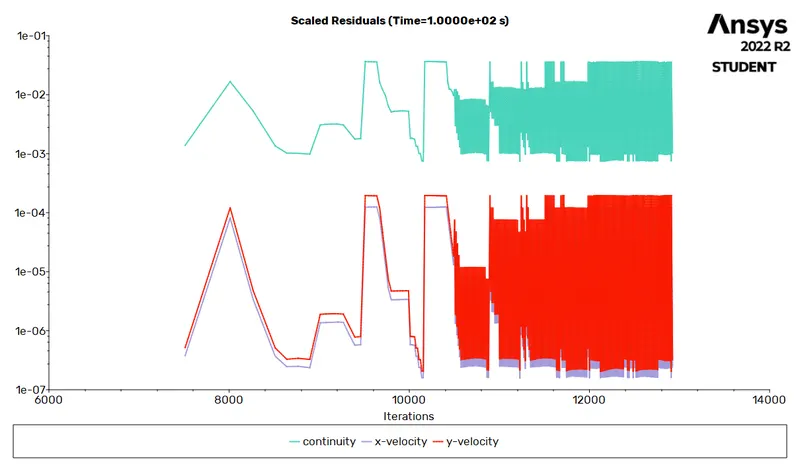
Plots of the coefficient of drag and lift
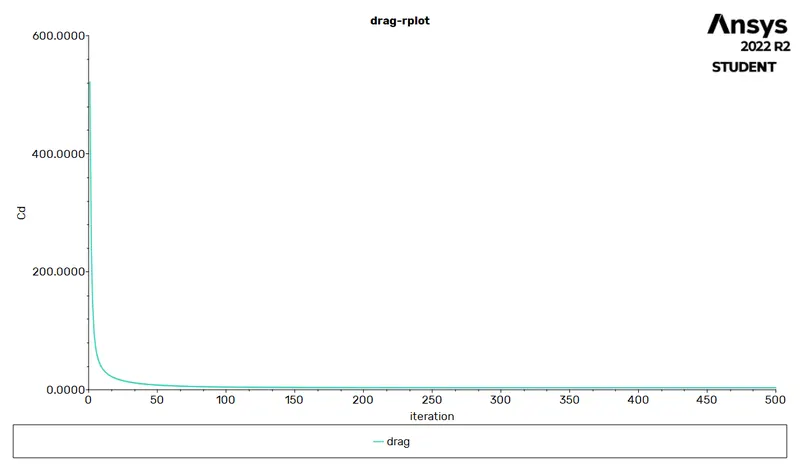
Coefficient of drag for steady flow with Reynolds number 10
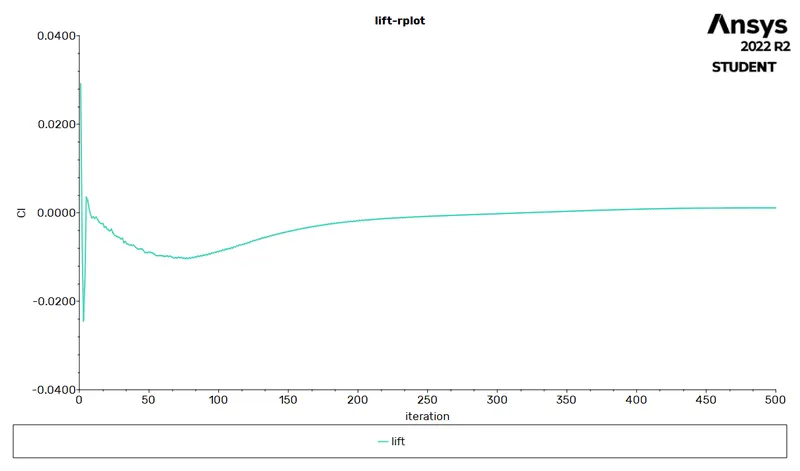
Coefficient of lift for steady flow with Reynolds number 10
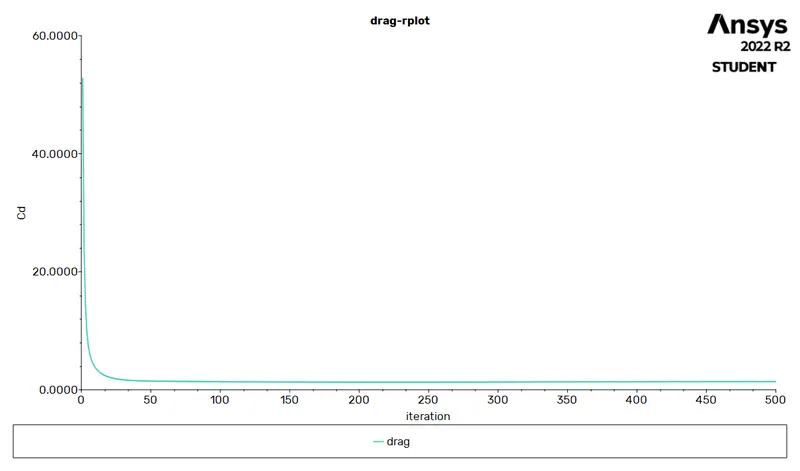
Coefficient of drag for steady flow with Reynolds number 100
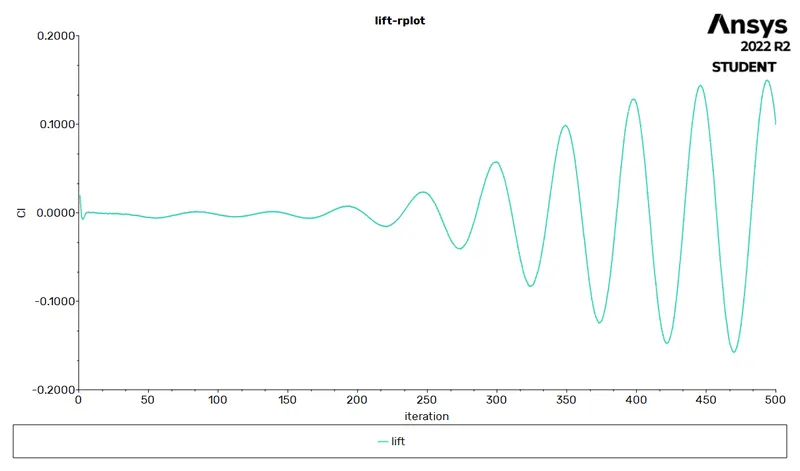
Coefficient of lift for steady flow with Reynolds number 100
Coefficient of drag for steady flow with Reynolds number 1000
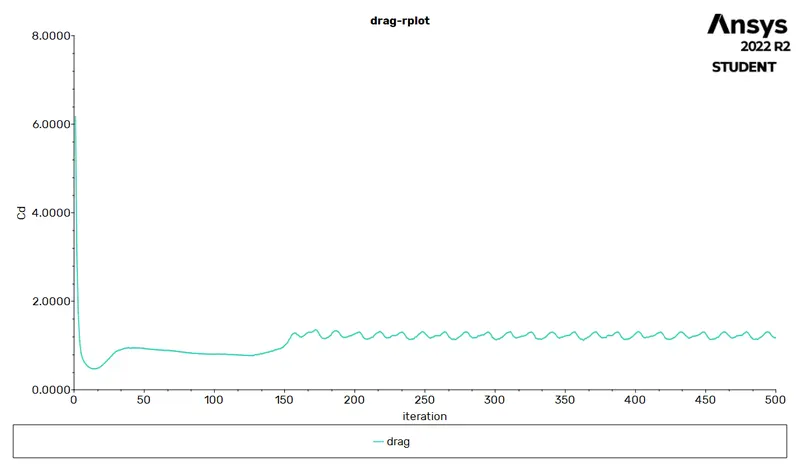
Coefficient of lift for steady flow with Reynolds number 1000
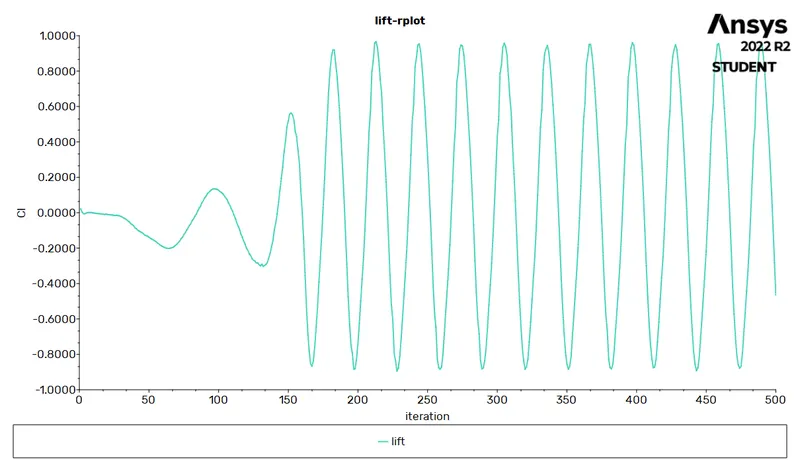
Coefficient of drag for steady flow with Reynolds number 10000
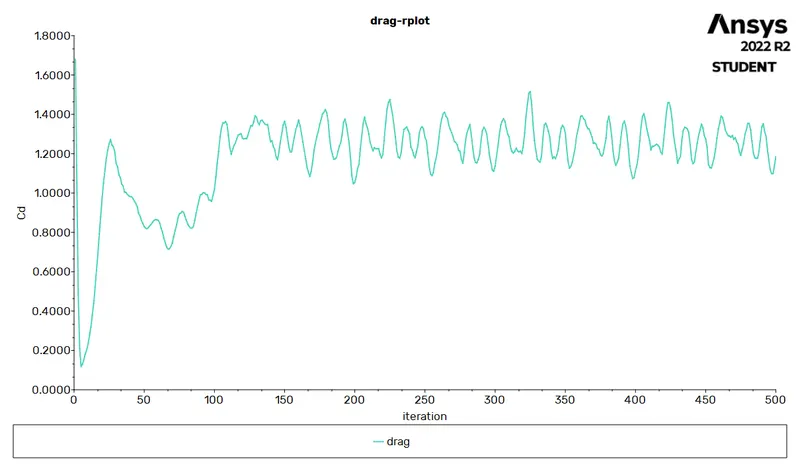
Coefficient of lift for steady flow with Reynolds number 10000
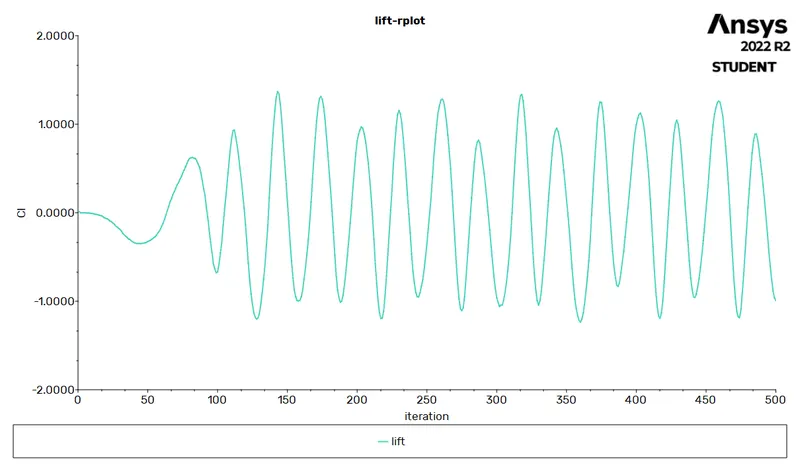
Coefficient of drag for steady flow with Reynolds number 100000
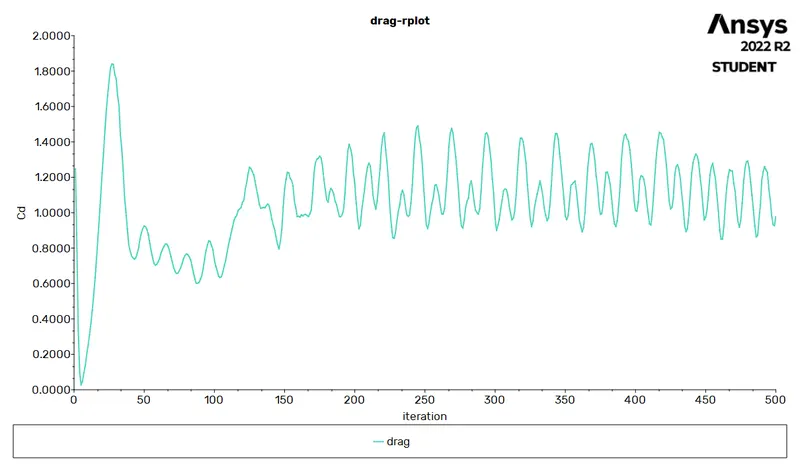
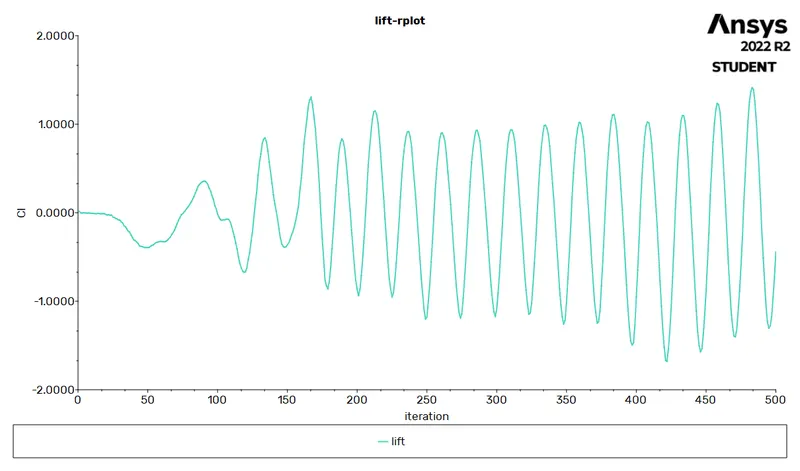
Coefficient of lift for steady flow with Reynolds number 100000
Coefficient of drag for unsteady flow with Reynolds number 100
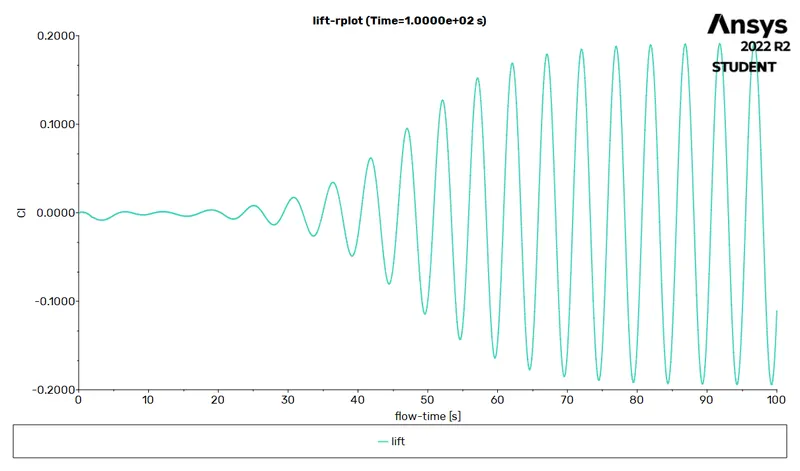
Coefficient of lift for unsteady flow with Reynolds number 100
Contour Plots
Velocity contours for steady flow with Reynolds number 10
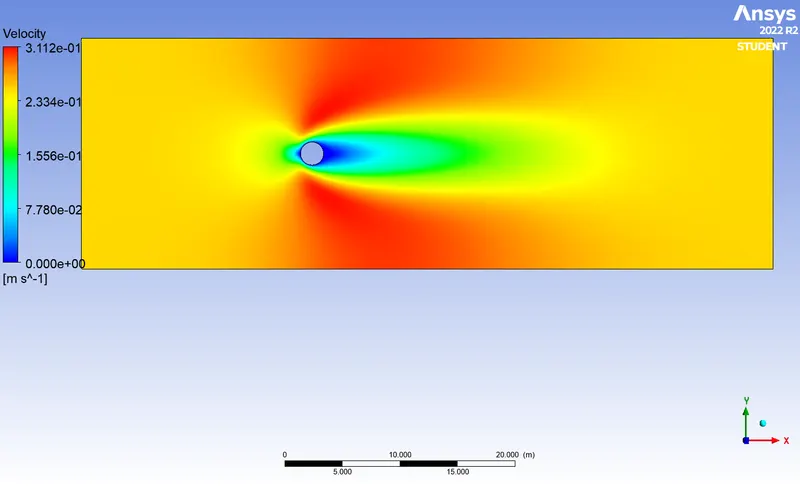
Pressure contours for steady flow with Reynolds number 10
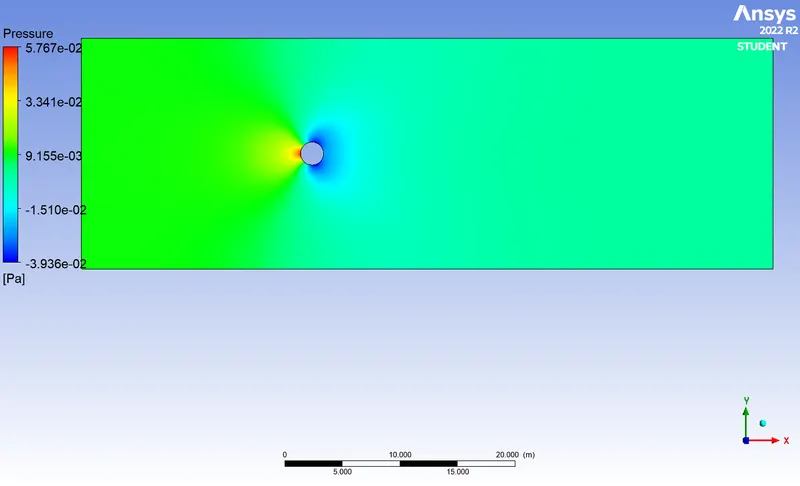
Velocity contours for steady flow with Reynolds number 100
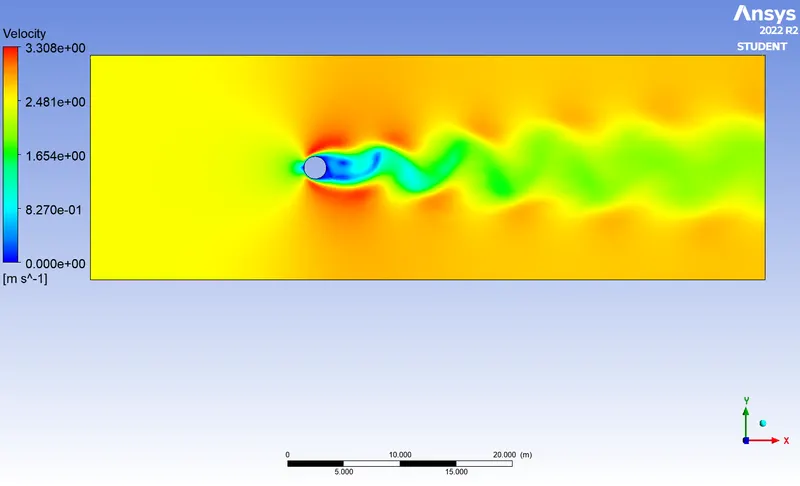
Pressure contours for steady flow with Reynolds number 100
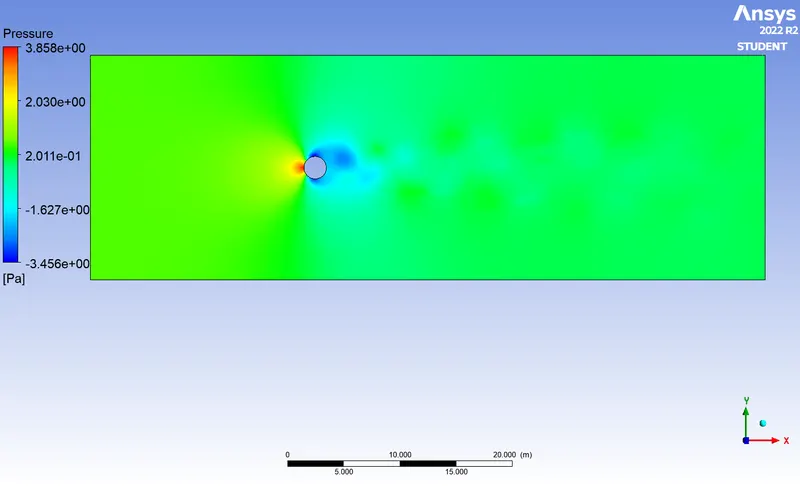
Animation for steady flow with Re = 100
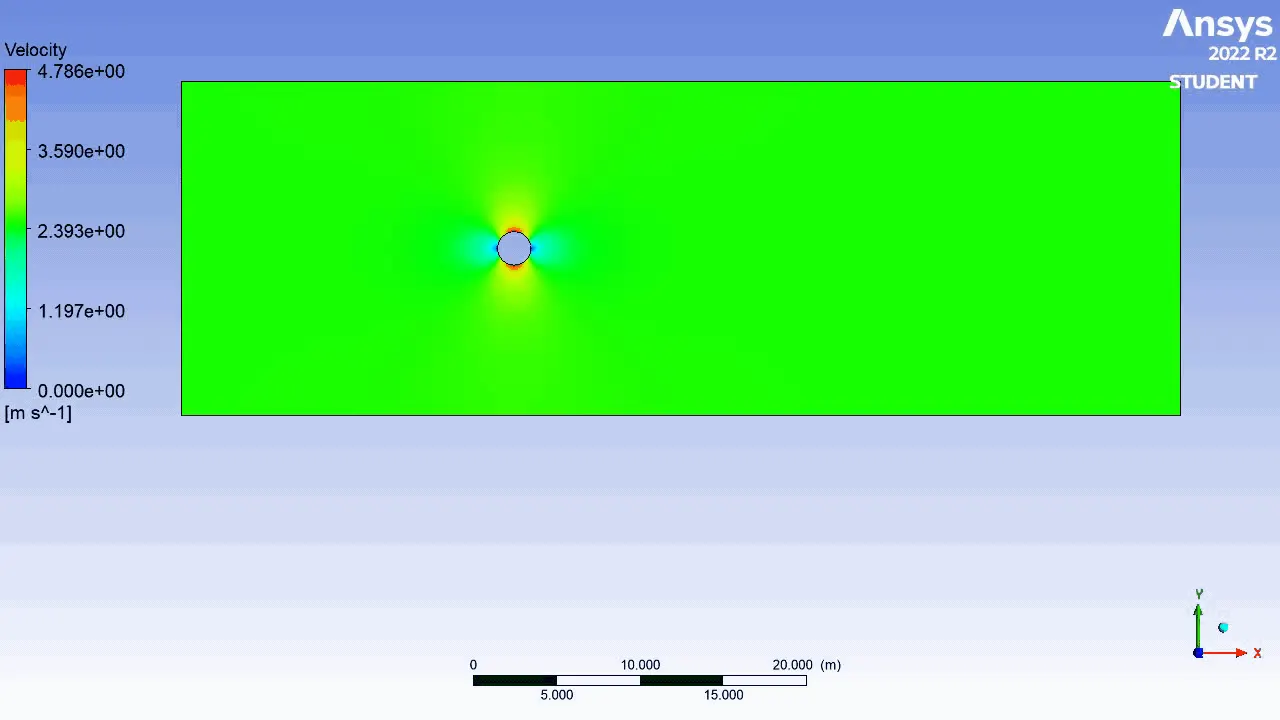
Velocity contours for steady flow with Reynolds number 1000
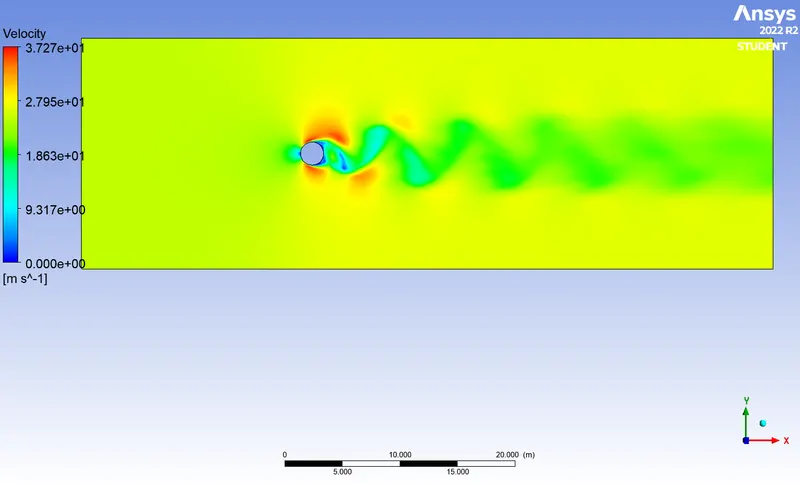
Pressure contours for steady flow with Reynolds number 1000
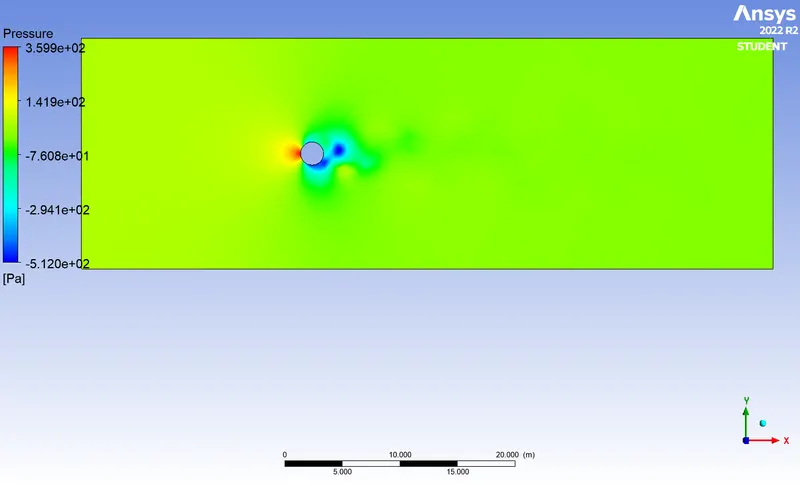
Velocity contours for steady flow with Reynolds number 10000
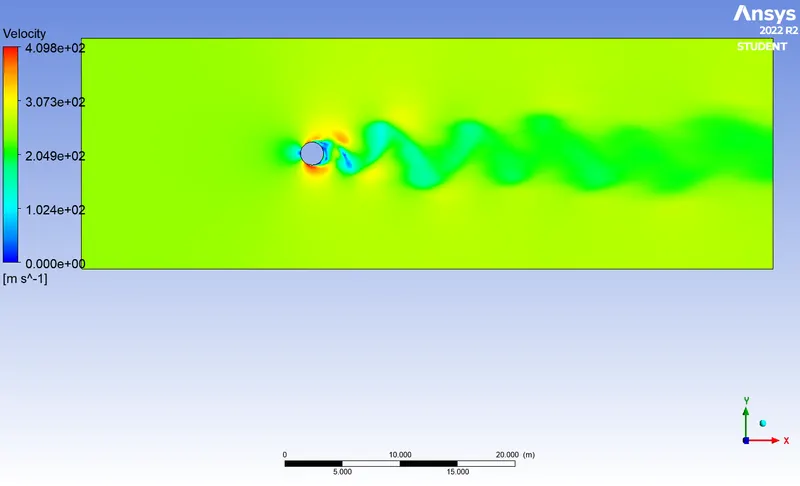
Pressure contours for steady flow with Reynolds number 10000
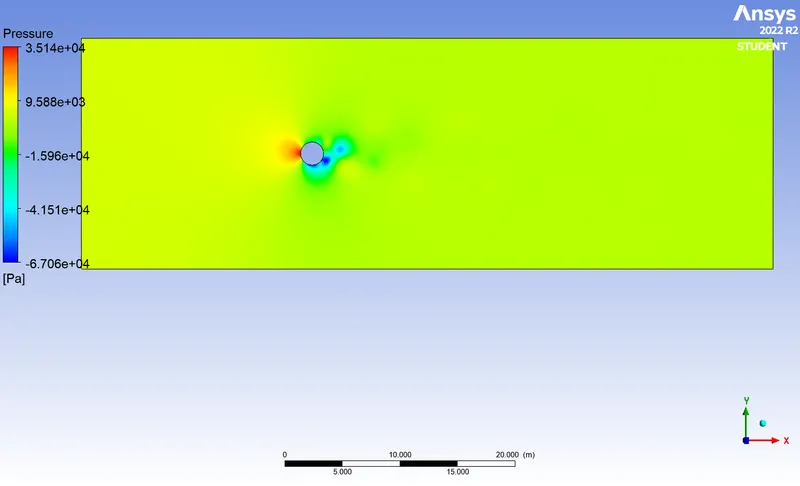
Velocity contours for steady flow with Reynolds number 100000
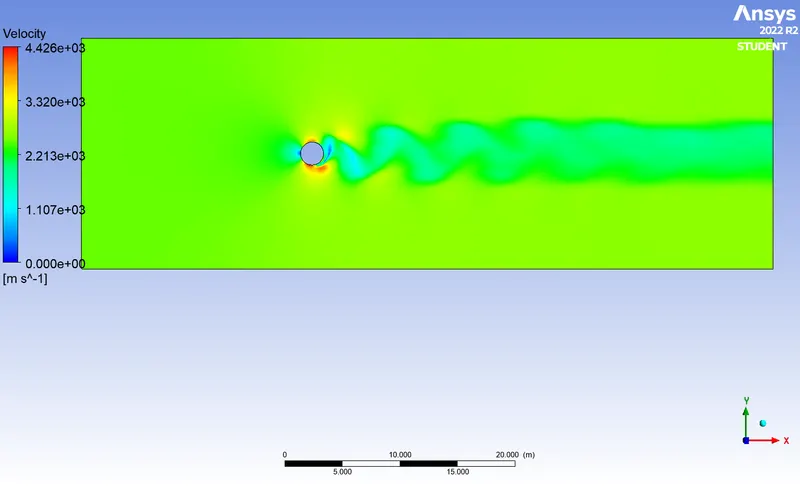
Pressure contours for steady flow with Reynolds number 100000
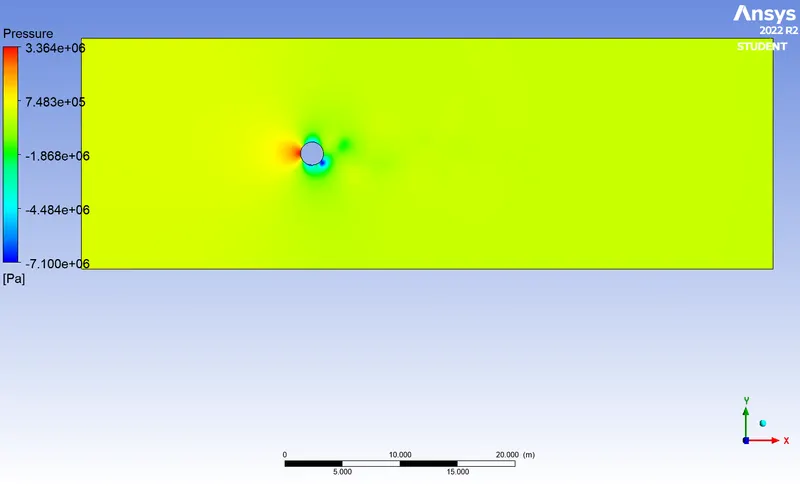
Velocity contours for unsteady flow with Reynolds number 100
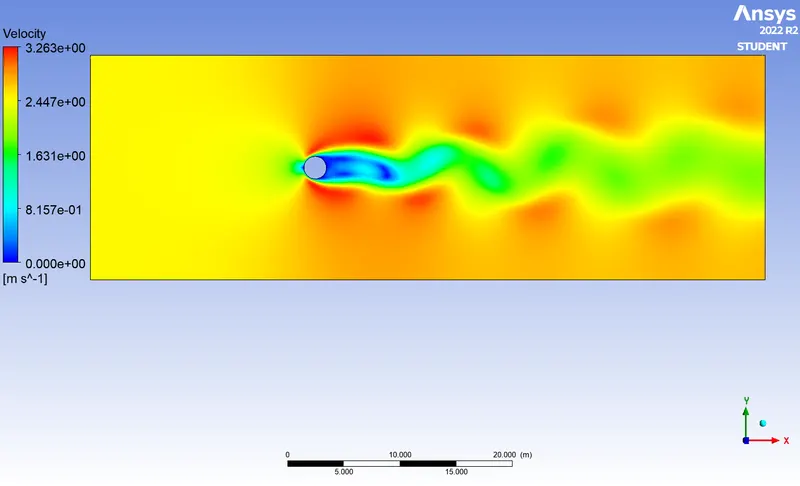
Pressure contours for unsteady flow with Reynolds number 100
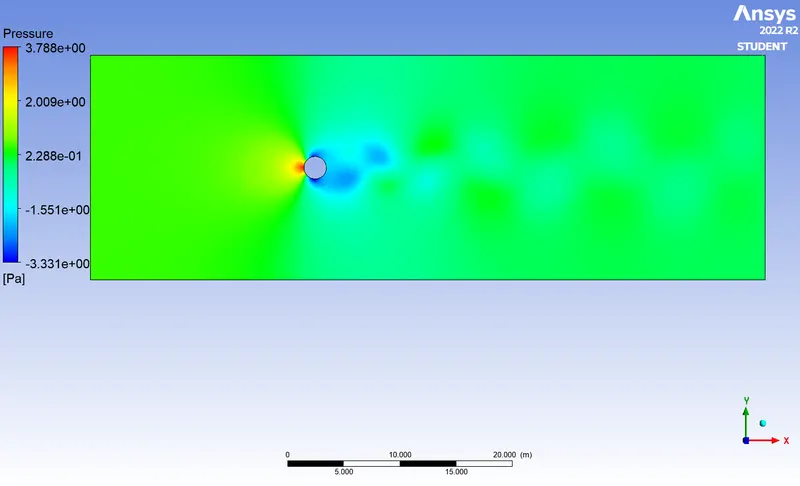
The Vortex Shedding occurs for the flow having reynolds number 100 and above.
Animation for unsteady flow with Re = 100
https://drive.google.com/file/d/1HCs22MD9PlC6seXtYbIoTPHpDaR6ulZL/view?usp=share_link
Conclusion
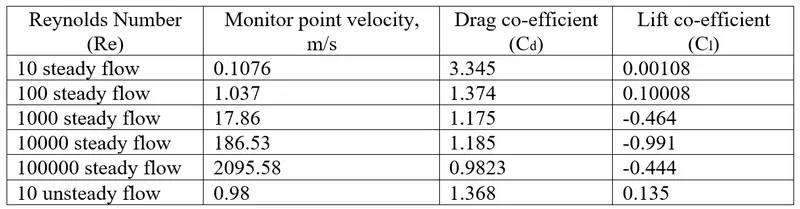
It is observed that for increase in reynolds number drag coefficient is decreased.
Monitor point velocity is the velocity which is measured at a distance away from cylinder wall which is weak region where the velocity of the incoming flow is reduced due to flow separation.