Week 2 - Flow over a Cylinder.
Aim: Simulate the flow over a cylinder and explain the phenomenon of Karman vortex street.
Objective:
PART-I
- Simulate the flow with the steady and unsteady case and calculate the Strouhal Number for Re= 100.
PART-II
- Calculate the coefficient of drag and lift over a cylinder by setting the Reynolds number to 10,100,1000,10000 & 100000. (Run with steady solver)
- Discuss the effect of Reynolds number on the coefficient of drag. [ Results should be validated with any standard literature and error should be within 5 %]
Procedure:
Phenomenon of Karman vortex street :
In fluid dynamics, a Karman vortex street is a repeating pattern of swirling vortices, caused by a process known as vortex shedding which is responsible for the unsteady separation of flow of a fluid around blunt bodies.
It is named after the engineer and fluid dynamicist Theodore von Karman and is responsible for such phenomena as the "singing" of suspended telephone or power lines and the vibration of a car antenna at certain speeds. Mathematical modeling of von Kármán vortex street can be performed using different techniques including but not limited to solving the full Navier-Stokes equations with k-epsilon, SST, k-omega and Reynolds stress, and large eddy simulation (LES) turbulence models, or by numerically solving some dynamic equations such as the Ginzburg-Landau equation.
Introduction:
Flow over a cylinder is one of the basic simulation in CFD domain and till this date the research is still going on to study the unsteady behaviour caused by the flow.The flow over cylinder study is very complex and periodic flow pattern are seen at lower Reynolds number and after achieving critical Reynolds number value, the flow get change in the wake region and this wake region can be studied using literature of Karman vortex street.one of the important point is Vortex shedding means In fluid dynamics vortex shedding is an oscillating flow that takes place when a fluid such as air or water flows past a bluff (as opposed to streamlined) body at certain velocities, depending on the size and shape of the body. In this flow, vortices are created at the back of the body and detach periodically from either side of the body forming a Von Karman vortex street. The fluid flow past the object creates alternating low-pressure vortices on the downstream side of the object. The object will tend to move toward the low-pressure zone.
PART-I
- Simulate the flow with the steady and unsteady case and calculate the Strouhal Number for Re= 100.
For steady state simulation Re=100:
Step 1) Creating the geometry : (this is 2D problem)
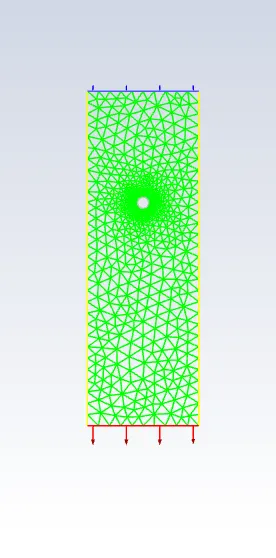
The diameter of circle is 2m ,and the rectangular surface of 20m width and 60m length the geometry is shown below
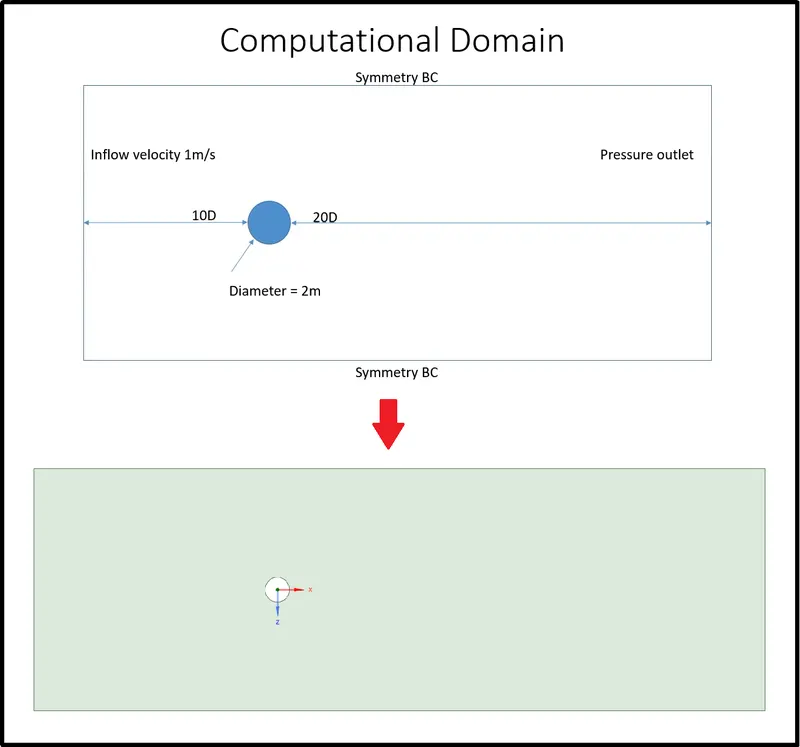
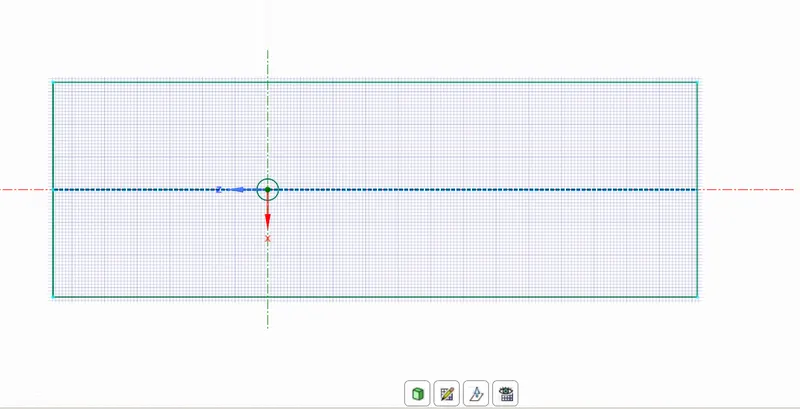
Step 2) Meshing :
- In meshing we insert method to change the shape of mesh ,In this case we use all triangles method
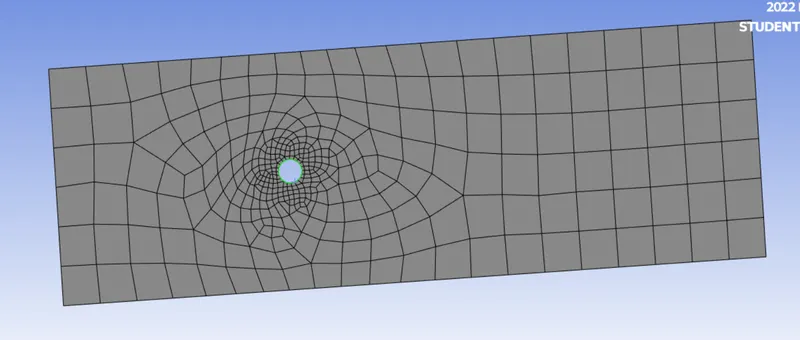
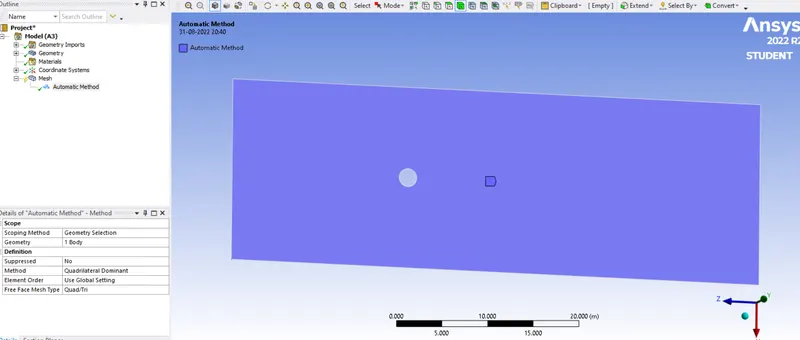
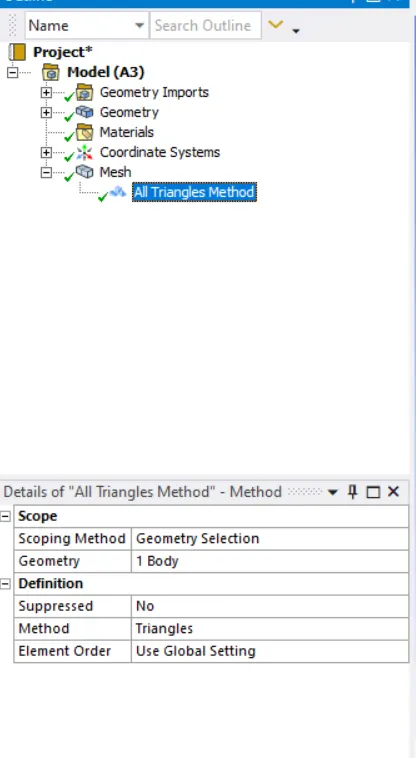
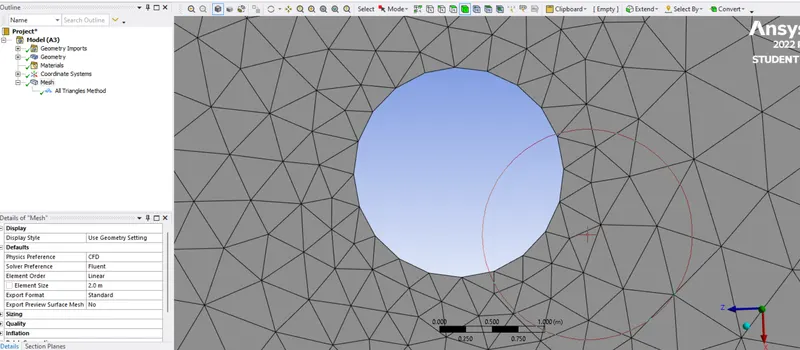
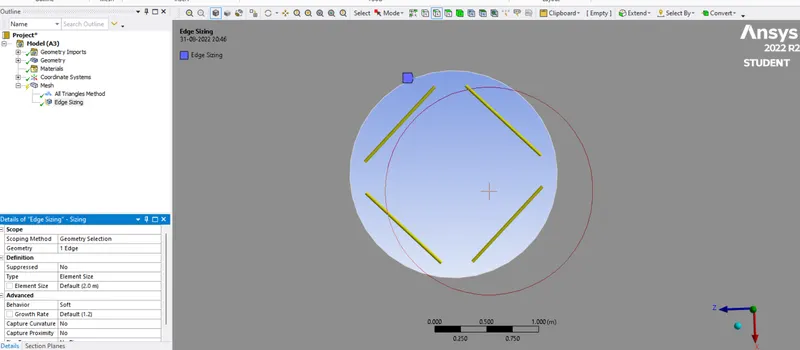
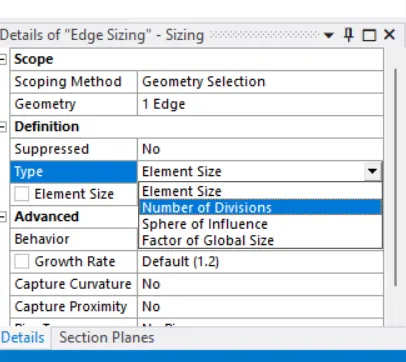
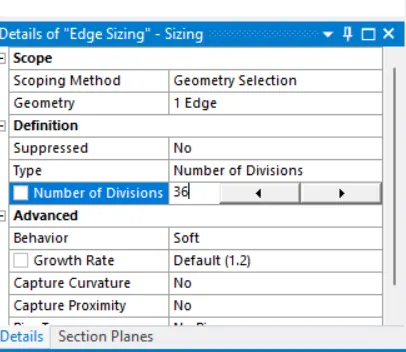
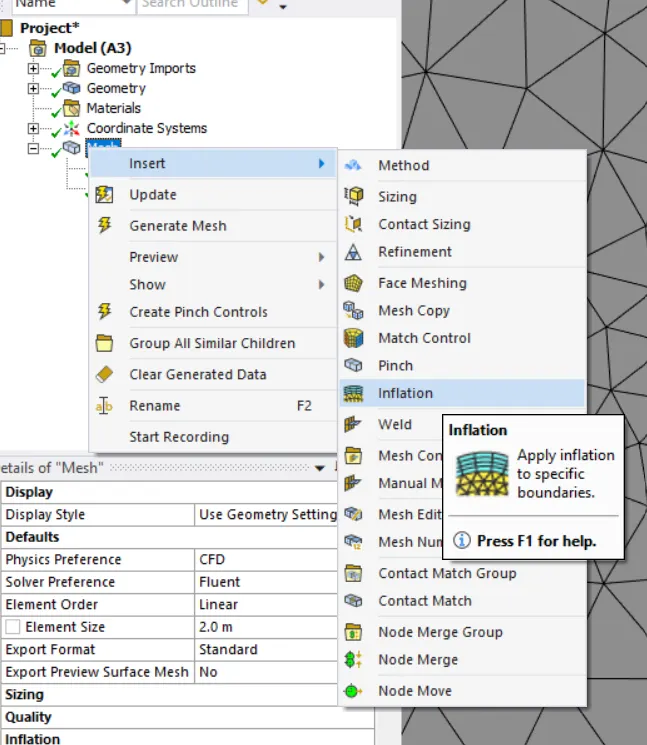
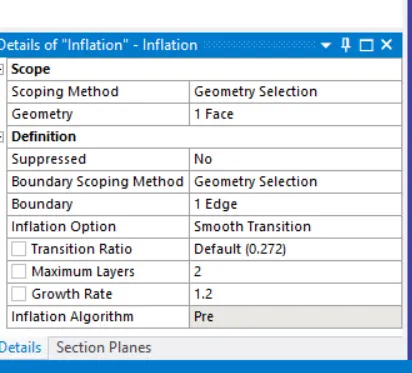
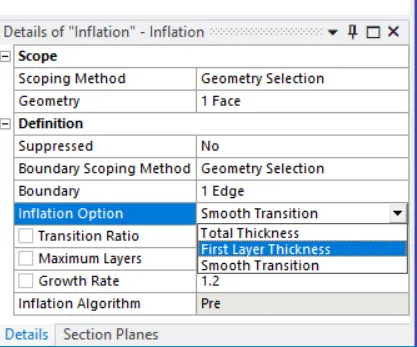
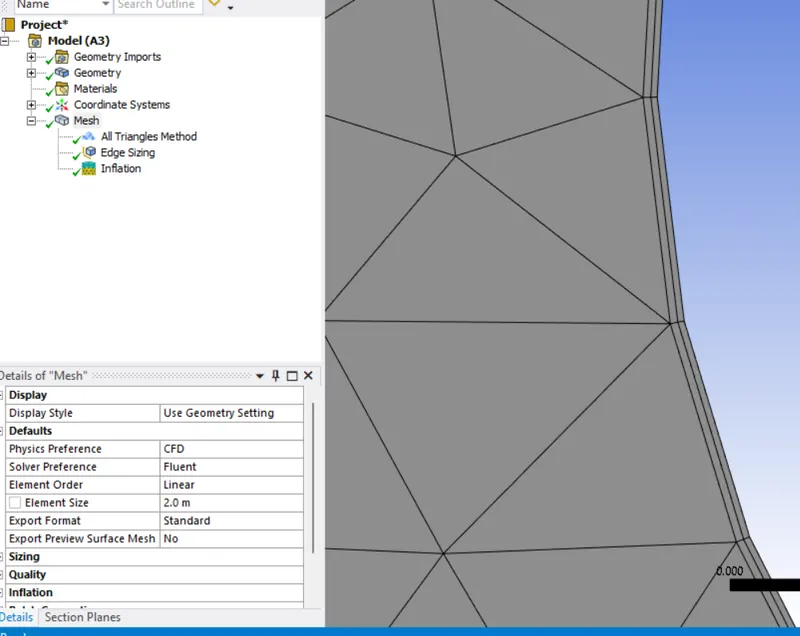
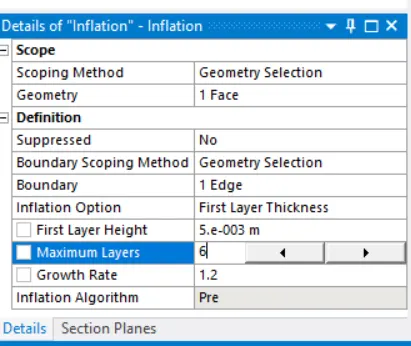
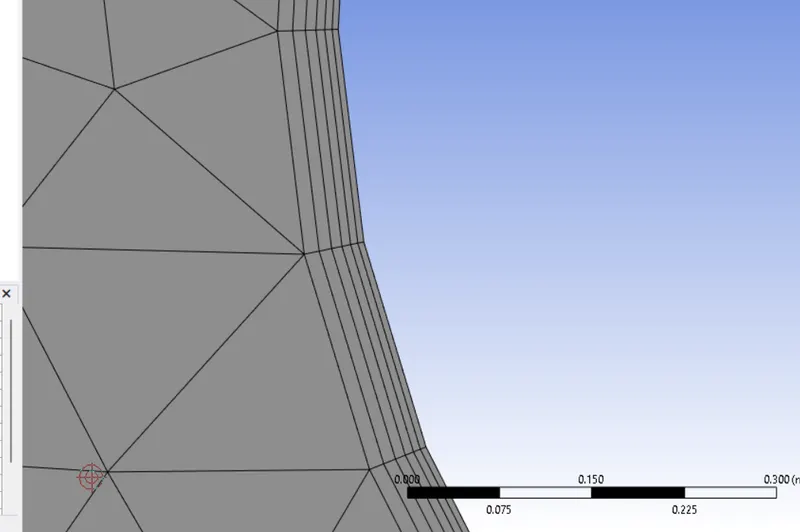
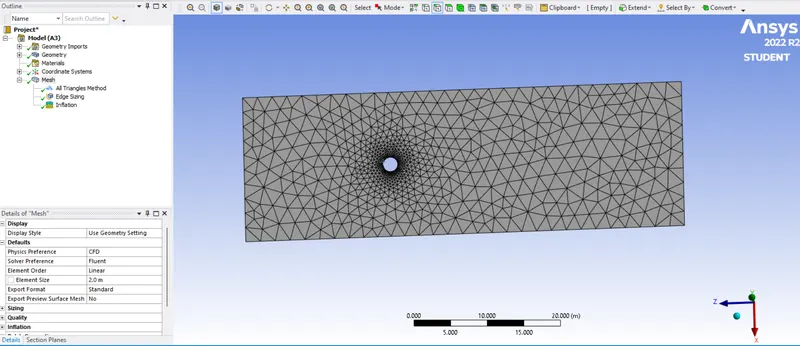
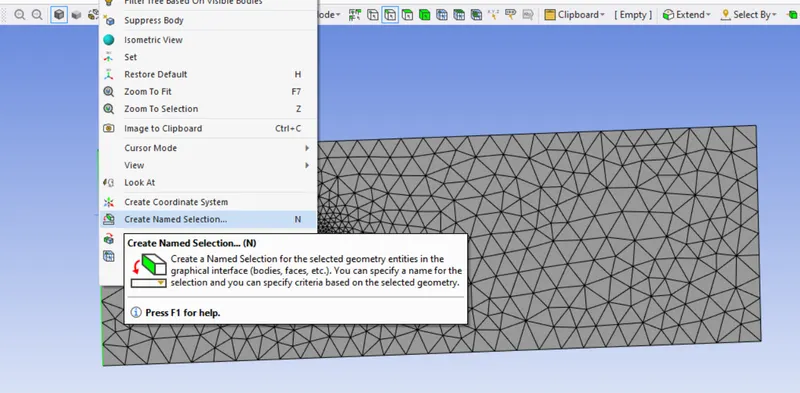
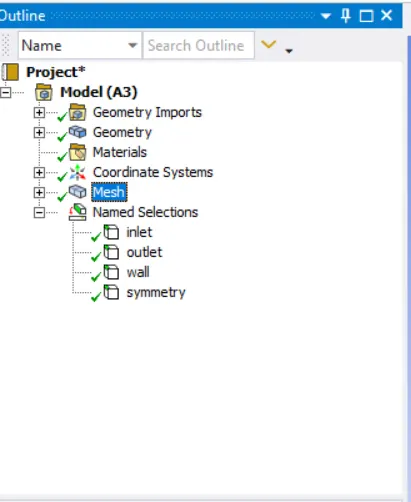
Step 3) Set up :
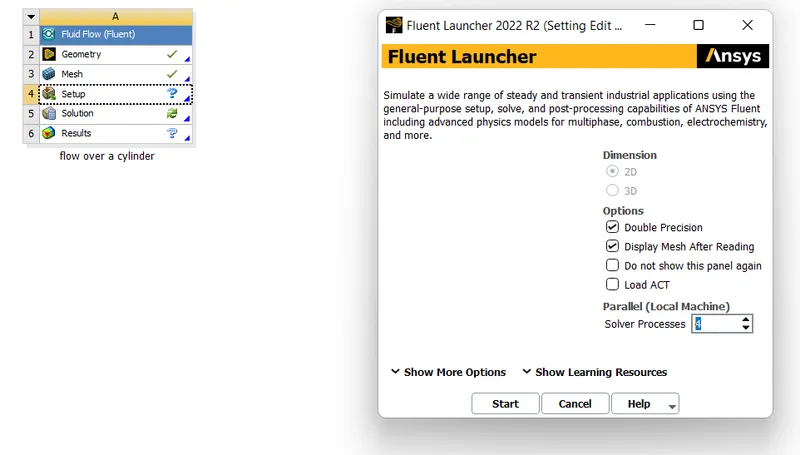
Solver type: Pressure based
Velocity formulation: Absolute
Time : Steady
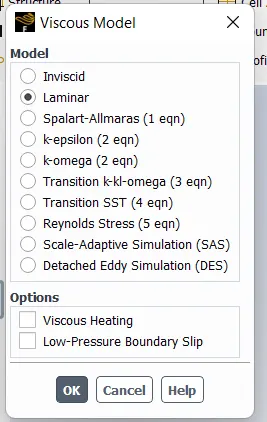
Viscosity model: laminar
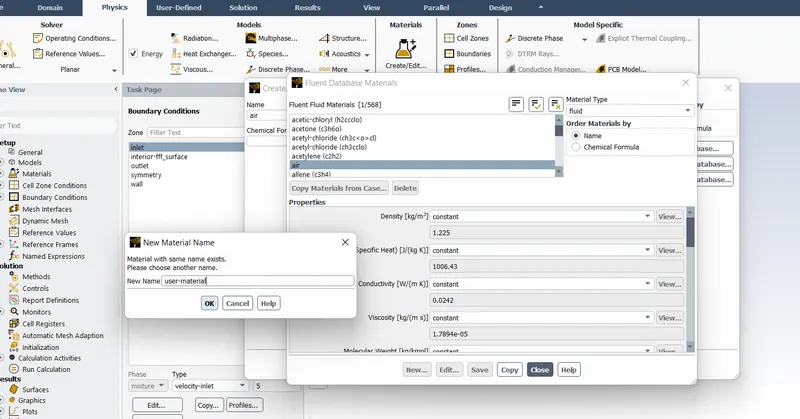
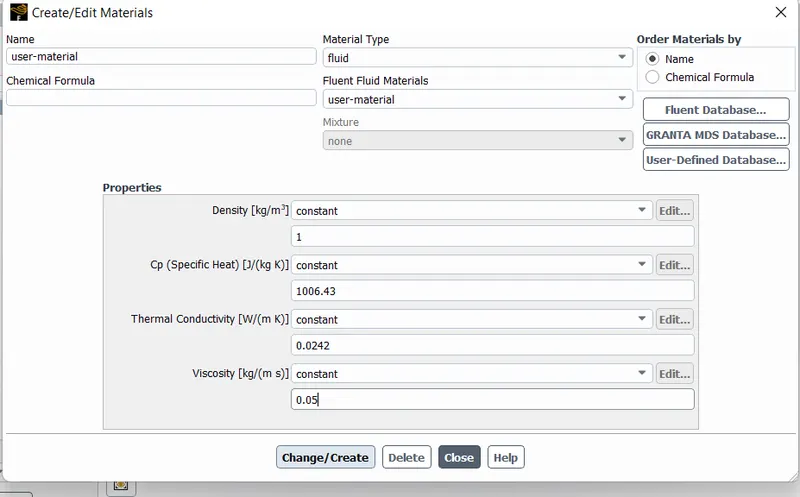
Material : Type : fluid
fluent fluid material :User defined
where viscosity =0.02 Kg/(m-s) ,Density=1 kgm3">kgm3kgm3
Cell zone :
fff_surface fluid type: User defined
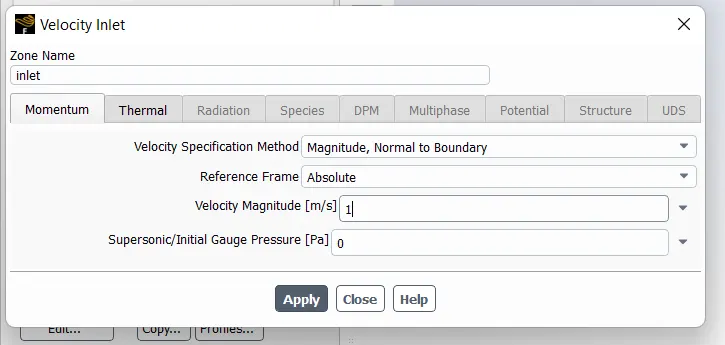
Boundaries : inlet(velocity inlet)
Velocity magnitude = 1 m/sec
outlet(Pressure outlet)
Gauge pressure = 0 pa
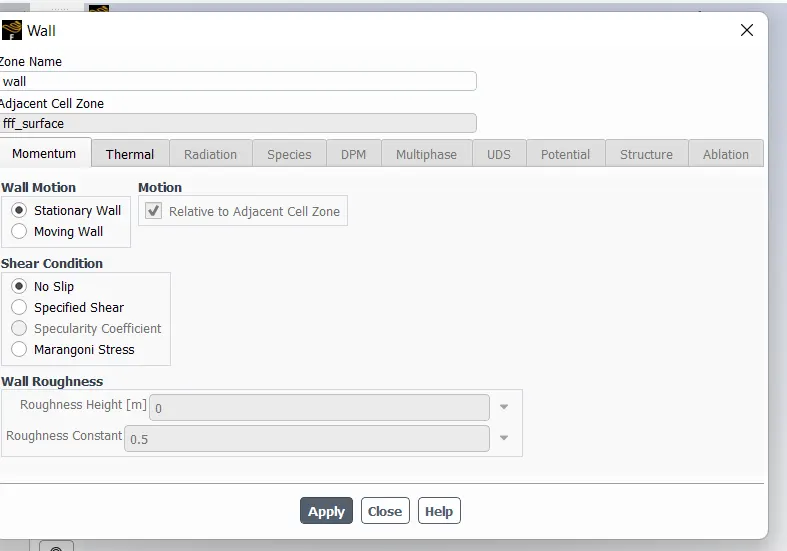
wall:shear condition=No Slip
symmetry =symmetry
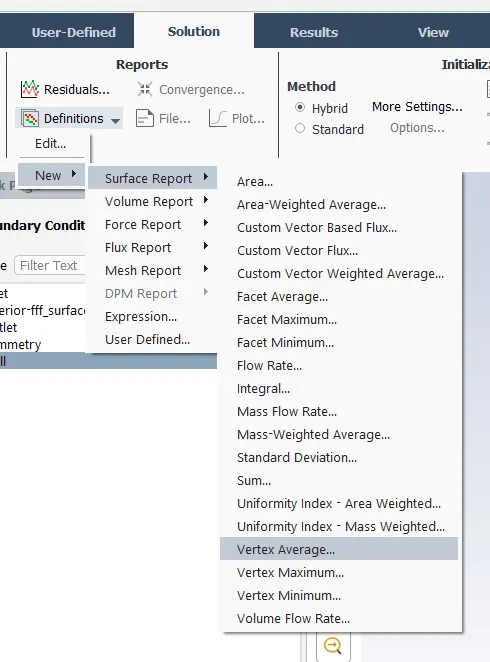
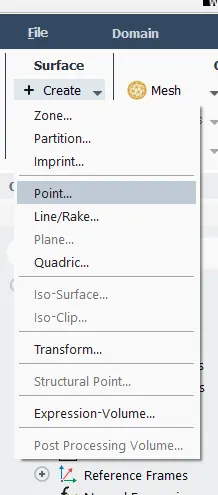
- One of the important setting is to set reference value in fluent this is shown below ;
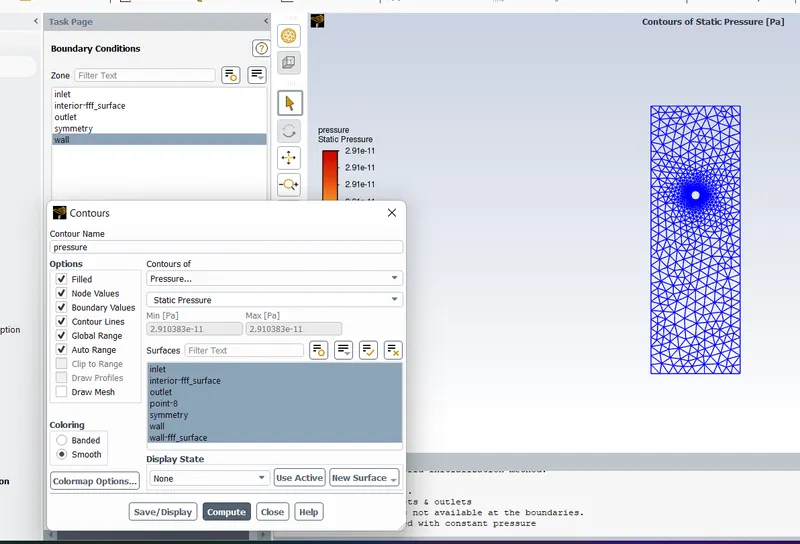
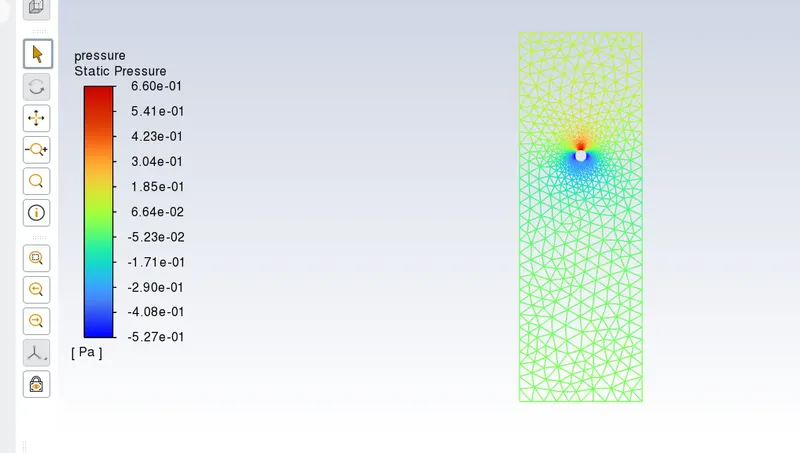
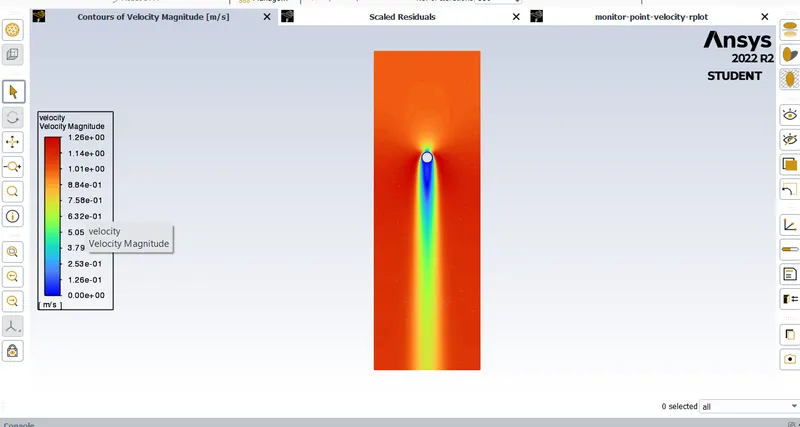
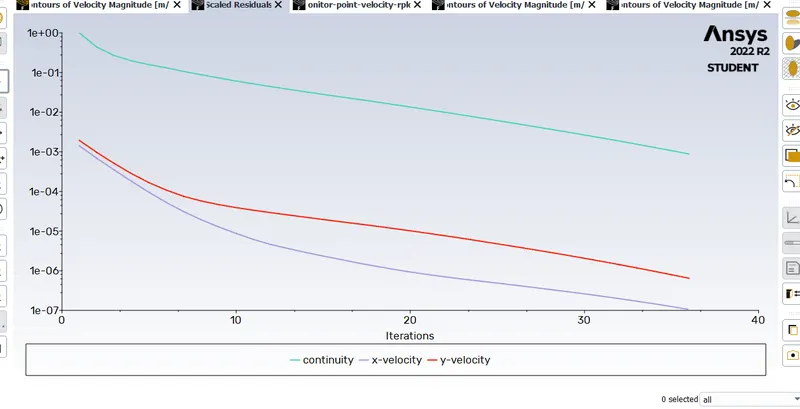
Conclusion:
- From the above table we can say that the Reynolds number increases then the coefficient of drag is decreases and coefficient of lift is increases,this data is compared with research paper for Re=100 the research paper value are coefficient of drag= 1.3353 ,and obtained value from simulation is 1.3147 and % of error=1.54% ie <5% .and strouhal number for Re=100 Research paper value=0.1569 and obtained value in unsteady state simulation is 0.1596 and % of error =1.72 %
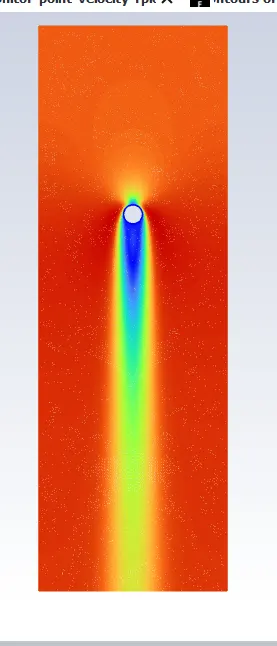
- The Reynolds number increases in value then the wake region behind the cylinder is also increases .
- The vortex shedding is takes place when Reynolds number is 100 and above value.