Week 2 - Flow over a Cylinder.
AIM- Simulate the flow over a cylinder and explain the phenomenon of Karman vortex street.
PART-I
- Simulate the flow with the steady and unsteady case and calculate the Strouhal Number for Re= 100.
PART-II
- Calculate the coefficient of drag and lift over a cylinder by setting the Reynolds number to 10,100,1000,10000 & 100000. (Run with steady solver)
- Vary the velocity of the flow to change the Reynolds number.
Von Karman Vortices-
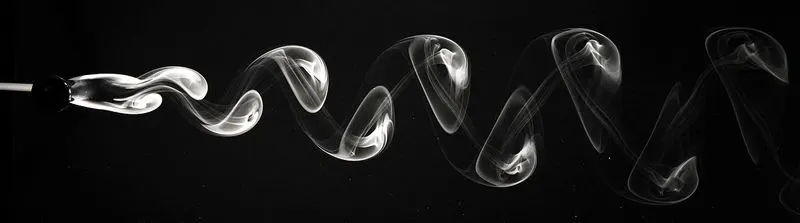
Von karman vortex shedding is an phenomenon of flow seperation above reynolds number of 100. Von karman is a repeating pattern of swirling vortices, caused by a process known as vortex shedding, which is responsible for the unsteady seperation of flow of a fluid around blunt bodies.These vortices produce a sinusoidal force acting on the body perpendicular to the flow. For a cylinder, the frequency ω (in Hz) of the shedding is related to the diameter D(m) and wind speed v (ms−1) via the Strauhal number.
Geometry-
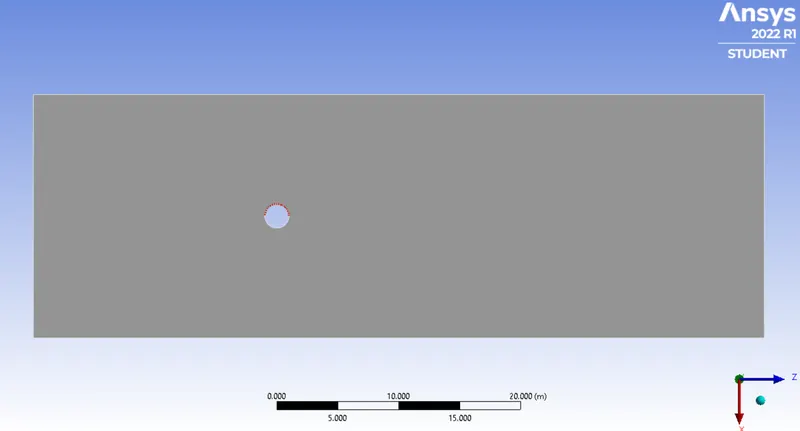
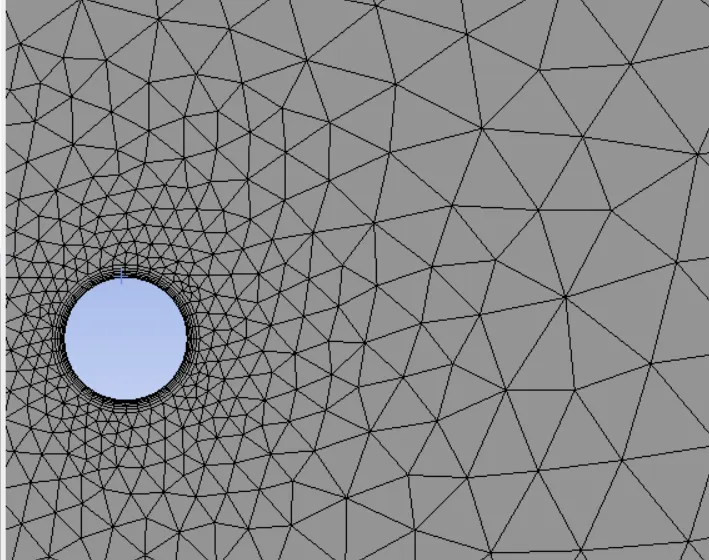
Mesh Generation-
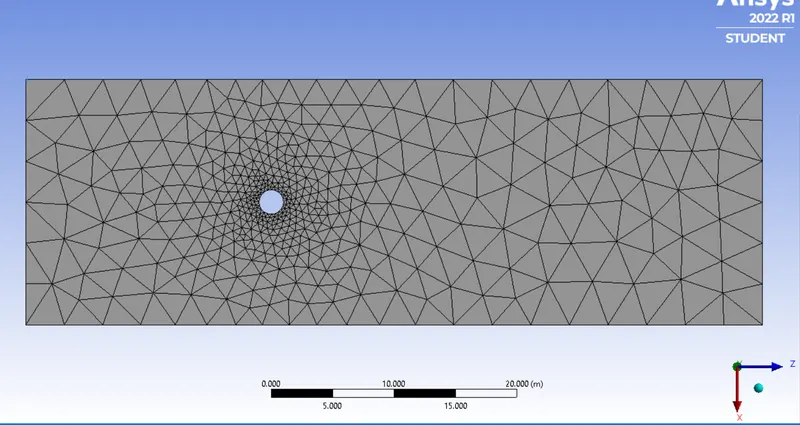
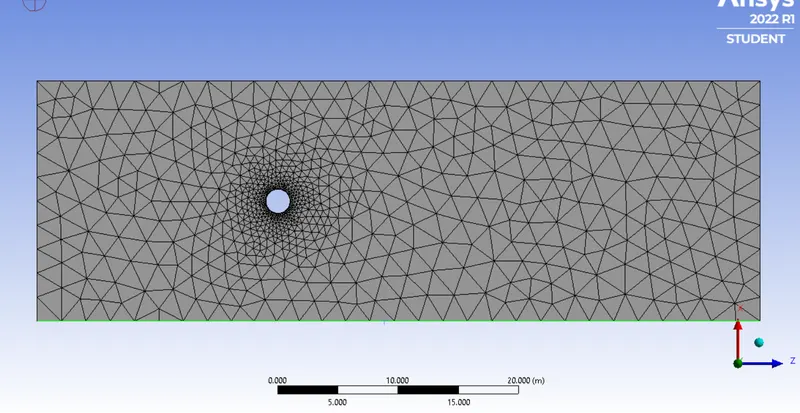
Initial size of mesh is 0.7mm which is further refined to 0.3mm.
Inflation Layers-
Inflation layers are used when we need a body fitted mesh around circles or sharp corners. Inflation layers are guided by growth ratio which controls size of ach inflation layer.
No slip wall boundary condition is used for wall so that velocity at first inflation layer is zero.
Steady-State Simulation
Calculation of inlet velocity based on reynold's number
`Re= (rho*u*L)/mu`
Given, density = 1kg/m3
L = 2m (cross section of cylinder)
viscosity = 0.2kg/m-s
Calculate velocity of inlet for Re =10,100,1000,10000 with above given formula.
Reynolds no = 10
Inlet velocity= 1m/s
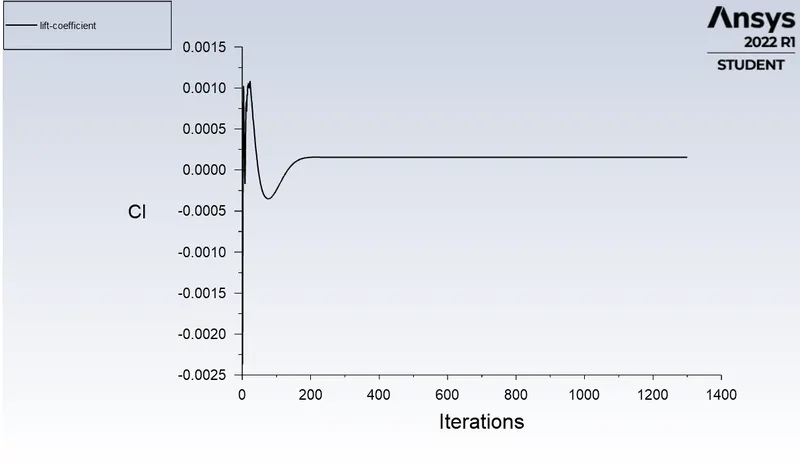
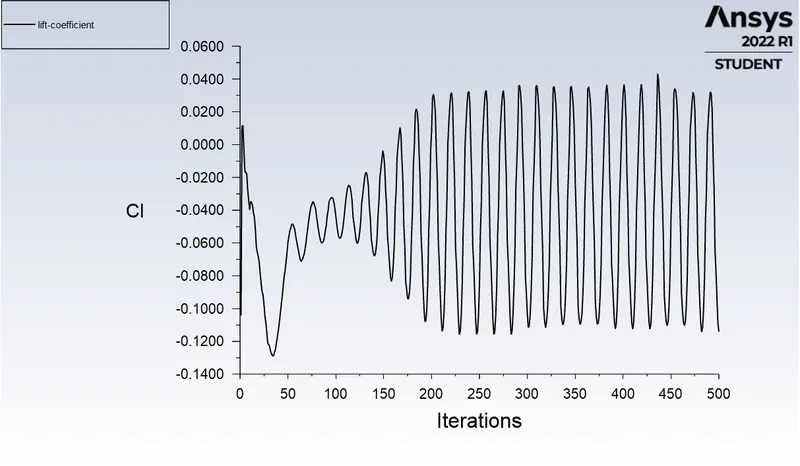
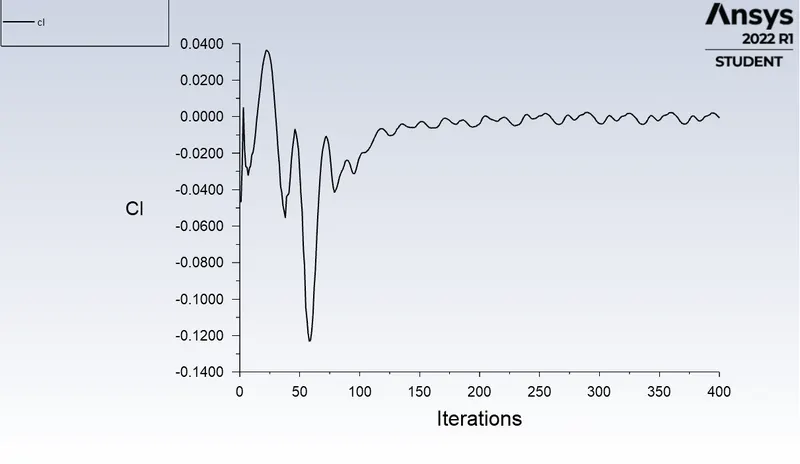
Lift coefficient
Re= 10 Re=100
Re= 1000
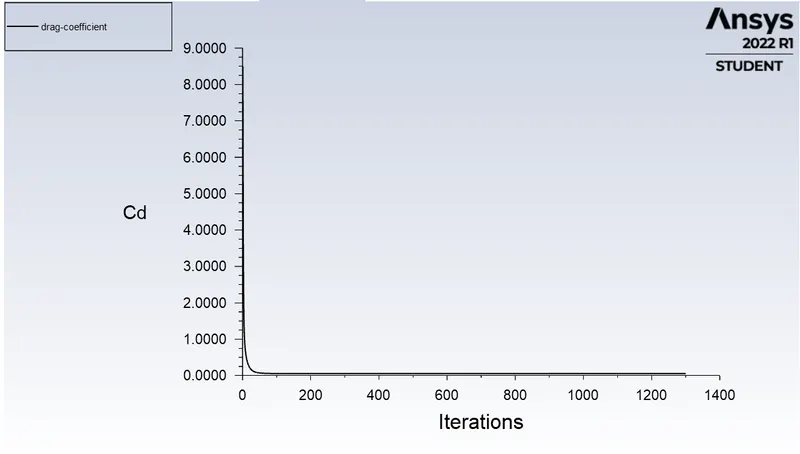
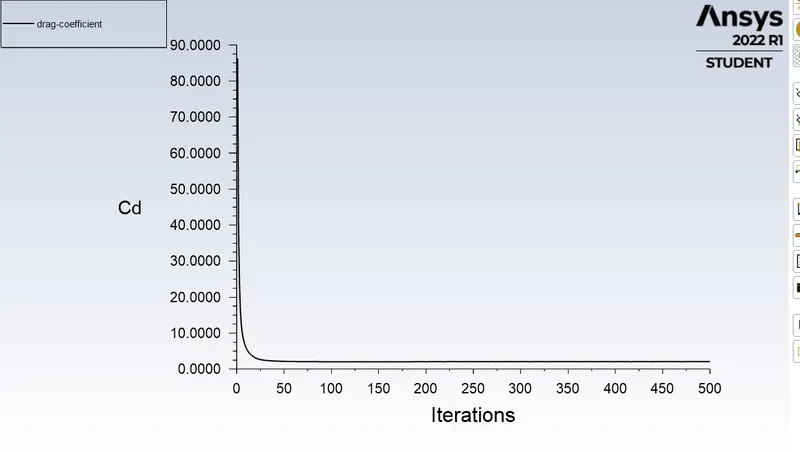
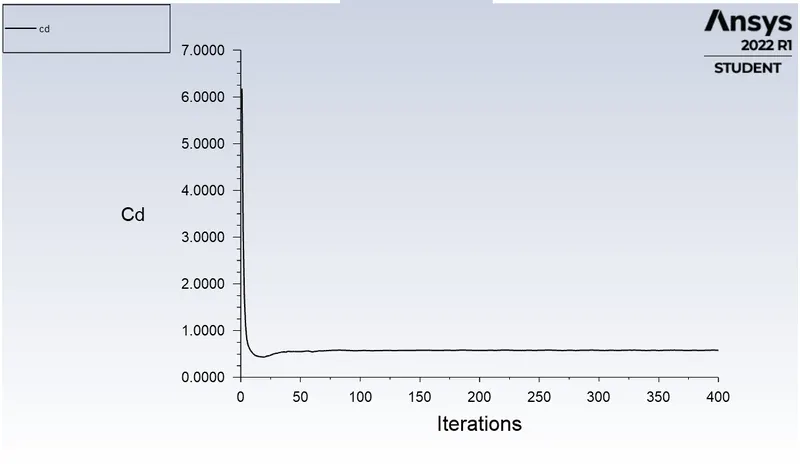
Drag coefficient
Re= 10 Re= 100
Re=1000
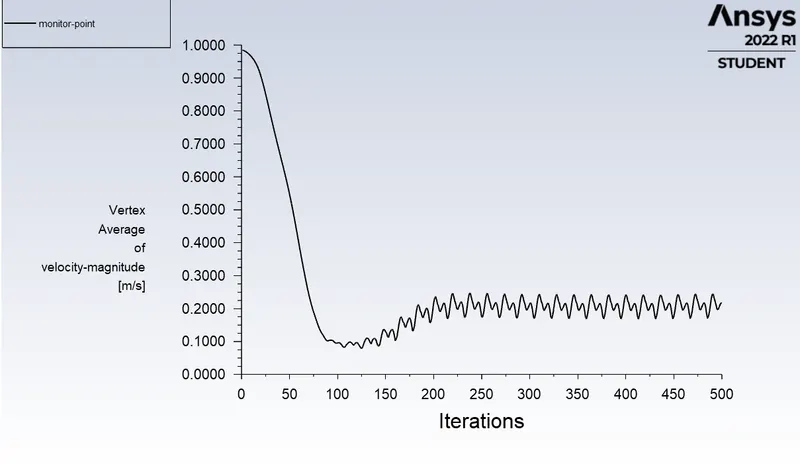
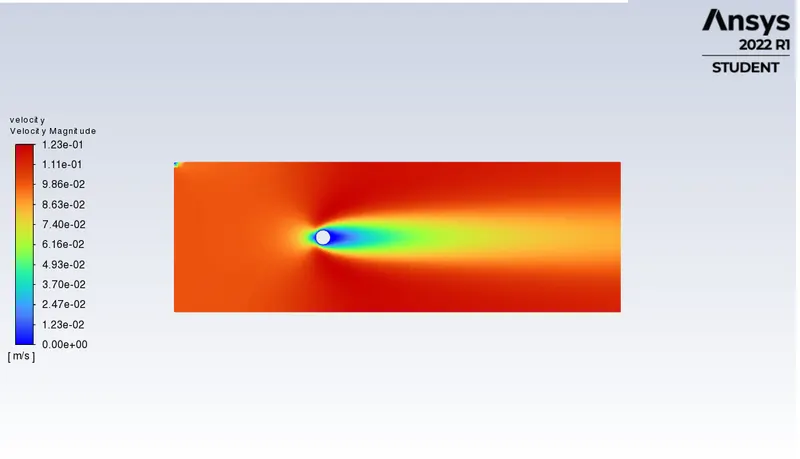
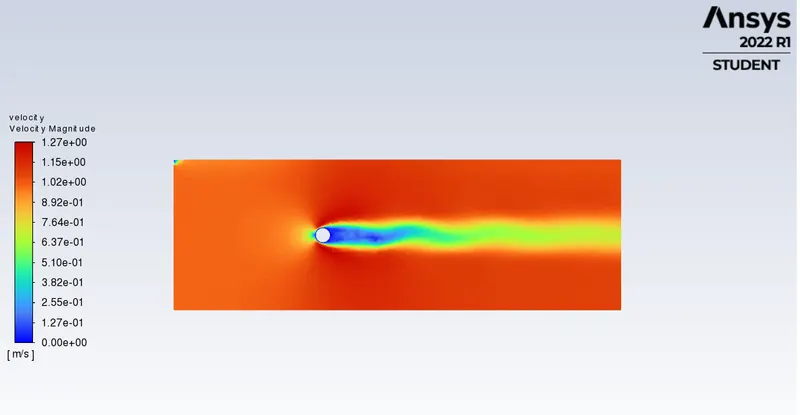
Velocity Magnitude for Re 100
Velocity Contours-
Re = 10 Re= 100
Lift and Drag coefficients
Steady-State Simulation.
Reynolds number Velocity Drag-coeff lift-coeff
10 0.1 3.12 0.000321
100 10 1.267 0.01932
1000 100 0.58232 -0.000712
Conclusion-
- Comparing value of drag with reynold's number we can observe that drag coefficient decrease with increase in reynold's number.
- Lift coefficient also decreases with increase in reynolds number.