Week 2 - Flow over a Cylinder.
AIM
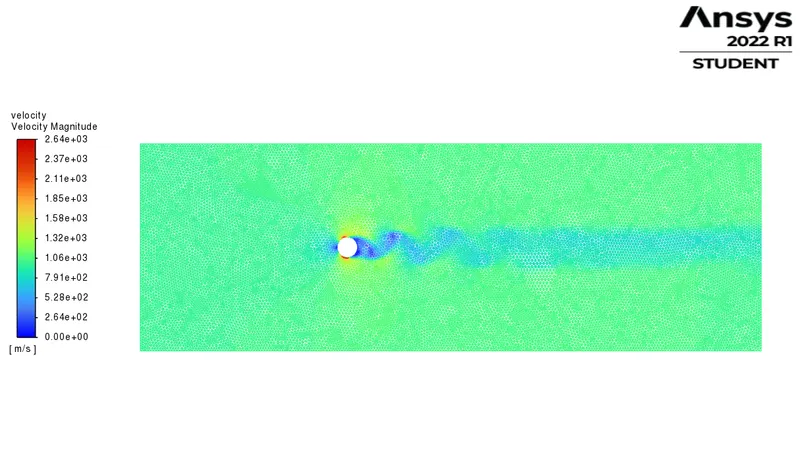
To simulate the flow over a cylinder and explain the phenomenon of Karman vortex street.
PART-I
- Simulate the flow with the steady and unsteady case and calculate the Strouhal Number for Re= 100.
PART-II
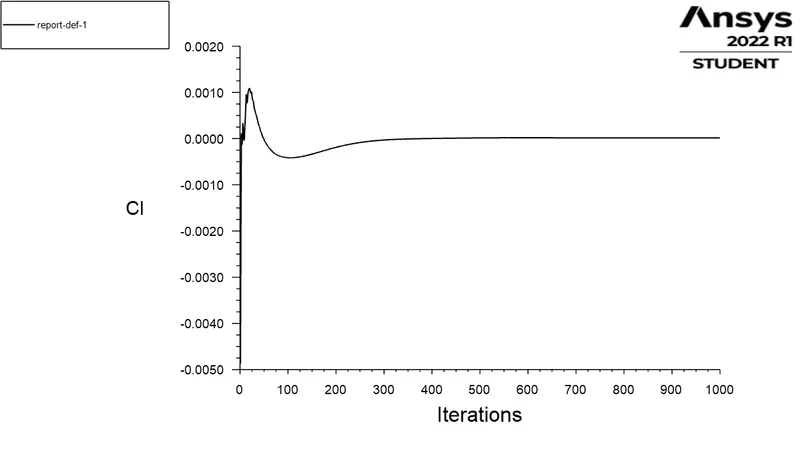
- Calculate the coefficient of drag and lift over a cylinder by setting the Reynolds number to 10,100,1000,10000 & 100000. (Run with steady solver)
- Discuss the effect of Reynolds number on the coefficient of drag. [ Results should be validated with any standard literature and error should be within 5 %]
Introdution
In spite of extensive experimental and numerical studies almost over a century, flow around a circular cylinder still remains a challenging problem in fluid mechanics, where intensive investigations are continued even today to understand the complex unsteady dynamics of the cylinder wake flow. Cross-flow normal to the axis of a stationary circular cylinder and the associated problems of heat and mass transport are encountered in a wide variety of engineering applications. Both experimental measurements and numerical computations have confirmed the onset of instability of the wake flow behind a cylinder beyond a critical Reynolds number, leading finally to a kind of periodic flow identified by definite frequencies, well-known in the literature as the Von Karman vortex street. In case of laminar flow past cylinders with regular polygonal cross-section, the flow usually separates at one or more sharp corners of the cross-section geometry itself, forming a system of vortices in the wake on either side of the mid symmetry plane. On the other hand, for a circular cylinder, where the point of flow separation is decided by the nature of the upstream boundary layer, the physics of the flow is much more complex than what its relatively simple shape might suggest.
Reynold's number
The Reynolds number is the ratio of inertial forces to viscous forces within a fluid which is subjected to relative internal movement due to different fluid velocities. A region where these forces change behavior is known as a boundary layer, such as the bounding surface in the interior of a pipe. A similar effect is created by the introduction of a stream of high-velocity fluid into a low-velocity fluid, such as the hot gases emitted from a flame in air. This relative movement generates fluid friction, which is a factor in developing turbulent flow. Counteracting this effect is the viscosity of the fluid, which tends to inhibit turbulence. The Reynolds number quantifies the relative importance of these two types of forces for given flow conditions, and is a guide to when turbulent flow will occur in a particular situation.This ability to predict the onset of turbulent flow is an important design tool for equipment such as piping systems or aircraft wings, but the Reynolds number is also used in scaling of fluid dynamics problems, and is used to determine dynamic similitude between two different cases of fluid flow, such as between a model aircraft, and its full-size version. Such scaling is not linear and the application of Reynolds numbers to both situations allows scaling factors to be developed.
With respect to laminar and turbulent flow regimes:
- laminar flow occurs at low Reynolds numbers, where viscous forces are dominant, and is characterized by smooth, constant fluid motion;
- turbulent flow occurs at high Reynolds numbers and is dominated by inertial forces, which tend to produce chaotic eddies, vortices and other flow instabilities.
Strouhal number
The Strouhal number represents the ratio of inertial forces due to the local acceleration of the flow to the inertial forces due to the convective acceleration. Depending on the time scale of the problem, this ratio may be of order unity, and therefore its importance is not obvious.In flows characterized by a periodic motion, the Strouhal number is associated with the oscillations of the flow due to the inertial forces relative to the changes in velocity due to the convective acceleration of the flow field. Thus, an alternative definition of the Strouhal number better suited to periodic flows is given by the following expression
Drag coefficient
In fluid dynamics, the drag coefficient is a dimensionless quantity that is used to quantify the drag or resistance of an object in a fluid environment, such as air or water. It is used in the drag equation in which a lower drag coefficient indicates the object will have less aerodynamic or hydrodynamic drag. The drag coefficient is always associated with a particular surface area.
Lift coefficient
The lift coefficient (CL) is a dimensionless coefficient that relates the lift generated by a lifting body to the fluid density around the body, the fluid velocity and an associated reference area. A lifting body is a foil or a complete foil-bearing body such as a fixed-wing aircraft. CL is a function of the angle of the body to the flow, its Reynolds number and its Mach number. The section lift coefficient cl refers to the dynamic lift characteristics of a two-dimensional foil section, with the reference area replaced by the foil chord.
Vortex shedding
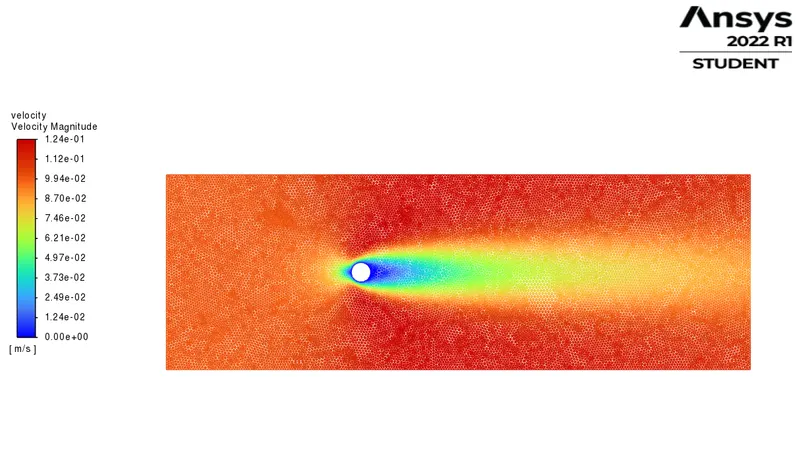
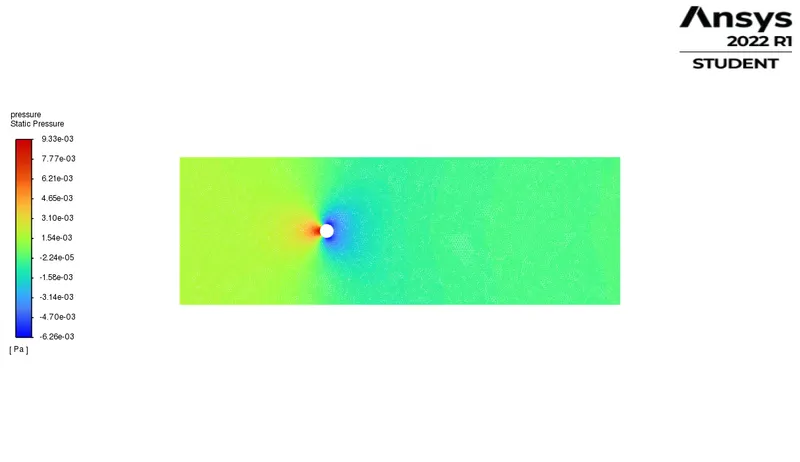
In fluid dynamics, vortex shedding is an oscillating flow that takes place when a fluid such as air or water flows past a bluff (as opposed to streamlined) body at certain velocities, depending on the size and shape of the body. In this flow, vortices are created at the back of the body and detach periodically from either side of the body forming a Von Kármán vortex street. The fluid flow past the object creates alternating low-pressure vortices on the downstream side of the object. The object will tend to move toward the low-pressure zone.
Procedure
Geometry
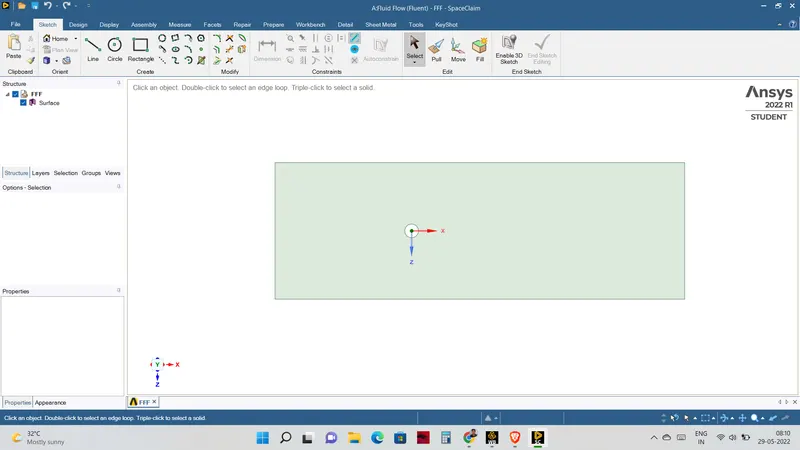
The first step begins with creating a 2d geometry in the space claim, along with the distance from the inlet to the center and to the outlet
Meshing
The meshing begins with convertion of the default quadrilateral mesh to triangular mesh. Following it the mesh around the cylinder is refined further to get a better result by increasing the number of edges of the cylindrical mesh and then by creating a inflation layer.
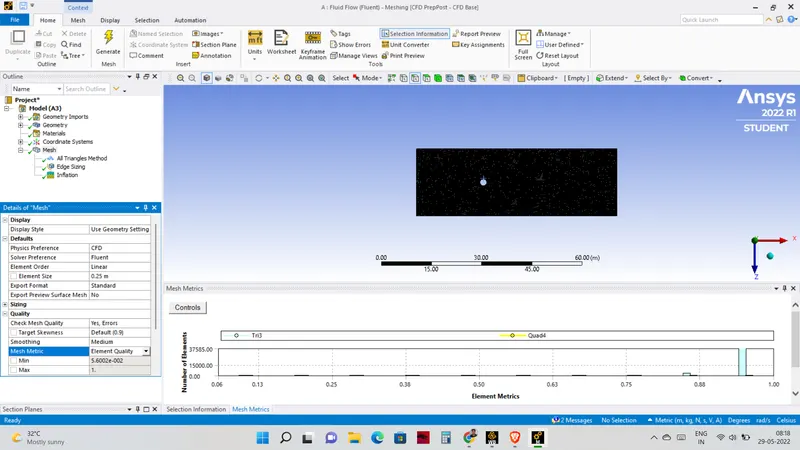
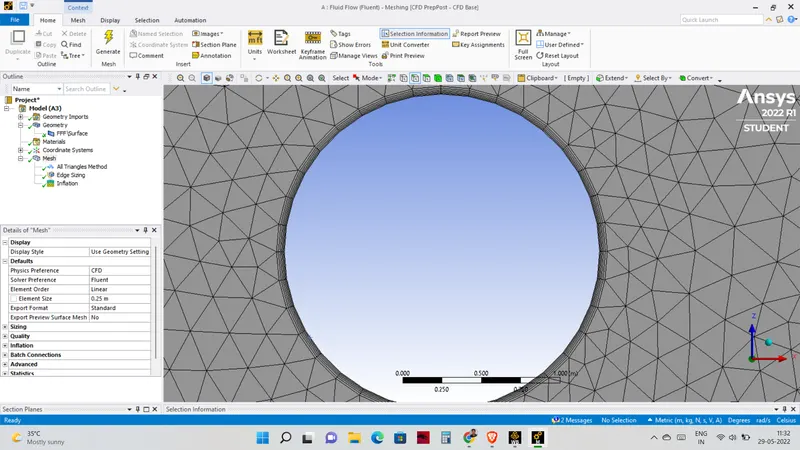
Then the input, wall, symmetry and the outlet is set by selecting the edges using the edge selection option and appropriate names are given.
Setup
The physical conditons steady state, pressure based solver, absolute are selected and the laminar flow option is selected
Then the user defined fluid is done using the fluent database and selecting the air and the density and viscosity are changes to `1(kg)/m^3` and `0.02(kg)/(ms` is modified.
Following it the inlet velocity is set to 1m/s to get the reynolds's number of 100.
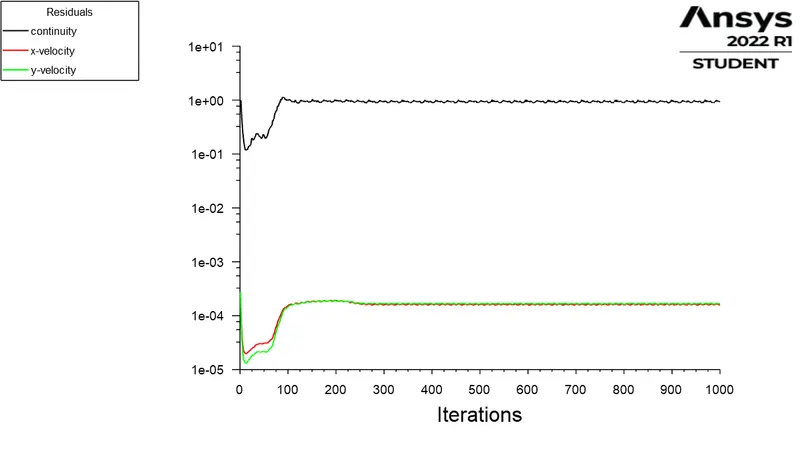
The default residuals are removed and the simple algorith is chosen.
Solution
The reference values are set.
Then the monitor point is set at a distance of 8m from the center and the vertex average is plotted from the Definitions`implies` New`implies`Surface report`implies` vertex average. Drag and coefficients are plotted using the same procedure but the wall is set the defined region for it.
Finally the the solution is initialised and the plots are plotted until convergence.
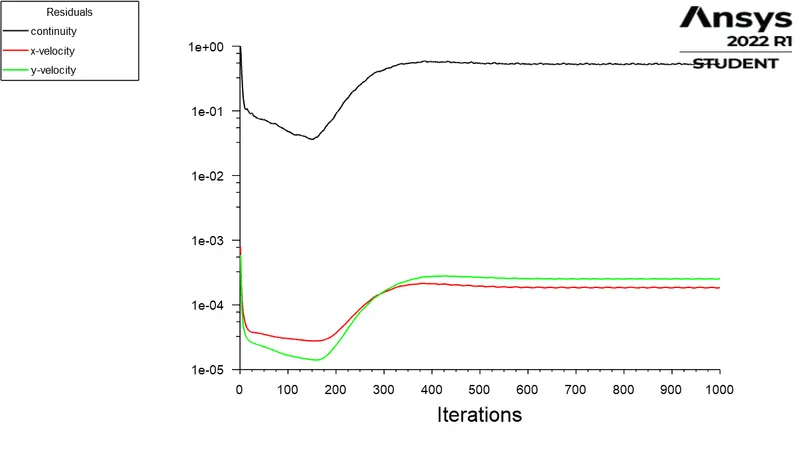
CASE:1
Steady state(Reynolds number =100)
Inlet velocity = 1m/s
Iterations = 1000
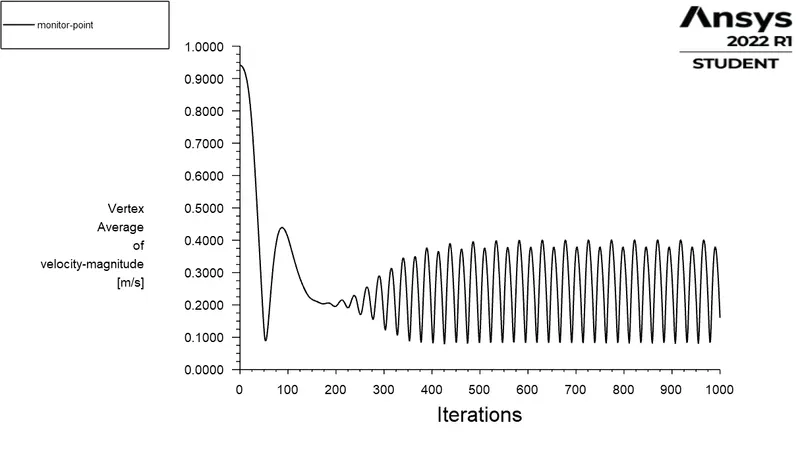
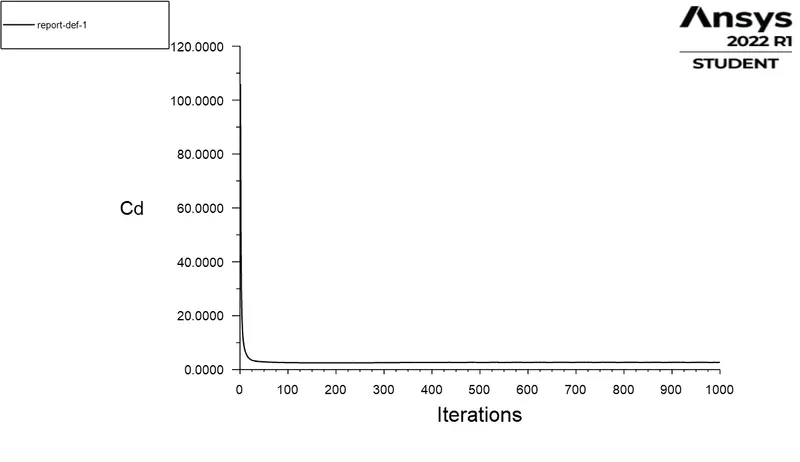
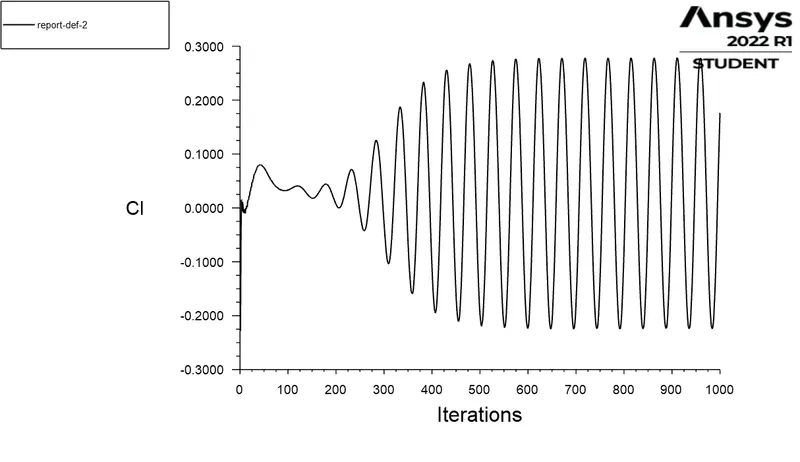
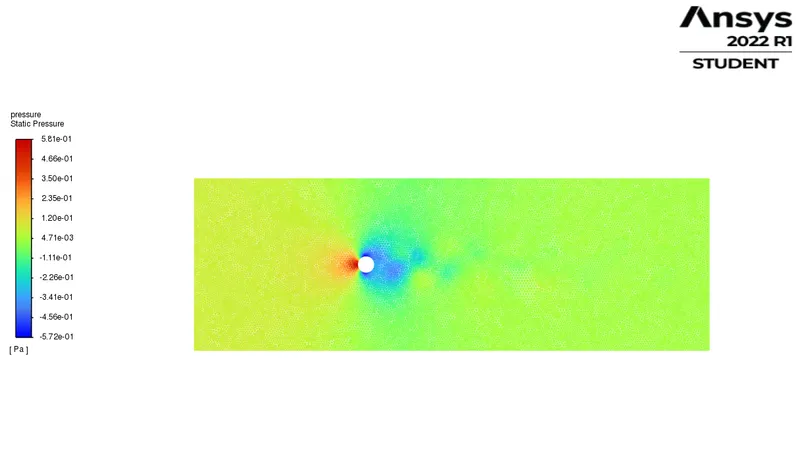
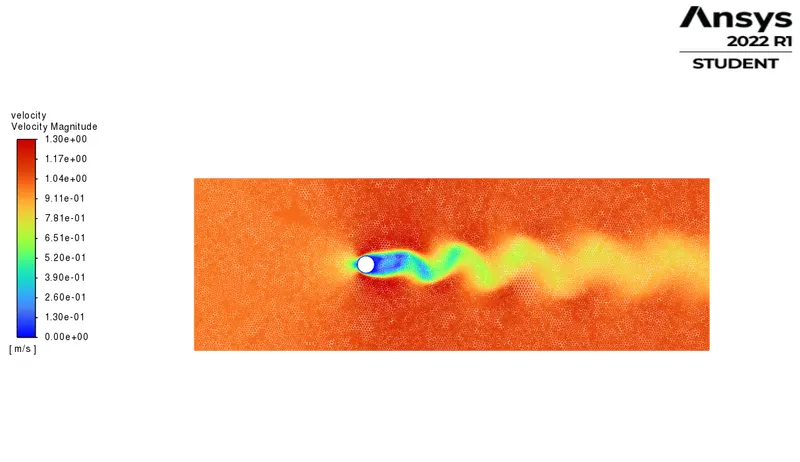
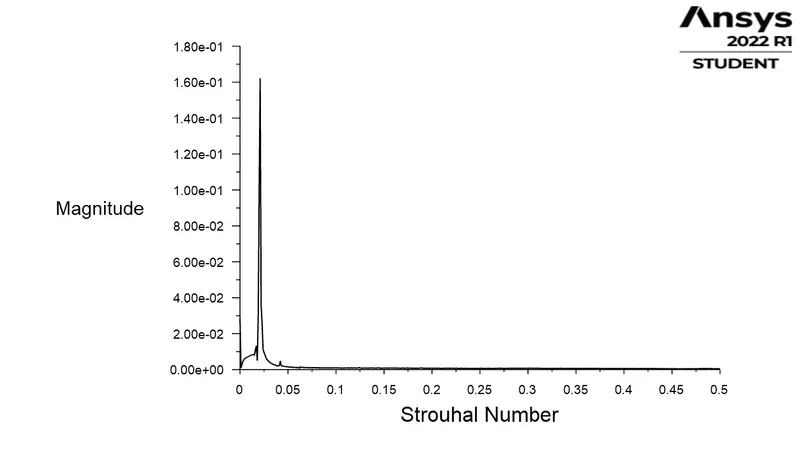
Transient state(Re=100)
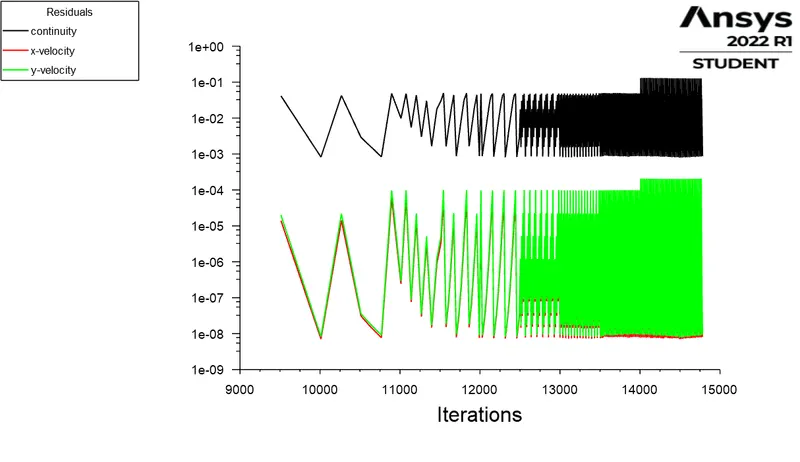
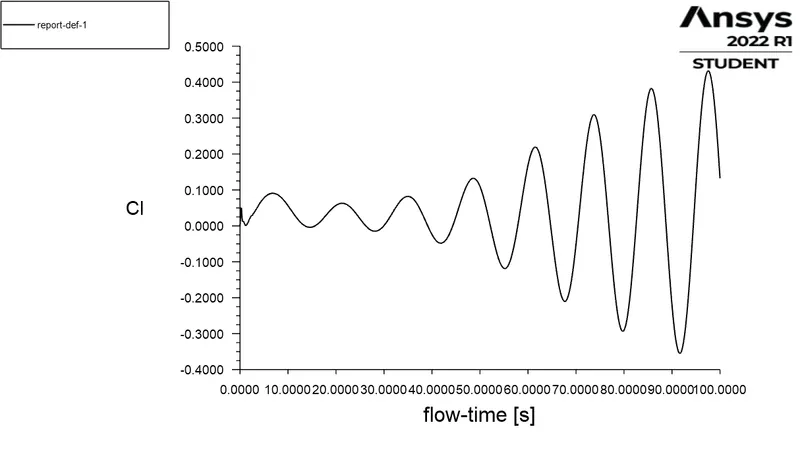
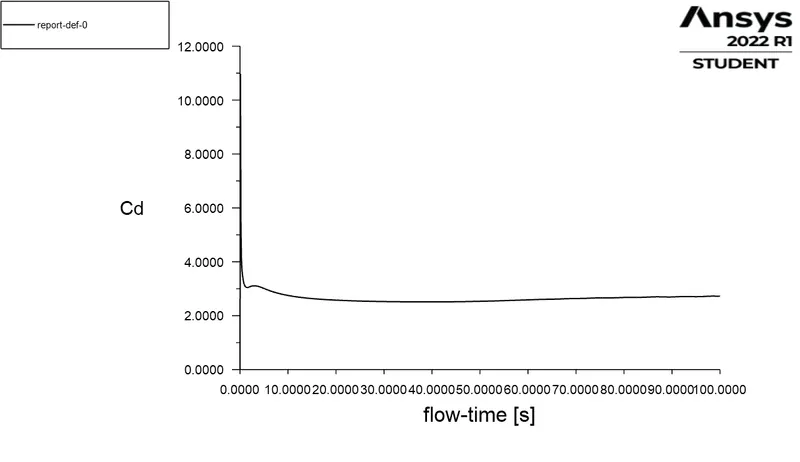
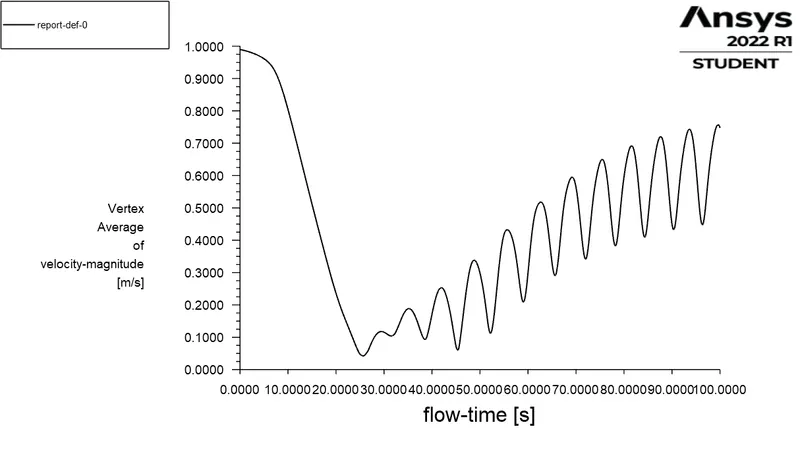
CASE:2
Common Setups for all the bottom cases
steady State
Pressure based solver
Absolute velocity formulation
User defined fluid with density 1kg/m^3
Reynolds number=10
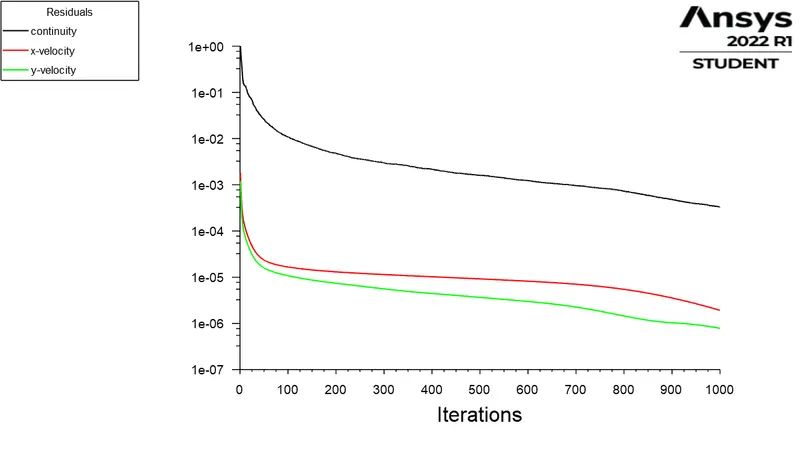
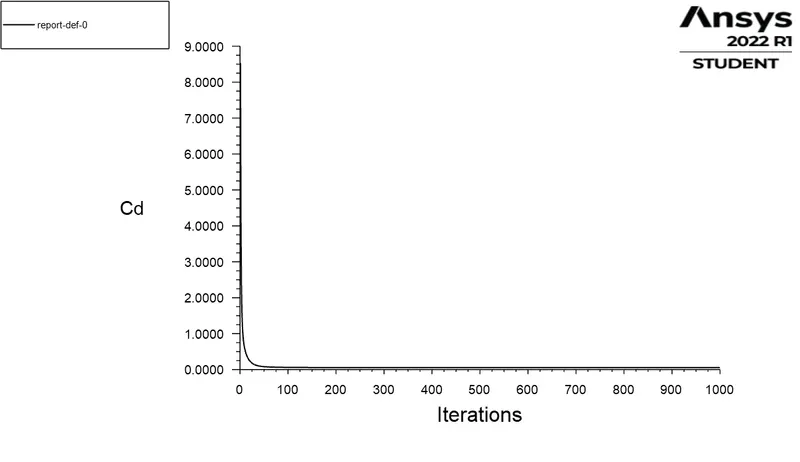
Reynold's number = 1000
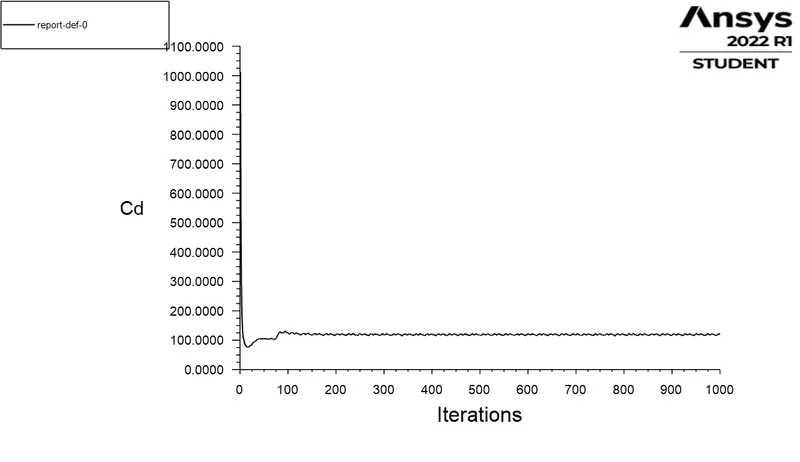
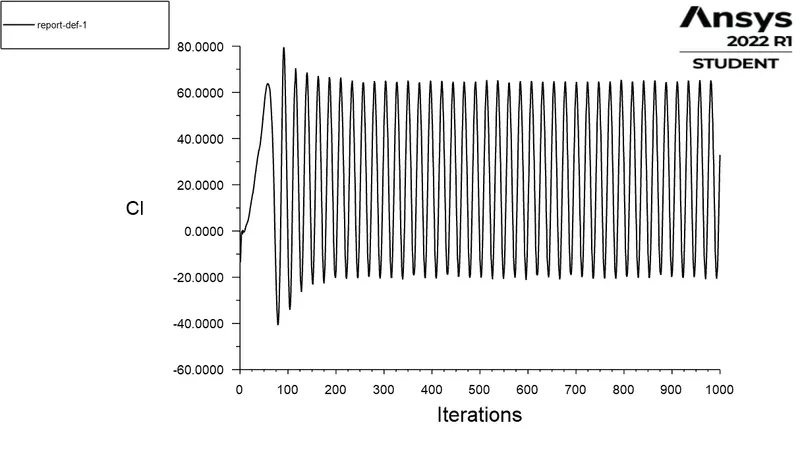
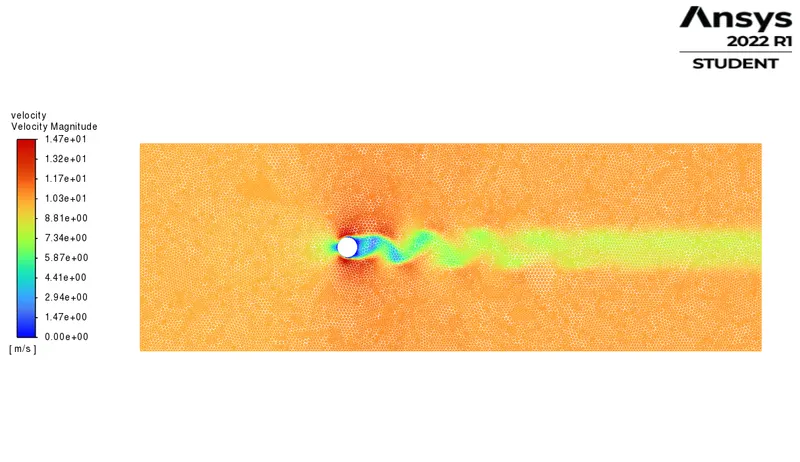
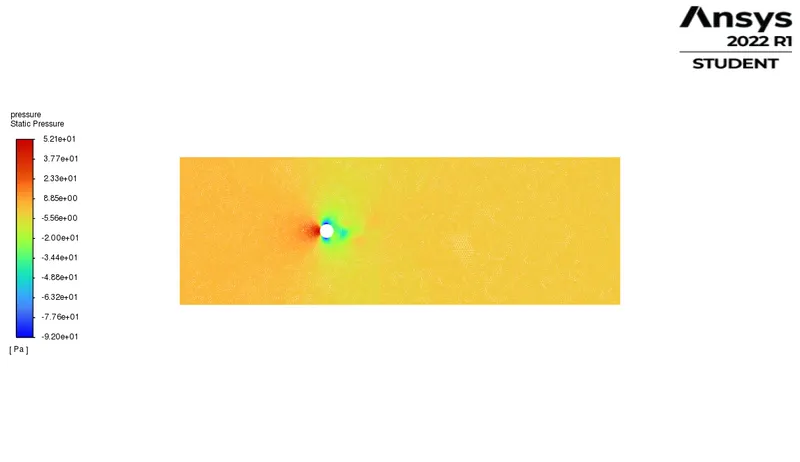
Reynold's number=10000
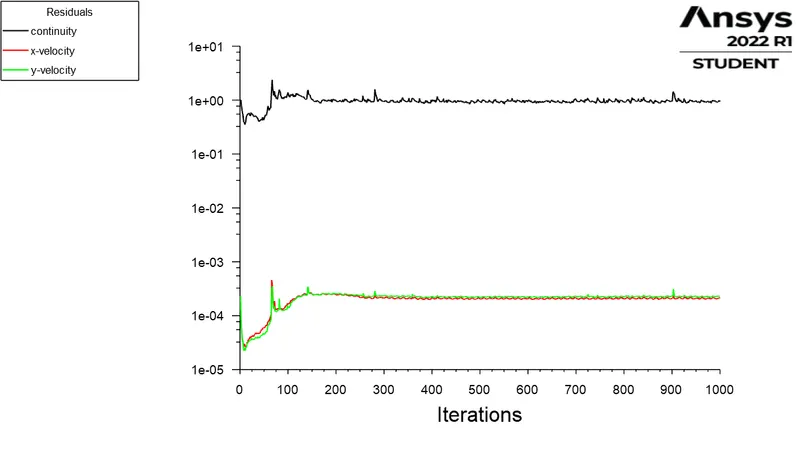
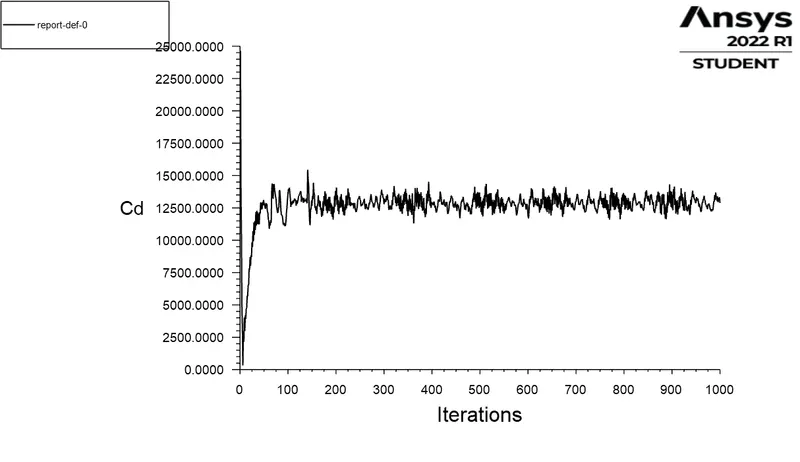
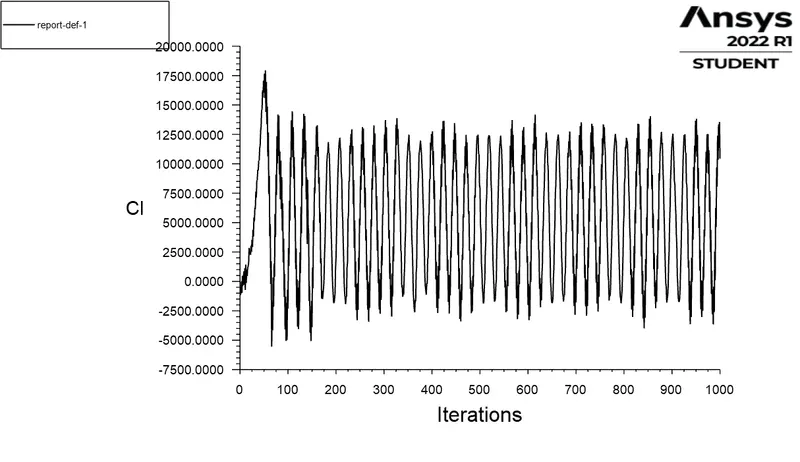
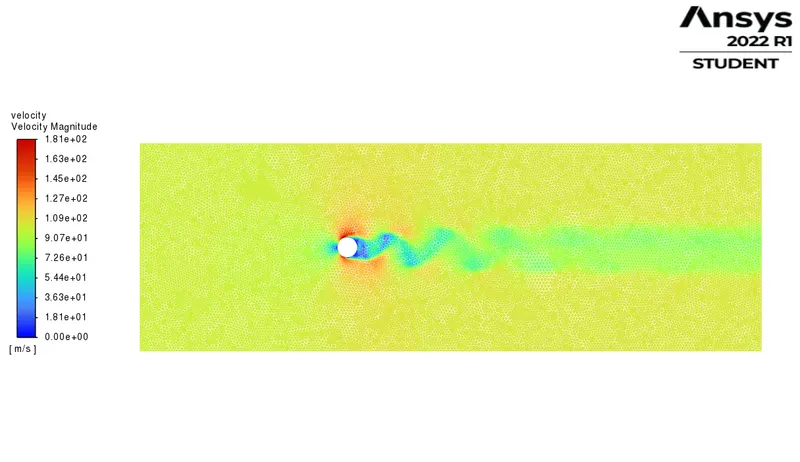
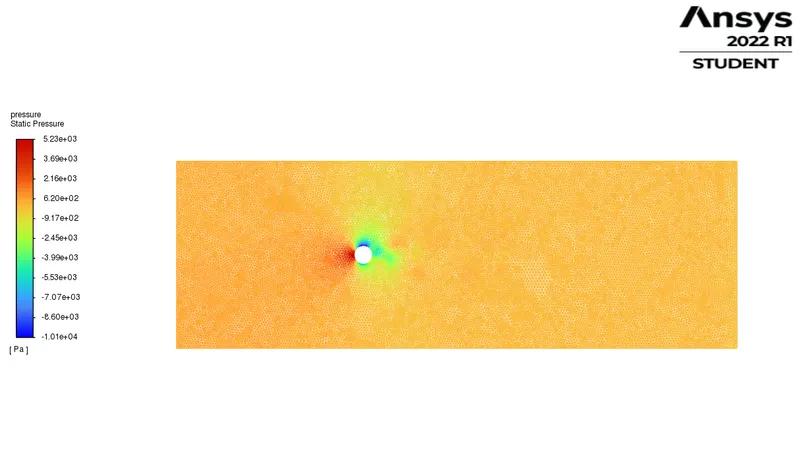
Reynold's number=100000
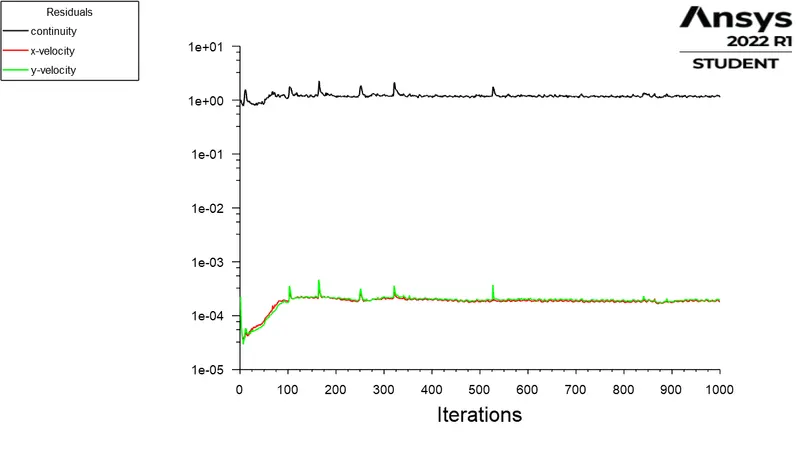
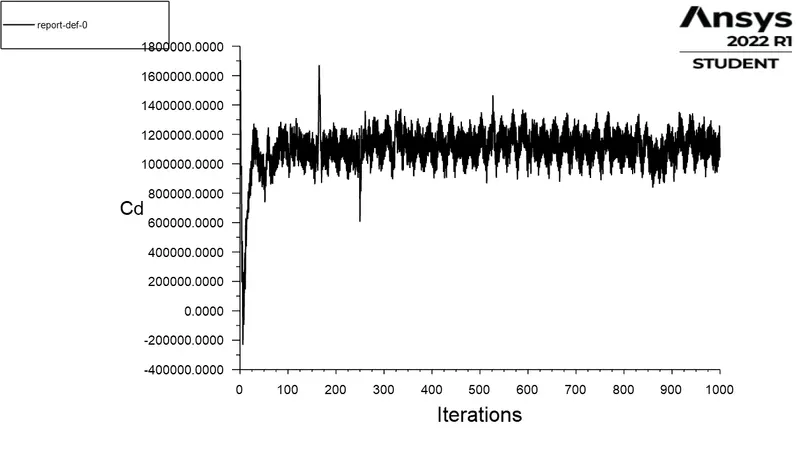
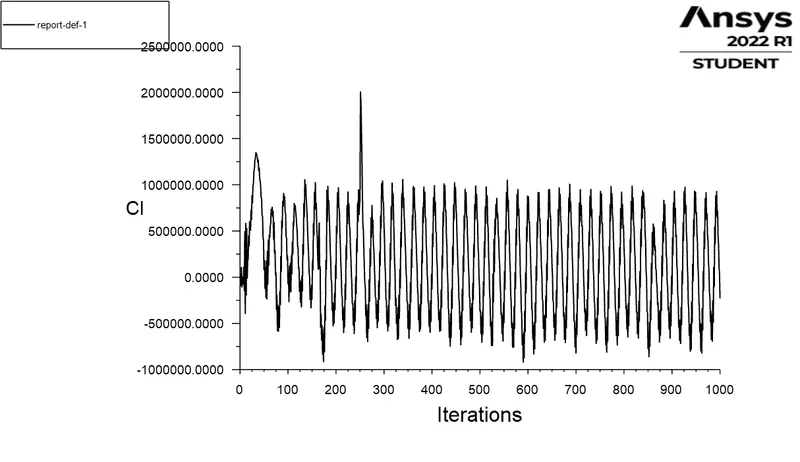
Conclusion
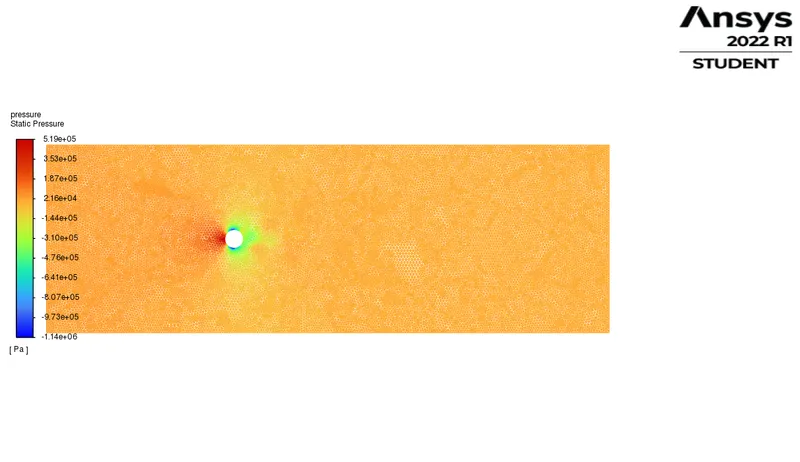
Transient state simulations are more accurate than steady state problems but it takes more time than steady state to converge.
Vortex shedding is achieved with less variation in viscosity whereas steady state needed lower viscosity.
The coefficient of darg decreases while that of lift increases when Reynolds number is increased, also the higher the Reynolds number the bigger the simulation domain.
As mesh resolution is increased we can get better results.
References
https://www.sciencedirect.com/science/article/pii/S0307904X08000243