Week 2 - Flow over a Cylinder.
1.Aim:
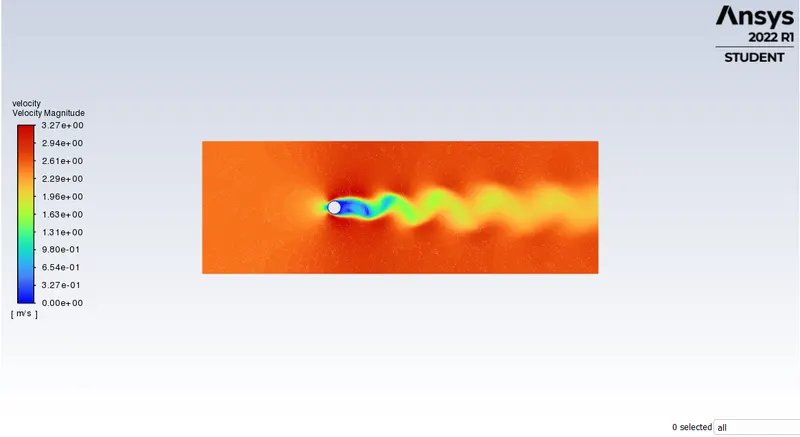
Simulate the flow over a cylinder and explain the phenomenon of Karman vortex street.
2.Objective:
- Simulate the flow with the steady and unsteady case and calculate the Strouhal Number for Re= 100.
- Calculate the coefficient of drag and lift over a cylinder by setting the Reynolds number to 10,100,1000,10000 & 100000. (Run with steady solver)
3.Introduction:
3.1 Vortex shadding:
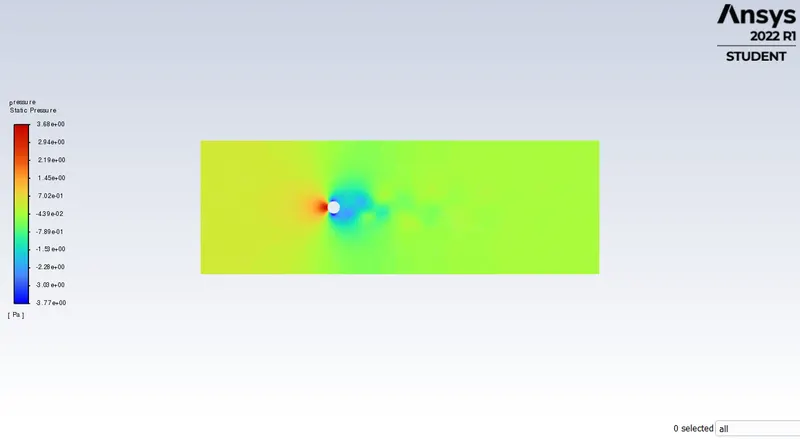
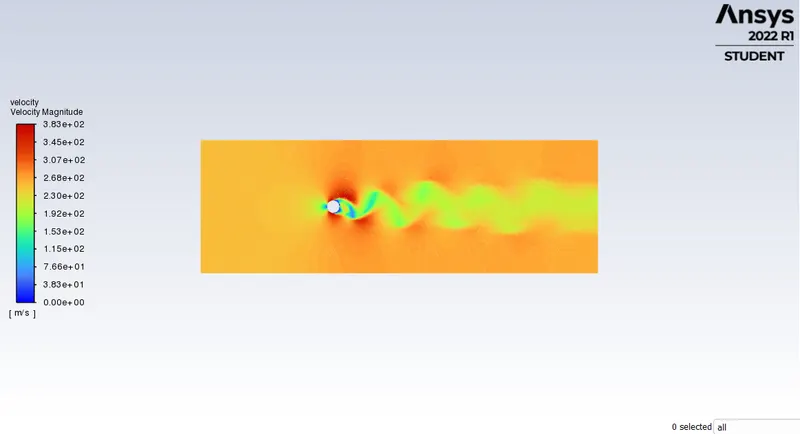
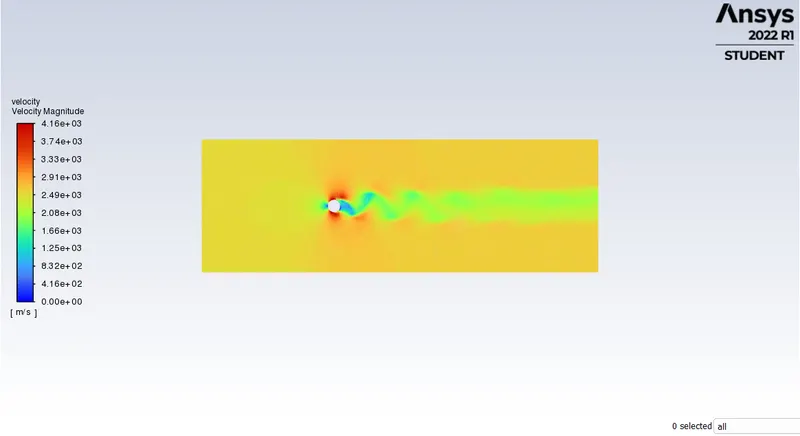
Vortex shedding is an oscillating flow that takes place when a fluid such as air or water flows past a bluff (as opposed to streamlined) body at certain velocities, depending on the size and shape of the body. In this flow,vortices are created at the back of the body and detach periodically from either side of the body forming a Von Karma vortex street. The fluid flow past the object creates alternating low-pressure vortices on the downstream side of the object. The object will tend to move toward the low-pressure zone.
If the buff structure is not mounted rigidly and the frequency of vortex shedding matches the resonance frequency of the structure, then the structure can be resonate, vibrating with harmonic ossillation drive by the energy of flow. This vibration is the cause for overhead power lines wire humming in the wind, and for the fluttering of automobile whip ratio antennas at some speeds. Tall chimneys constructed of thin-wall steel tubes can be sufficiently flexible that, in air flow with a speed in the critical range, vortex shedding can drive the chimney into violent osscillations that can damage or distroy the chimney.
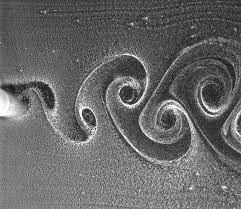
Fig: vortex shedding
3.2 Reynolds Number:
The Reynolds number is the ratio of inertial forces to viscous forces within a fluid which is subjected to relative internal movement due to different fluid velocities. A region where these forces change behavior is known as a boundary layer, such as the bounding surface in the interior of a pipe.

 |
= | Reynolds number |
 |
= | Density of the fluid |
 |
= | Flow speed |
 |
= | Characteristic linear dimension |
 |
= | Dynamic viscosity of the fluid |
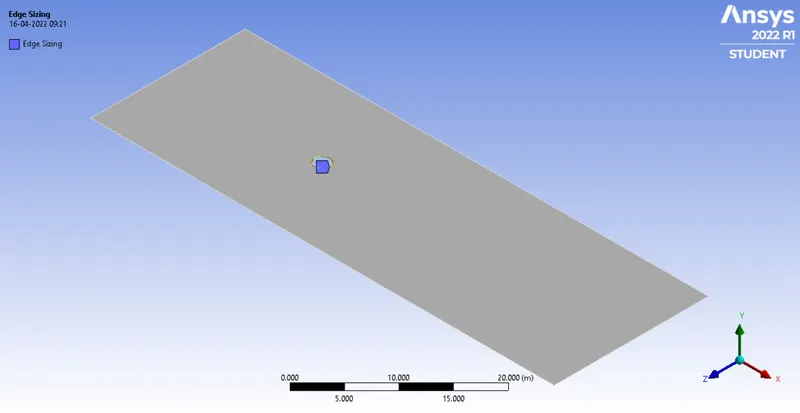
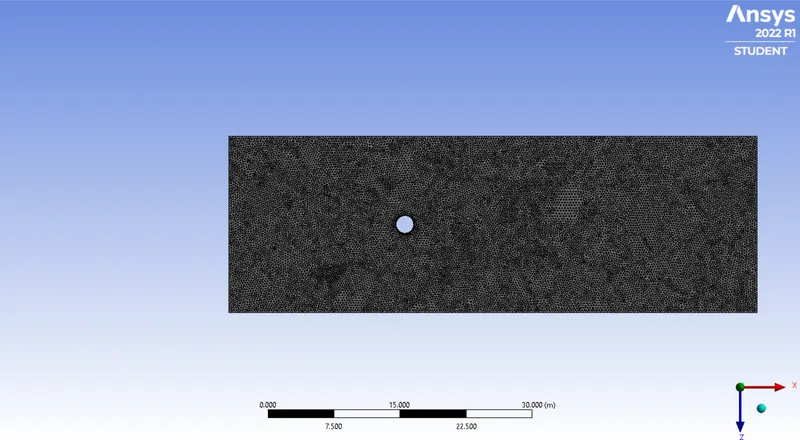
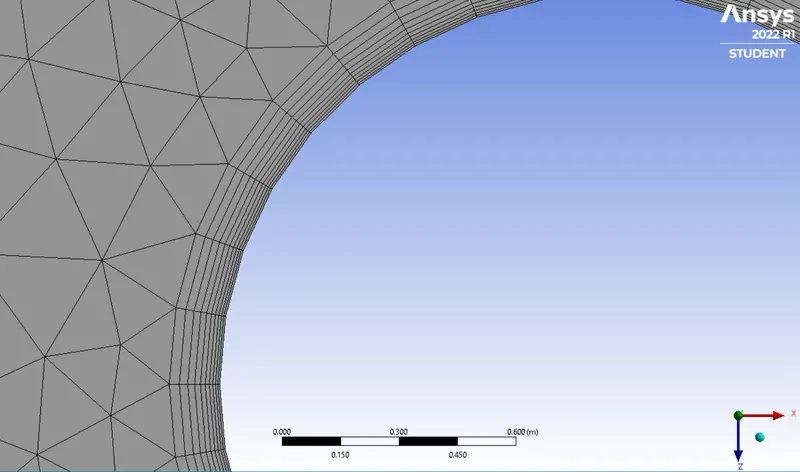
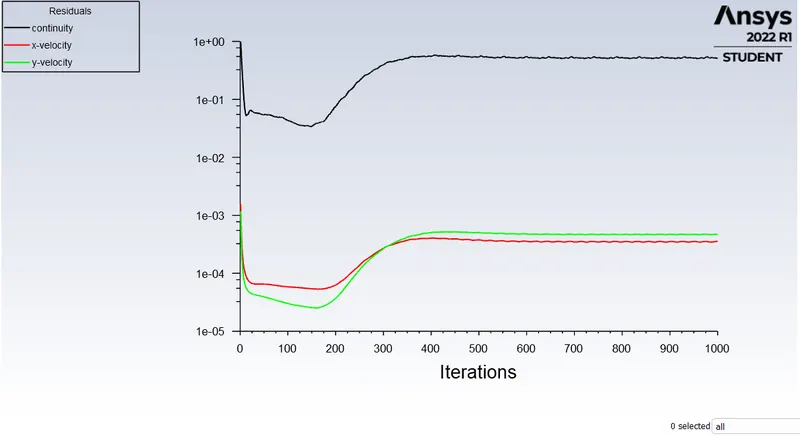
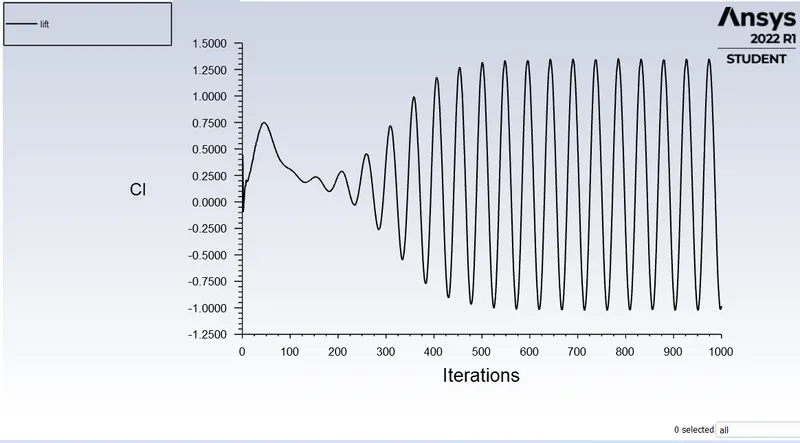
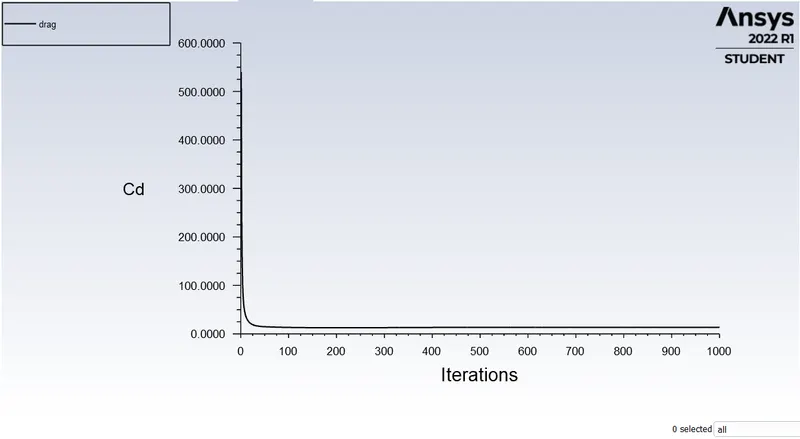
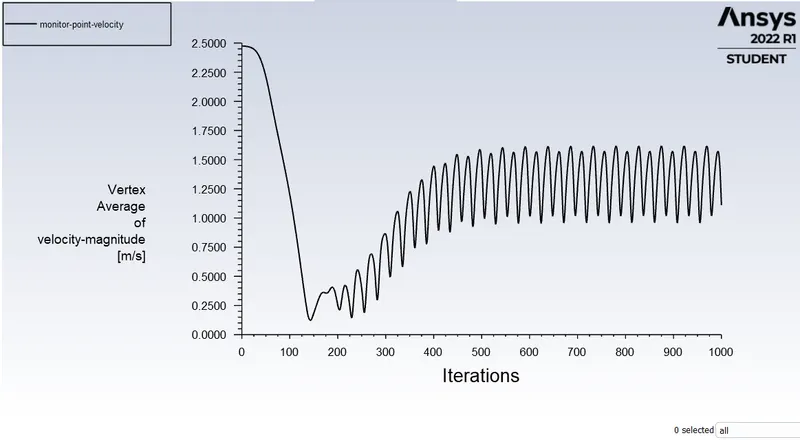
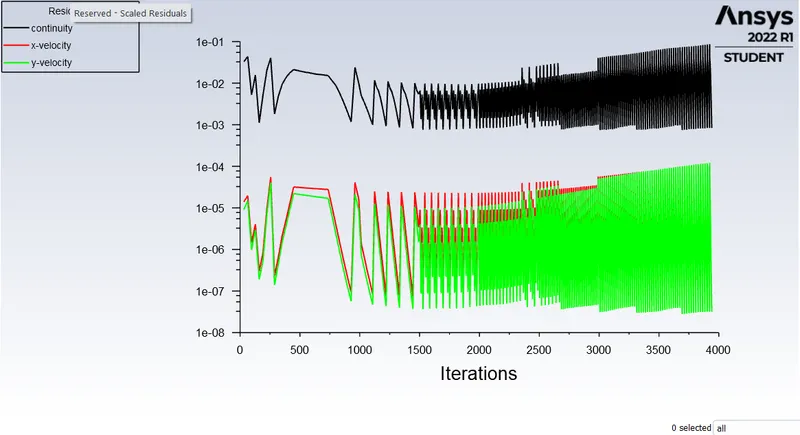
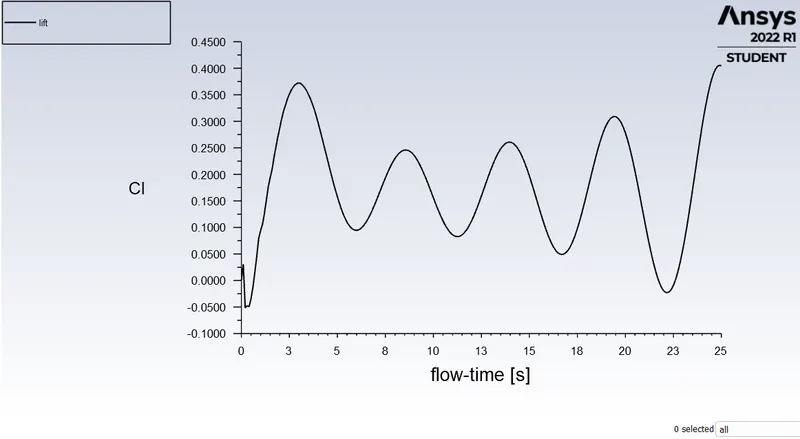
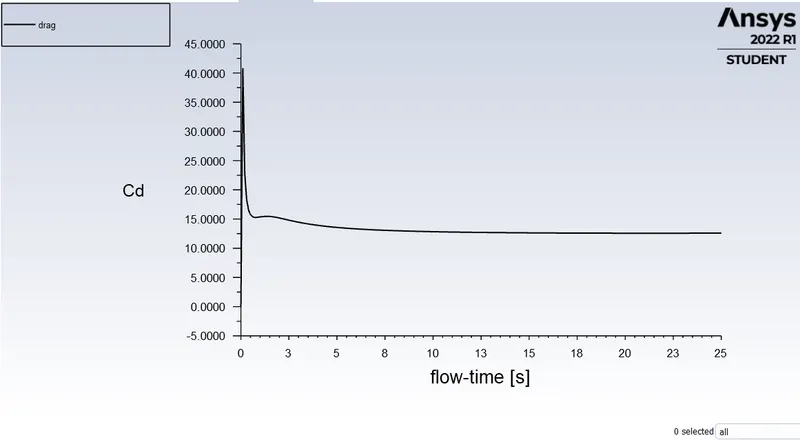
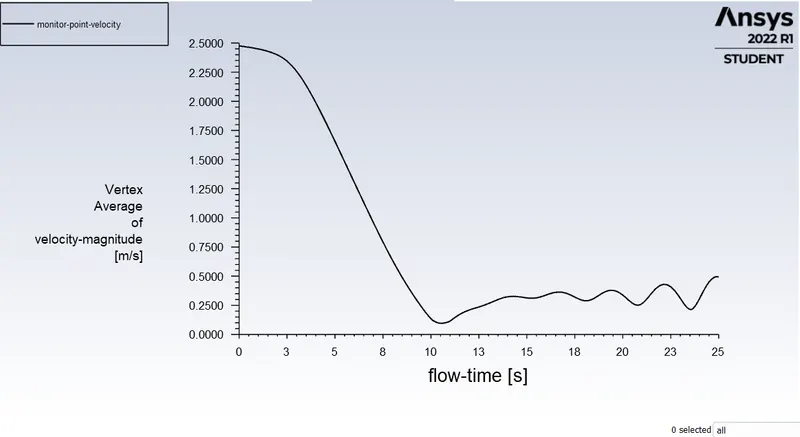
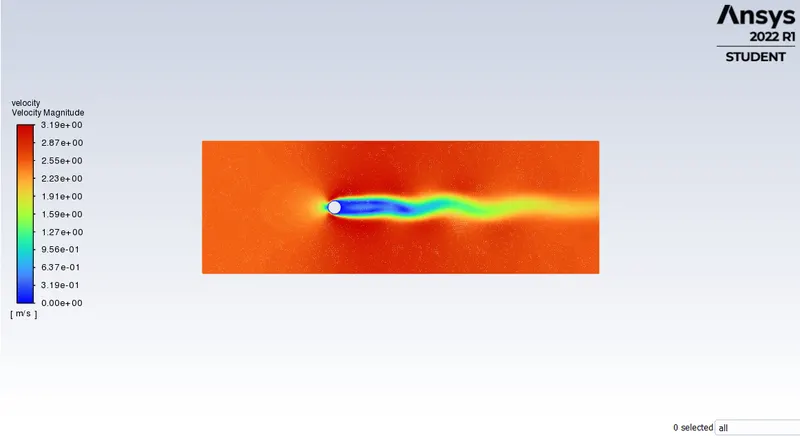
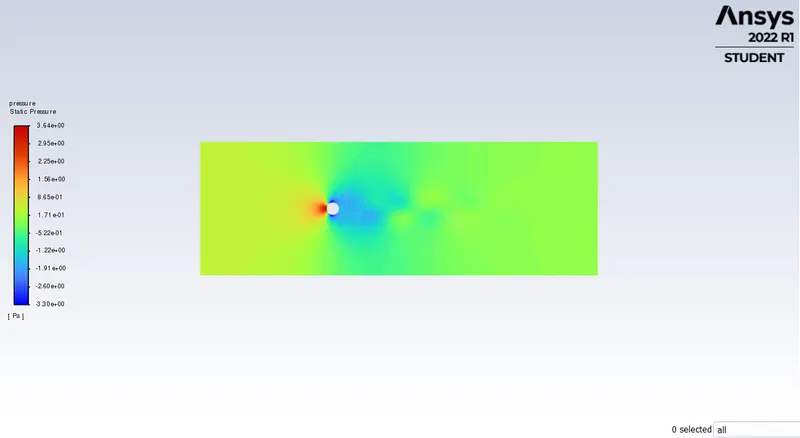
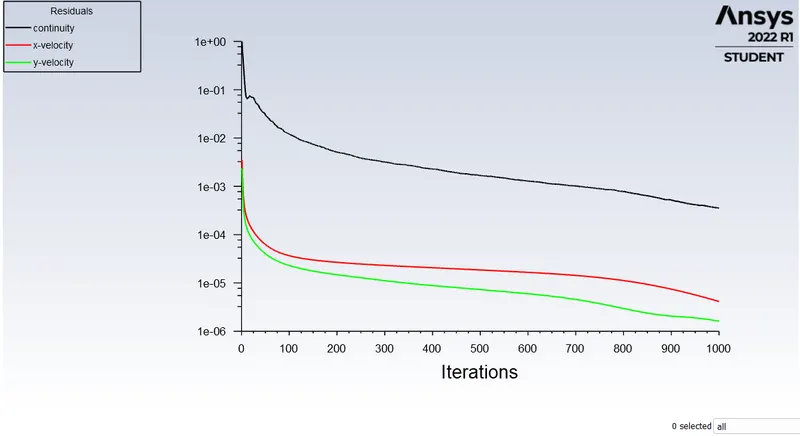
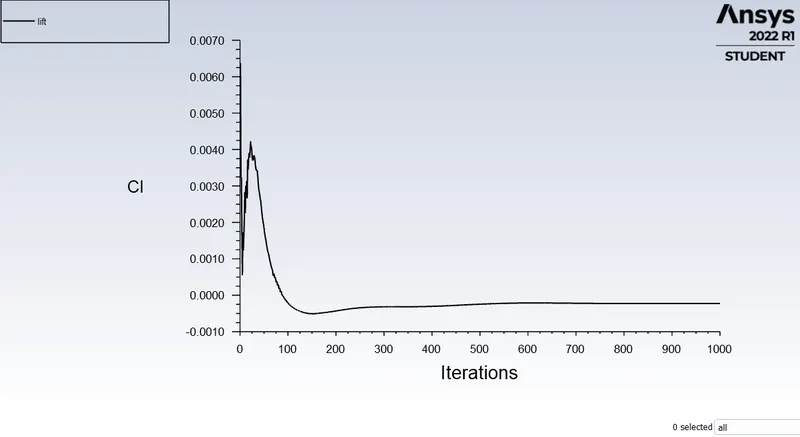
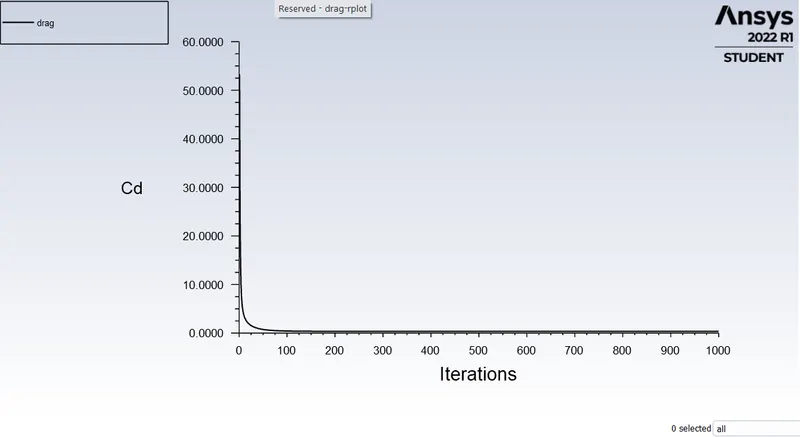
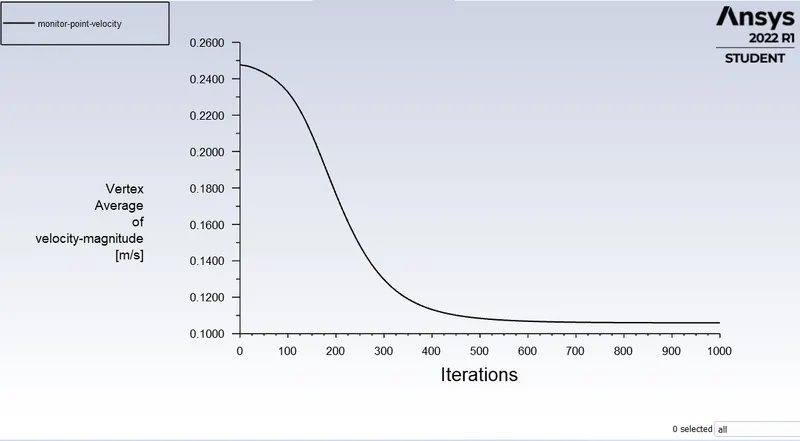
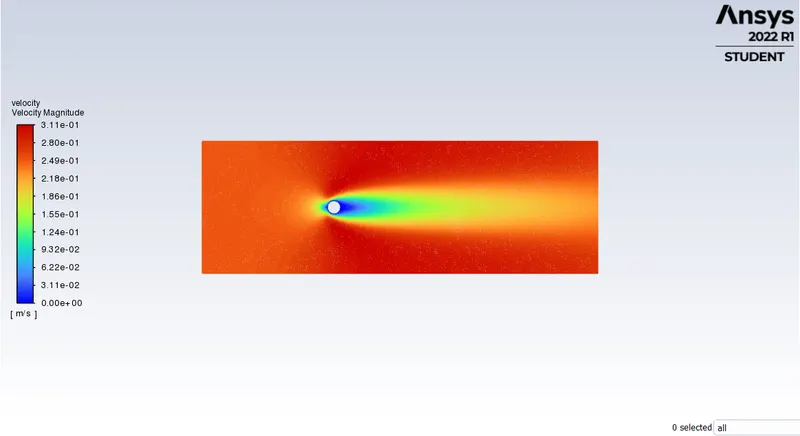
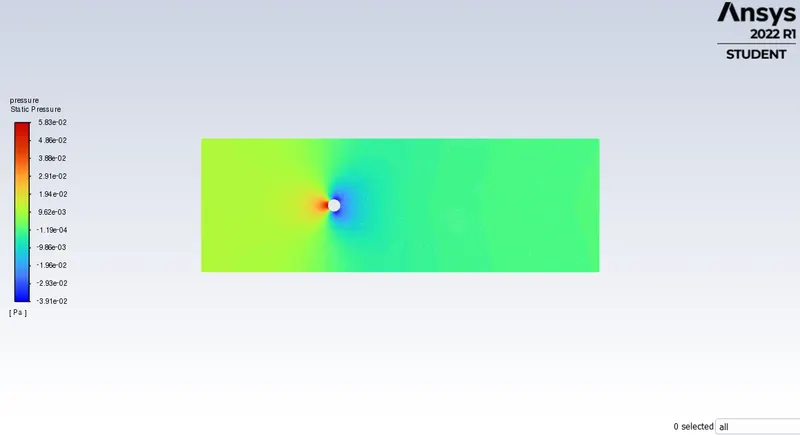
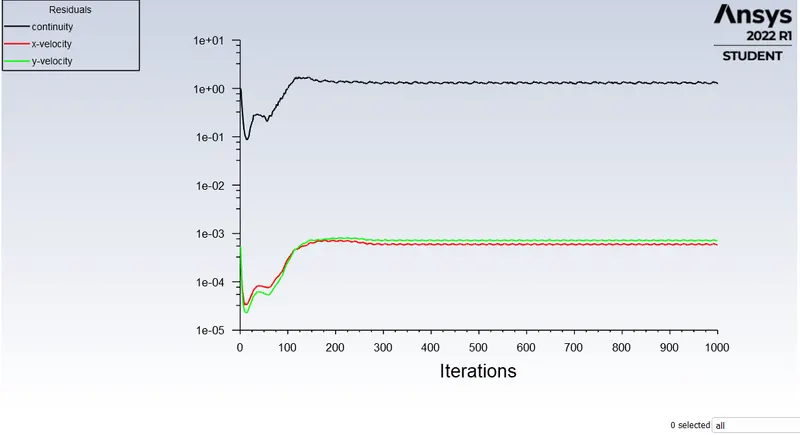
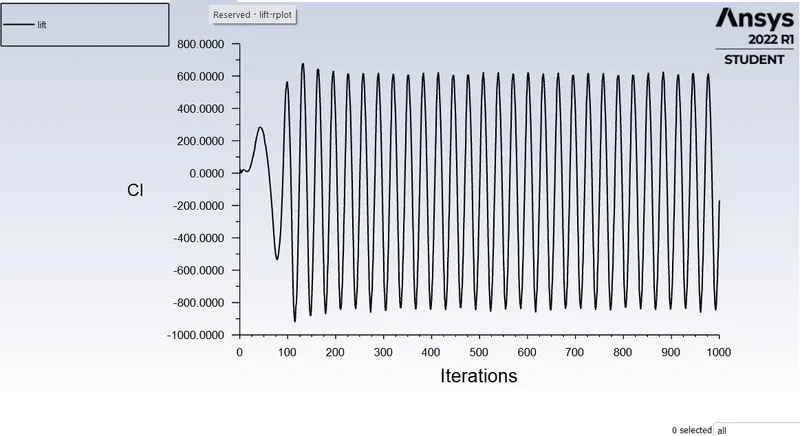
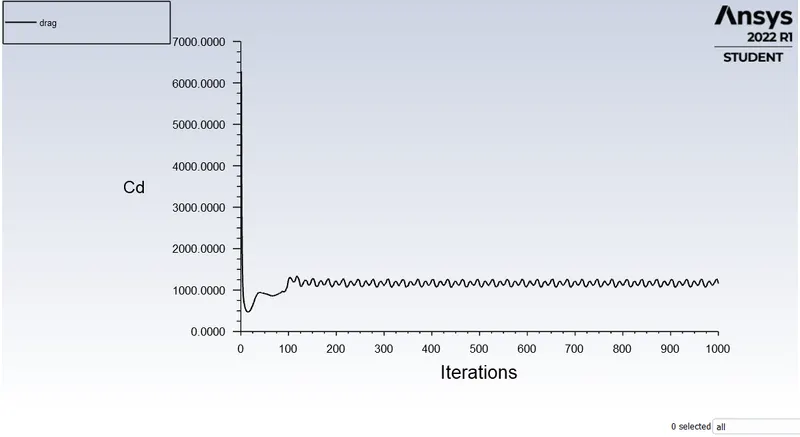
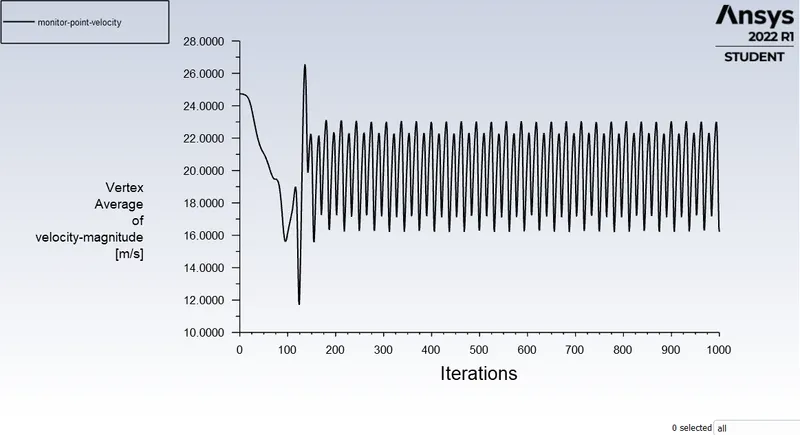
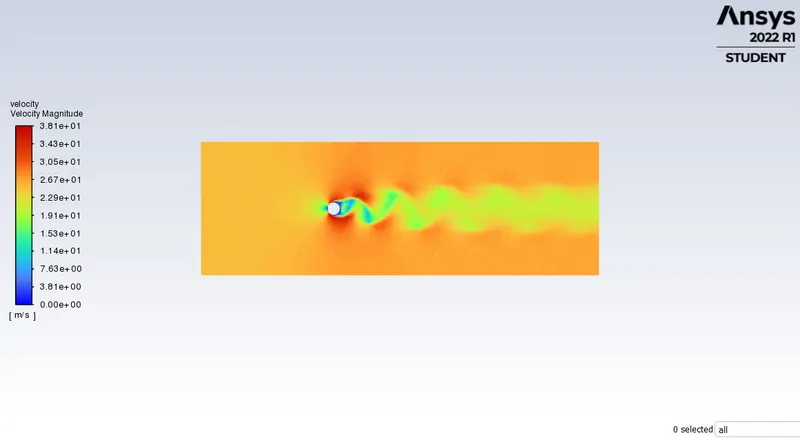
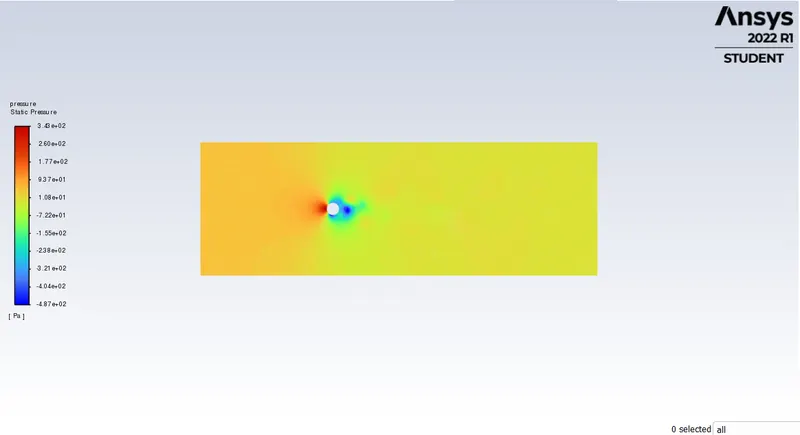
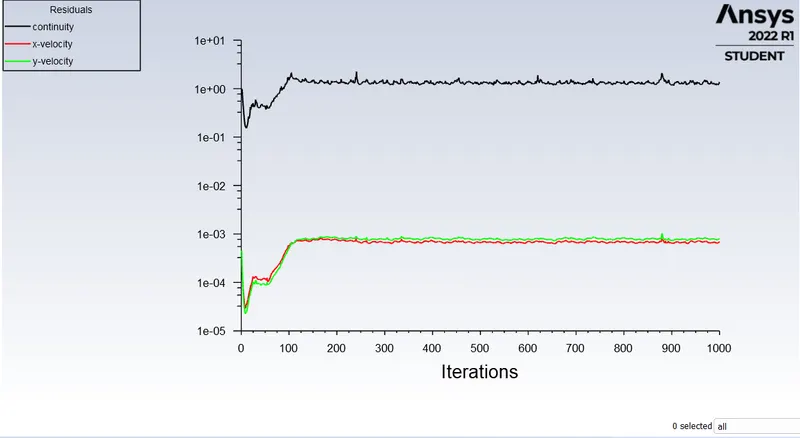
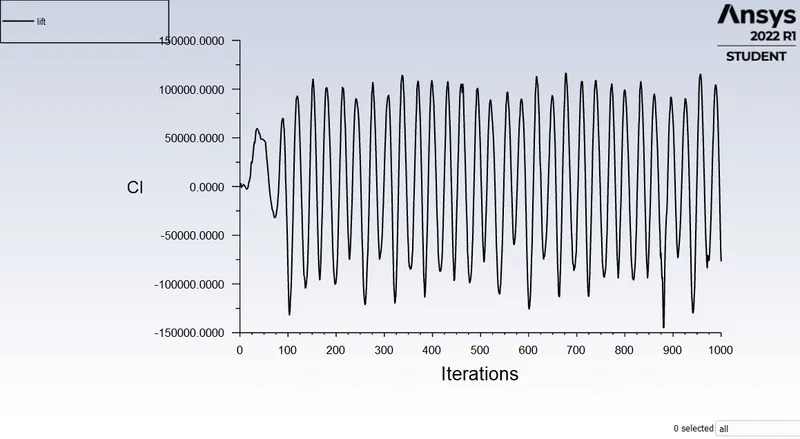
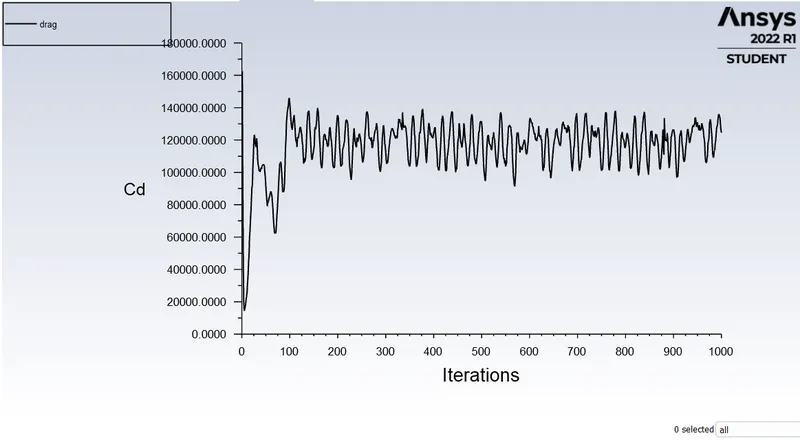
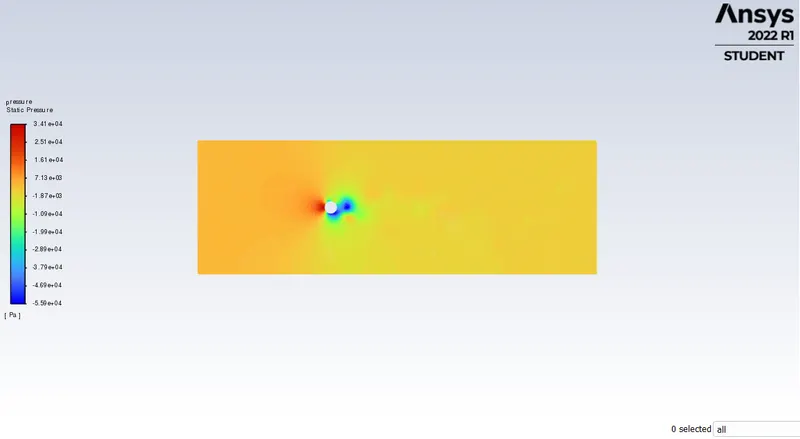
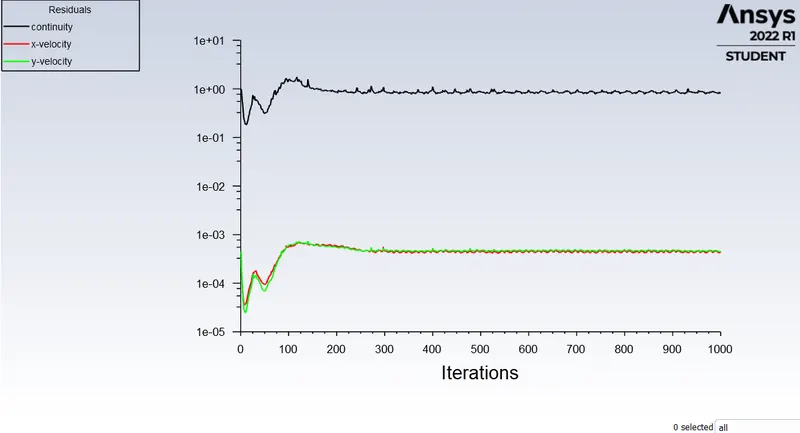
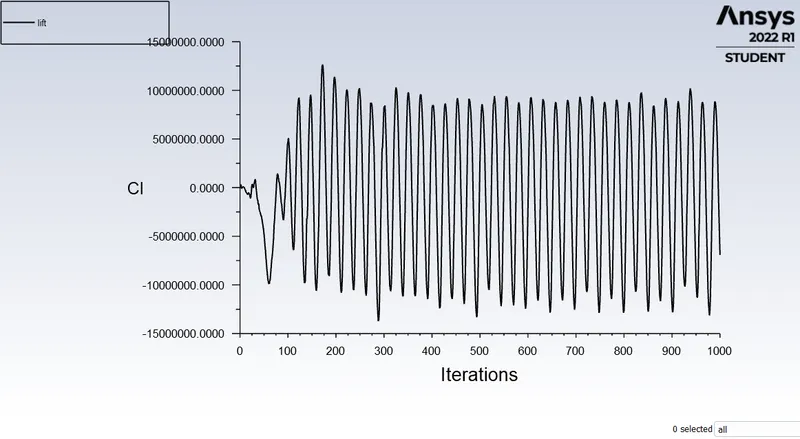
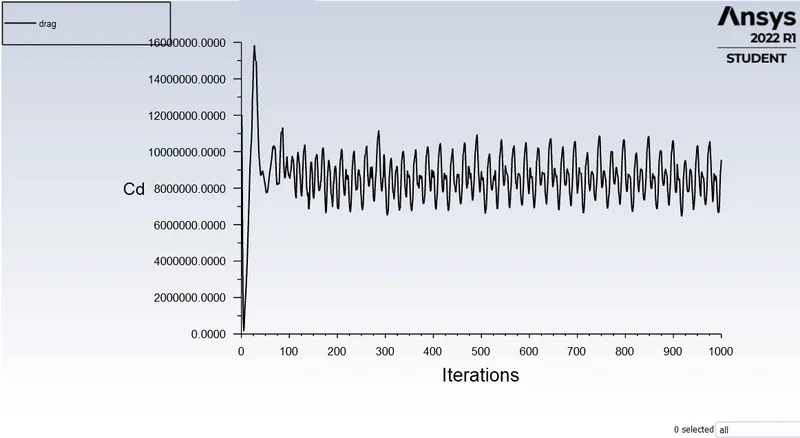
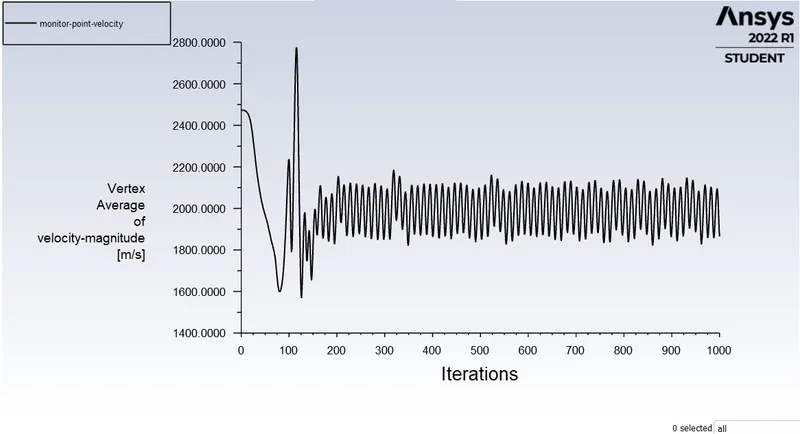
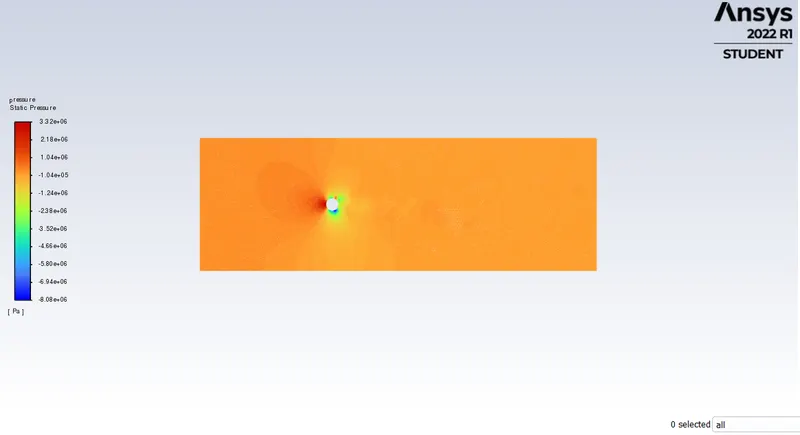
The range of Re values will vary with the size and shape of the body from which the eddies are being shed, as well as with the kinematic viscosity of the fluid. Over a large Re range (47 3.3 Strouhal number: The Strouhal Number is a dimensionless value useful for analyzing oscillating unsteady fluid flow dynamics problems. The Strouhal Number can be expressed as St = ω l / v where St = Strouhal Number ω = oscillation frequency l = characteristic length v = flow velocity 4. Procedure: 4.1 Geometry A plate with the dimension of 20*60m is created using spaceclaim. Now, We want to simulate effective of fluid flow over cylinder, select the circle and delete it. 4.2 Meshing: 4.3 Soving: 4.3.1 Boundary condition: Inlet: velocity =0.25,2.5,25,250,2500. Outlet: gauge pressure = 0Pa. Wall: no slip condition. Symmetry: Symmetry. 5.Results: 5.1 Part:1 1.Reynolds number=100 2.Steady state. Residual: Co-efficient lift Co-efficient of drag Monitor point velocity: Monitor point: A point is created at 8mm in x direction from the axis of cylinder to check velocity. Velocity contour Pressure contour 1.Reynolds number=100 2.Unsteady state. Residual Co-efficient of lift Co-efficient of drag Monitor point velocity: Monitor point: A point is created at 8mm in x direction from the axis of cylinder to check velocity. Velocity contour Pressure contour 5.2 Part:2 1.Reynolds number=10 2.Steady state. Residual Co-efficent of lift Co-efficient of drag Monitor point velocity: Monitor point: A point is created at 8mm in x direction from the axis of cylinder to check velocity. Velocity contour Pressure contour 1.Reynolds number=1000 2.steady state. Residual Co-efficient of lift Co-efficient of drag Monitor point velocity: Monitor point: A point is created at 8mm in x direction from the axis of cylinder to check velocity. Velocity contour Pressure contour 1.Reynolds number=10000 2.steady state. Residual Co-efficient of lift Co-efficient drag Velocity contour Pressure contour 1.Reynolds number=100000 2.steady state. Residual Co-efficient of lift Co-efficient of drag Monitor point velocity: Monitor point: A point is created at 8mm in x direction from the axis of cylinder to check velocity. Velocity contour Pressure contour Values of co-efficient of drag and lift co-efficient for respective reynolds number is tabulated as follows: 100 (Unsteady) 6. Conculsion:
1.
Velocity
2.5m/s
2.
Density
1 kg/m^3
3.
Viscosity
0.05Pa-s
1.
Velocity
2.5m/s
2.
Density
1 kg/m^3
3.
Viscosity
0.05Pa-s
1.
Velocity
0.25m/s
2.
Density
1 kg/m^3
3.
Viscosity
0.05Pa-s
1.
Velocity
25m/s
2.
Density
1 kg/m^3
3.
Viscosity
0.05Pa-s
1.
Velocity
250m/s
2.
Density
1 kg/m^3
3.
Viscosity
0.05Pa-s
1.
Velocity
2500m/s
2.
Density
1 kg/m^3
3.
Viscosity
0.05Pa-s
Reynolds number
Co-efficient of drag(Cd)
Co-efficient of lift(Cl)
10
3.23
0.0018
100 (steady)
1.35
0.0289
1.36
0.0368
1000
0.719
0.174
10000
0.805
0.555
100000
0.715
0.286