Week 2 - Flow over a Cylinder.
Aim:
To study vortex shedding over a cylinder
Objective:
- Simulation of steady and unsteady state
- Calculate lift and drag coefficient
- Calculate Strouhal number for Reynolds number 100 in both steady and unsteady case
- Perform steady state simulation for various cases of Reynolds number.
Introduction:
Flow over cylinder in field of fluid mechanics has undergone intense research, in all cases, analytical, experimental and numerical.
Various studies have undergone with empirical relations being setup in analytical approach to have more of an agreement between the experimental and numerical solution results.
This setup becomes very complex case study as opposed to its simple geometry as the flow separation prediction at the exact location becomes hard to capture even for a laminar case.
In case of other objects, flow detachment can be captured at sharp edges and corners if present, but due to the blunt nature of our setup, this proves challenging.
In this challenge, we shall not be trying to ascertain the exact location of separation point, which, according to studies, lies somewhere in the third quadrant, i.e., 90 to 150 degrees in the direction of incoming flow.
For this particular case, we shall set up a customized fluid in order to get rounded off values of Reynolds number by varying the velocities in each case. These cases then shall be compared and inferences derived.
Reynolds number: This is a dimensionless number, whose values determines the laminar to turbulent flow regions. For values of Reynolds number in range of 50, as can be seen from research papers, we see the formation of vortices in wake region of cylinder. These vortices move in a periodic motion. The frequency of this motion increases upon increasing the Reynolds number, in our case, by changing the velocity.
SOLVING AND MODELLING APPROACH:
Aim of this project is to study behavior of Reynolds number on flow over a cylinder. To capture flow physics, it is imperative to have enough cells to capture realistically the flow physics in wake region of cylinder.
Our challenge is divided into 2 parts. Part 1 is further divided into two subgroups. We have to simulate the flow over cylinder in laminar case of Reynolds number 100 for cases of steady and transient state. Following this, we also calculate the Strouhal number for the same.
In case 2, we use a steady state solver to calculate lift and drag coefficients for various cases of Reynolds numbers i.e., Reynolds number of 10, 100, 1000,10000 and 100000.
Problem starts with 2D geometry of flow field and meshing shall be carried out later on.
Case I
Simulation over cylinder with steady and transient solver for Reynolds number of 100.
The solver in this case shall be pressure based.
Reynolds number is given by
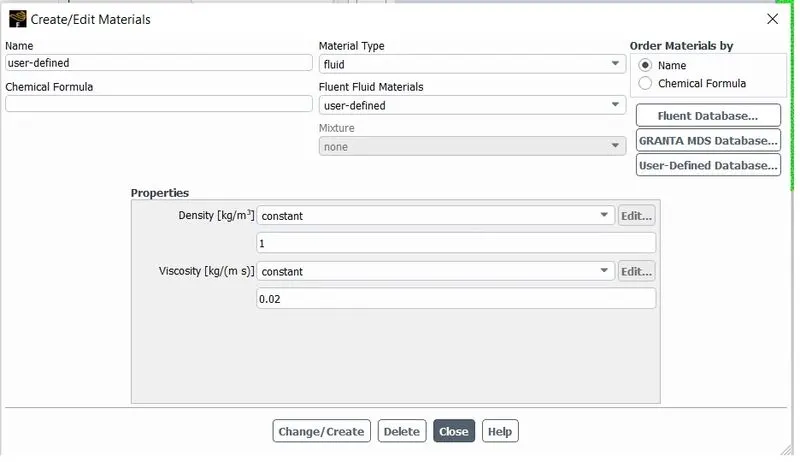
We shall choose a value of 1 for density and 0.05 for viscosity.
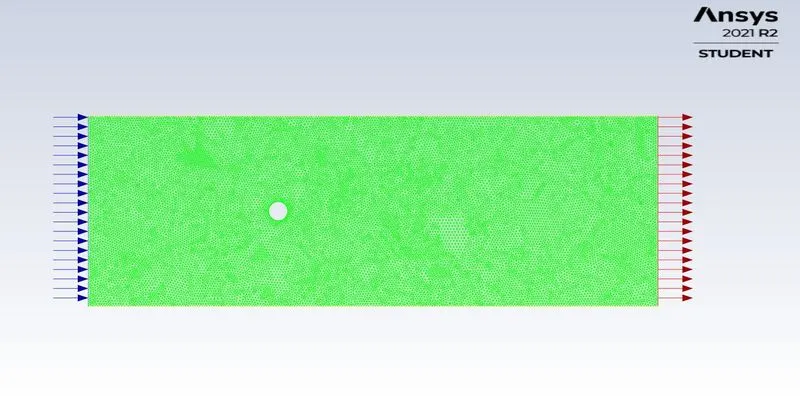
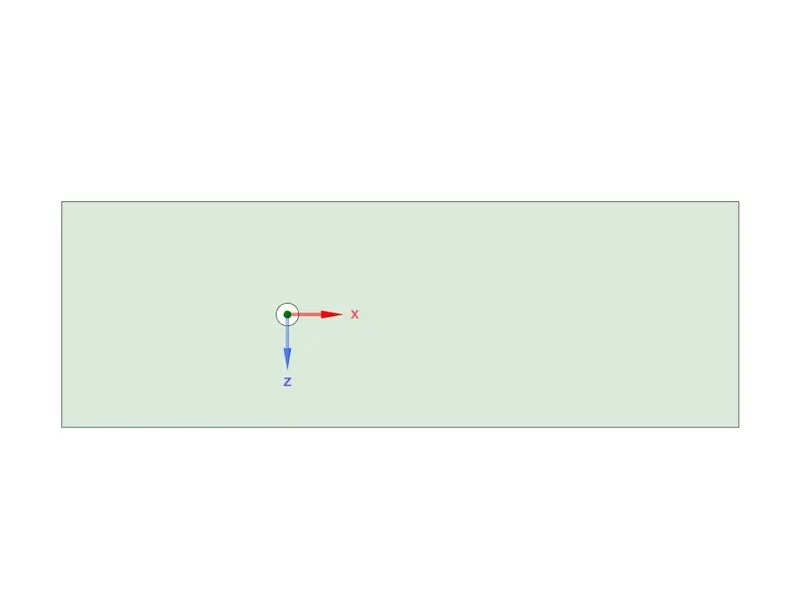
In the above geometry, we sketch a cylinder 2 meter in diameter which is setup inside a bounding box of sorts, 2D in nature. Size of bounding box is 60 meters by 20 meter in dimensions.
Cylinder is placed mid height along 20-meter dimension and at a distance of 20 meters from inlet along 60-meter dimension.
There is no thickness provided to the geometry as this is a case of 2D flow simulation.
Meshing:
As mentioned, the mesh elements must be fine enough to capture physics of flow in the wake region of cylinder.
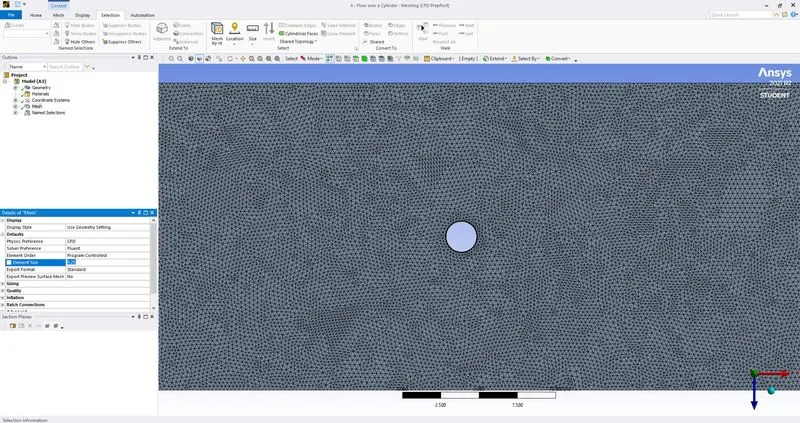
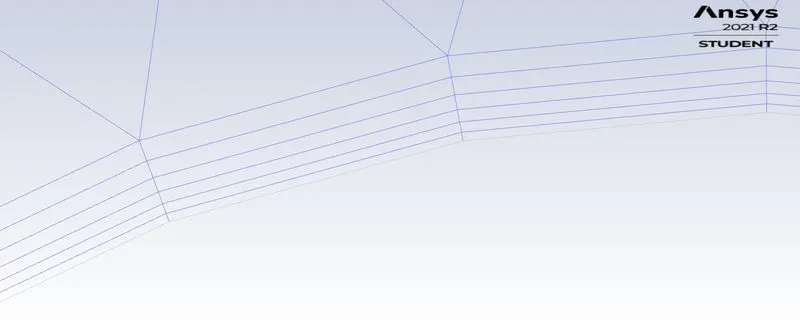
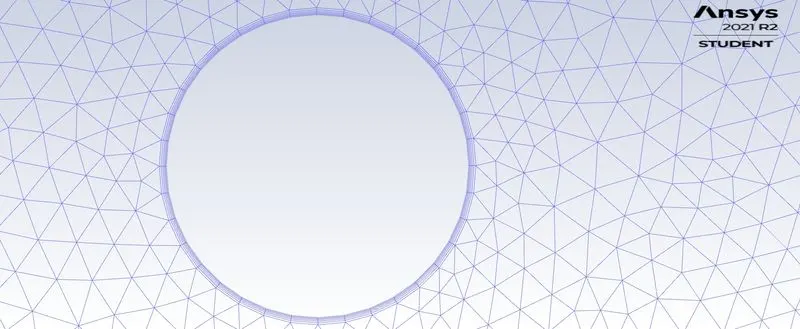
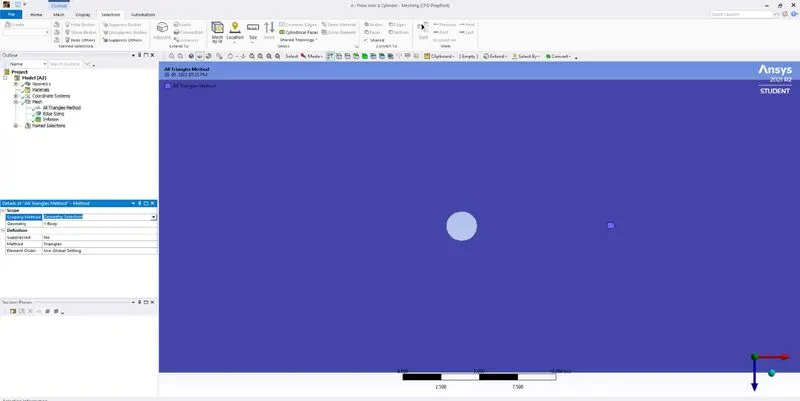
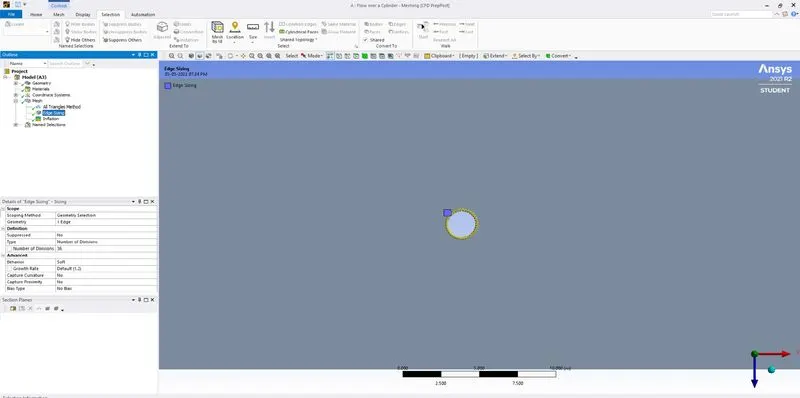
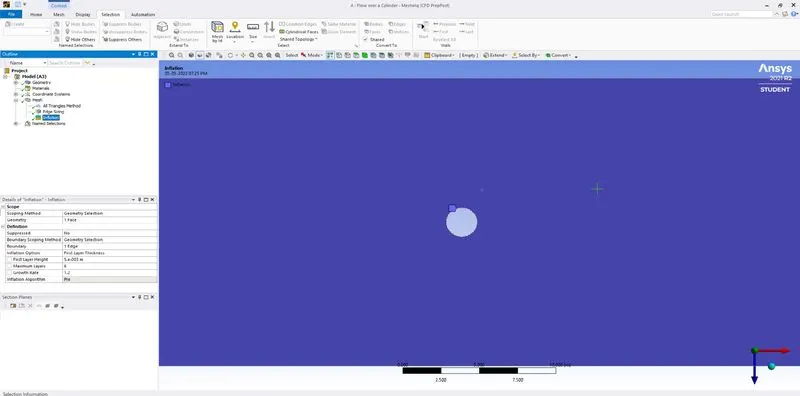
Mesh size in both cases is taken to be 25 cm in size. Triangular mesh is selected. In order to capture flow near the walls of cylinder, an inflation later is modelled.
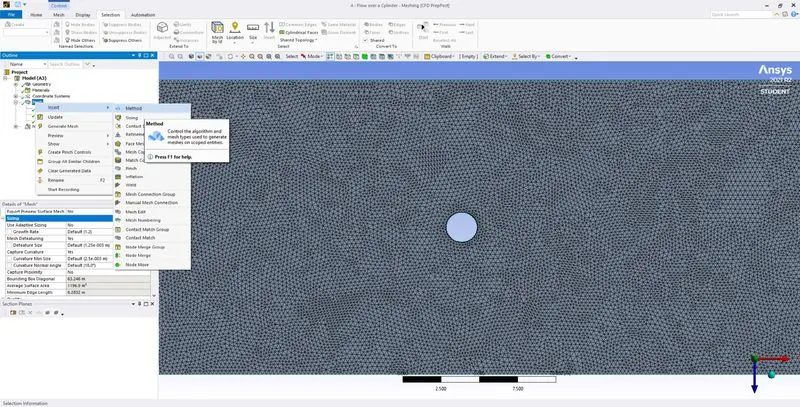
A total of 6 layers are needed with a growth rate of 1.2. this means a 20 percent of growth is used as one moves along the layers. The thickness of first layer is taken as 5 mm.
Strouhal number is a dimensionless number describing the oscillating flow mechanism.
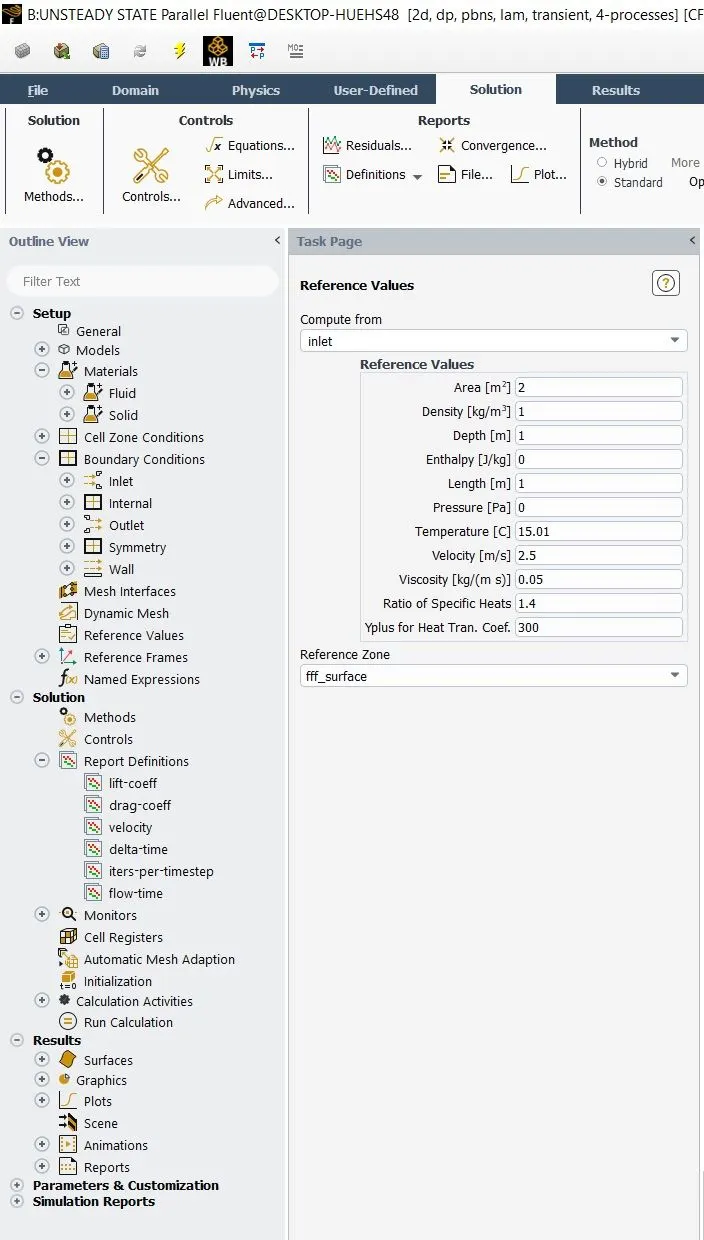
Below are snippets from the software taken as a work flow.
Solution:
Under physics tab, click on viscous model and select laminar viscous model
Under solvers option, in physics tab, click on reference value and modify them accordingly.
The diameter of our cylinder is 2 square meters, thus we shall be choosing an area of 2 meter square as that would be our projected area of cross section in transverse plane.
Make sure the density chosen is 1. The reference values affect the lift and drag coefficients calculated so make sure these are properly updated!
Next click on materials and create a new customized user defined material having properties as shown in one of the snippets
Next select boundaries and change the velocity at the inlet according to value of Reynolds number we need.
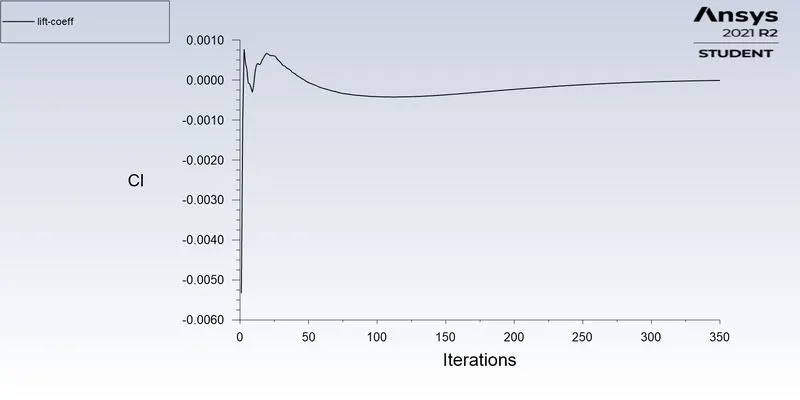
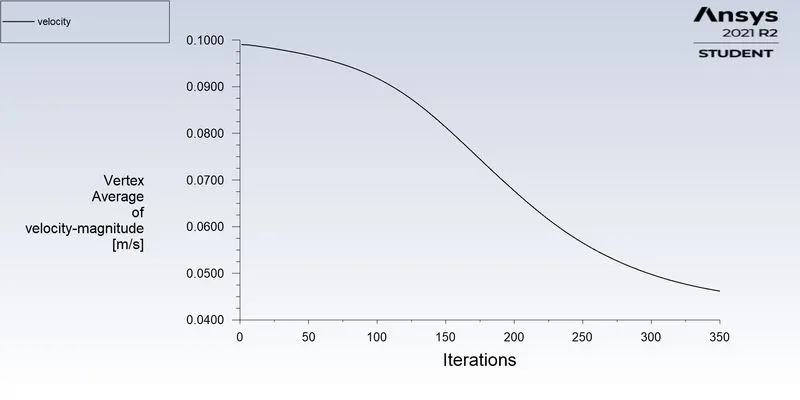
Under solutions tab, move to the reports sub tab section, we find definitions, there in choose vertex average from surface report and drag and lift from force report respectively.
Initialize and run the calculations for 500 iterations in steady state and 1000 in transient with time step size of 0.1.
Workflow:
Results from Case 1 and Case 2:
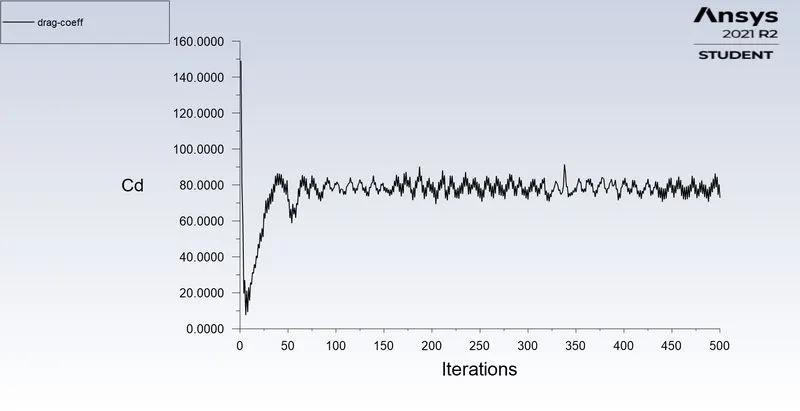
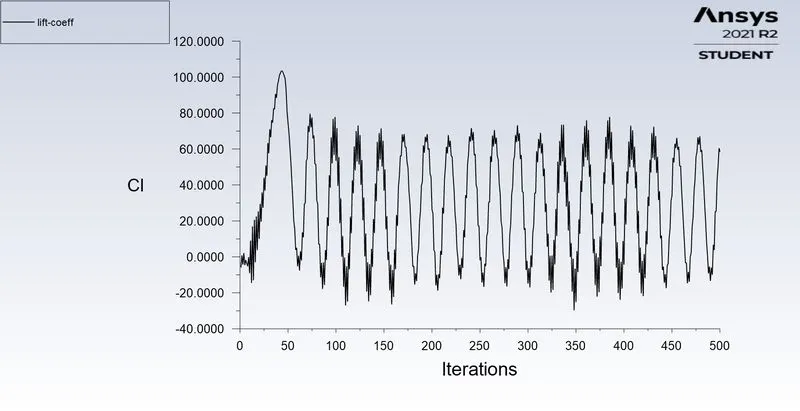
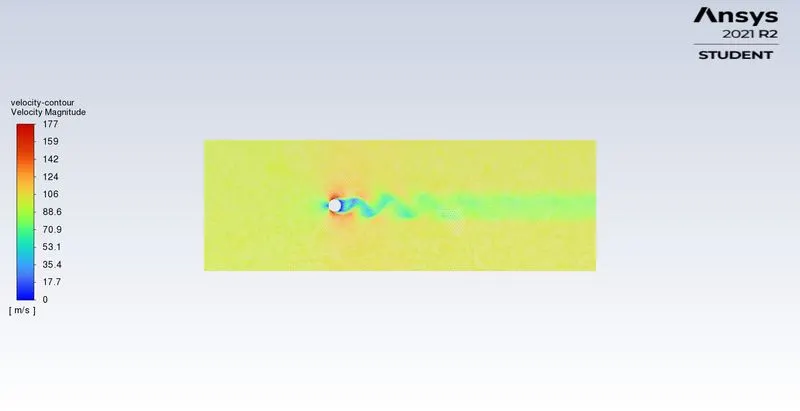
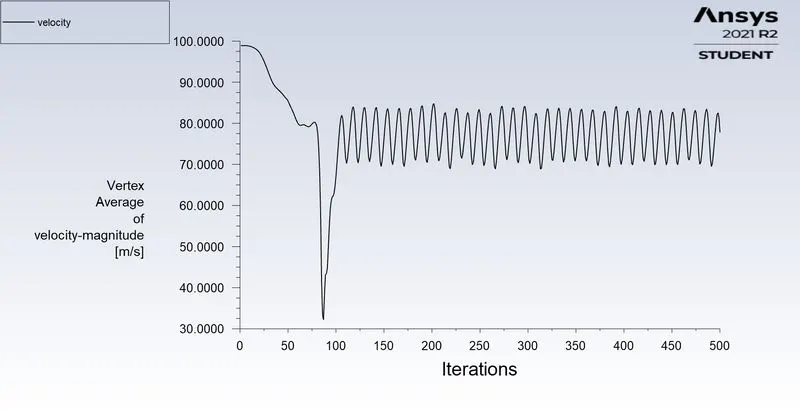
STEADY FLOW FOR REYNOLDS NUMBER = 100
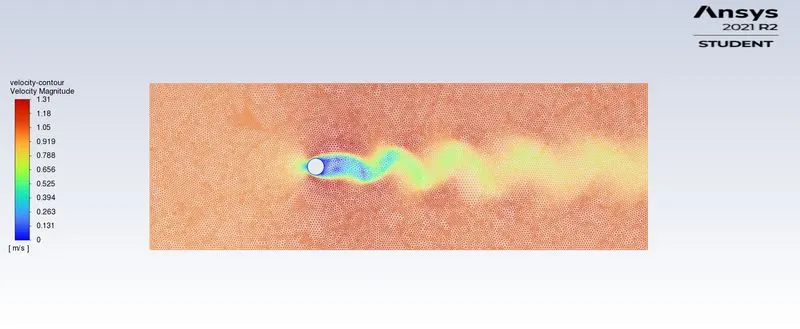
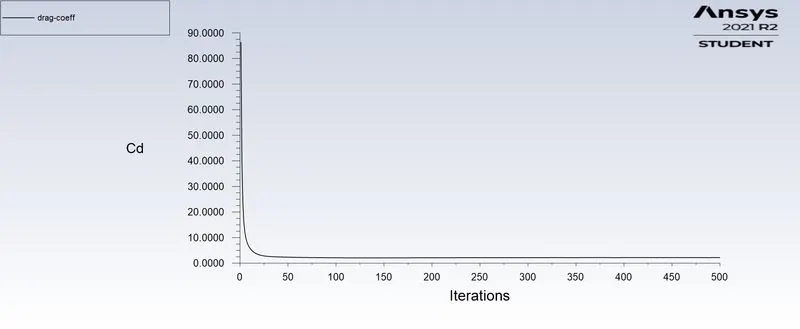
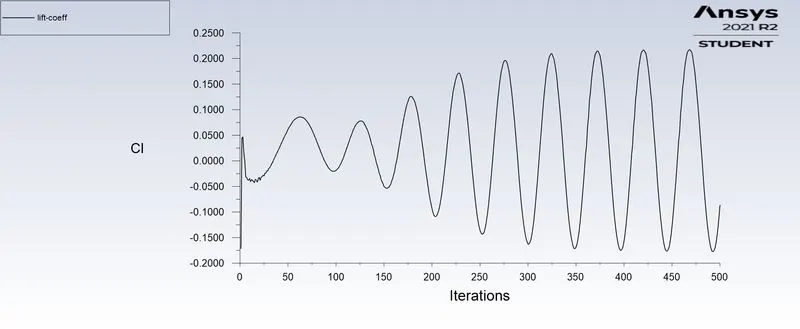
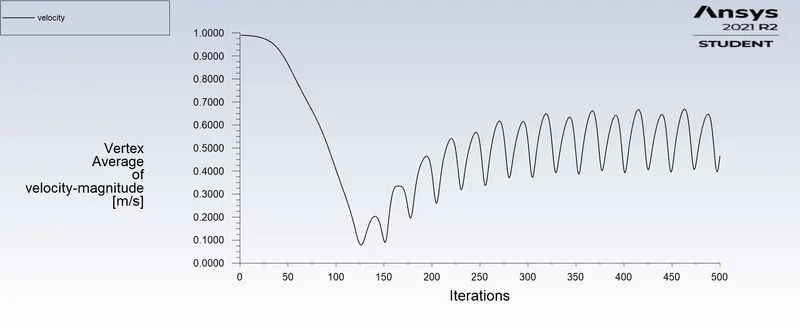
UNSTEADY FLOW FOR REYNOLDS NUMBER = 100
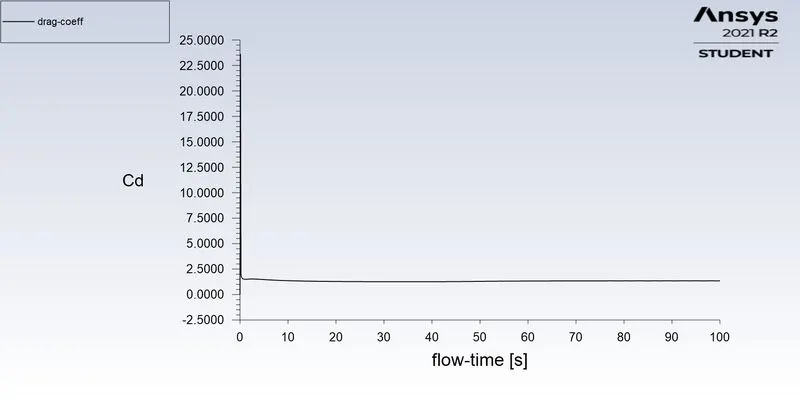
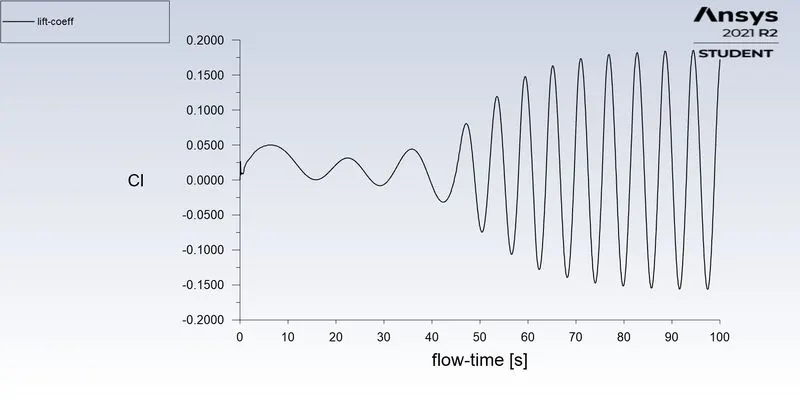
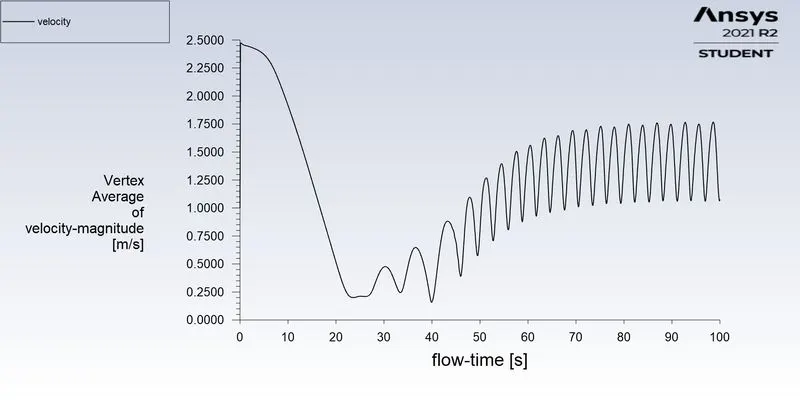
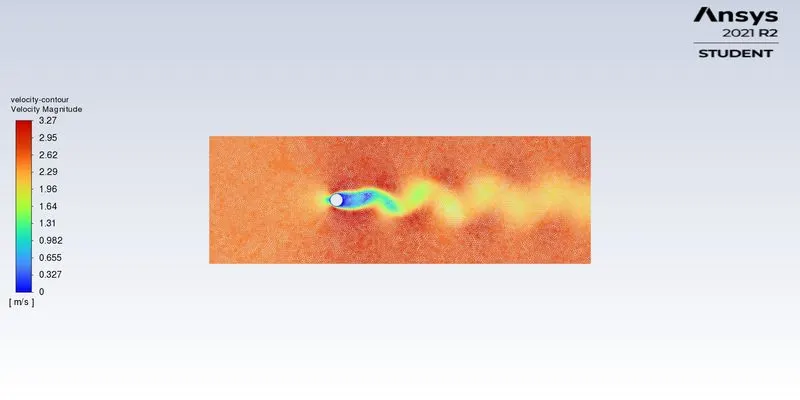
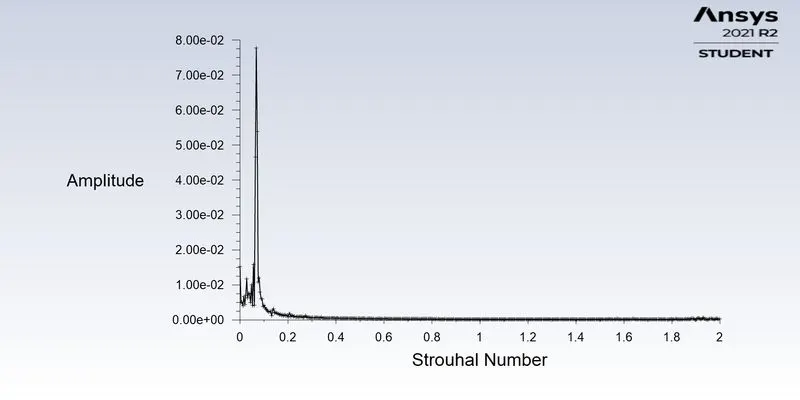
STROUHAL NUMBER CORRESPONDING TO MAXIMUM AMPLITUDE = 0.0679
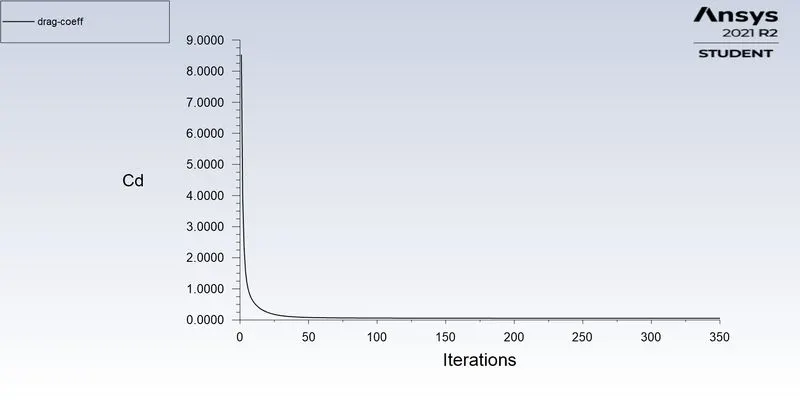
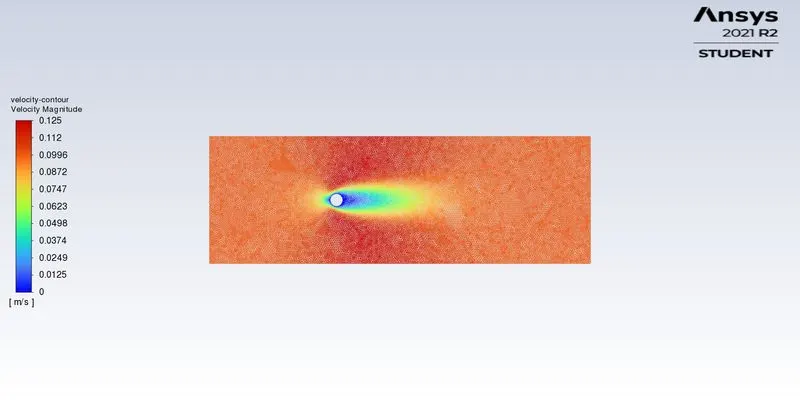
STEADY FLOW FOR REYNOLDS NUMBER = 10
STEADY FLOW FOR REYNOLDS NUMBER = 1000
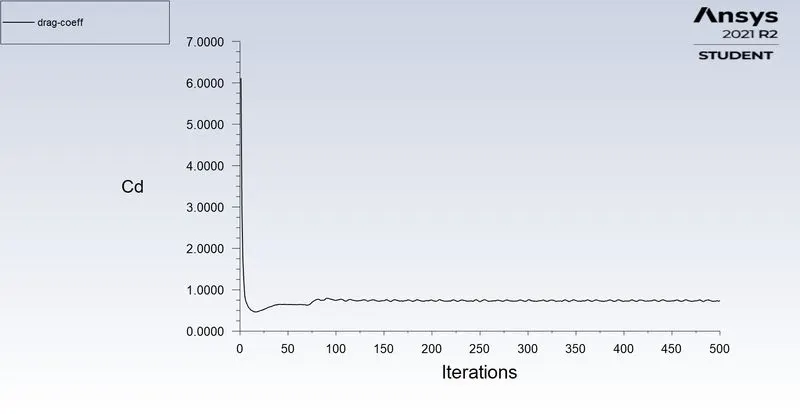
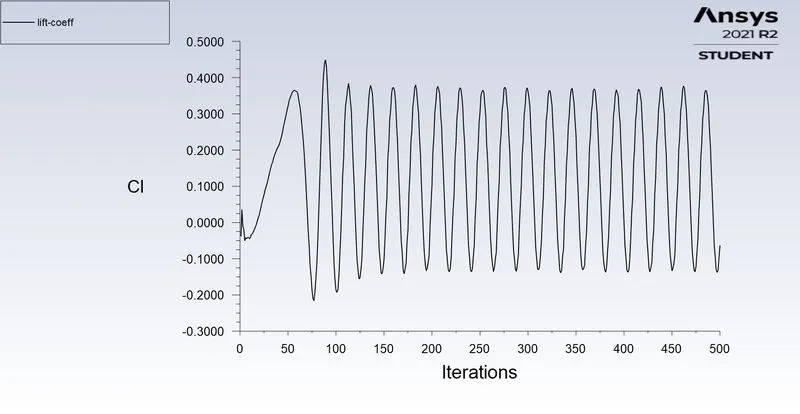
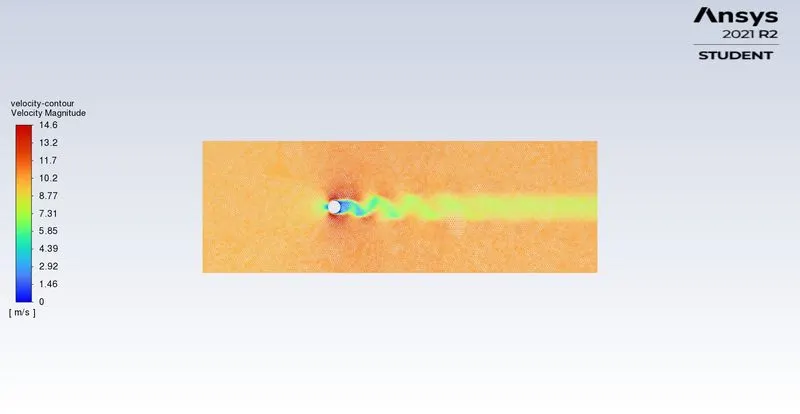
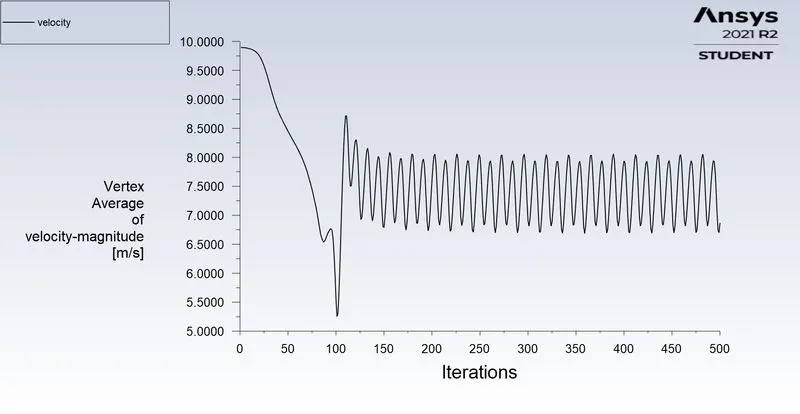
STEADY FLOW FOR REYNOLDS NUMBER = 10,000
STEADY FLOW FOR REYNOLDS NUMBER = 100,000
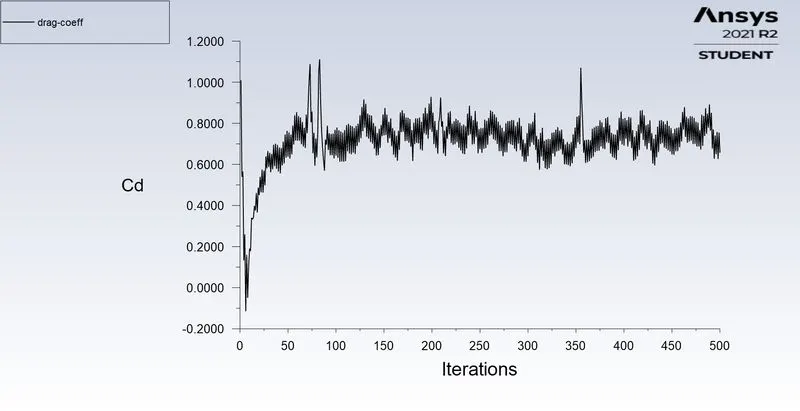
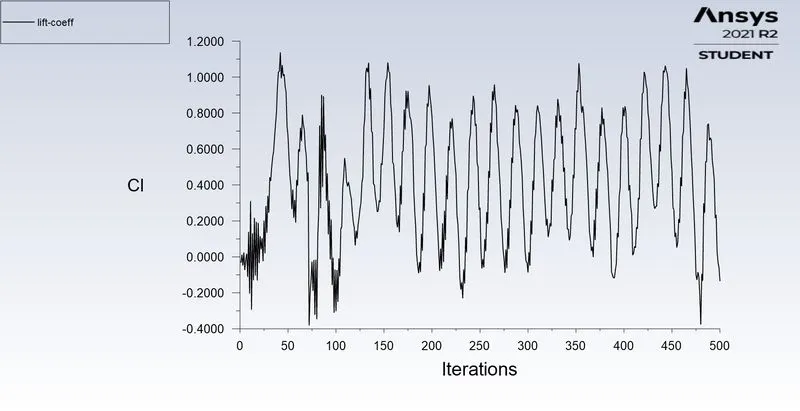
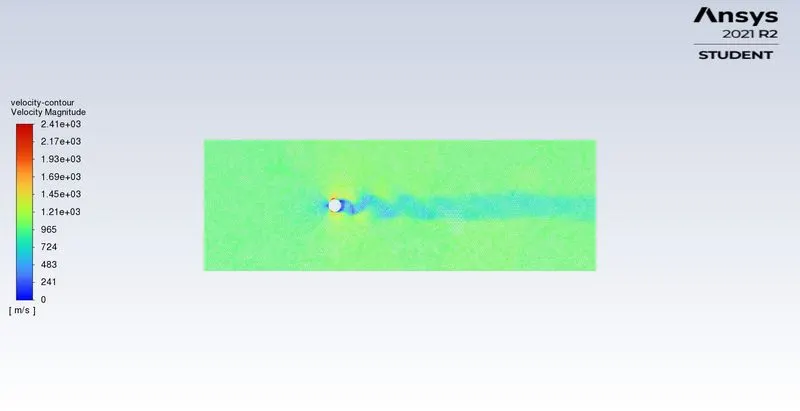
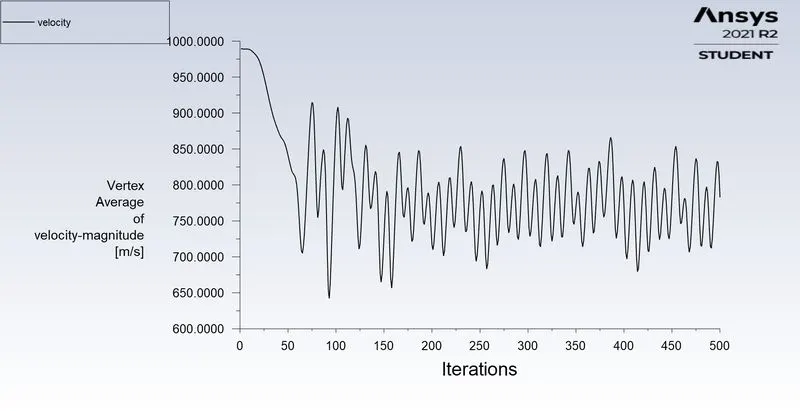
CONCLUSIONS:
Effect of Reynolds number on coefficient of drag
Following inferences can be obtained from the above results
As the Reynolds number increases, the coefficient of drag decreases.
The increases in Reynolds number leads ti shedding of vortices from the upper and lower half of the wake of cylinder.
The shedding of vortices has a specific frequency corresponding to each Reynolds number.
At Reynolds number of 10 the frequency of vortices formation is pretty low and increases as we increase the Reynolds number accordingly. These could be understood from the contour plots.
Transient model simulation takes much more time to simulate as compared to the steady state solvers.
The time step taken in transient simulation, it is a general practice to take a small-time step, in order of the mesh size taken so that information does not skip the cells, this helps us in generating realistic profiles as is created from experimental data. This phenomenon is also called in literature as CFL number. This number as given in literature, must be less than some stipulated value as derived empirically and that ensures that solution does not blow up and gives us more realistic values or profiles in solution accordingly.
Transient model is more appropriate for vortex Karman Street as this is time dependent.
Validation of Reynolds number:
Validation of drag coefficient for Reynolds number of 100 with respect to the research paper provided in challenge page
Drag coefficient from literature for Re of 100 is 1.3353
Value of drag coefficient obtained from simulation is 1.347. The error is less than 5 percent, this is enough for validation of the same.
Regarding Reynolds number higher than 100, we do not need a validation as all other parameters are the same, except the velocity. This is explicitly done to showcase the effect of dimensionless number on the physics of the flow in wake region.
REFERENCE:
NUMERICAL FLOW OF LAMINAR FLOW PAST A CIRCULAR CYLINDER, CTFD DIVISION, NIT SURATKAL