Flow over a Cylinder.
Steady / Unsteady Flow over a Cylinder.
Aim:-
Simulate the flow over a cylinder and explain the phenomenon of Karman vortex street.
PART-I
- Simulate the flow with the steady and unsteady case and calculate the Strouhal Number for Re= 100.
PART-II
- Calculate the coefficient of drag and lift over a cylinder by setting the Reynolds number to 10,100,1000,10000 & 100000. (Run with steady solver)
- Discuss the effect of Reynolds number on the coefficient of drag. [ Results should be validated with any standard literature and error should be within 5 %]
Theory:-
Strouhal number
Strouhal number is a dimensionless number describing oscillating flow mechanisms.
The Strouhal number is often given a
`S_t=(fL)/U`
where
f = frequency of vortex shedding.
L = characteristic length (for example, hydraulic diameter or the airfoil thickness).
U = flow velocity.
vortex shedding:-
vortex shedding is an oscillating flow that takes place when a fluid such as air or water flows past a bluff (as opposed to a streamlined) body at certain velocities, depending on the size and shape of the body. In this flow, vortices are created at the back of the body and detach periodically from either side of the body forming a Von Karman Street. The fluid flow past the object creates alternating low-pressure vortices on the downstream side of the object. The object will tend to move toward the low-pressure zone.
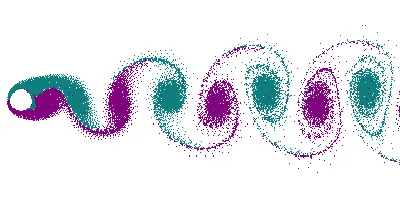
If the bluff structure is not mounted rigidly and the frequency of vortex shedding matches the resonance frequency of the structure, then the structure can begin to resonate, vibrating with harmonic oscillation driven by the energy of the flow. This vibration is the cause for overhead power line wires humming in the wind and for the fluttering of automobile whip audio antennas at some speeds. Tall chimneys constructed of thin-walled steel tubes can be sufficiently flexible that, in airflow with a speed in the critical range, vortex shedding can drive the chimney into violent oscillations that can damage or destroy the chimney.
Von Karman Street:-
In fluid dynamics, a Von Karman Street is a repeating pattern of swirling vortices, caused by a process known as vortex shedding, which is responsible for the unsteady separation of flow of a fluid around blunt bodies.
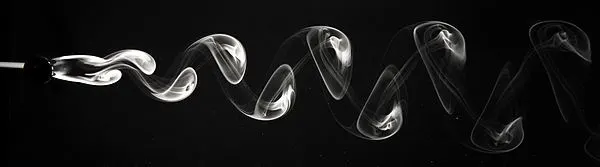
A vortex street will form only at a certain range of flow velocities, specified by a range of Reynolds Number(Re), typically above a limiting Re value of about 90.
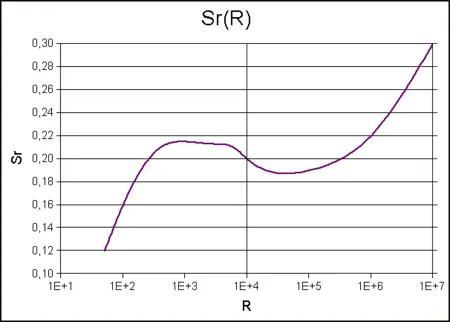
Strouhal number (Sr) as a function of the Reynolds number (Re) for a long circular cylinder.
Simulate the flow over a cylinder
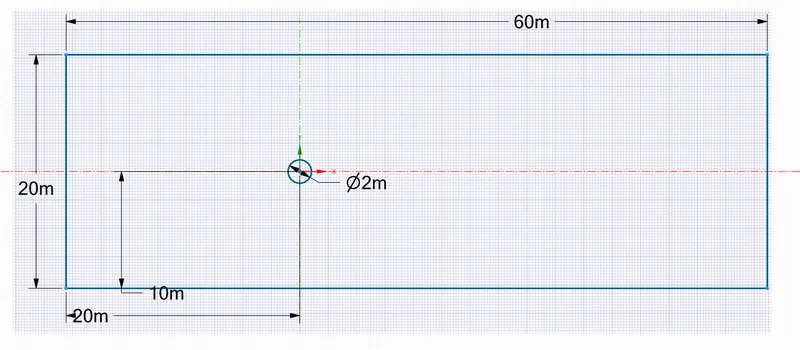
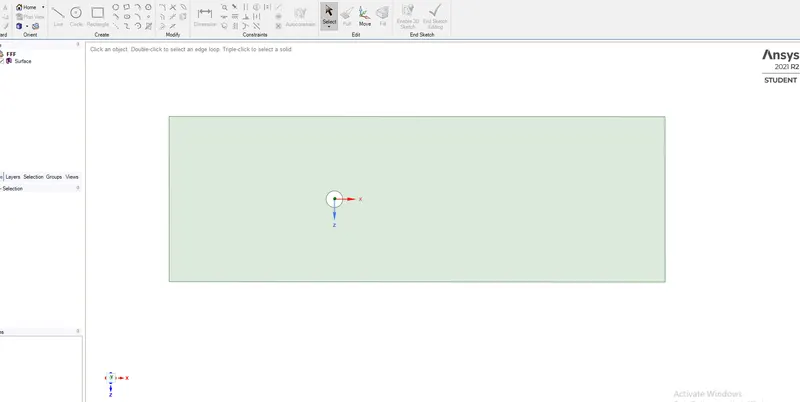
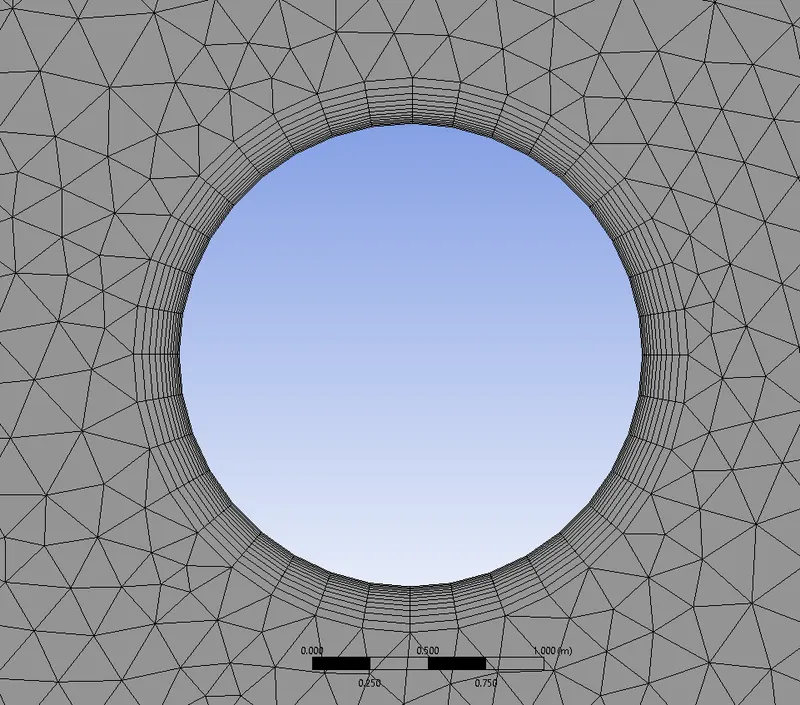
Geometry:- 2 -D rectangular surface 60*20m and a hole of Dia 2 m in it.
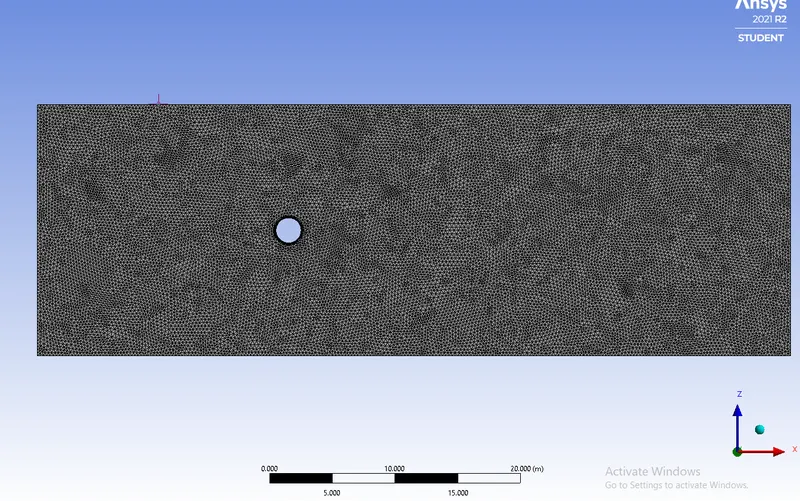
Triangle dominant mesh with element size = 0.25m.
Nodes = 20657
Elements =40422
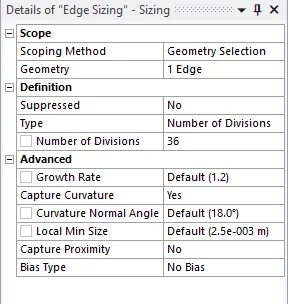
2) Edge sizing 36 divisions on cylinder
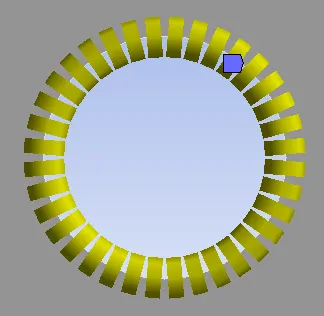
3) Inflation layers
- number of layers over the cylinder = 6
- first-layer thickness = 5e-3
- growth rate = 1.2.
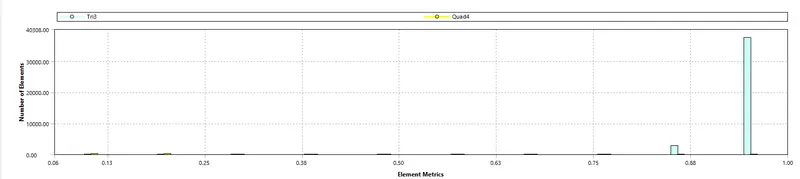
Quality:-
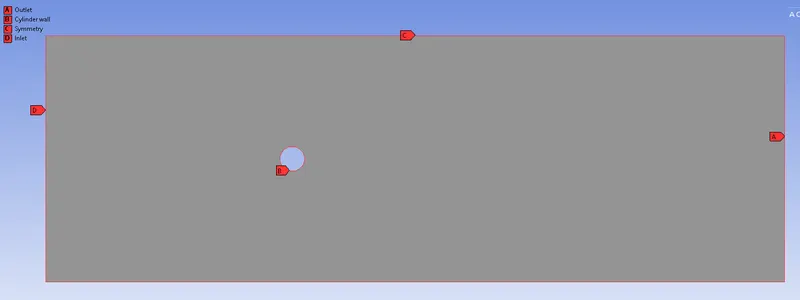
Creating named sections
Setup:
- Fluent launcher Double-precision Parallel solving with 4 solvers.
- Check the mesh & report quality.
- Setup
- General:- Type = Pressured Based, Absolute Velocity Formation & Time =both Steady and Transient.
- Models:- Viscous model:- Laminar
- Materials:- Copy air-fluid material from fluent database to create user-defined fluid with density = 1 Kg/m3, Viscosity(Kg/m-s) = 0.05 calculated from Renolds number formulae.
- Cell zone conditions:- user-defined fluid in the region.
- Boundary conditions:-
- Cylinder wall: Stationary wall no-slip boundary condition
- Inlet:- Velocity inlet, Absolute Velocity magnitude calculated with respect to Renolds number
- Outlet:- Pressure outlet, Absolute Gauge pressure = 0 Pa
- symmetry:- Symmetry
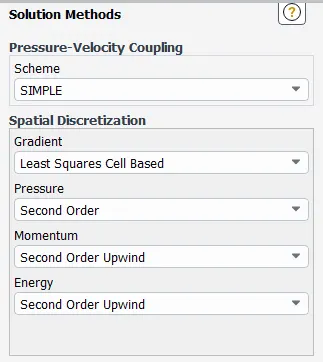
- Solution method:-
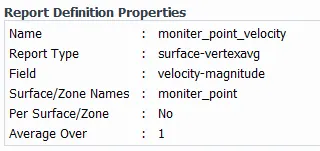
- Creating a Monitor point at length = 4*Dia = 10 m of the cylinder from center of cylinder towards +ve side
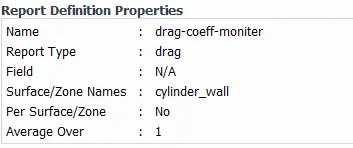
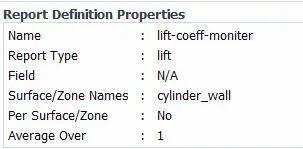
Report Definitions:-
Surface report
Drag & lift coefficient report:
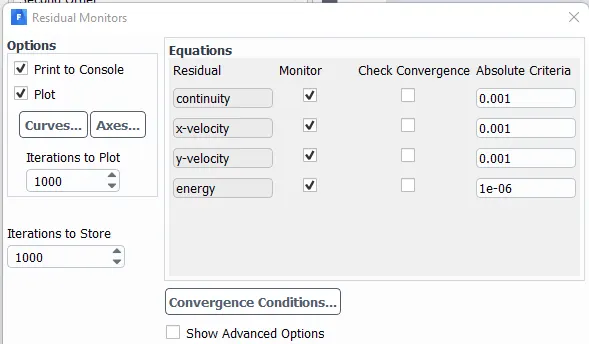
Residual monitor:-
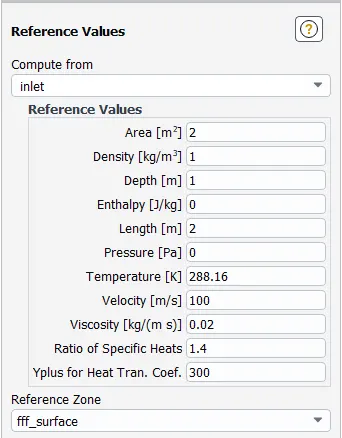
Reference values:-
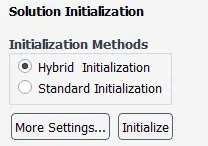
Hybrid Initialization :
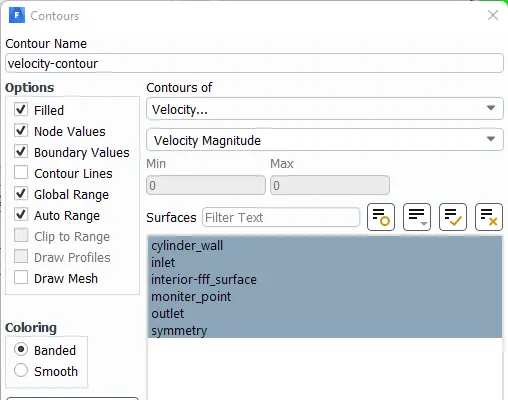
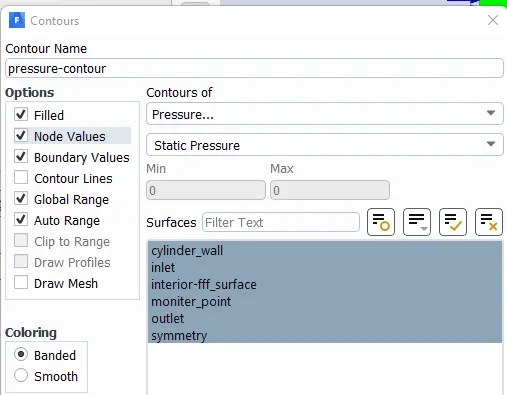
Velocity and pressure contour for animations
Solution:
For steady-state Run for 1000 iterations
For Transient time calculation
V= 2.5 m/s, L = 60 m, Time step size = 0.25 sec.
No of timesteps = 1000
In this simulation we were given 1000 timesteps
Simulation time = 1000*0.25 = 250 sec
Results:-
Create XY plane
velocity contour, pressure contours, velocity streamline, velocity vector on XY Plane.
Velocity calculation:-
`v = (R_e * mu)/(rho* D)`
Diameter D= 2 m
Density ρ= 1 `(kg)/(m^3)`
Dynamic Viscosity μ= 0.05 `(kg*m)/s`
| Renoulds number | Velocity m/s |
| 10 | 0.25 |
| 100 | 2.5 |
| 1000 | 25 |
| 10000 | 250 |
| 100000 | 2500 |
Unsteady case and calculate the Strouhal Number for Re= 100.
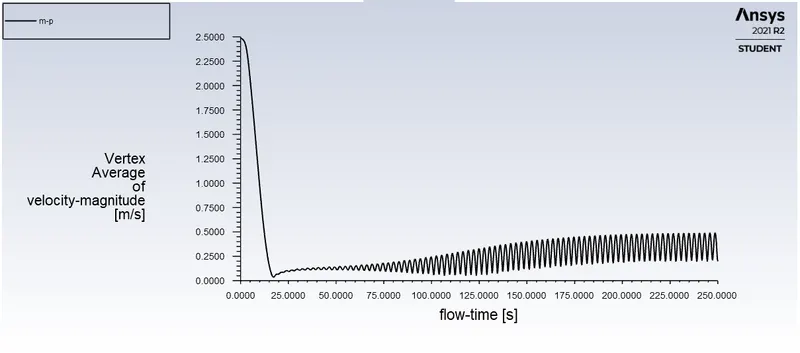
Vortex shedding behind the cylinder using the point
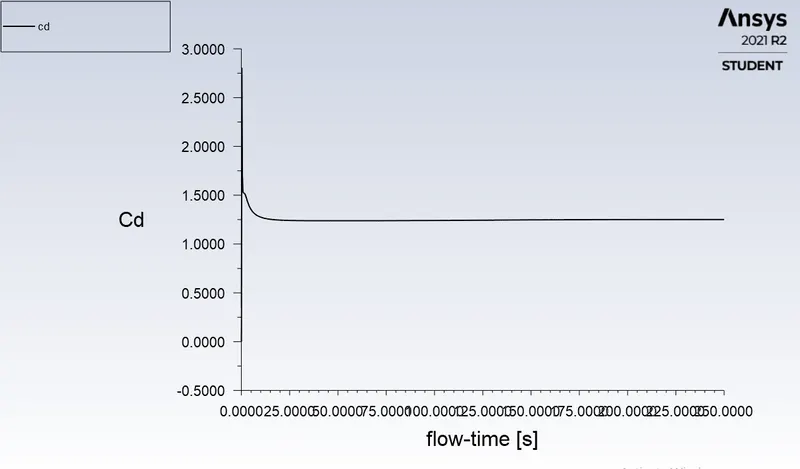
Drag coefficent
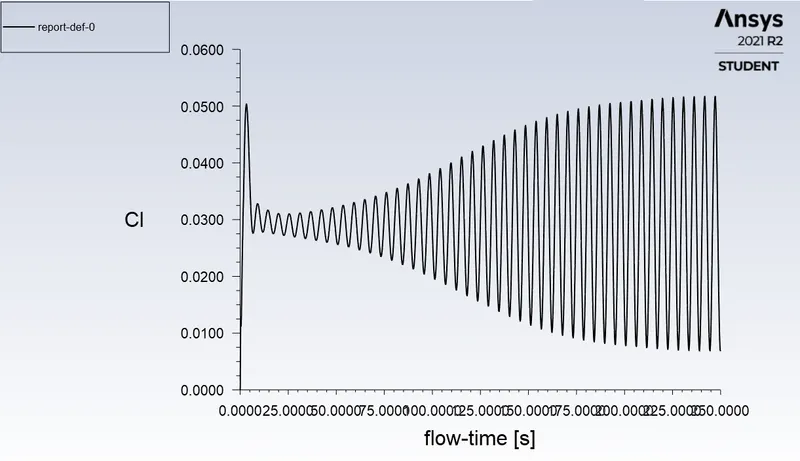
Lift force
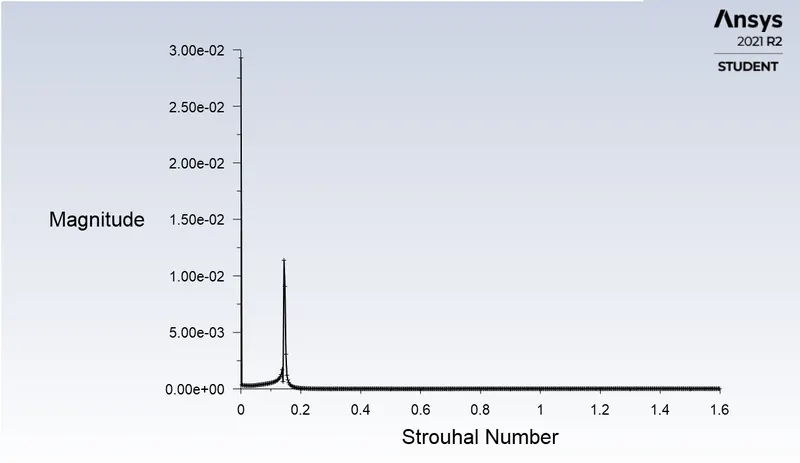
Strouhal Number
Steady case for Re= 10
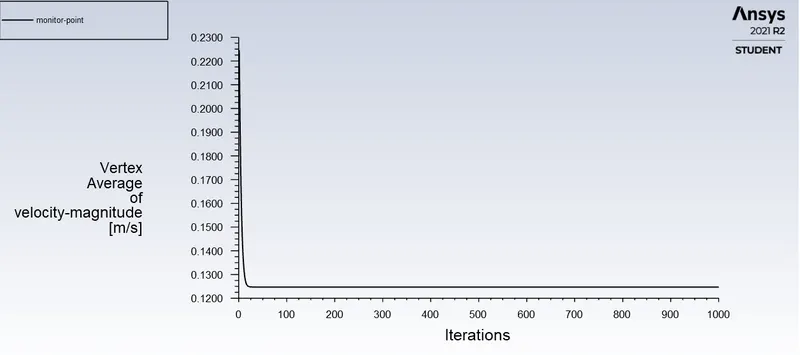
Vortex shedding behind the cylinder using the point
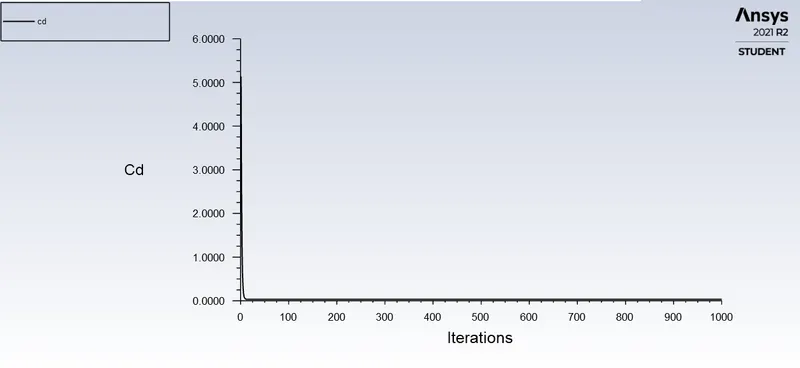
Drag coefficent
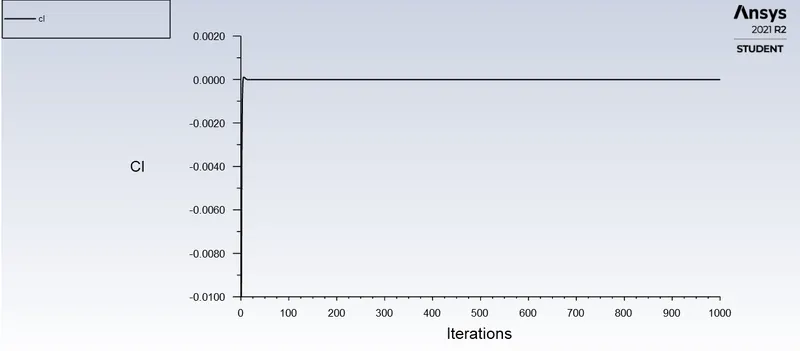
Lift force
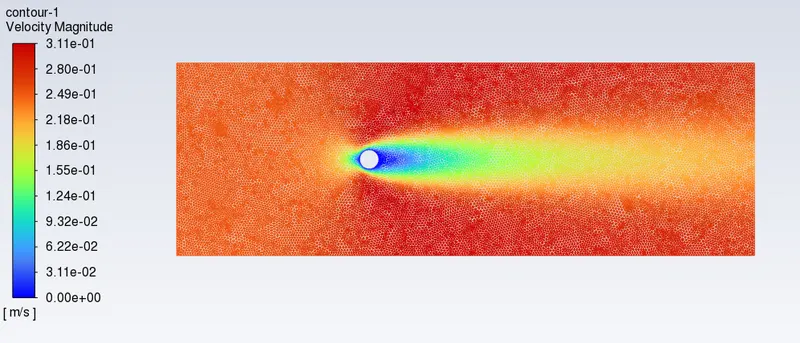
velocity contour
Steady case for Re= 100
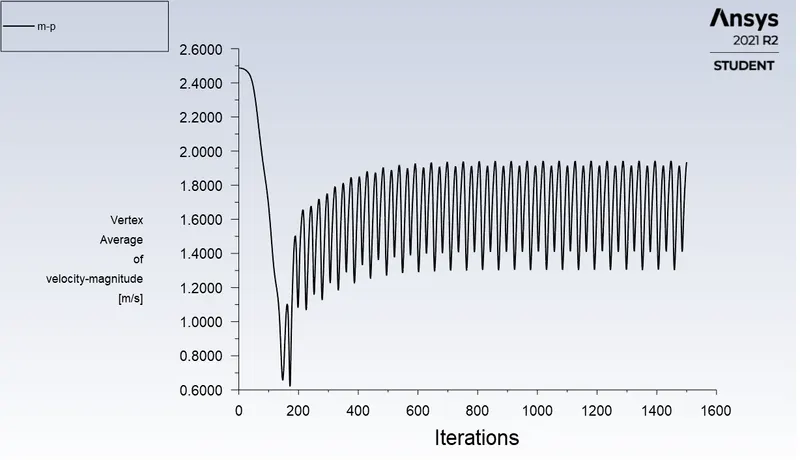
Vortex shedding behind the cylinder using the point
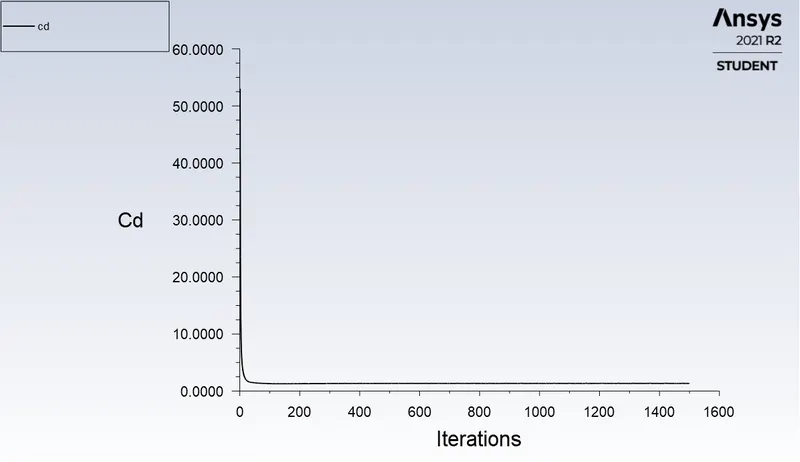
Drag coefficent
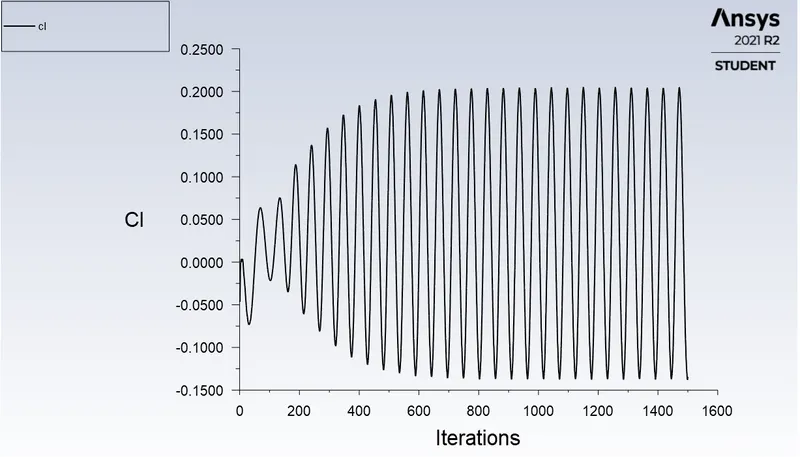
Lift force
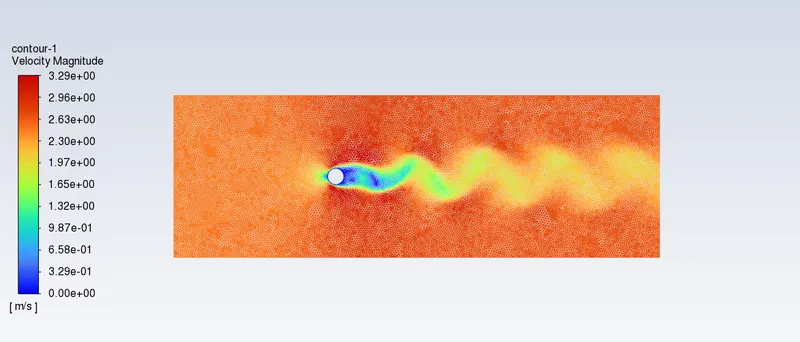
velocity contour
Steady case for Re= 1000
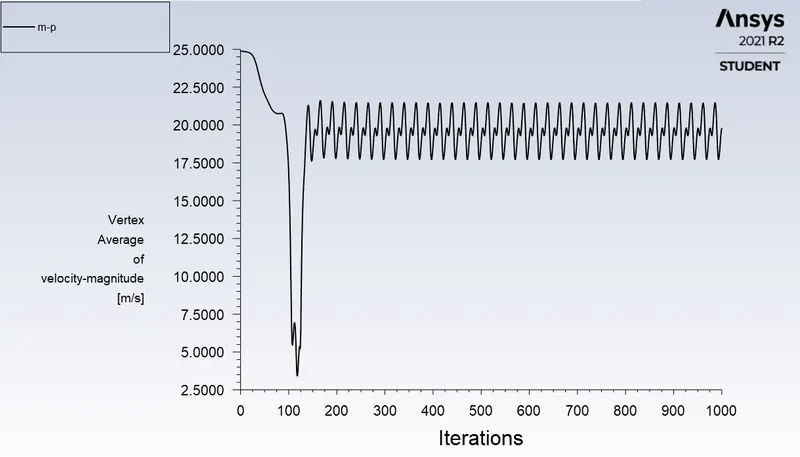
Vortex shedding behind the cylinder using the point
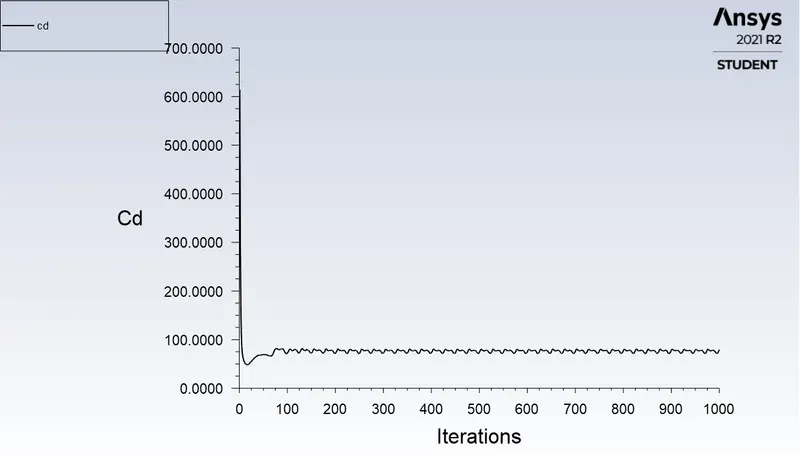
Drag coefficent
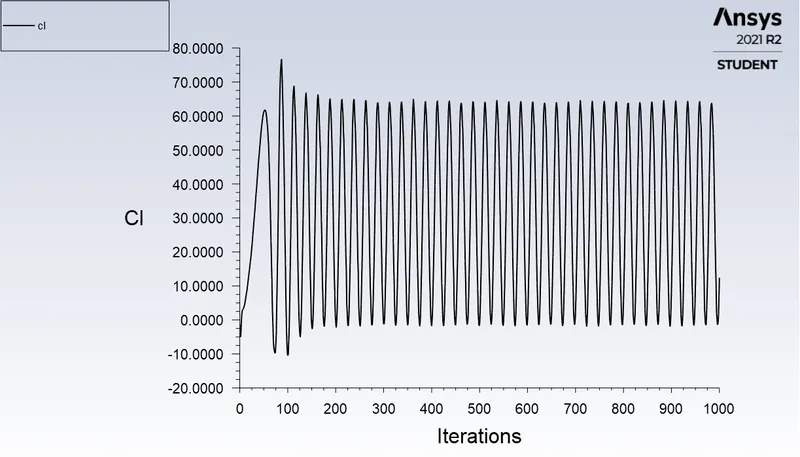
Lift force
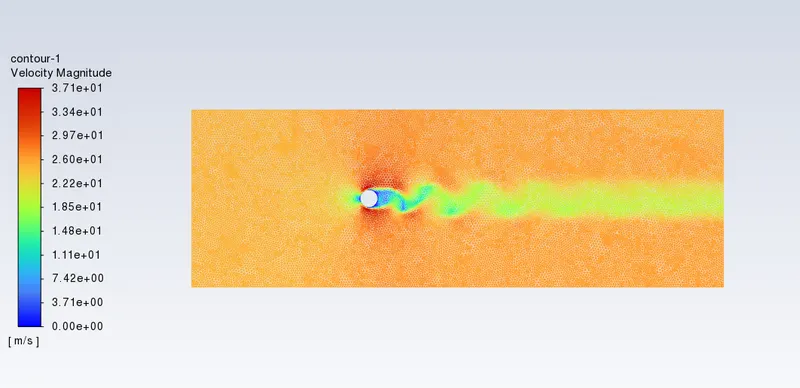
velocity contour
Steady case for Re= 10,000
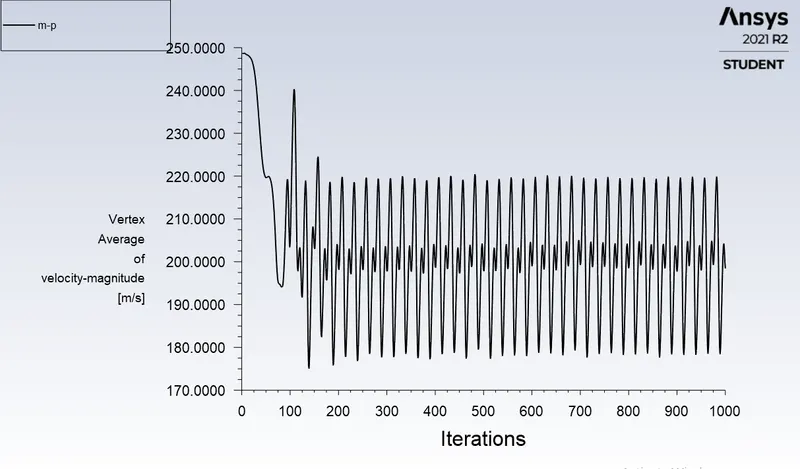
Vortex shedding behind the cylinder using the point
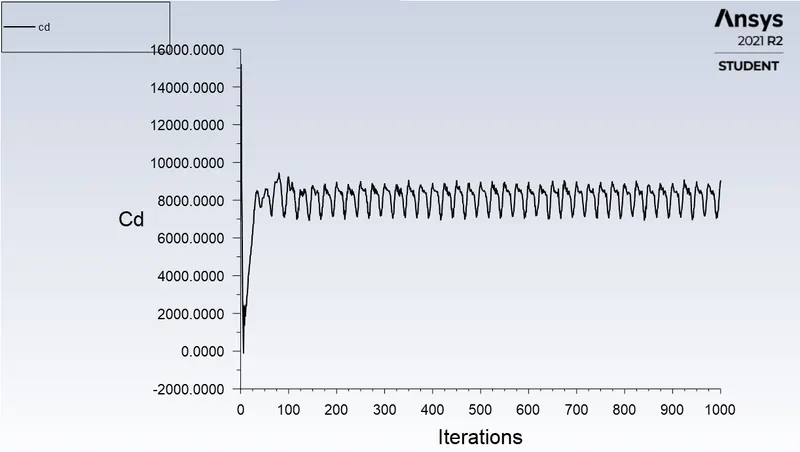
Drag coefficent
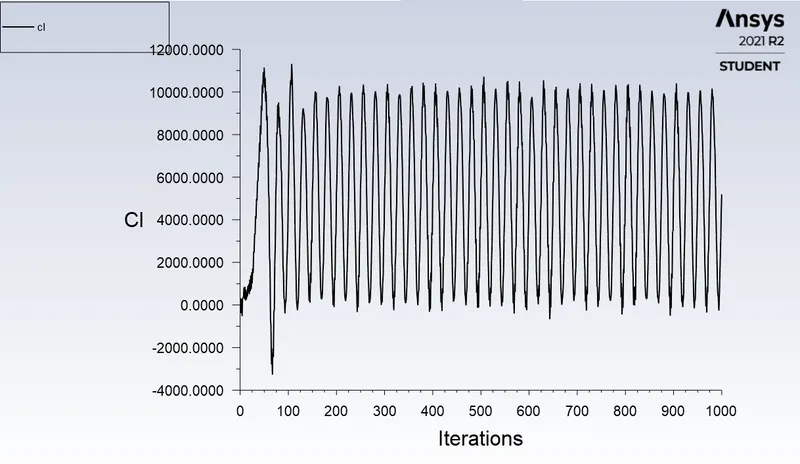
Lift force
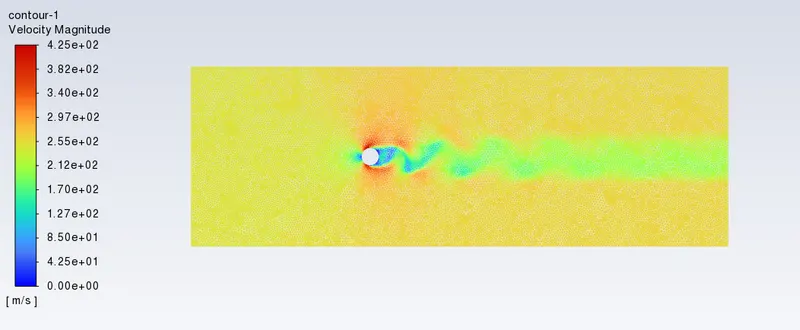
velocity contour
Steady case for Re= 1,00,000
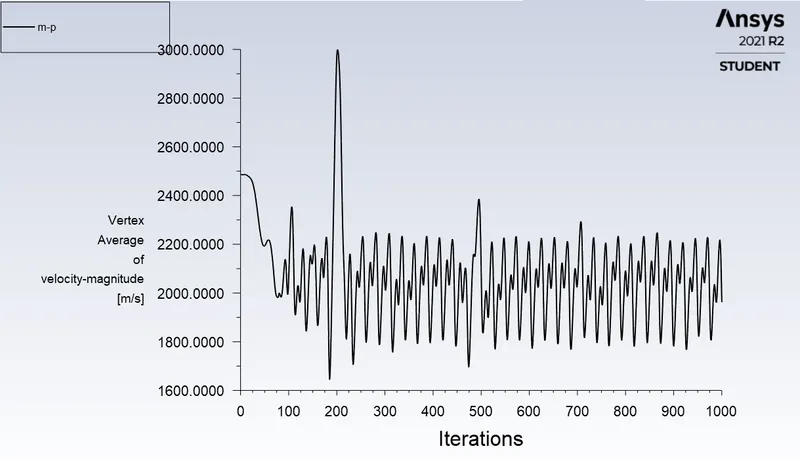
Vortex shedding behind the cylinder using the point
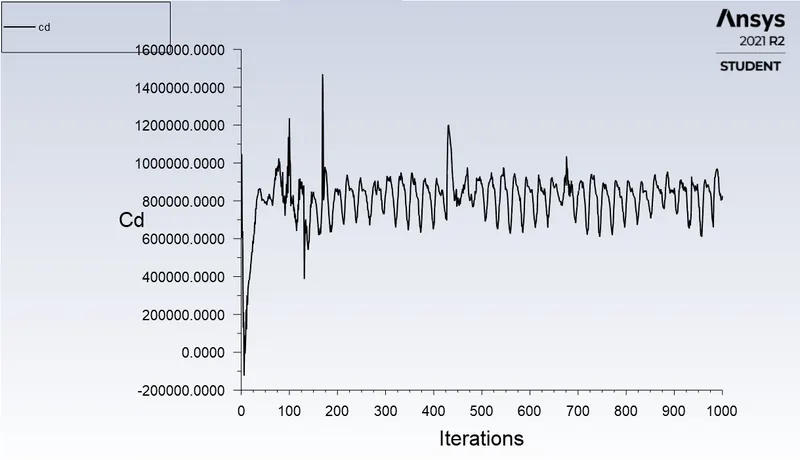
Drag coefficent
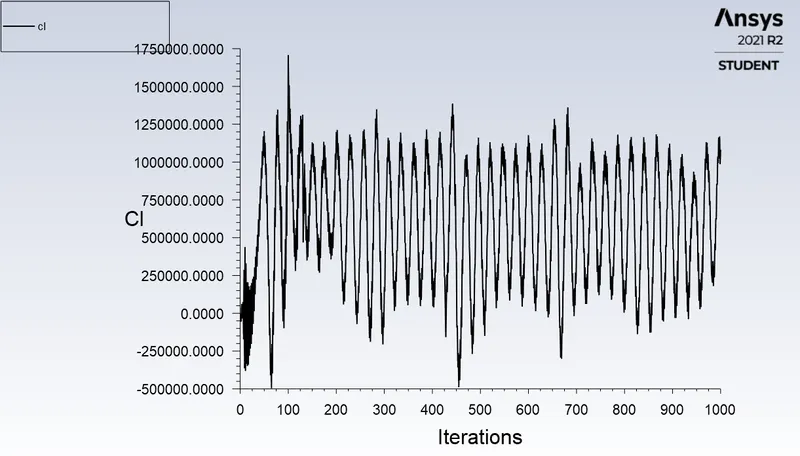
Lift force
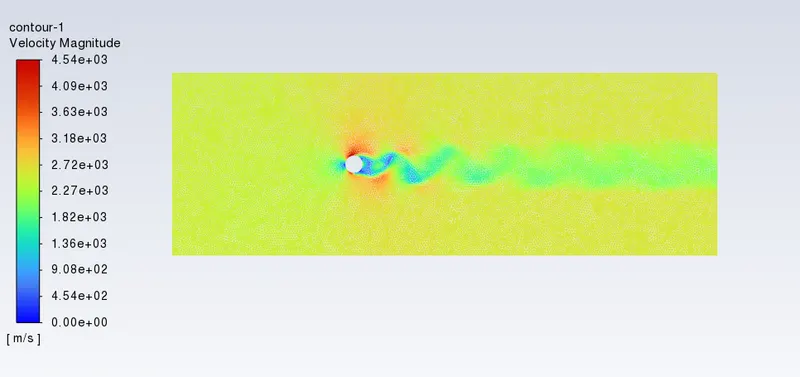
velocity contour
Discuss the effect of Reynolds number on the coefficient of drag. [ Results should be validated with any standard literature and error should be within 5 %]
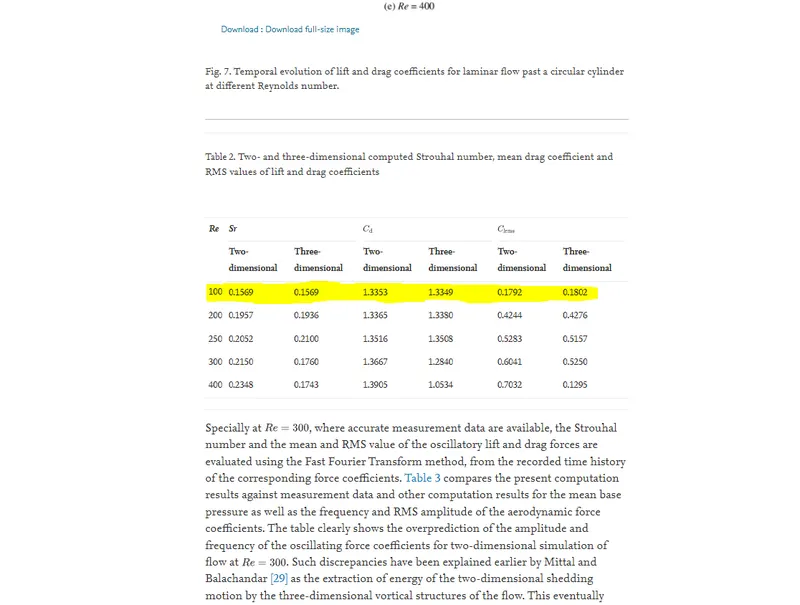
Reference Research Paper:- https://www.sciencedirect.com/science/article/pii/S0307904X08000243
coefficient of drag
| Reynolds number | Standard literature | Simulation | error |
| 100 | 1.3353 | 1.3446851 | 0.7% |
Effect of Reynolds number on the coefficient of drag
| Reynolds number | Velocity m/s | coefficient of drag | Lift force |
| Re = 10 | 0.25 | 3.323905 | -0.0010525335 |
| Re = 100 | 2.5 | 1.3451576 | 0.099114695 |
| Re = 1000 | 25 | 0.79450536 | 0.12417937 |
| Re = 10,000 | 250 | 0.90531319 | 0.51943049 |
| Re = 1,00,000 | 2500 | 0.82698375 | 1.0819452 |