Week 2 - Converging diverging nozzle
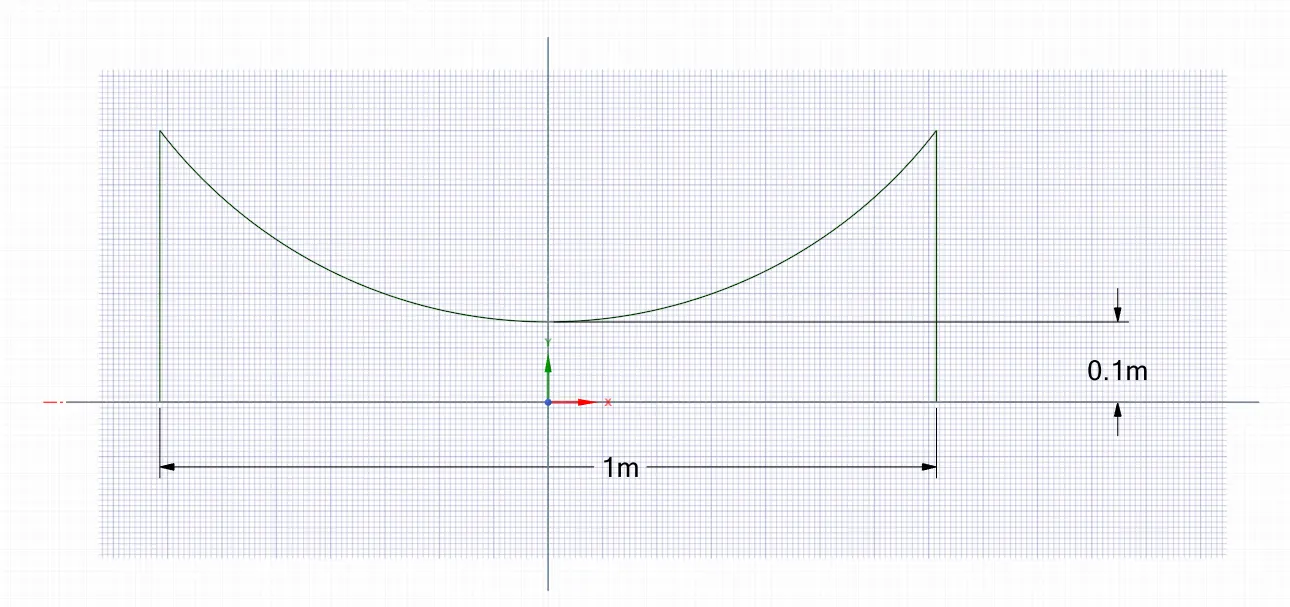
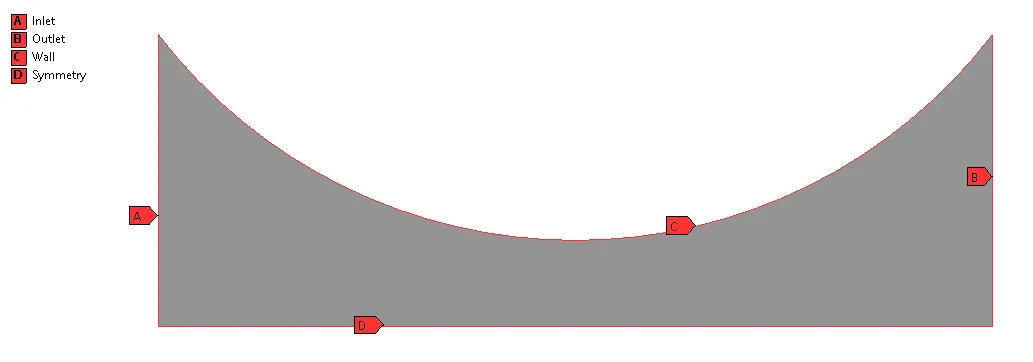
Task: Consider the converging-diverging nozzle below with the dimensions.
For the following boundary conditions,
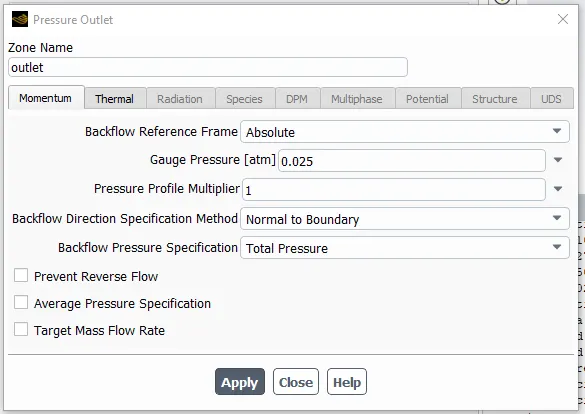
- At Inlet, Pressure = 1atm and Temperature = 300K. The outlet pressure= 0.027 atm.
- In the operating conditions, consider the reference pressure to be zero.
Plot:
- The pressure, velocity and temperature variations across the domain
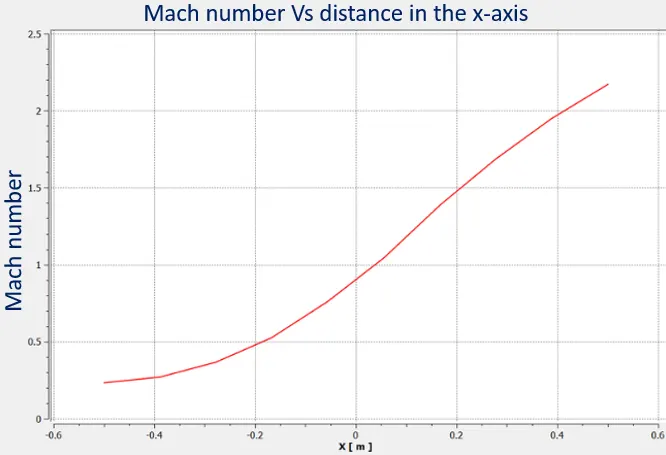
- The variation of Mach number across the domain and at what distance from the inlet does the flow become supersonic.
Solution:
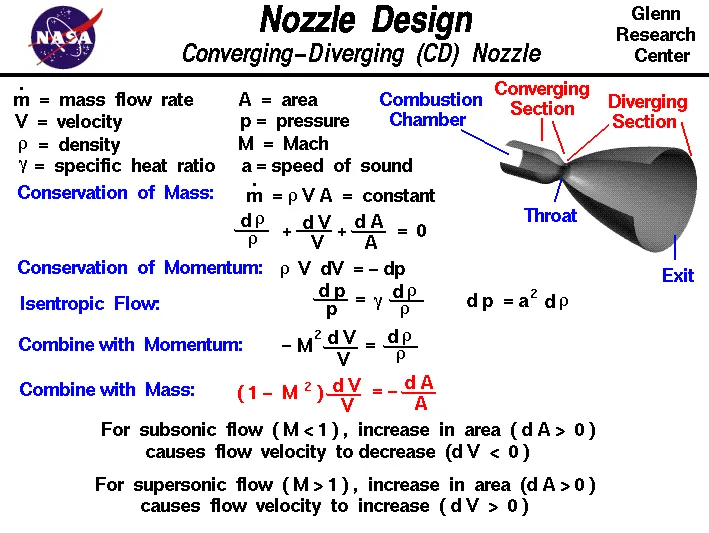
Theory: Convergent Divergent nozzle
A nozzle is a relatively simple device, just a specially shaped tube through which hot gases flow. Ramjets and rockets typically use a fixed convergent section followed by a fixed divergent section for the design of the nozzle. This nozzle configuration is called a convergent-divergent, or CD, nozzle. In a CD nozzle, the hot exhaust leaves the combustion chamber and converges down to the minimum area, or throat, of the nozzle. The throat size is chosen to choke the flow and set the mass flow rate through the system. The flow in the throat is sonic which means the Mach number is equal to one in the throat. Downstream of the throat, the geometry diverges, and the flow is entropically expanded to a supersonic Mach number that depends on the area ratio of the exit to the throat. The expansion of a supersonic flow causes the static pressure and temperature to decrease from the throat to the exit, so the amount of the expansion also determines the exit pressure and temperature. The exit temperature determines the exit speed of sound, which determines the exit velocity. The exit velocity, pressure, and mass flow through the nozzle determine the amount of thrust produced by the nozzle.
Procedure:
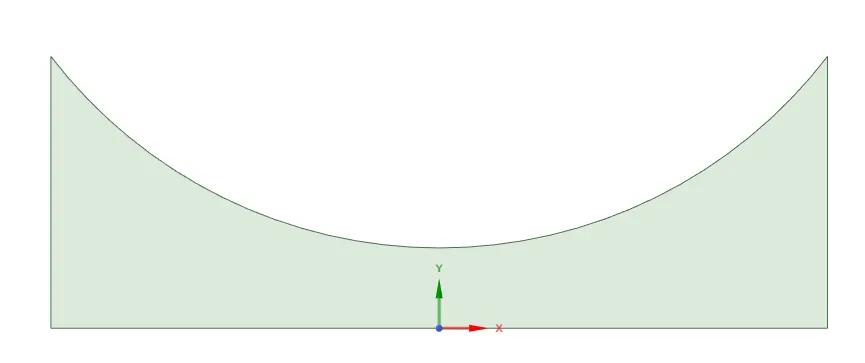
2D Model created in SpaceClaim as below.
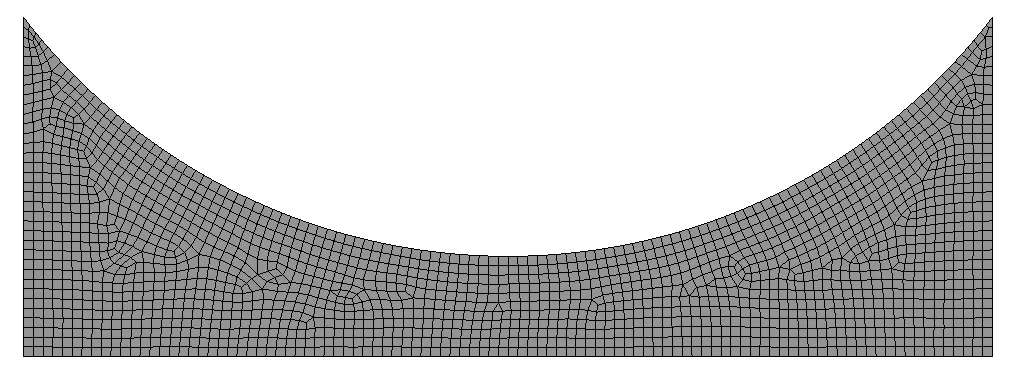
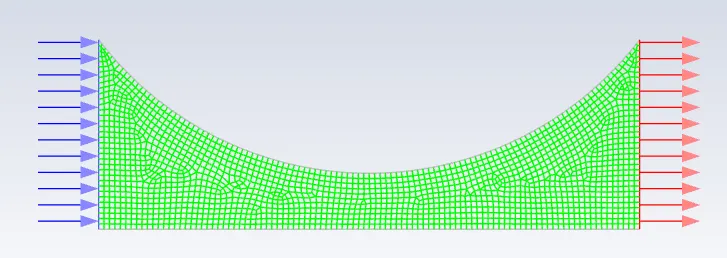
Meshing:-
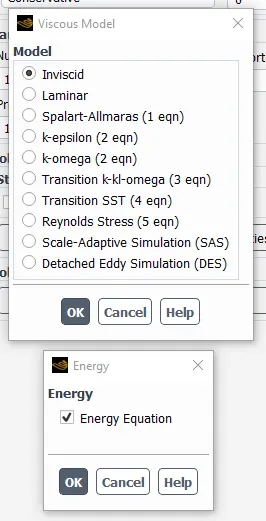
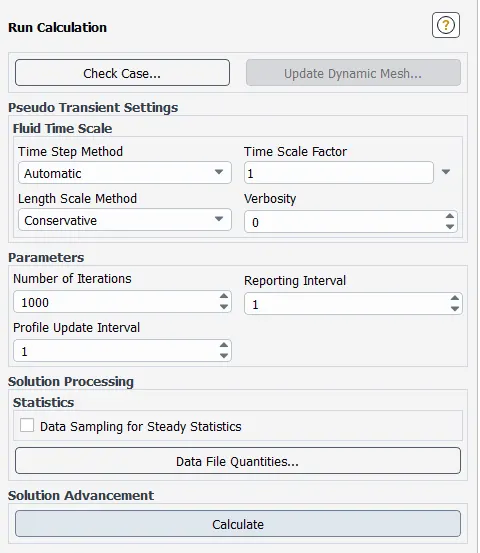
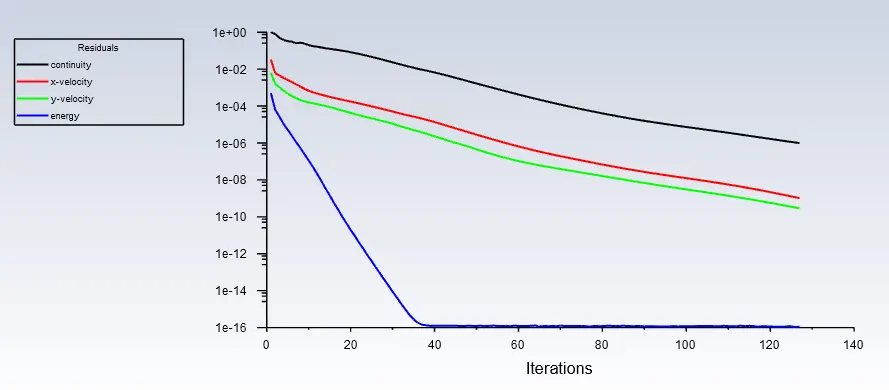
Fluent setup:-
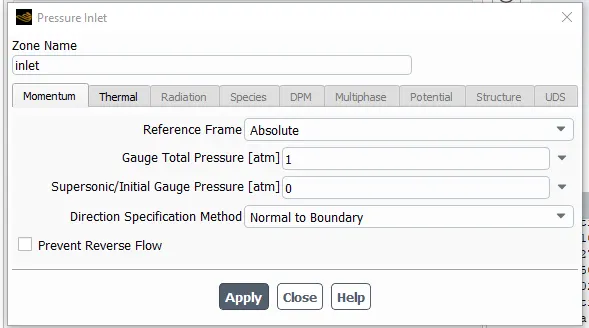
Temperature @ 300K,
Plots:
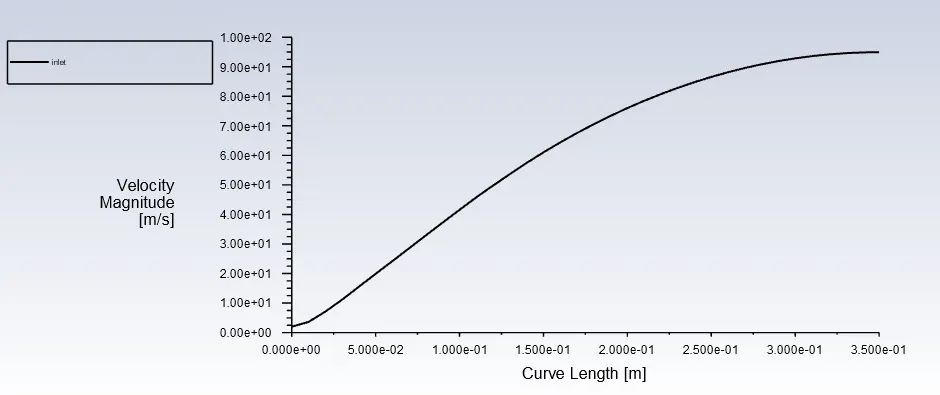
Velocity Plot:
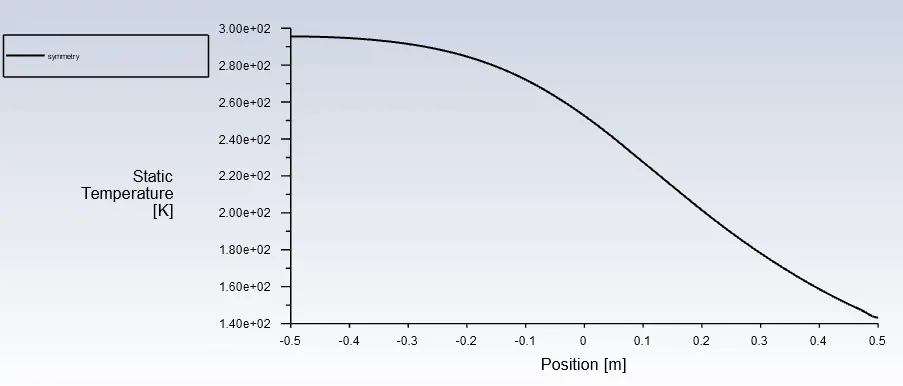
Temperature Plot:
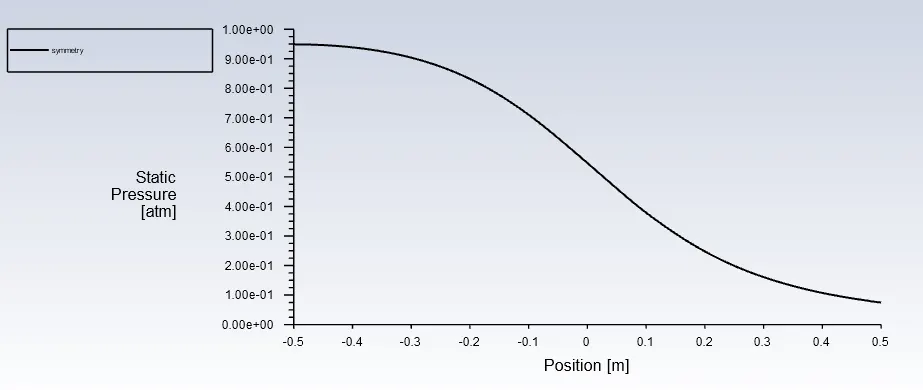
Pressure Plot:
Mach number plot:
Results & Conclusion:
1. Velocity increases throughout the nozzle inlet and at the neck of the nozzle velocity increases rapidly. At a distance of 0.5 meters from the inlet, velocity attains supersonic speed.
2. Temperature and pressure are higher at the inlet. gradually decrease along the length of the nozzle.
3. Contour plots and line graphs for Temperature, pressure, velocity & Mach number are plotted for the changes in the characteristics of flow in Steady-state simulation and Density-based solver.