Week 2 - Converging diverging nozzle
Aim
- To simulate a flow through a converging-diverging nozzle
- Inlet pressure as 1 bar and temperature as 300 k
- Outlet pressure as 0.027 bar
Introduction
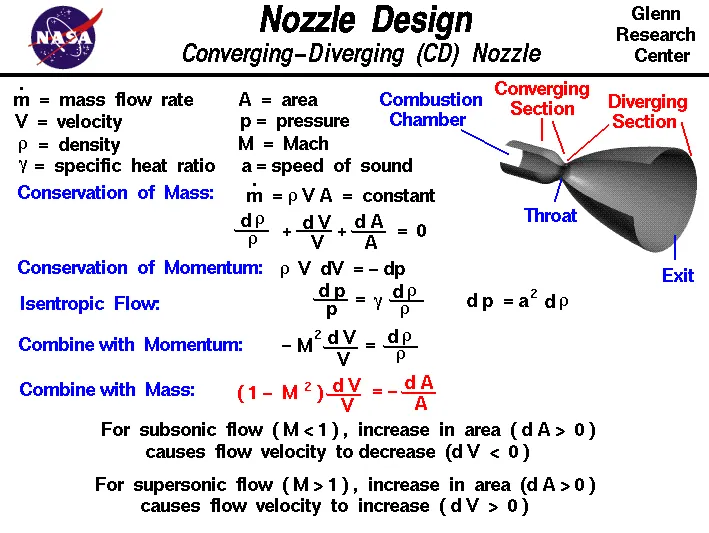
A nozzle is a relatively simple device, just a specially shaped tube through which hot gases flow. Ramjets and rockets typically use a fixed convergent section followed by a fixed divergent section for the design of the nozzle. This nozzle configuration is called a convergent-divergent, or CD, nozzle. In a CD nozzle, the hot exhaust leaves the combustion chamber and converges down to the minimum area, or throat, of the nozzle. The throat size is chosen to choke the flow and set the mass flow rate through the system. The flow in the throat is sonic which means the Mach number is equal to one in the throat. Downstream of the throat, the geometry diverges and the flow is isentropically expanded to a supersonic Mach number that depends on the area ratio of the exit to the throat. The expansion of a supersonic flow causes the static pressure and temperature to decrease from the throat to the exit, so the amount of the expansion also determines the exit pressure and temperature. The exit temperature determines the exit speed of sound, which determines the exit velocity. The exit velocity, pressure, and mass flow through the nozzle determines the amount of thrust produced by the nozzle.
Ramjets, scramjets, and rockets all use nozzles to accelerate hot exhaust to produce thrust as described by Newron's third law of motion. The amount of thrust produced by the engine depends on the mass flow rate through the engine, the exit velocity of the flow, and the pressure at the exit of the engine. The value of these three flow variables are all determined by the nozzle design.
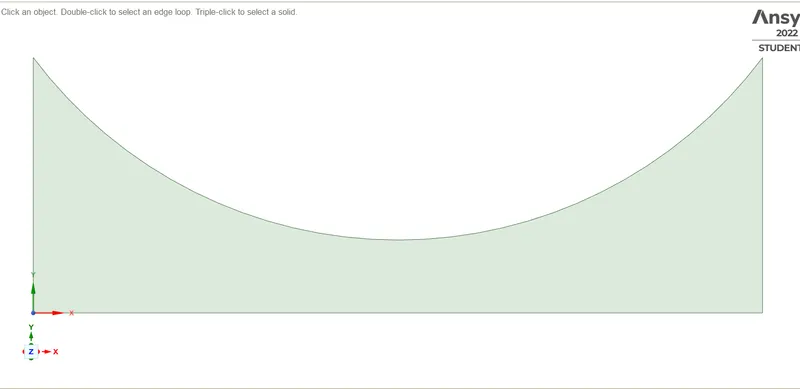
Geometry
Mesh
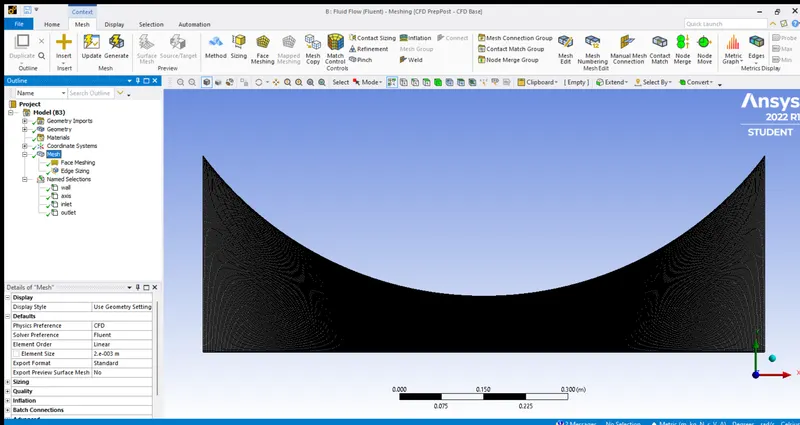
- Face meshing is enabled
- Named the boundaries as Inlet, Outlet, Axis and wall
- Edge sizing is also enabled with BIAS option enabled and Bias factor is set to 10
- A mesh size of 2 mm is given and for edge sizing it is 1 mm
Setup
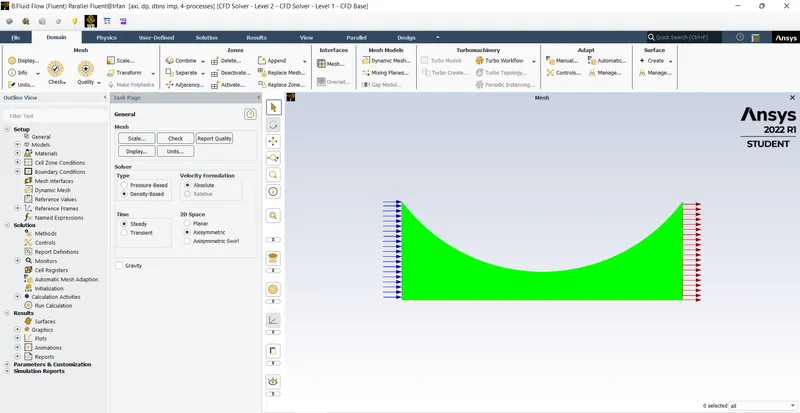
- Density based
- Axis symmetric
- Energy option is enabled
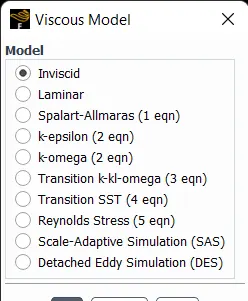
- Inviscid flow
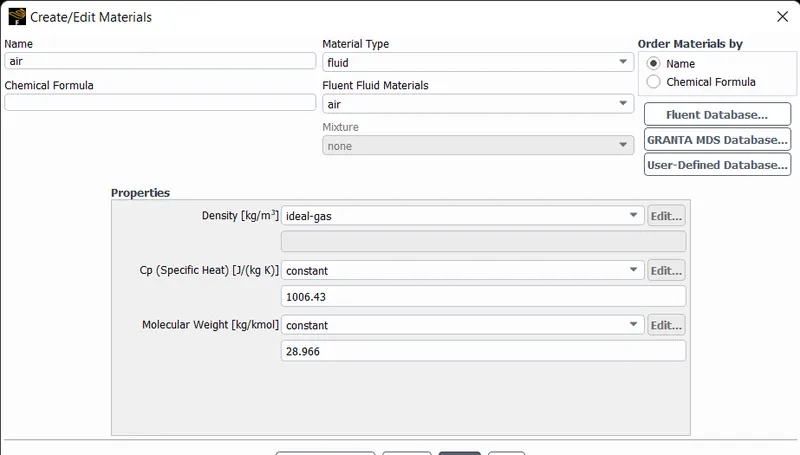
- Material set to Ideal Gas air
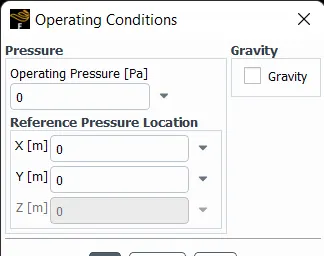
- In operating conditions the pressure is set to 0 to remove round off errors which common in density based solvers
- A standard initialisation from inlet is done
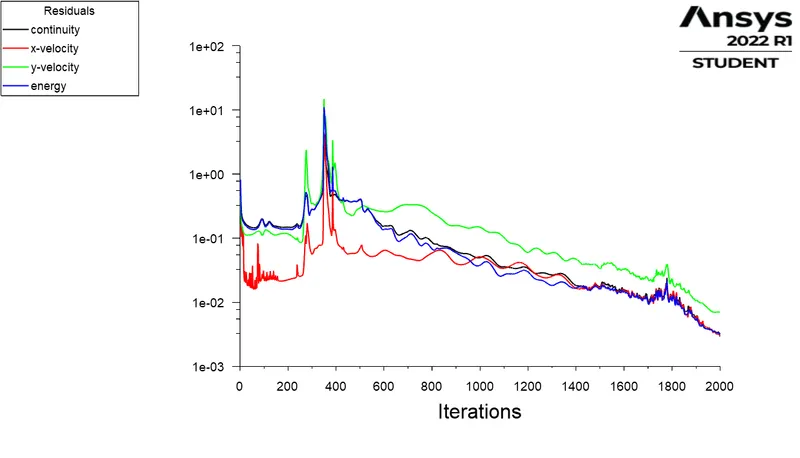
- Run for 2000 iterations
Results
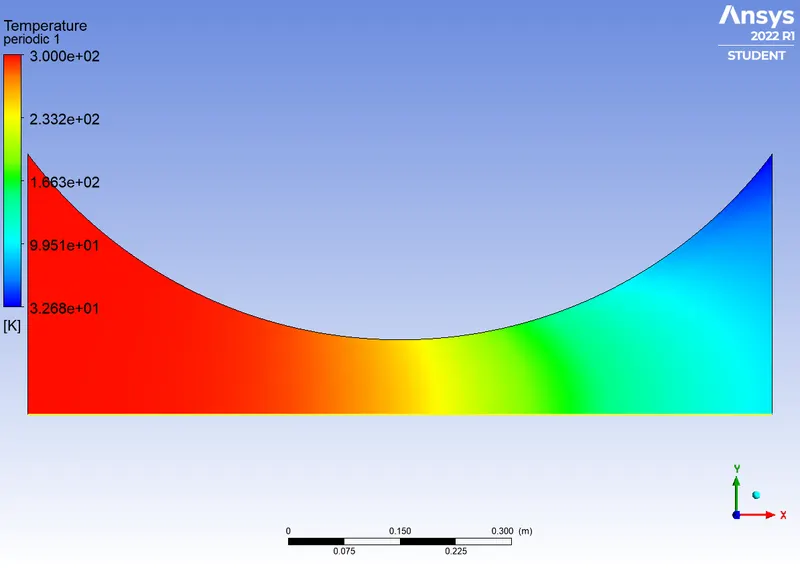
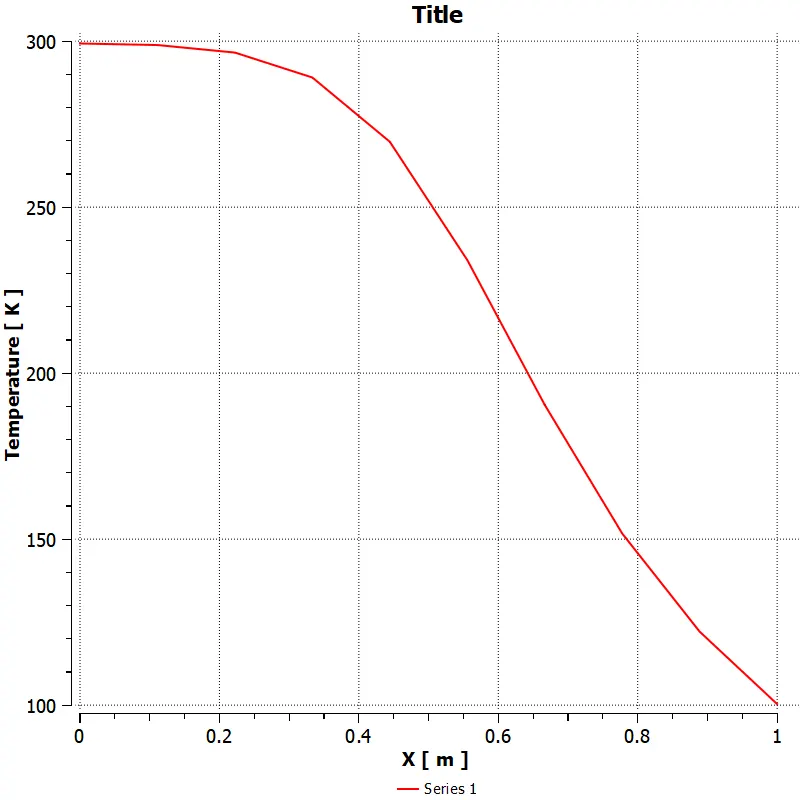
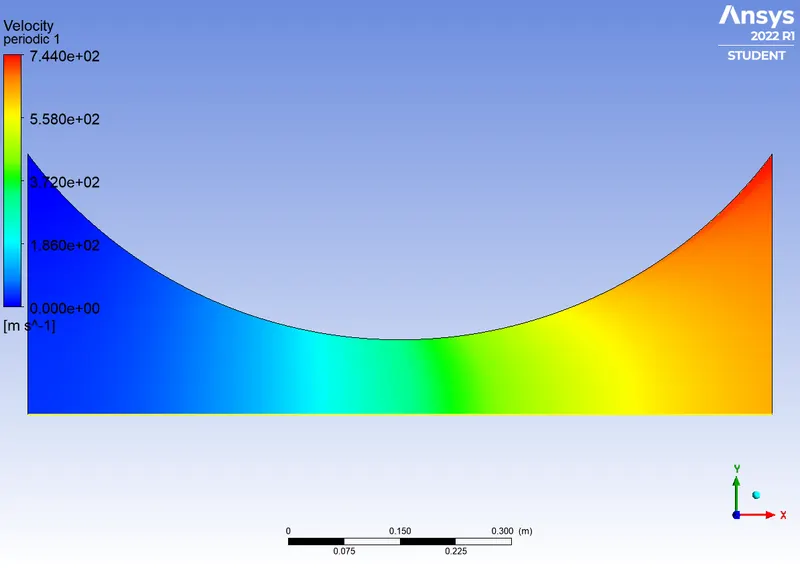
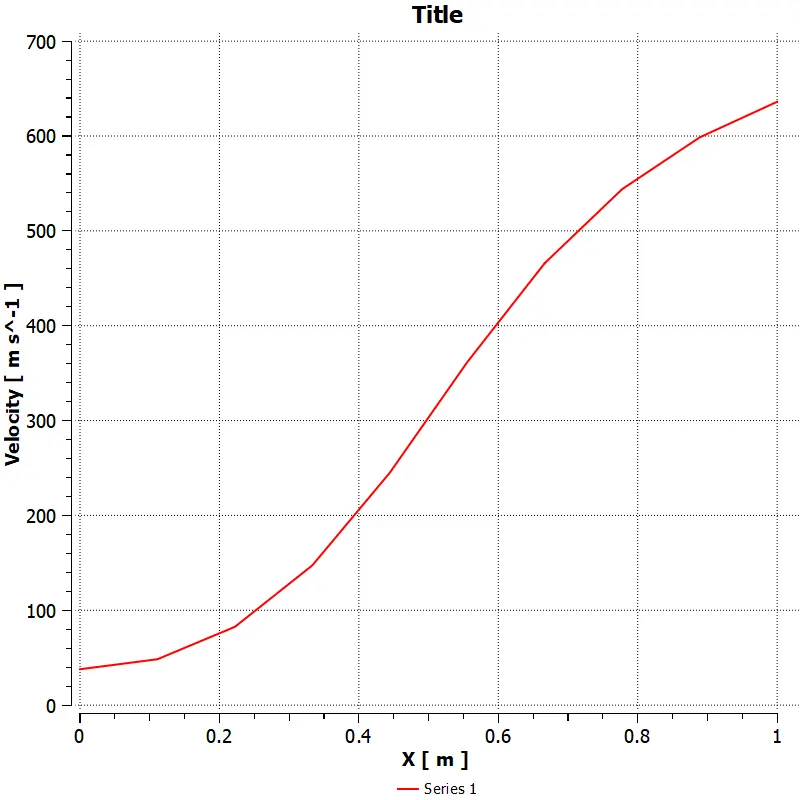
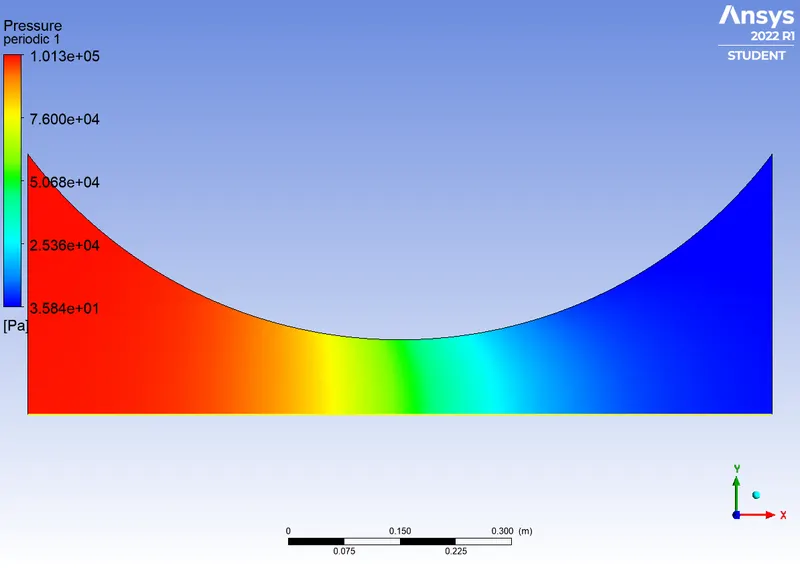
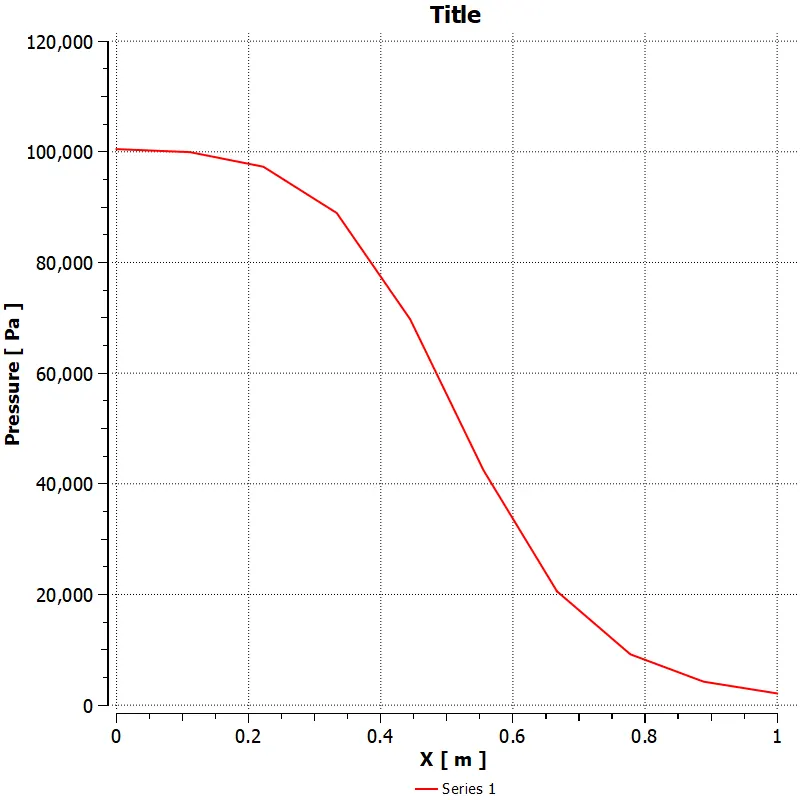
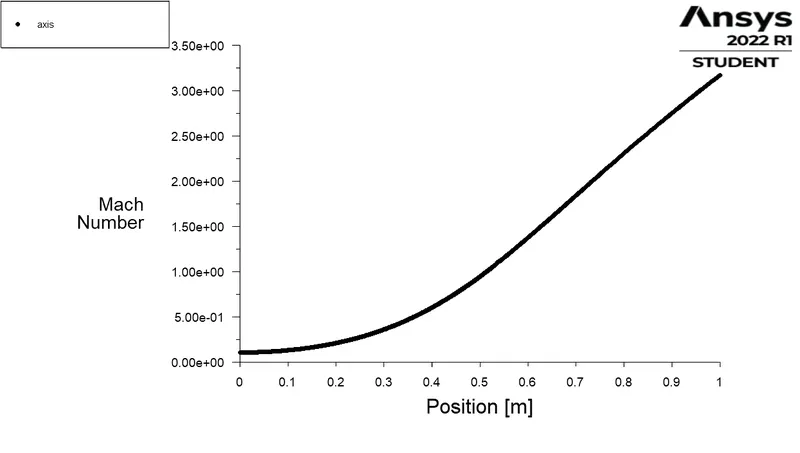
- Contours and variations of flow characteristics along the length of nozzle plots is generated here
Temperature
Velocity
Pressure
Mach number
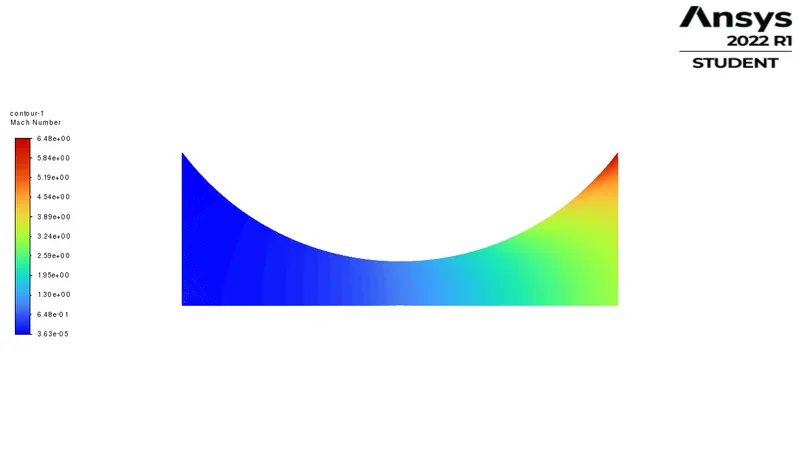
- As seen from the contours the velocity gets increased along the length of nozzle
- Temperature and pressure is higher at inlet
- As mentioned in introduction, flow becomes supersonic at a distance of 500 mm from inlet this can be varified by looking the mach number plot as it shows the mach nuimber as 1 at 0.5 metres from inlet
Conclusions
- Run a steady state simulation on converging diverging nozzle
- Extracted necessory contours and plotted the variation of flow charecteristics like pressure , temperature, velocity and mach number