Week 2 - Converging diverging nozzle
Aim: To simulate the flow through a converging-diverging nozzle with the given boundary conditions.
Theory:
A nozzle is a tube of varying cross-sectional area (usually axisymmetric) aiming at increasing the speed of an outflow and controlling its direction and shape.
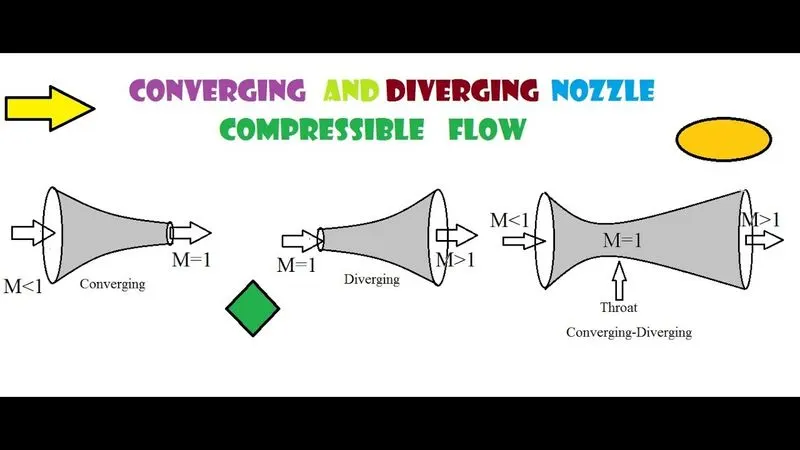
A Converging-diverging nozzle also known as C-D nozzle is a type of nozzle that consists of three sections: The converging section(Where the flow is usually subsonic), the throat(where the Mach number is usually around 1), and the diverging section(Where the Mach number usually exceeds the unity).
C-D nozzles find their applications in water supply pumps, formula car intake systems and jet engines for providing sufficient thrust to propel at high speeds mostly in supersonic jets or in ramjets, scramjets, and rockets to accelerate hot exhaust to produce thrust.
Problem Statement:
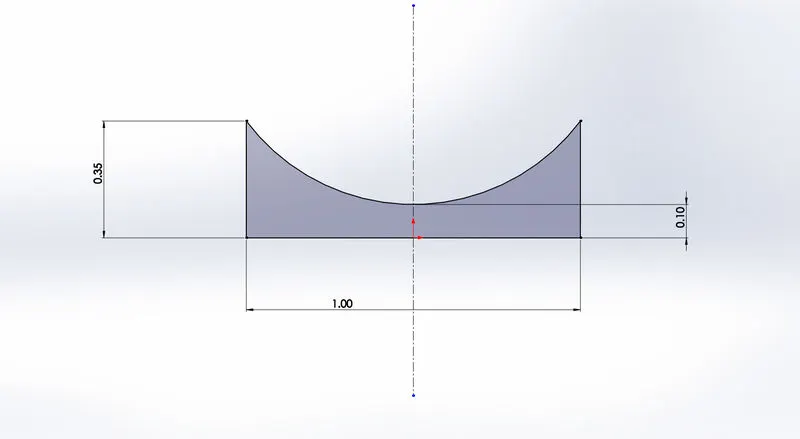
The task here consists of simulating the flow of air through a C-D nozzle with the dimensions given in the figure below:
The boundary conditions are as follows:
- At Inlet, Pressure = 1atm and Temperature = 300K. The outlet pressure= 0.027 atm.
- In the operating conditions, consider the reference pressure to be zero.
Procedure:
This simulation is done using Ansys fluent software.
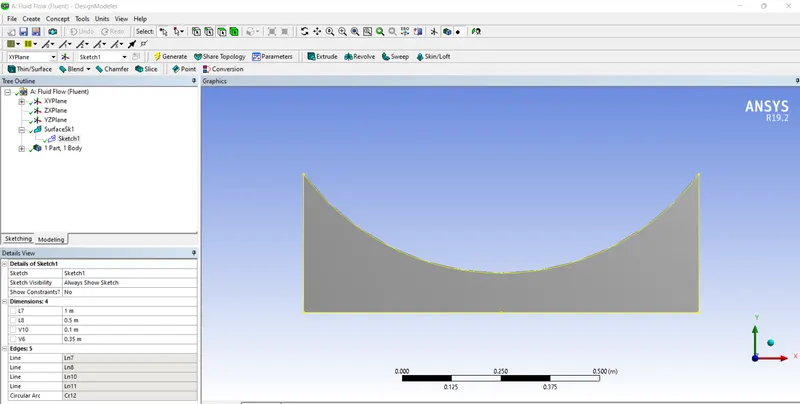
- First of all the geometry is drafted as per the given dimensions and converted into a surface from the concept tab.
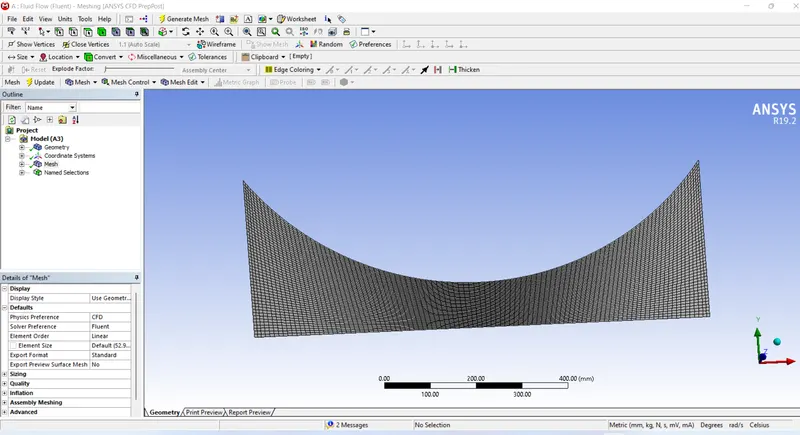
- Then comes the turn of the meshing where the converted surface has been properly meshed:
- After meshing, the different edges of the meshed surface are selected for named selections(Inlet, Outlet, Wall, and Axis)
- In the Setup section the different parameters are set as following: Dimension (2D),2D space: Axisymmetric, Options: Double-precision, Processing operations: Parallel, Solver processes: 4
MODEL:
-Energy equation:on
-Viscosity: Inviscid
-Material: Air ideal gas
-Solver type:density-based - Now the boundary conditions are set at the inlet and outlet: At the inlet, the pressure is set at 1 atm(10125 Pa) and temperature at 300K.:
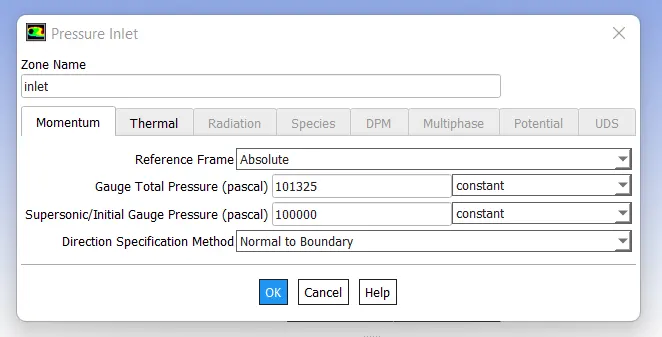
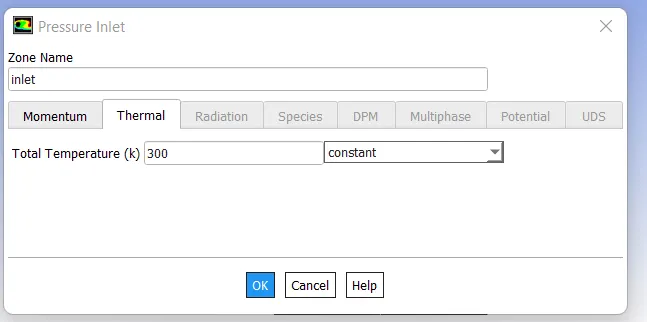
At the outlet, the pressure is set at 0.027 atm (2735.775 Pa) and for the operating conditions, the reference pressure is set to zero.
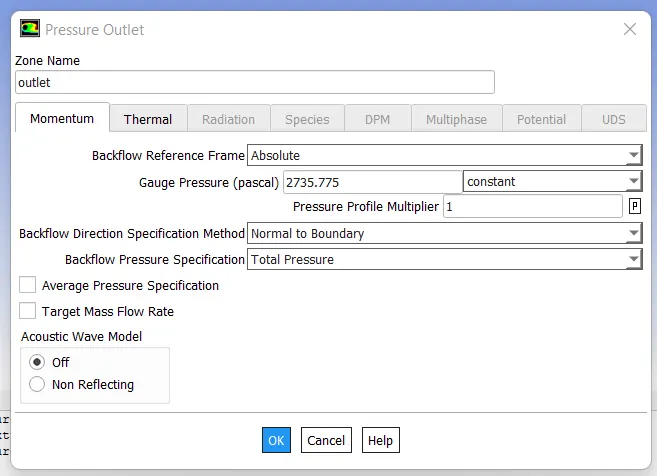
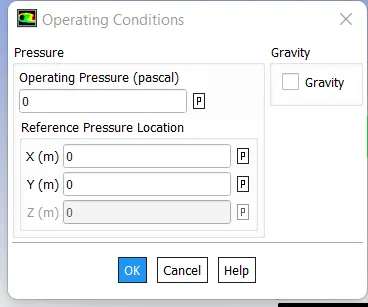
- In the solution section, the initialization is standard and computations are performed from the inlet.
- Calculations are run with 1500 iterations:
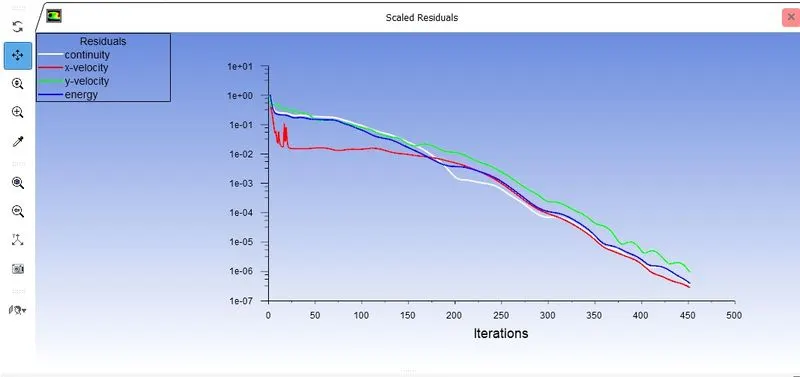
- In the results section, the pressure contour is inserted:
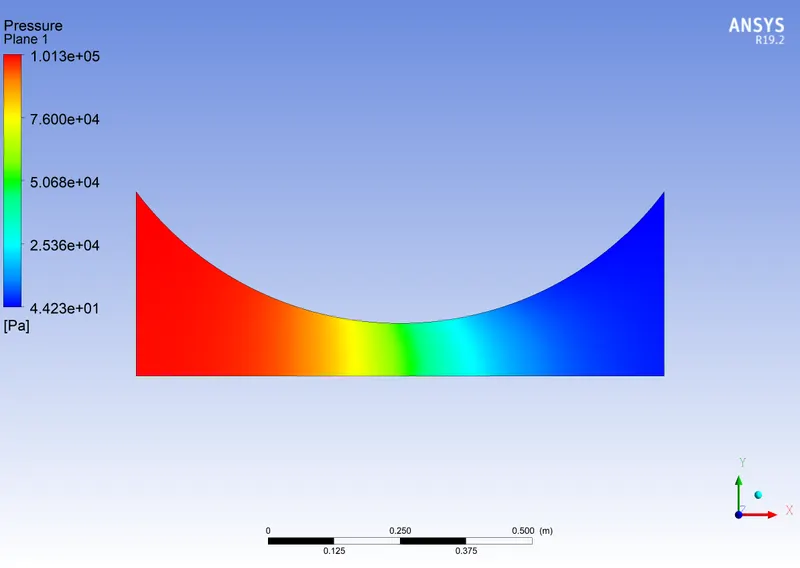
From the above figure, we can conclude that the pressure in a C-D nozzle rises in the converging section and drops in the diverging section.
- Similarly, the velocity contour is inserted:
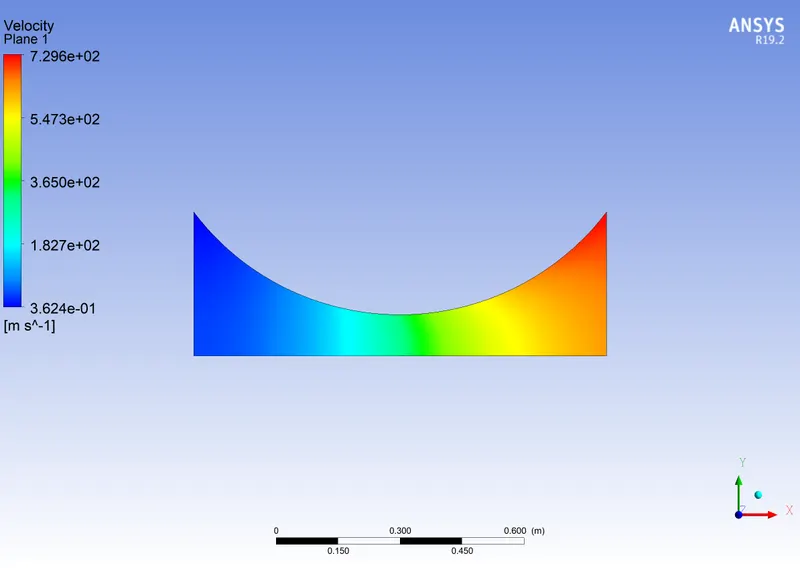
From the velocity contour, it is clear that the velocity of the flow rises in the diverging section.
- And finally, the Mach number contour is inserted:
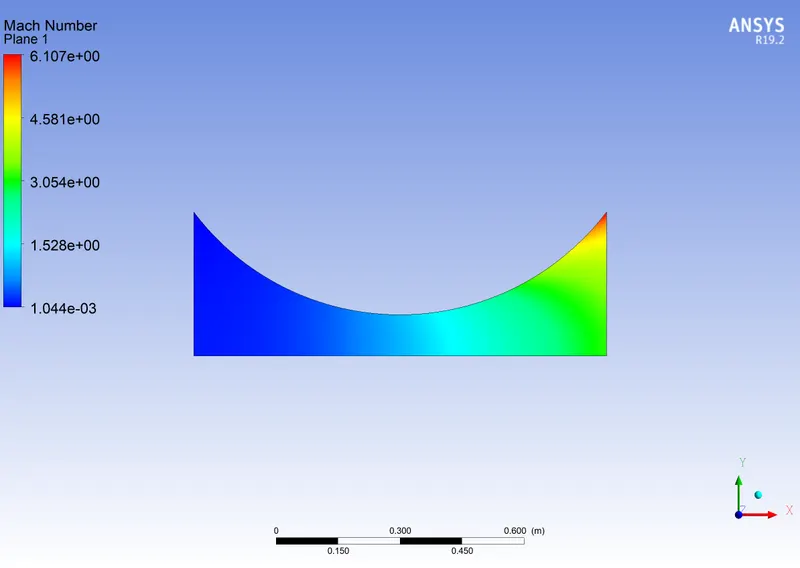
From the above contour, we can conclude that the flow is subsonic in the converging section(M<1), sonic in the diverging section(M around 1), and supersonic or hypersonic in the diverging flow(M>1).
Results:
From the different contours, we can say that in the diverging section of a C-D nozzle, the velocity and the Mach number rise whereas the pressure drops.