Week 2 Challenge : Surface meshing on a Pressure valve
Objective: Pre_processing of a Pressure-Valve using ANSA, with the following specifications:
Case 1: Target length = 5 mm.
Case 2: Target Length = 3 mm.
Case 3: Target Length = 1 mm.
Element Type = Tria (For each case)
Procedure: We follow the general steps of pre-processing which is as follows:
1. Topological Modifications/ Topo-Cleanup
2. Setting up Mesh parameters and Quality Criteria
3. Assigning Target Length and imploying Mesh.
TOPO CLEAN-UP
STEP 1: We import the geometry on ANSA. Check for Geometrical Errors from Checks Manager > Geometry. We can see the Errors are mostly Single Conns which are disconnected edges, also there are
cracked edges.
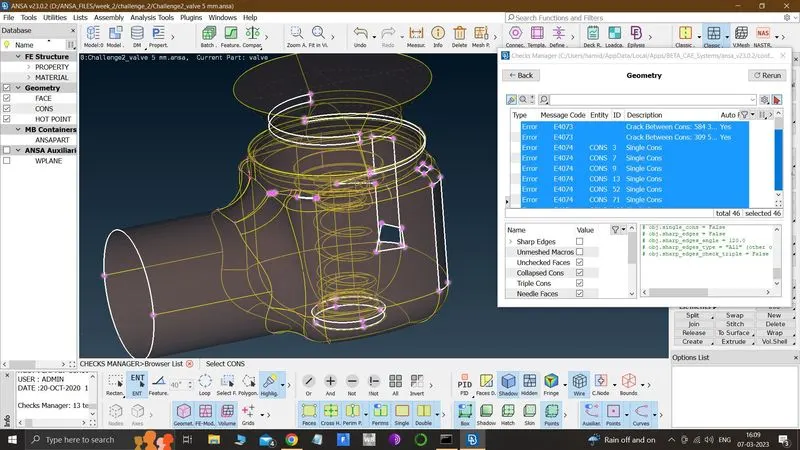
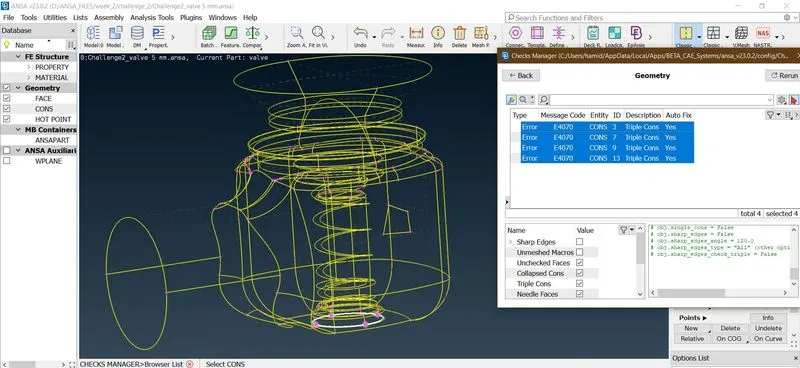
Step 2: Now we use NEW tool in Faces window which allows us to use surface patching algorithms like: Existing surface, Planar, Fitted and Coons. After patching all coons we are left with only one type of
error which is Tripple Coons, but as it was essential to join three surface at an edge, it is not treated like an Error.
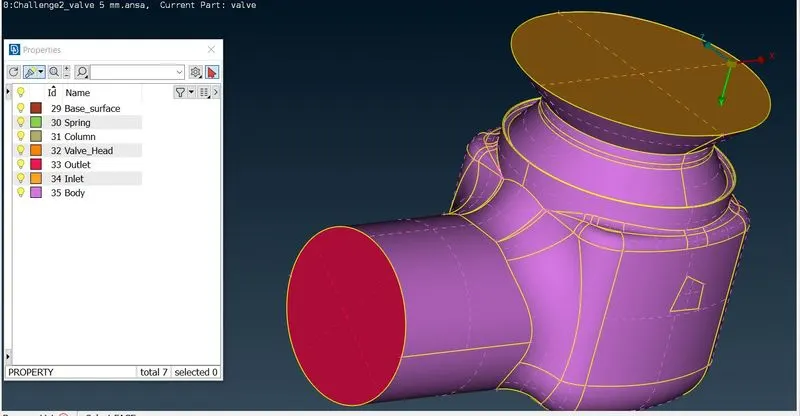
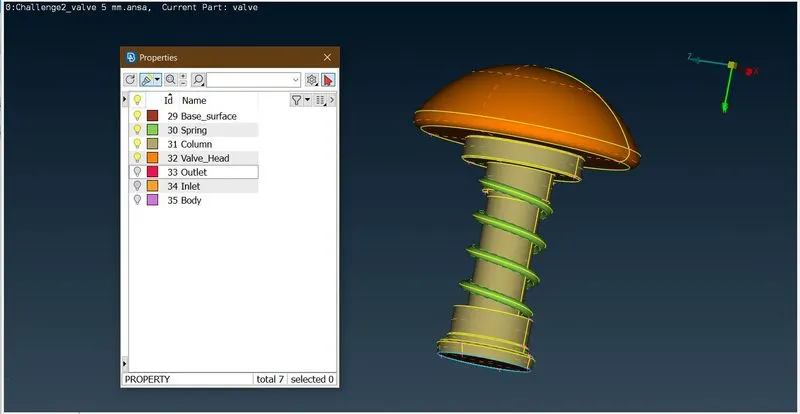
Step 3: Now we use PID MANAGER to assign PIDs to each component, this allows us to handle each part saperately.
MESHING THE MODEL
CASE 1: TARGET LENGTH = 5 MM
Step 1: We specify the Mesh Parameters and Quality Criteria as follows:
1. Min Length = 3 mm
2. Max Length = 7 mm
3. Target Length = 5 mm
4. Element type = Tria
5. Meshing algorithm = Spot Mesh
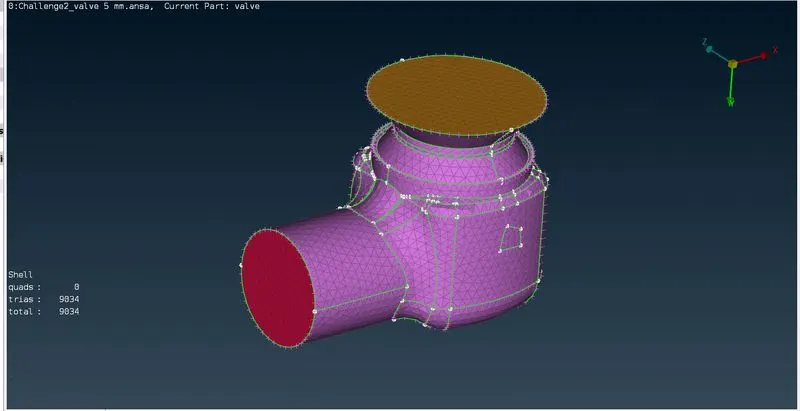
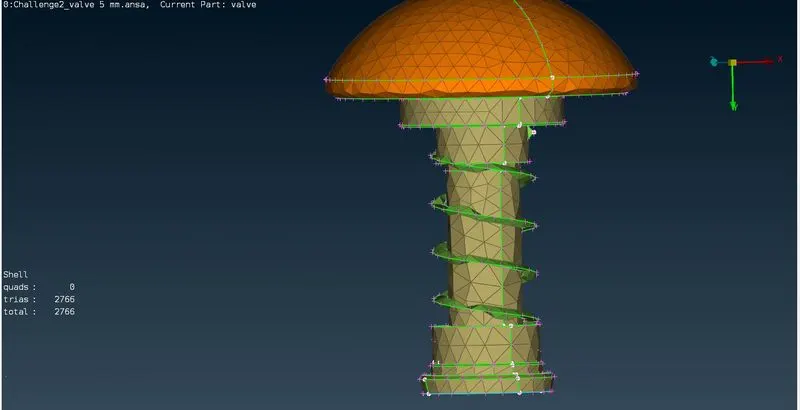
CASE 2: TARGET LENGTH = 3 MM
Step 1: We specify the Mesh Parameters and Quality Criteria as follows:
1. Min Length = 2 mm
2. Max Length = 4 mm
3. Target Length = 3 mm
4. Element type = Tria
5. Meshing algorithm = Spot Mesh
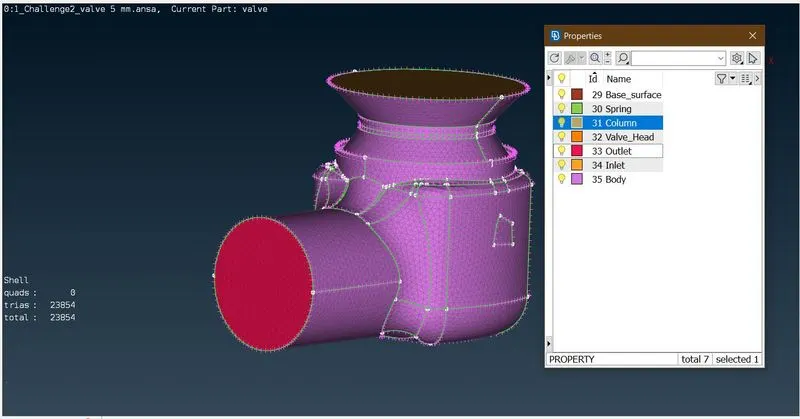
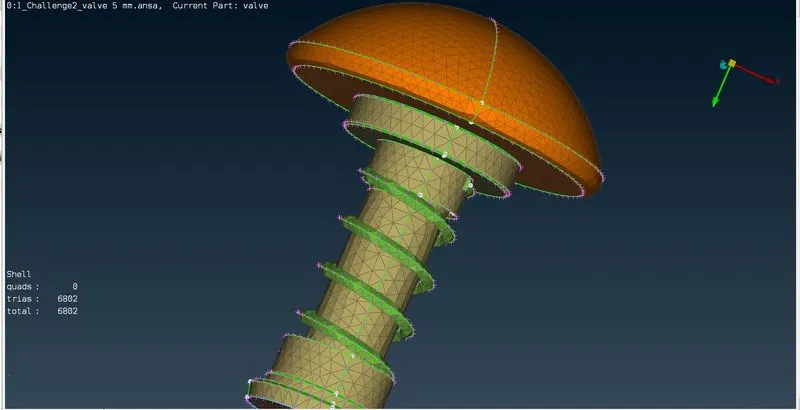
CASE 3: TARGET LENGTH = 1 MM
Step 1: We specify the Mesh Parameters and Quality Criteria as follows:
1. Min Length = 0.5 mm
2. Max Length = 2 mm
3. Target Length = 1 mm
4. Element type = Tria
5. Meshing algorithm = Spot Mesh
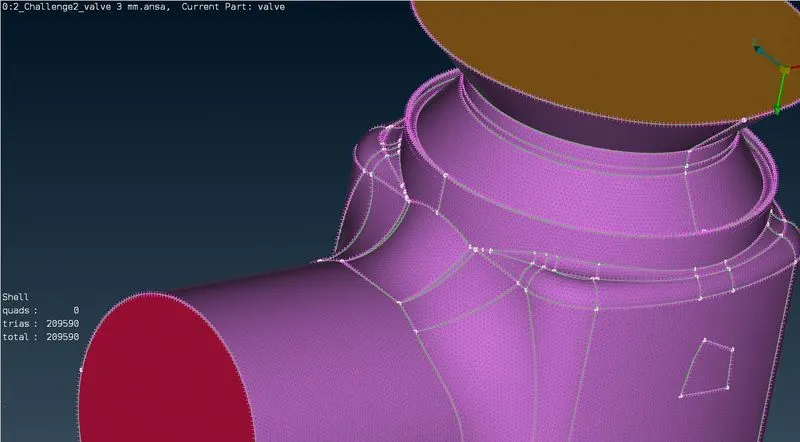
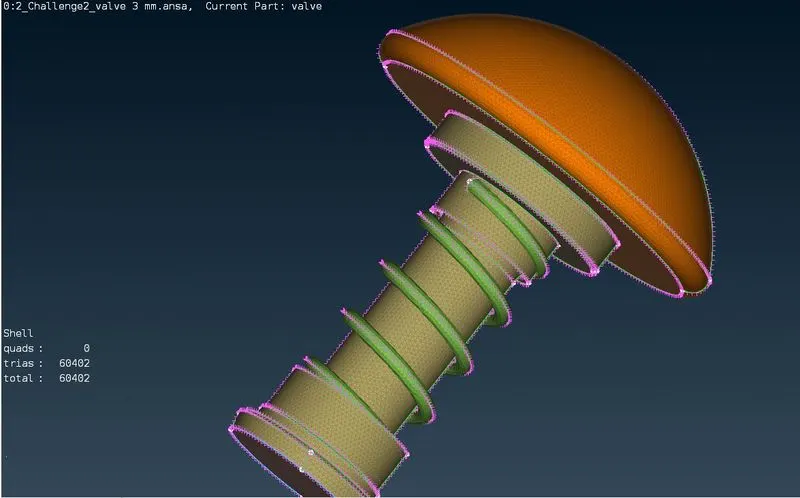
COMPARISION
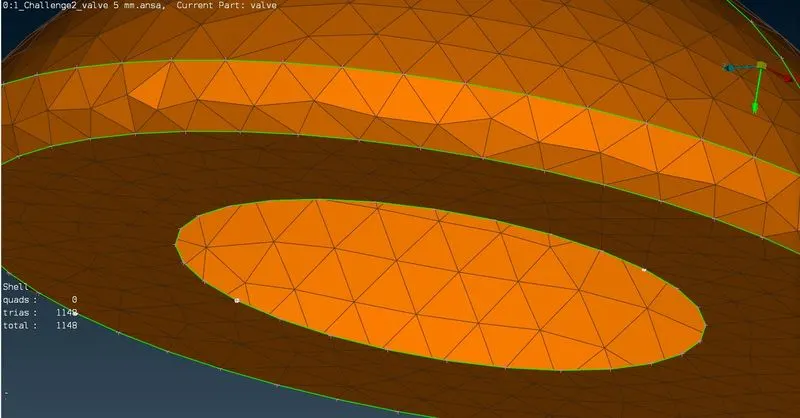
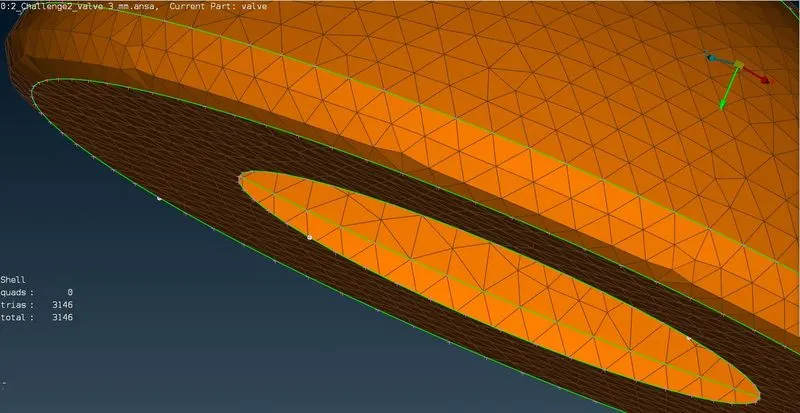
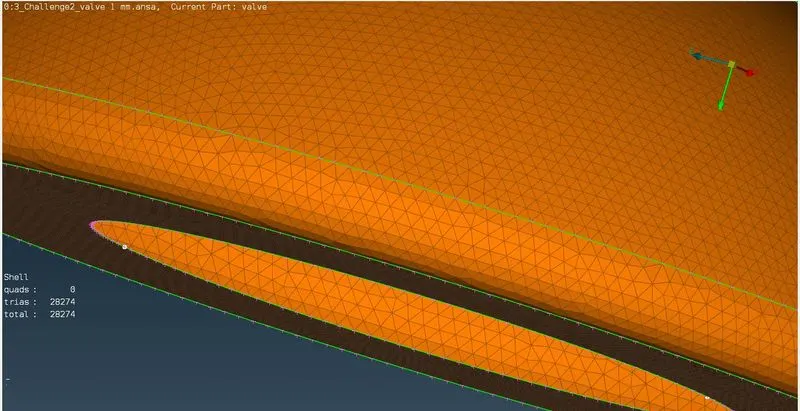
As we know, with decreasing mesh length, meshing gets refined and more surface quality features can be captured, this includes fillets and surface curvatures. We decided to compare the cases based on two components: Spring and Valve head. Spring because, due to its small diameter 3.42 mm a larger target length distorts its shape, and a smaller target length improves surface quality. Then, we selected valve_head because its base contains a fillet whose proper capture signifies mesh quality. We first look at the steep increase in number of elements with decreasing target length.
| TARGET LENGTH (mm) | Number of Elements |
| 5 | 9034 |
| 3 | 23854 |
| 1 | 209590 |
First we look at the Improvement of mesh quality with decreasing target length for SPRING.
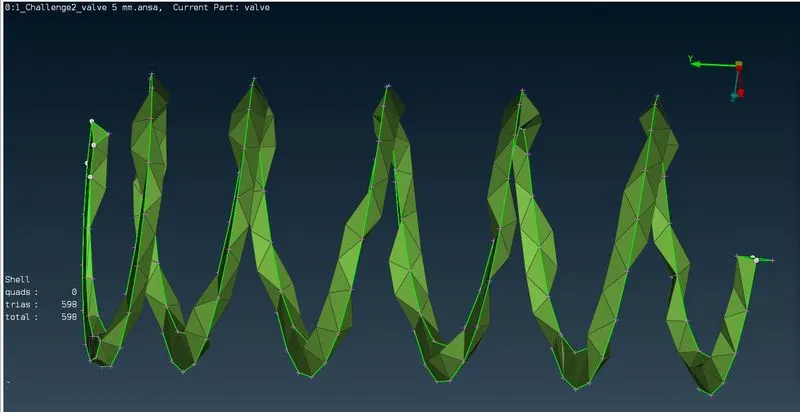
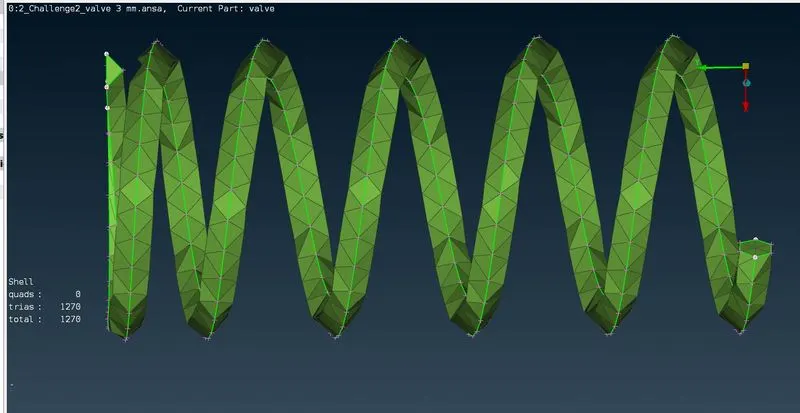
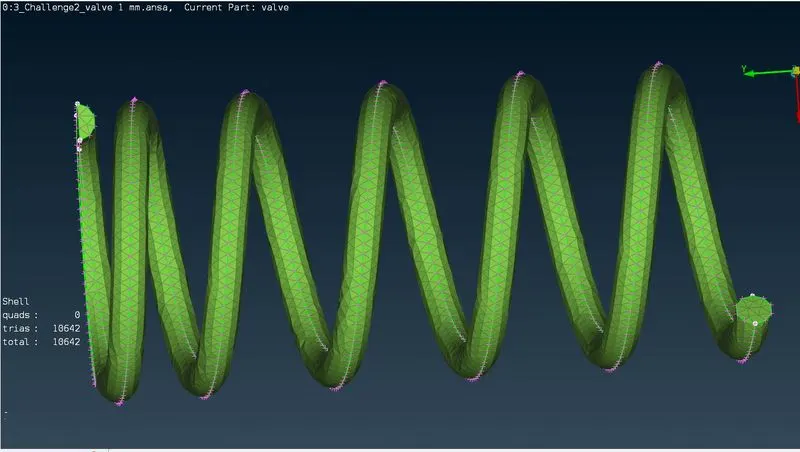
As we can see the mesh quality and also the surface curvature is significantly better at target length of 1mm.
Now we look at the refining of mesh around valve head base surface which has roundness present. This also occurs with decreasing target length.
CONCLUSION
This is clearly evident that with minimum mesh length among all cases we get the best result. This is because as target length decreases, more number of elements can fit in, this allows better capture of surface quality. Thus, the case with target length of 1 mm provides the best results in terms of meshing quality
Learning Outcomes
- Topological clean up or topographical modification process and tools in ANSA.
- Errors associated with geometry and their fixing.
- Use of surface patching tools: Existing surface, Planar, Fitted, Coons.
- PID manager and its use.
- Various selection modes: ENT, LOOP
- Meshing procedure.
- Importance of Target Length on Quality of Mesh