Week 2 Challenge : Surface meshing on a Pressure valve
Aim:
To look for geometrical errors and perform topology cleanup appropriately. Mesh the model with Ansa using three different target lengths for various cases.
Objective:
- Check for the model's geometrical errors, then correct them by performing topology cleanup. Create three distinct cases for three different target lengths, then mesh the model.
- 1 mm, 3 mm, and 5 mm as the targets (i.e. 3 cases)
- Tria is the element type.
- Use one of the above target lengths at a time for the full model as one case. Present 3 unique models for 3 instances.
Procedure:
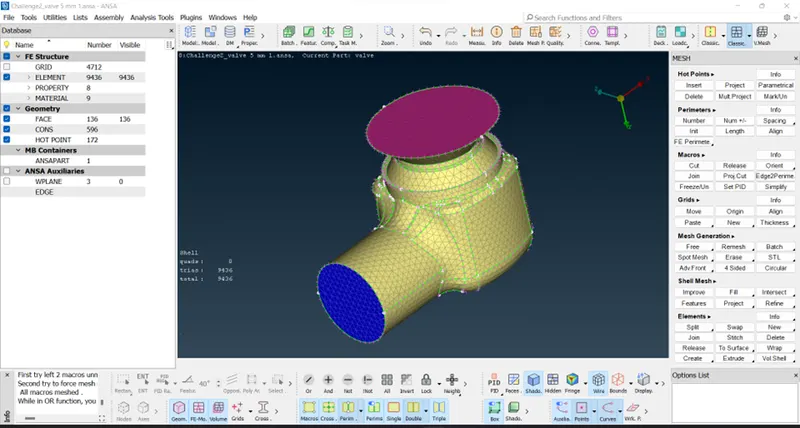
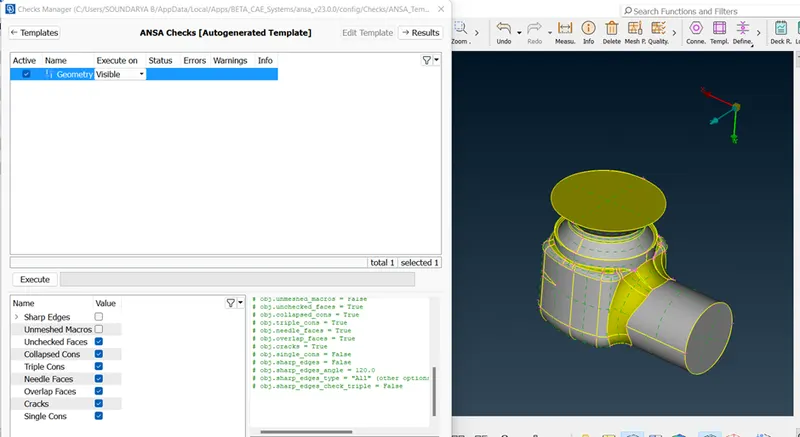
- OPEN THE MODEL: Open the model in ANSA as you see in the below image.
- Geometry clean up - skin or mid-surface generation - shell or solid meshing -element quality check.
- Errors Observed.
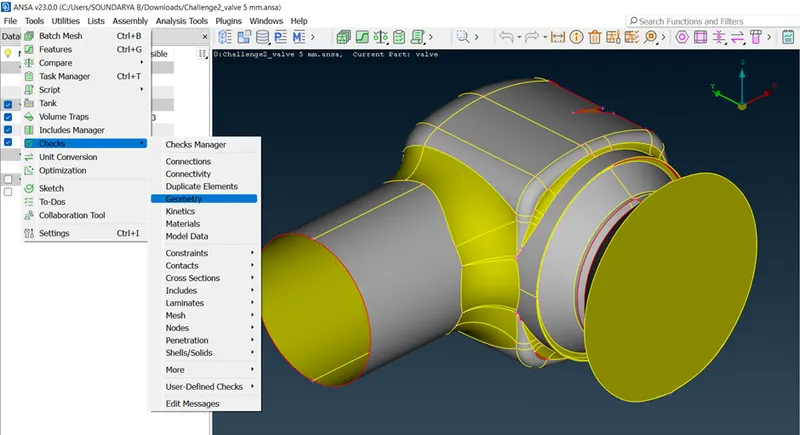
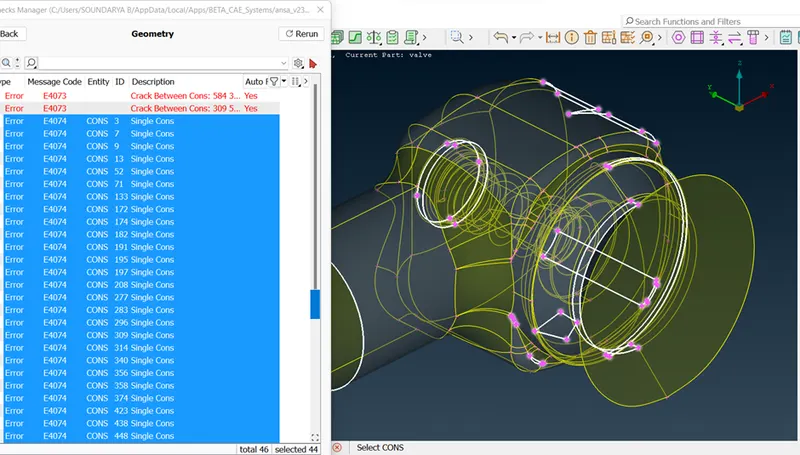
- Lots of single cons found in the quality check.
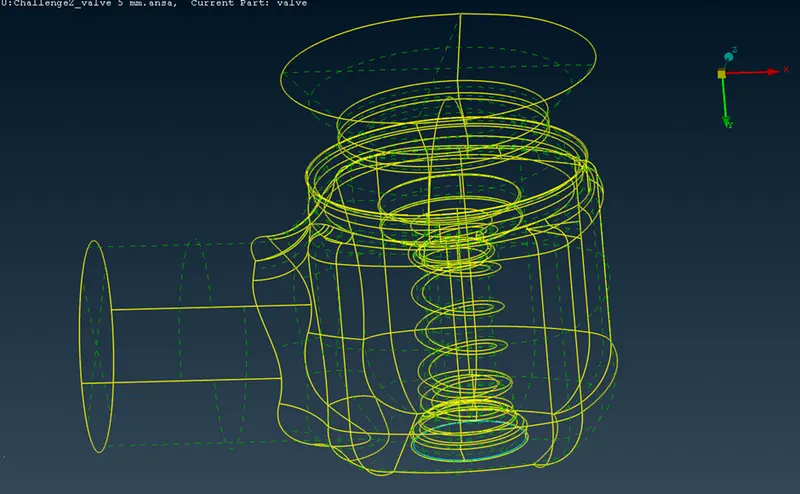
- Errors are cleared using topo clean-up tools by filling up the surfaces using different methods, namely using coons, fitted, and existing surf as shown in the below images.
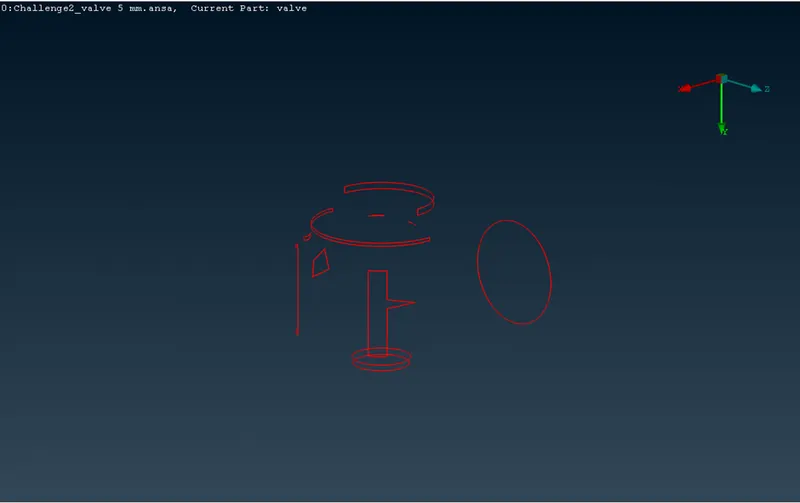
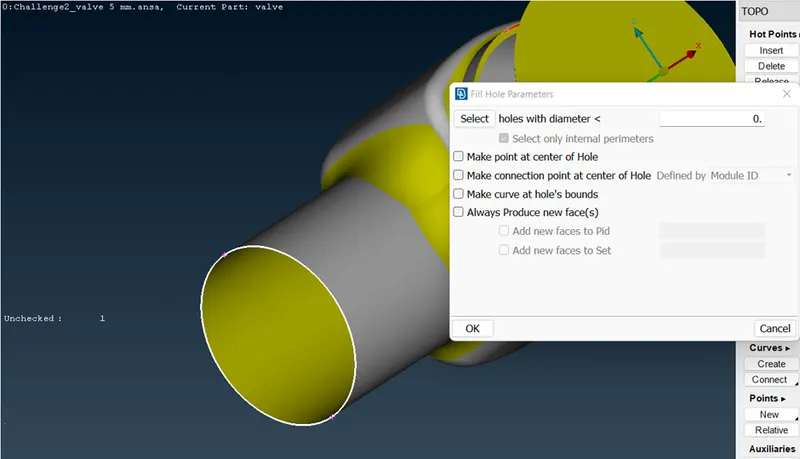
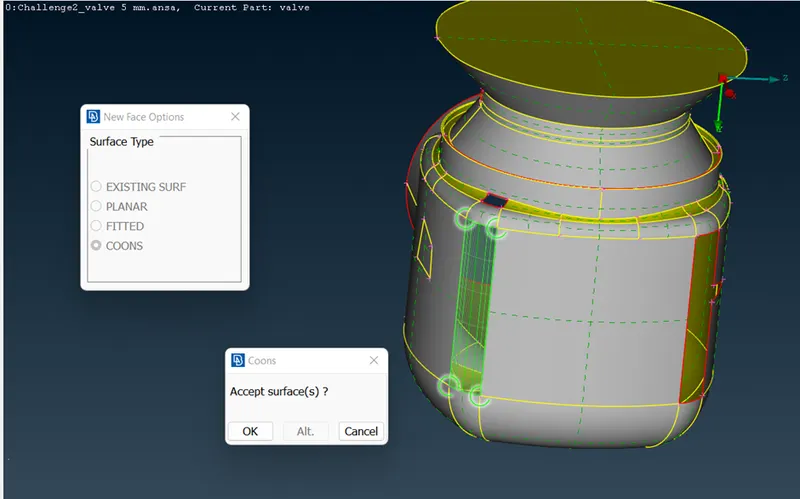
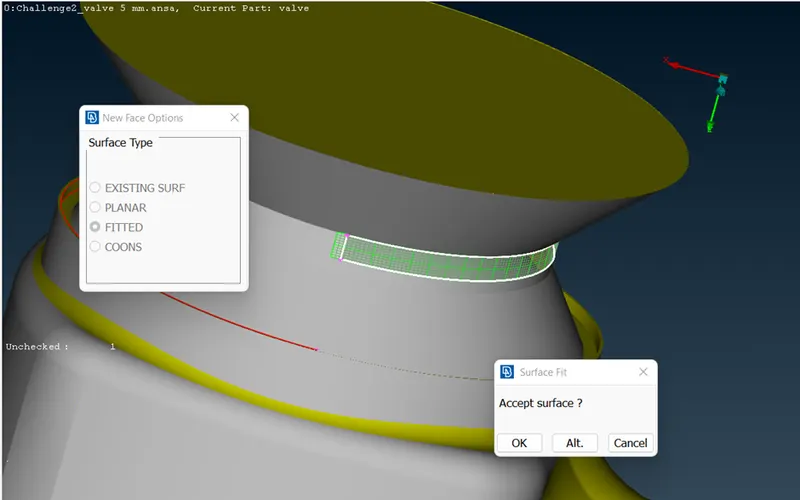
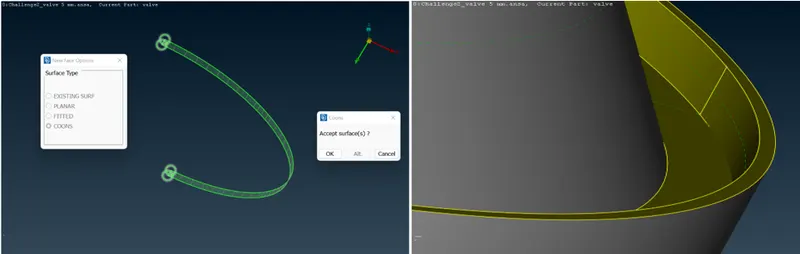
- All errors all solved.
- Wireframe of the model.
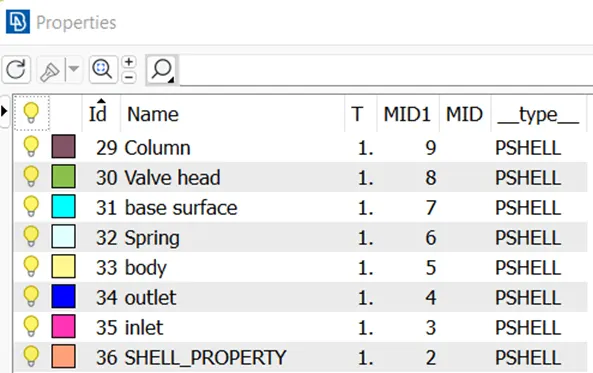
- Using Properties the various shell naming selection has been given.
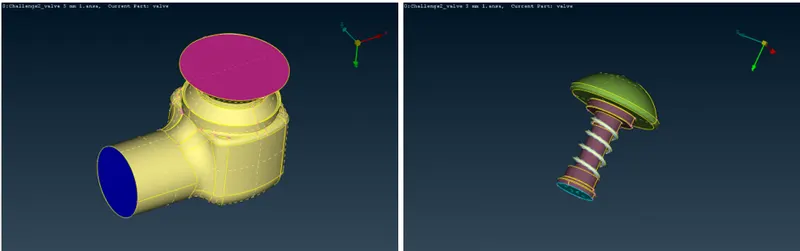
- Named Model.
Meshing:
Now going for the mesh option here we are considering the following terms,
Case 1:
- Target length = 1 mm
- Element type = Tria
Case 2:
- Target length = 3 mm
- Element type = Tria
Case 3:
- Target length = 5 mm
- Element type = Tria
Results:
Case 1:
- Target length = 1 mm
- Element type = Tria
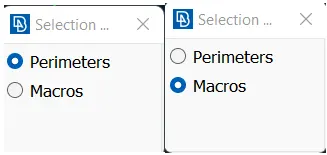
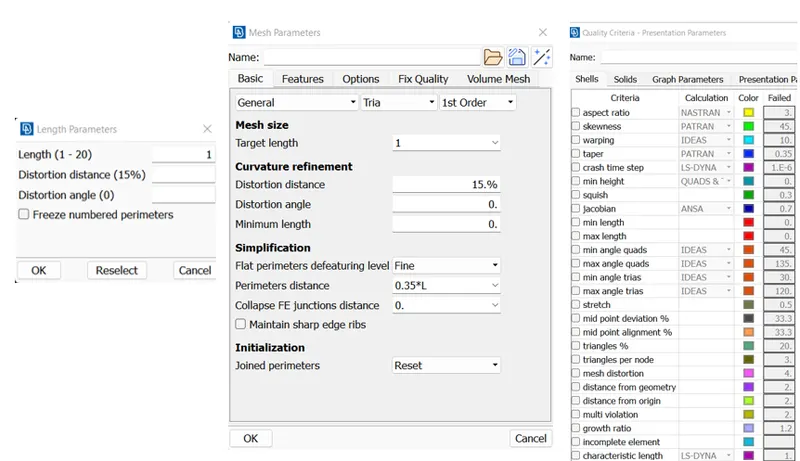
- Now in the perimeter, the length parameters have to be given as 1 as you see in the below image.
- Then we have to give mesh length by selecting the length under parameters and then select the whole model by drag and drop then click the middle mouse. and give the mesh length as required at present we give mesh length 1.
- Giving quality minimum size as 0.5 mm and maximum size of element as 2 mm.
- Same as followed in the Mesh target size and providing the same minimum element quality and here we are using tria method for the element.
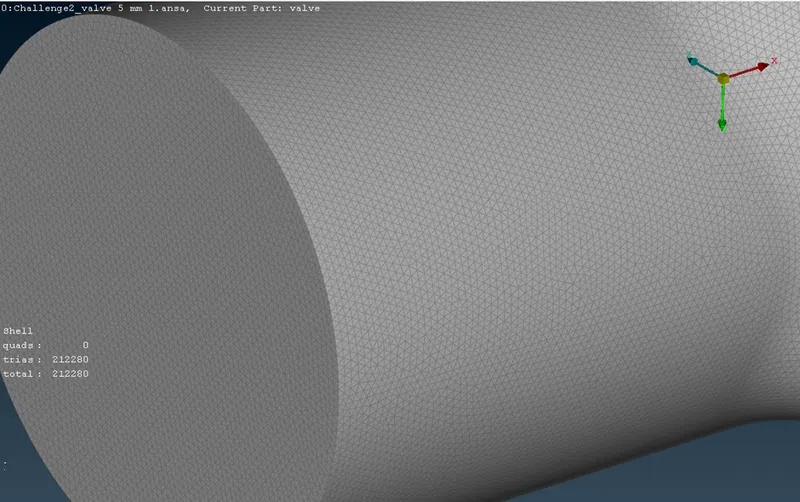
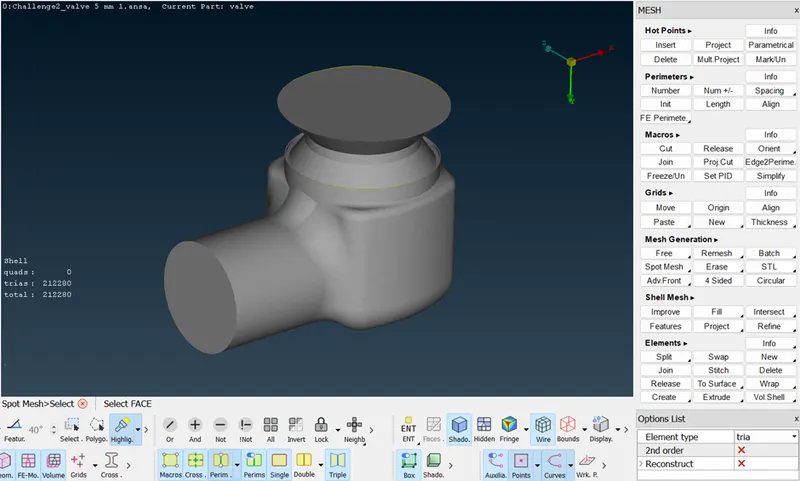
- Now use Spot mesh to provide the meshing for the given model.
- The total no of elements under 1 mm is 212280.
Case 2:
- Target length = 3 mm
- Element type = Tria
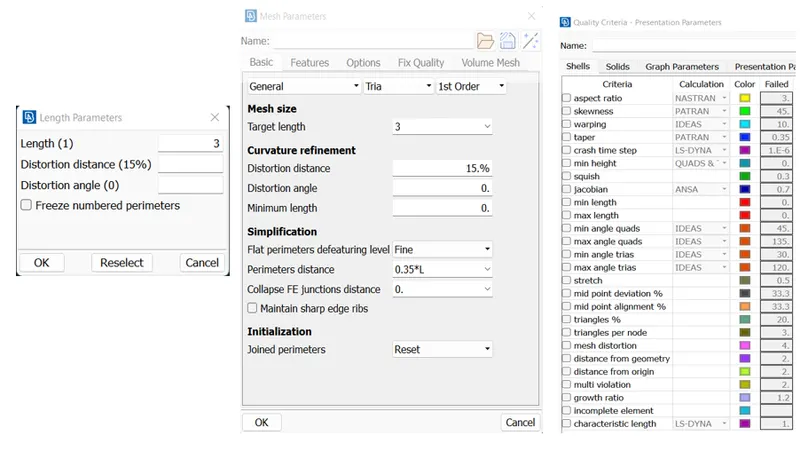
- Now in the perimeter, the length parameters have to be given as 3 as you see in the below image.
- Then we have to give mesh length by selecting the length under parameters and then select the whole model by drag and drop then click the middle mouse. and give the mesh length as required at present we give mesh length 3.
- Same as followed in the Mesh target size and providing the same minimum element quality and here we are using tria method for the element.
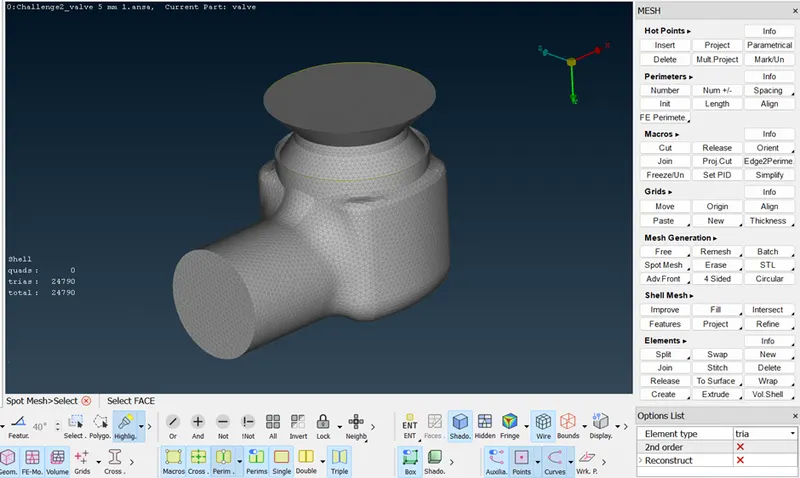
- Now use Spot mesh to provide the meshing for the given model.
- The total no of elements under 3 mm is 24790.
Case 3:
- Target length = 5 mm
- Element type = Tria
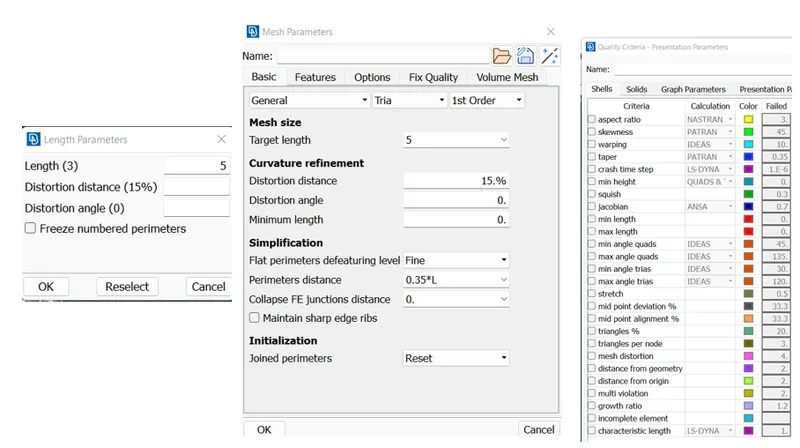
- Now in the perimeter, the length parameters have to be given as 5 as you see in the below image.
- Then we have to give mesh length by selecting the length under parameters and then select the whole model by drag and drop then click the middle mouse. and give the mesh length as required at present we give mesh length 5.
- Same as followed in the Mesh target size and providing the same minimum element quality and here we are using tria method for the element.
- Now use Spot mesh to provide the meshing for the given model.
- The total no of elements under 5 mm is 9436.
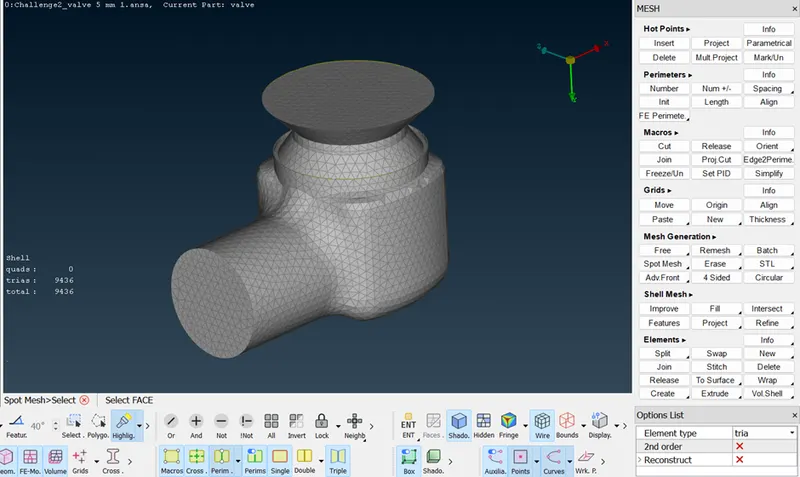
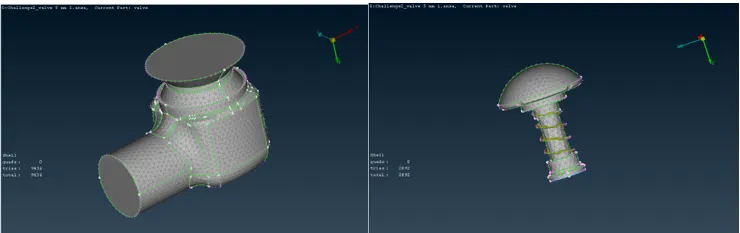
- Meshed Element with the target size of 5 mm. but here the inside of the model the element surfaces are not meshed properly so reducing the element size to 1 mm for the following parts,
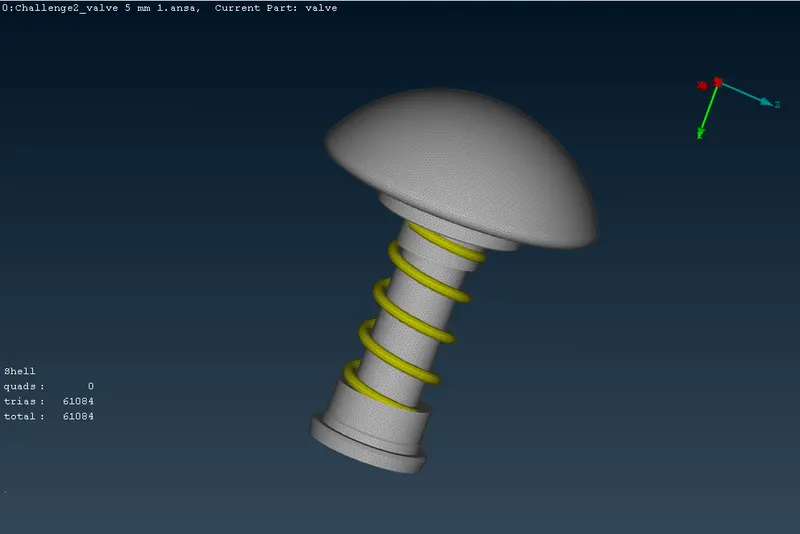
- Re-meshed Model, element size 1 mm.
- The total no of elements under 5 mm is 61084.
Learning outcomes:
Through this approach, I have learned how to correct mesh and geometry errors in a model as well as how to correct mesh errors and how those errors are to be fixed. learned about surface correction, naming sections, and other meshing tools.
Conclusion:
- Although accuracy rises with finer mesh size, calculation time also does.
- In this instance, the outer case mesh size can be 3mm, which is not too huge and not too fine earthier for a nice and precise outcome.
- We can construct two different target lengths depending on the size of the items and the necessary accuracy.
- The precision for smaller pieces also improves because the mesh length for components like the spring and column head can be 1mm.