Week 2 Challenge
ANS.1.
1.1
- To assign the Circular section to a column steps involved are as follows :-
1.Firstly create the model in the STAAD Pro that can be seen as column.
2.Then go to properties section and click on Define parameters
3.After that Assign the circular shape of the column
4.Also mention the diameter of the circle.
5.Hence circular section has been defined
1.2.
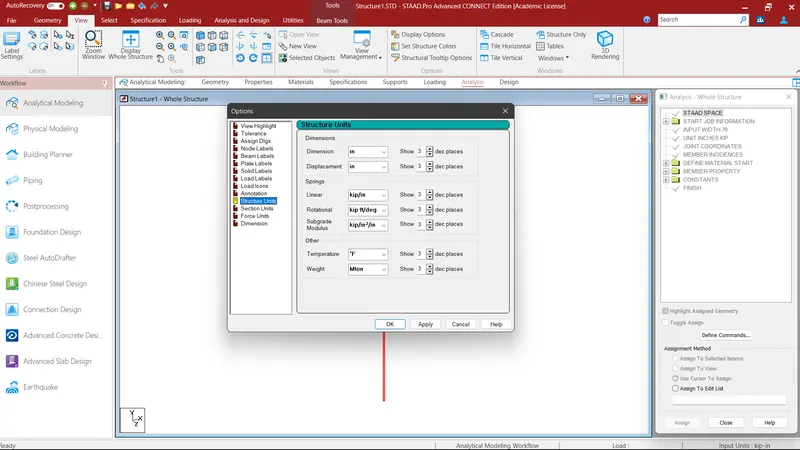
- To assign Unit system to a .std model file following steps are taken
1.Go to view and then click on the Display Options
2.Then a dailog box will open, click on the Structure units.
3.From there you can assign the desired unit for a .std file
1.3
- The parameters to be specified while using “Bay Frame” option are
1.Length
2.Height
3.Width
4.No.of bays along Length
5.No.of bays along Height
6.No.of bays along Width
1.4.
- In STAAD Pro the codal standard are incorporated for steel , concrete , almunium
For steel the codal provision are :-
ISO 800, ISO 800:2007 , WSD,IS801
For the concrete the codal provision are :-
IS456 and IS13920 for the seismic design
1.5.
- Go to the design option
Then Click on define parameter
In the design parameter , Fck `nbsp;compressive strength of RCC section is given as 25000kN/m^2` etc.
ANS.2
2.1
Input steps involved in RCC design are as follows :-
a.GEOMETRY
The node location and the node spacing are given
b.PROPERTIES:
Specify the sectional properties of the section
c.MATERIALS
Specify the properties of the materials
d.SPECIFICATION
The specification are given
e.SUPPORT
The end support are to be given as per necessity
f.LOADING
Need to provide the loading pattern and the loading combination
g.ANALYSIS
Need to analyse the model and all the input specifications are given
h.DESIGN
Finally the designing is done.
2.2
FIXED SUPPORT CONDITION :-
When the FIXED or FIXED BUT type of support is specified, for those degrees of freedom which are to be treated as fully restrained, STAAD assumes the displacements to be known quantities whose value is zero. Hence,
those degrees of freedom are not considered for the stiffness matrix, and their value is not calculated.
ENFORCED SUPPORT CONDITION :-
When the ENFORCED or ENFORCED BUT type of support is specified, for those degrees of freedom which are to be treated as restrained, STAAD assigns a spring with a very high spring
stiffness - translational stiff springs for translational restraints, and rotational stiff springs for rotational restraints. Those degrees of freedom which are free to displace are assigned springs of zero stiffness.
Hence, for all the 6 degrees of freedom at such supports, the displacements are calculated.
ANS.3
3.1
1.Click on the Run Analysis tool in the Analysis and Design ribbon tab.
2.The STAAD Analysis and Design dialog opens.
3.During the analysis (and design, if specified), an output file is generated. This file may contain selected input data items, results and error messages. Optional print specifications can be used to includ
additional information in the output file.
3.2
The two ways to model the structural framework is:
a.Creating model by node to node
b.Creating model by BAY frame
3.3
There are 5 types of support conditions that are predefined in the software
a.FIXED:-
All the transitional and rotational displacement are restrained
b.PINNED:-
Transitional displacement are restrained but rotational moments are not restrained
c.FIXED BUT:-
The fixed support is similar to pinned support it allows us to provide the degree of freedom to view the displacement either translation or rotational
d.ENFORCED:-
When enforced supports are assigned to the structure the software allows the springs to itself and the displacement can be calculated however there is no provision to provide the spring constant
e.ENFORCED BUT:-
The software assigns the spring itself with zero stiffness or high stiffness
3.4.
To extract the stress distribution for a staircase slab following steps are taken :-
1.Define the nodes to the staircase design
2.Then add the beams
3.Then Add plate/solid to show the staircase slab
4.Assign the materials and design properties
5.Then Run the analysis
6.When the analysis is completed, double click on the plate element to view the stress distribution factors and other details
3.5
To view SFD & BMD in staad pro , different ways are as follows :-
1.By going to the post processing process, then click on OK.
2.By clicking the beam results deflection command
3.Reaction click on the beam deflection
PRACTICAL :-
AIM:-
To Analyze the following structural elements and validate the results
A. Simply Supported Beam
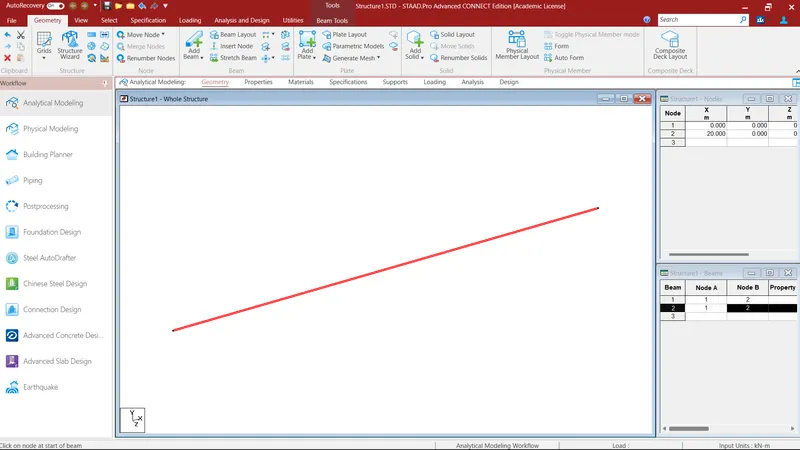
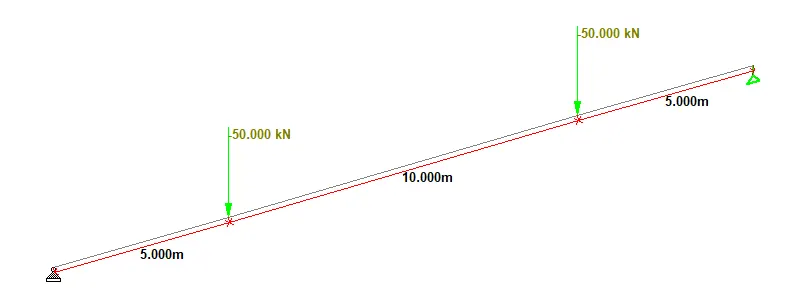
a. A Simply supported beam with two point loads symmetrically placed
b. Span L = 20m
c. Load P = 50kN each
d. Both P located at 5m from each support
INTRODUCTION :-
STAAD is the abbreviation for Structural Analysis and Design. STAAD.Pro is one of the popular software that is used for analysing & designing structures like – buildings, towers,
bridges, industrial, transportation and utility structures.
PROCEDURE :-
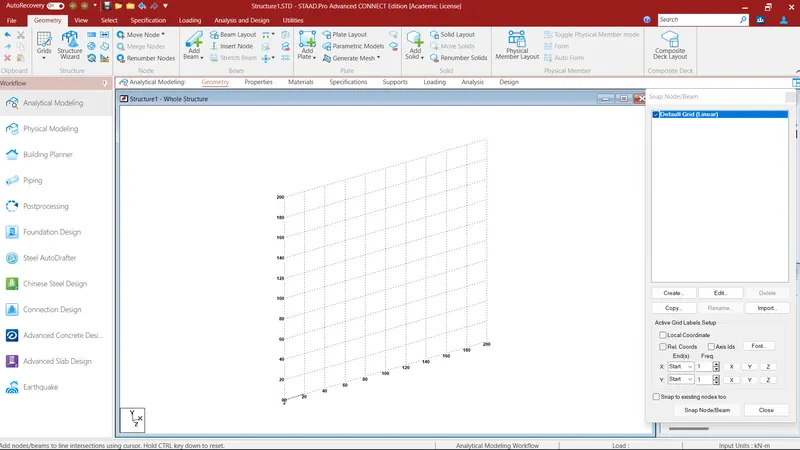
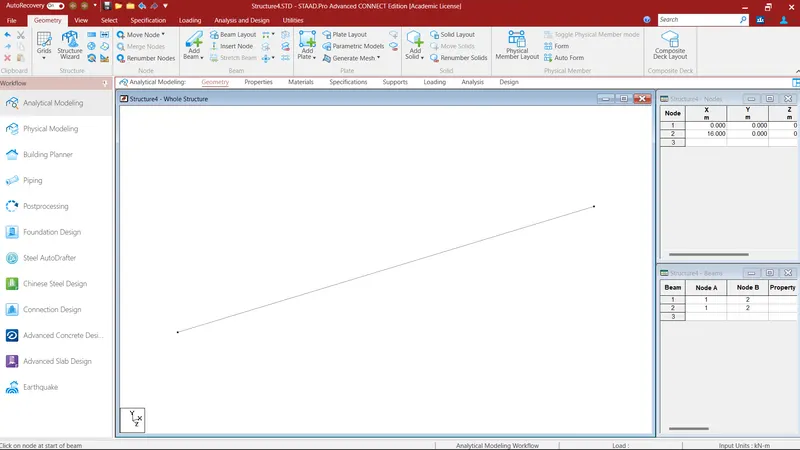
Open staad pro and create new model and add grids
Then assign the geometry
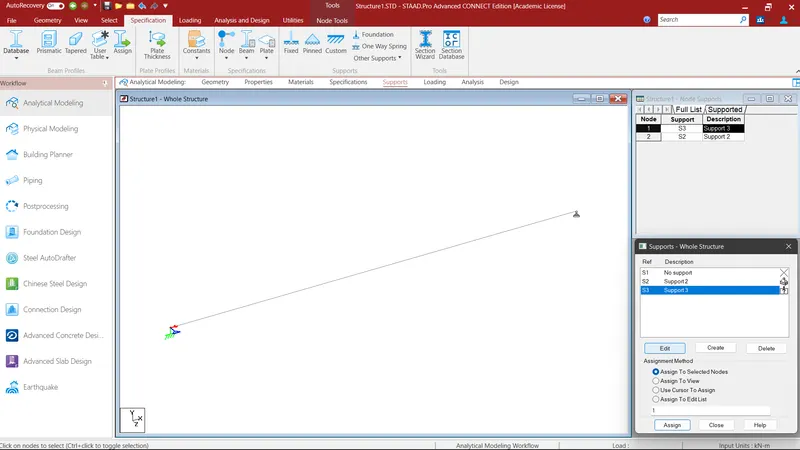
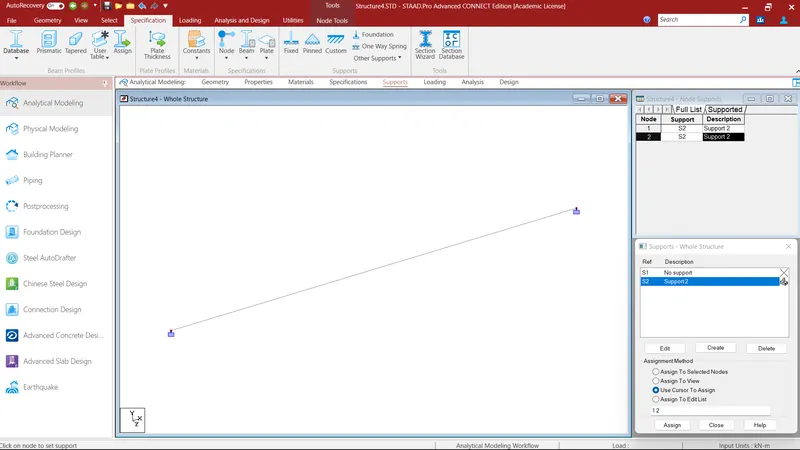
Then supports are assigned
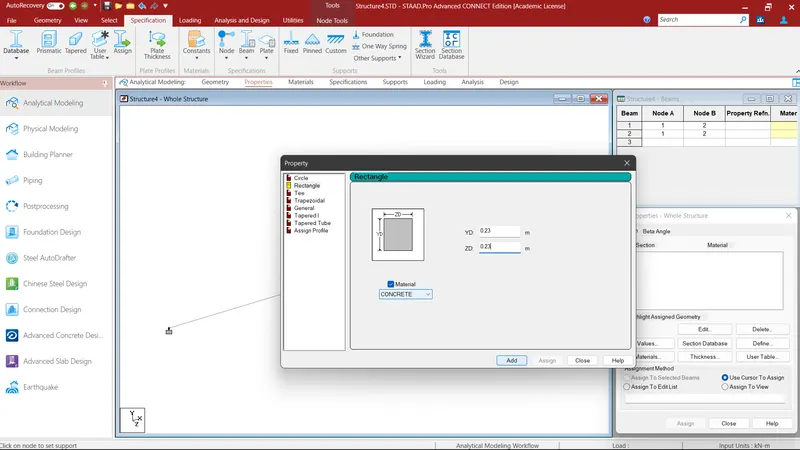
After that properties of material are added.
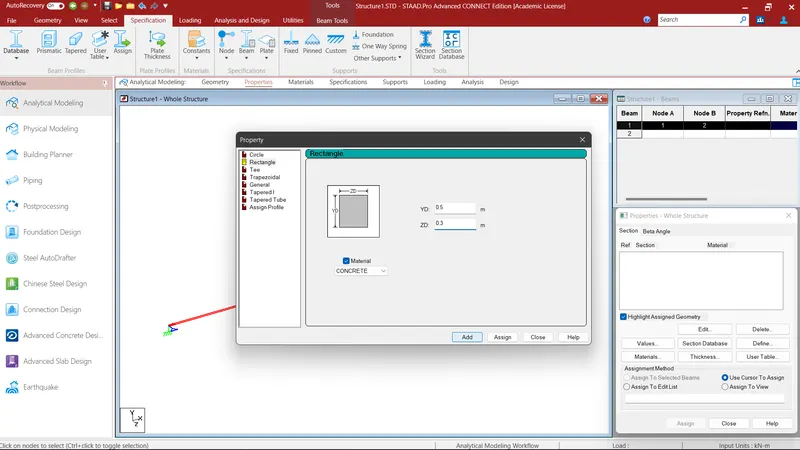
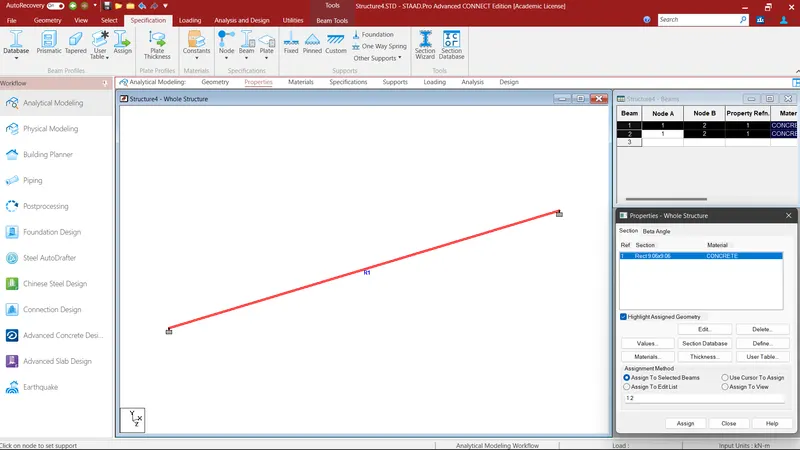
then material is assigned
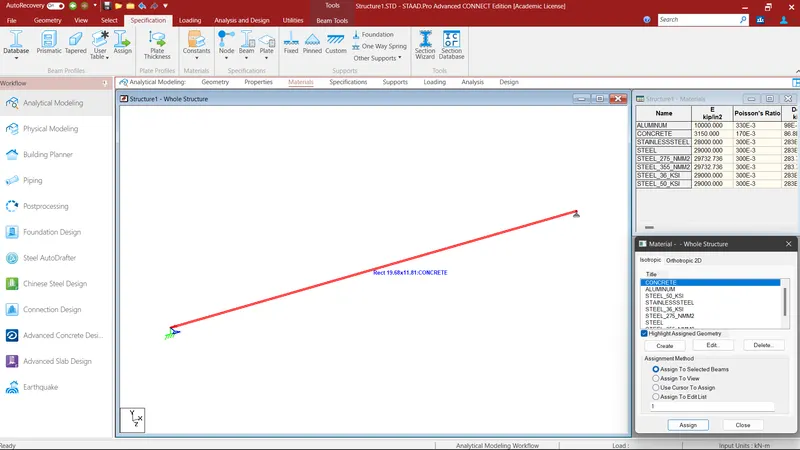
Then loads are added
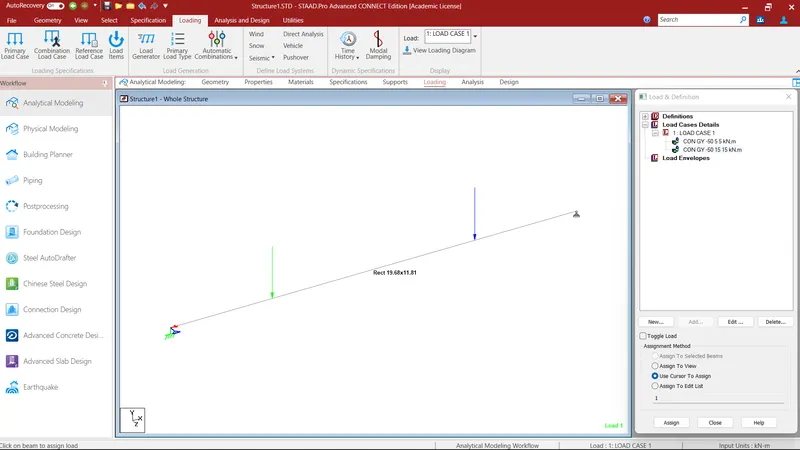
After that analysis is done
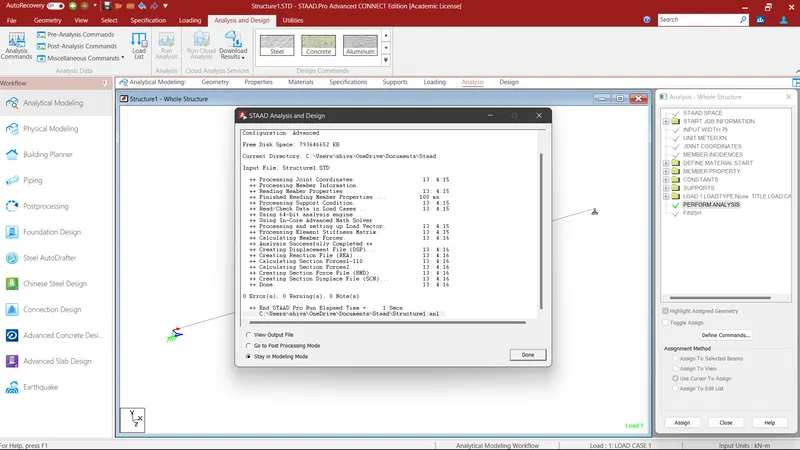
Analysis SFD and BMD
- LOADING DIAGRM
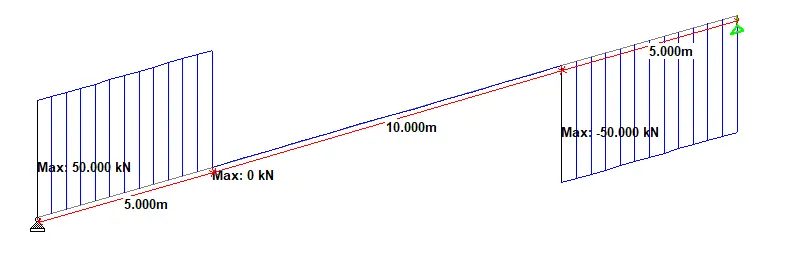
- SFD
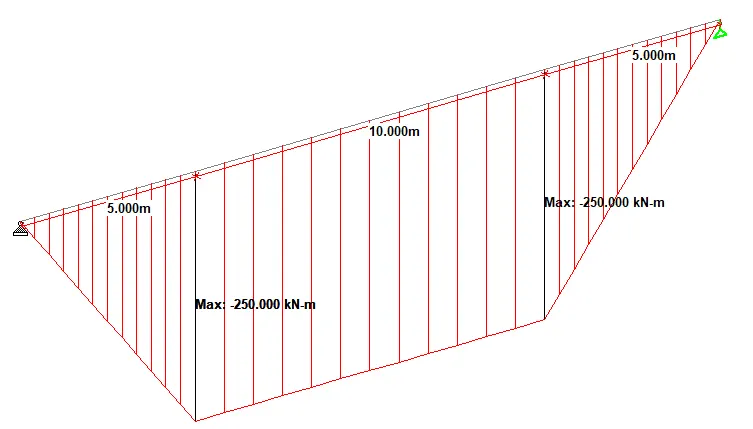
- BMD
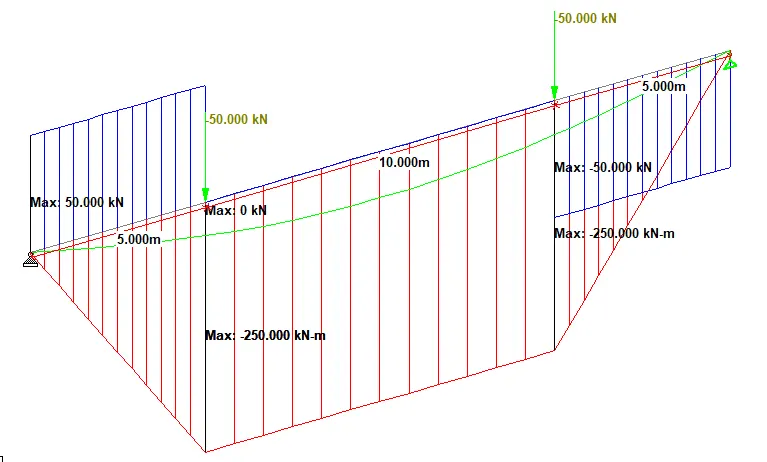
- COMBINE load,sfd,bmd,deflection
RESULTS:-
Hence analysis of given structural element is done successfully.
(SFD)max.=50 KN
(BMD)max.=250 KN-M
B.Fixed Beam
a. Span L = 16m
b. Uniformly Distributed Load w=9kN/m
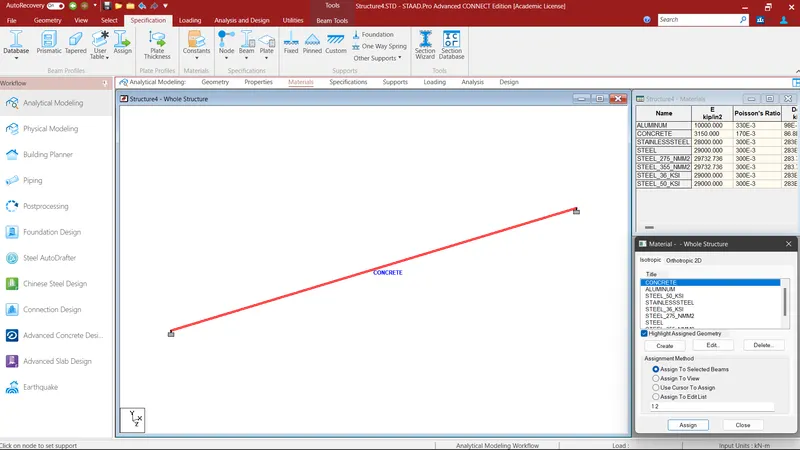
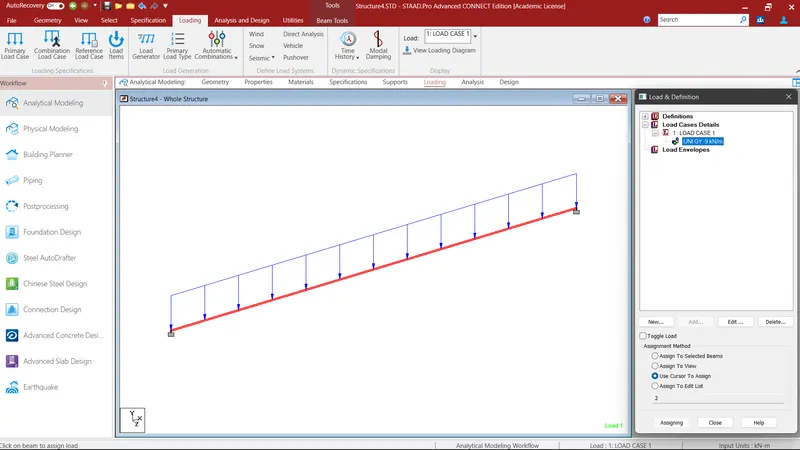
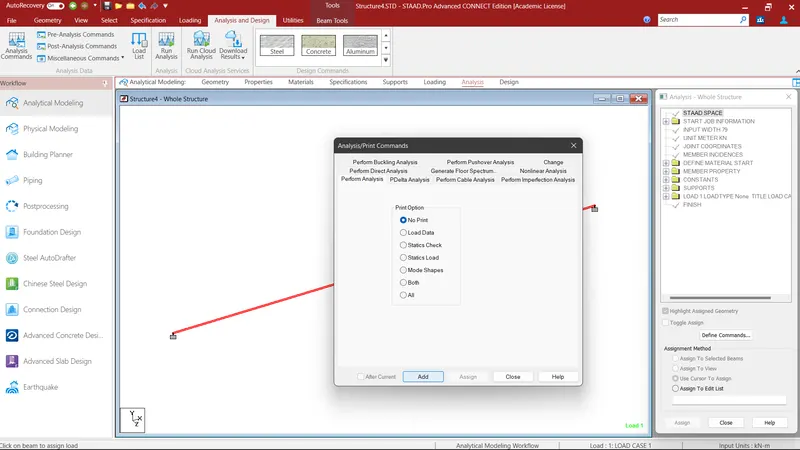
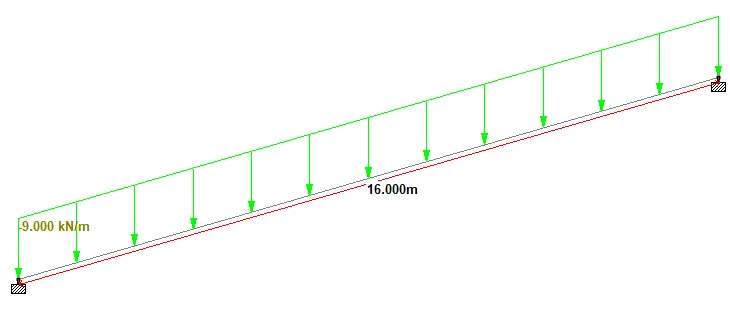
- loading diagram
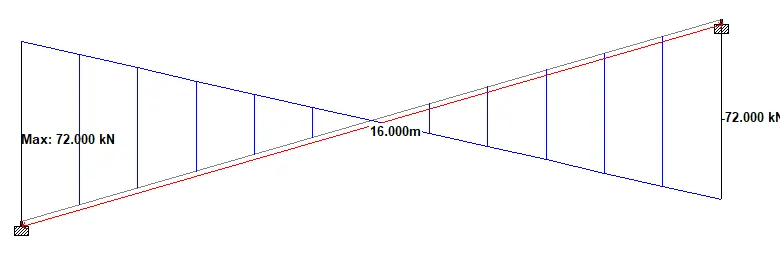
- SFD
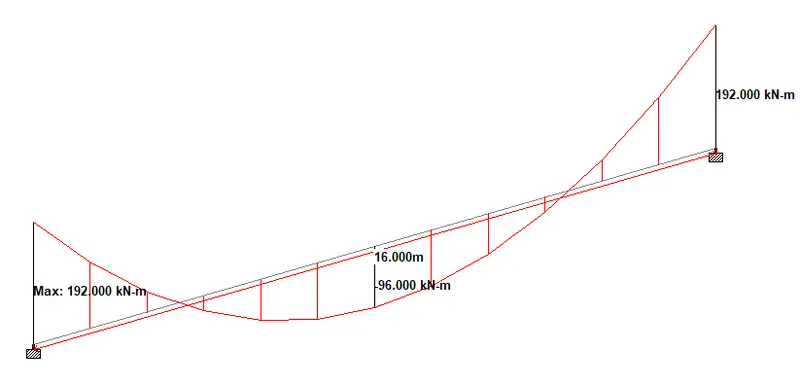
- BMD