Week 2 Bevel Gear Challenge
Grid dependency: Grid dependency mainly talks about the quality of mesh. The main challange we encounter is the selection of the appropriate mesh size of any analysis. It mainly depends upon the type of analysis, accuracy we need and the geometry, but even though its difficult to determine the size of mesh. So at first we start with coarse mesh and slowly make it finer until results wont change due to change in mesh size, then we could confirm the correct size for the analysis. This method is know as Grid dependancy
Objective: To perform grid dependency test on bevel gears with mesh sizes pf 6,5 and 4mm and determine
1. Total deformation
2. Equivalent stress
3. Elastic strain
Setting up the analysis: The material that we are using is structural steel which can be selected from the engineering materials or by default it is selected. Then we open the mechanical module. The contact that is selected between gears is frictional
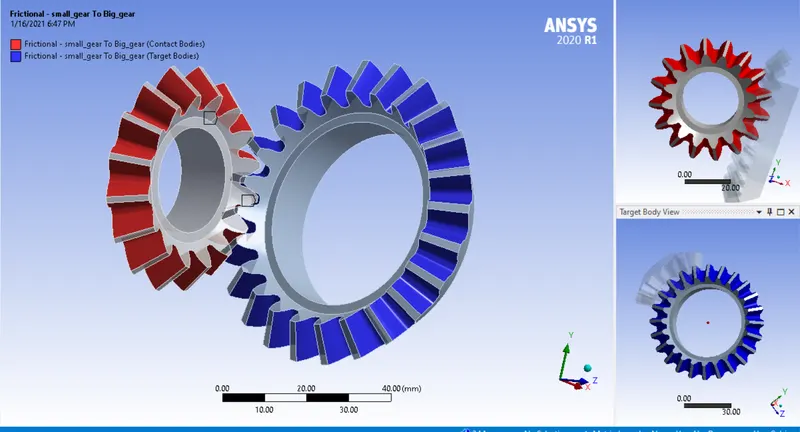
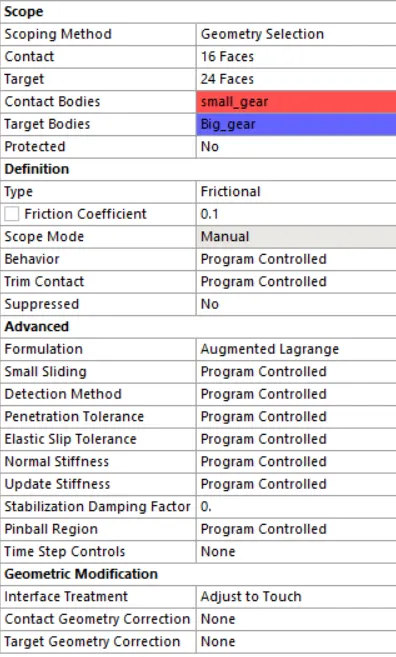
The contact settings which used are :
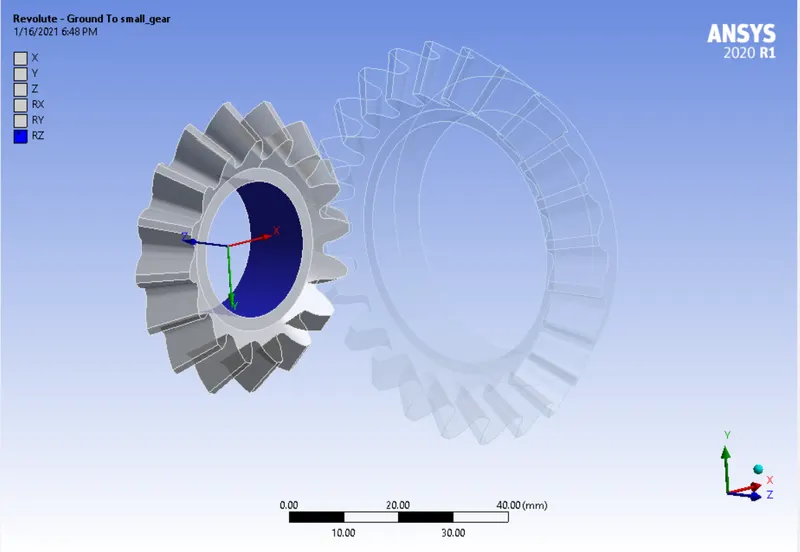
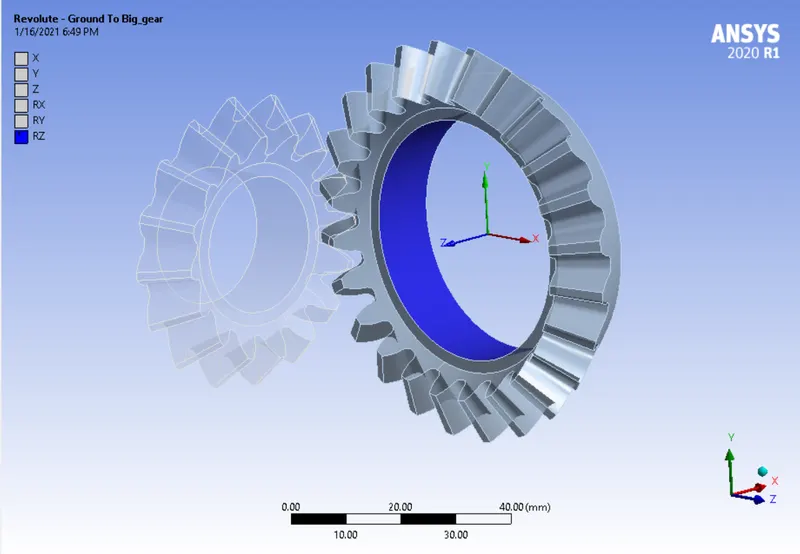
Then 2 reveloute joints are added
Mesh: The entire setup is not meshed with same size because we might face convergence issues, that is why we select sizing option to decrease the mesh size at the contact region as shown :
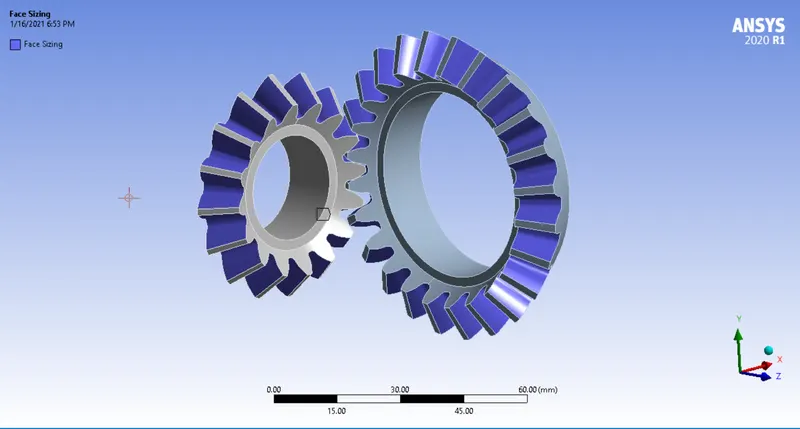
At the selected faces the mesh size will be 1.75mm and at the rest of the surfaces as 6,5 and 4mm respectively
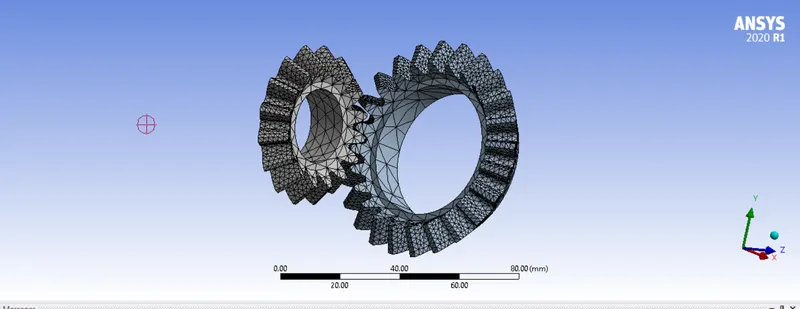
This the figure for mesh size of 6mm
Boundary conditions:
As we took 2 reveloute joints, one joint is rotated for 120 degress with 6 time steps and another joint is given moment of 100 N-mm. The rotation of each gear must be in opposite direction, if they are not, then the direction of the axis of one gear must be changed in reference coordinate system.
For rotation:

For moment:

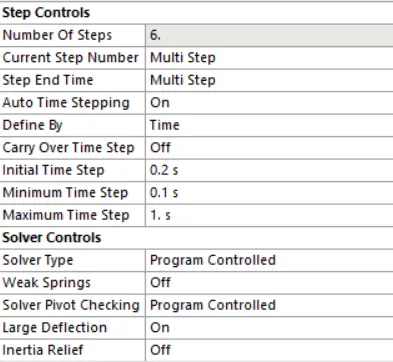
Analysis settings:
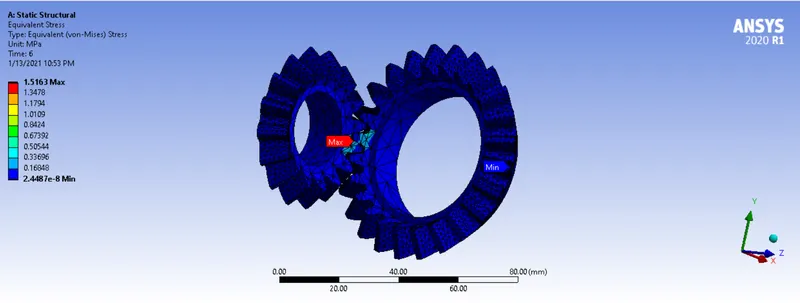
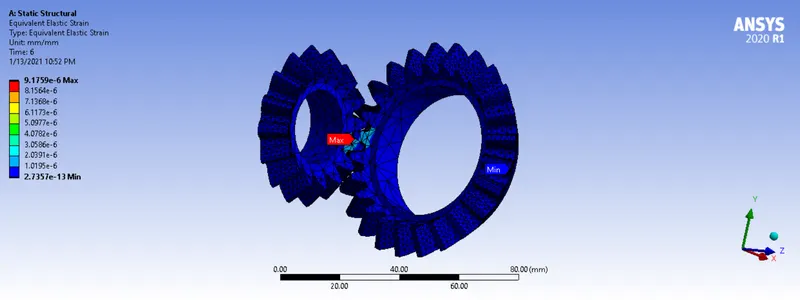
Case 1: 6mm mesh size
Total deformation
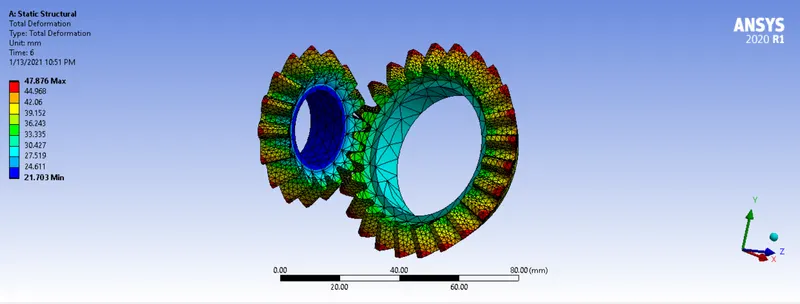
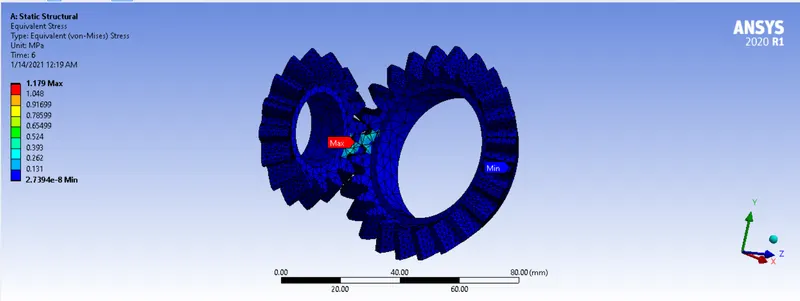
Equivalent stress
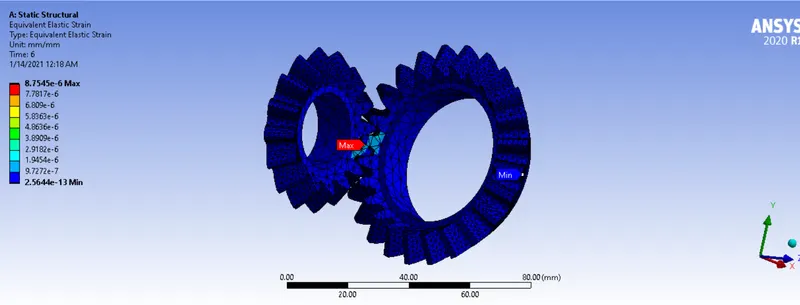
Equivalent elastic strain
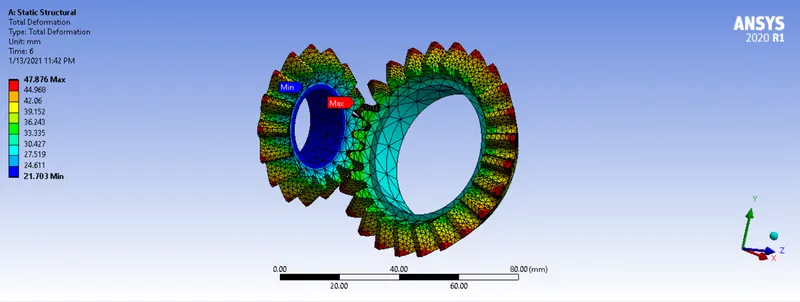
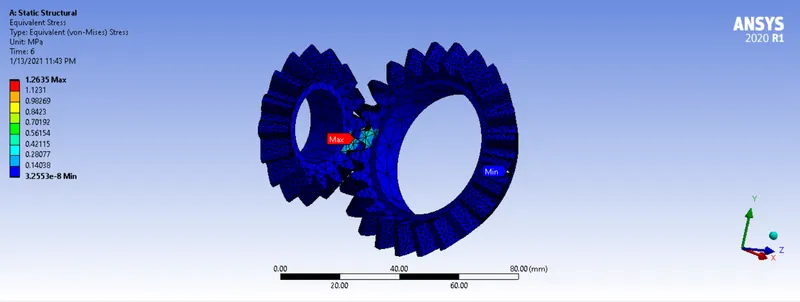
Case 2: 5mm mesh size
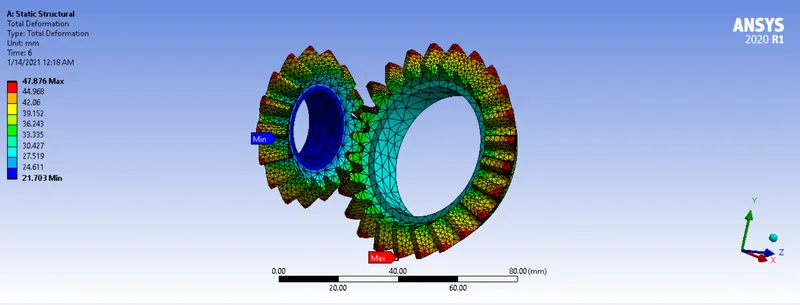
Total deformation
Equivalent stress
Equivalent elastic strain
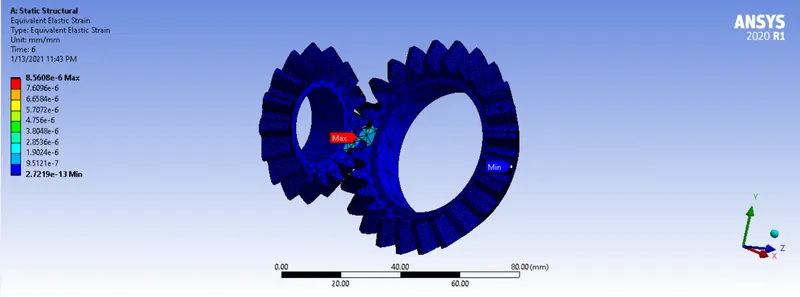
Case 3: 4mm mesh size
Total deformation
Equivalent stress
Equivalent elastic strain
Results:
| Mesh size (mm) | Total deformation(mm) | Equivalent stress(MPa) | Equivalent elastic strain |
| 6 | 47 | 1.5 | 0.0000090 |
| 5 | 47 | 1.2 | 0.0000085 |
| 4 | 47 | 1.1 | 0.0000087 |
Conclusion:
From the results obtained we can see that equivalent stress and strain depends on the size of the mesh. Lesser the size more accurate our findings would be.