Week 2 Railwheel and Track
Objective: To find the total deformation, Equivalent stress and life of a railwheel on a track under some bearing load.
Setting up the analysis: After importing the parasolid model, the model is opened in the ANSYS mechanical. The contact between wheel and rail is frictional with coefficient of friction as 0.3. The contact between shaft and wheel is taken as frctionless.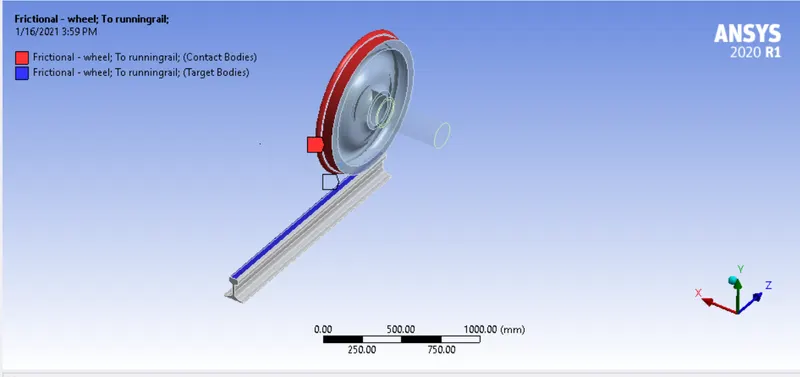
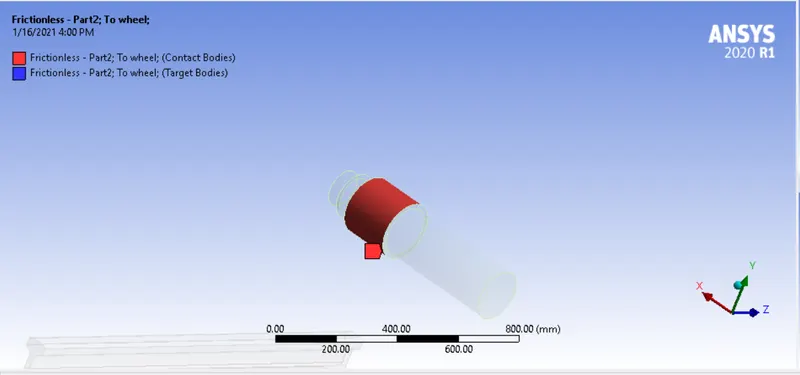
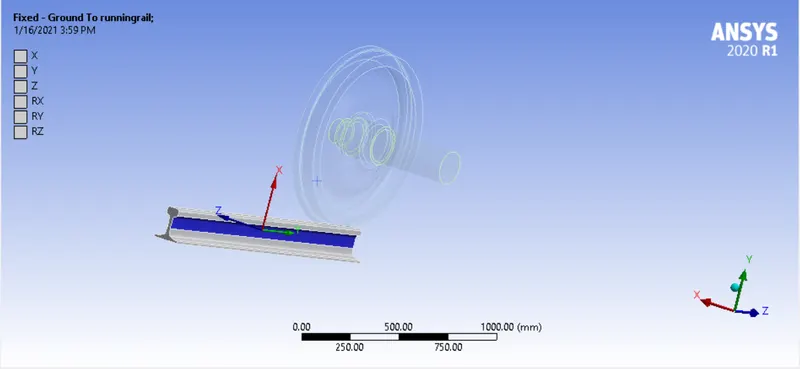
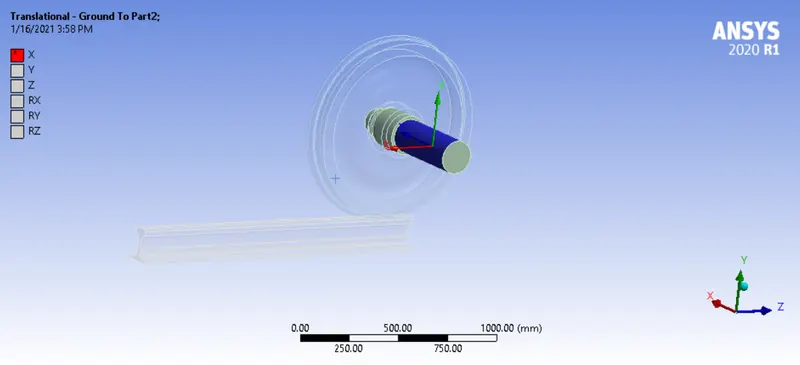
The rail is fixed, translation motion is given to the shaft the axis perdendicular to the axis of shaft in railway direction and planar motion is given to the wheel.
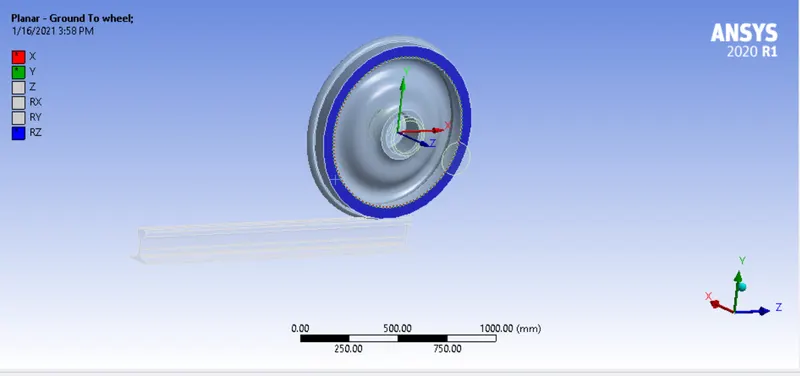
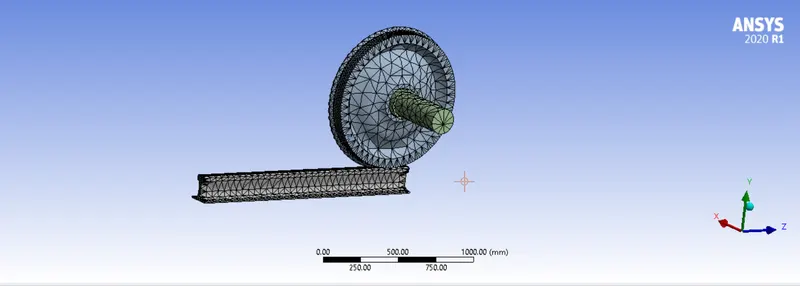
Mesh: For meshing, the mesh size is taken as 50mm and at the contacts it is taken as 20mm.
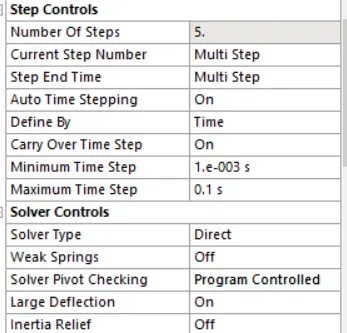
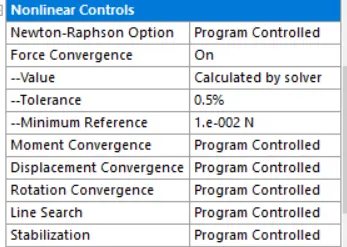
Boundary conditions: A displacement of 500mm is given to the translation joint and load in the downward direction given at the bearing.
Case 1: Load of 100000N
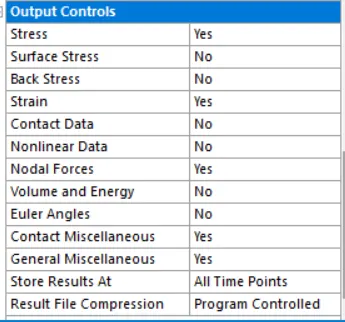
Analysis settings :

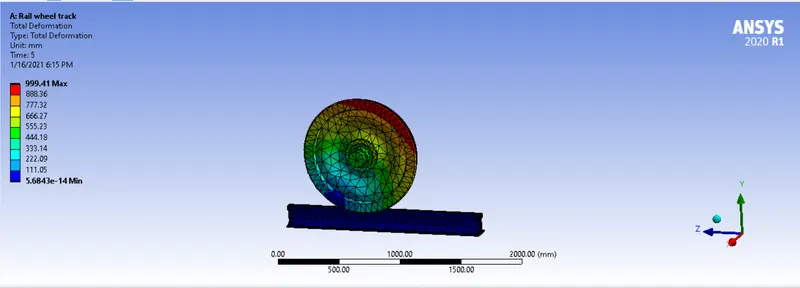
Total deformation
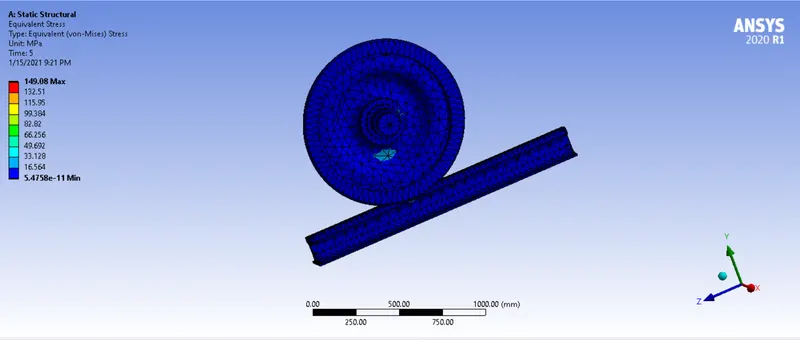
Equivalent stress
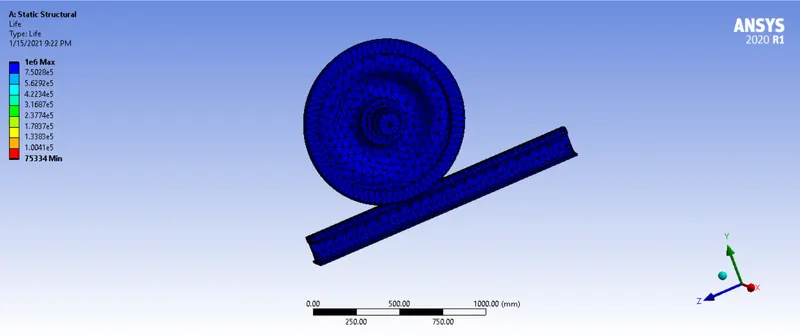
Life
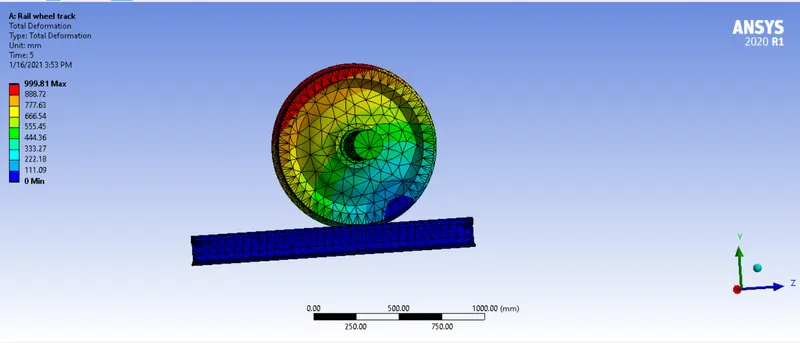
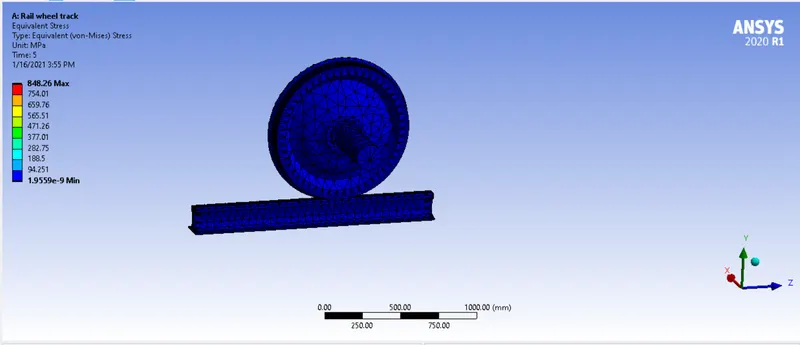
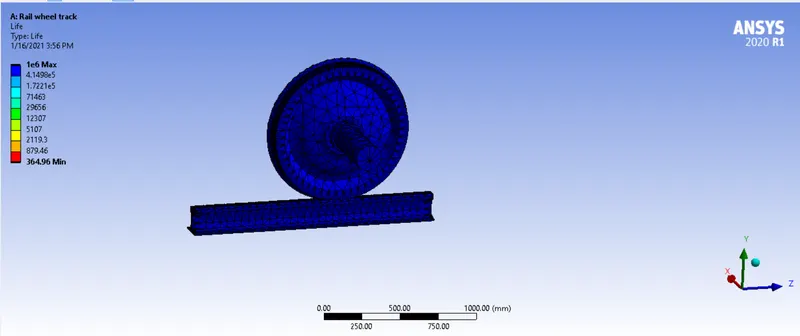
Case 2: Load of 500000N
Total deformation
Equivalent stress
Life
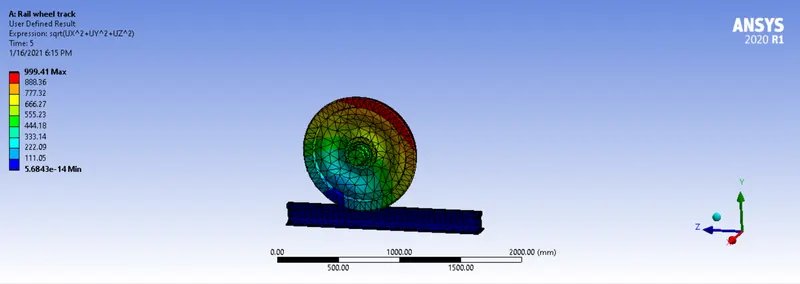
Case 3: User defined function
The function which is used to find out the total deformation is sqrt(UX^2+UY^2+UZ^2)
The bearing load applied is 100000N
Total deformation
Result:
| Loads(N) | Total deformation(mm) | Equivalent stress(MPa) | min life(cycles) |
| 100000 | 999.41 | 149 | 75334 |
| 500000 | 999.81 | 848 | 364 |
| 100000(user defined) | 999.41 | - |
Conclusion: It can be concluded that as the load increases the stress increases and the life of the wheel decreases. It is observed that there is no difference in the deformation obtained from programmed function and user defined function, which means it is correct and upto the mark.