Week 2 : Basic Calibration of Single cylinder SI-Engine
Aim:
- To run the single cylinder SI engine setup at 1800 rpm and list down parameters such as air flow rate,BMEP,BSFC,In-cylinder pressure.
- To run the same setup at 3600 rpm and to increase the output by 10%
Introduction:
- SI engine stands for spark ignition engine. Spark ignition engine means any engine in which fuel is ignited by a spark plug or by a predefined ignition source. Many of us have misconception that only petrol engines are SI engines but actually petrol engine is a type of SI engine. There are many other SI engines like gas engines, Hydrogen engines, LPG engines.
Working of the SI Engine:
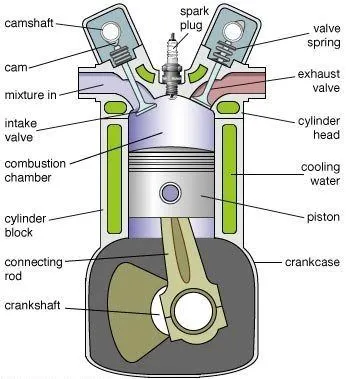
- In this type of engine, a correct amount of fuel air mixture drawn into cylinder where it compressed and a spark plug ignite this compressed mixture. This will starts combustion process which generates a high pressure force which is used to drive piston and crankshaft.This is general working of SI engine.
According to the design, this engine can classified into two types.
1.Two-stock Engine
2.Four-stock Engine
Air-Fuel Ratio(AFR)
- Air–fuel ratio (AFR) is the mass ratio of air to a solid, liquid, or gaseous fuel present in a combustion process. The combustion may take place in a controlled manner such as in an internal combustion engine or industrial furnace, or may result in an explosion (e.g., a dust explosion, gas or vapour explosion or in a thermobaric weapon).
- The air–fuel ratio determines whether a mixture is combustible at all, how much energy is being released, and how much-unwanted pollutants are produced in the reaction. Typically a range of fuel to air ratios exists, outside of which ignition will not occur. These are known as the lower and upper explosive limits.
- In an internal combustion engine or industrial furnace, the air–fuel ratio is an important measure for anti-pollution and performance-tuning reasons. If exactly enough air is provided to completely burn all of the fuel, the ratio is known as the stoichimetric mixture, often abbreviated to stoichimetry. Ratios lower than stoichiometric are considered "rich". Rich mixtures are less efficient, but may produce more power and burn cooler. Ratios higher than stoichiometric are considered "lean". Lean mixtures are more efficient but may cause higher temperatures, which can lead to the formation of nitrogen oxide. Some engines are designed with features to allow lean-burn. For precise air–fuel ratio calculations, the oxygen content of combustion air should be specified because of different density due to different altitude or intake air temperature, possible dilution by ambient water vapour, or enrichment by oxygen additions.
Case 1: Run the case at 1800 rpm and list down important parameters
- air flow rate
- BMEP
- BSFC
- In-cylinder pressure
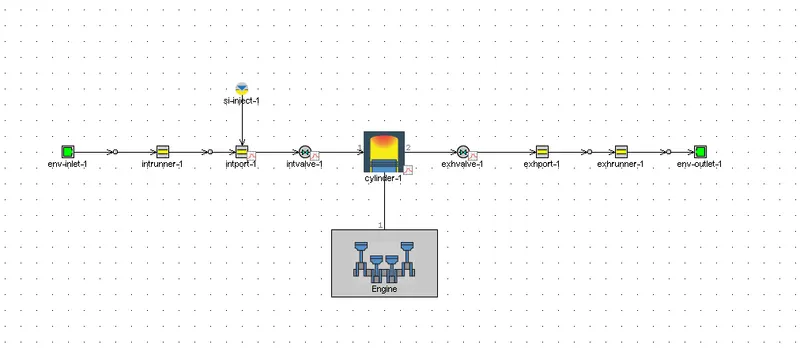
The model is importedfrom tutorials > modelling applications > engine_performance >1cylsi-final.gtm
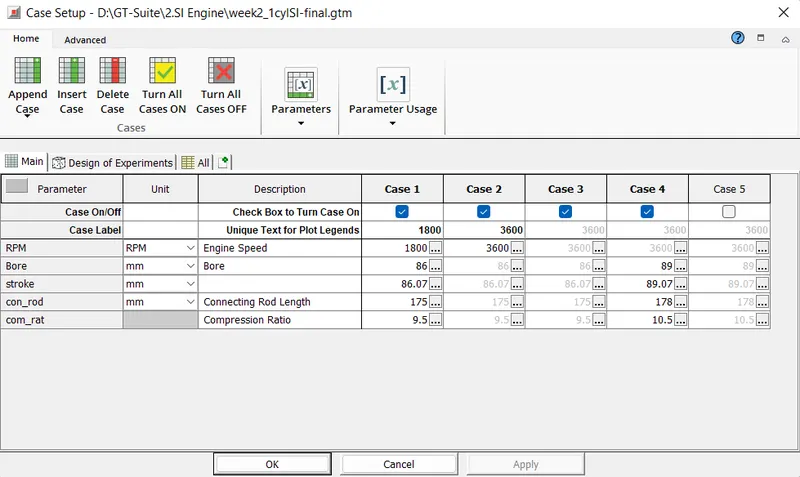
Case setup
1.Air flow rate
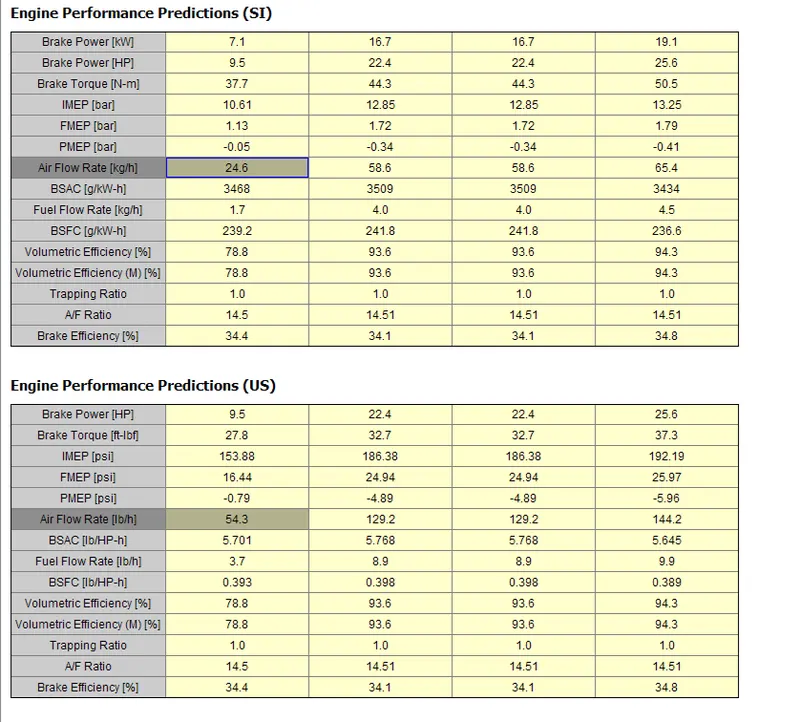
2.Brake mean effective pressure
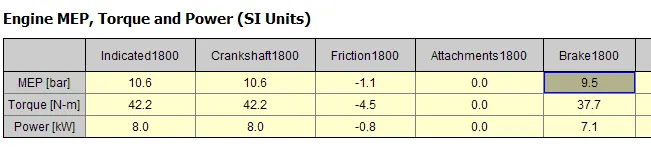
3.Brake specific fuel consumption
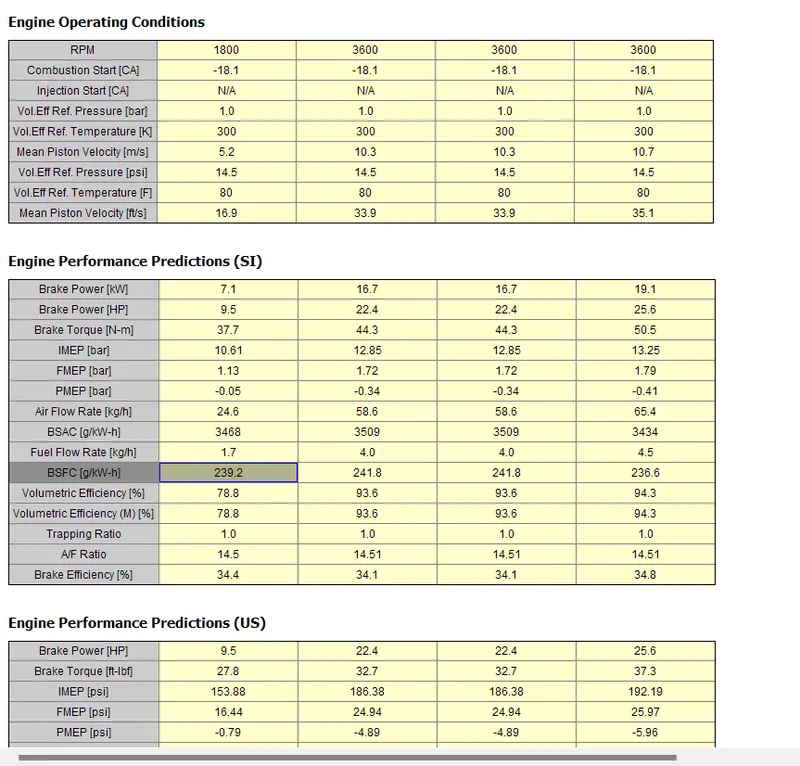
4.Maximum pressure
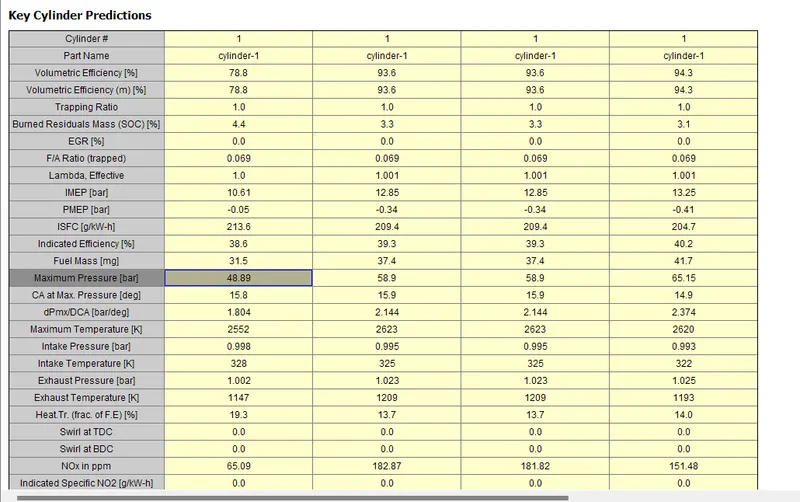
case 2: Increase the power output at 3600 rpm by 10%
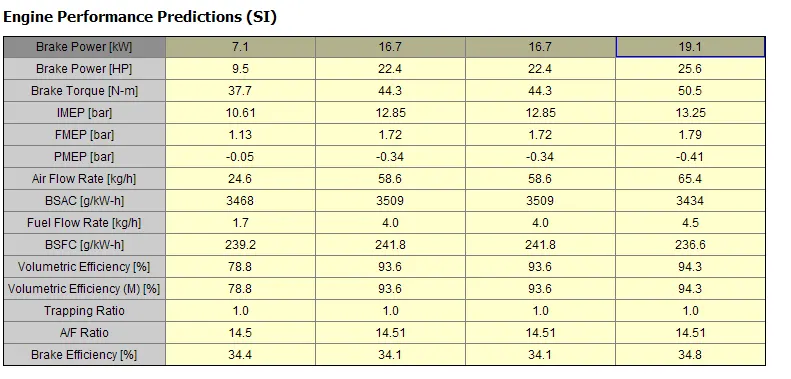
- Percentage increase in power output = (19.1-16.7)/19.1 * 100 = 12.56%
Conclusion:
- Successfully run the simulation with 1800 rpm and find out all the parameters like Airflow, BMEP,BSFC, In-Cylinder pressure.
- Execute the power of thw single cylinder engine with 3600 rpm and find out the brake power.
- Thus the power of the single cylinder engine can be increased by 12.56% by changing the bore, stroke, connecting rod length and compression ratio.