Week 2 : Basic Calibration of Single cylinder SI-Engine
Basic Calibration of Single-cylinder SI-Engine
Aim: Basic Calibration of Single-cylinder SI-Engine.
Objectives:
1. Run the case at 1800 rpm and list down important parameters
Airflow rate
BMEP
BSFC
In-cylinder pressure
2. Increase the power output at 3600 rpm by 10%
Q.Run the case at 1800 rpm and list down important parameters
airflow rate
BMEP
BSFC
In-cylinder pressure
Ans:- The case setup is a single-cylinder SI Engine as shown below. This case is loaded from Tutorial -Engine Performance-1Cyl SI Engine.
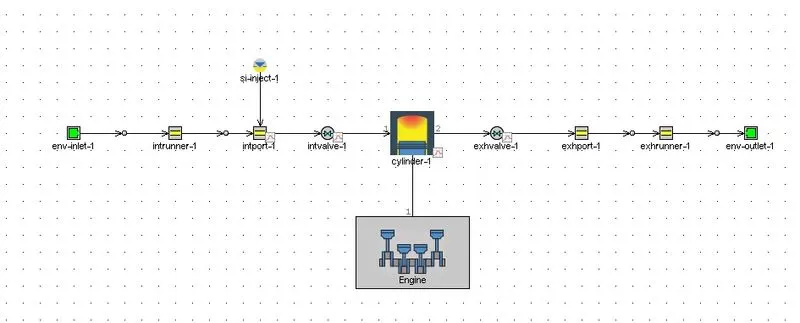
The initial Inlet condition of air is as shown below
Pressure = 1 bar
Temperature =300K
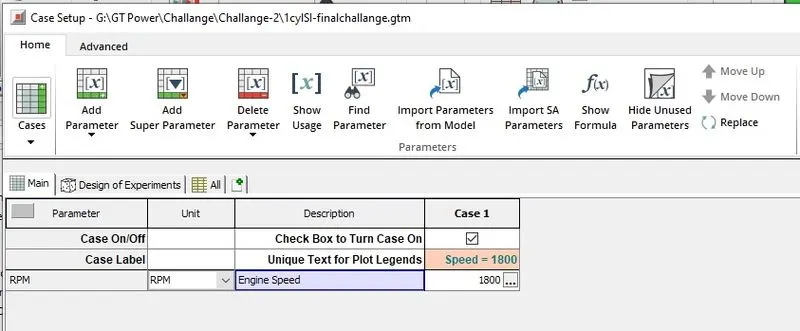
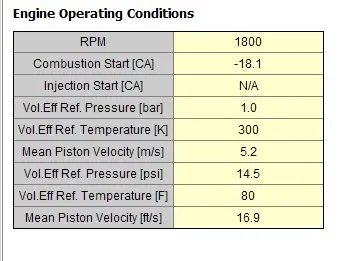
Engine Speed =1800 RPM
Case Setup is given below
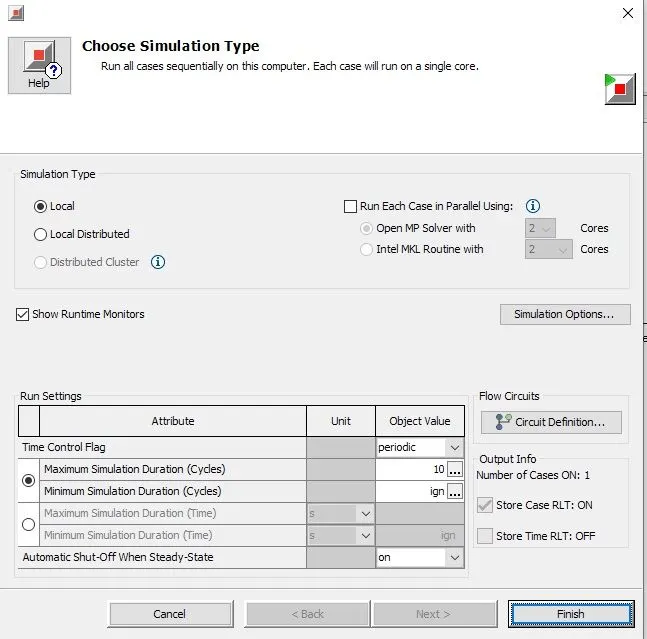
Then click on the Run button to simulate the case setup as shown below. Time flag control is periodic and the Maximum simulation time is 10 sec with an option of automatic shut off when steady-state reach.
After simulation of the case, setup GT-Post open to show results
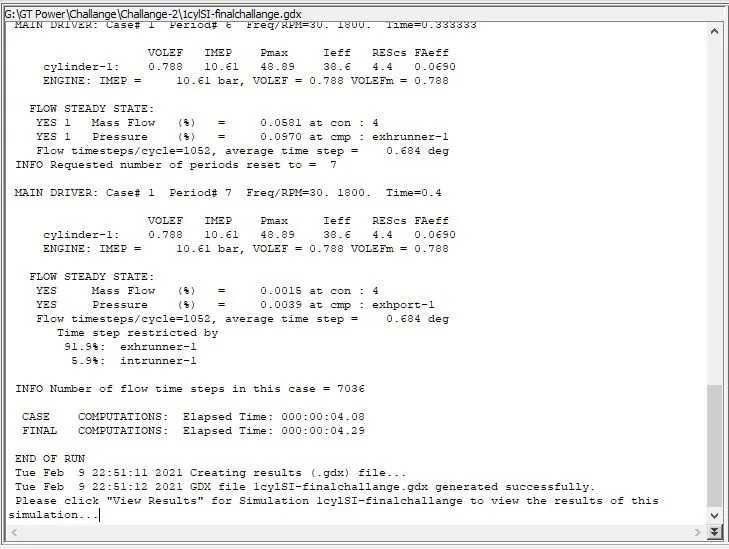
Results
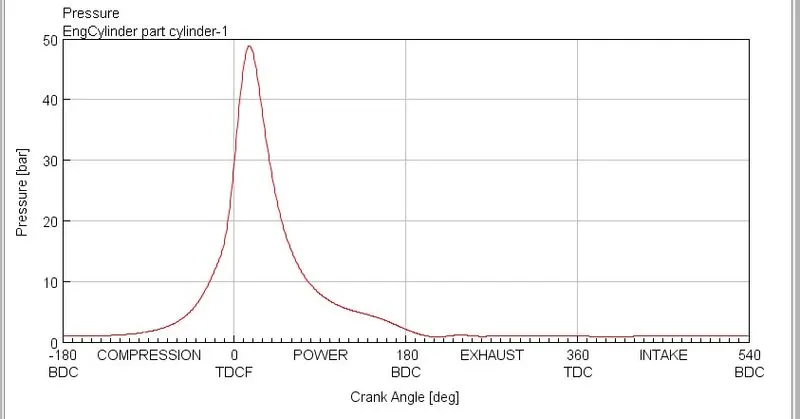
P-Thita graph
P-Thita graph shows a sudden rise of pressure inside combustion chamber while combustion of fuel. The Maximum Pressure Generated in the combustion bar is 48bar.
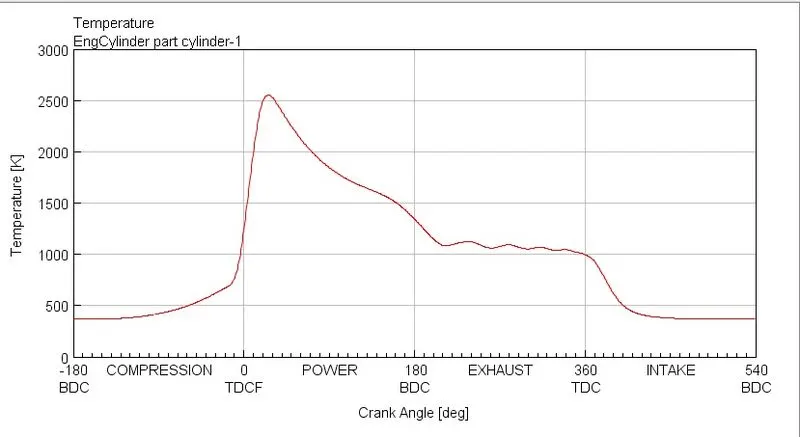
Temperature Graph
The temperature graph represents the sudden increase in temperature in the combustion chamber. The maximum rise in temperature is 2510 K while combustion of fuel in the combustion chamber
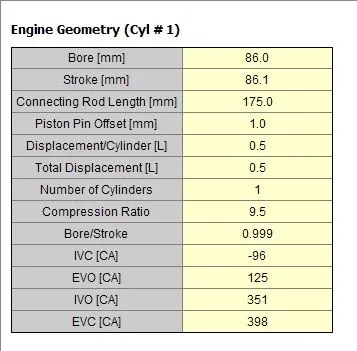
Engine Performance Parameter
Engine Geometric Parameters and valve Timing are shown below. The case setup is run with these initial parameters at 1800RPM
Output Results
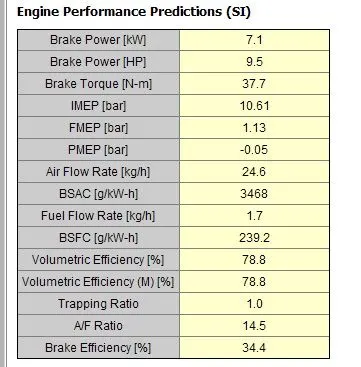
Brake Power =7.1Kw
Brake Torque = 37.7Nm
AIR Flow Rate = 24.6 Kg/h
BSFC = 239.2 g/Kw-h
In cylinder Pressure = 48bar
BMEP= IMEP-FMEP
= 10.61-1.13
= 9.48 Bar
Increase Power 10%
The rated power can be increased by changing Engine volume (Bore, Stroke), RPM, Intake Air temperature and fuel injection quantity.
Changning Engine volume
The change in either Bore, Stroke and both will change Engine volume. It will change the compression ratio. As compression ratio is given below
CR = V(Stroke) + V (Clearance) / V(clearance)
Case-1 BY Changing Bore Values
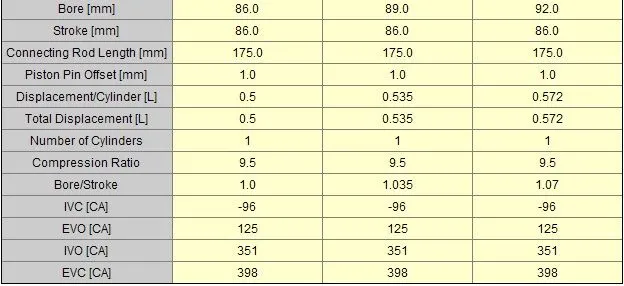
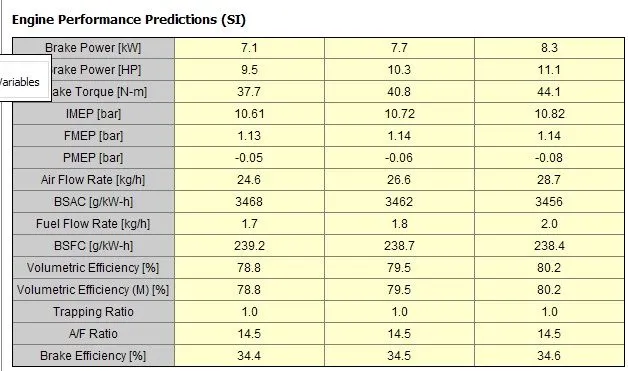
Bore values are changed to 86mm, 89mm and 92 mm and stroke remain constant at 86mm. With an increase in Compression Ratio, the Power of the Engine is also increased
The Power is increased to 7.7 kW as given below with an increase of Bore to 89mm
Case-2 BY Changing Stroke Values
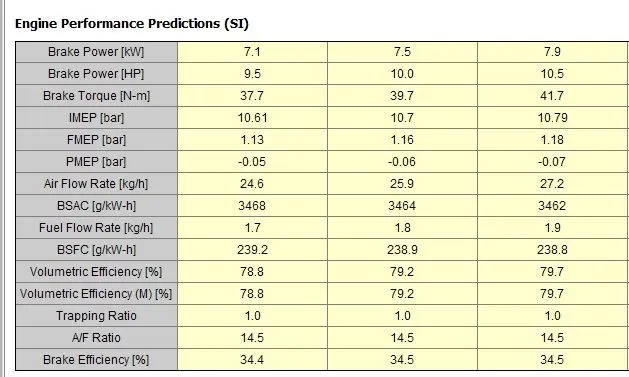
The stroke is changed to 86mm,90mm and 94 mm while the bore remains the same at 86mm. It will also change the compression ratio and power will also be increased.
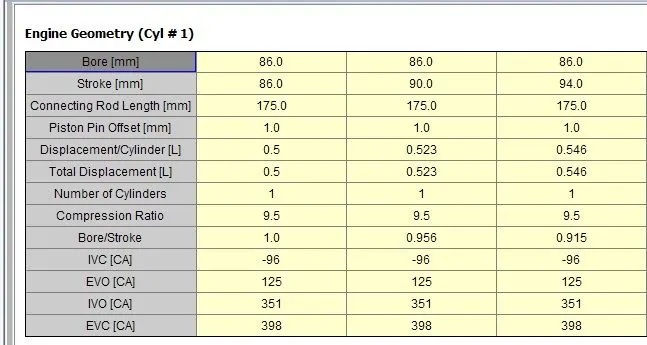
The power will be increased to 10% with a change of stroke to 86mm as shown below
Case-3 BY Changing both Bore and Stroke Values
The compression ratio will also be changed by changing both Bore and stroke values. It will also increase the Power of the Engine. In this case, bore and Stroke value set to 88mm is given below
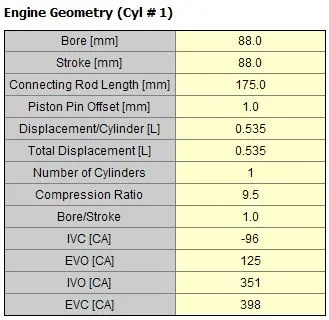
there is 10 per cent of power increased as value is 7.7 KW given below
RPM Change
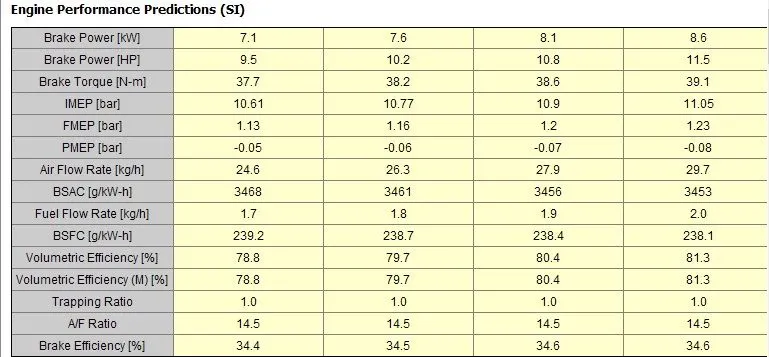
Change in RPM will also increase the Power of the Engine. In the below case Engine is Run at 1800,2000,2200,2400 rpm Respectively.
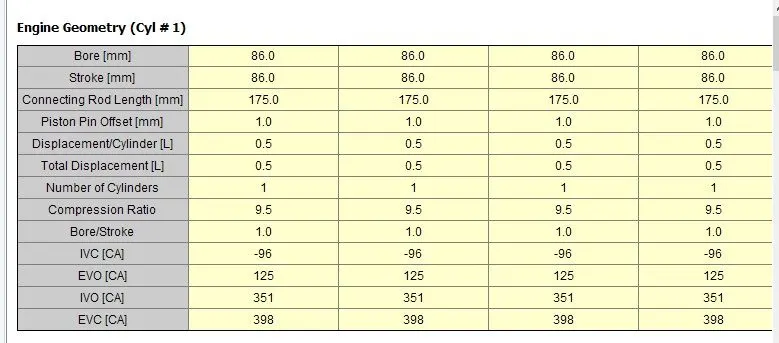
AT 2000 RPM Engine Power is increased to 7.6 kW which is 10% of initial Engine Power.
Air Intake Temperature
A decrease in Air Intake Temperature will also increase Power. As the Density of Air is increased by a Decrease in Temperature so more air will be entered into the cylinder. In the below case Engine intake temperature is at 300K and 295 K.

AT 295K air intake Temperature Power of Engine is increased
By Changing the fuel injection rate
Change in Fuel injection rate will change Air-Fuel Ratio. It will also increase Engine Power. It will affect Engine Emission norms as it will increase Smoke value.
So above mentioned methods will increase Engine Performance parameters.
Conclusions:
The SI engine modelling is done successfully with given input parameters.
The rpm, duration and air-fuel ratio are taken to compare the performance.
The brake power and airflow rate increased by 3600 rpm speed.