Simulator for a Doorbell using the solenoid block of Simulink and a fan using the thermistor block of Simulink
----------------------------------------------------------------------------------------------------------------------------------------------------------------------------------------------------------------------------------------------------------------------------------------
Task 1
Aim: Make a Simulink model of Doorbell using solenoid block
Theory: The most important part of a door bell is its magnetic motor. The magnetic motor constitutes a conventional electromagnet. We know that an electromagnet is an arrangement in which a coil of wire is wrapped around magnetic material which produces magnetic field when electricity is passed through the coil. The greater the coiling of the wire, the higher the amplification of magnetic field. This magnetic field produces a substantial effect on any magnetic substance when brought in the vicinity of its magnetic field. This means that when an iron object is placed in this magnetic field, it will be attracted towards the magnetic field due to polar orientation generated by the electromagnetism.
Process: When the doorbell button is pressed, the electric curcuit is closed, which leads to the flow of current through the electromagnet. This current is passed through the transformer, which converts this high voltage, into a usable low voltage. Different mechanisms can be used to obtain different type of noises. This current then flows throgh the electromagnetic wire winding. This induces a magnetic field, which can be used to drive different such mechanisms.
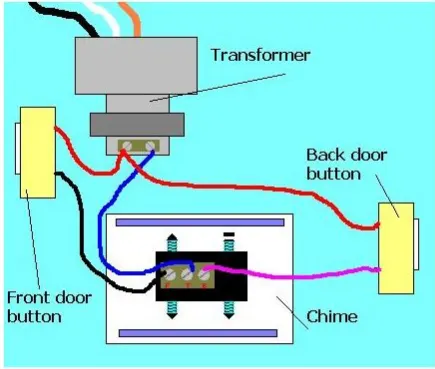
Mechanism of Chime:
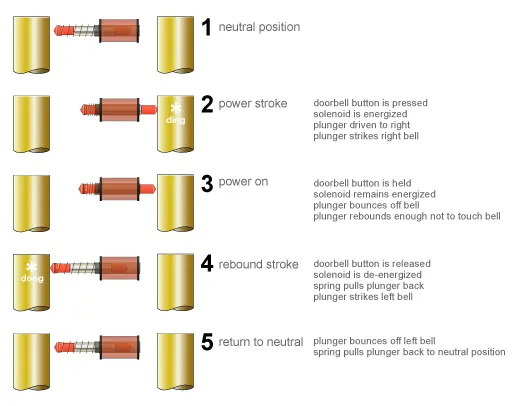
This image is self-explanatory, to know more, click here.
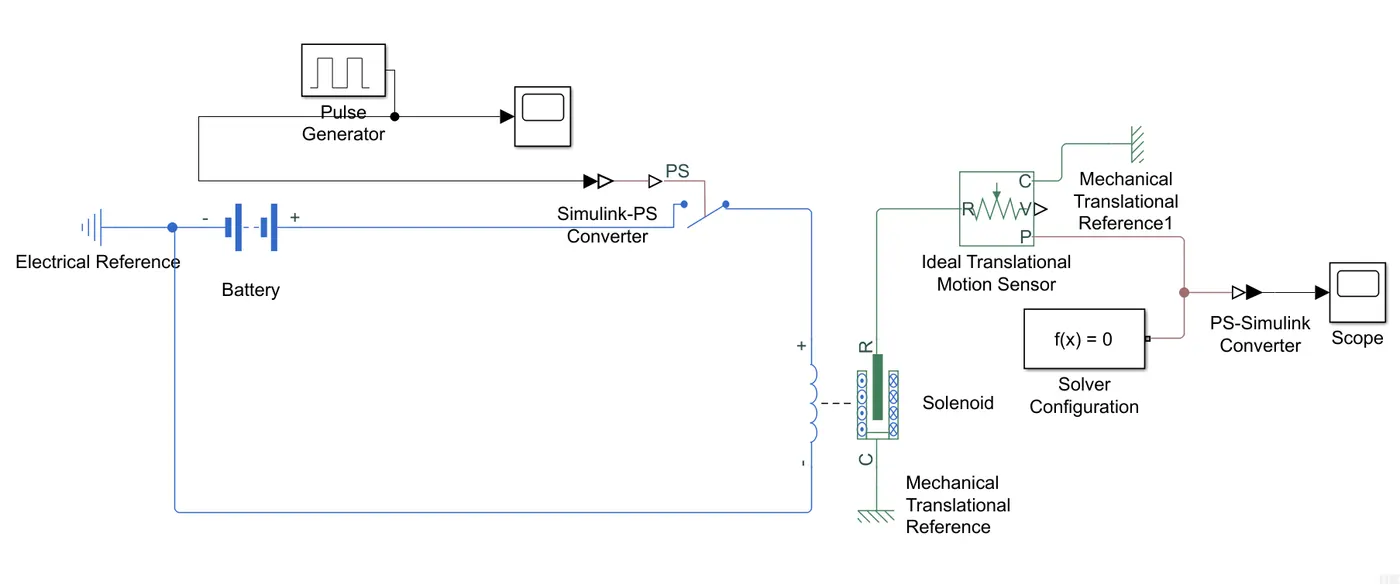
Simulink Model: Following model has been made using the Simulink feature of MATLAB.
A pulse generator has been used as input signal. Solenoid block is used to represent the plunger of the doorbell. This is connected to a D.C. battery source. Now, the circuit is connected to an electrical reference. To sense the motion of the plunger, an ideal translational motion senser is connected to the cuircuit bloc. The secondary simulink bloc is connected to a mechanical reference. Finally, a solver configuration is attached.
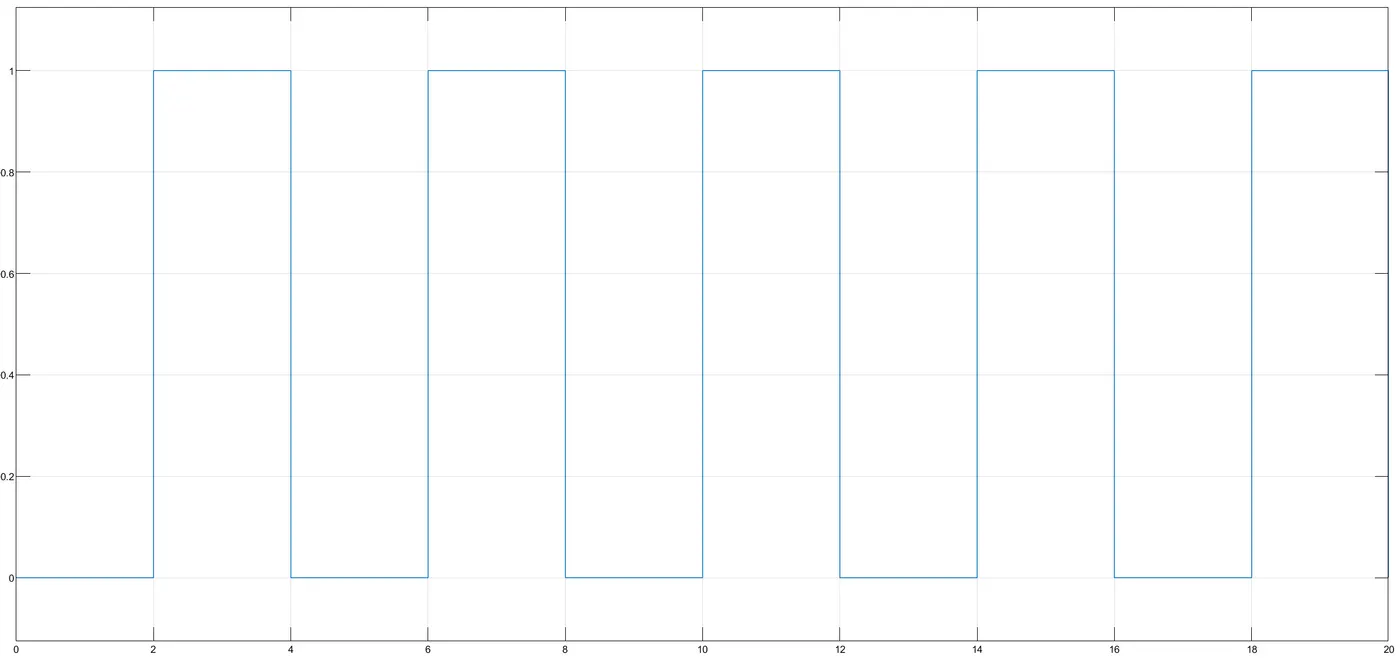
Input Signal:
Results:
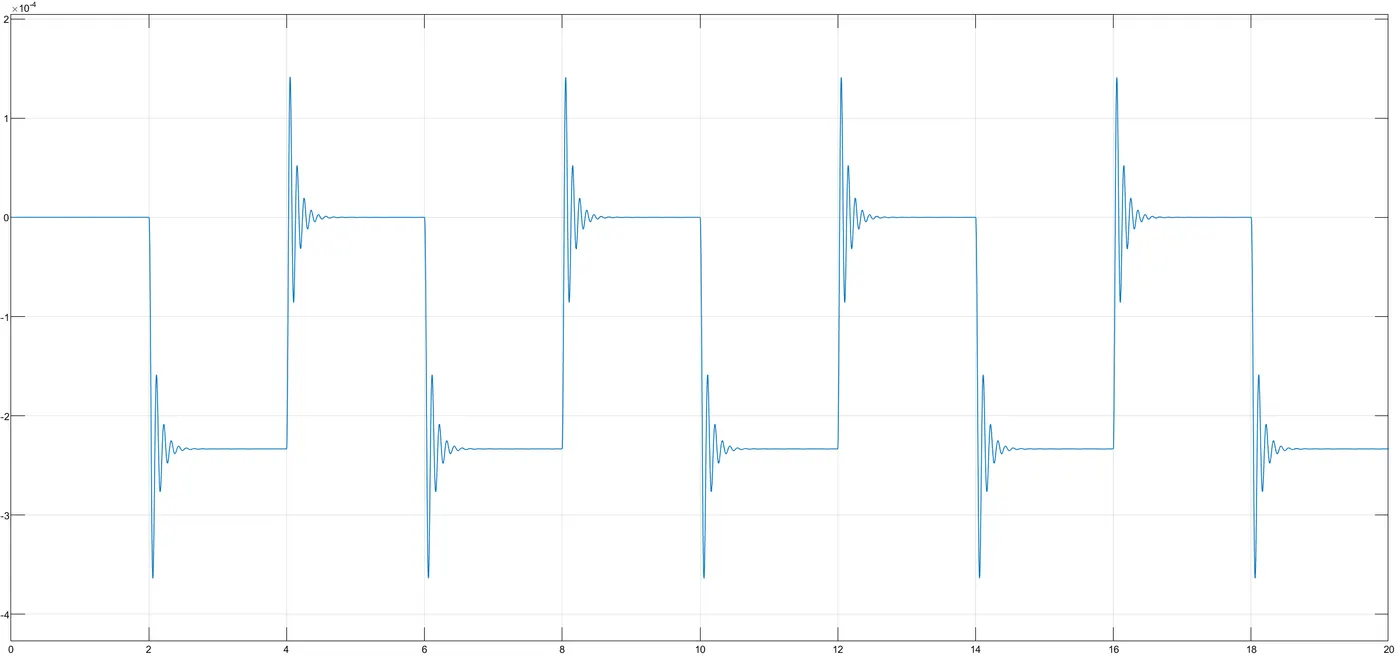
Thus, from the above graph, it is quite clear that when an electric current is passed through the elctromagnet, there is a movement in the plunger which is quite evident from the deflections shown in the curve. Thus, the study is done successfully.
Reference:
https://www.knockdoorbells.com/Knock%201%20images/advice%20main/1055-solenoid-actionF-07022.jpg
--------------------------------------------------------------------------------------------------------------------------------------------------------------------------------------------------------------------------------------------------------------------------------------------------------
Task 2
Aim: Use a thermistor to sense the temperature of a heater & turn on or turn off the fan
Theory: Thermistors, derived from the term thermaIly sensitive resistors, are a very accurate and cost- effective sensor for measuring temperature. Available in 2 types, NTC (negative temperature coefficient) and PTC (positive temperature coefficient), it is the NTC thermistor that is commonly used to measure temperature. Thermistors are available in two types: those with Negative Temperature Coefficients (NTC thermistors) and those with Positive Temperature Coefficients (PTC thermistors). NTC thermistors’ resistance decreases as their temperature increases, while PTC thermistors’ resistance increases as their temperature increases. Only NTC thermistors are commonly used in temperature measurement. Thermistors are composed of materials with known resistance. As the temperature increases, an NTC thermistor’s resistance will increase in a non-linear fashion, following a particular “curve.” The shape of this resistance vs. temperature curve is determined by the properties of the materials that make up the thermistor. Thermistors are available with a variety of base resistances. Low-temperature applications (-55 to approx. 70°C) generally use lower resistance thermistors 2252 to 10,000Ω). Higher temperature applications generally use higher resistance thermistors (above 10,000Ω). Some materials provide better stability than others. Resistances are normally specified at 25°C (77°F). Thermistors are accurate to approximately ± 0.2°C within their specified temperature range. They’re generally durable, long-lasting, and inexpensive. Thermistors are often selected for applications where ruggedness, reliability and stability are important. They’re well suited for use in environments with extreme conditions, or where electronic noise is present. They’re available in a variety of shapes: the ideal shape for a particular application depends on whether the thermistor will be surface-mounted or embedded in a system, and on the type of material being measured.
Assumptions:
Temperature source: 20 °C from 0 to 10 seconds, 27 °C from 10 to 30 seconds, 23 °C from 30 to 50 seconds
Fan conditions: ON if the temperature above 25 °C, OFF otherwise
Simulink Model:
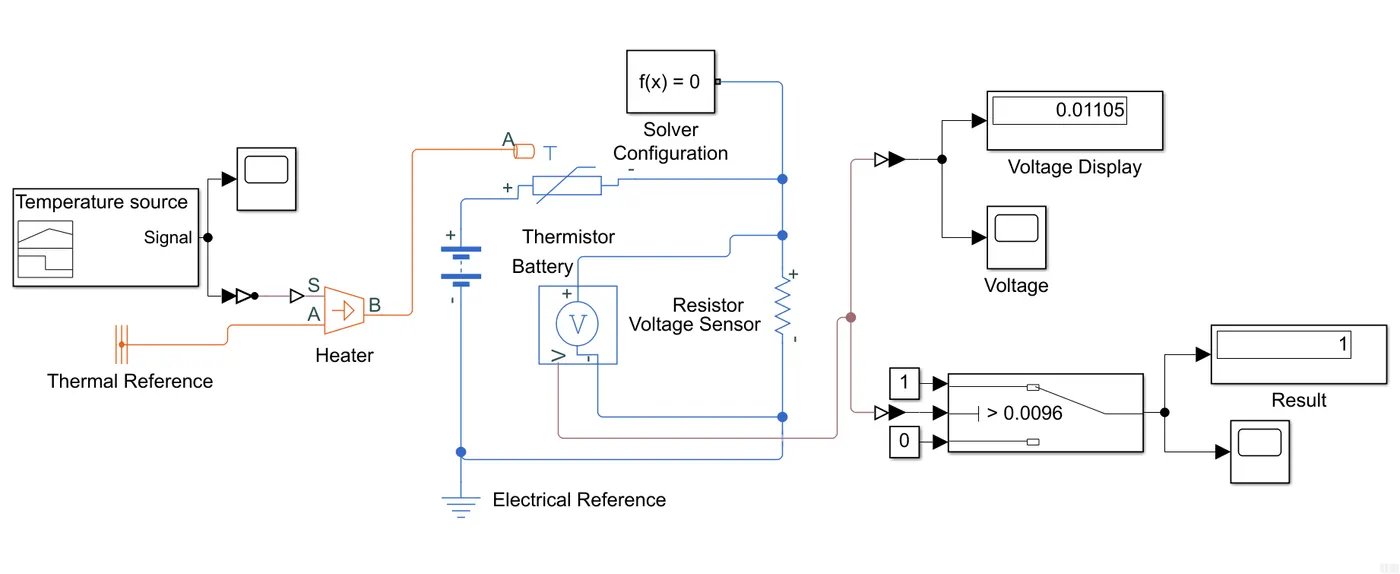
This model has been made using the simulink feature of MATLAB.
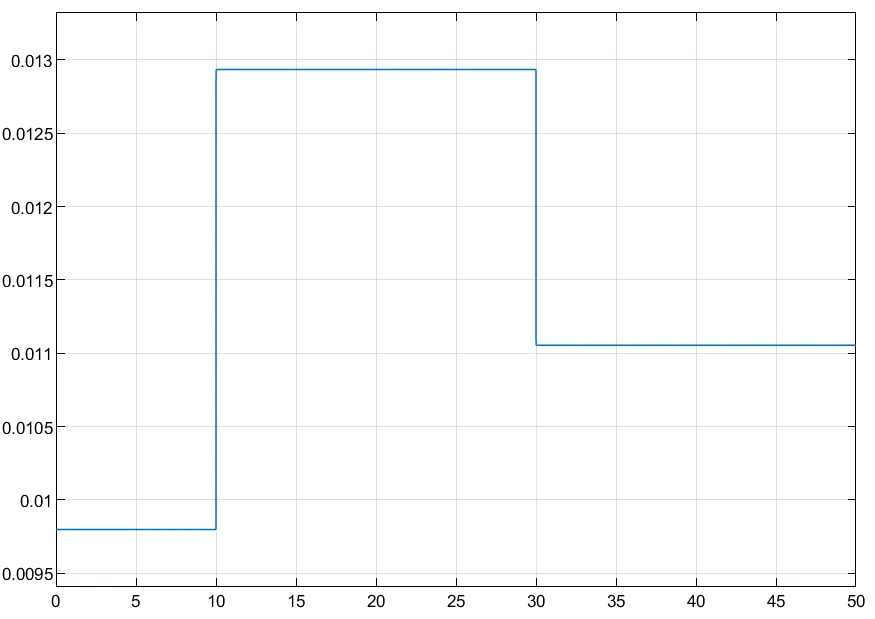
A signal builder has been used to input the temperature. This temperature source is connected to the heater, which takes the data supplied by the signal builder as the input for simulating the fan. A termistor is connected with the battery source and a voltage sensor is connected to check the voltage across the circuit. This data is then input into the fan and then the scope is attached to plot the motion of the fan.
Input Signal:
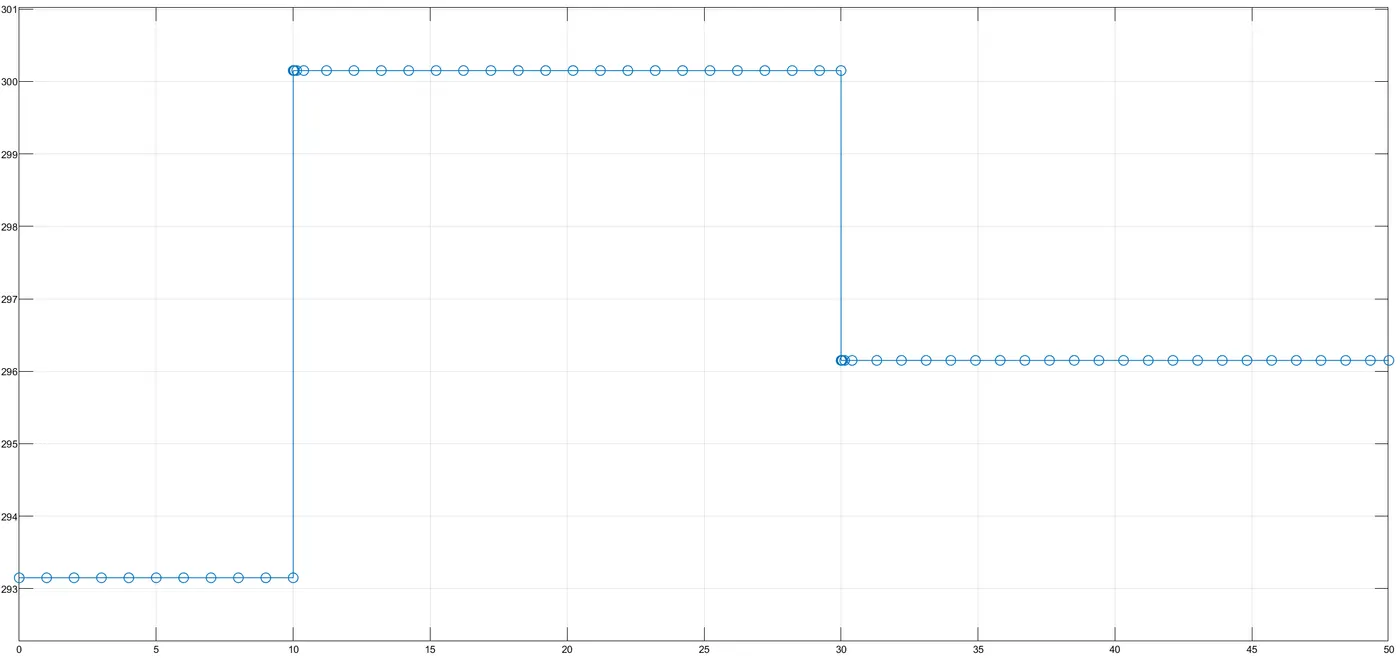
The signal has been made using the signal builder. The data points are taken as per the asked data.
Temperature source: 20 °C from 0 to 10 seconds, 27 °C from 10 to 30 seconds, 23 °C from 30 to 50 seconds
The temperature has been entered in K.
Result:
Reference:
https://www.omega.com/en-us/resources/thermistor
----------------------------------------------------------------------------------------------------------------------------------------------------------------------------------------------------------------------------------------------------------------------------------------