Week -2
1)
OBJECTIVE:
Modelling a Doorbell using solenoid block in SimuLink
HOW DOORBELL WORKS:
The heart of a doorbell is an electromagnet. Electromagnets are coils of wire wrapped around a small piece of magnetic metal. When electricity passes through the wire, it creates a magnetic field around the wire.
When we press a doorbell button, we complete an electrical circuit that allows household electricity to flow through the doorbell's internal electromagnet. The magnetic field generated by the electromagnet is then used to power a mechanism that creates the doorbell sound.
Doorbells are low-voltage devices. This means they require relatively little energy to operate. An important part of a doorbell mechanism is the transformer. The transformer converts regular 120-volt household current to the lower voltage (usually somewhere between 6-16 volts) required by the doorbell.
A simple chime doorbell uses the magnetic field created by the electromagnet to move a magnetic piston to strike two tone bars. This makes that “ding dong" sound we've heard many times.
The simplest type of doorbell is the buzzer. In a buzzer doorbell, the electromagnet operates a self-interrupting circuit. When the button is pressed, the circuit closes and the electromagnet moves a contact arm. When the contact arm moves, it interrupts the circuit and the electromagnet stops. When it stops, the contact arms falls back into position, completing the circuit and starting the process over again.
This cycle repeats quickly over and over again as long as the button of the doorbell is held down. The sound of the contact arm hitting the electromagnet multiple times every second creates the buzzing noise we hear the doorbell.
SIMULINK MODEL:
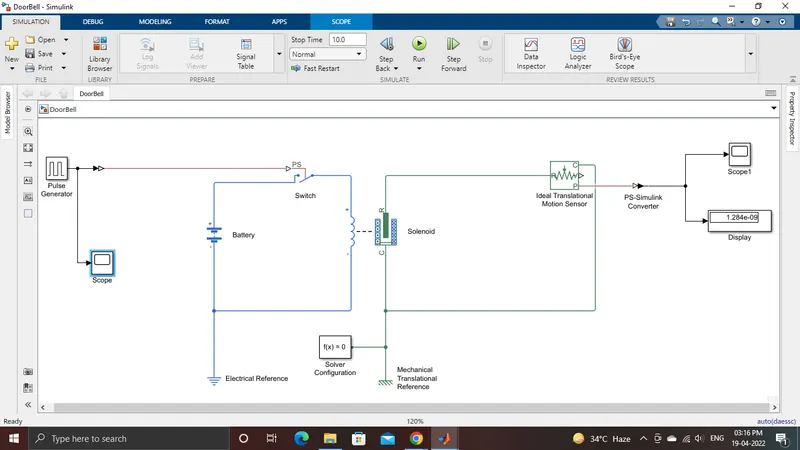
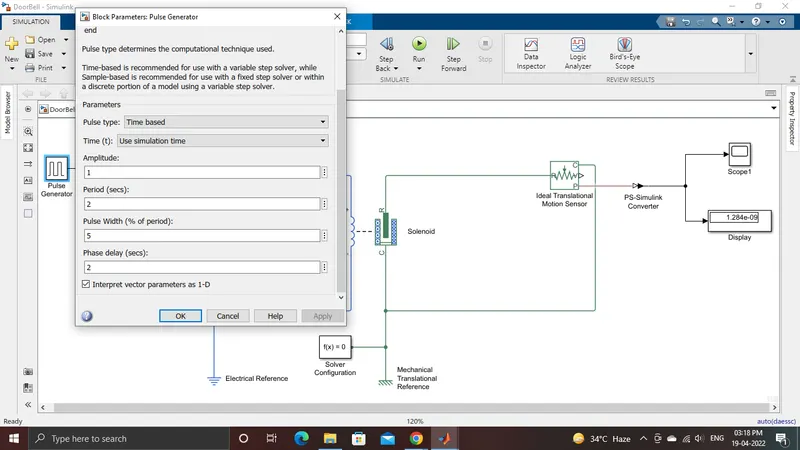
Before we run the model we input the parameters of the pulse generator.
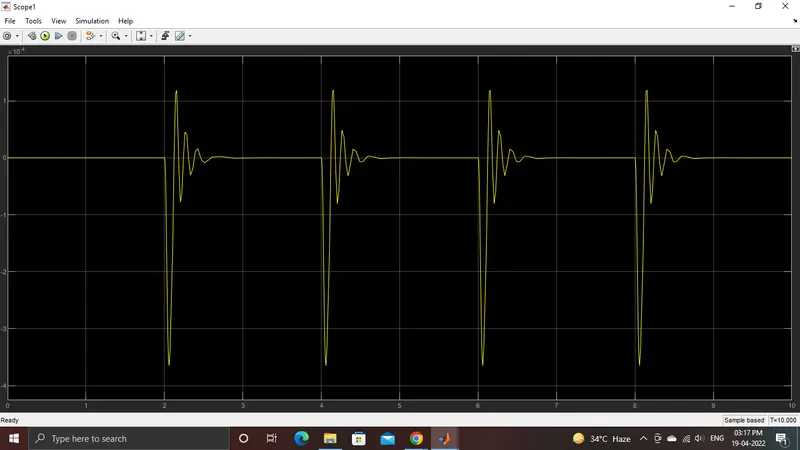
OUTPUT signal of the MODEL
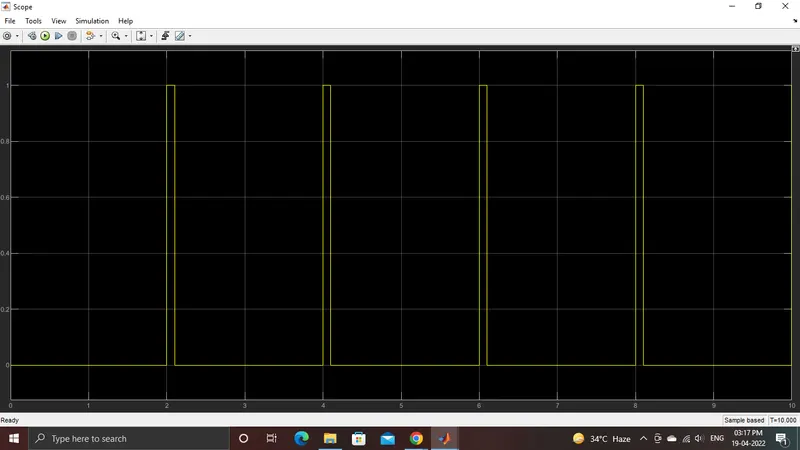
INPUT section of the Pulse generator.
2)
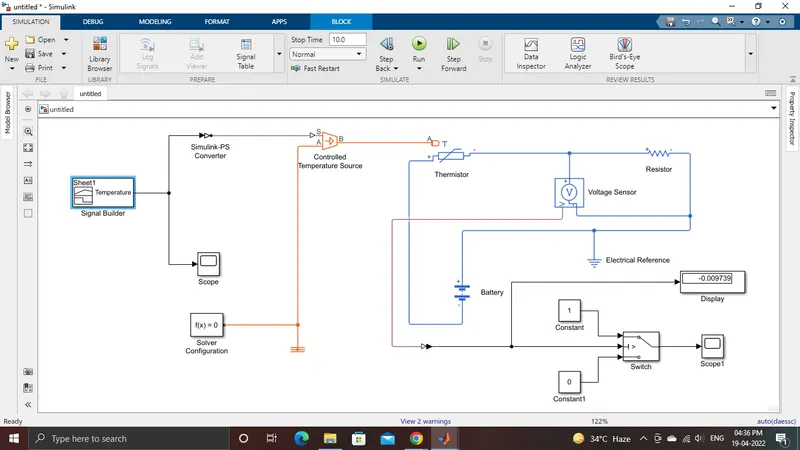
A thermistor is a resistance thermometer, or a resistor whose resistance is dependent on temperature. The term is a combination of “thermal” and “resistor”. It is made of metallic oxides, pressed into a bead, disk, or cylindrical shape and then encapsulated with an impermeable material such as epoxy or glass.
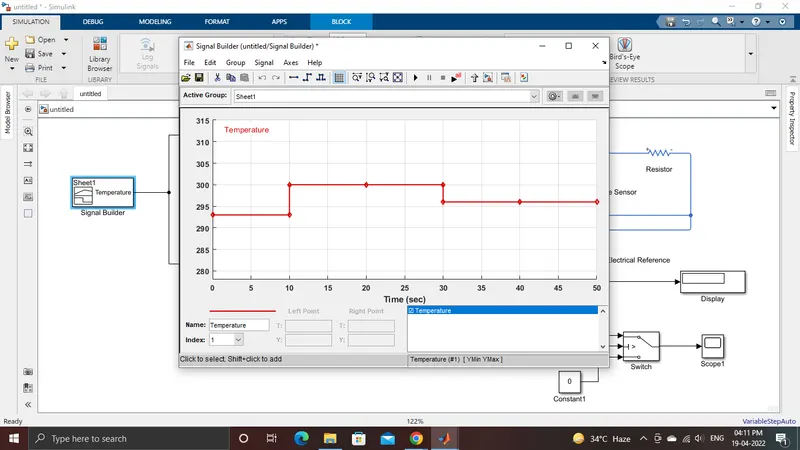
After importing the Temperature source data from excel sheet we import it into a signal builder.
CONCLUSION:
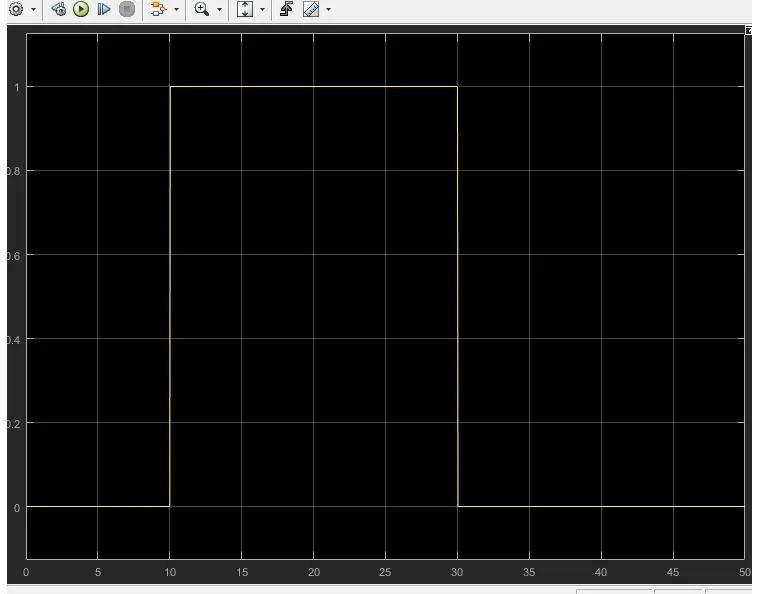
we get 1 and a signal if temperature is above 25 degrees