Using simulink model of doorbel using solenoid block & use a thermister to sense the temperature of a heater.
Aim:
- Make a Simulink model of Doorbell using solenoid block.
- Use a thermistor to sense the temperature of a heater & turn on or turn off the fan as per the below conditions
Introduction:
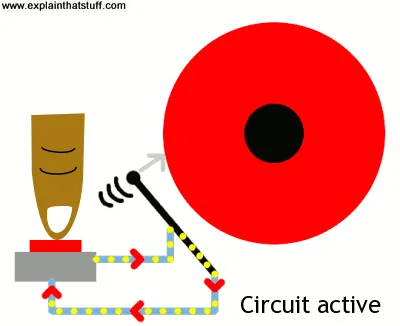
Model of door bell
working
When you press a doorbell button, you complete an electrical circuit that allows household electricity to flow through the doorbell's internal electromagnet. The magnetic field generated by the electromagnet is then used to power a mechanism that creates the doorbell sound. Doorbells are low-voltage devices.
Objectives:
- In the above arrangement, when the switch is closed the electromagnet receives electrical power from the battery and pulls the metal arm to hit the bell producing sound.
- Create a situation where the switch is closed for 2 seconds and then released. Observe the physical movement of the plunger.
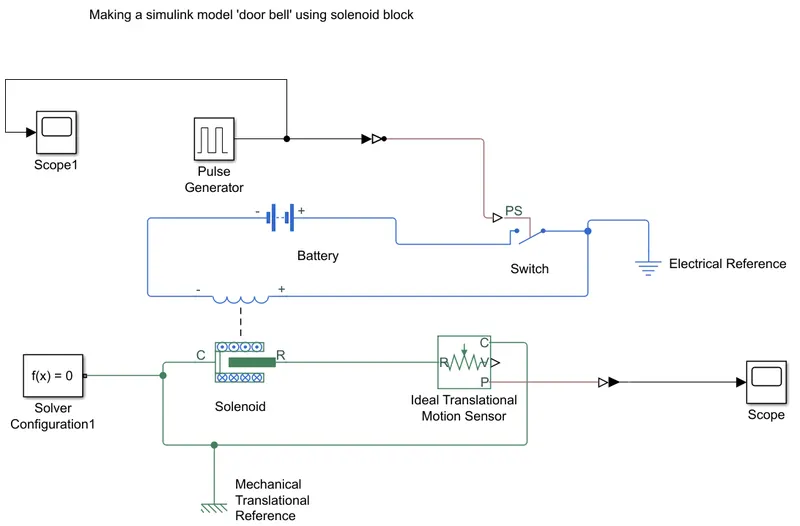
Simulink model:
Pulse generator output:
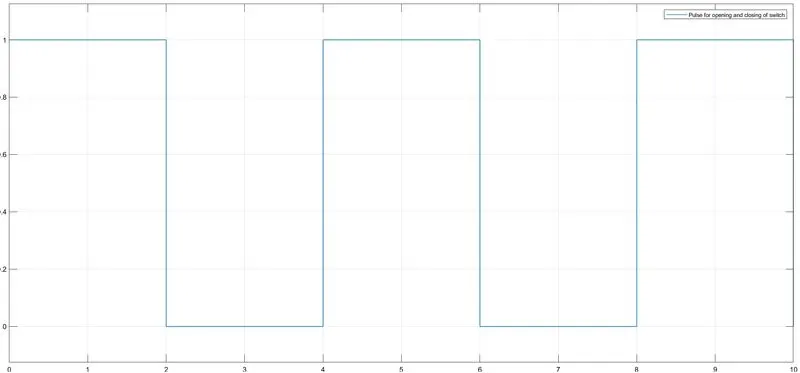
In this case the switch is cloced for first 2 seconds and switch is opened for another 2 seconds.
Model Explanation:
- In this model first i have been taken the switch which is controlled by pulse generator block to given the inputs of 4 i.e when 2 seconds for the switch is open and another 2 seconds for the switch is closed so, i can create a situation when the switch is closed for 2 seconds and opn for two seconds.Then i take the battery block to given the current supply for that.
- When the battery and switch i have been connected into solenoid block which is available in simulink physical system.
- Then i'll use the mechanical translational sensor to sense the movement of plunger on the solenoid valve.The scope is connected to the ideal translational sensor which shows the graphical reference of movement of plunger.
- In this case i'll use the mechanical referece and solver configration for simulation.
Outputs:
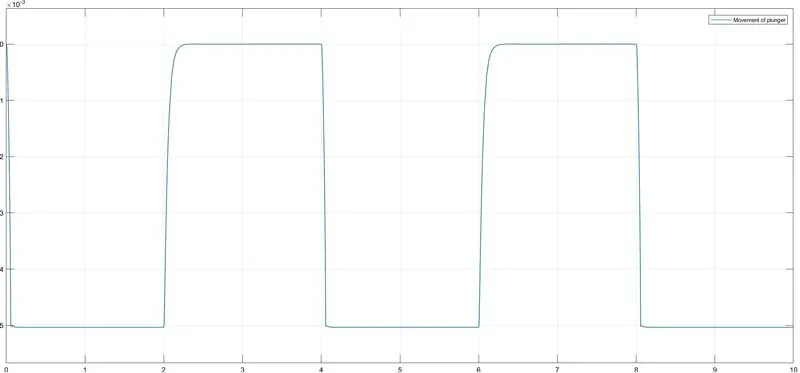
In this case the move of plunger with respect to time can be visualized i.e for first 2 second the plunger moves from 0 to 5 then another 2 seconds it will return back to its original position.
Important blocks used in this model and their uses:
Inputs:
Pulse generator
Pulse type determines the computational technique used.Time-based is recommended for use with a variable step solver, while Sample-based is recommended for use with a fixed step solver or within a discrete portion of a model using a variable step solver.
Switch:
The Switch block models a switch controlled by an external physical signal. If the external physical signal PS is greater than the value specified in the Threshold parameter, then the switch is closed, otherwise the switch is open.
Battery:
The Battery block represents a simple battery model. The block has four modeling variants, accessible by right-clicking the block in your block diagram and then selecting the appropriate option from the context menu, under Simscape > Block choices:
Solenoid:
The plunger Maximum stroke is implemented as a hard stop, the dynamics of which are set by the Contact stiffness and Contact damping parameters. The same parameters are used to model the contact dynamics when the plunger pulls fully in. The Spring constant parameter is used to implement a spring force that pulls the plunger out, and can be set to zero.
Solver configration:
Each physical network represented by a connected Simscape™ block diagram requires solver settings information for simulation. The Solver Configuration block specifies the solver parameters that your model needs before you can begin simulation.
Outputs:
Ideal translational sensor:
This block measures velocity or displacement in a mechanical translational network.so, in this challange we have been find the displacement of plunger with respect to time.
scope
Scope is used to show the graphical referance of movemect of plunger and Opening and closing of switch with respect to time.
2. Use a thermistor to sense the temperature of a heater & turn on or turn off the fan as per the below conditions:
Introduction:
Automatic Temperature Control, as its name implies, is an automatic climate control system, which automatically controls interior temperature based on the driver's demands and temperature information from various sources. ATC does this through direct interaction with the vehicle's A/C and heating systems.so, in this case I have been given a input signal from the thermister to the D.C motor.once the temperature is achieved the thermister sence the temperature and given the signal to the D.C motor then the motor starts rotates to control the temperature.
Block model:
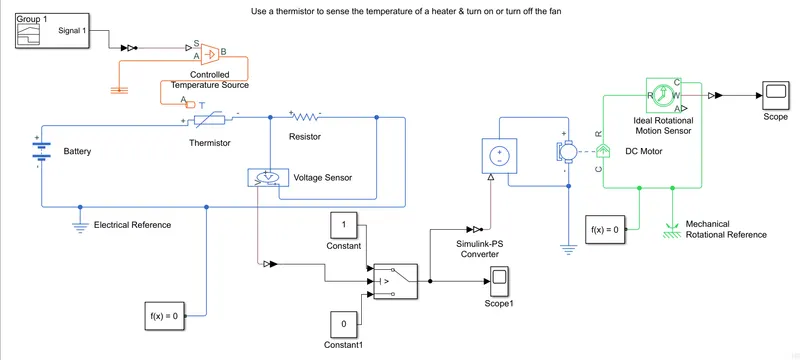
Model explanation:
In this model i have been created the simulink blocks to sence the temperature of heater by the thermister to turn on and turn off the fan whenever required.First i will take the thermister and connect it to the controlled temp source.when the controlled temp sourse requires the input of temperature difference,over here we have 3 different temperature sourse so thats why i'm taking the controlled temp sourse and connet it to the signal builder, With the help of this Signal builder block to set the 3 difference of temp W.R.T time and given the input to controlled temp source.After that i can connect the battery and resistor it would supply the required current to the D.C motor when ever they required.In this case i can use the voltage sensor block to supply the inputs value three temp to the switch which is gained from the thermister.When the switch having three inputs input 1&3 are data ports and input 2 are control port which is known as u2 ,our main aim of this challange is to turn ON the fan at 25 degree celcius .i'll given the inputs of the switch is u2 > threshold force i.e the value given by the voltage sensor is greater then the u2 value means conect to the 1 st data port until connect the 2nd data port.Now the switch is closed or opened with respect to comparision of threshold and u2 value.when the switch is closed its spplies the power to the controlled voltage source block it will try to rotate the D.C motor.
Important blocks used in this model:
- signal builder- This block is used to given the varaion of inputs as per the project requirments with respect to x & y co-ordinates.
- controlled temp source- This block is an physical system block in a thermal network it will maintain the temp difference of the heat flow
- Thermiater- The Thermistor block represents an NTC thermistor which is used to sense the temp from the thermal source.
- voltage sensor- The block represents an ideal voltage sensor, that is, a device that converts voltage measured between any electrical connections into a physical signal proportional to the voltage.
- Input switch - This block contains 3 inputs when Pass through input 1 when input 2 satisfies the selected criterion; otherwise, pass through input 3. The inputs are numbered top to bottom (or left to right). The first and third input ports are data ports, and the second input port is the control port. The criteria for control port 2 are u2 >= Threshold, u2 > Threshold or u2 ~= 0.
- Controlled voltage source - The block represents an ideal voltage source that is powerful enough to maintain the specified voltage at its output regardless of the current passing through it. The output voltage is V = Vs, where Vs is the numerical value presented at the physical signal port.
- D.C Motor - This block represents the electrical and torque characteristics of a DC motor.
- Ideal rotational motion sensor - In this case the block measures the angular velocity or angle in a mechanical rotational network of the D.C motor.
Output:
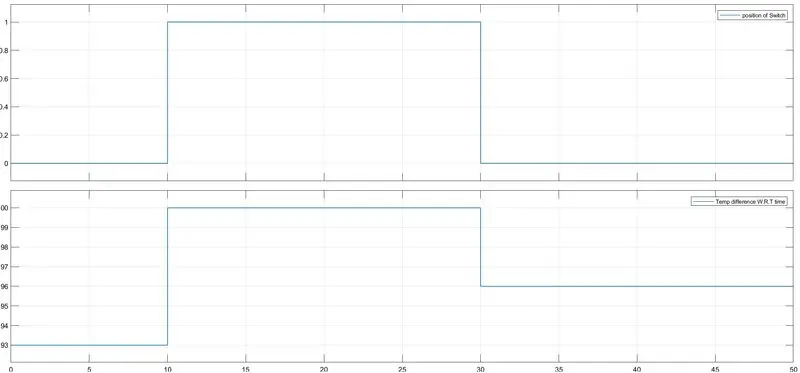
- In this output The first sub plot shows the position of switch i.e ON/OFF condition.At the rate of temp 25 degree can be achieved in 10 -30 seconds so, that time the switch gets cloced.
- The second sub-plot shows 3 difference of temp which given as input W.R.T time.
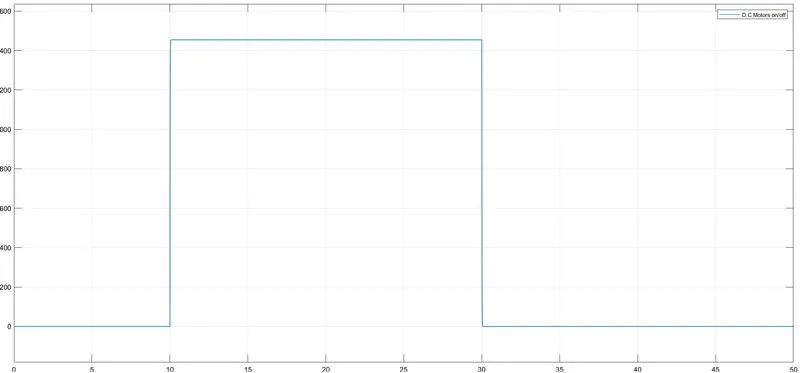
- In this case the scope shows the working D.C motor.At the rate of 10-30 seconds then temp increased more then 25 degree celcius so the motor will try to rotate at the ample of time to control the temp.