Week -2
1. Make a Simulink model of Doorbell using solenoid block with the following details
Working of doorbell
A Solenoid is a type of electromagnet that is used in ringing doorbells. A solenoid is nothing more than an electromagnet with a coiled wire around a metal piston. The electromagnetic field may drive the piston backward or forward because it comprises magnetically conductive metal. To see how this works, press the button in the diagram below. The solenoid piston in this design is made out of an iron core attached to a non-magnetic metal bar. When the electromagnet is turned off, a spring pulls the piston to the left, causing the iron core to expand beyond the wire coil. The iron core is dragged to the magnetic field when the electromagnet is switched on by pushing the bell button, and it slips into the centre of the coiled wire. The end of the piston strikes the right-hand tone bar as the iron core glides to the right. The tone bar vibrates, resulting in a certain note. This is the sound of a "ding." The current will flow through the electromagnet as long as users hold the doorbell button down, and the piston will remain in this position. When the button is activated, though. The current in the electromagnet will cease flowing, and the magnetic field will collapse. The piston is snapped back to the left by the spring, where it collides with the tone bar on the other side. The "ding" sound is produced by the second tone bar. More solenoids and tone bars can be used to create more complex tone sequences. When someone rings the rear doorbell, certain varieties of this design create a different tone pattern than when someone rings the front doorbell. Each doorbell button closes its own circuit, which is coupled to solenoids in the doorbell mechanism. In its most basic form. Instead of the second tone bar, one of the solenoids strikes a bumper. One doorbell button will produce a "ding-dong" tone, while the other will just produce a "ding" tone. People have started placing electronic doorbells in their houses in increasing numbers in recent years. There are no electromagnets or tone bars in an electronic buzzer. Instead, it uses an integrated circuit (IC) to track when the button is pressed. A digitally recorded song or message is triggered by the IC.
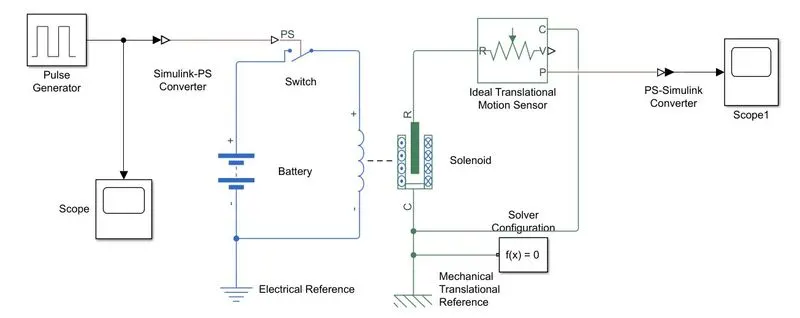
figure 1: Simulink model of Doorbell using solenoid block
Block Used:
Following blocks are used in Simulink to make this project
- Pulse Generator
- Switch
- Battery
- Electrical Reference
- Solenoid
- Mechanical Translational Reference
- Ideal Translational Motion Sensor
- Solver Configuration
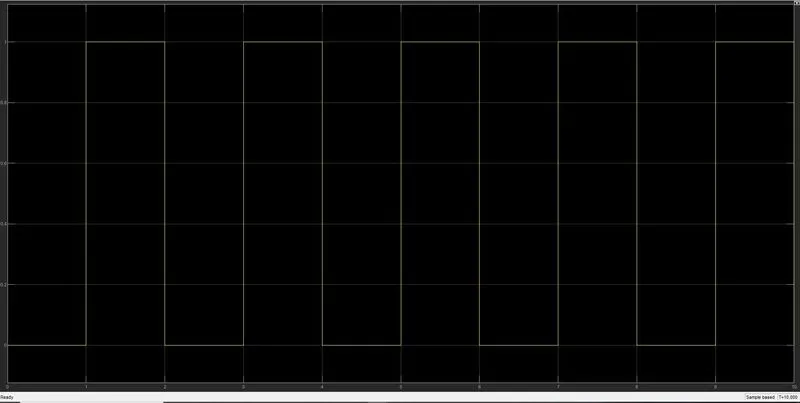
Figure 2: input pulse
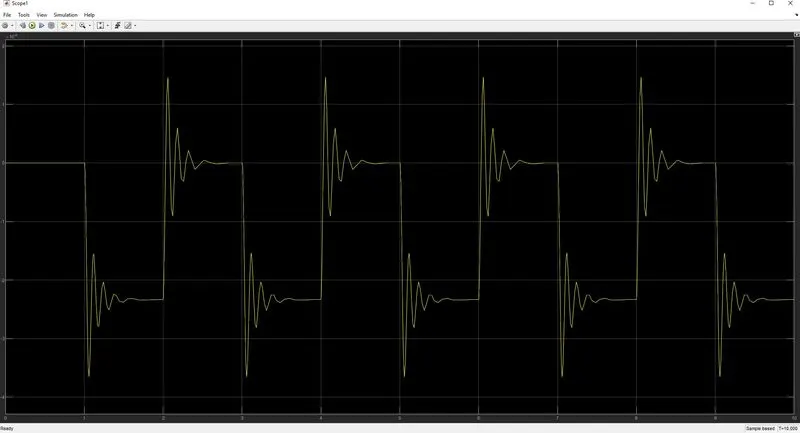
Figure 3: output result
here in this output it is clearly sense the moment of the plunger.
2. Use a thermistor to sense the temperature of a heater & turn on or turn off the fan
Thermistor: A thermal resistor is a resistor whose electrical resistance changes as the temperature varies. Although the resistance of all resistors varies slightly with temperature, the resistance of a thermistor is more sensitive to temperature variations. In a circuit, thermistors serve as a passive component. They are a reliable, accurate, and inexpensive technique to detect temperature. Despite the fact that thermistors do not operate well in severe heat or cold, they are the sensor of choice for a wide range of applications.
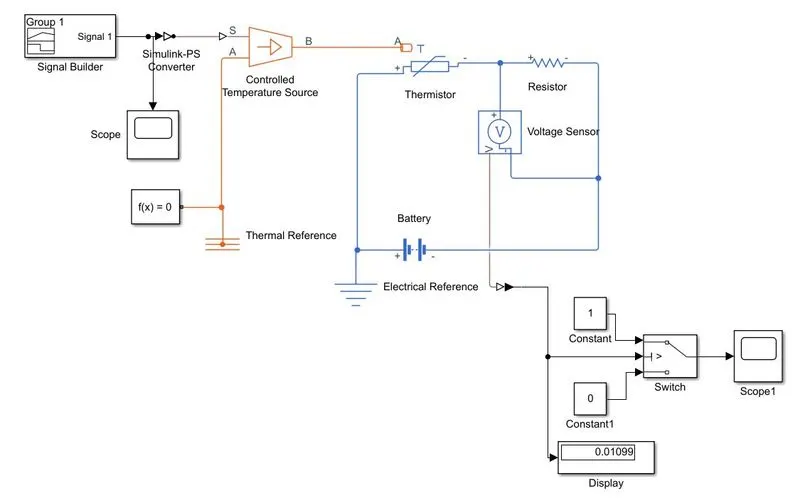
Figure 4: simulink model
Explanation
Here signal builder block is used for input signal and it is made as per given condition
- 1-10 sec temperature is 293K
- 10-30 sec temperature is 300K
- 30-50 sec temperature is 296K
Below image shows the signal
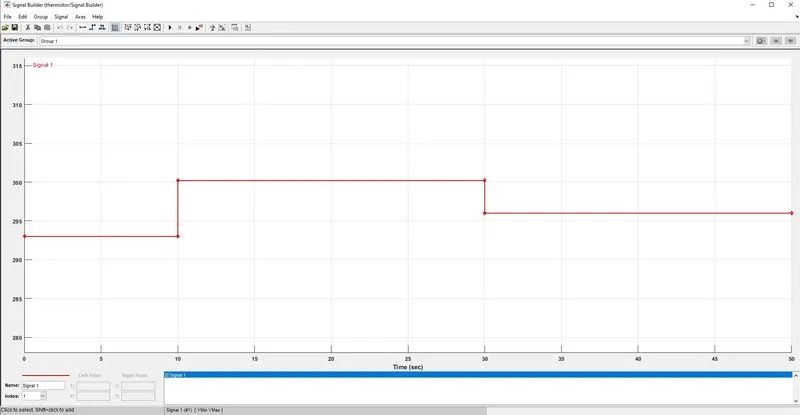
Figure 5: input signal in sgnal builder block
it is treated as intergrated input signal and for this, simulink-ps converter input handaling is set as filter input so that block is able to read the signal. It is very crucial step.
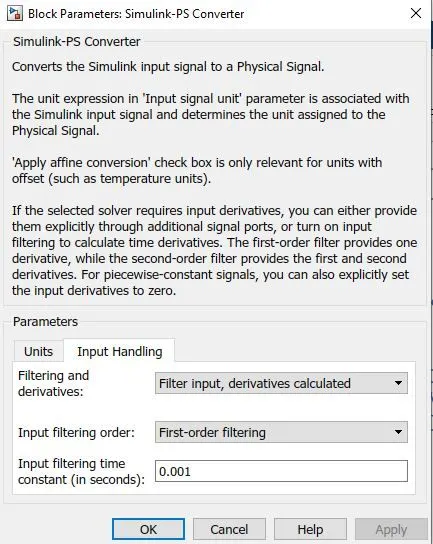
Figure 6: Simulink to ps converter block parameters
A regulated temperature source is an ideal source of thermal energy because it can maintain a constant temperature differential independent of the heat flow rate. The physical signal port S controls the temperature difference. When there is a positive temperature differential, the temperature at port B is higher than the temperature at port A. Thermistor is a kind of resistor whose resistance varies with temperature. To regulate the amount of current drawn from the battery, a linear resistor is employed. The voltage sensor is used to transform the voltage measured between two places into a physical signal. Solver Configuration is applied to a voltage source that represents a dc or ac electrical reference block. For simulation, each physical network represented by a linked simscape block requires solver setup information.
Result
Because the temperature is 293K, which is less than the 298K threshold, the fan is turned off for 0 to 10 seconds. If the temperature rises over 298 degrees kelvin in 10 seconds, the switch will turn on. After 30 seconds, the fan will switch off since the temperature has dropped to 296K, which is below the threshold temperature of 298K. So all the conditions is fullfilled.
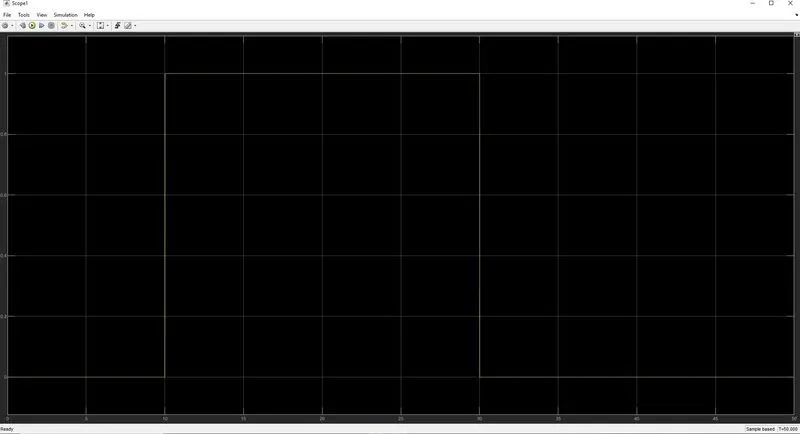
Figure 7: output result