Week 14 challenge
Aim:
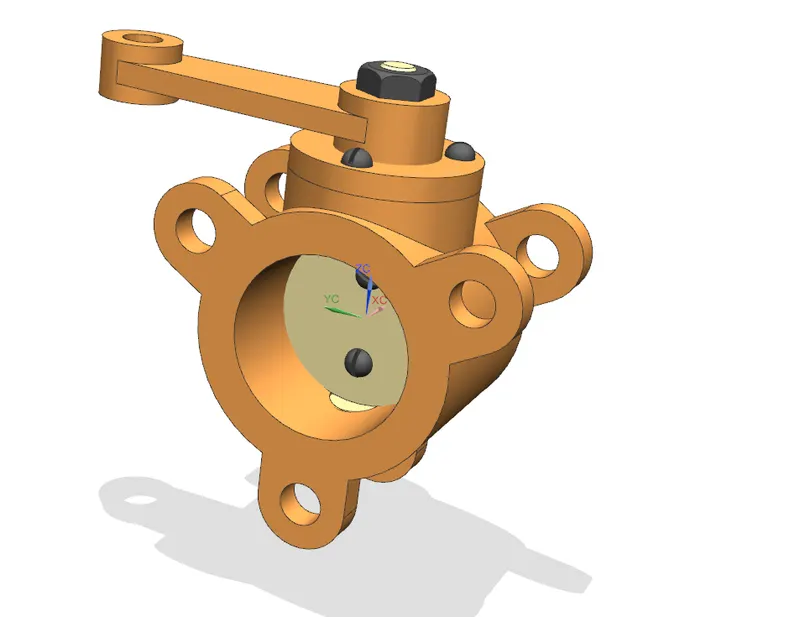
The aim of this project is to design a butterfly valve and apply GD&T to it's components and final assembly using Siemens NX.
Introduction:
A butterfly valve is a type of quarter-turn valve that is used to control the flow of fluids through a pipeline. It derives its name from the shape of its disc, which resembles the wings of a butterfly. The disc is mounted on a spindle or stem, which is positioned in the center of the pipe. When the valve is fully open, the disc is perpendicular to the flow, allowing for maximum fluid passage. Conversely, when the valve is closed, the disc is parallel to the flow, obstructing the fluid flow completely.
Butterfly valves are known for their simple and compact design, which makes them cost-effective and easy to install. They are commonly used in both industrial and commercial applications, where they provide efficient control over the flow of various fluids, including water, gases, slurry, and corrosive substances.
The operation of a butterfly valve can be manual or automated. In manual operation, a lever or a handwheel is used to rotate the disc and control the flow. In automated systems, an actuator, such as a pneumatic, hydraulic, or electric actuator, is attached to the valve, enabling remote control and precise positioning of the disc.
Working Principle
The butterfly valve operates on a quarter-turn principle. When the valve is in the closed position, the disc completely blocks the fluid passage. As the valve is opened, the disc rotates 90 degrees, allowing for full flow. The disc's position can be controlled manually using a handle or automatically through an actuator. The flow characteristics of a butterfly valve are typically quick opening, making them suitable for applications requiring fast response and tight shut-off.
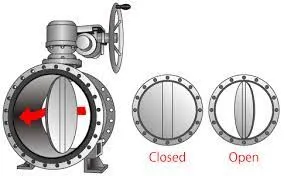
Components:
- Body
- Shaft
- Disc
- Retainer
- Lever
Design Considerations
During the design of a butterfly valve assembly, the following considerations should be taken into account:
a. Size and Pressure Rating: The valve size and pressure rating should be selected based on the specific application requirements, considering factors such as fluid flow rate, system pressure, and pipe dimensions.
b. Material Selection: The materials used for the valve components should be compatible with the fluid being handled and resistant to corrosion, erosion, and wear. Common materials include stainless steel, cast iron, carbon steel, and various polymers.
c. Seat Design: The seat design plays a crucial role in providing a reliable seal. Considerations should be given to the seat material, shape, and sealing mechanism (such as elastomeric or metal-to-metal) to ensure effective sealing and longevity.
d. Disc Profile: The disc profile influences the flow characteristics of the valve. The design should be optimized to minimize pressure drop, turbulence, and cavitation while maintaining a tight
Butterfly valves offer several advantages, including:
-
Fast and Efficient Operation: Butterfly valves can be quickly opened or closed with a quarter-turn motion, allowing for rapid response and efficient flow control.
-
Minimal Pressure Drop: The streamlined disc design of butterfly valves minimizes the pressure drop across the valve, resulting in improved energy efficiency.
-
Space-Saving Design: Butterfly valves have a compact design, making them suitable for installations where space is limited.
-
Cost-Effectiveness: Due to their simple design and ease of installation, butterfly valves are often more affordable compared to other types of valves.
-
Versatility: Butterfly valves can be used in a wide range of applications and industries, including water treatment plants, HVAC systems, oil and gas pipelines, chemical processing, food and beverage production, and more.
Cad Models:
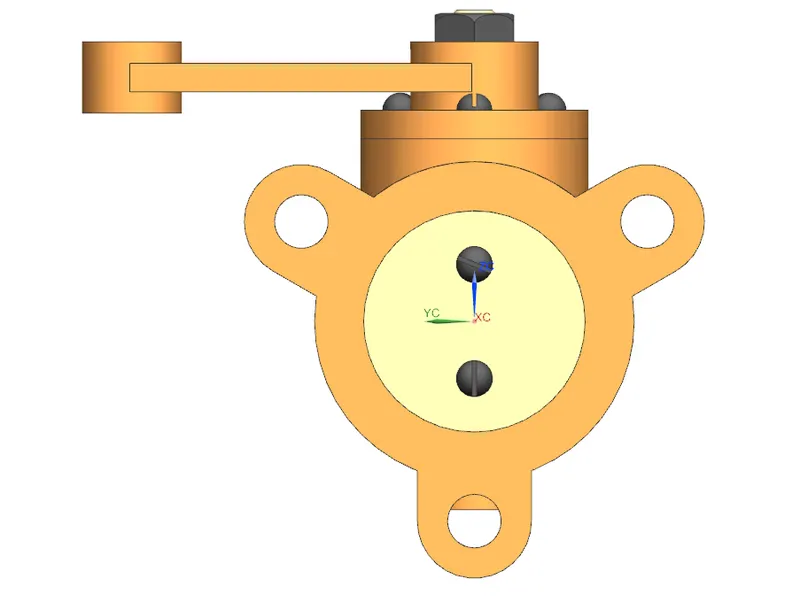
Front View:
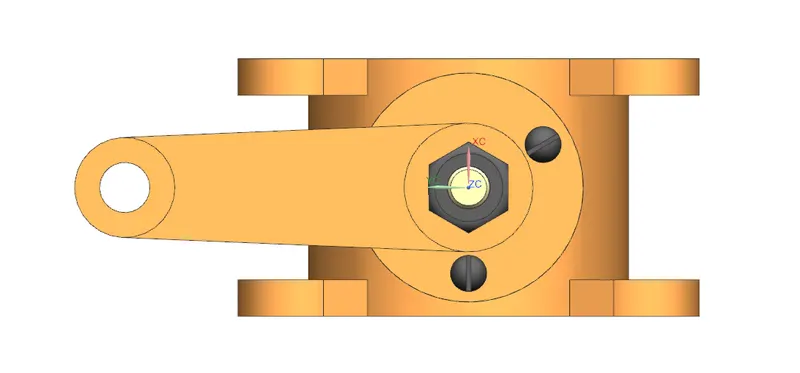
Top View:
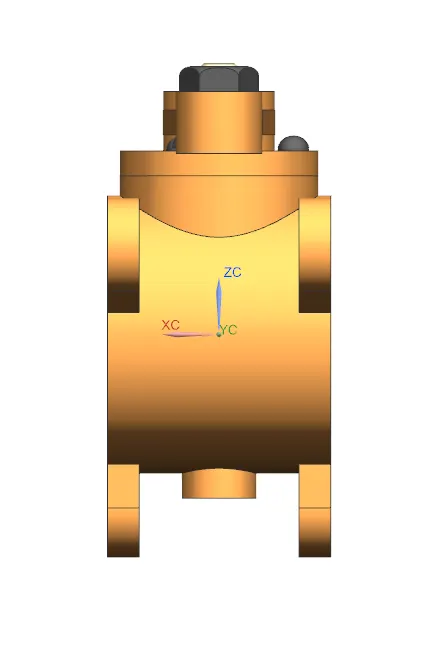
Side View:
Isometric View:
Drafting:
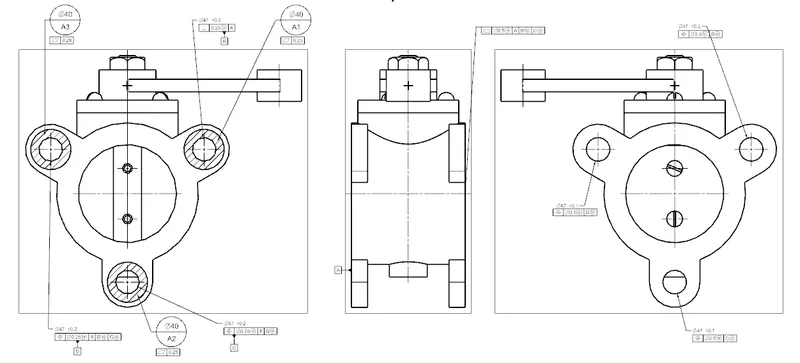
Conclusion:
Successfully created butterfly valve model and created draft with GD&T.