Week 12- Final project
AIM - Development of a Door Trim panel.
Creation of CAD model considering the following inputs as like in OEM and tier1 companies
- a) Class A surface
- b) Nominal thickness: Refer to master sections
- c) Attachment strategy :
Find an attachment strategy for the door panel complete work.
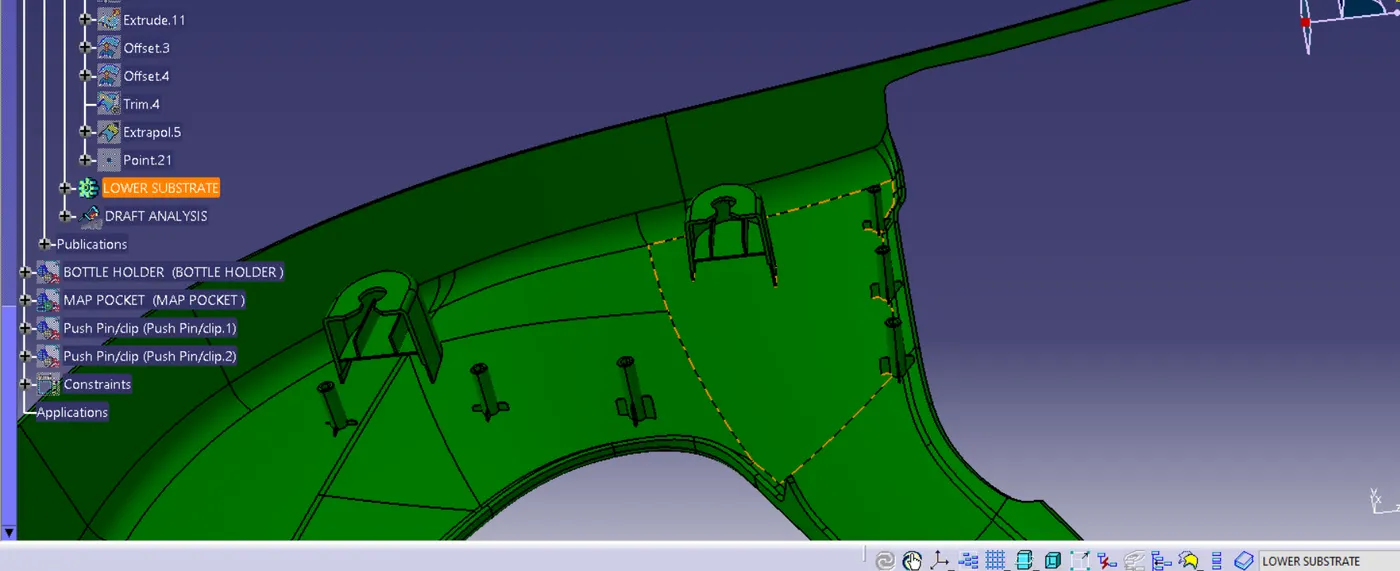
Use Push pin with Dog house for Lower substrate – Door panel attachment
Use heat stakes for part-to-part attachment
INTRODUCTION - The Door Trim Panel is a crucial component of automotive interiors, serving both functional and aesthetic purposes. It provides a seamless and attractive interface between the vehicle's interior and exterior. This project aims to develop a high-quality CAD model for a Door Trim Panel, with a focus on Class A surface quality, nominal thickness adherence, and effective attachment strategies.
DOOR TRIM - Next to the dashboard, the door trims are the interior parts that contain the most controls and decorative parts. As such, there is a necessity for balancing the gap between parts and an overall sense of unity between the numerous parts.
GIVEN MASTER SECTION AND SURFACES - These are the surfaces and master section given to make the remaining class B and C and the master section is given to make b side Engineering features for connecting the parts and connecting whole door trim components
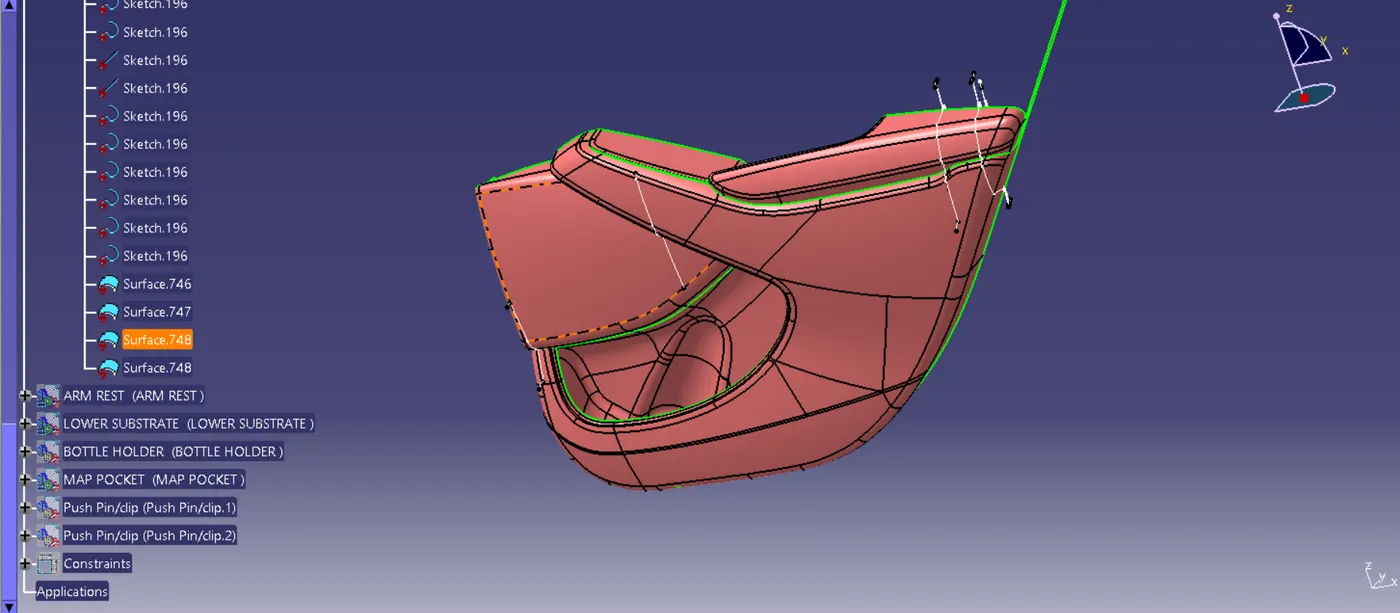
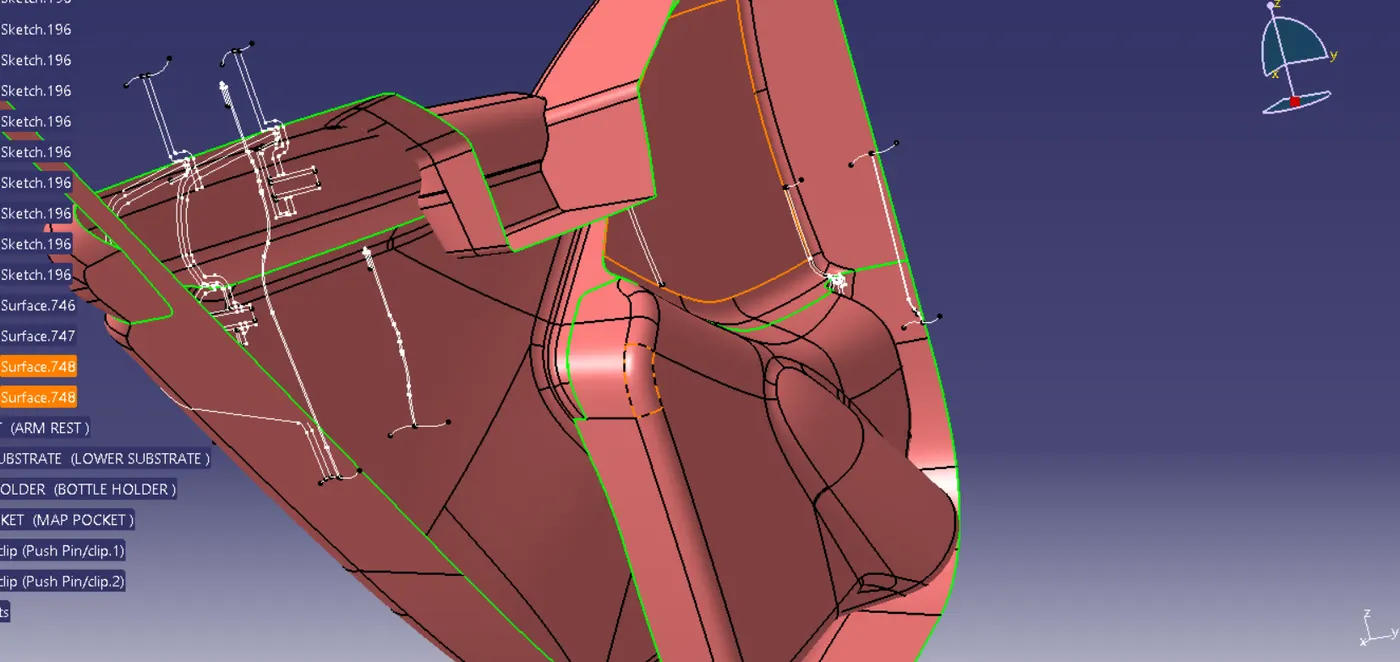
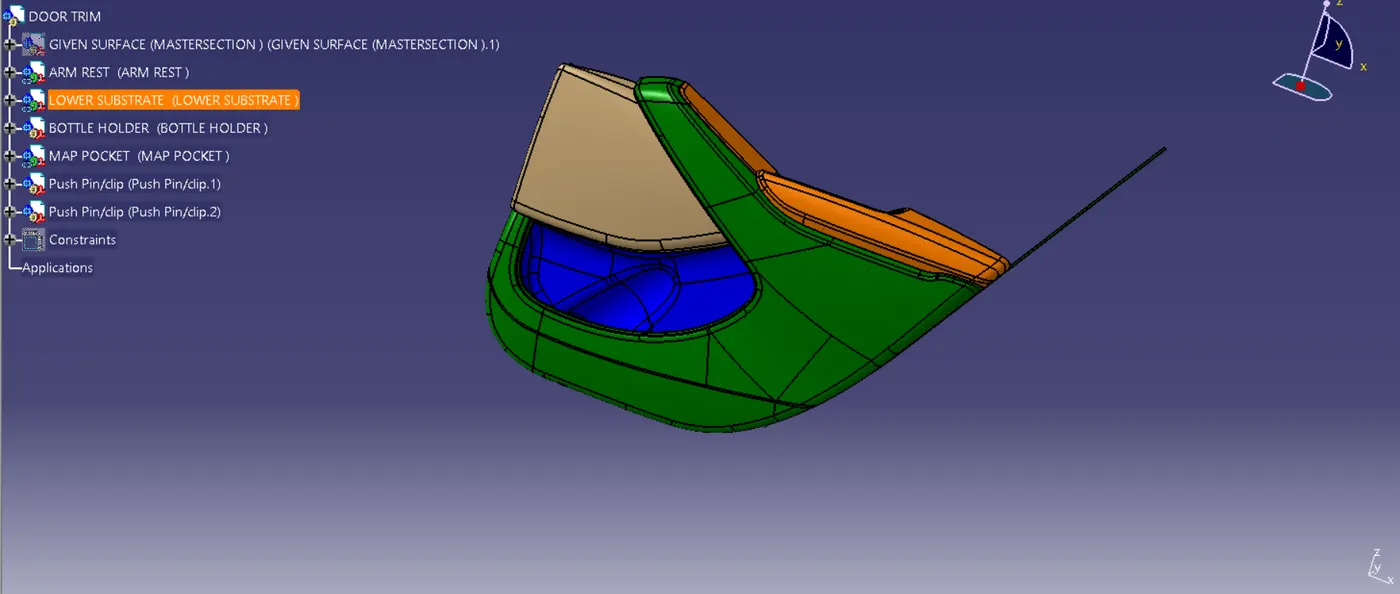
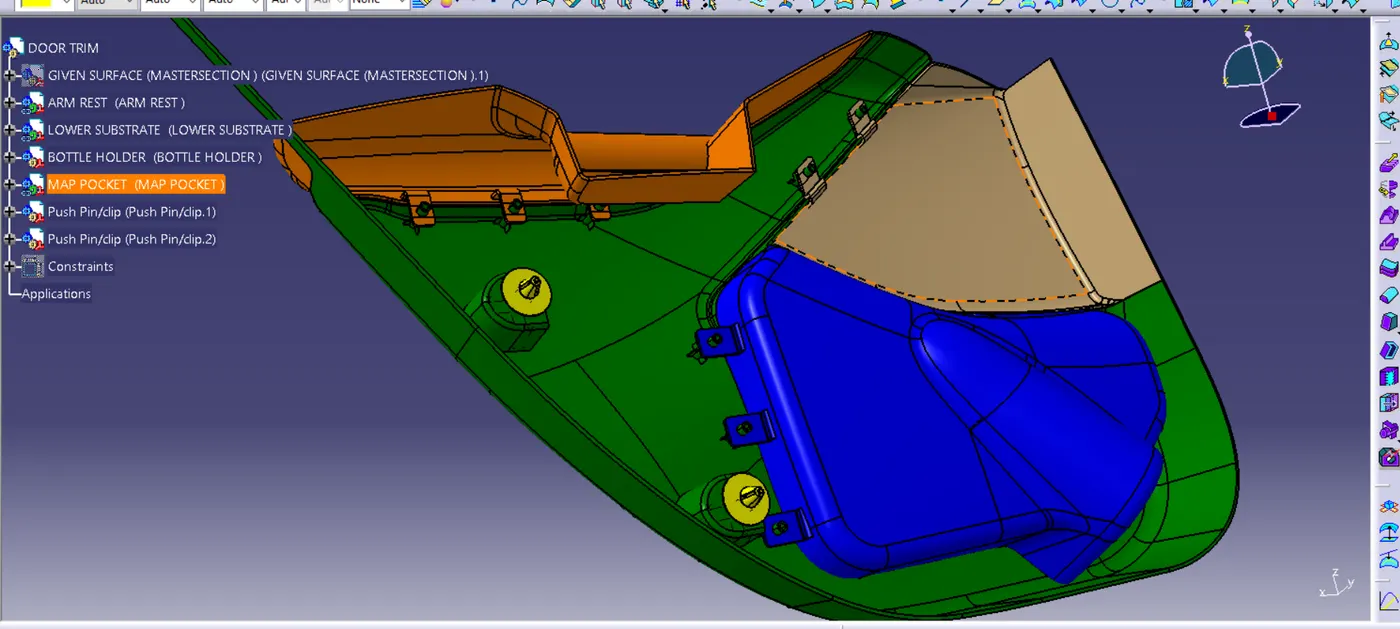
DOOR TRIM COMPONENTS - ARM REST, LOWER SUBSTRATE, MAP POCKET, AND BOTTLE HOLDER.
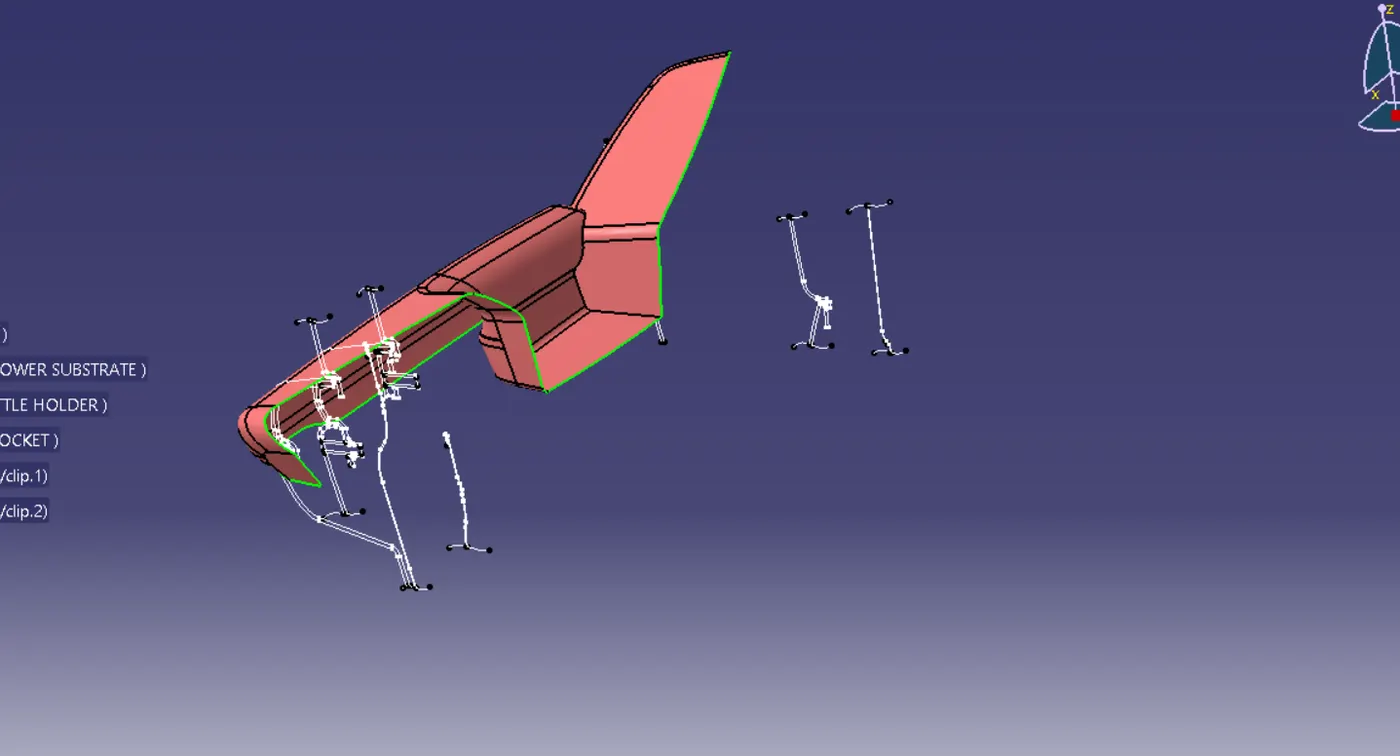
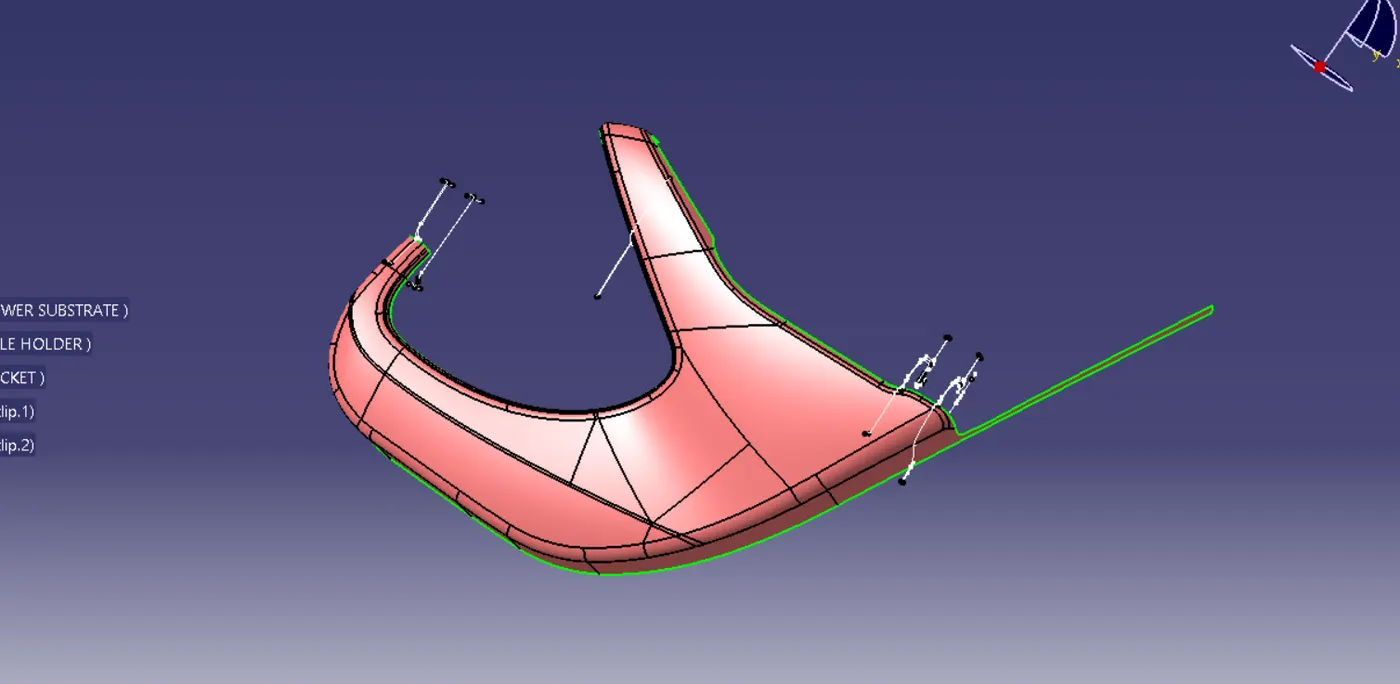
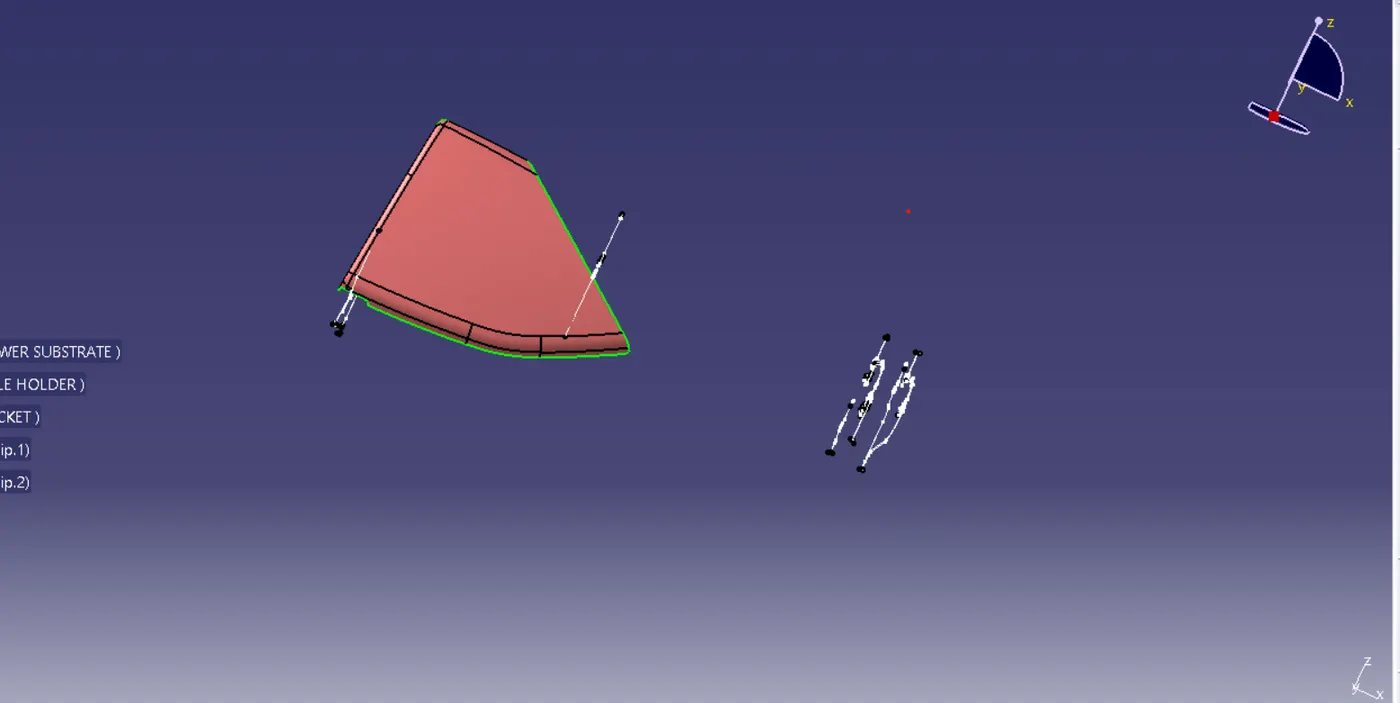
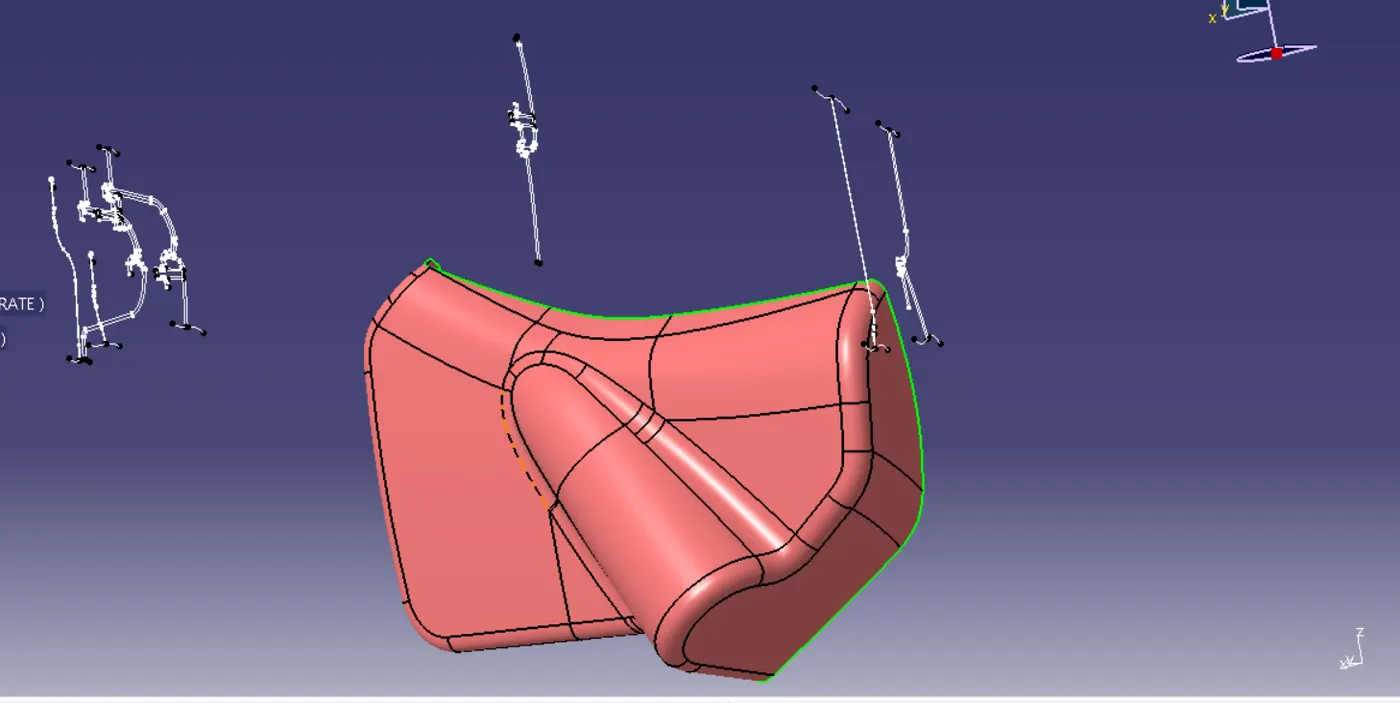
CLASS A SURFACE - All class A surface is given so we make separate product files with door trim name and all parts names separately .
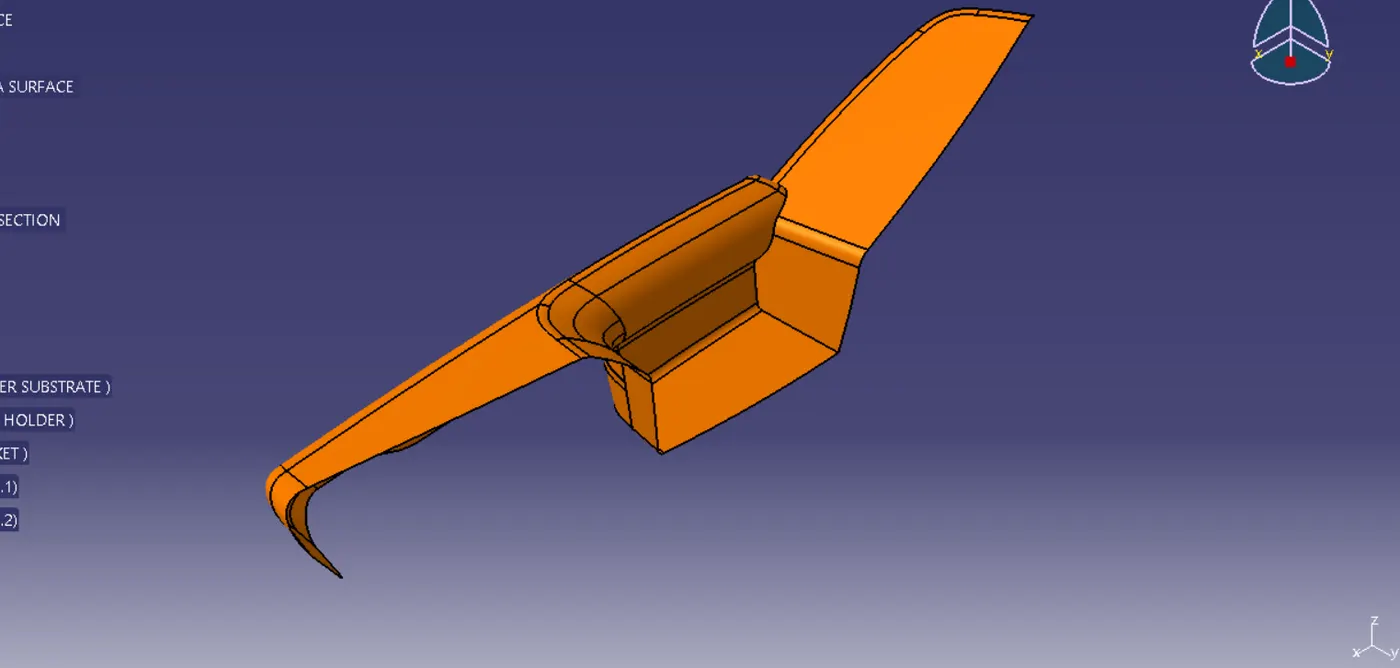
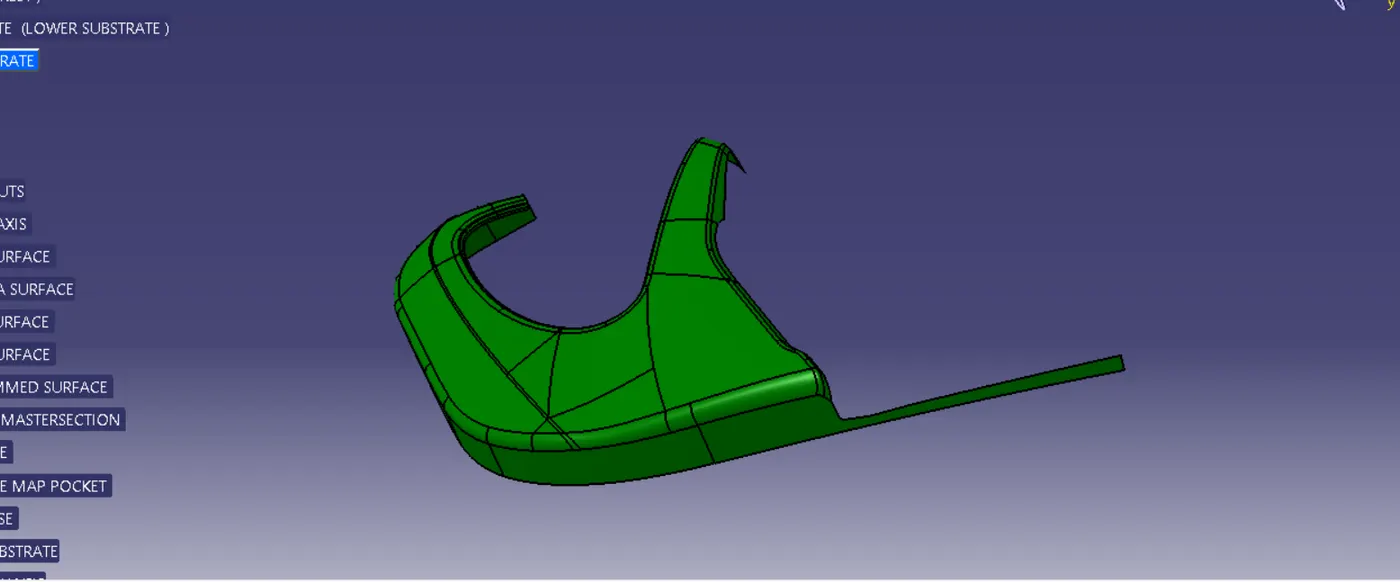
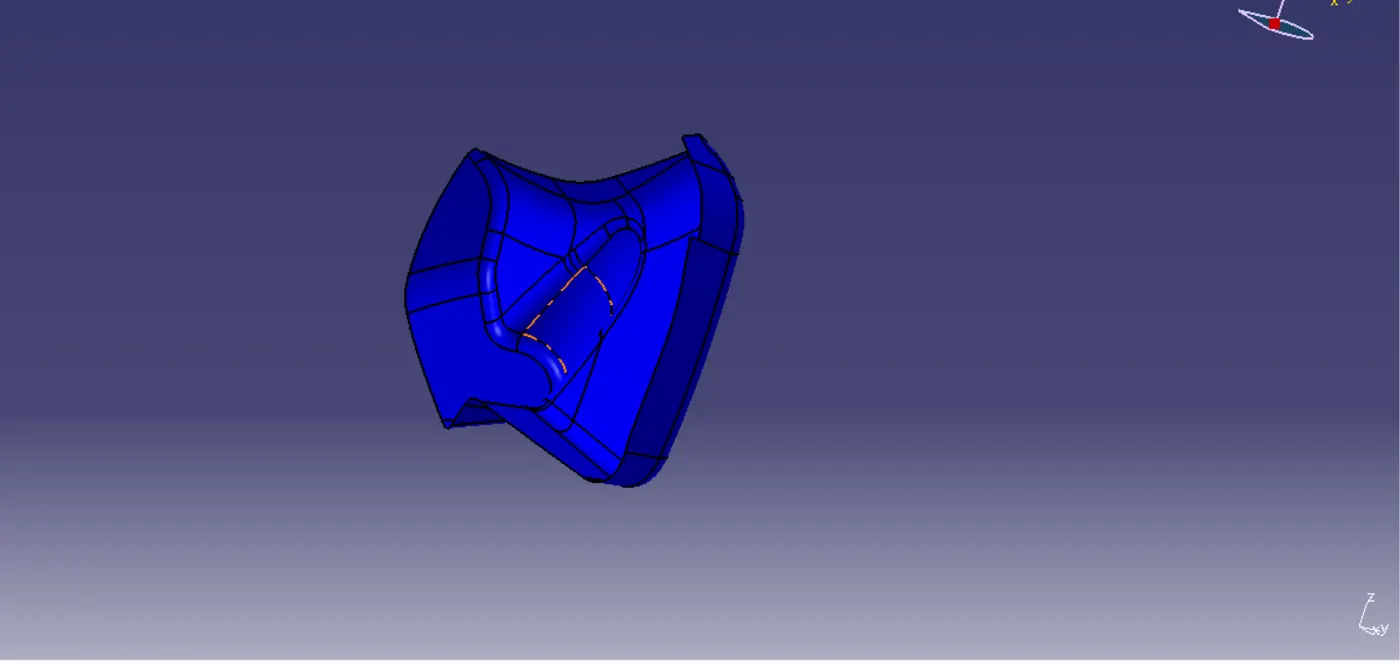
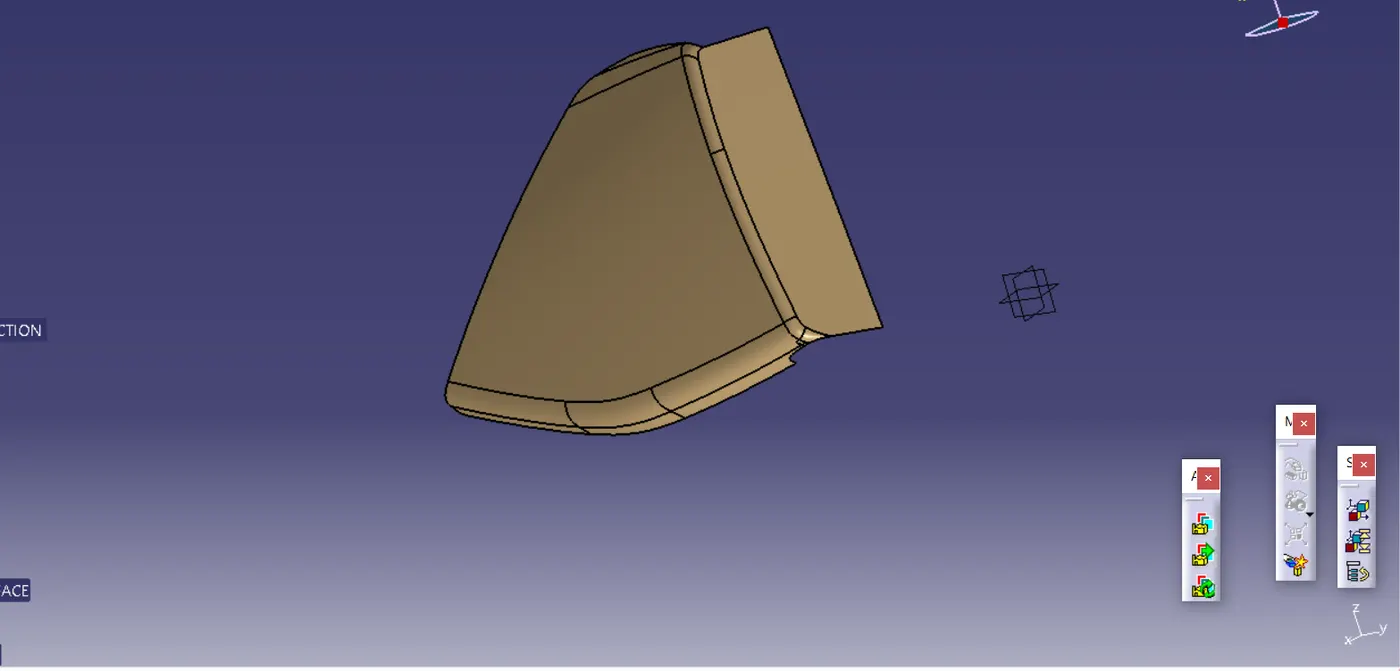
TOOLING AXIS -
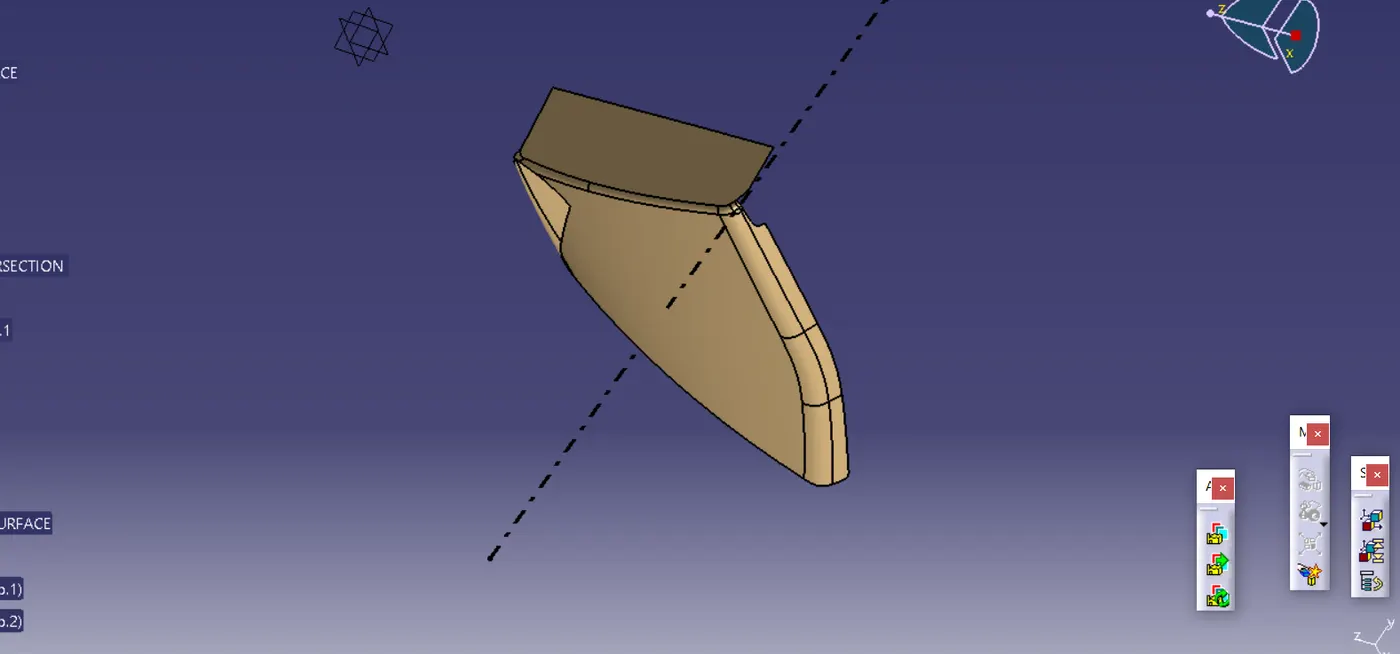
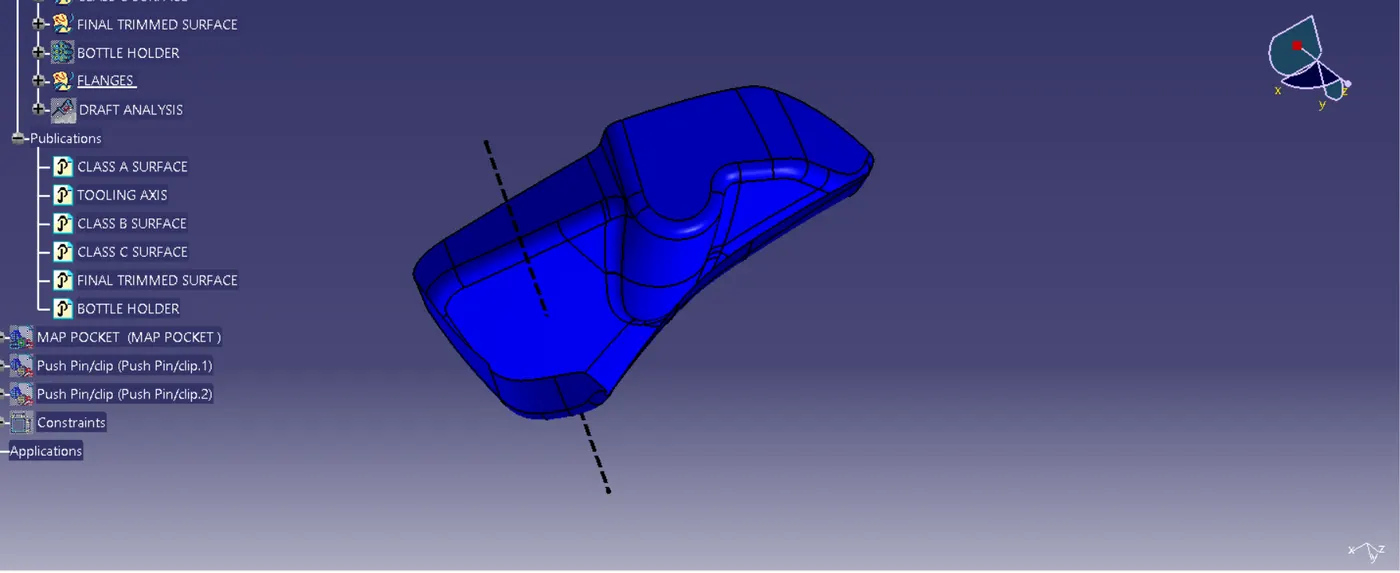
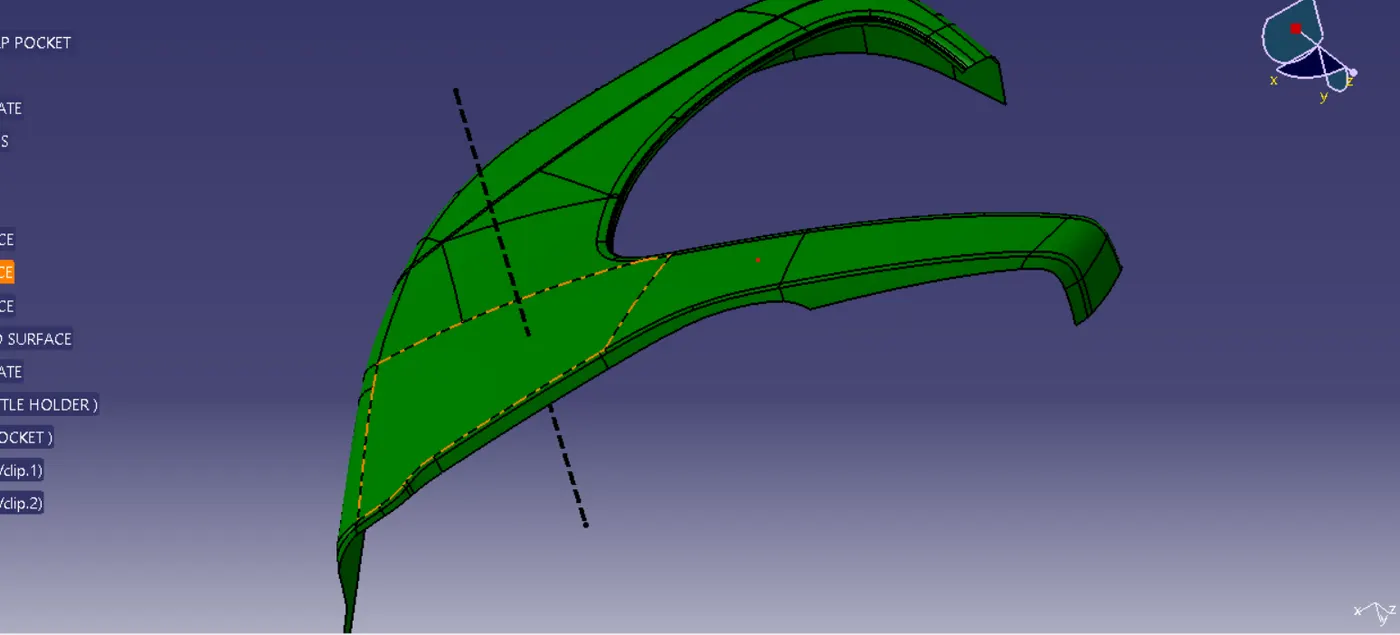
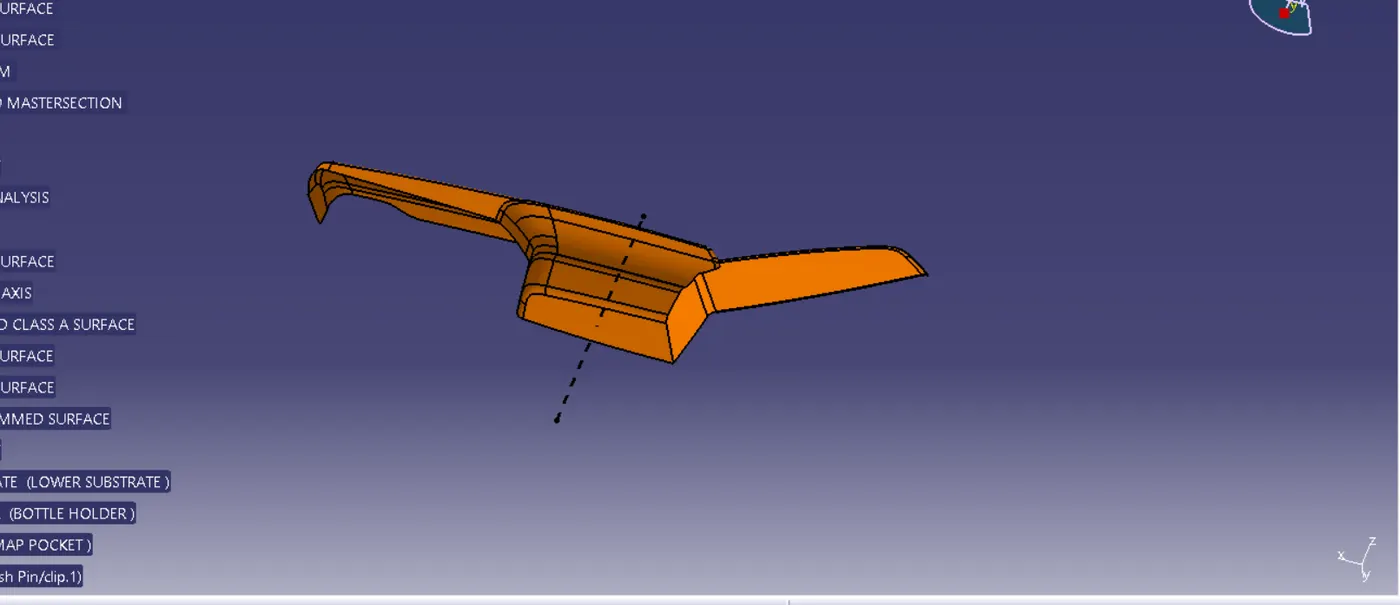
CLASS B SURFACE - According to the given master section we know that the part thickness will be 2.5 mm and now we make offset of class A and fill the patches by using extrapolation, trim, and multisection solid commands.
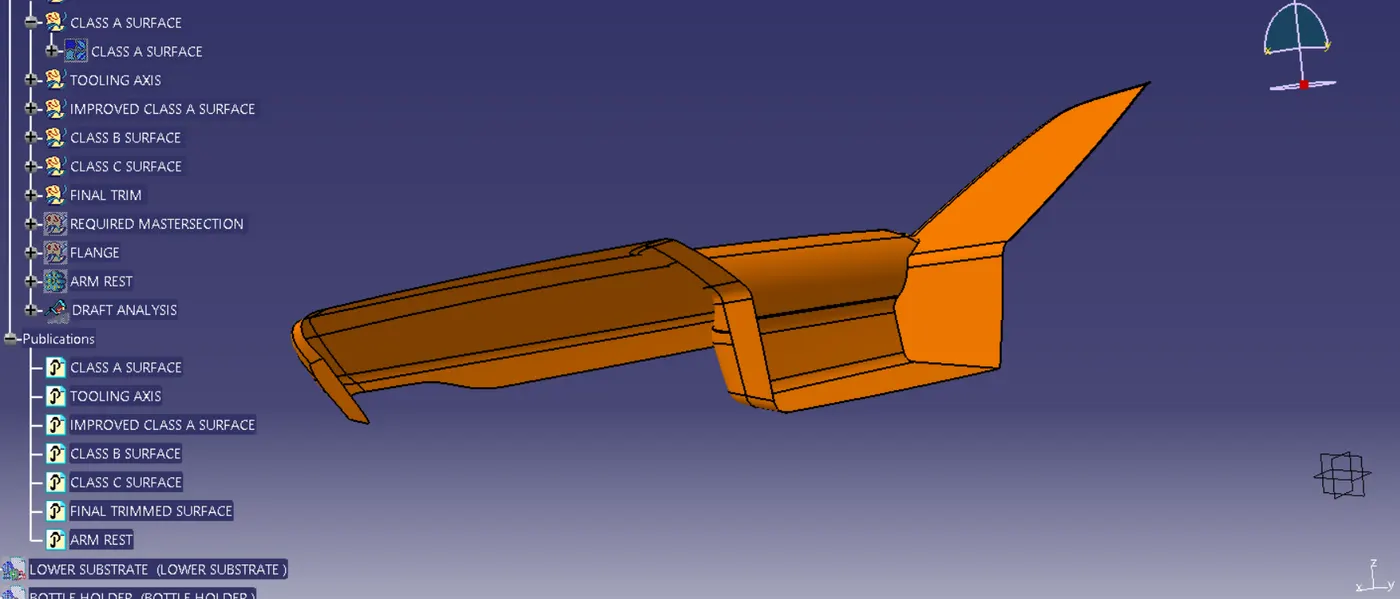
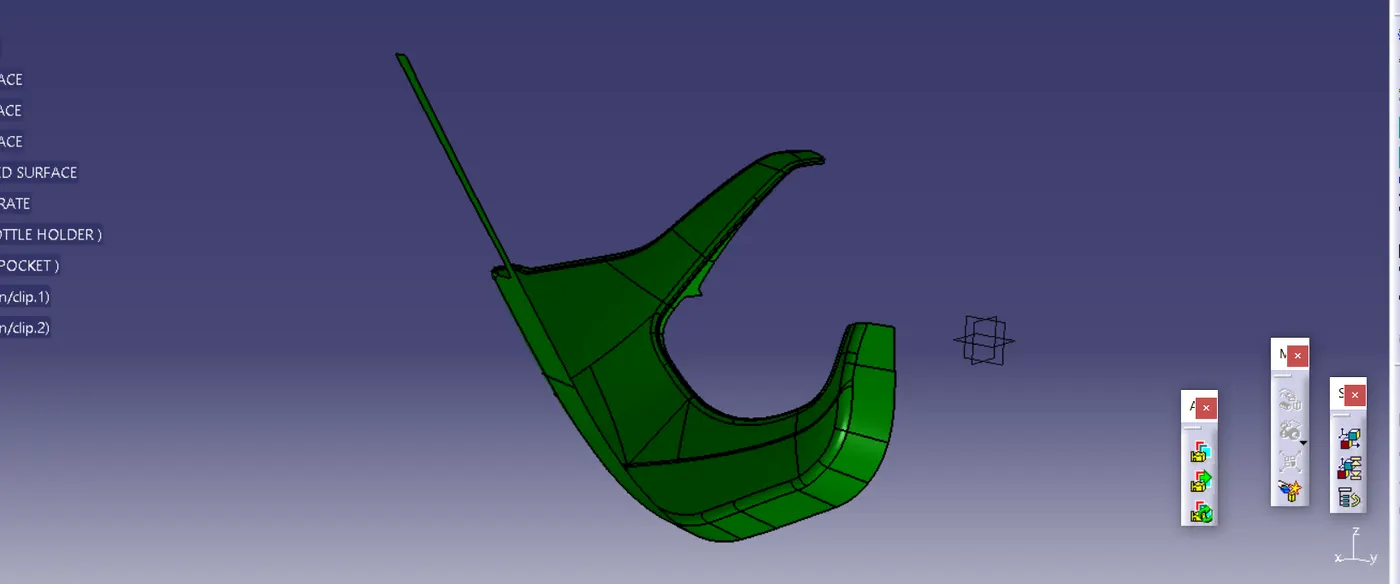
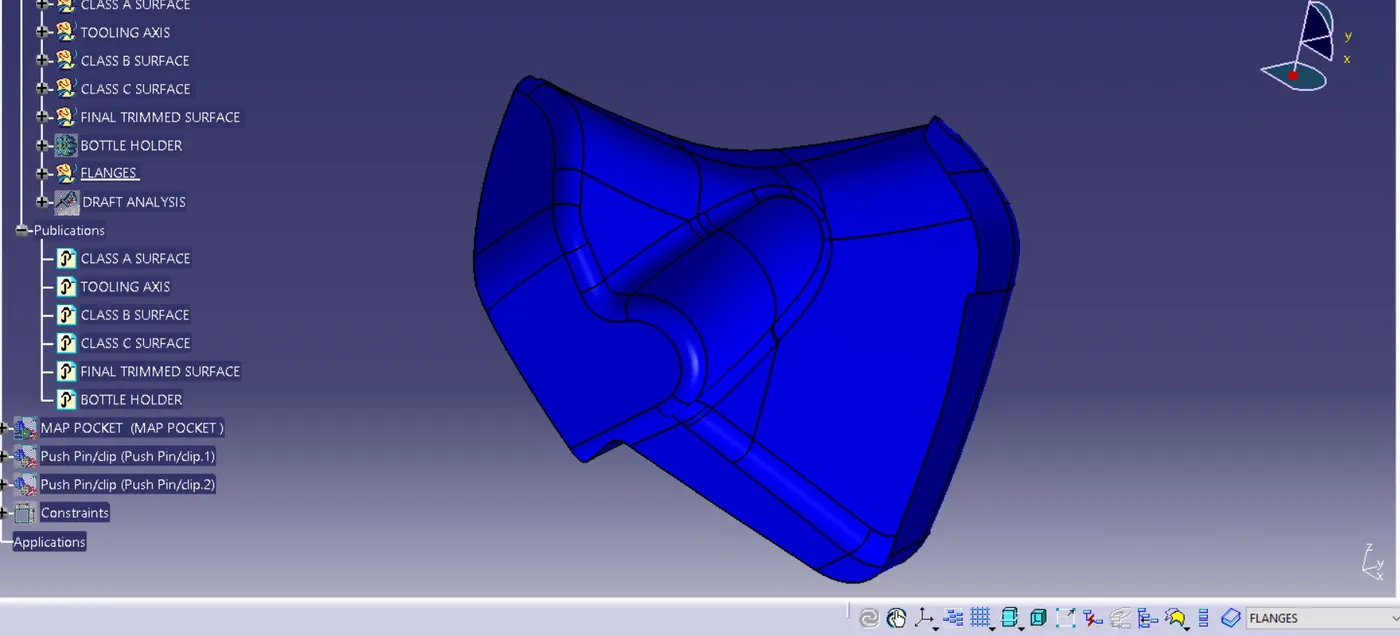
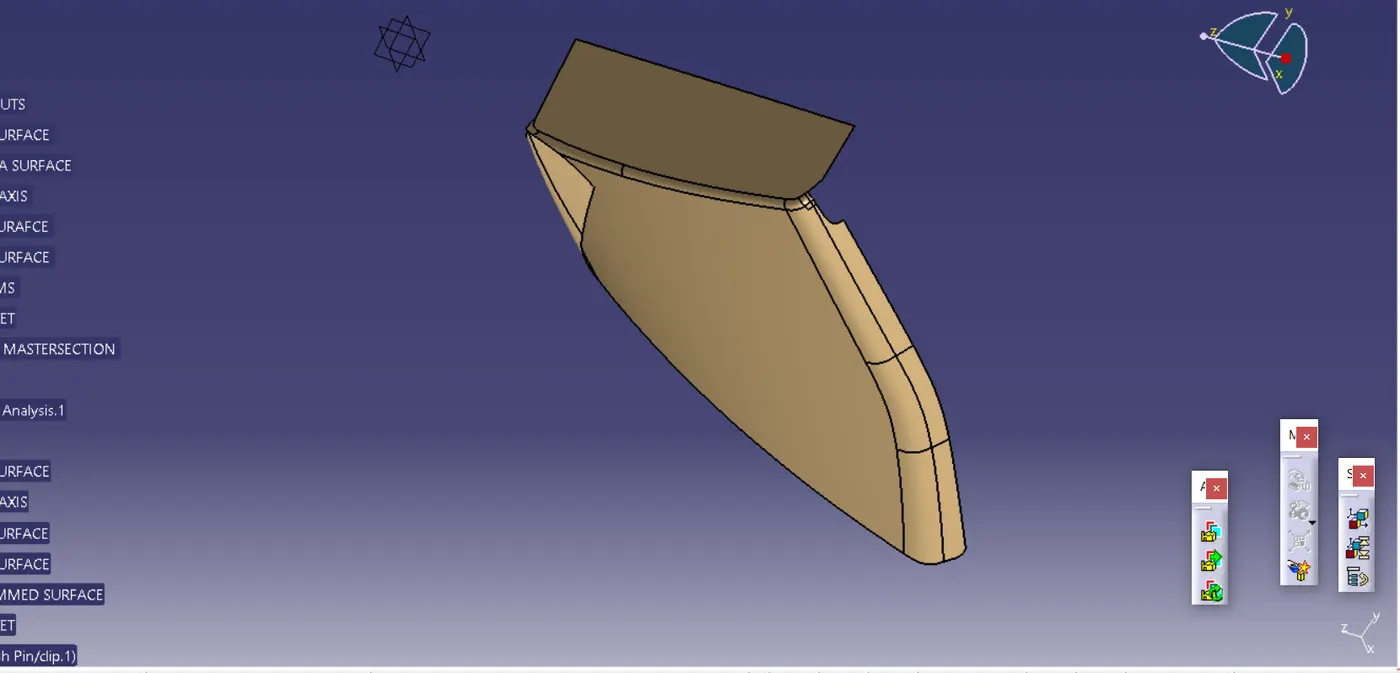
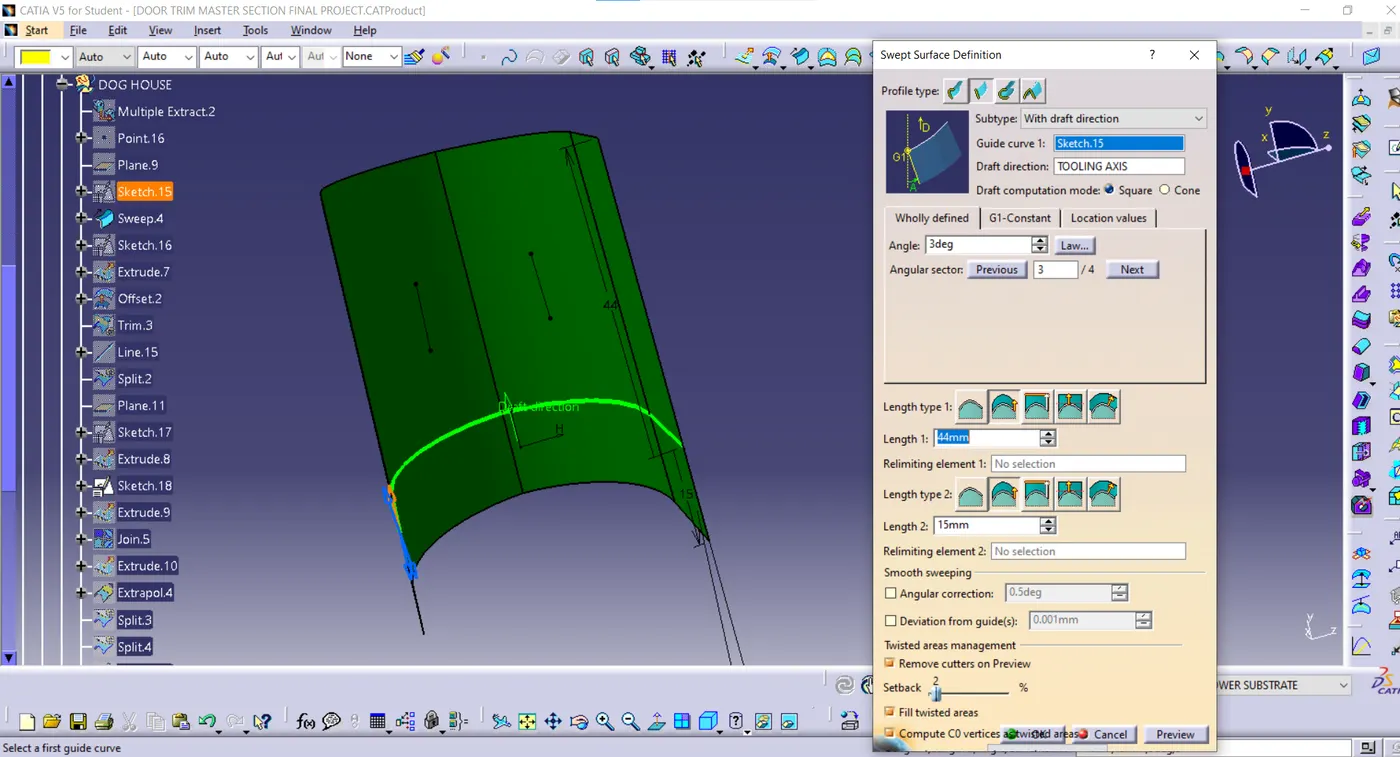
CLASS C SURFACE - Class C surface is the surface that joins Class A and Class B and plays main thickness roles in any part component. For making this we have to Use the sweep command along with class a boundary in which some sweeps are made through draft direction and some are made with reference surface with a 90-degree angle which makes accurate perpendicular.
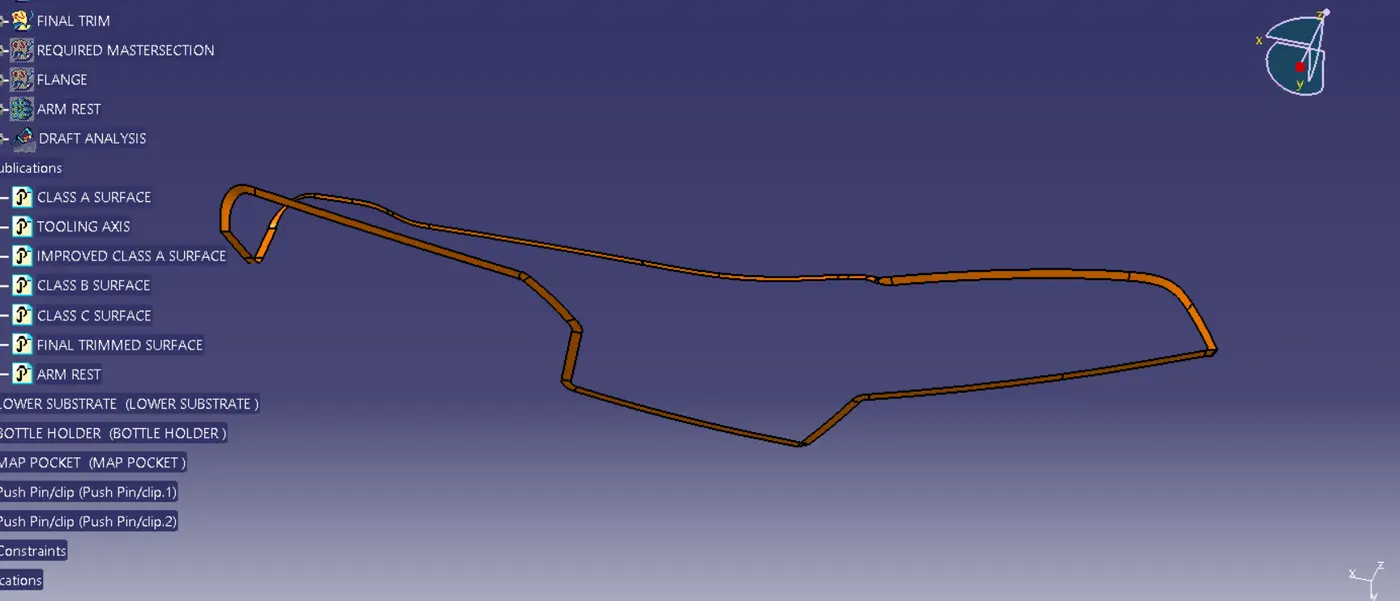
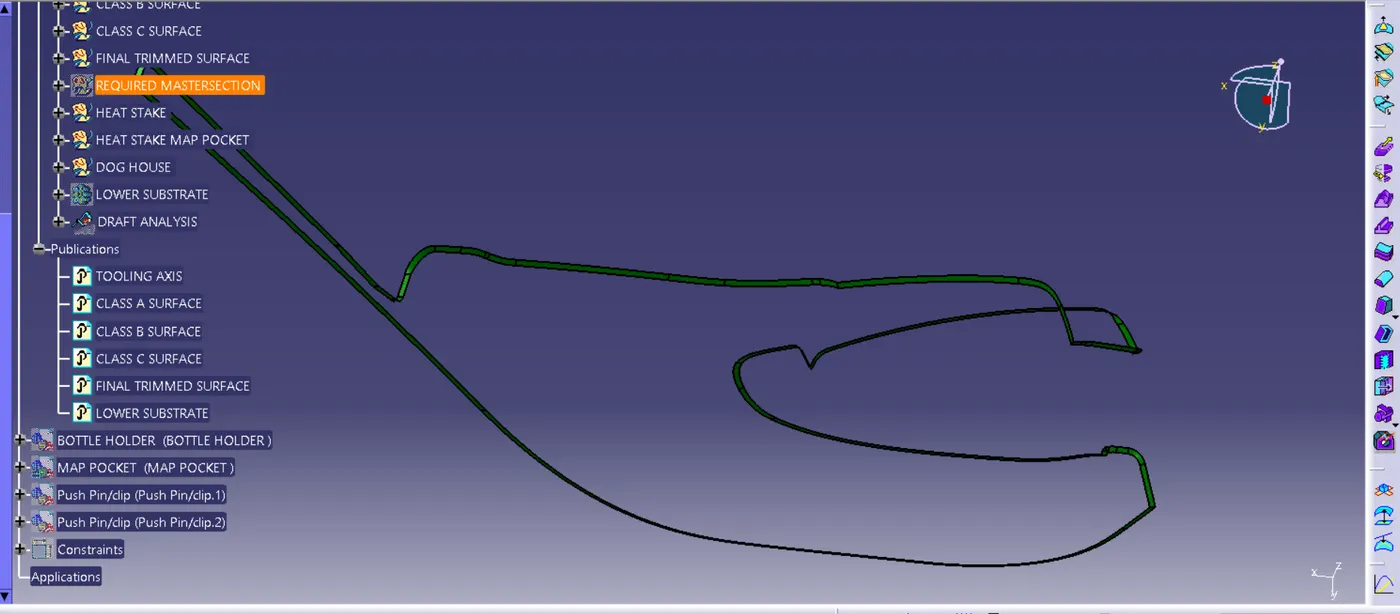
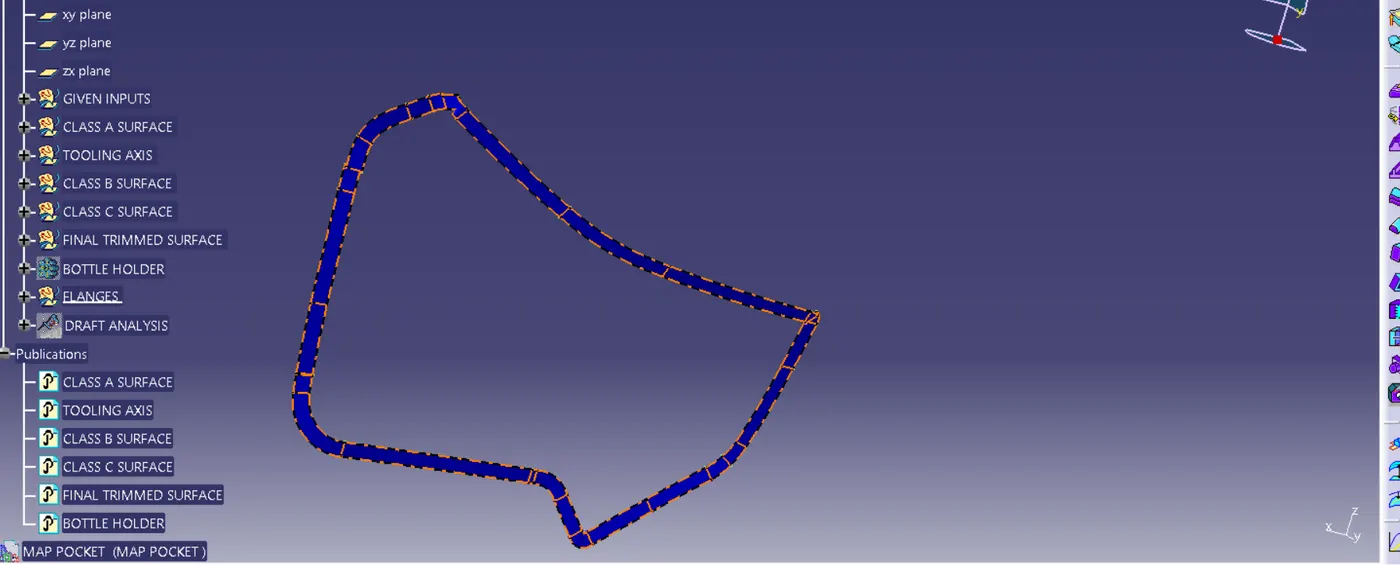
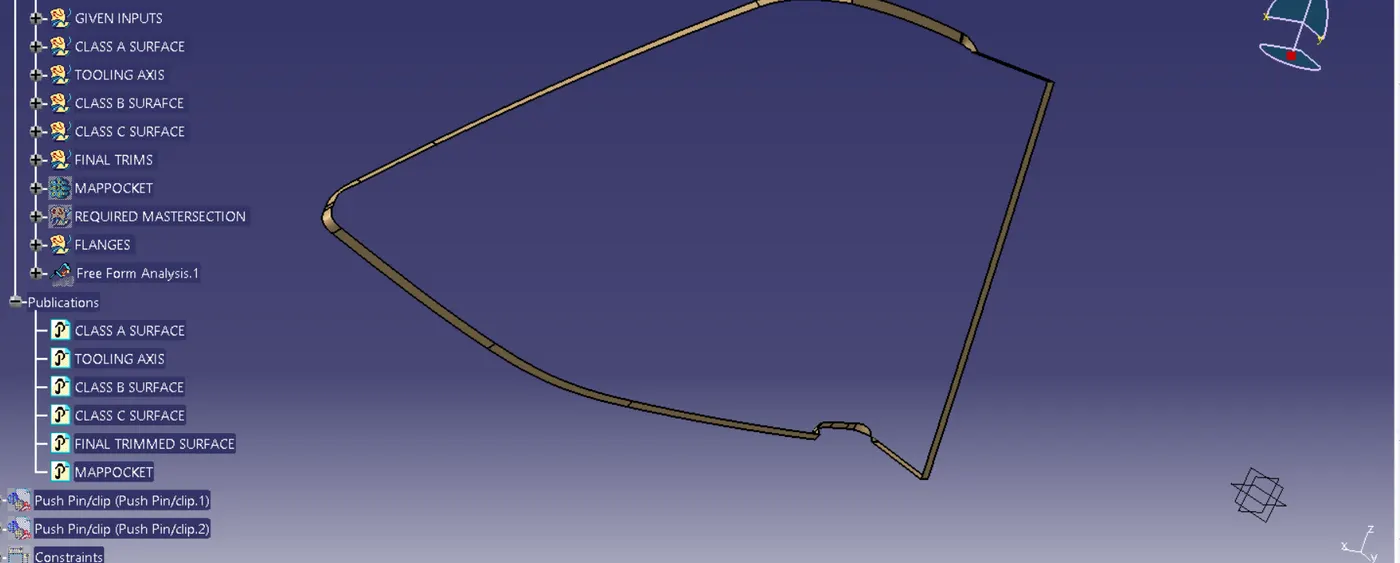
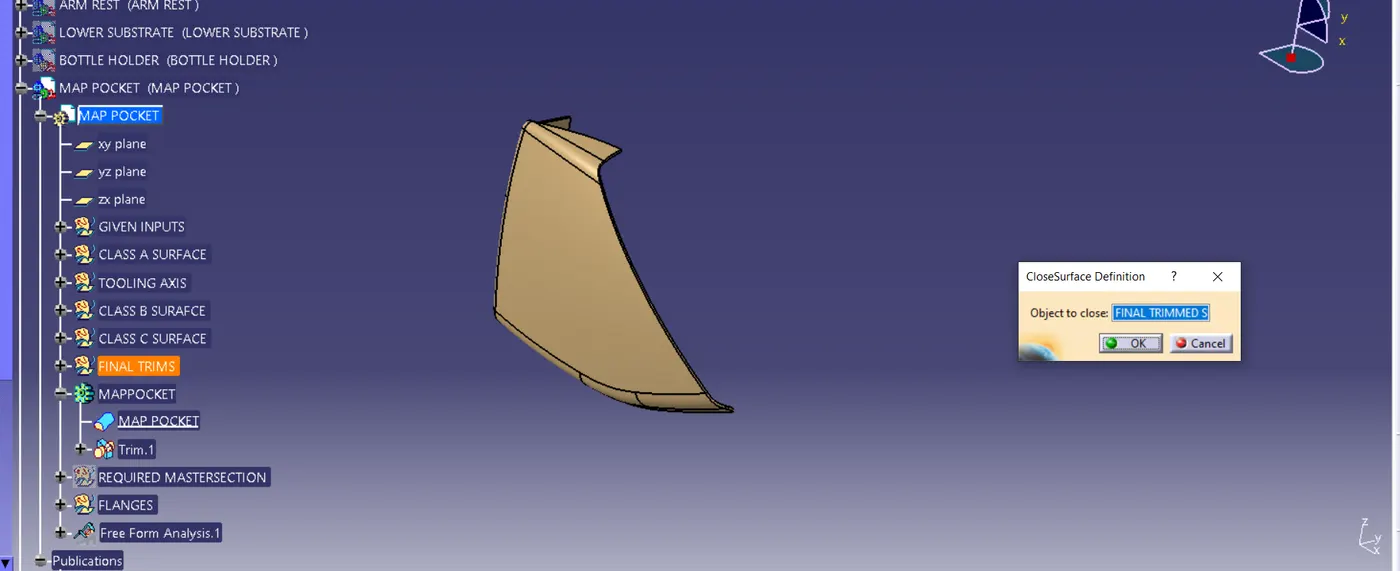
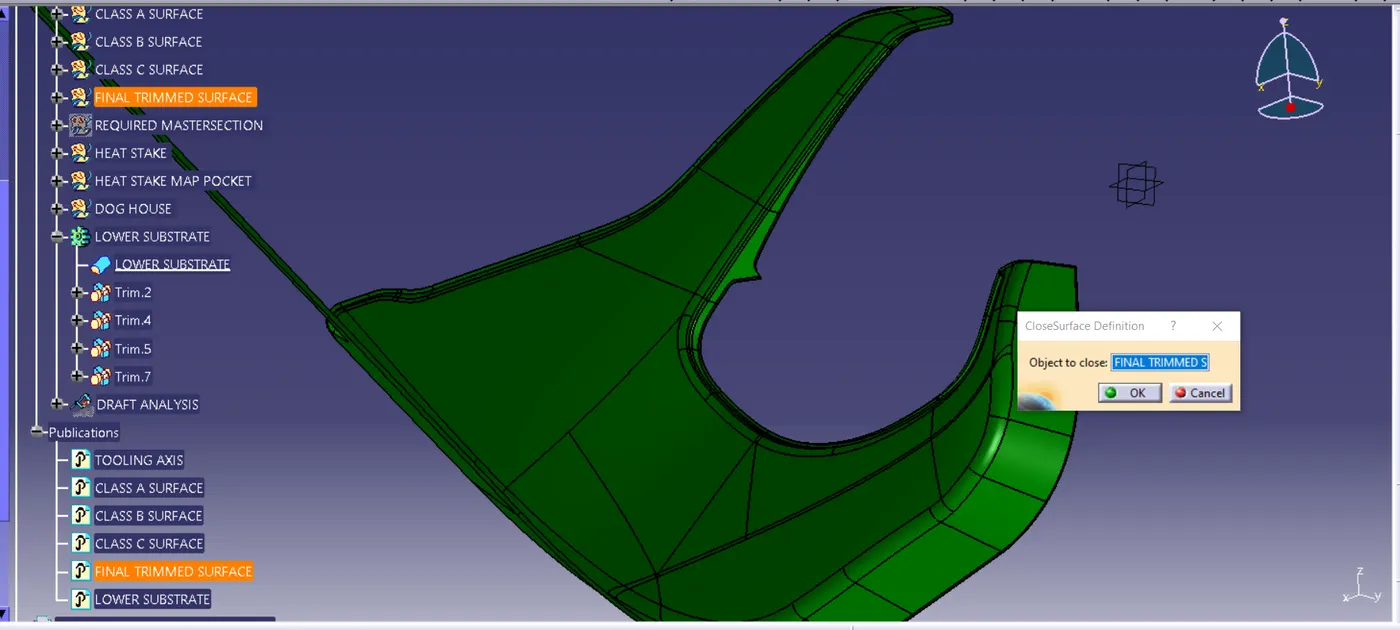
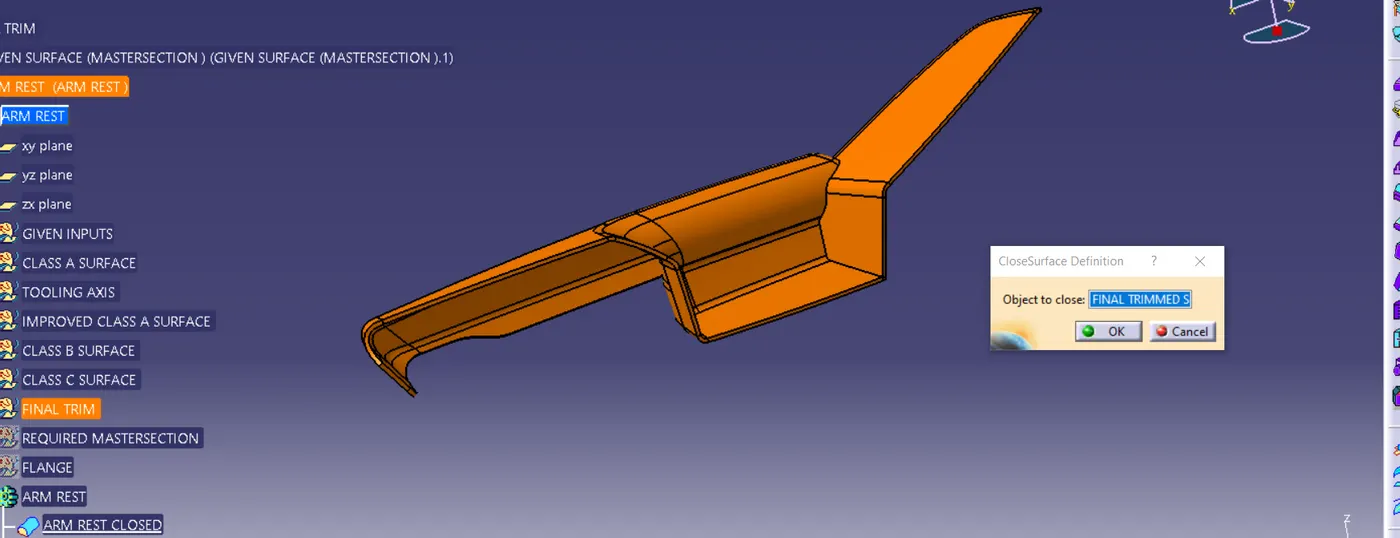
SOLID PART BODY - After making all three surfaces we have to join them and after joining we have to move on to part workbench to close the surface and make them closed-filled solid.
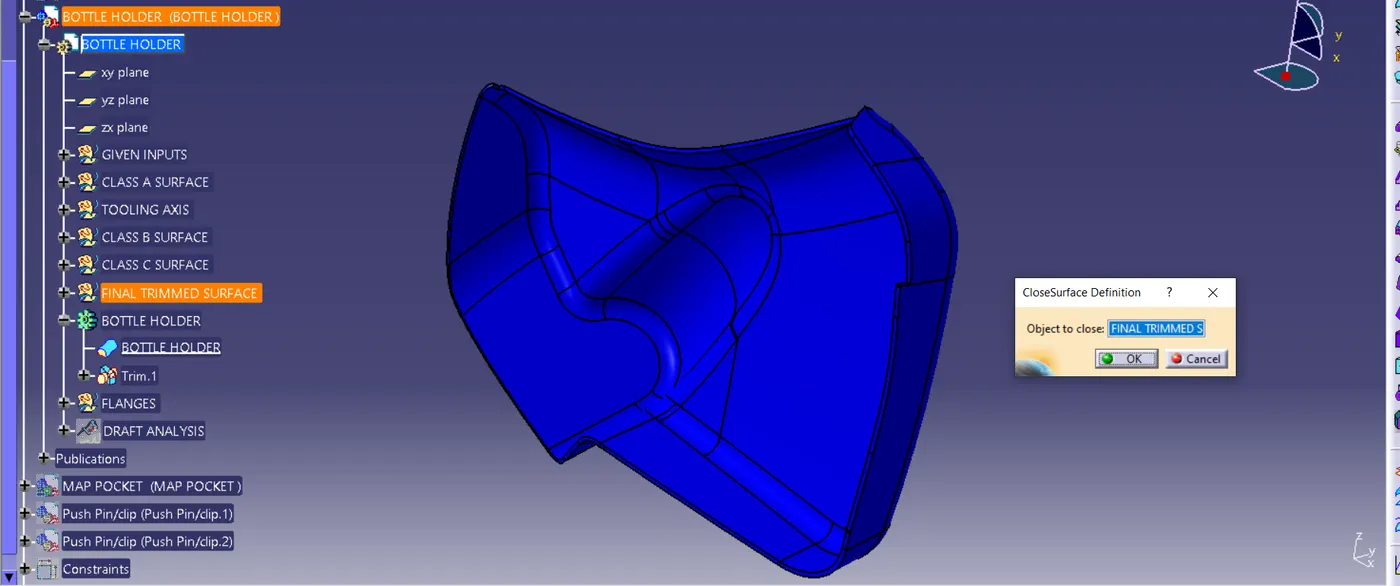
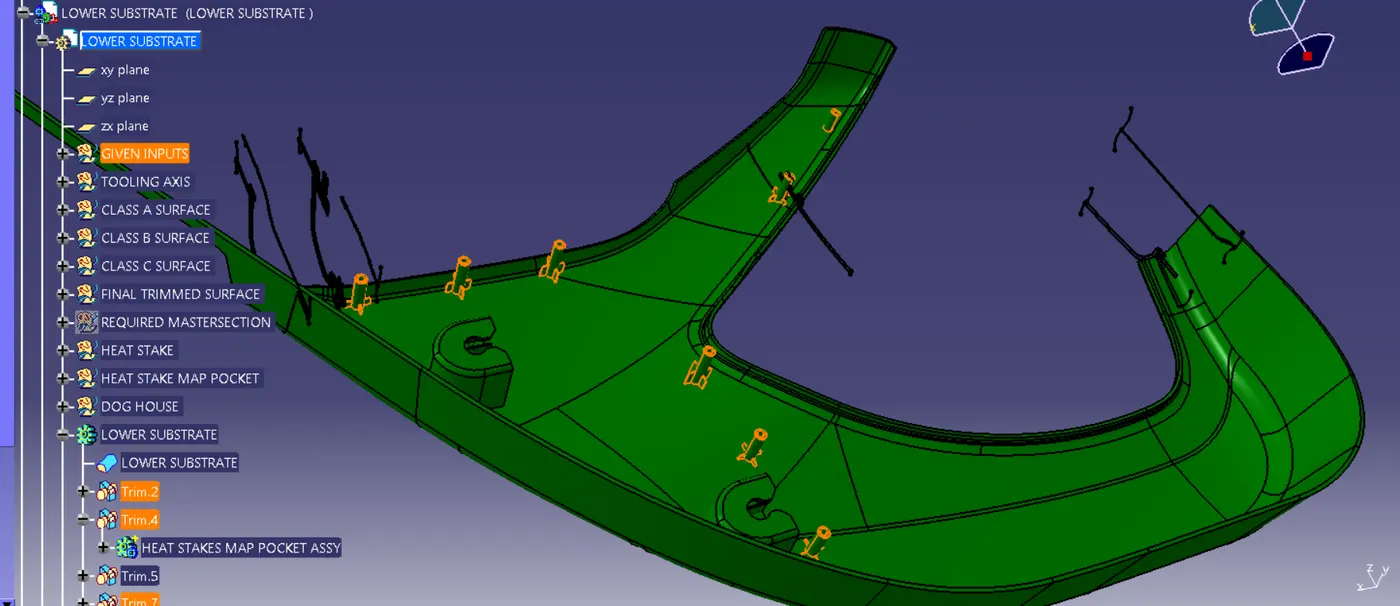
B SIDE ENGINEERING FEATURES - B Side engineering features are made to join different parts which include Flanges, dog houses, and heat stakes.
- FLANGES - We made flanges using the given master section and copy-pasting and translating it to different points the average distance between flanges is 50 mm
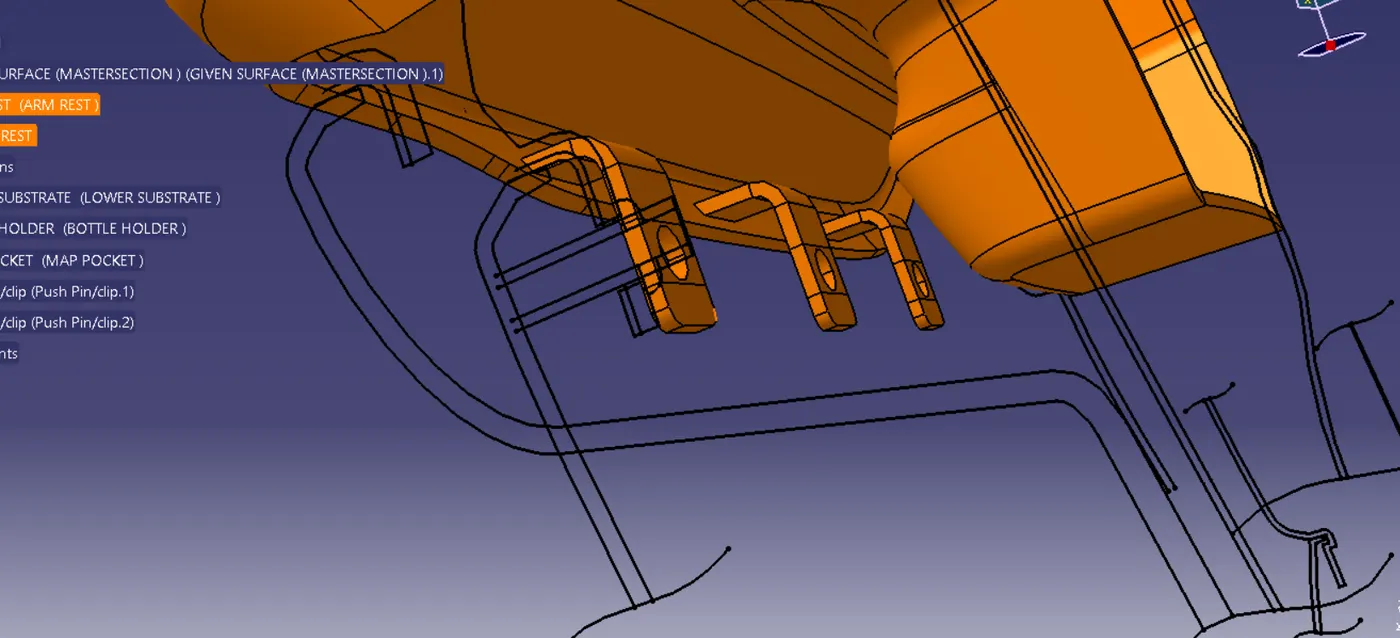
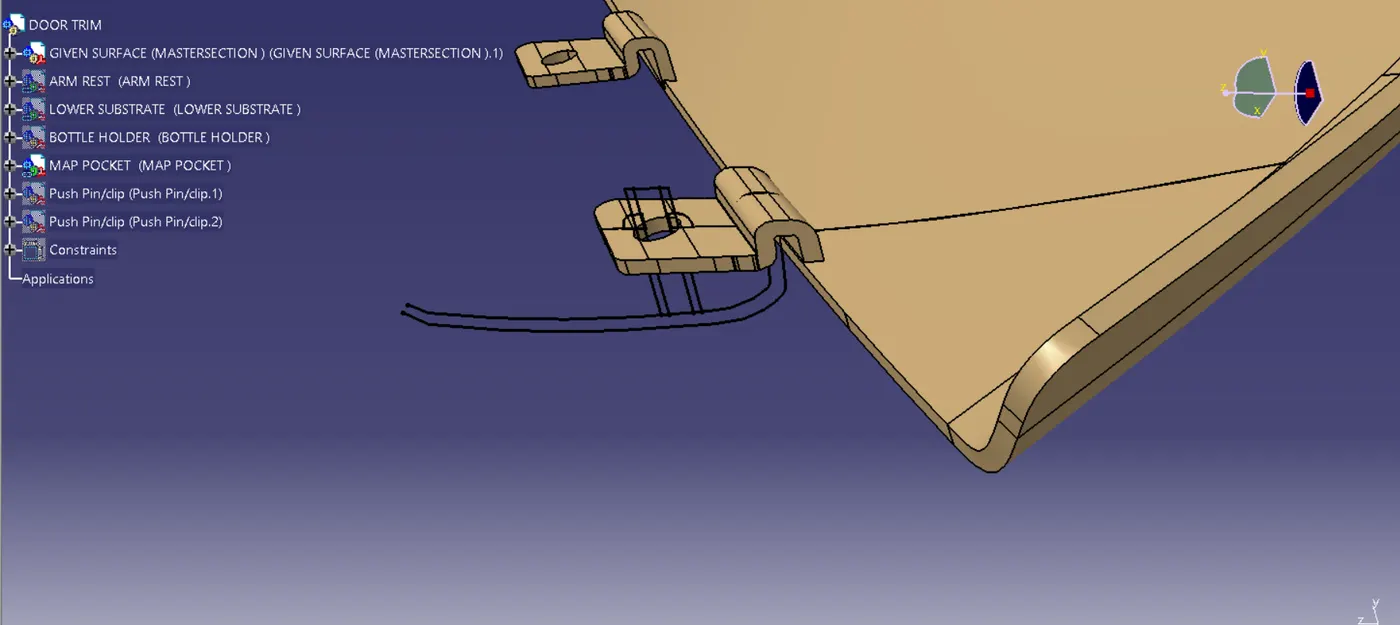
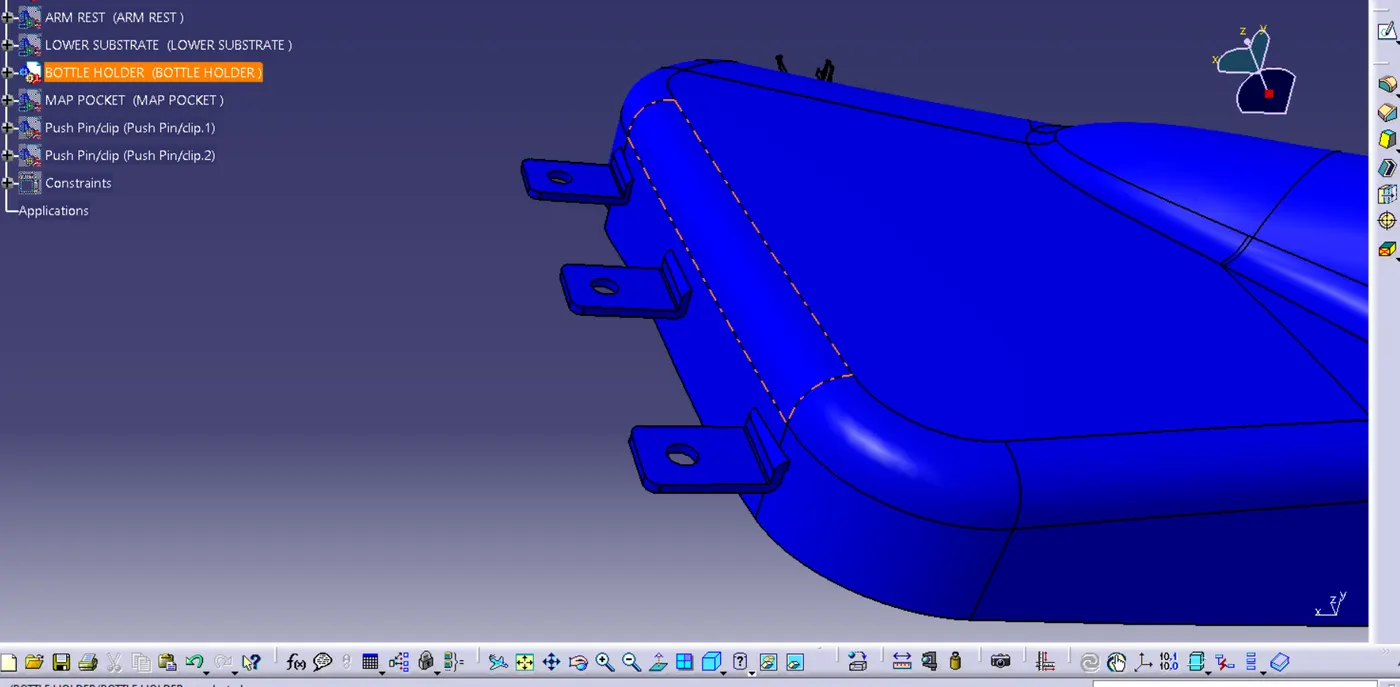
HEAT STAKES - Heat stakes are used for the fixation of the part.
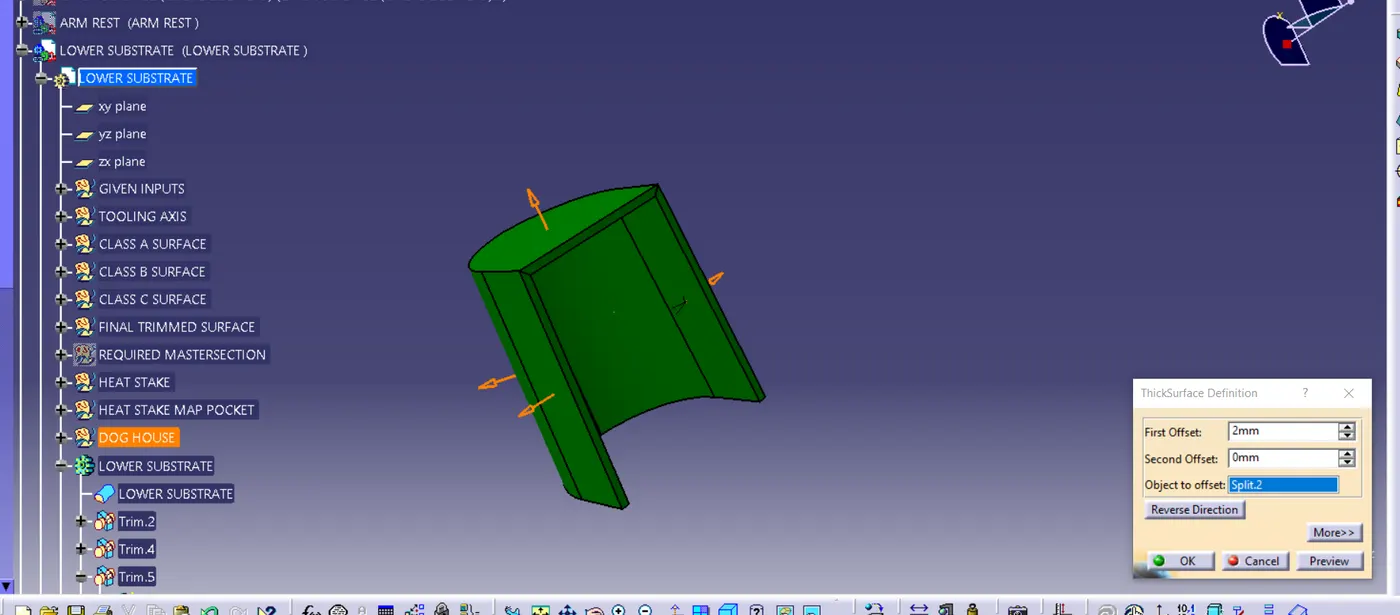
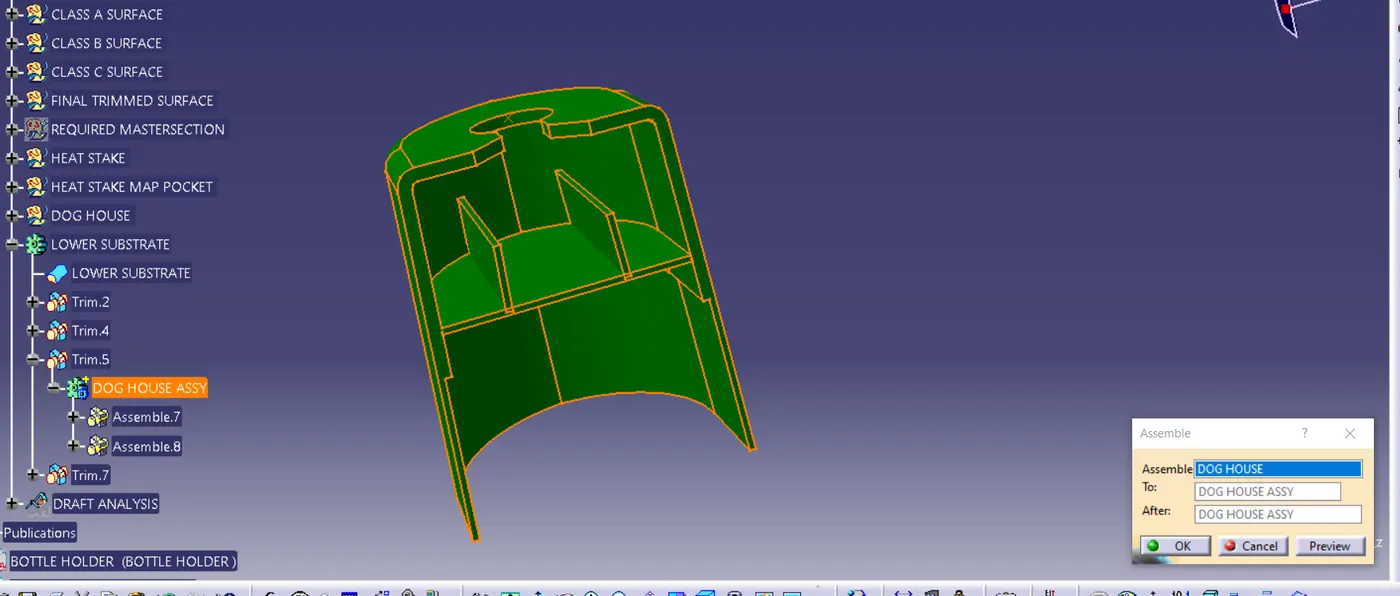
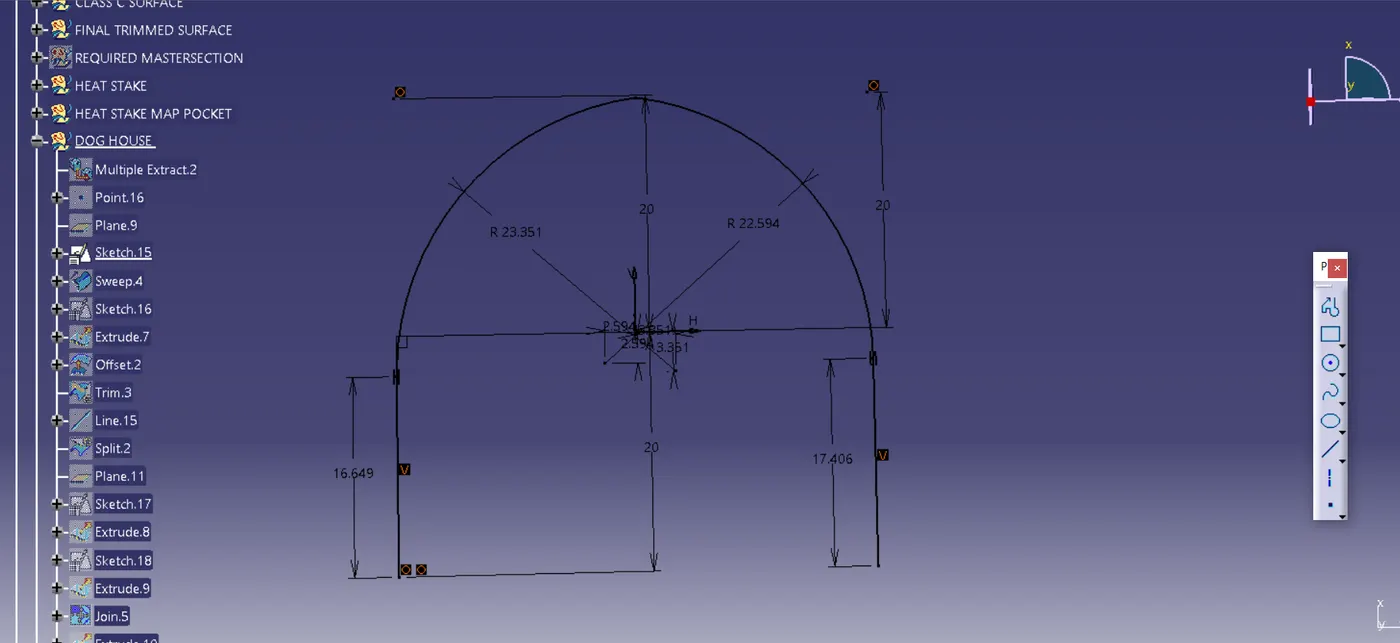
Dog house - Dog house is an engineering feature used in plastic trim design. Dog houses are used as supporting feature. Sometimes other engineering features like snaps; locators etc. are mounded on them to increase their strength. we made dog house using all design consideration.
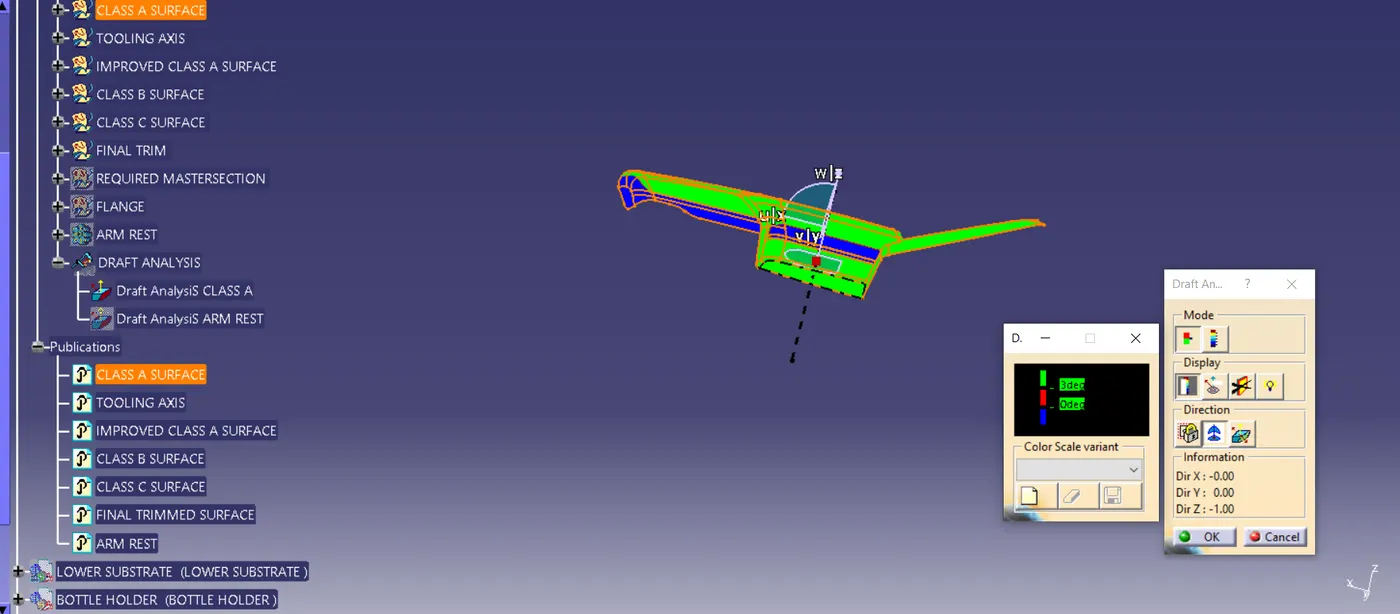
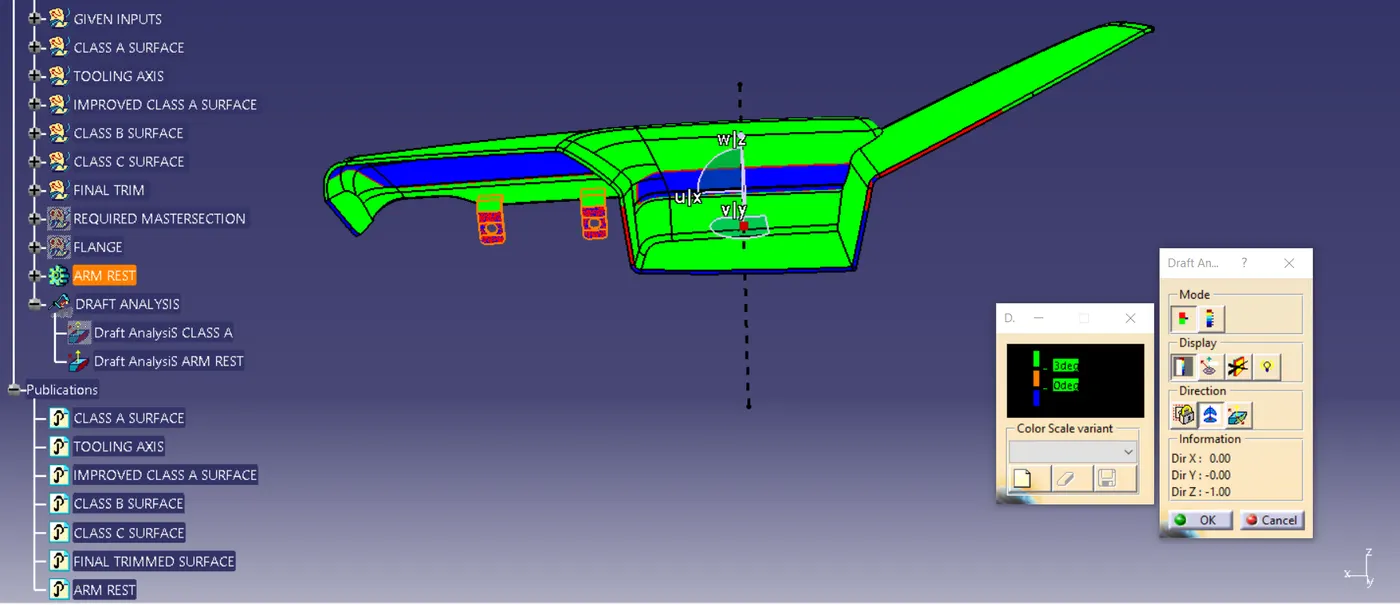
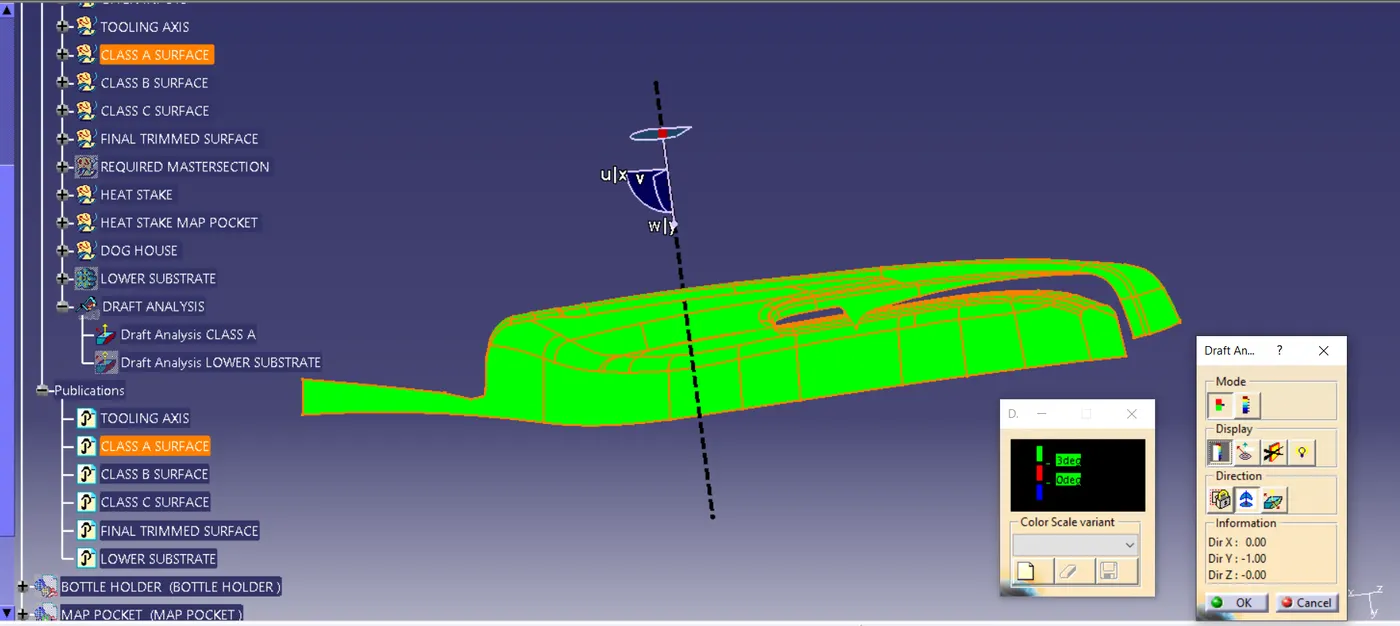
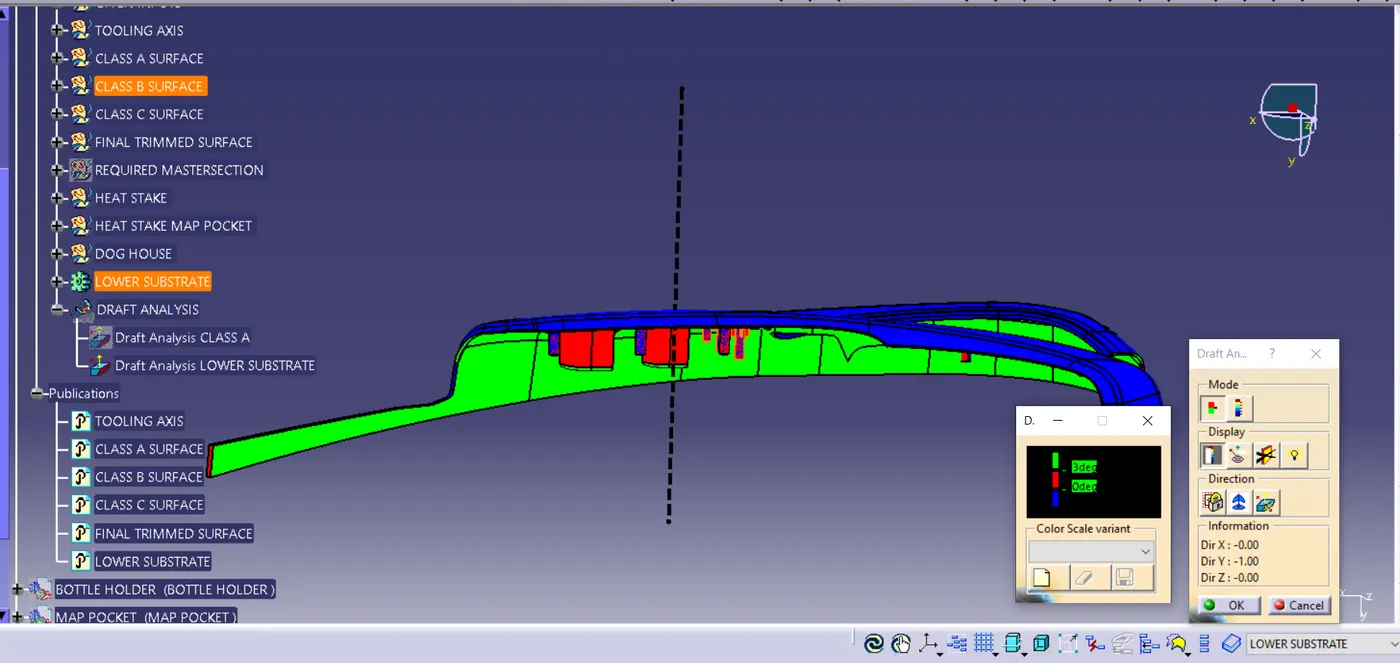
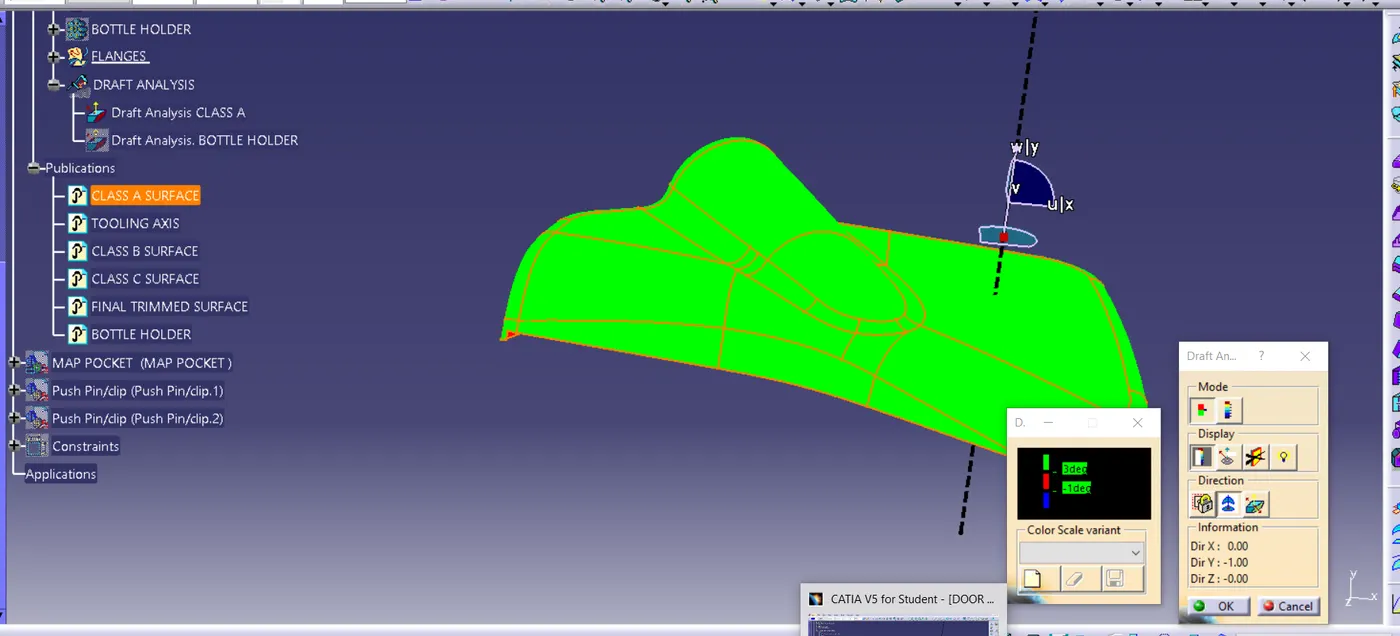
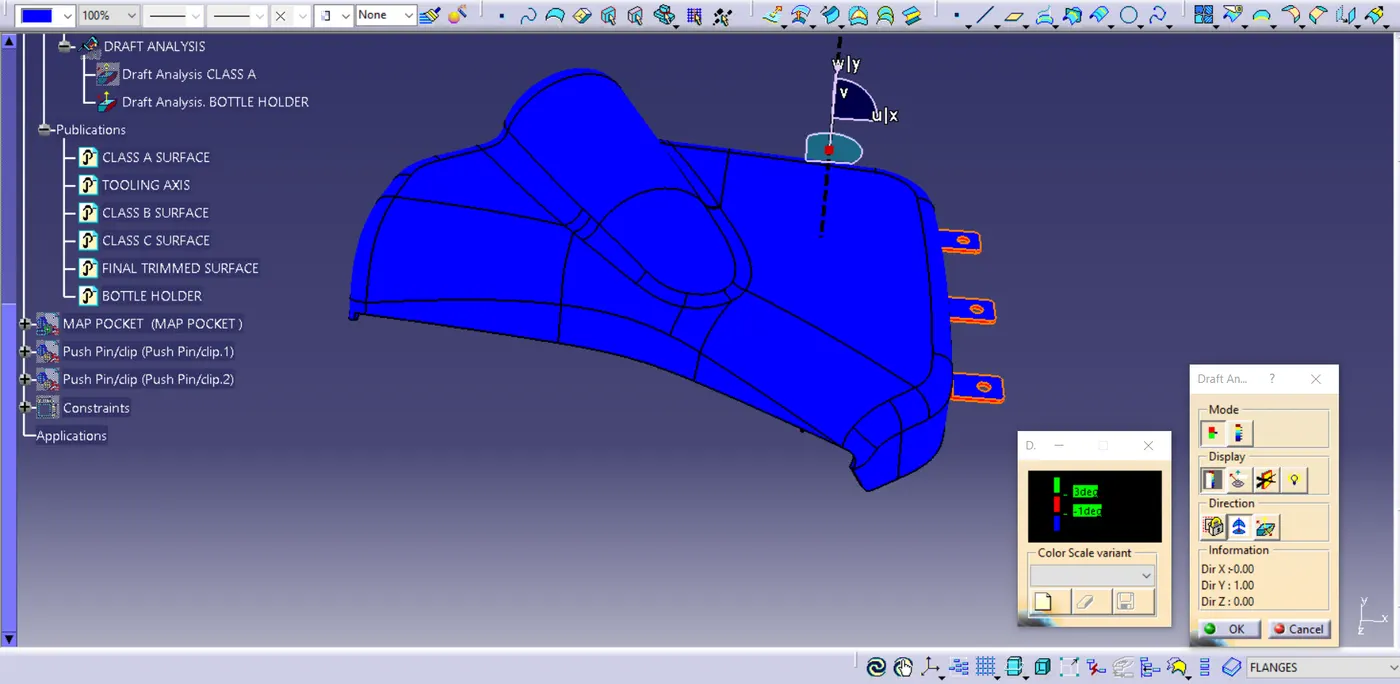
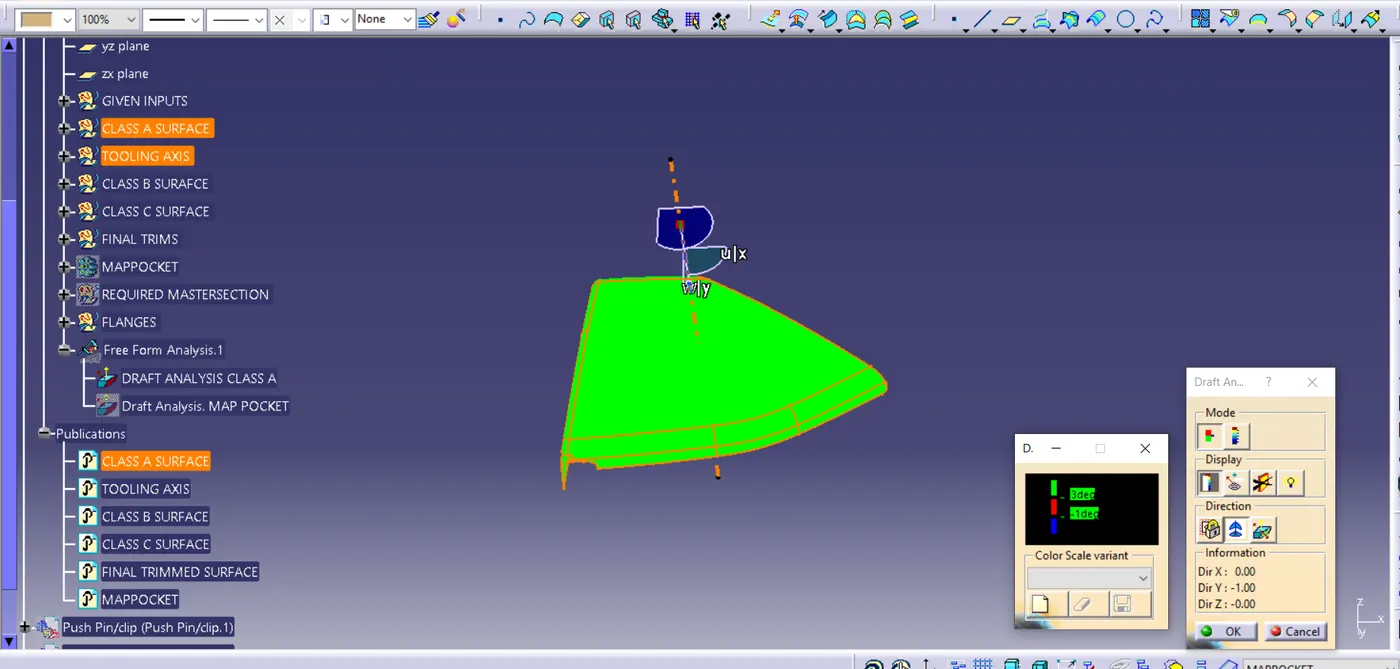
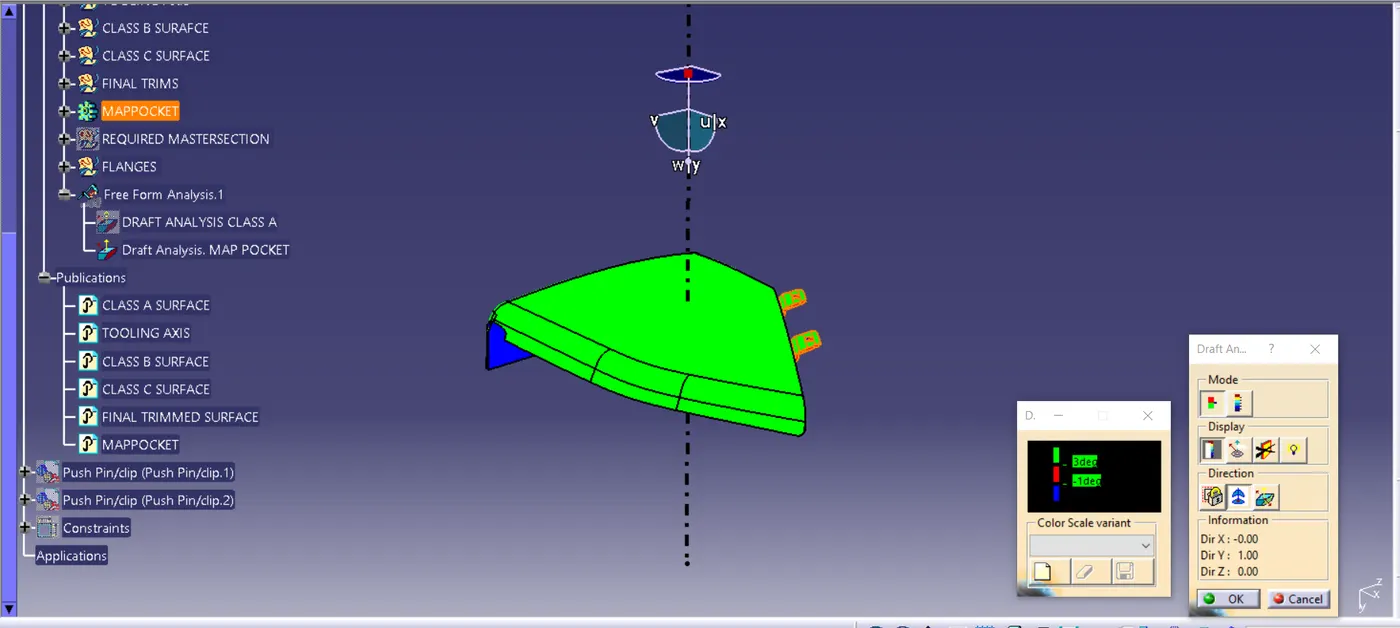
DRAFT ANALYSIS OF CLASS A AND FINAL PRODUCT -
COMPLETED DOOR TRIM WITH ALL ENGINEERING FEATURES -
CONCLUSION - The development of a Door Trim Panel, with a strong emphasis on Class A surface quality, adherence to nominal thickness as per master sections, and the implementation of specific attachment strategies, marks the successful culmination of this project. The project, aimed at meeting the exacting standards of OEM and tier-1 companies in the automotive industry, has delivered a comprehensive CAD model and attachment strategy that can serve as a benchmark for similar endeavors
- KEY ACHIEVEMENTS -
- Class A Surface: The project meticulously adhered to the principles of Class A surface finish, ensuring that the Door Trim Panel exhibits a premium and flawless appearance. This meticulous attention to surface quality is vital for enhancing the overall aesthetic and user experience within the vehicle.
- Nominal Thickness: The nominal thickness of the Door Trim Panel, meticulously referred to master sections, guarantees structural integrity and uniformity. By adhering to these specifications, we ensure the part's ability to withstand the stresses and demands of real-world usage.
- Attachment Strategies: The project incorporated two specific attachment strategies, tailored to different aspects of the Door Trim Panel's assembly: a. Push Pin with Dog House for Lower Substrate Attachment: This strategy provides a robust and reliable method for securing the lower substrate to the door panel. The inclusion of dog houses reinforces structural integrity and minimizes the risk of rattling or detachment. It ensures that the lower substrate remains firmly affixed in place, contributing to the longevity of the Door Trim Panel. b. Heat Stakes for Part-to-Part Attachment: Heat stakes were employed to create durable and nearly invisible connections between different components within the assembly. The use of heat stakes enhances the strength of these connections while maintaining a clean and unobtrusive appearance, in line with the high-quality standards expected in the automotive industry.
In conclusion, the development of the Door Trim Panel has successfully met the stringent requirements of Class A surface finish, nominal thickness, and attachment strategies expected by OEM and tier-1 companies in the automotive industry. This project paves the way for enhanced vehicle interiors, offering not only visual appeal but also structural soundness and operational efficiency. The meticulous CAD model, alongside the innovative attachment strategies, forms the cornerstone of a comprehensive solution that can be a reference point for similar projects within the automotive sector.