Week 12- Final project
REPORT
AIM
To design and development of vehicle interior door trim using Catia V5 with given class A surface along with Master section. Also create the Side Attachment features as per design rules.
OBJECTIVE
- To create thickened part using master section for reference
- To create the mounting features as per design guidelines in the industry and with master sections
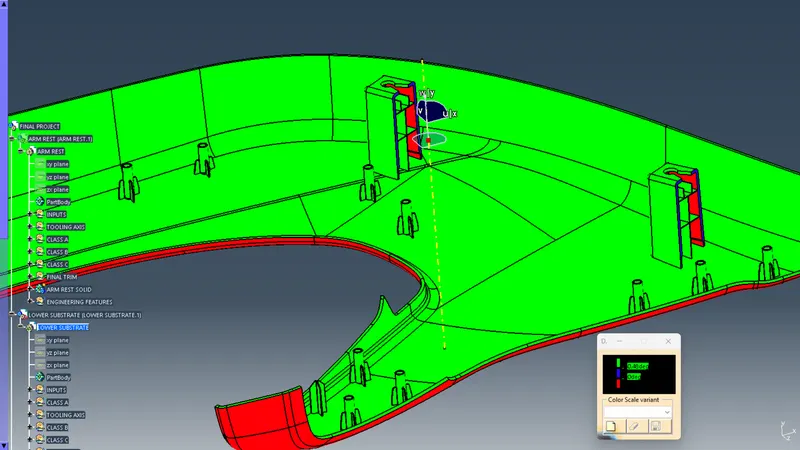
- To perform Draft analysis & Tooling analysis
WHAT IS A DOOR PANEL
The door panel serves as the intermediary between the inside of the car and the internal mechanisms of the door. It is usually divided into various sections, such as armrests, map pockets, and lower substrates, in order to facilitate its design. The door panel must meet stringent requirements as one of the most durable interior components of a car. It must withstand considerable pressure, while still being less than 2mm thick, and must also protect passengers in the event of a collision. Modern door panels often contain a full-width inner panel that incorporates features such as electronic windows, central locking systems, and speakers. These panels are usually composed of a foamed core that is covered with either textile or plastic materials.
The door panel is of four parts. There are,
- Door Arm Rest.
- Lower Substrate.
- Upper Map Pocket.
- Lower Map Pocket.
TOOLING AXIS CREATION
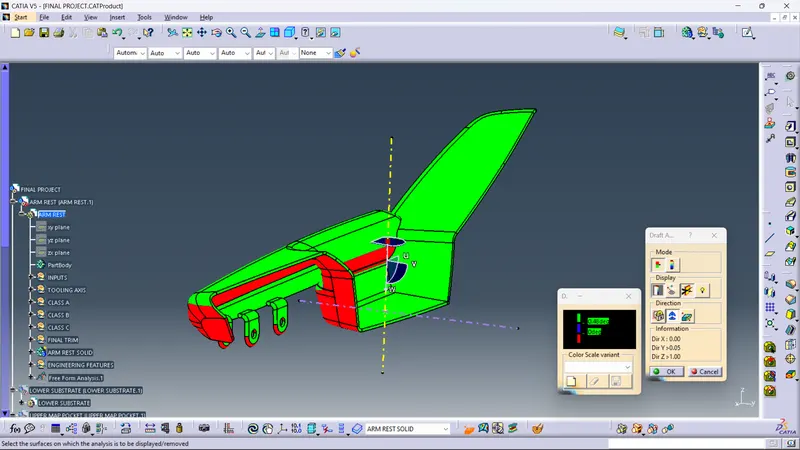
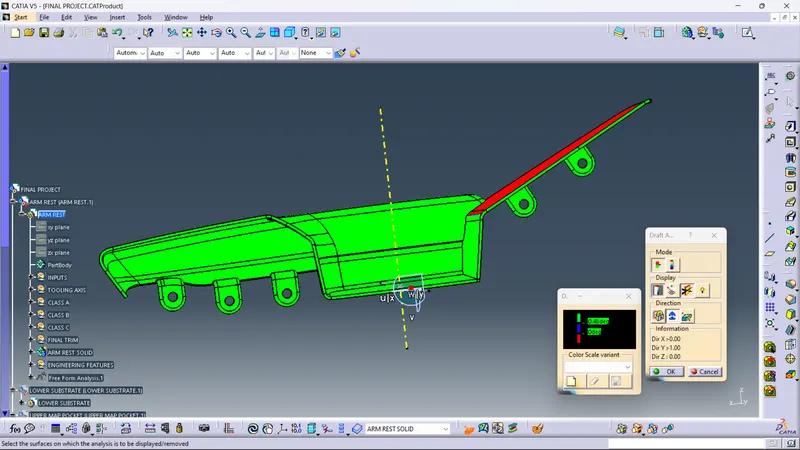
The process of determining the tooling direction involves identifying the direction in which a part can be removed from the core and cavity. To facilitate the manufacturing process, the draft angle should have a positive orientation towards the tooling axis.
Door Arm Rest
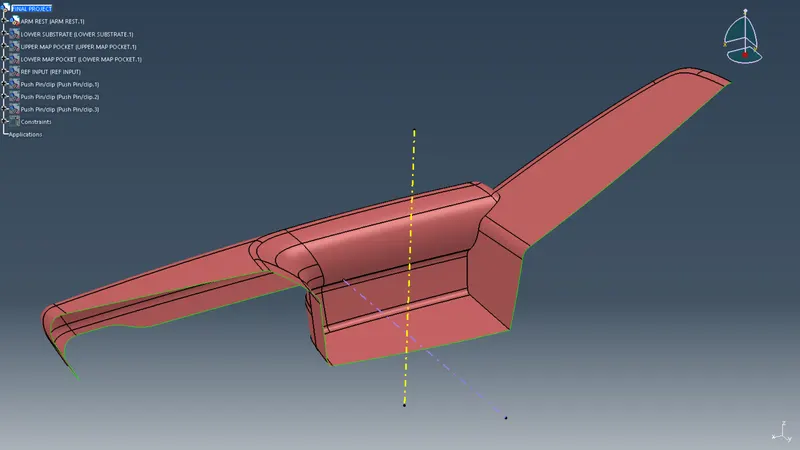
Here, the part is a bit complicated and it cant be made with only one tooling axis. A side core tooling axis is also required to make the manufacturing possible.
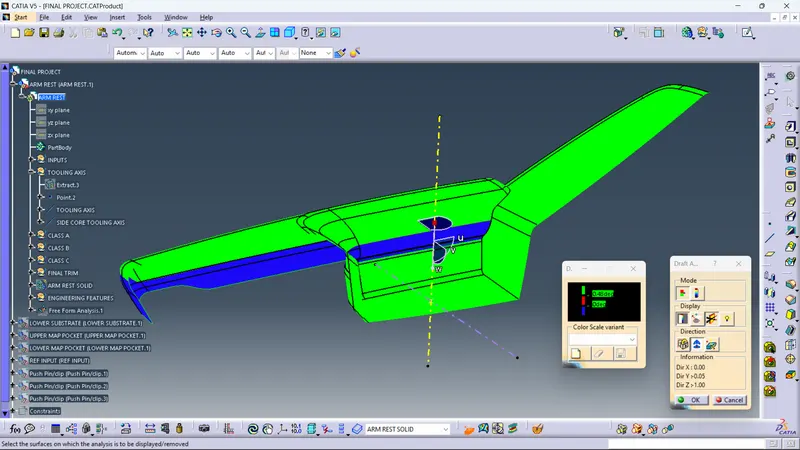
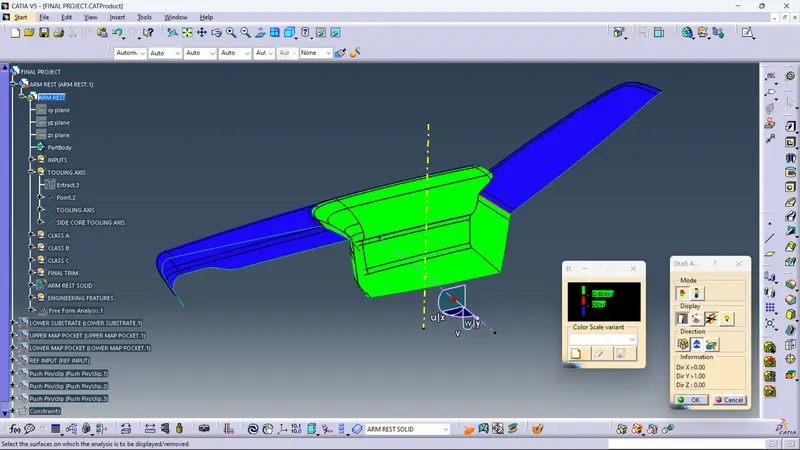
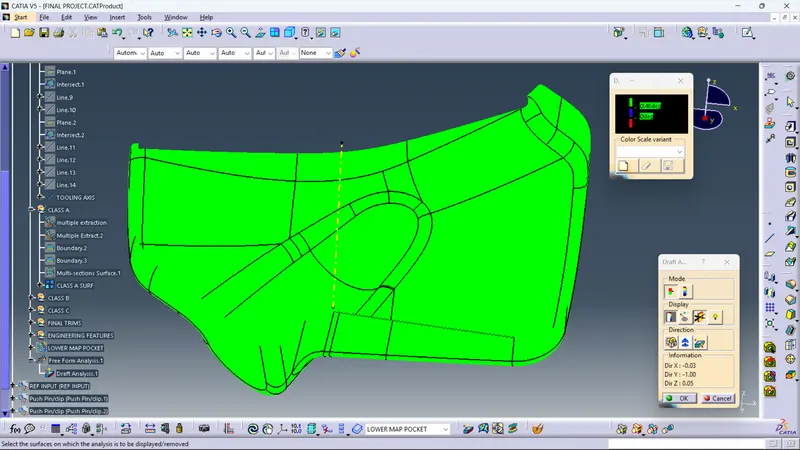
From the Draft analysis, it is clear.
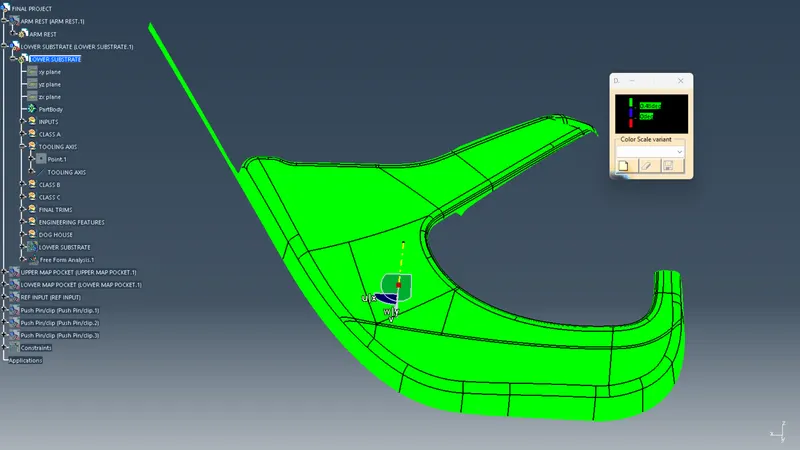
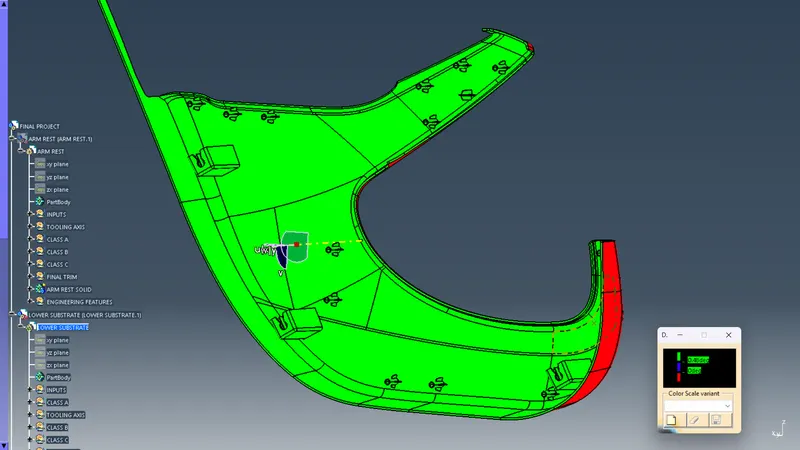
Lower Substrate
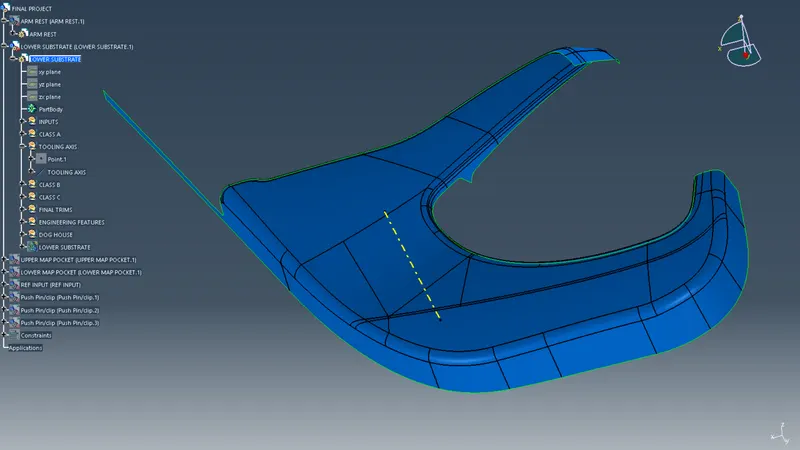
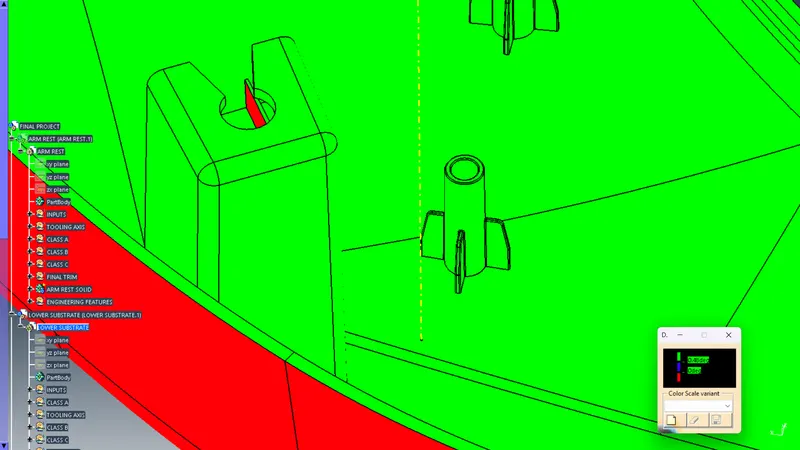
Here, the y direction is taken as tooling axis and checked whether it is passing the draft analysis.
Upper Map Pocket
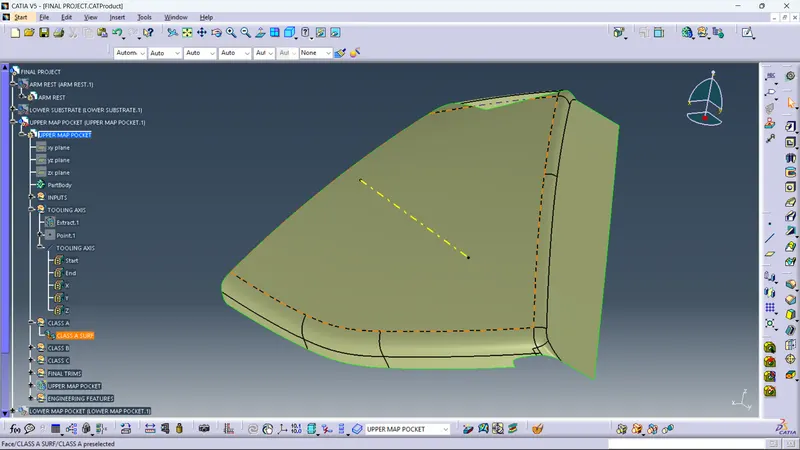
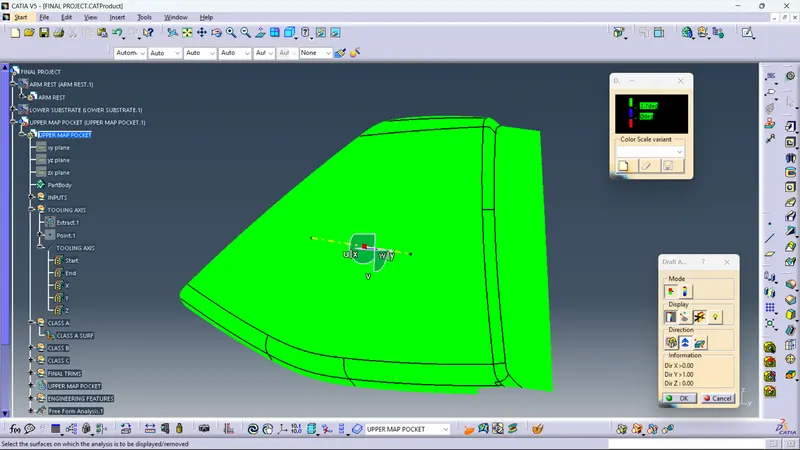
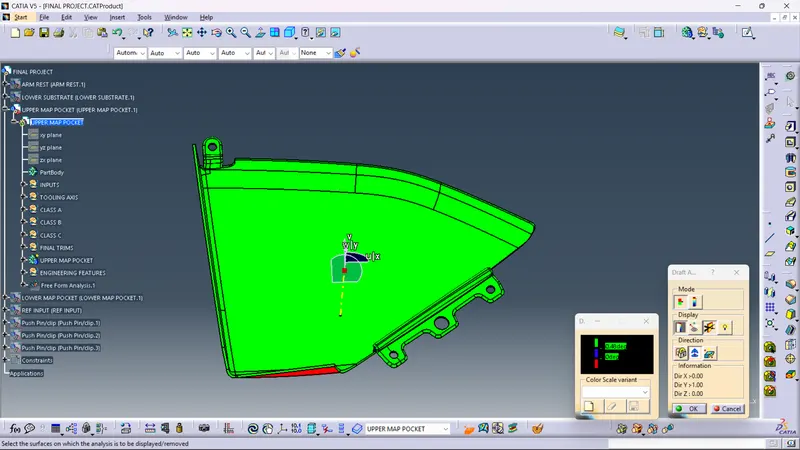
Here, the y direction is taken as tooling axis and checked whether it is passing the draft analysis.
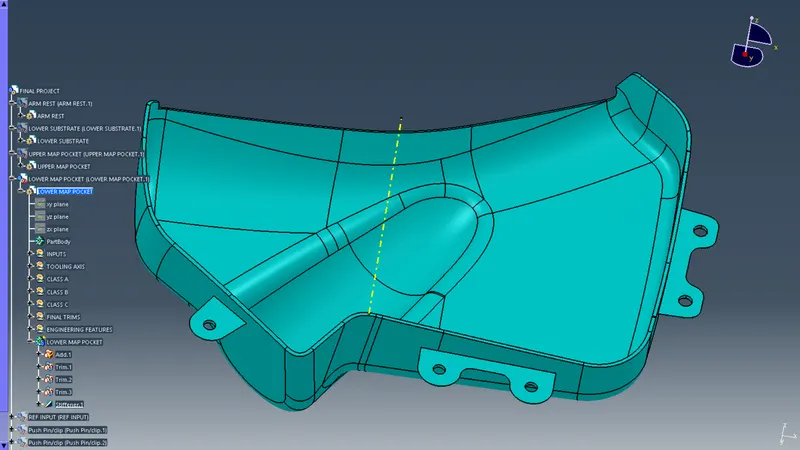
Lower Map Pocket
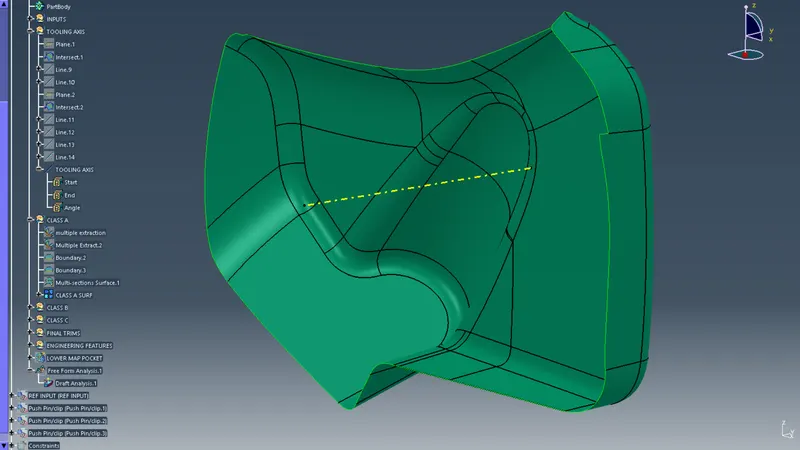
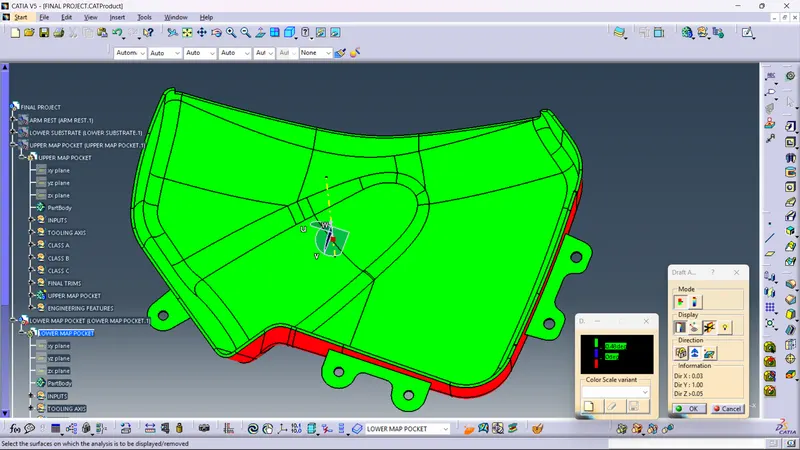
Here, the Tooling axis is created using bisecting method.
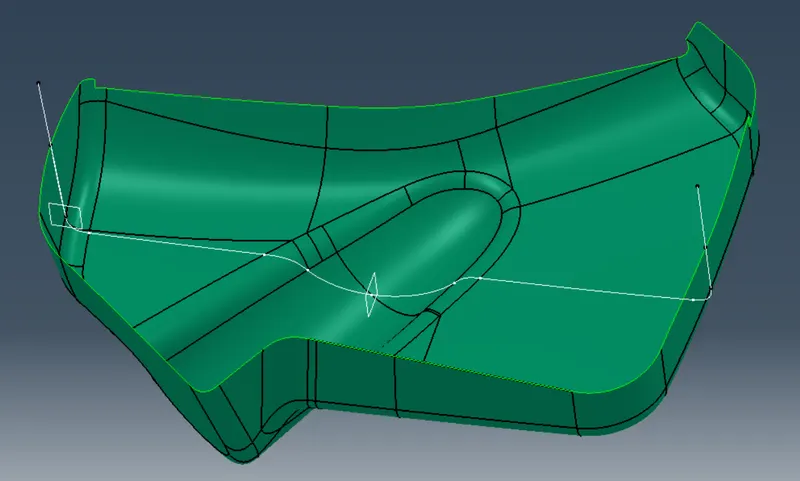
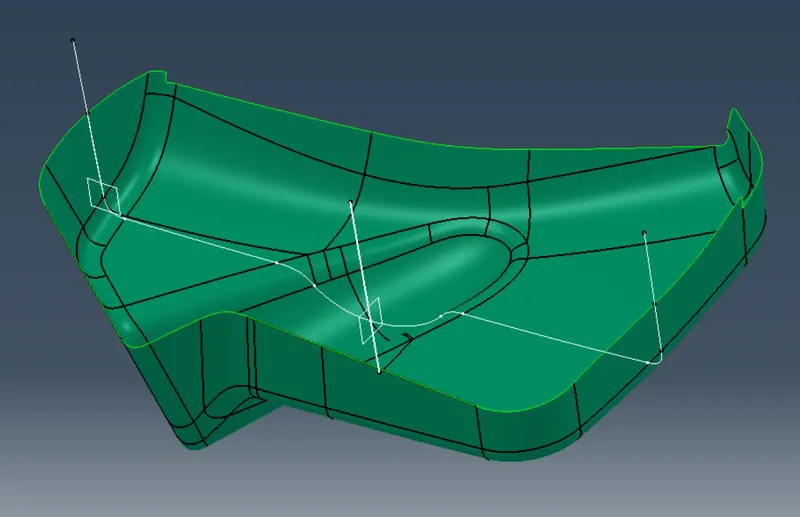
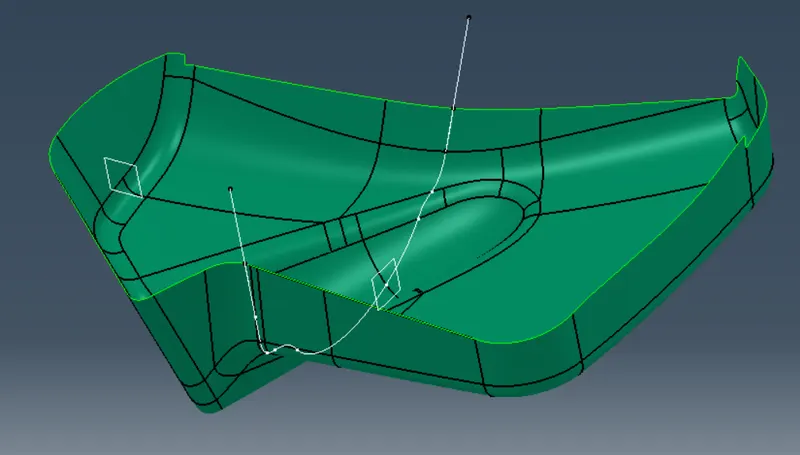
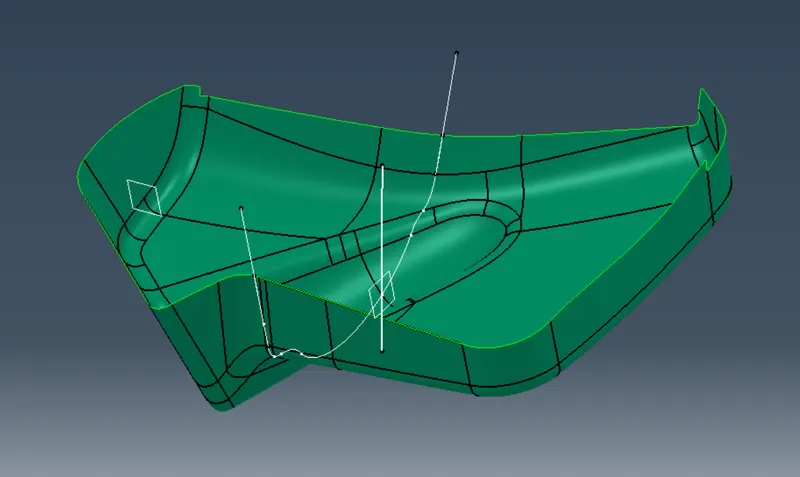
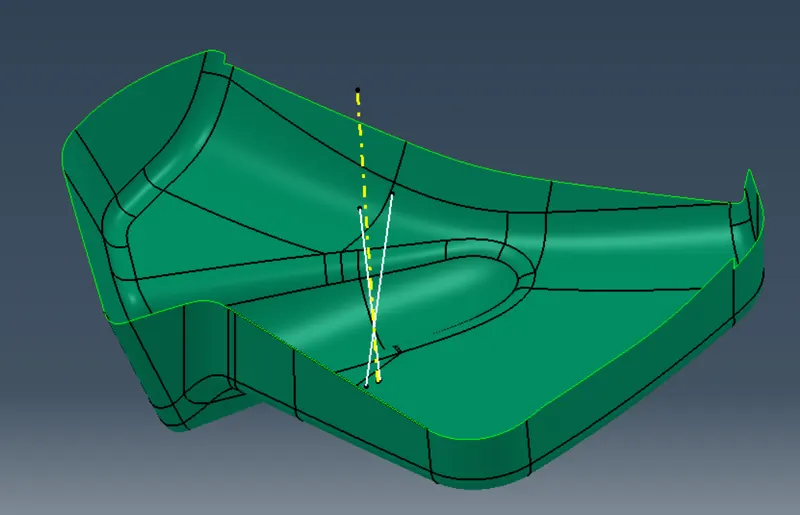
Then it is checked for draft analysis if its clearing or not, and made adjustments to the tooling axis to properly clear the draft analysis.
SOLID BODY CREATION
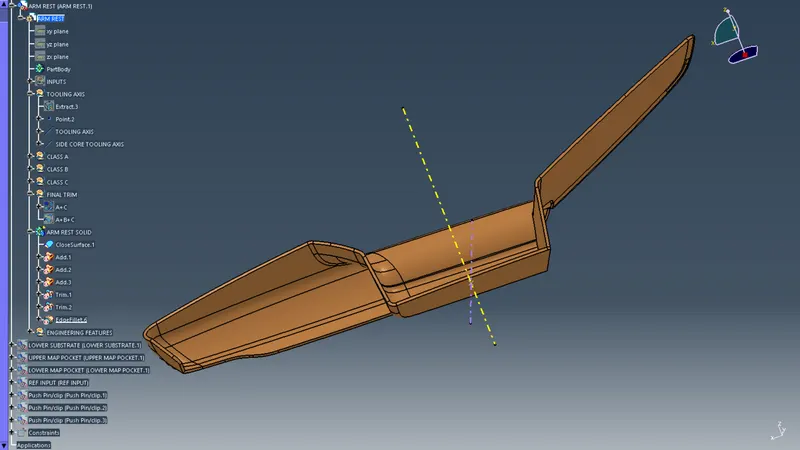
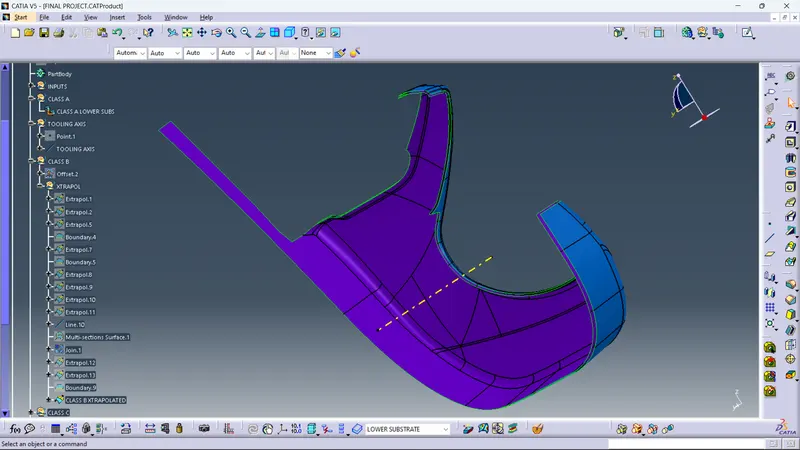
For creating the solid body, the class A surface is ofsetted to the value that needed to be the thickness of the plastic part to create the class B. Here, the value is 2.5mm for all the parts.
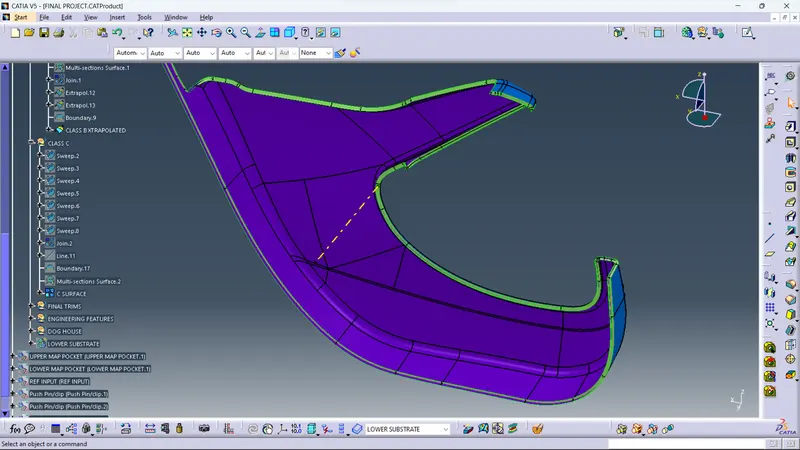
Then class C surface is created to make a closed surface with class A and class B surfaces.
A solid Body can be created from this closed surface.
Door Arm Rest
Class A
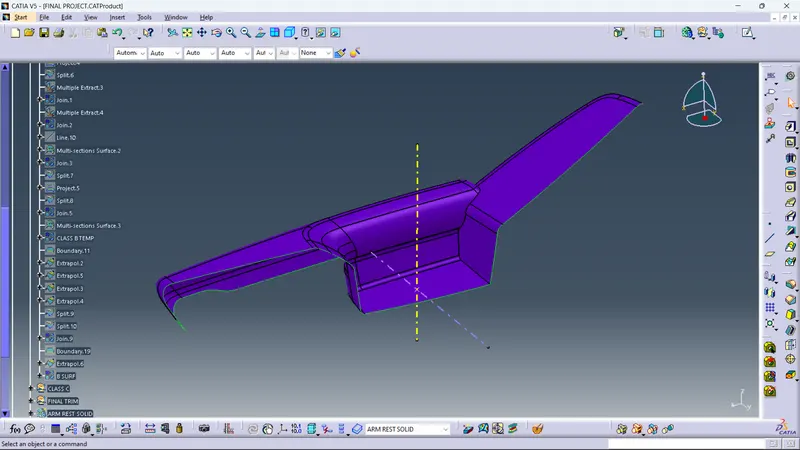
Class B surface creation
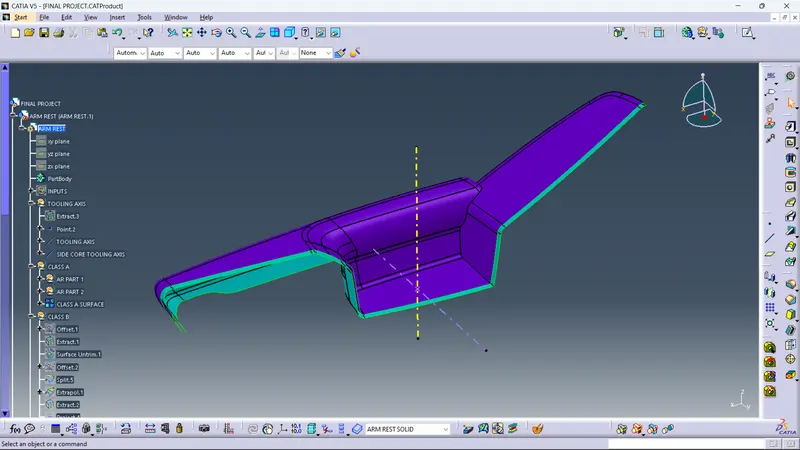
Class C
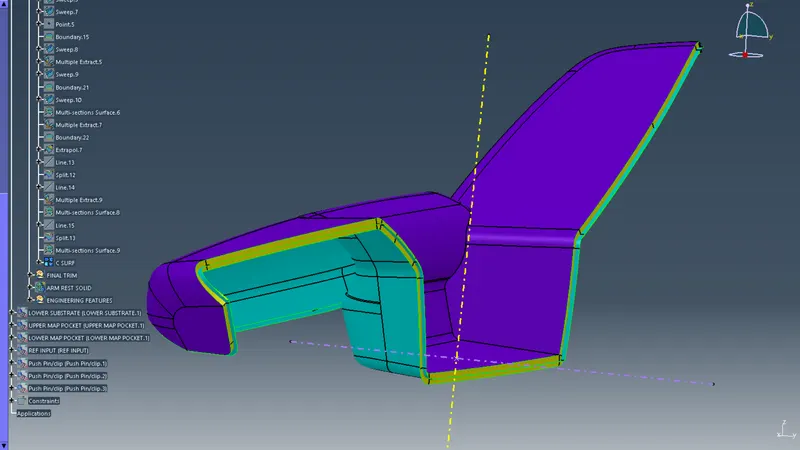
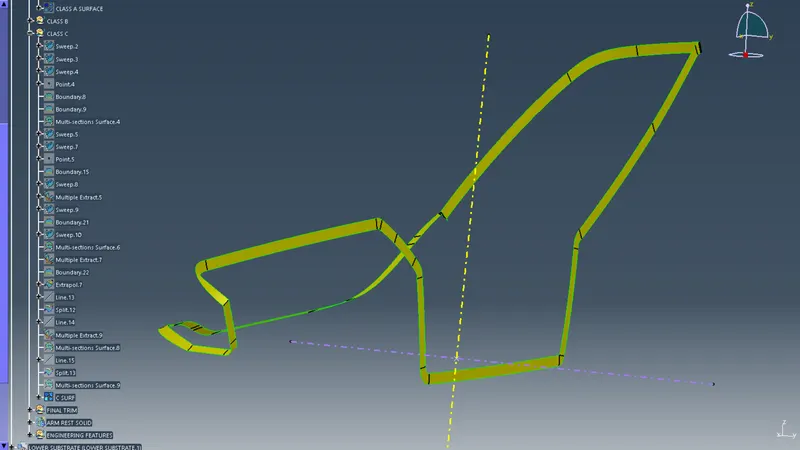
A B C Trim for closed body creation
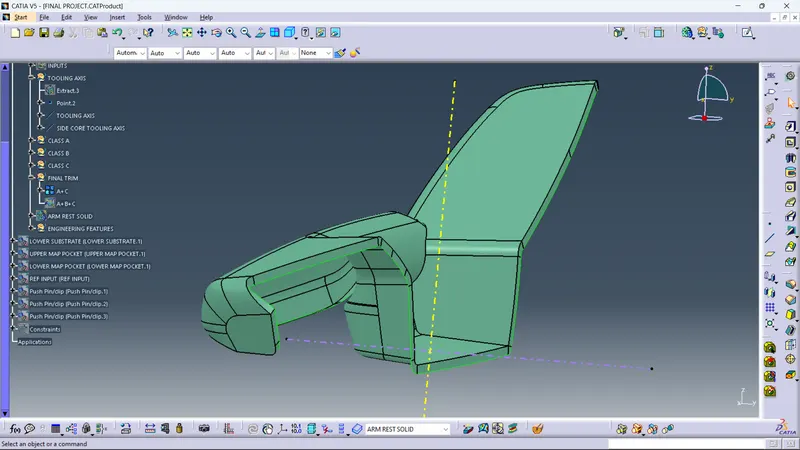
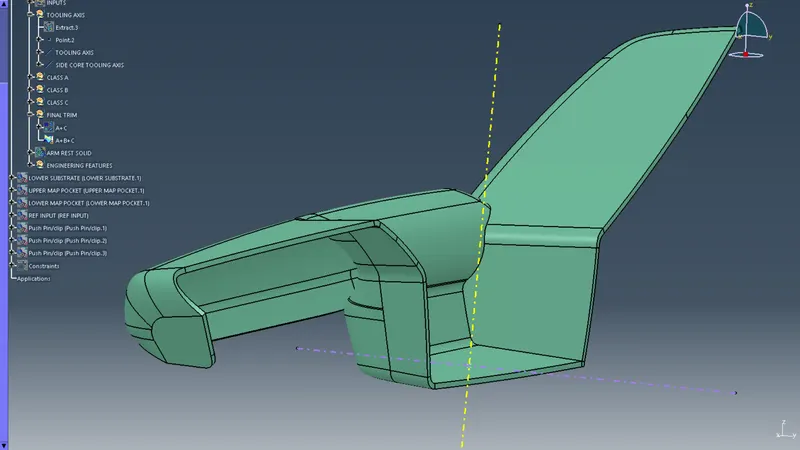
Solid Body Creation
Lower Substrate
Class A
Class B
Class C
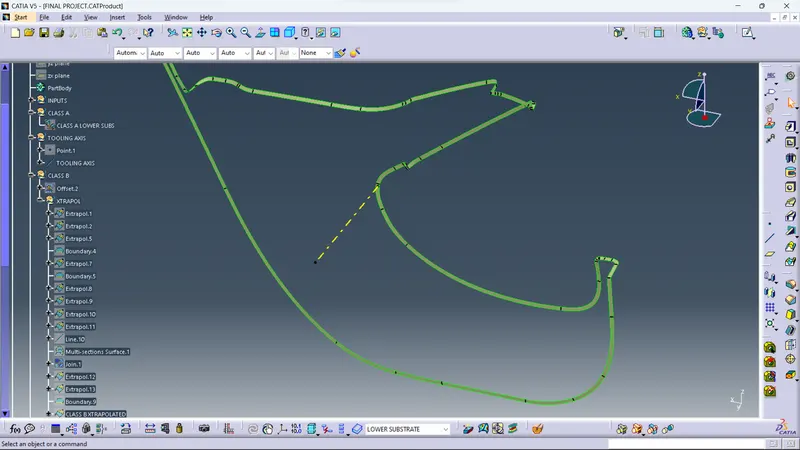
A B C Trim for Closed body creation
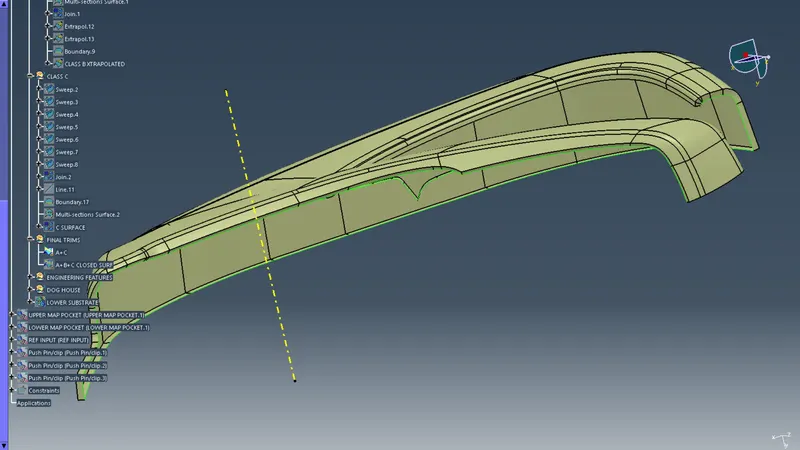
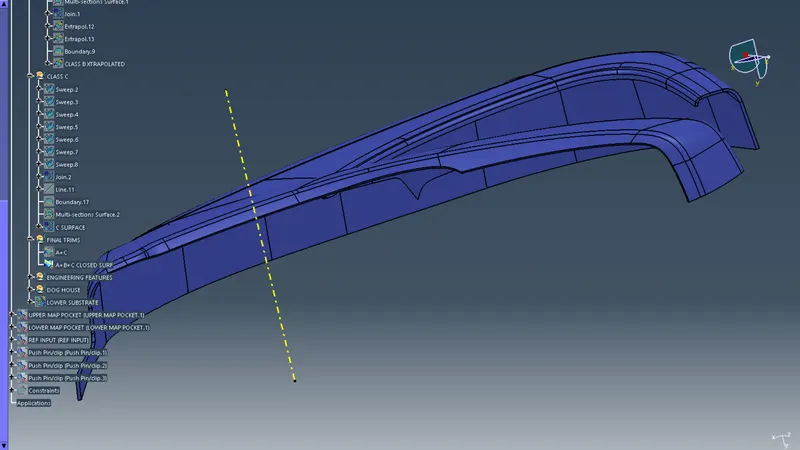
Solid Body Creation
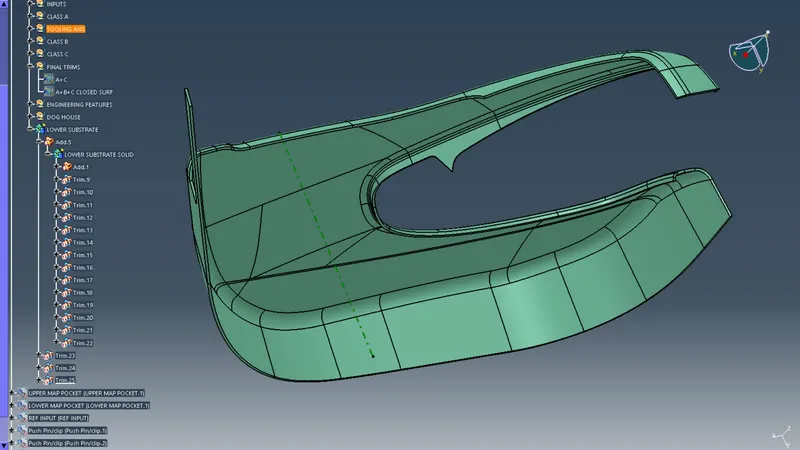
Upper Map Pocket
Class A
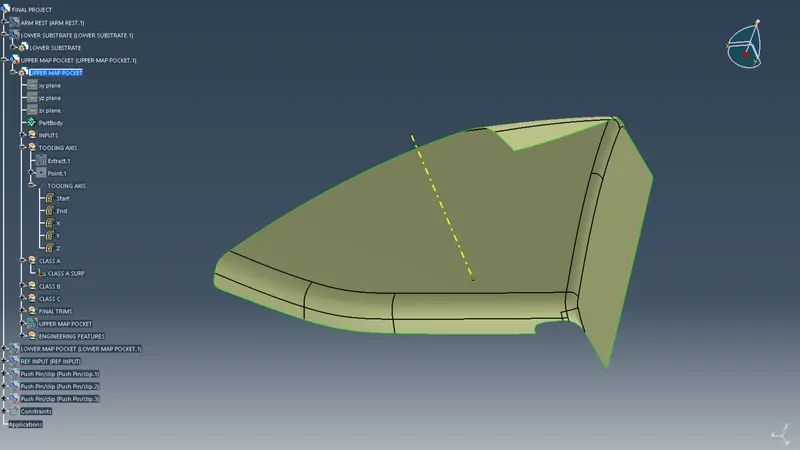
Class B
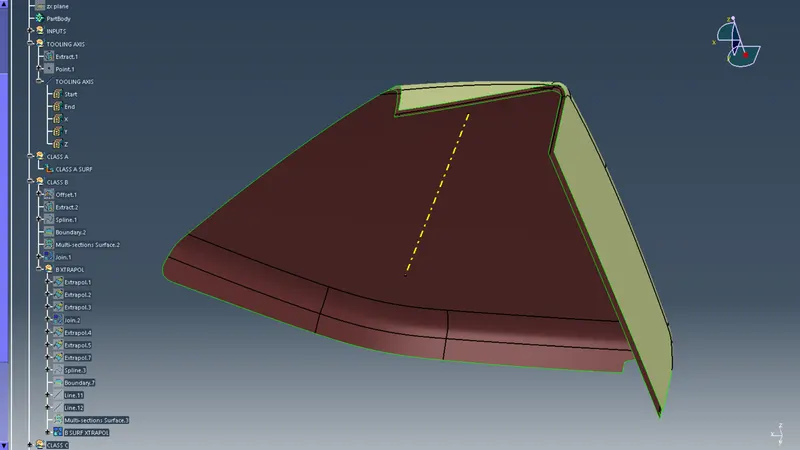
Class C
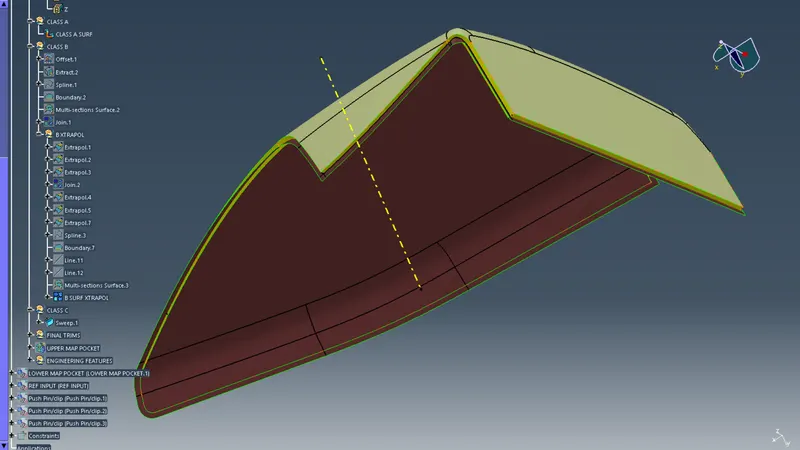
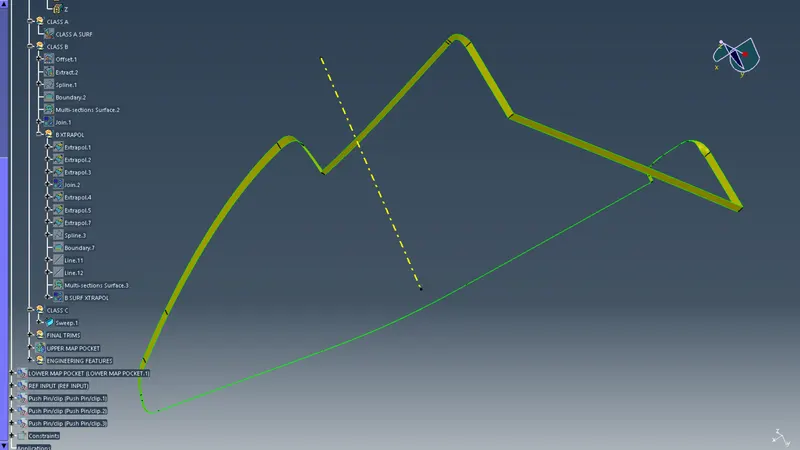
A B C Trim for Closed body creation
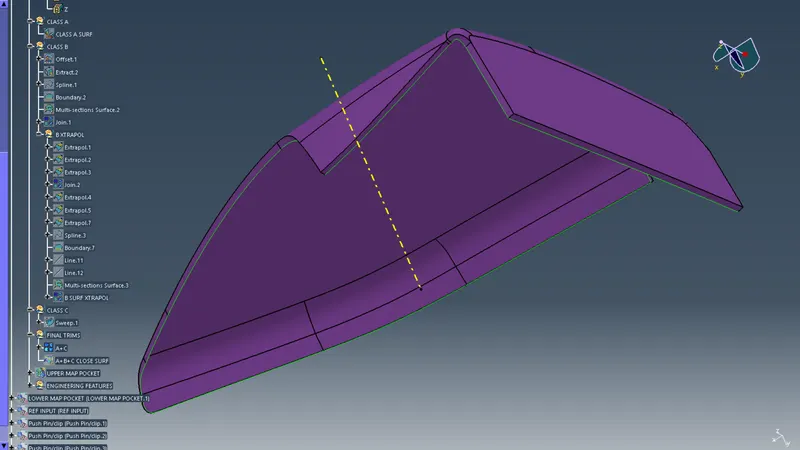
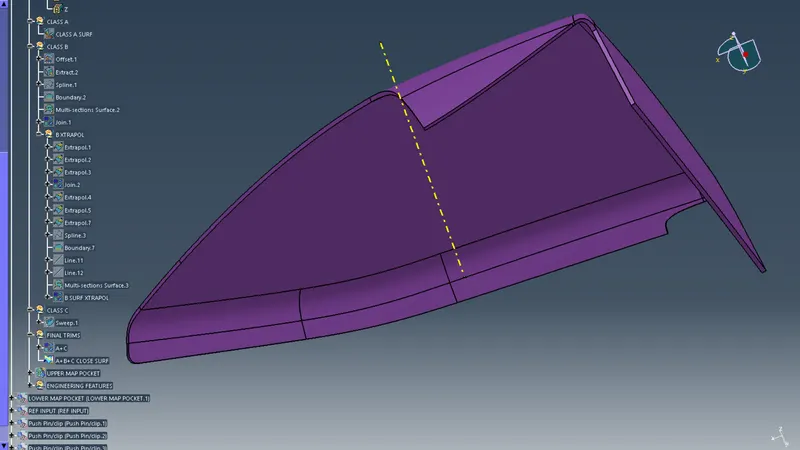
Solid Body Creation
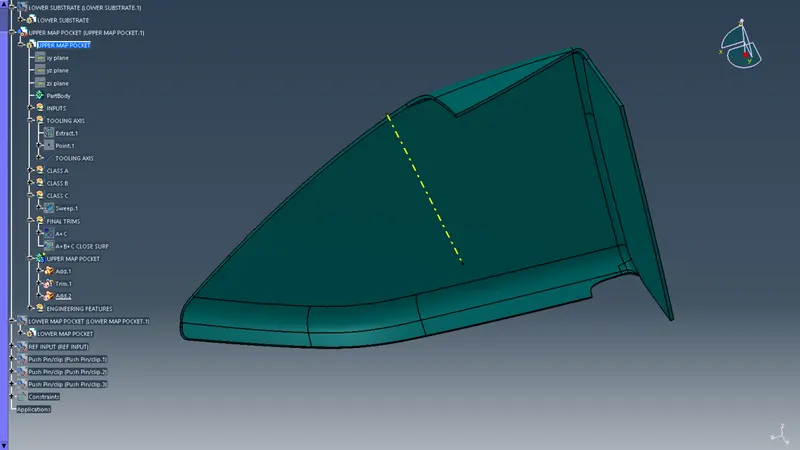
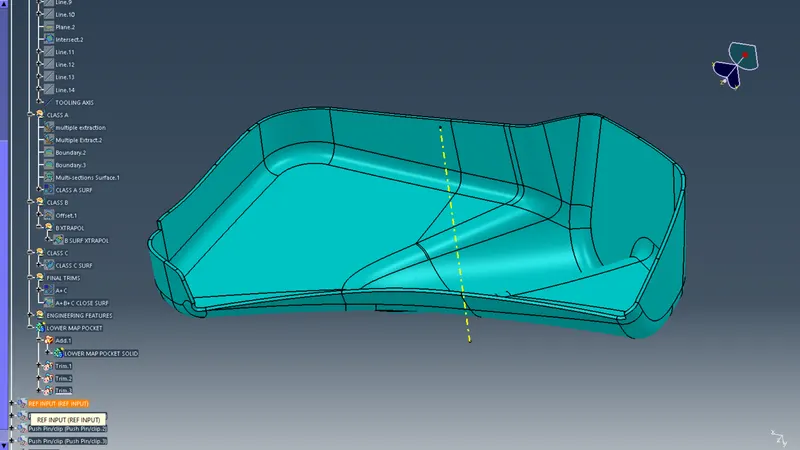
Lower Map Pocket
Class A
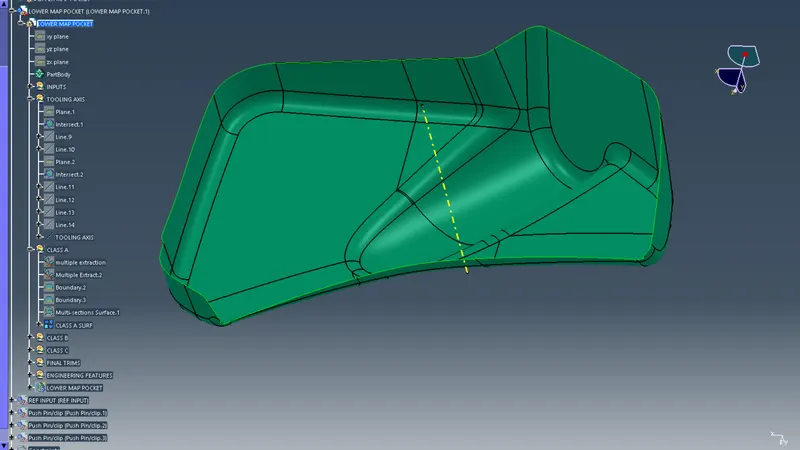
Class B
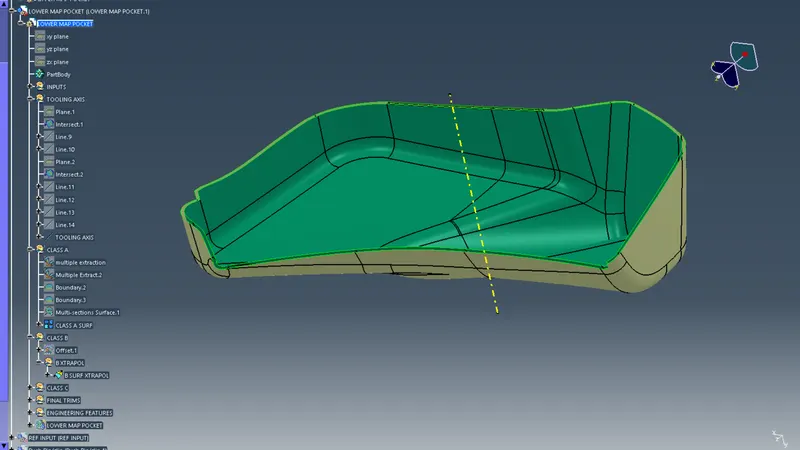
Class C
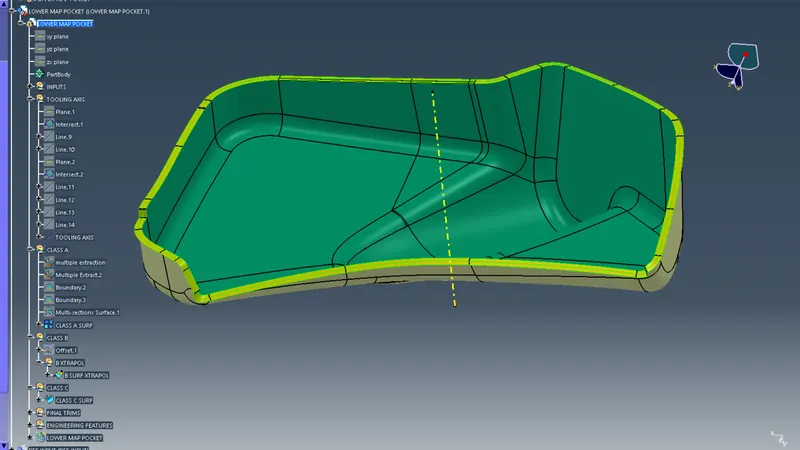
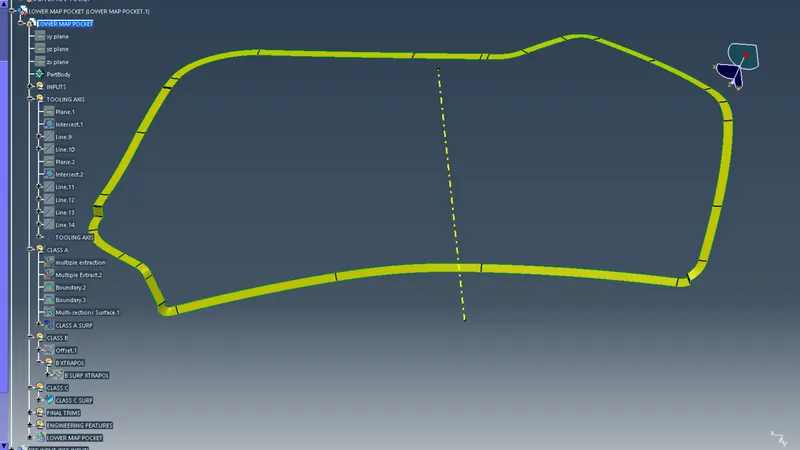
A B C Trim for Closed body creation
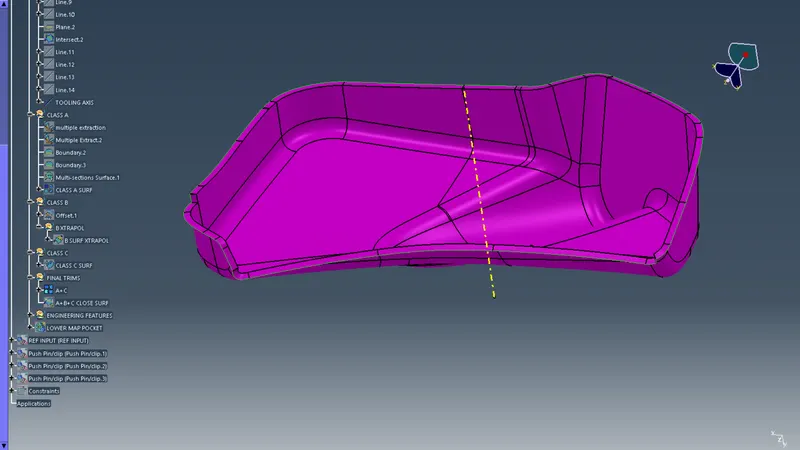
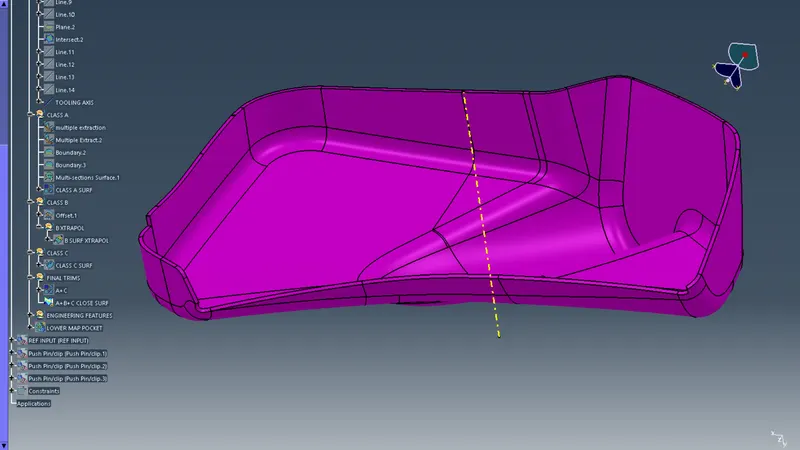
Solid Body Creation
ENGINEERING FEATURES CREATION
Arm Rest
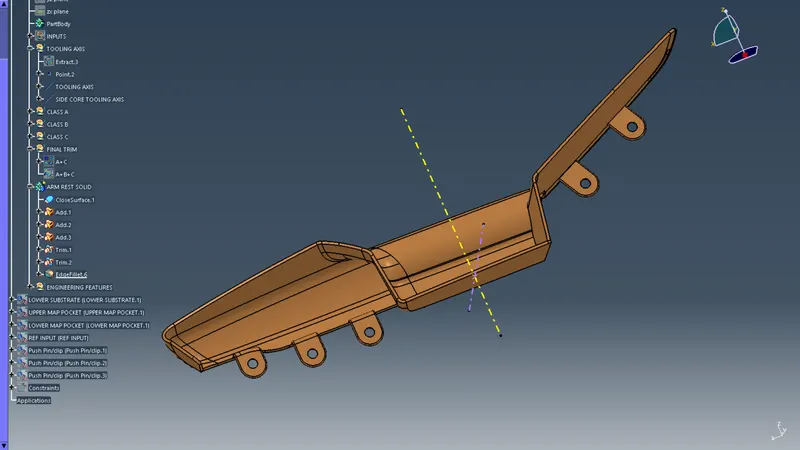
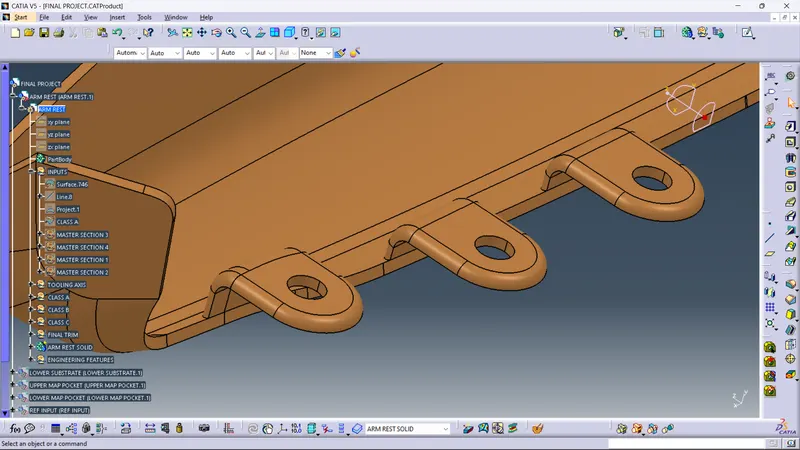
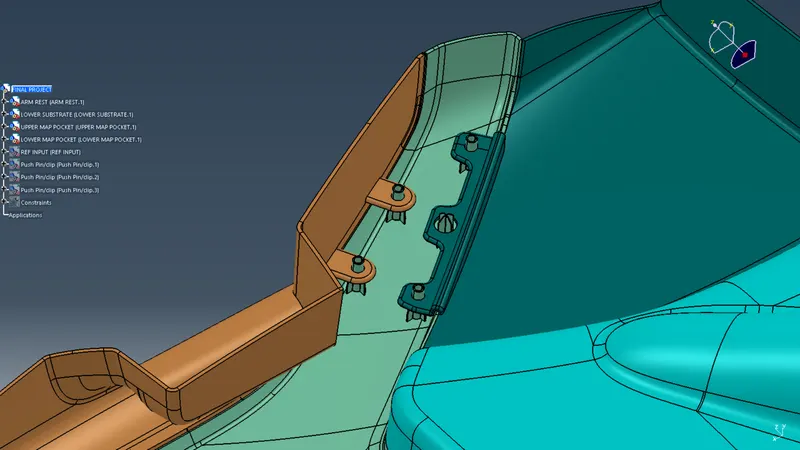
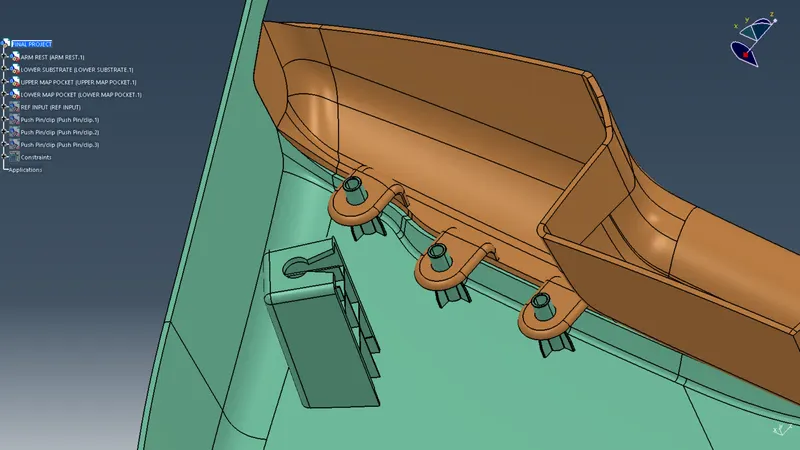
The Arm Rest part has flanges so as to join with the Heat Stakes on the Lower substrate.
Lower Substrate
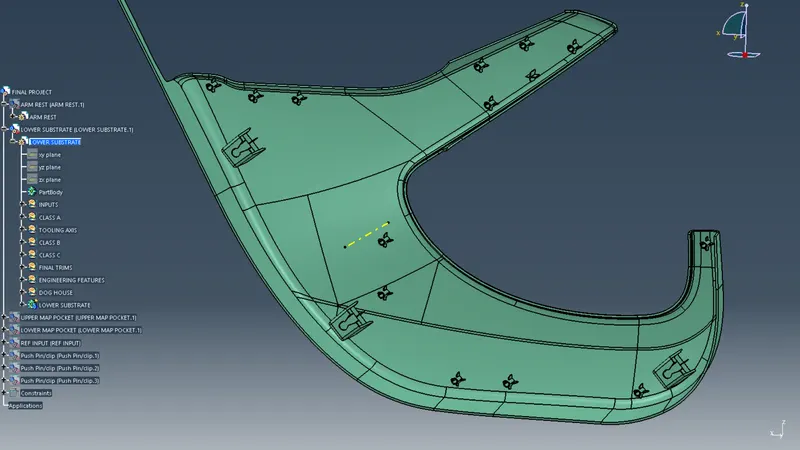
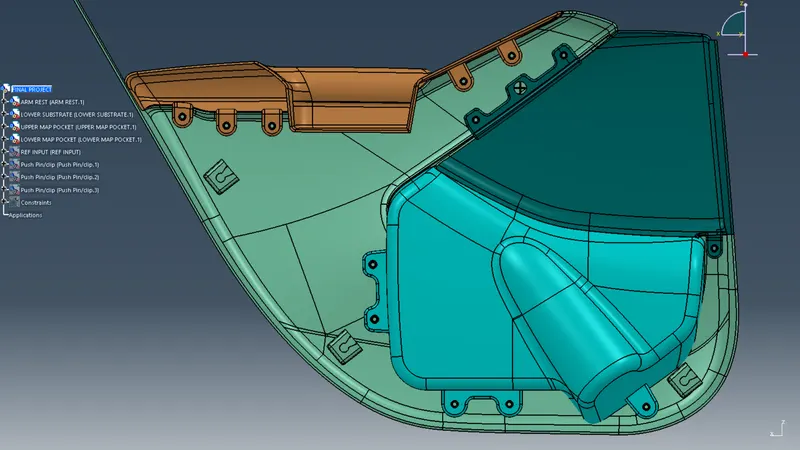
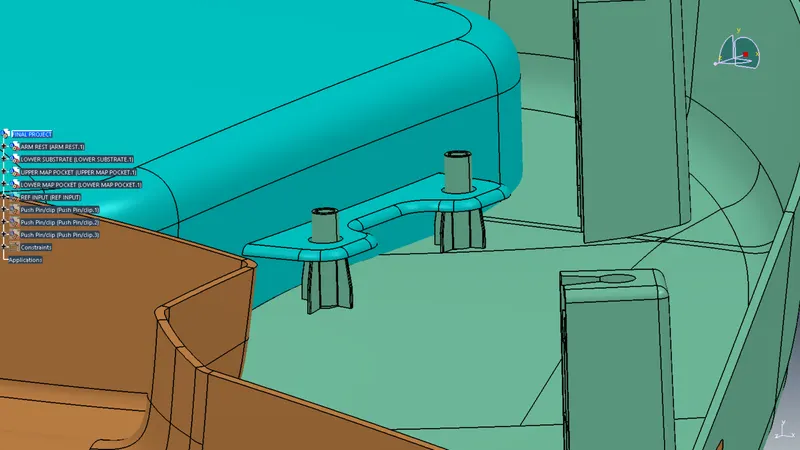
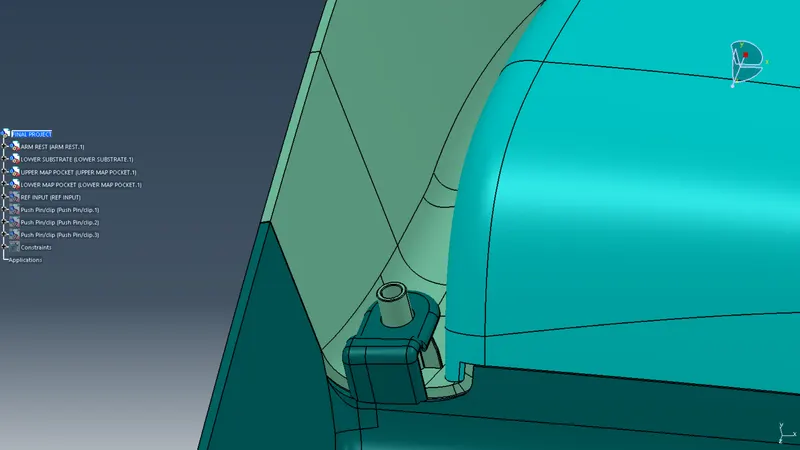
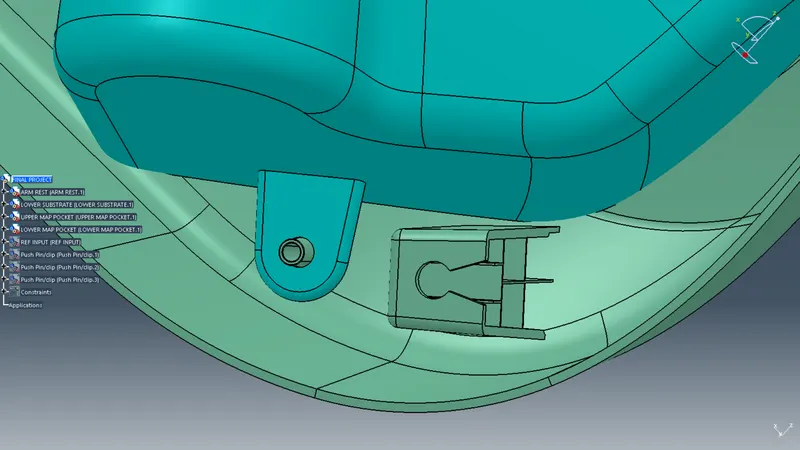
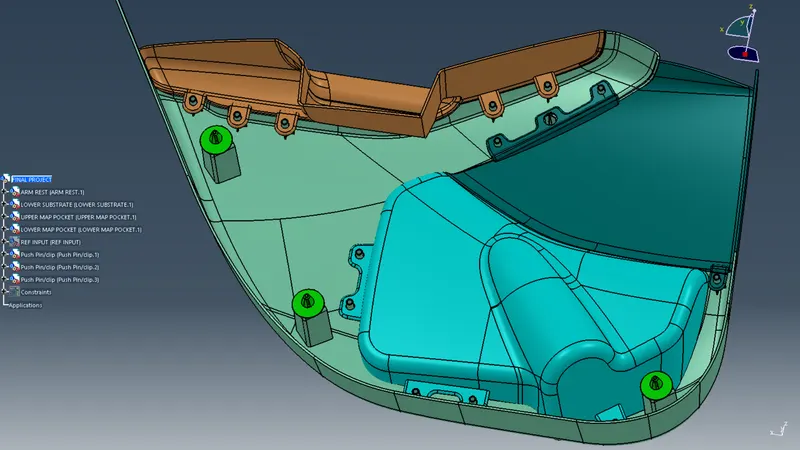
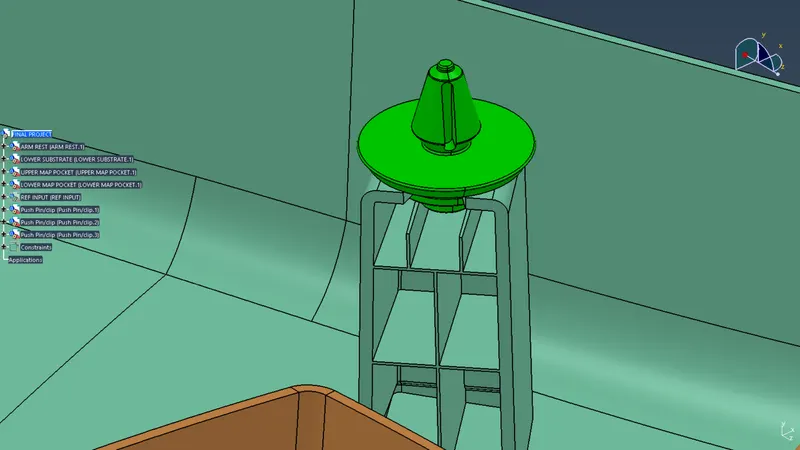
The lower substrate has all the heatstakes placed in it to join the other parts into it. Dog Houses are also present to attach the plastic part to the biw structure using push pins.
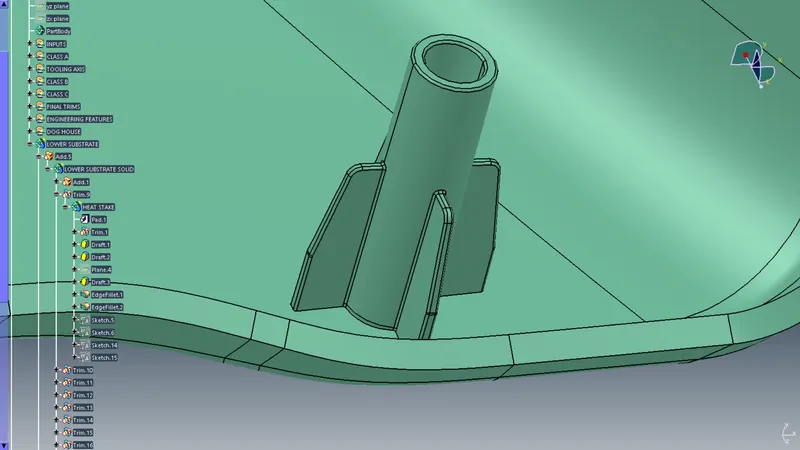
Heat Stakes are designed with reference to the provided master sections for the dimensions. The height of the ribs are determined so as the flanges of the joining part will be supported by the ribs.
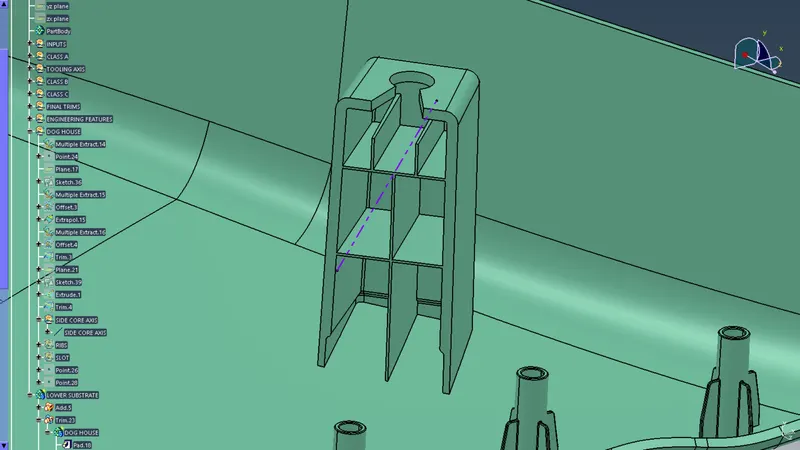
Dog houses are designed so as it is clearing draft analysis with the side core axis. Additional ribs are provided to improve the strength and stiffness of the feature.
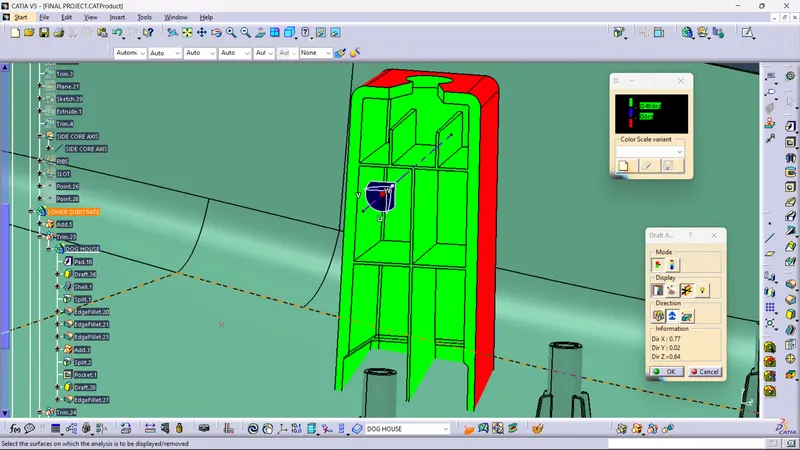
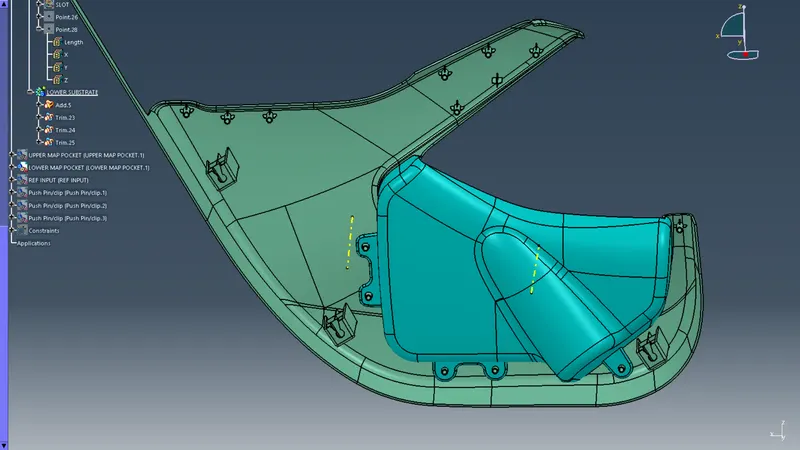
The placement of the dog house and side core direction is determined so as there should not be any interference with other plastic parts and the movement of the side core is also possible.
Upper Map Pocket
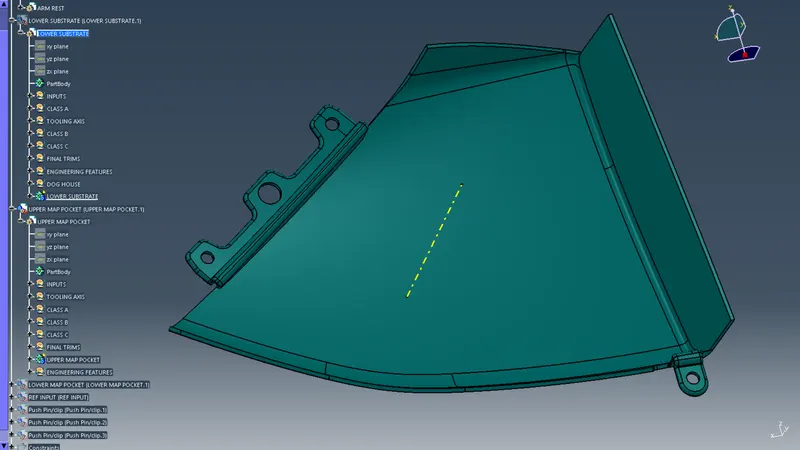
Flanges are created with respect to the master sections provided.
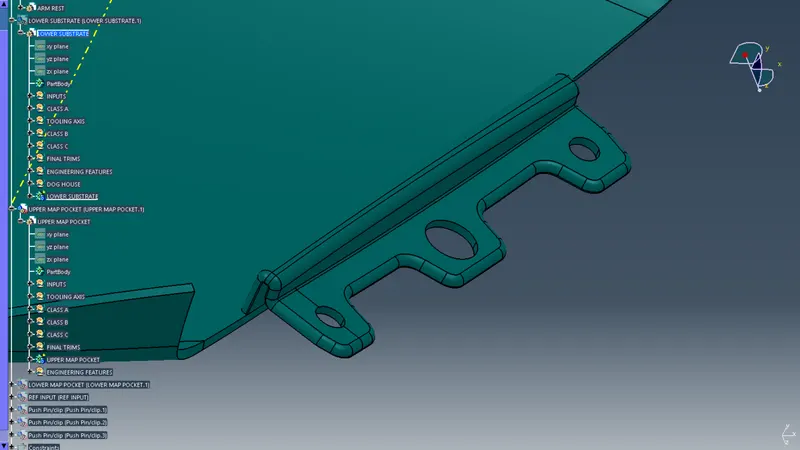
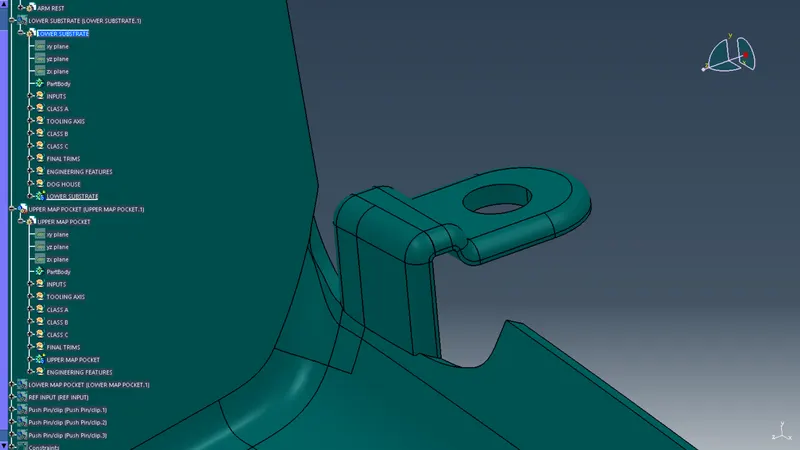
Lower Map Pocket
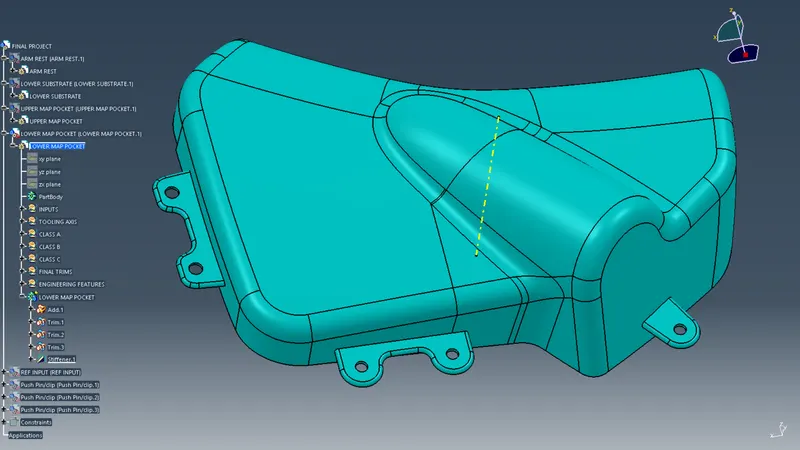
Flanges are provided for join Lower Map Pocket to the Lower substrate by Heat Staking process.
DRAFT ANALYSIS
DOOR ARM REST
LOWER SUBSTRATE
UPPER MAP POCKET
LOWER MAP POCKET
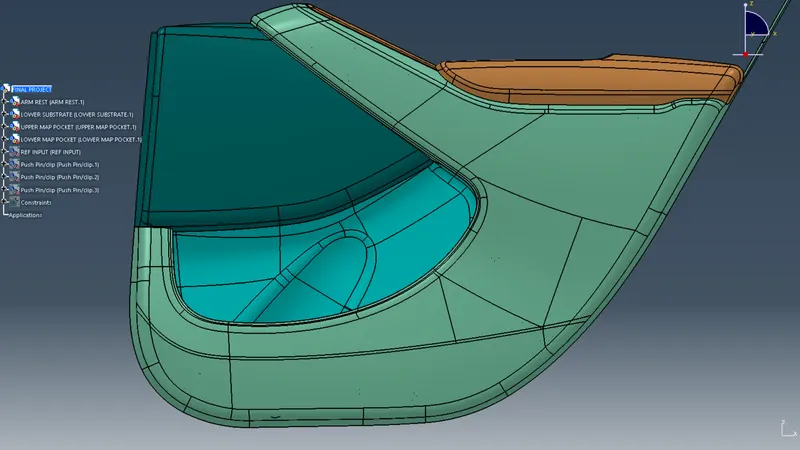
DOOR TRIM
CONCLUSION
The car interior door trim is fabricated using a Class A surface as the starting point, from which Class B and C surfaces are derived. Design rules and master sections are used as references to create attachment features such as heat stakes, locators, flanges, and a dog house. The component undergoes draft analysis to ensure ease of manufacturing by applying a 0.5 degree draft to both the surface and attachment features.