Week 12:- Documentation Challenge
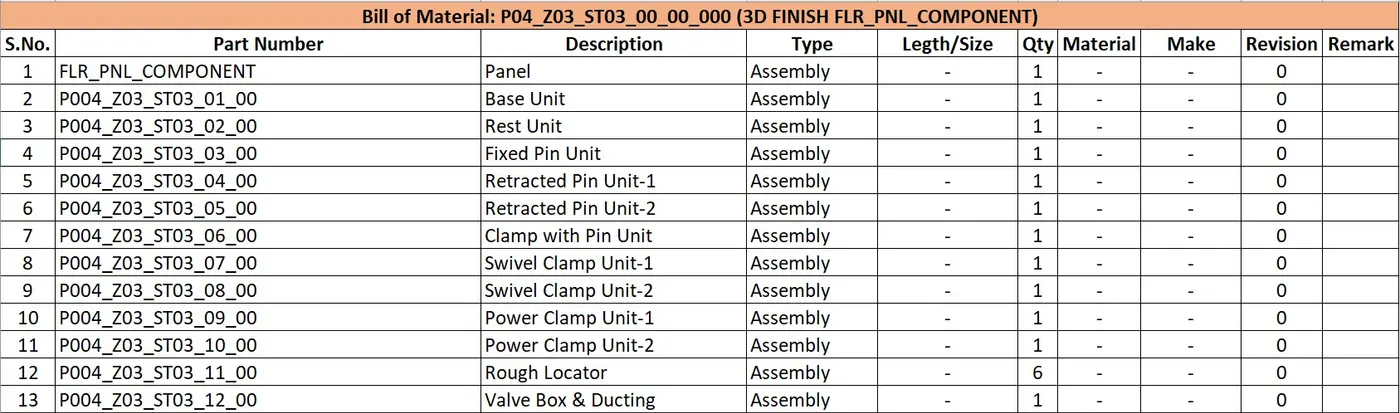
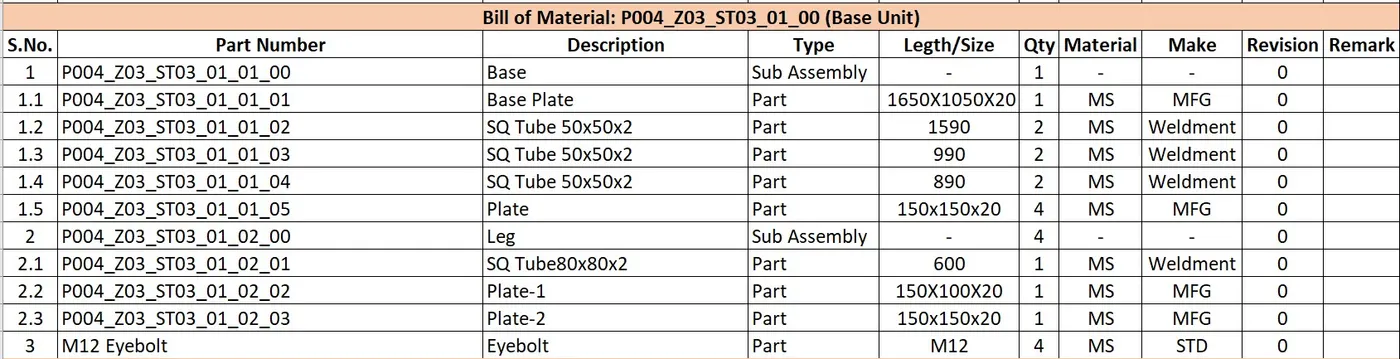
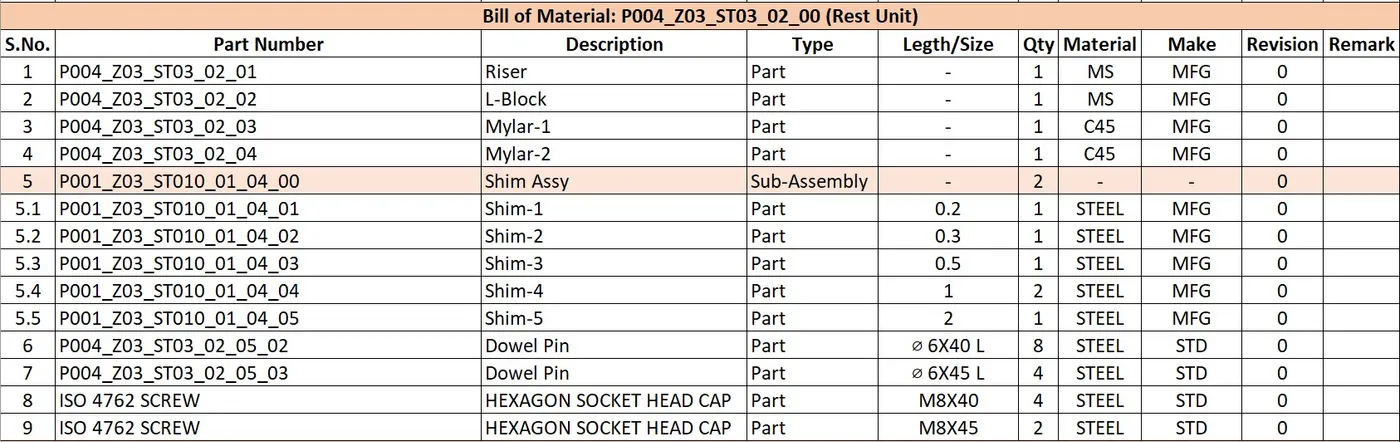
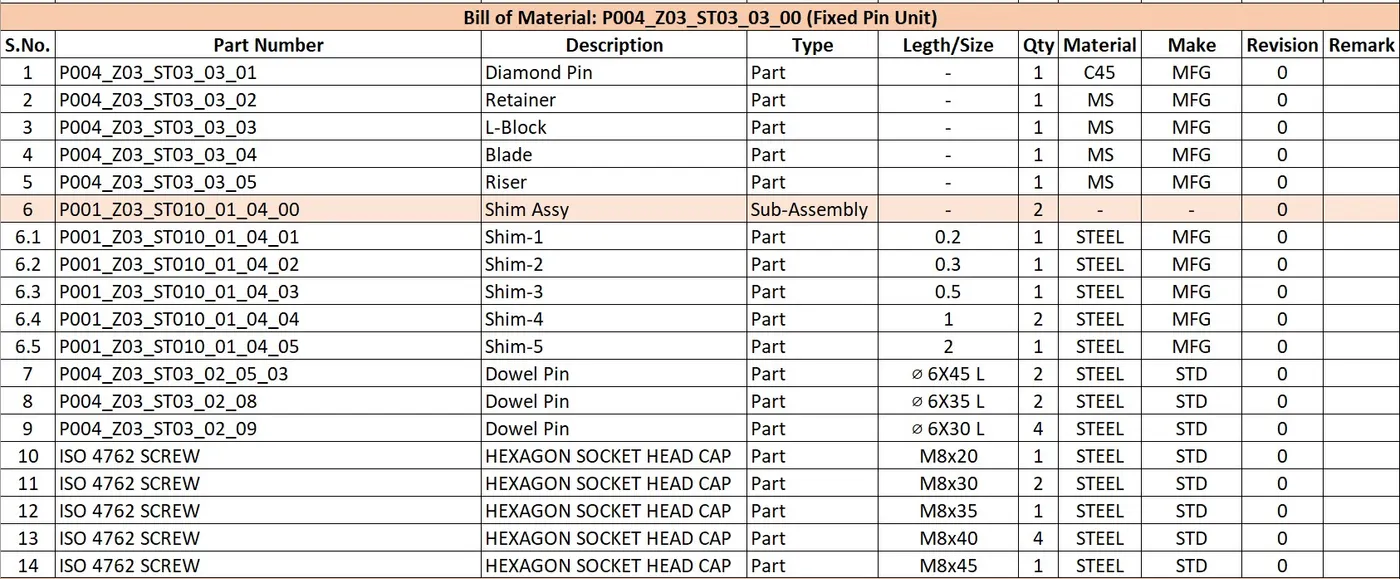
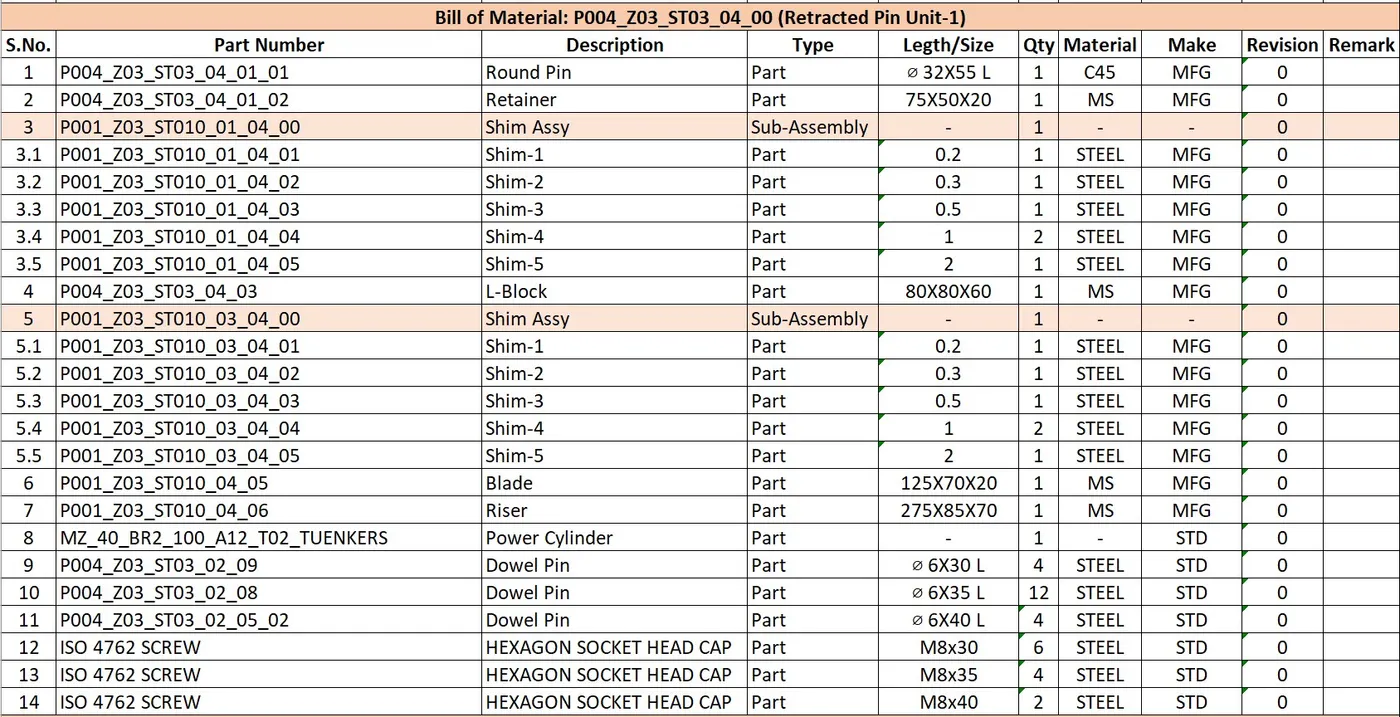
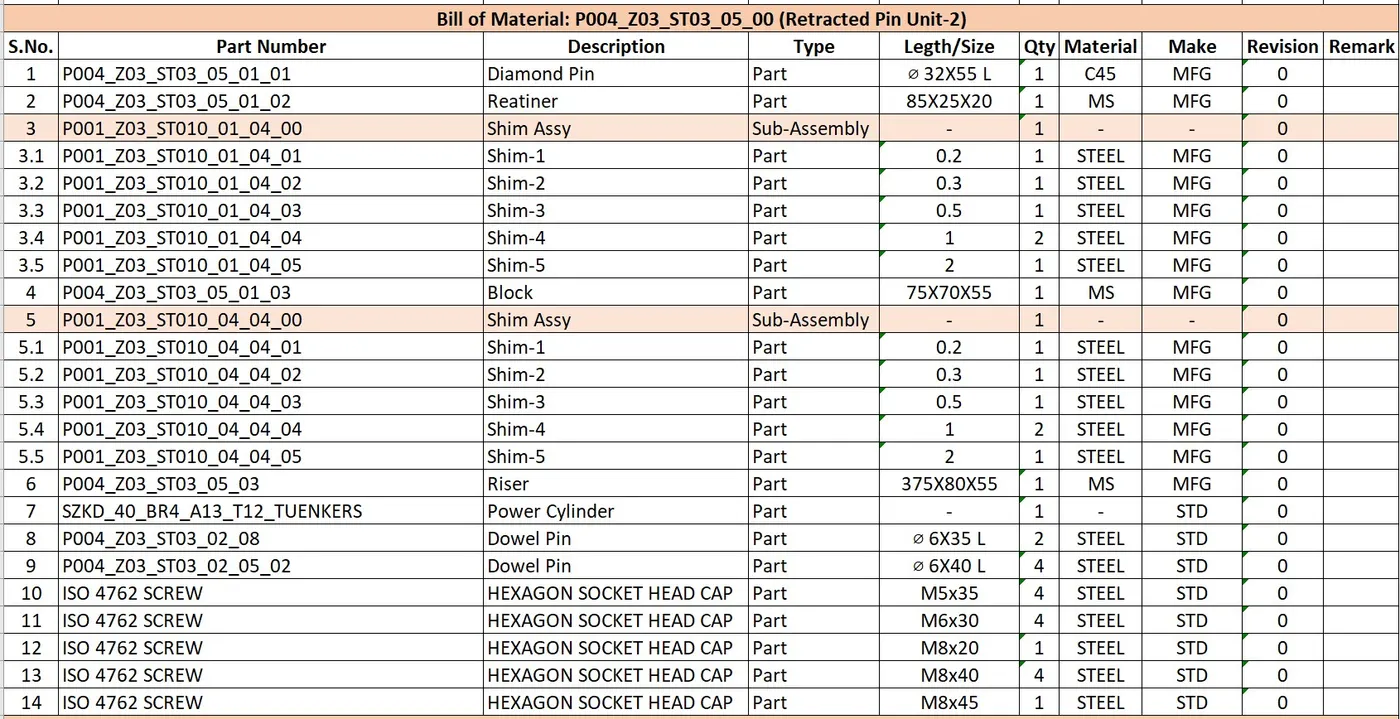
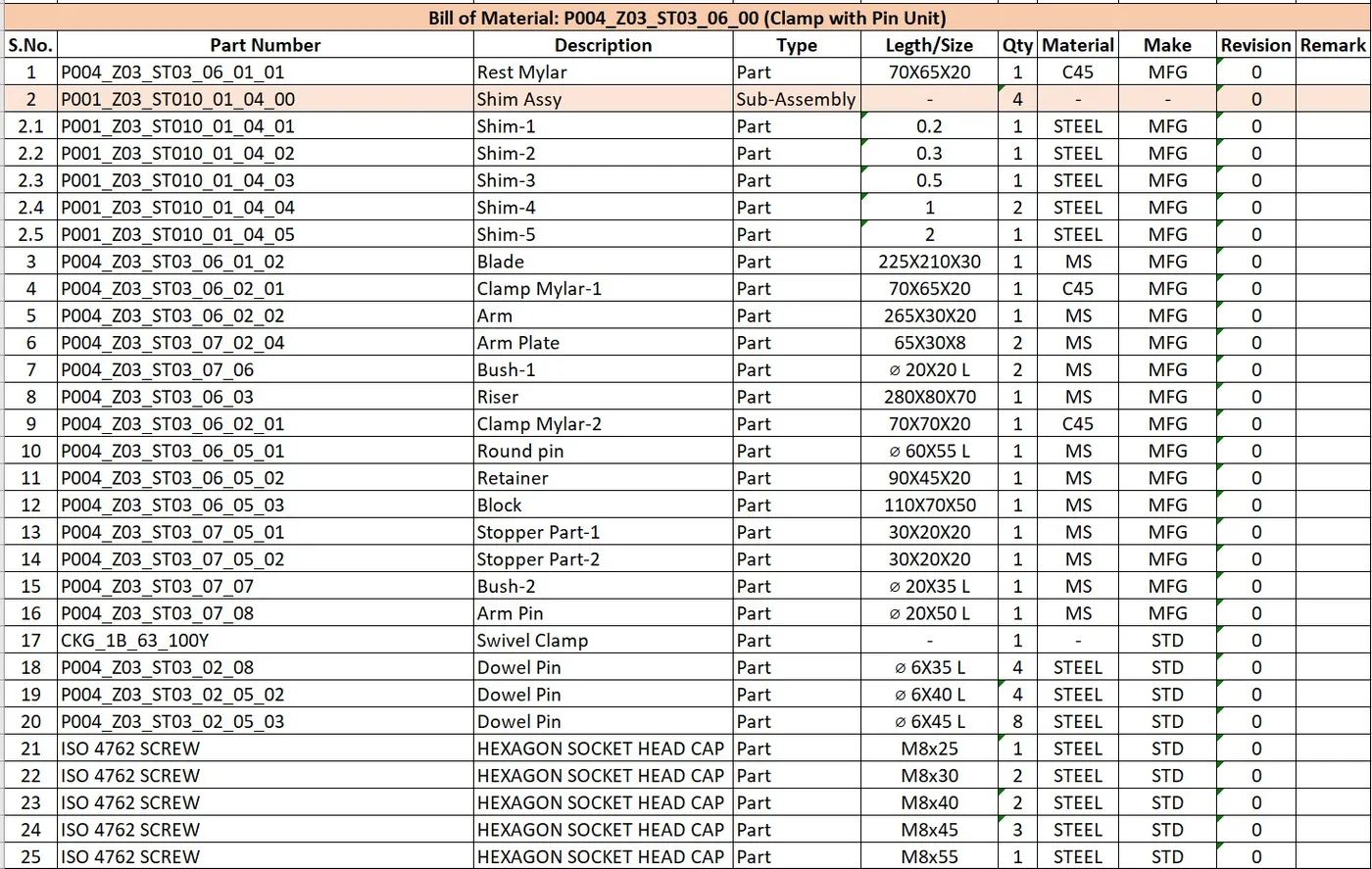
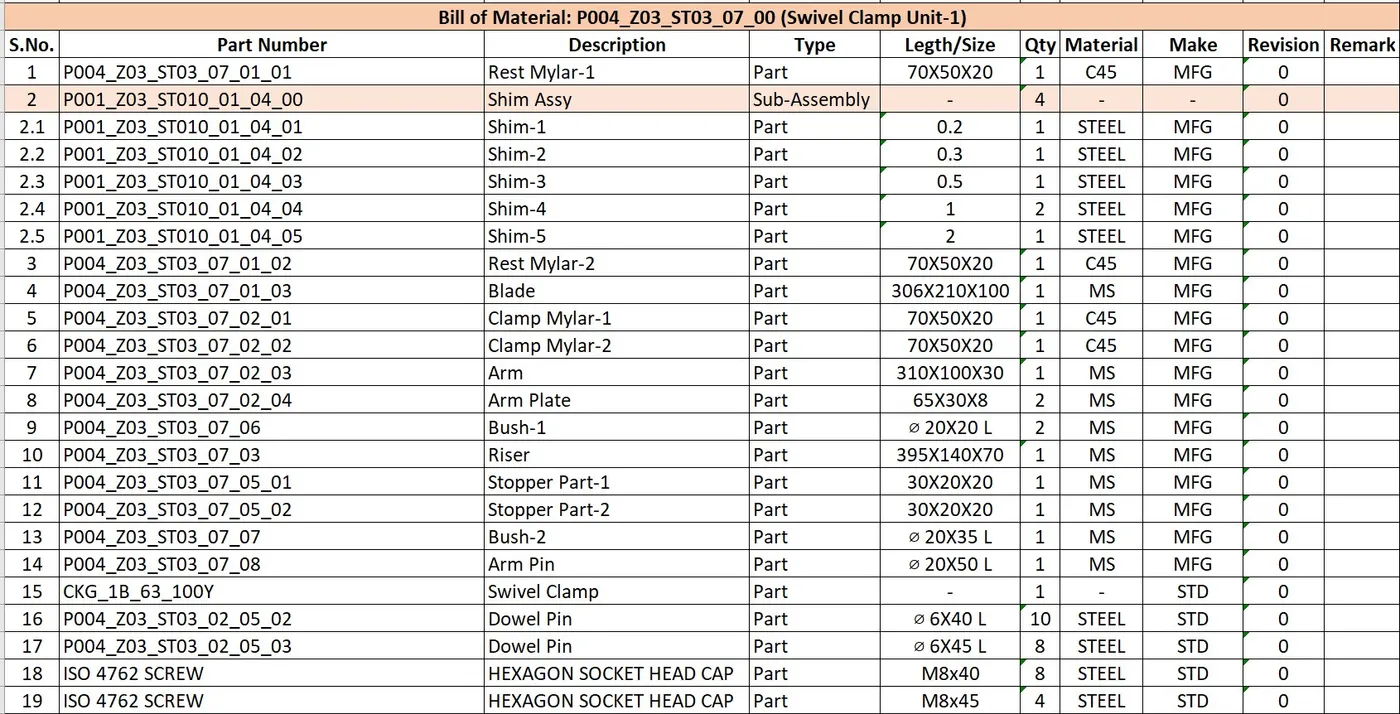
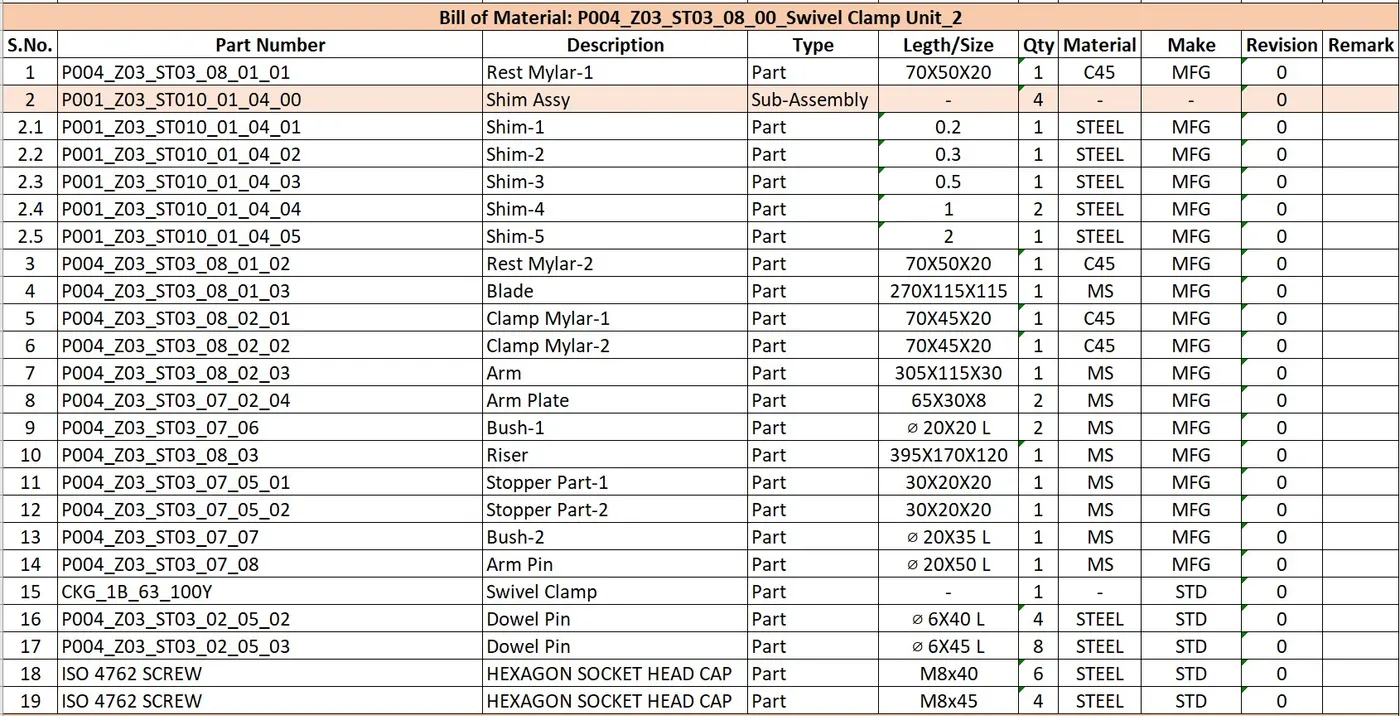
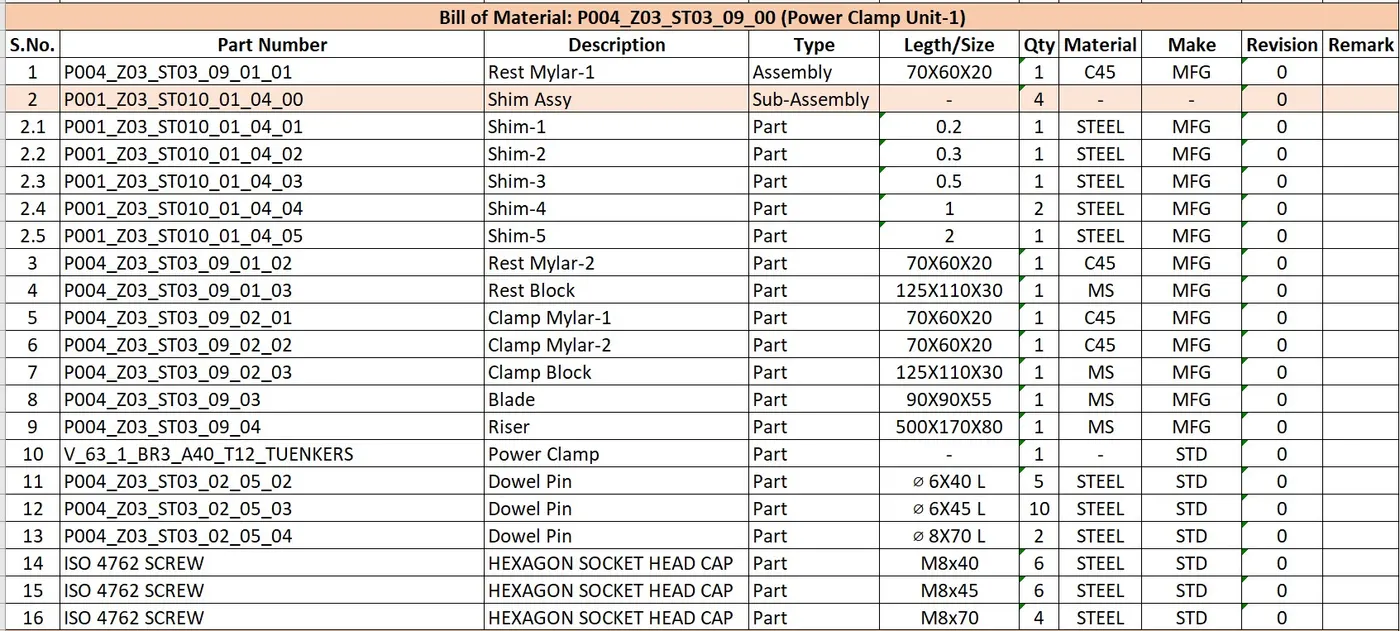
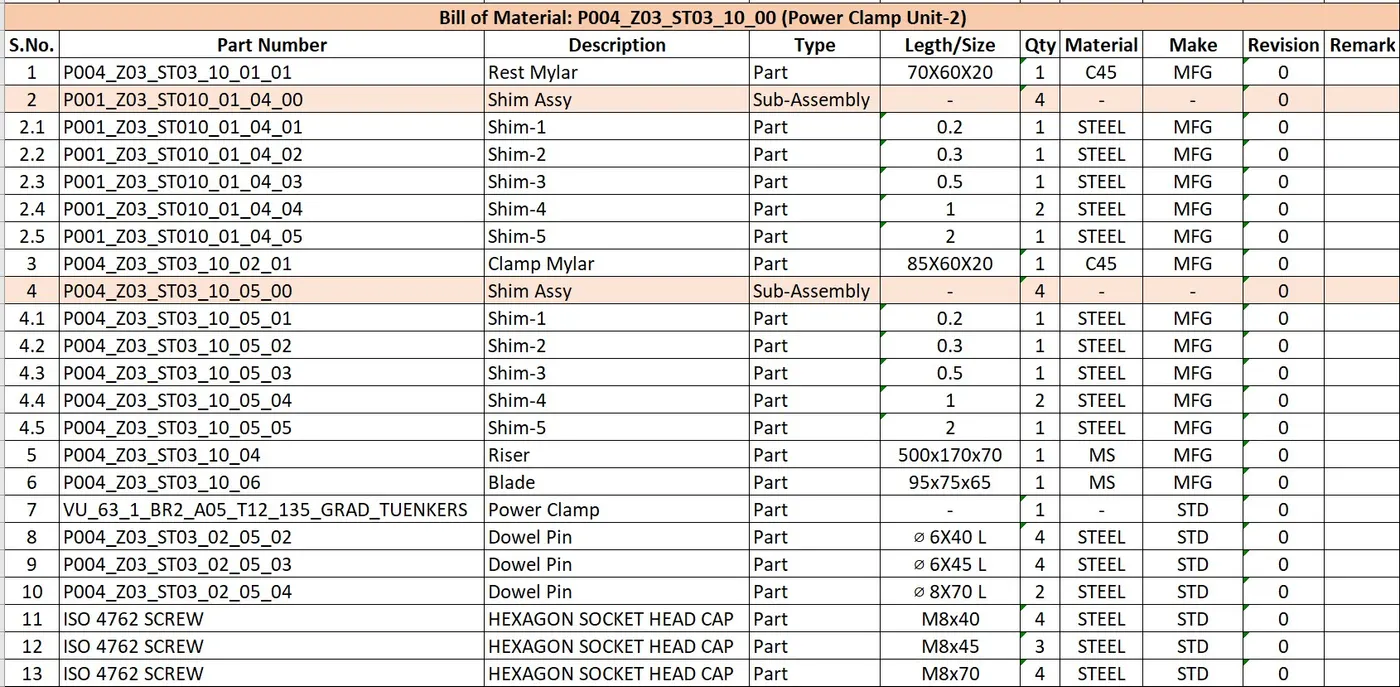
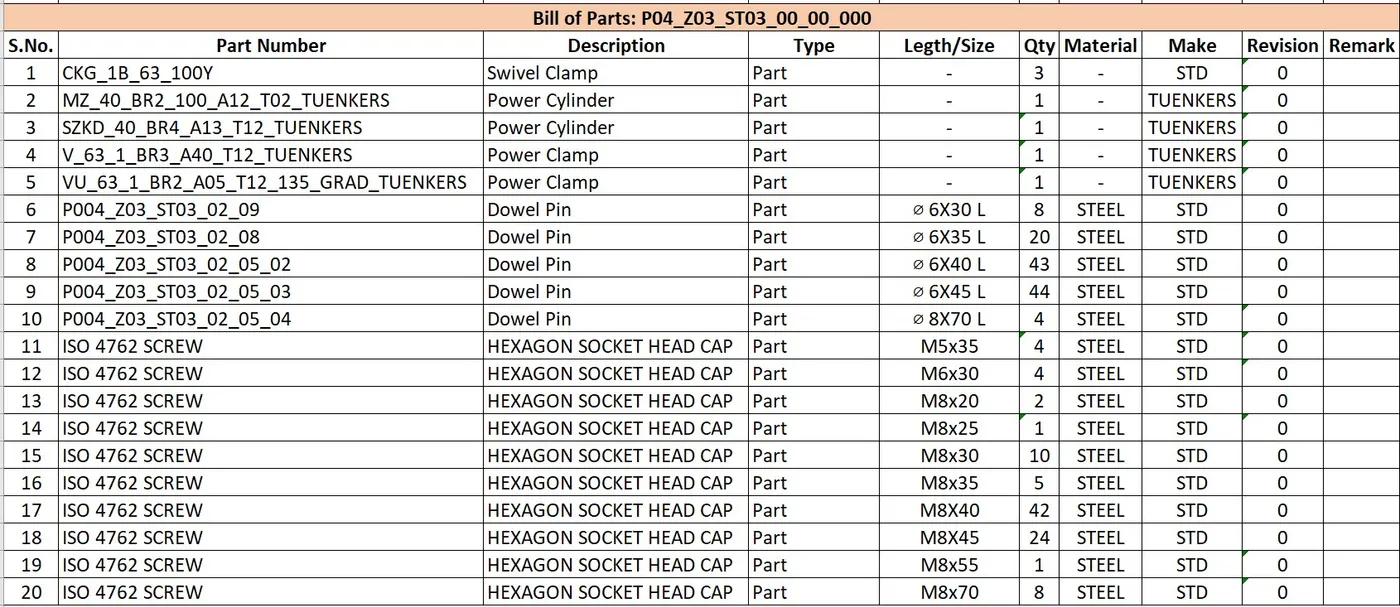
Challenge: Create a BOM and Hardware list (BOP) for the complete Fixture assembly from challenge 8.
Answer:
Bill of Materials (BoM): A Bill of Materials, or BoM, is a detailed list of all the components, raw materials, parts, and assemblies needed to plan, produce, and manage a product. It can also include instructions for purchasing materials and is sometimes referred to as a product recipe, assembly list, or product structure.
Advantages of BoM
- Component Identification and Organization: A BoM assists companies in identifying and organizing the necessary components for product assembly. It shows the final product and its parts in a clear structure, helping businesses easily list and organize everything.
- Cost Estimation and Budgeting: The BoM includes the costs associated with each component utilized in the product. This allows businesses to reference these prices to estimate total production costs and create budgets, facilitating the establishment of product pricing while ensuring profitability.
- Product Planning and Scheduling: With a comprehensive list of components available, businesses can accurately determine the types and quantities of materials needed for production, enhancing the cost-effectiveness of supply chain management. This information also helps in planning production capacity, delivery times, and part availability, which helps in making efficient production schedules.
- Inventory Management: A detailed BoM simplifies inventory management. Companies can check component details to ensure they have enough inventory stock, providing a dependable method for managing inventory and preventing production delays due to shortages.
- Quality Control and Compliance: Managing quality control and compliance can be difficult, especially when a final product includes many different components. However, a detailed BoM equips businesses with the necessary component information to ensure the use of high-quality materials that meet regulatory standards.
- Documentation and Communication: The Bill of Materials (BOM) acts as a single, reliable source of information for everyone involved in the production process, from stakeholders to employees. Utilizing a BOM facilitates clear communication among all parties, ensuring alignment and reducing the likelihood of misunderstandings or gaps in communication.
Types of Bill of Materials
- Manufacturing Bill of Materials (mBOM): The manufacturing Bill of Materials (mBOM) is used when a company needs to list all components and assemblies required to produce a finished product. It also includes parts that need processing before assembly. This document is essential for various business systems involved in ordering parts and managing production, such as ERP (Enterprise Resource Planning), MRP (Materials Resource Planning), and sometimes MES (Manufacturing Execution System). The mBOM is the most commonly used BOM in manufacturing. Accurate quantity details are vital, as they help the purchasing team schedule part procurement efficiently and get the best deals from suppliers.
- Engineering Bill of Materials (eBOM): The engineering Bill of Materials (eBOM) is developed during the product design phase, usually using tools like Computer-Aided Design (CAD) or Electronic Design Automation (EDA). It lists all items, parts, components, subassemblies, and assemblies as designed by the engineering team, often showing how they relate to the main product through assembly drawings. It's common for a single finished product to have multiple eBOMs linked to it.
- Service BOM: The service Bill of Materials (service BOM), typically created by engineers during the design phase, includes a detailed list of all parts, installation steps, and repair instructions that service technicians use when setting up or maintaining a product at the customer's site.
- Sales BOM: In contrast to other BOM types, a sales BOM describes the specifics of a final product before it is assembled during the sales process. The final product and its constituent parts are shown as separate items in the sales order document in this kind of BOM. Additionally, the child components are recognized as the parent's sub-items, although the parent item is only classified as a sales item rather than an inventory item.
- Assembly BOM: Similar to a sales BOM, an assembly BOM has the parent item listed as a sales item rather than an inventory item. However, a significant difference is that, unlike the sales BOM, the sales document only contains the final product; the child components are not shown as sub-items.
- Production BOM: Production orders are usually based on a production BOM. The individual parts and components of the final product are listed along with their costs, specifications, quantities and associated units of measurement. The physical parts can be transformed into finished products during the production process. Criteria for components, prices and available materials can be automatically incorporated into the work order in a fully automated BOM system. This ensures the correct allocation of raw materials to products.
- Template BOM: A template BOM can be used for either production or sales purposes. It usually starts with parent items followed by the components. The users can change the quantity of components, swap them for different components, or add and remove components from the BOM or sales order.
- Configurable BOM (cBOM): A configurable BOM includes all the components needed to develop and produce custom materials. Configurable BOMs are often used in industries that offer highly customizable products, such as Contract manufacturing, heavy engineering, and industrial.
- Single-level BOM: A single-level Bill of Materials (BOM) is typically used for products with simple structures and no sub-assemblies. This document typically contains a complete list of all components used in the product assembly, sorted by part number. The format of this document only allows for a single level of components, assemblies, and materials.
- Multi-level BOM: In contrast, a multi-level BOM is designed for more complex designs and contains sub-assemblies, which in turn can be divided into additional levels. In this document type, each material number, whether related to raw materials or labor, must be linked to a parent material (except the top level).
Key Elements of a Bill of Materials
- Levels: For highly complex products, multiple BOM levels are necessary. These levels delineate the appropriate parts and instructions for each significant component of the product. For example, a refrigerator would include levels for the freezer, the refrigerator itself, the door, and potentially additional levels for features like an ice maker.
- Part Number: Each component within a product is assigned a unique part number, which is included in the BOM. This part number may contain descriptive elements to aid in identification. For instance, a lid might be designated with the part number LID-721, which is considered an intelligent part number as it conveys information about the component. However, creating intelligent part numbers can be more complex, as they require a descriptor that accurately identifies the part, necessitating familiarity with each component.
- Part Name: The part name refers specifically to the designation of any given component.
- Phase: The phase indicates the current status of the part within the product lifecycle. It may be in the design stage (the "beginning"), during production (the "middle"), or at the point of discontinuation (the "end of life").
- Description: A description provides additional details about a specific component, allowing for differentiation among similar items. For example, in cabinet manufacturing, you may have handles that, despite being similar in appearance, vary in color or size and require distinct identification.
- Quantity: The quantity refers to the number of necessary units of a particular component. For instance, when assembling a side table, you might need two knobs.
- Unit Measure: When a component requires measurement, it is essential to specify the amount needed. For example, if you produce chairs, you should indicate the number of yards of fabric required for each chair.
- Procurement Specification: Some components are produced internally, while others are either assembled by subcontractors or sourced from suppliers. The procurement specification clarifies the origin of these components.
- Reference Indicator: In the electronics industry, components are often placed on a printed circuit board. The reference indicator denotes the specific location of each component on the board.
- Notes: This section is reserved for any additional information that may assist readers of the Bill of Materials (BOM), such as images or recommendations for alternative vendors for sourcing parts.