Week 11 - Final project
AIM
To design the car door inner panel with reference to the given Class-A surface by using the given master section, creating attachment features, and performing draft analysis to check the manufacturing feasibility of the component by using software CATIA V5.
OBJECTIVE
The project deals with explaining the method followed to develop the door trim inner panel. The given Class-A surface, Class-B surface, and Class-C surface were created along with the tooling axis. Other attachment features were also designed for the assembly of the different components of the door trim.
PROCEDURE
The methodology of the project is explained here:
1. Class-A surface was extracted from the given surface.
2. Tooling Axis was created for the individual component.
3. Class-B and Class-C surfaces were created with the OEM guidelines.
4. Formed Solid body from the closed surface.
5. Engineering features were created for attachment.
6. Draft analyses of each component were performed to check the manufacturing feasibility.
Components included in the door panel
- Map pocket
- Bottle holder
- Lower substrate
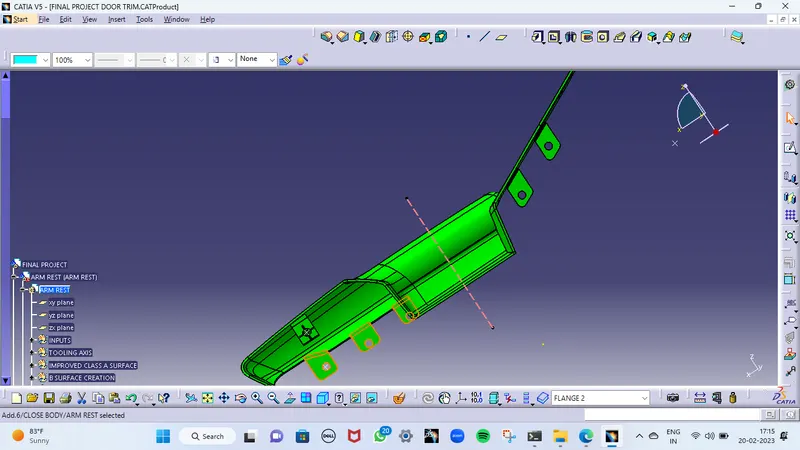
- Armrest
MAP POCKET
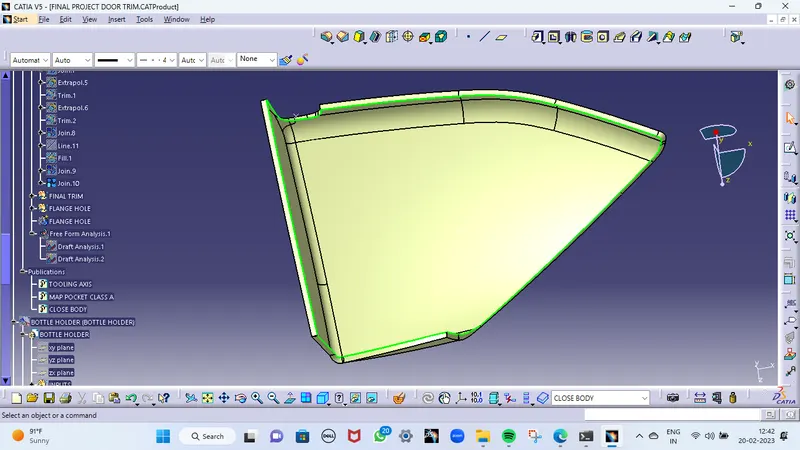
Class-A surface of Map Pocket
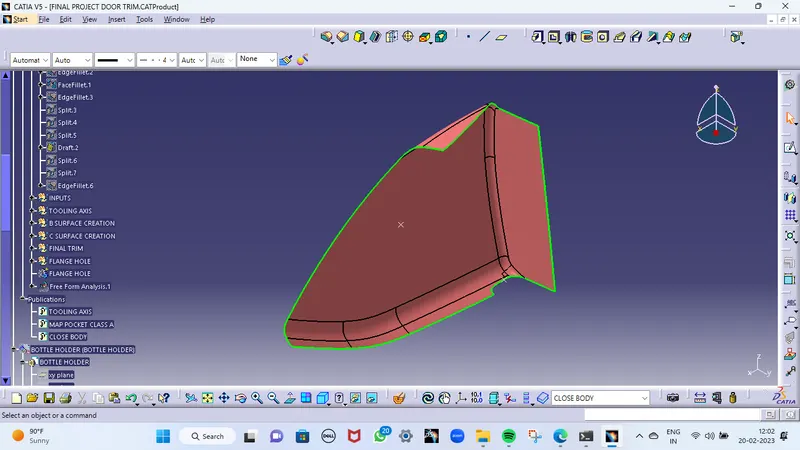
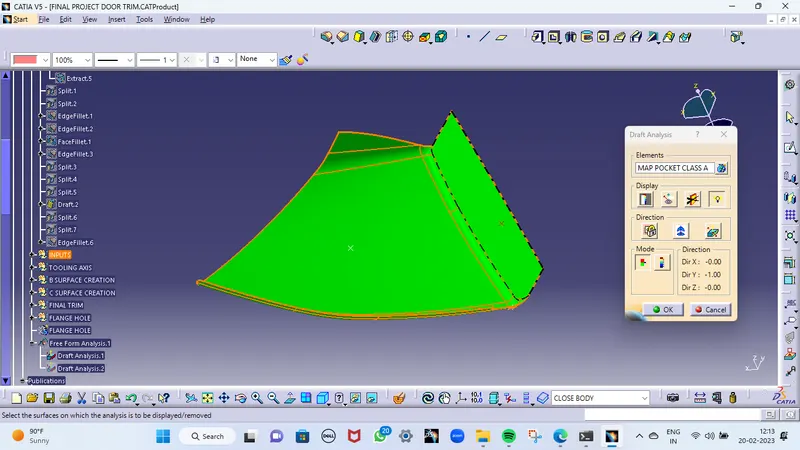
Here, to check the Class-A surface manufacturing feasibiliy as a plastic product Draft analysis was performed on it at 3 degrees.
DRAFT ANALYSIS
It is performed to check the manufacturing feasibilty of a component or part, in plastic manufacturing process we generally provide 3 degrees draft and 0.5 degree draft in critical conditions. To perform draft analysis first tooling axis was created by taking a point on surface and line was created in the direction in which part will form easily with provided draft
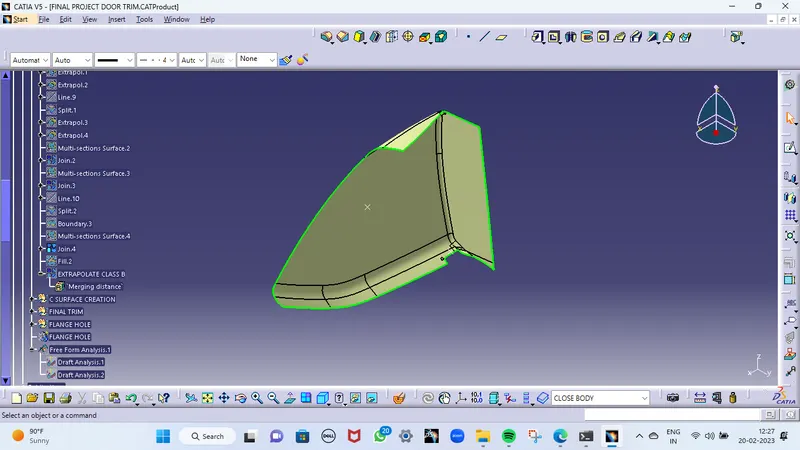
CREATION OF CLASS B SURFACE
To create the Class-B surface of the map pocket, the class-A surface was offset at a distance of 2.5mm.
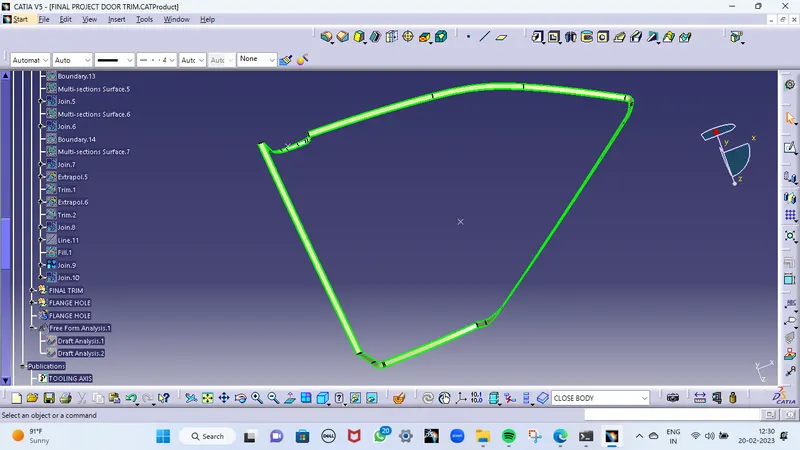
CREATION OF C SURFACE
CREATE CLOSE BODY
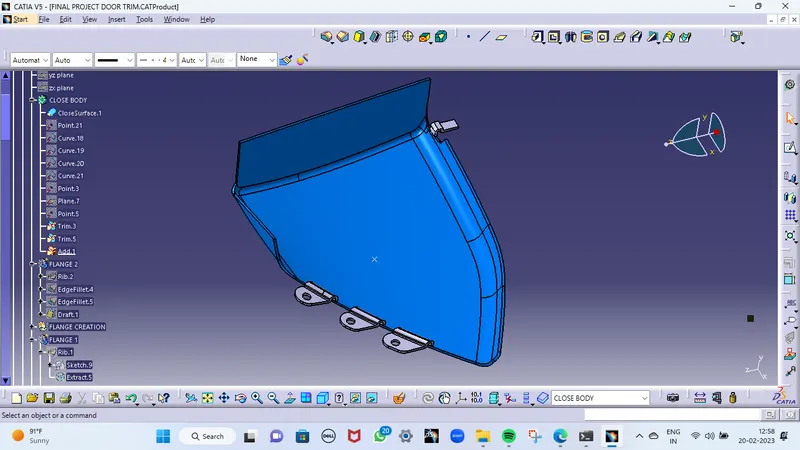
Then Map Pocket closed surface was converted as a solid body with the use of a feature called closed body in part workbench. Other engineering features like Flanges, and Doghouse, are created on the closed body of the map pocket with consideration of a 0.5-degree draft for easy manufacturing of the component.
BOTTLE HOLDER
CLASS A SURFACE
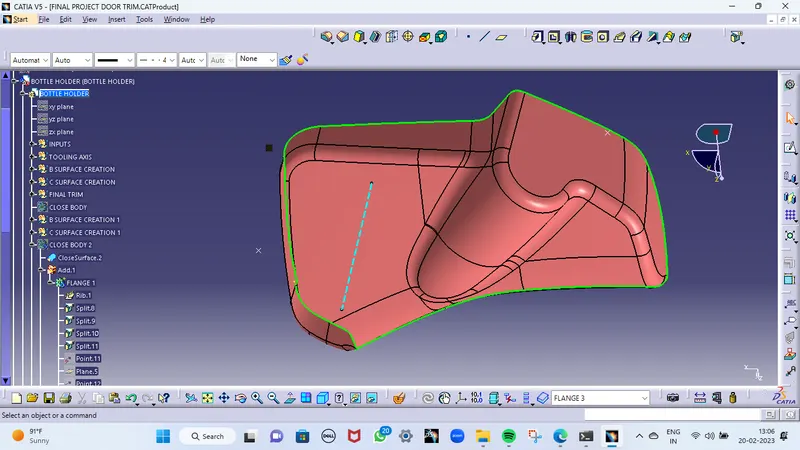
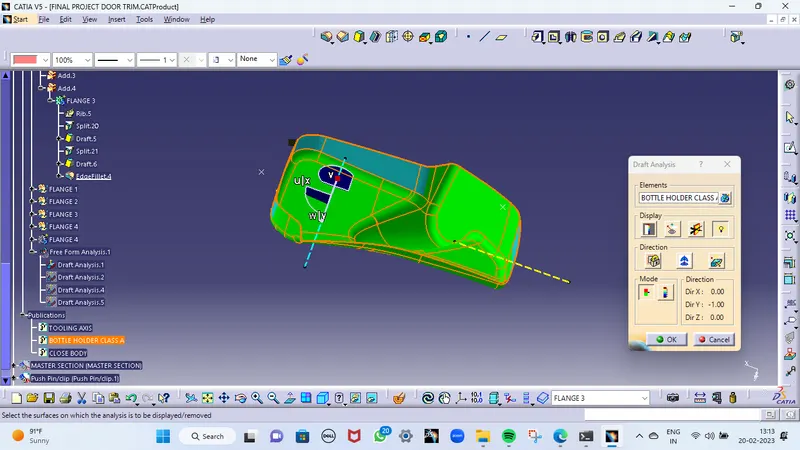
Draft Analysis performed on Class-A surface along Tooling Direction
In this part one tooling axis was not able to clear the draft of the component, so a side sore axis was provided to form the component. This issue must be discussed with other designers like the NPD CAD team or Class-A modelers because using a side core can be an expensive way to manufacture a plastic component. So, if it is possible to make changes in design, should be done which helps in easy and low-cost manufacturing of components.
CREATION OF CLASS B SURFACE
Class-B surface created by the offset of 2.5 mm of Class-A
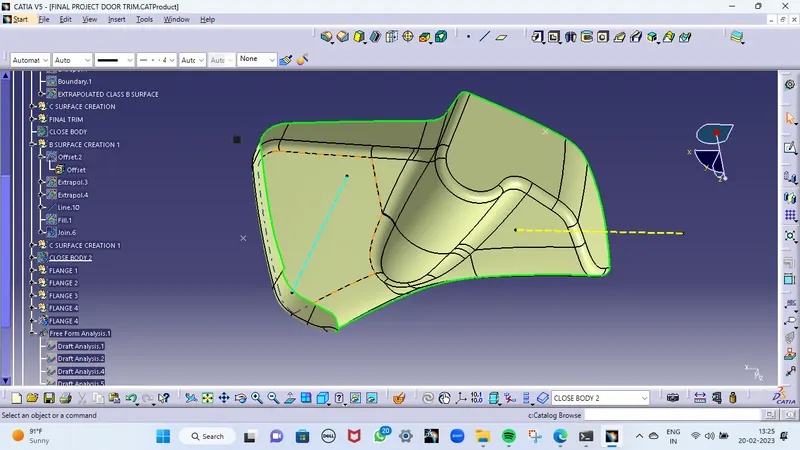
Class-C surface was swept from the Class-A surface boundary with reference to the class A-surface.
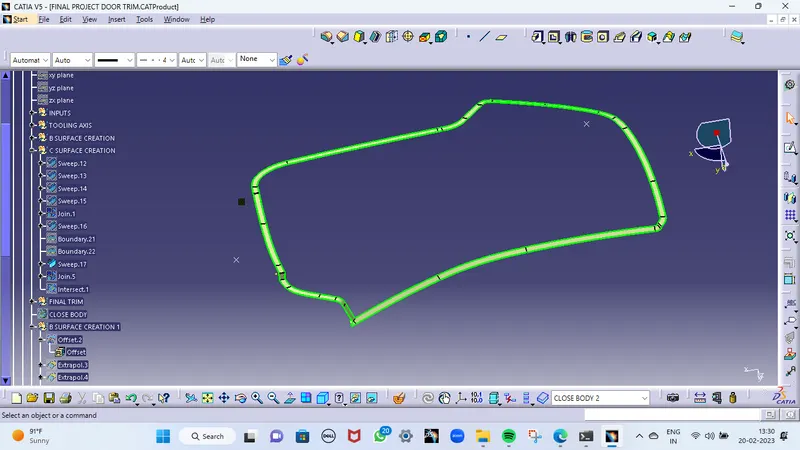
After getting this C surface, unhide the extrapolated B surface and trim them together to get a closed surface
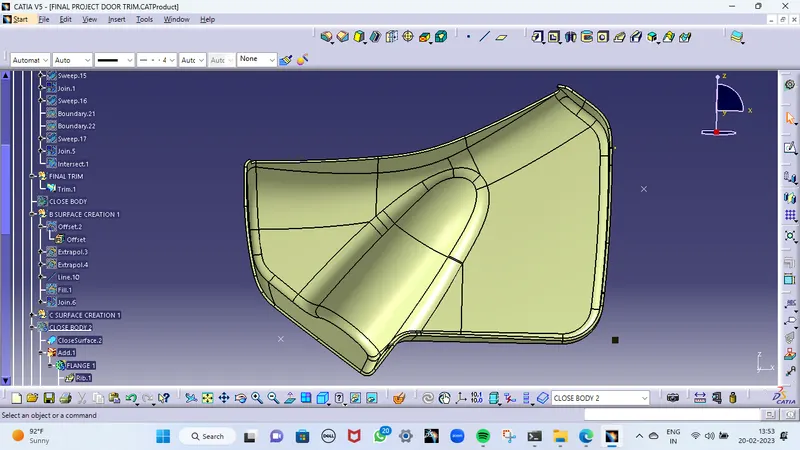
CLOSE BODY
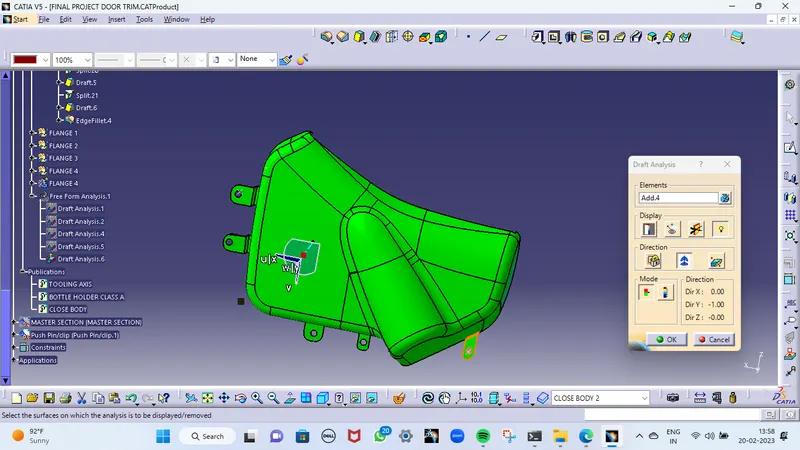
After Creating the Closed Surface of a bottle holder, It was converted into solid body and attachment features like flanges were created with a 0.5-degree draft for an easy manufacturing process.
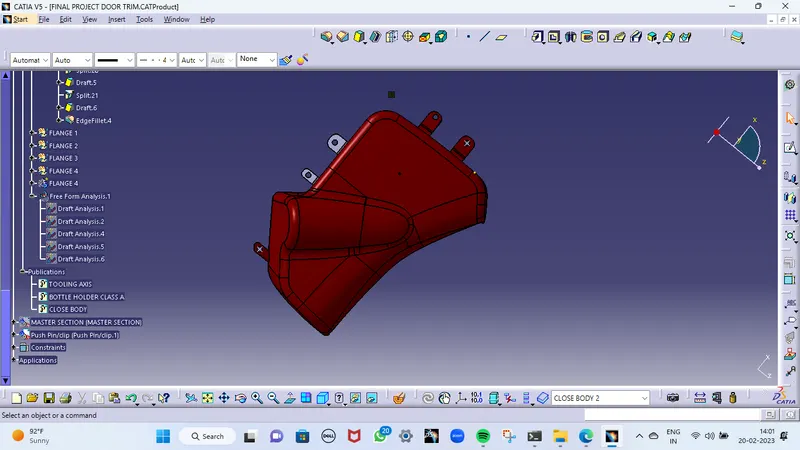
Draft Analysis of attachments features with 0.5-degree draft
LOWER SUBSTRATE
CLASS A SURFACE
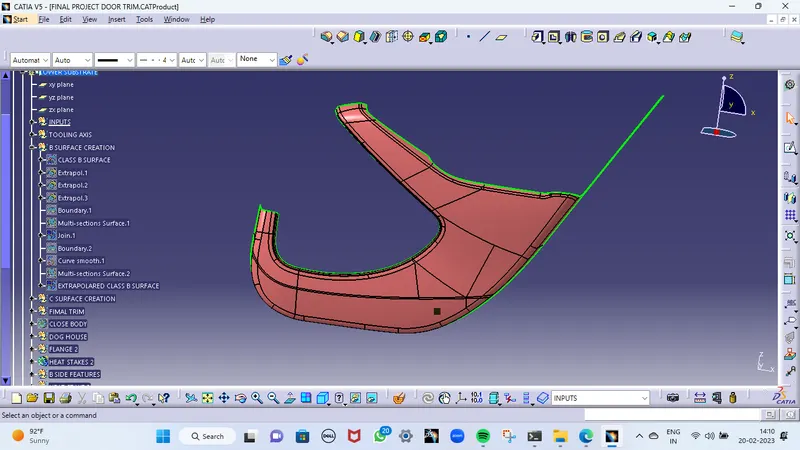
Draft Analysis on Class-A surface with 3 degrees along Tooling Direction
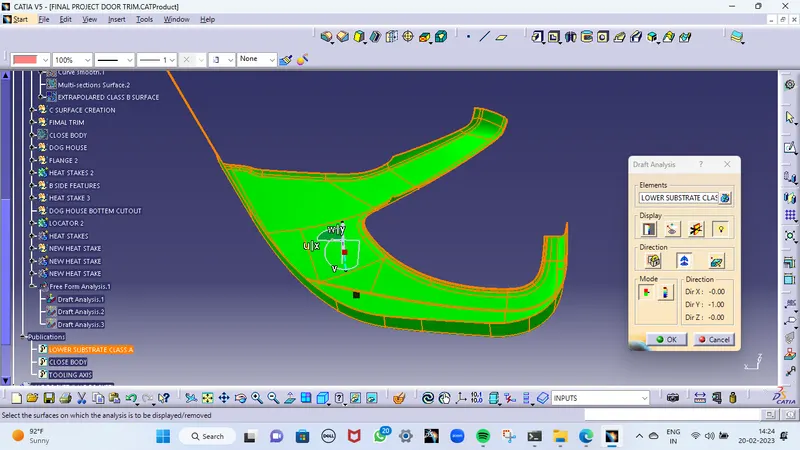
Class-B surface offset at 2.5 mm from class-A
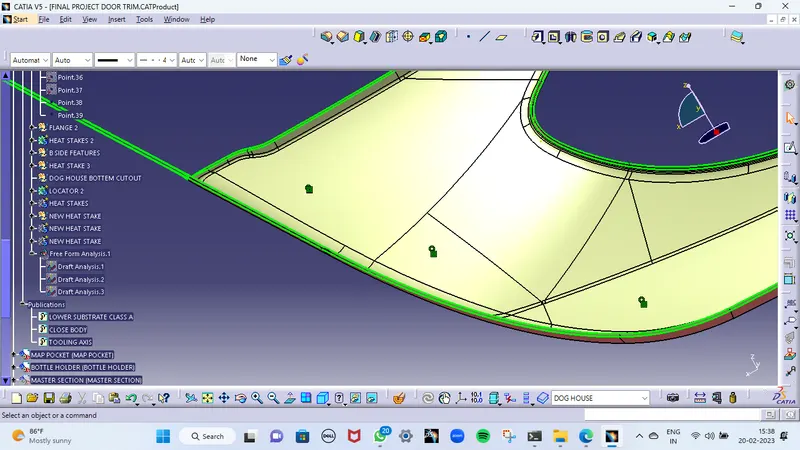
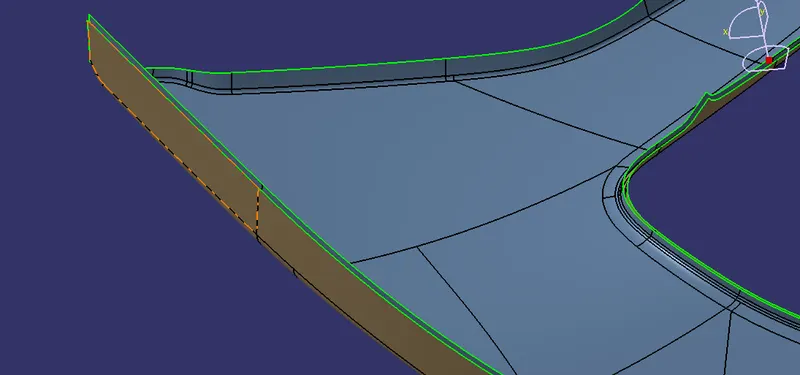
Class-C surface swept from Class-A boundary with 3 degrees draft in tooling direction
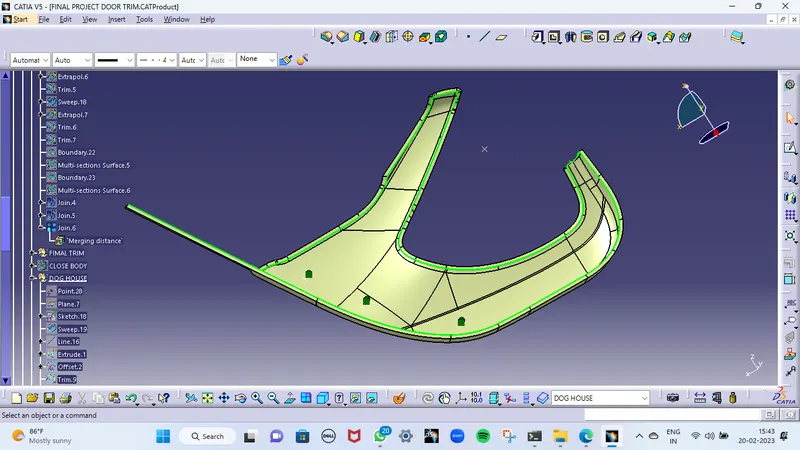
AFTER GETTING THIS C-SURFACE UNHIDE THE EXTRAPOLATED B-SURFACE AND TRIM THEM TOGETHER TO GET A CLOSED SURFACE
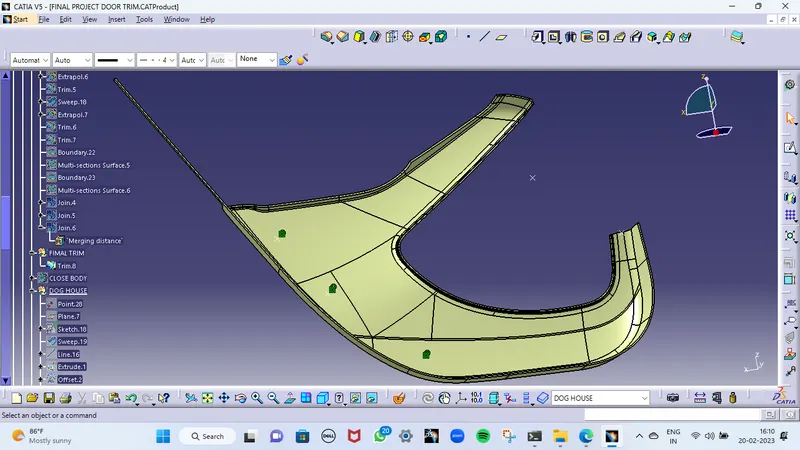
CLOSED SURFACE
Lower Substrate Closed body with attachments features like heat stakes, Doghouse, Pushpins, Ribs with 0.5 degrees draft
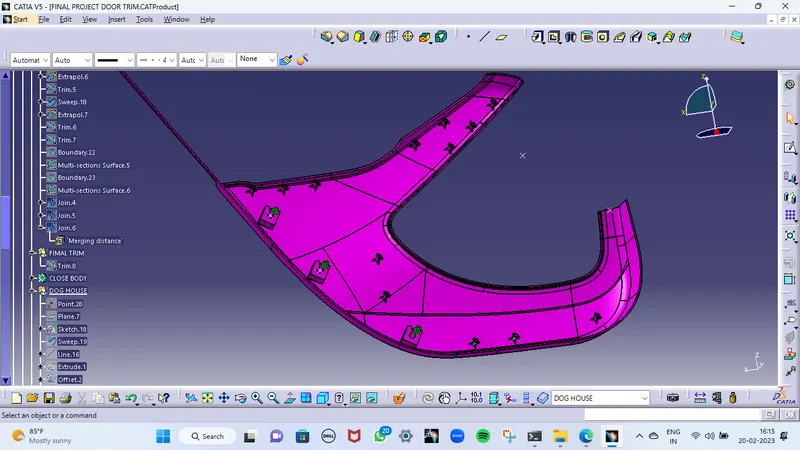
ATTACHMENT FEATURES
DOG HOUSE
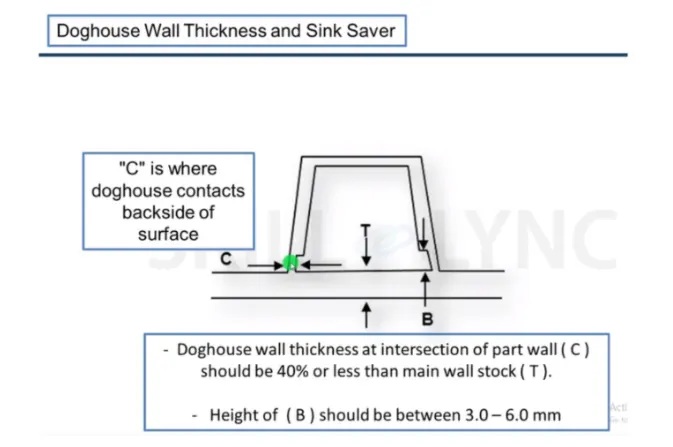
Doghouse is an engineering feature used in the plastic trim design which helps to remove sink marks formed on the Class-A surfaces while creating an attachment feature on the Class-B surfaces. Doghouse is a supporting feature, other features like locators, heat stakes, pushpins are mounted on top of the doghouse for fixing and assembly purposes. Doghouses are subjected to draft analysis to prevent breakage of the component during ejection from the mold
FLANGES
Flanges are the joining features that help to assemble different components. The master section was used to make flanges. After creating one flange axis to axis system was used to translate the flanges. Boolean operations were used to add attachment features to the closed body.
PUSH PIN
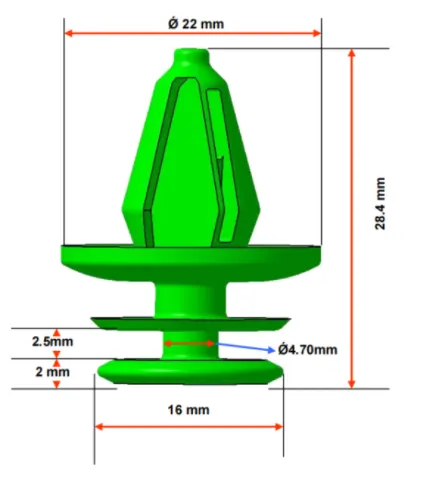
Push pins are used for joining one component to another. These are basically attached to the doghouse.
HEAT STAKES
Heat stakes also known as thermoplastic staking is the process of joining two dissimilar materials together. In heat staking, local heating and cooling are used to raise the temperature of plastic components and allow plastic reforming to be carried out. This reform can be used in a wide variety of applications.
The advantages of heat staking are as follows
- Simplifications of the machinery
- Reduced cost of machinery.
- Allows higher density of welds.
RIBS
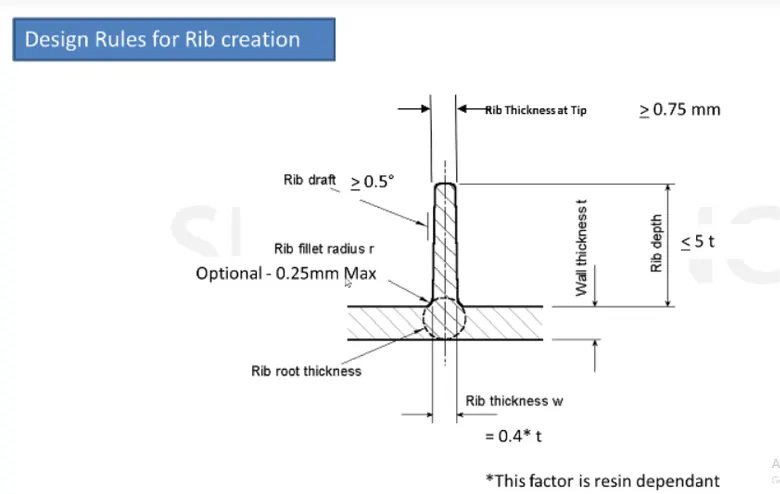
Ribs are the feature that provides stiffness to the parts and toughness without increasing the thickness of the part.
- The rib thickness should be 0.4 times the thickness of the part.
- The walls of the rib should be drafted with 0.5 degrees draft.
- The top height of the ribs should be at least 5 times the part thickness
- The thickness of the rib at the tip should be equal to or less than 0.75mm.
- The maximum fillet value should be 0.25mm Radius.
ARMREST
CLASS A SURFACE
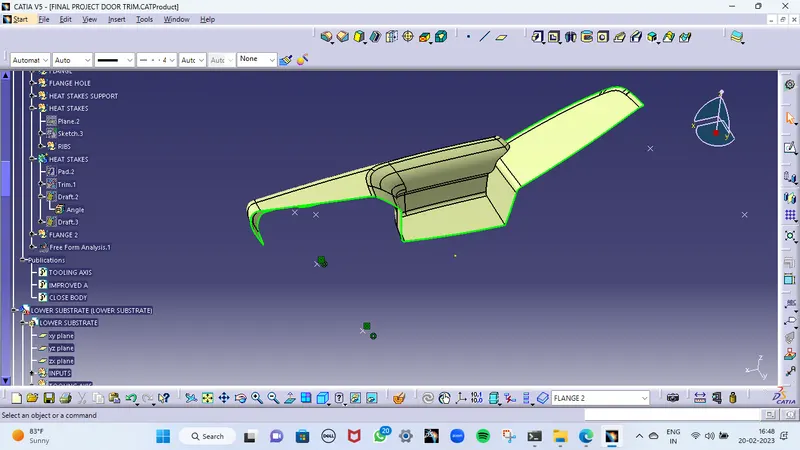
Class-B surface offset at 2.5 mm from Class-A
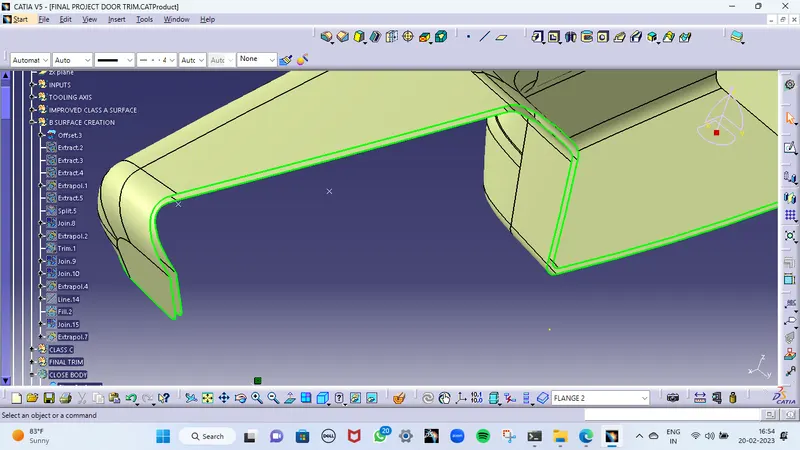
CLASS C-SURFACE
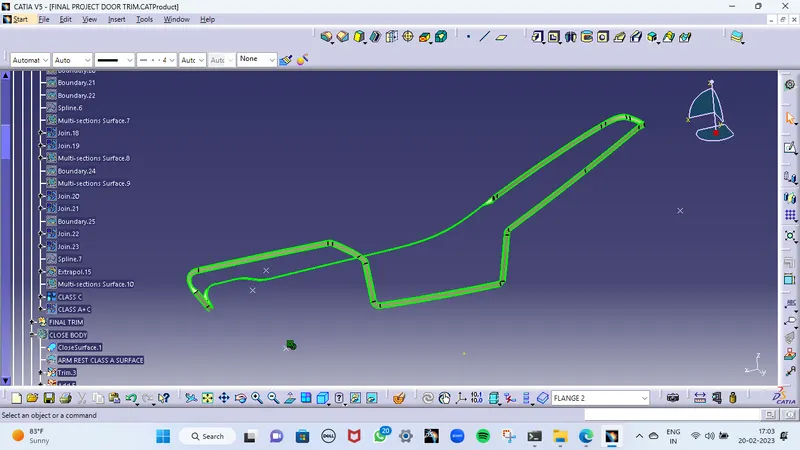
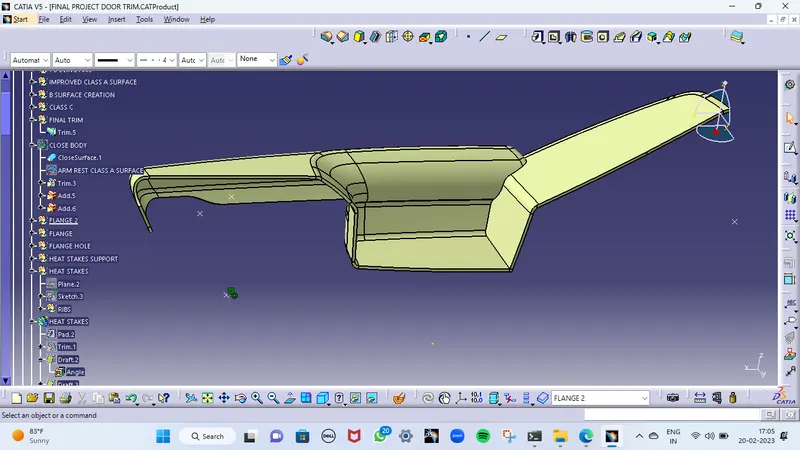
CLOSE BODY
A closed body of the armrest was created and attachment features were also created with the 0.5-degree draft.
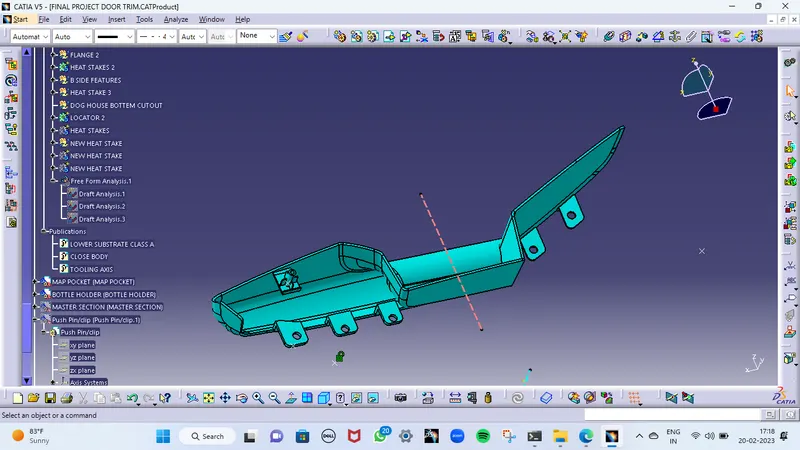
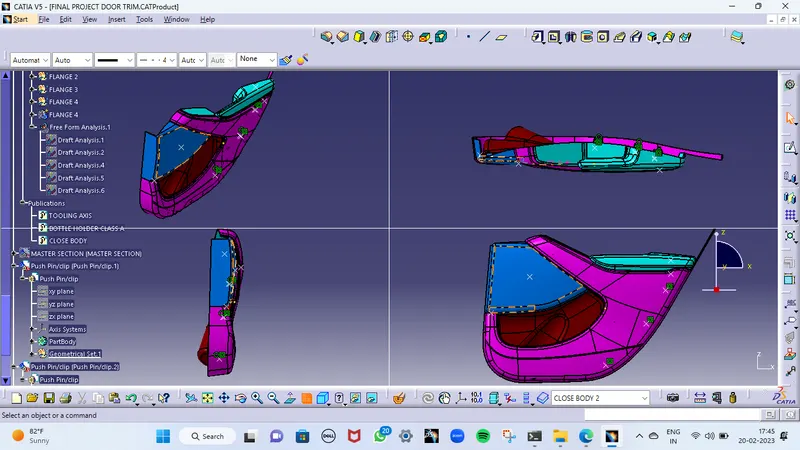
DIFFERENT VIEWS OF COMPLETE DOOR PANEL
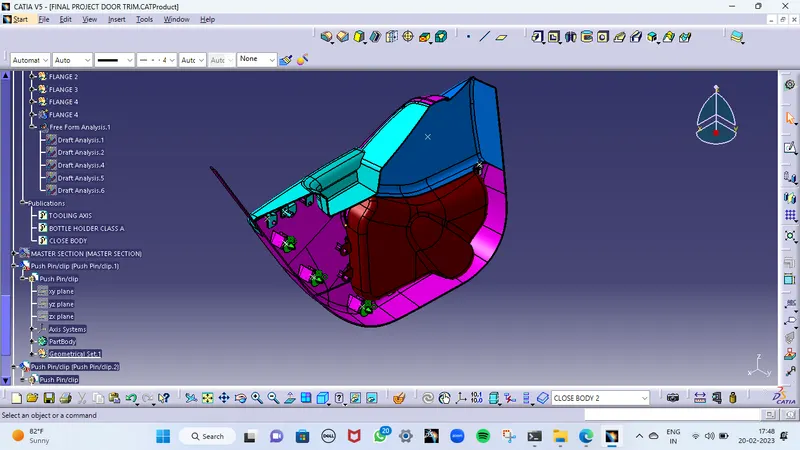
ISOMETRIC VIEW OF DOOR PANEL
*****THANK YOU*****