Week 11 - Final project
FINAL PROJECT
Objective: To create class B & C surface for the given door interior trims and to perform draft analysis for the given class A surface i.e., the styling surface and for the final component and also to provide necessary engineering features such as flanges, heat-stakes and ribs on B surface.
Introduction: Door interior trim panel majorly consists of five components.
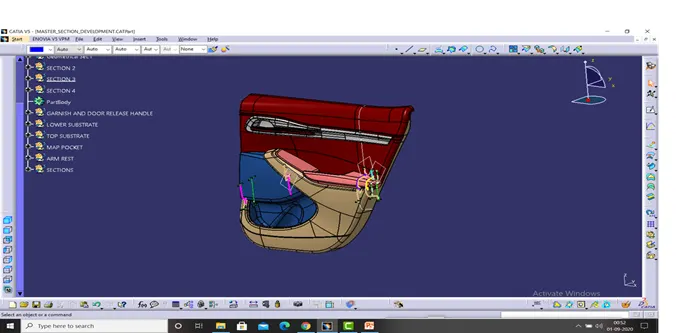
They are:
- Upper & Lower Substrate.
- Map pocket.
- Bottle holder.
- Door arm rest.
- Garnish & door handle.
These are the five components, in this final project we will be working on the lower substrate, map pocket, bottle holder and door arm rest.
Lower Substrate: Lower substrate is an automotive door interior trim plastic component which helps in positioning of other door interior trims with the help of heat stakes.
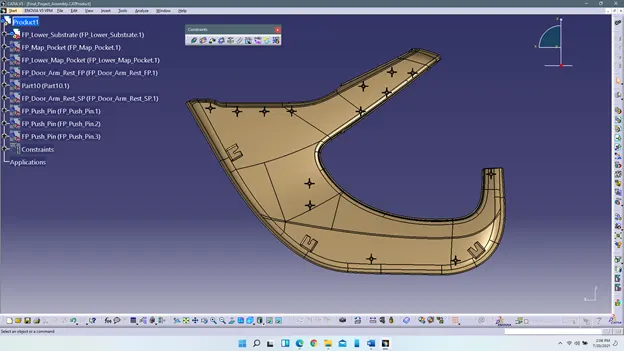
Procedure:
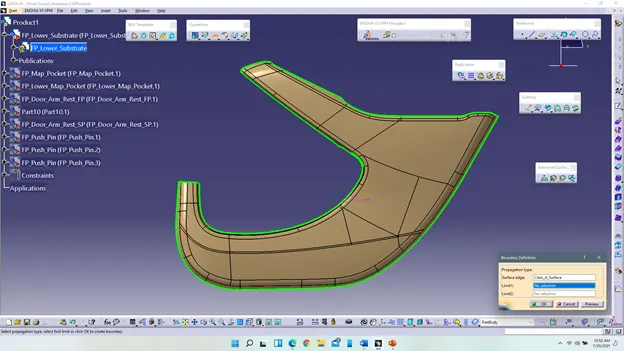
1. Perform a boundary check for the class A surface of the lower substrate, to check whether the given class A surface contains any flaws. Those flaws should be addressed if the styling team allows to alter them.
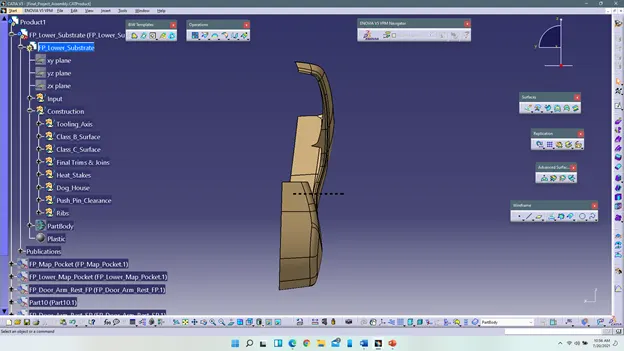
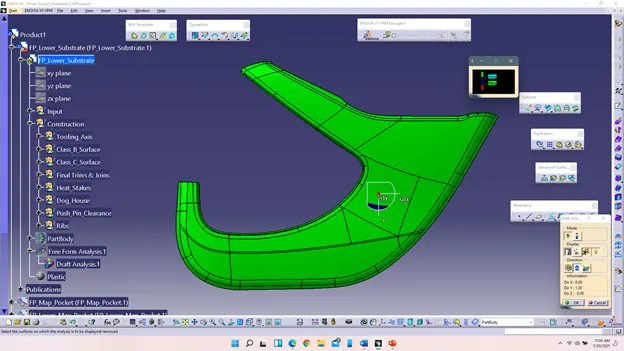
2. To perform draft analysis for the class A surface, create a point on the surface of the lower substrate at zero distance then create a line using point-direction method and choose the direction as Y-axis.
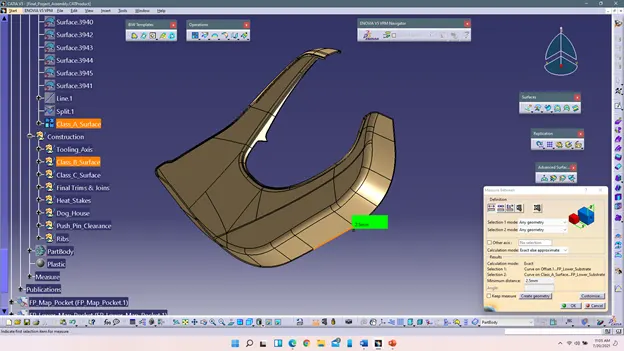
3. To create class B surface offset the class A surface and follow the given master-section to provide the offset distance which is 2.5mm. After offsetting the class, A surface to a distance of 2.5mm, if any flaws were created, those must be addressed using multi-sections surface command.
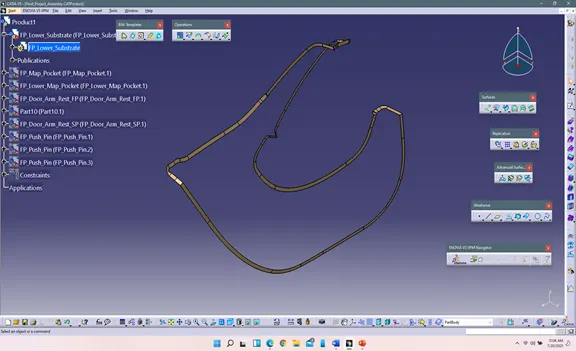
4. Create class C surface using multiple-extract, sweep with draft direction and multi-section surfaces commands and obtain the appropriate class C surface for the lower substrate.
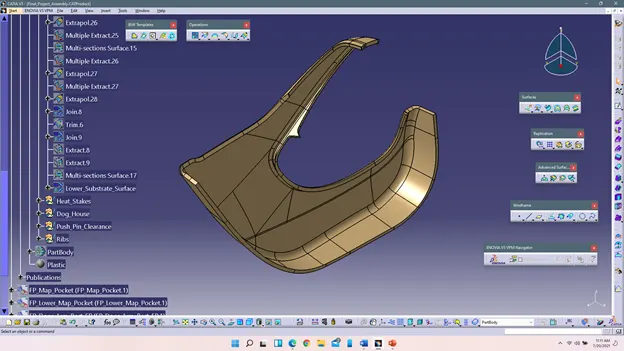
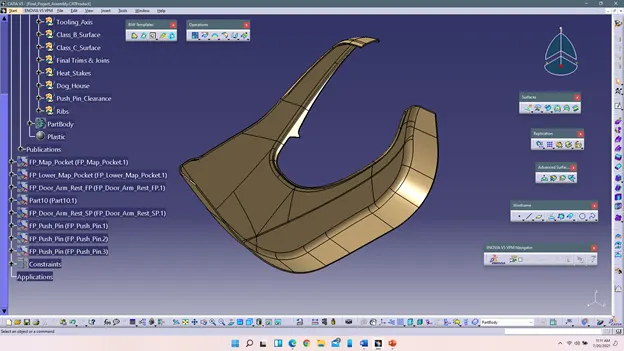
5. Join the class A & C surfaces and trim the class B surface with the help of join (A&C) and get the lower substrate.
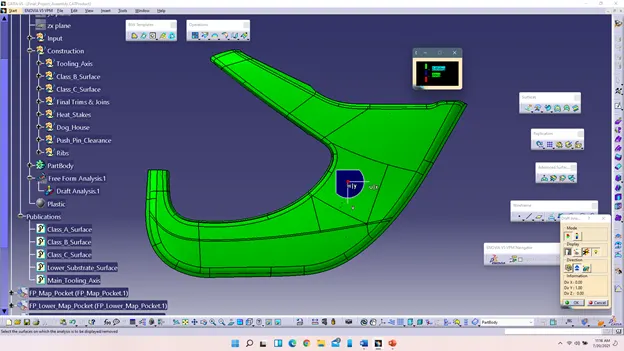
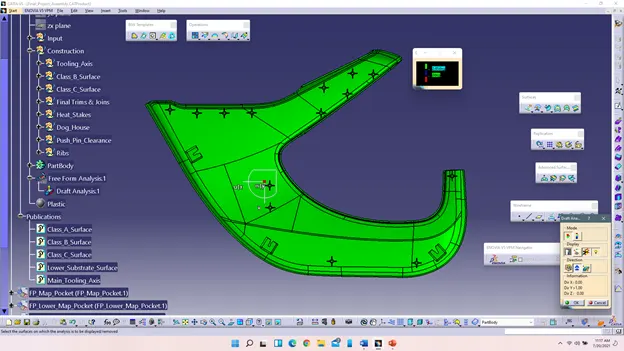
6. Convert the surfaces into solids using the close surfaces command in the part design workbench and get the final solid modelling component and perform draft analysis for the final component.
Map Pocket: Map pocket is an interior trim which is made up of polypropylene blends, which acts as a closure and provides resistance during impacts. Some map pockets have provision for a lamp.
Procedure:
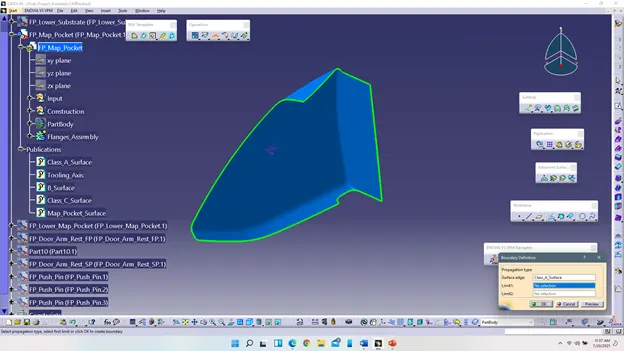
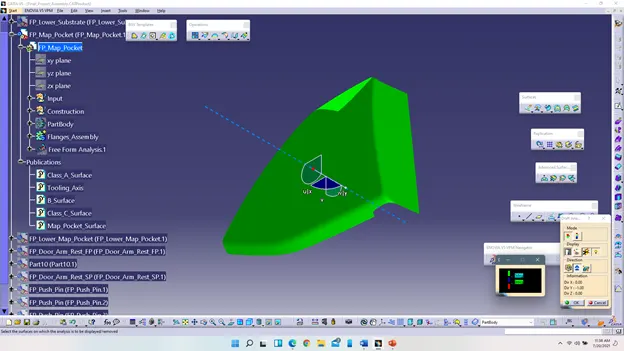
1. Perform boundary check and create a tooling axis for the map pocket and perform draft analysis.
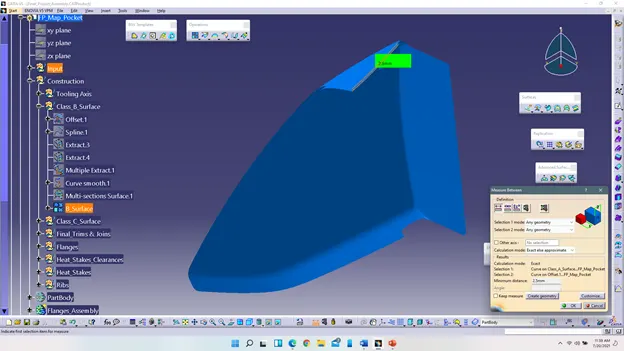
2. Create class B surface by following the offsetting distance from master-section which is 2.5mm and address all the flaws if exists in the class B surface.
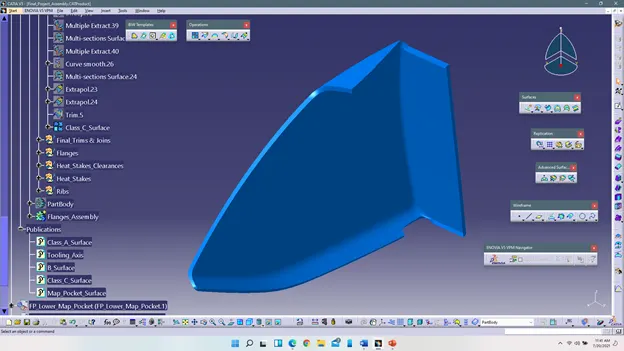
3. Create class C surface by extracting the edges of the class A surface and using sweep command create class c surface.
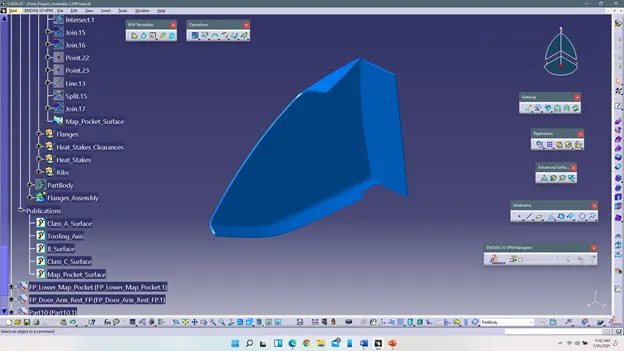
4. Join the class A & C surfaces and trim the B surface using the join which is obtained before.
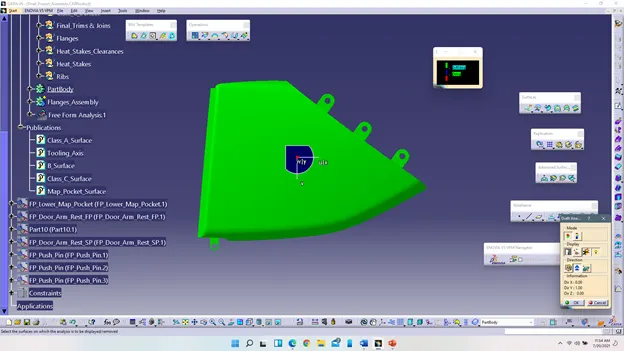
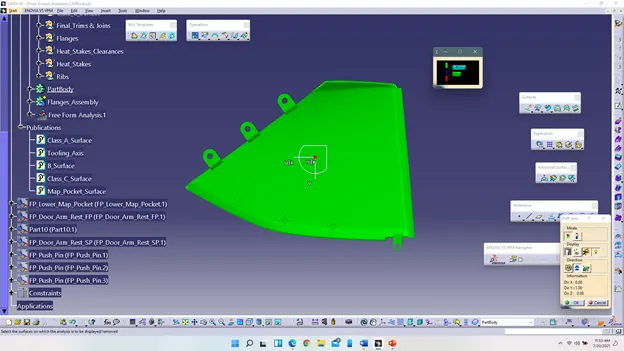
5. Convert the surfaces into solids using close surfaces command which is present in the part design work bench and perform the draft analysis for the final component.
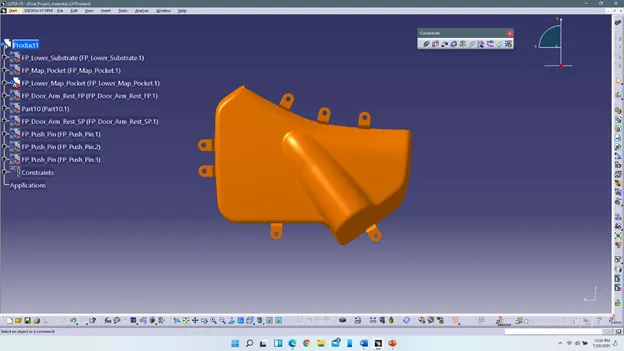
Bottle Holder: Bottle holder is an automobile door interior trim which allows passengers to keep their bottles in the bottle holder, which is a plastic component.
Procedure:
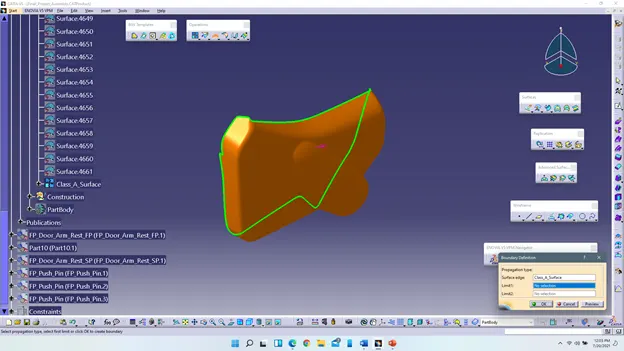
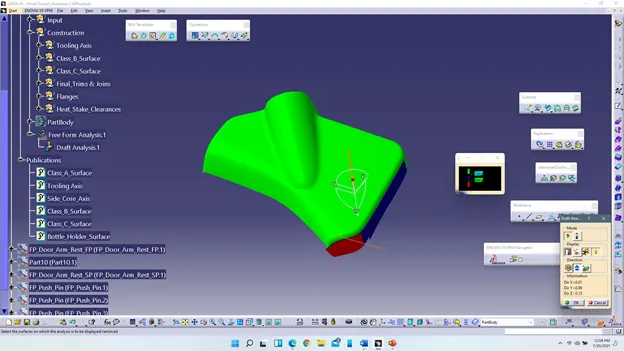
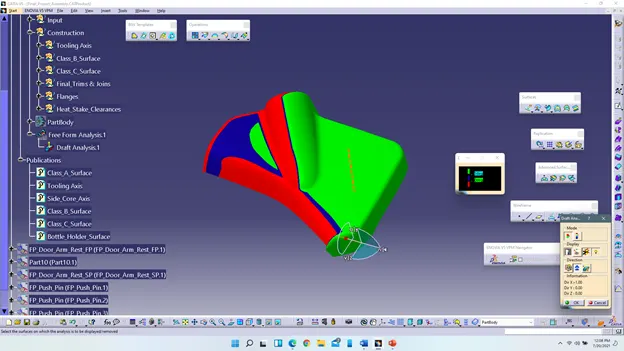
1. Perform boundary check and draft analysis for the class A surface by creating tooling axis. Since there is a patch(flaws) in the class A surface a side core axis should be implemented to address those patches. Perform the draft analysis using side core axis.
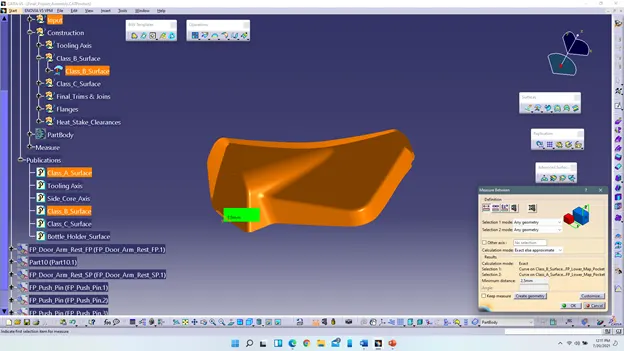
2. Create class B surface by offsetting the class A surface to 2.5mm and the patches should be addressed if any obtained during offsetting of class A surface by using multi-sections surfaces command.
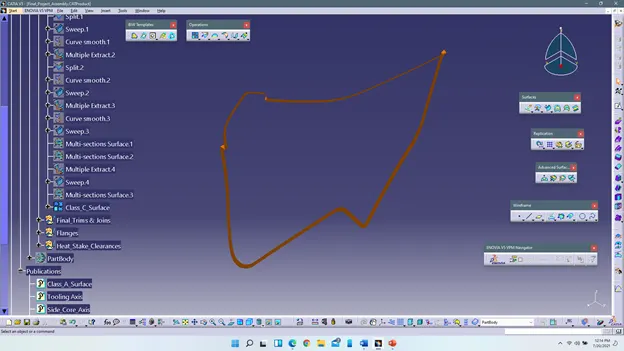
3. Create class C surface by using multiple extract command and extract the edges of the bottle holder with the help of class A surface and use sweep command to obtain class C surface with draft direction as tooling axis.
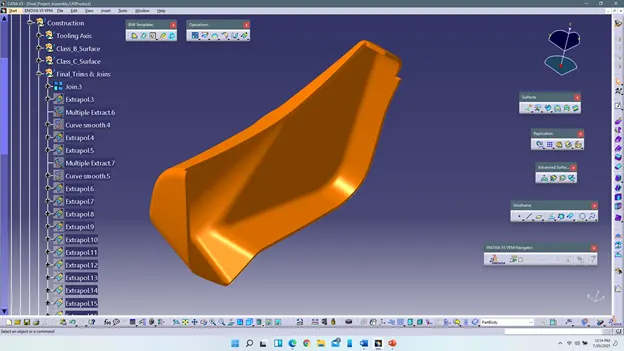
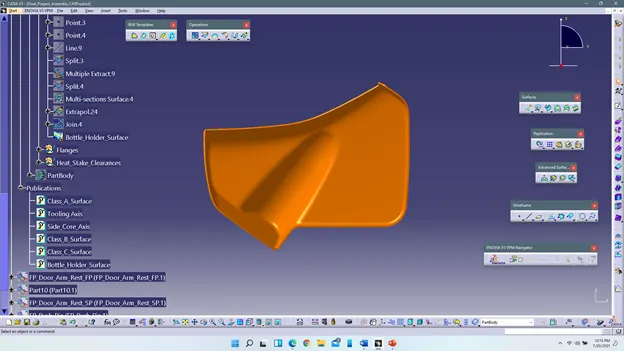
4. Join class A&C surfaces and trim the class B surface with the join obtained and obtain the final bottle holder surface.
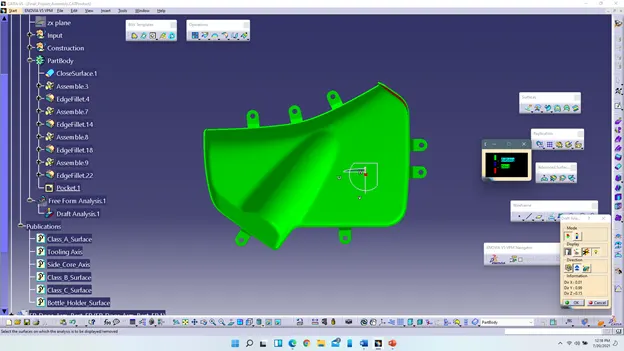
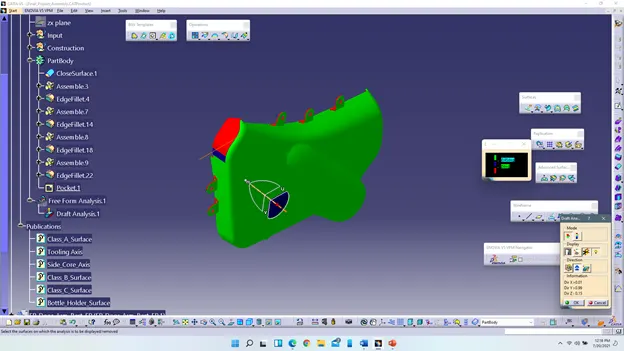
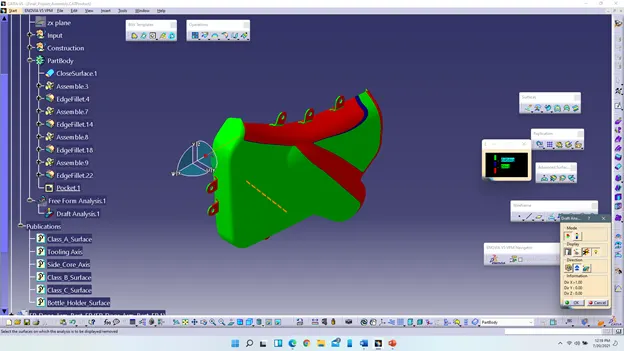
5. Convert the surfaces into solids and perform the draft analysis for the final component using tooling axis and side core axis.
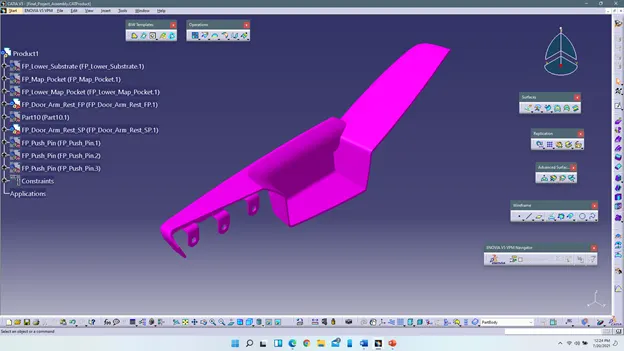
Door Arm Rest: Door arm rest is also an automobile door interior trim which helps passengers to rest their arms over them and also to keep their belongings in the pocket provided for the door arm rest.
Procedure:
1. Since this component is not clearing the tooling axis, so I have considered the door arm rest as two components and created the door arm rest.
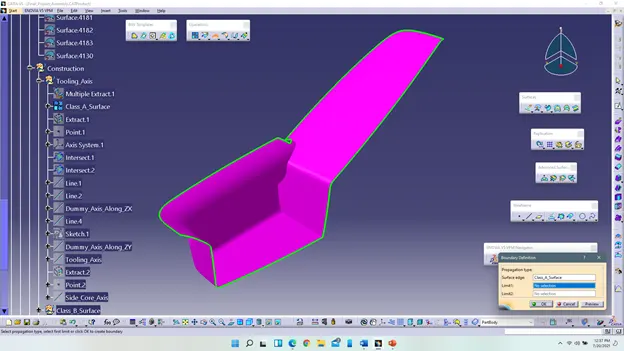
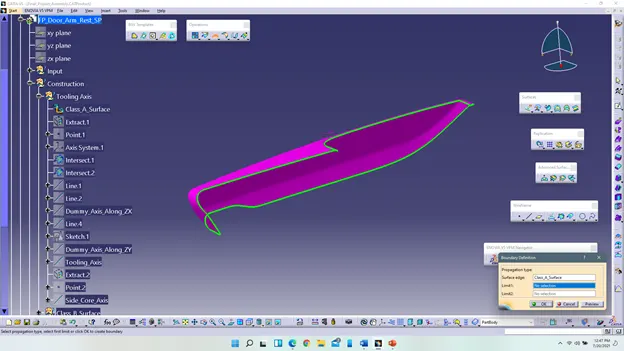
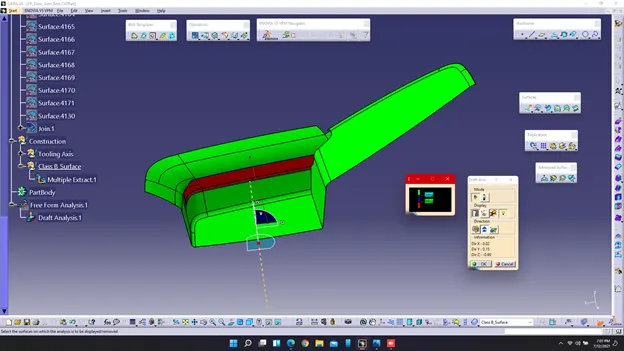
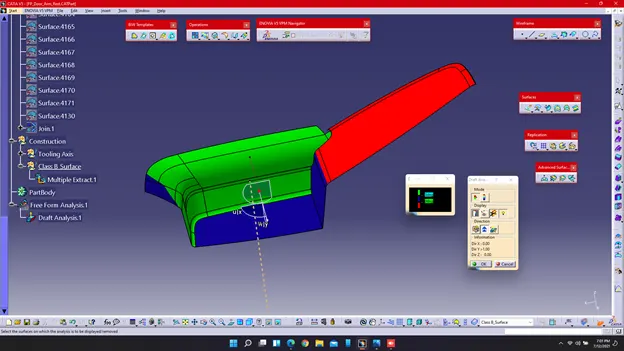
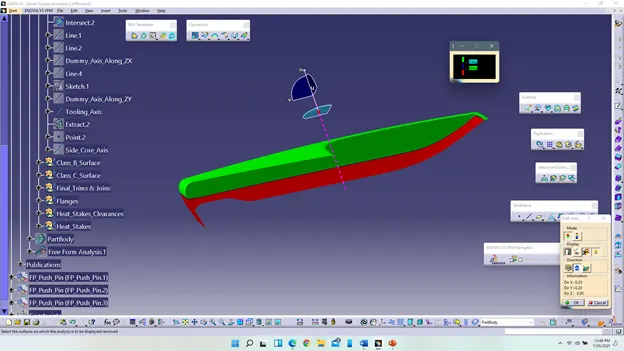
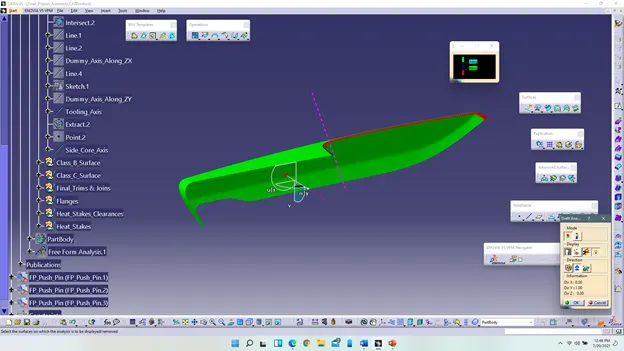
2. Perform boundary check and draft analysis for the class A surface using tooling axis and side core axis.
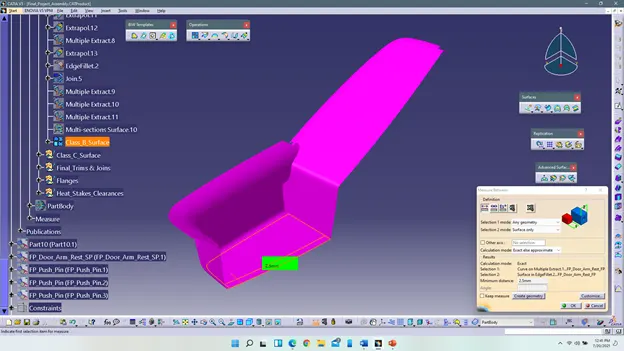
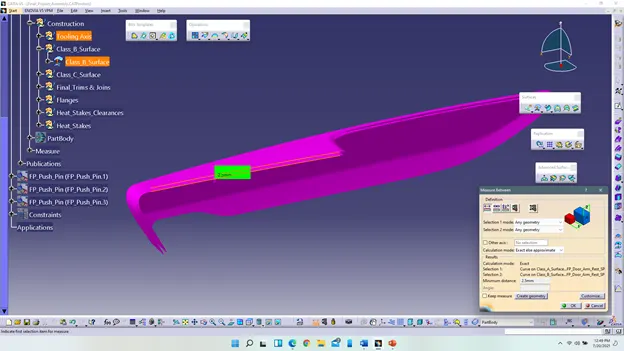
3. Create class B surface by offsetting the class A surface to 2.5mm and address all the flaws obtained during offsetting the class A surface.
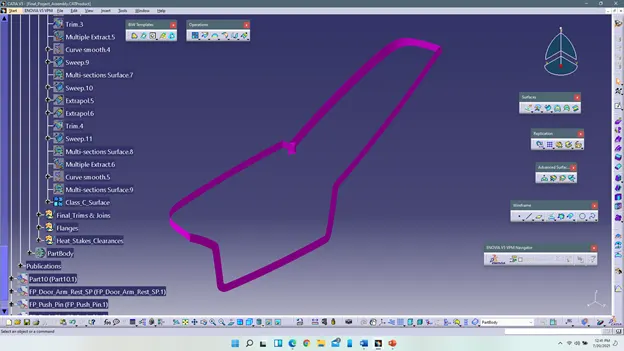
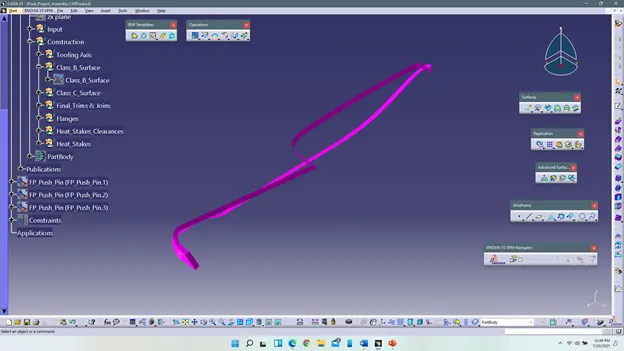
4. Create class C surface by extracting the edges of the class A surface and use sweep command to create class C surface by choosing the draft direction method in sweep command and select the draft direction as tooling axis.
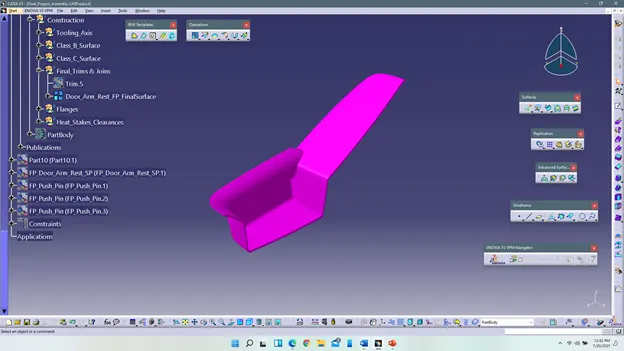
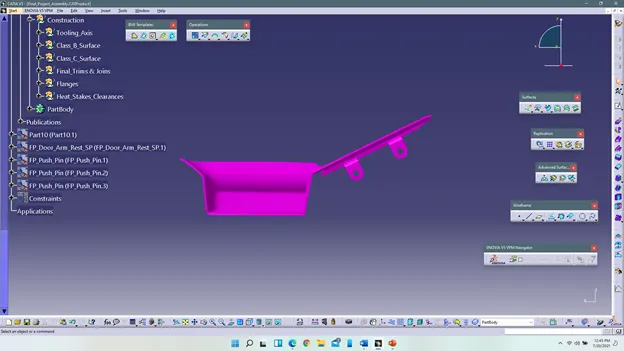
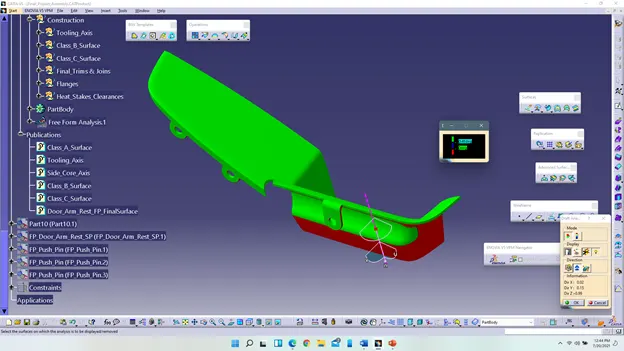
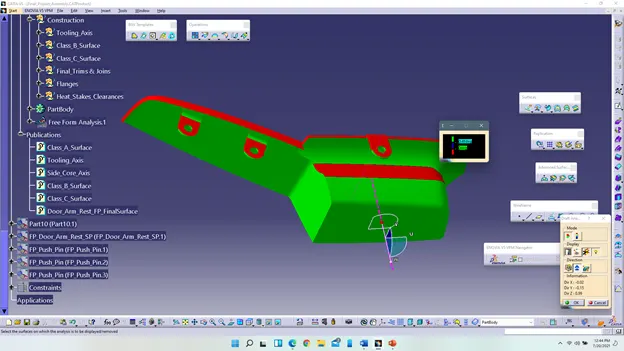
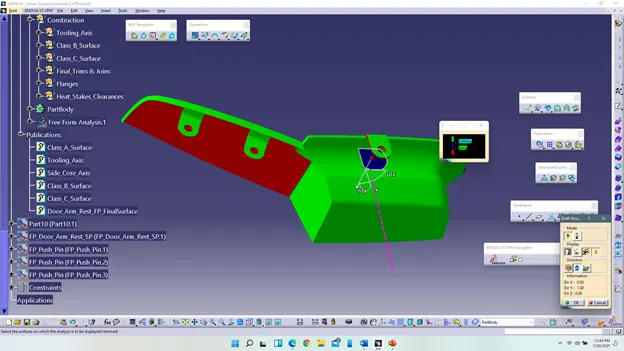
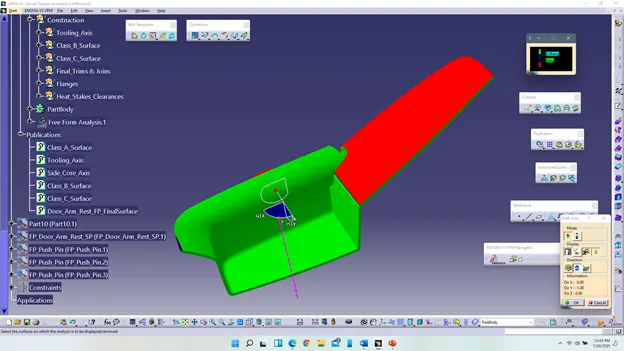
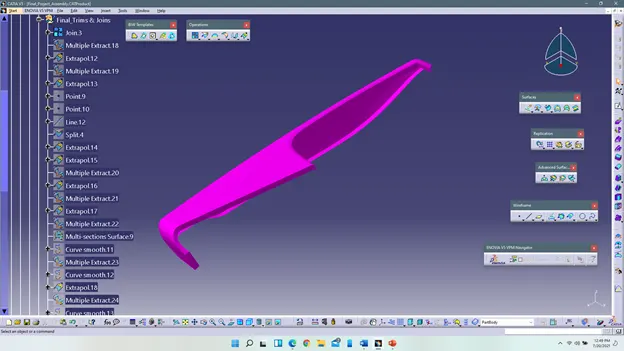
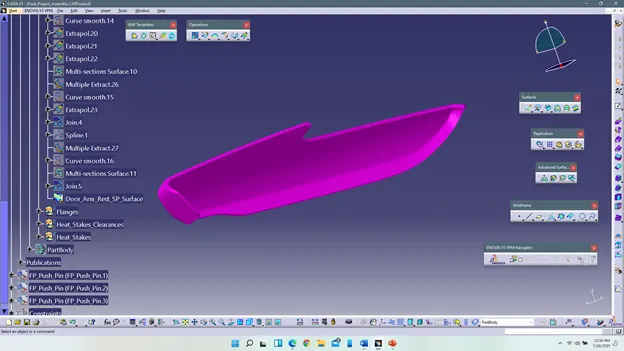
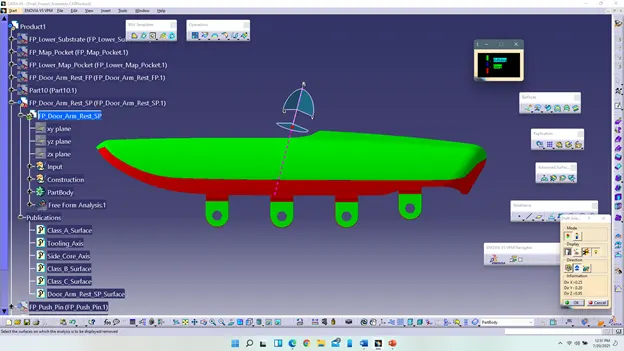
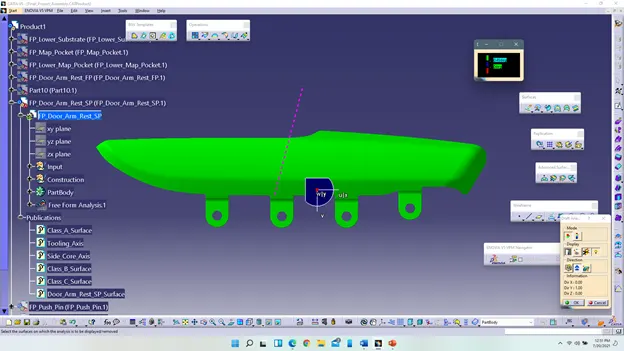
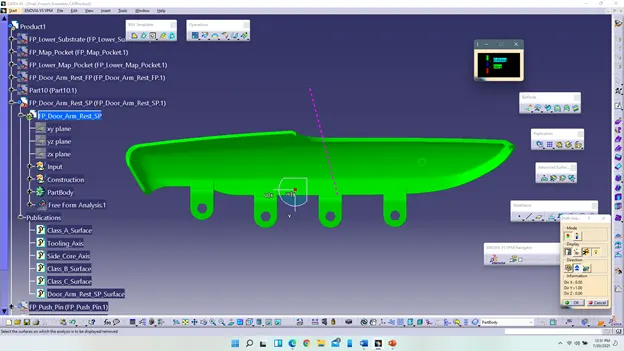
5. Join the class A & C surfaces and trim the class B surface using the join obtained and obtain the final surface required for door arm rest. Perform draft analysis for the final component using tooling axis and side core axis.
Engineering Features:
These are the features which are essential for the components to provide a closure between them. Some of the engineering features used in this final project are:
- Heat stakes.
- Flanges.
- Ribs.
- Dog house.
- Push pins.
Heat stakes helps in arresting the components, flanges help in positioning the component with respect to the heat stakes. Ribs adds additional strength to the heat stakes and dog house helps in eliminating the sink marks while manufacturing the component and also assist the length issues. Push pins are provided to create attachment between the door interior trim with other parts. All the engineering features were created using the guidelines and master-section which is provided.
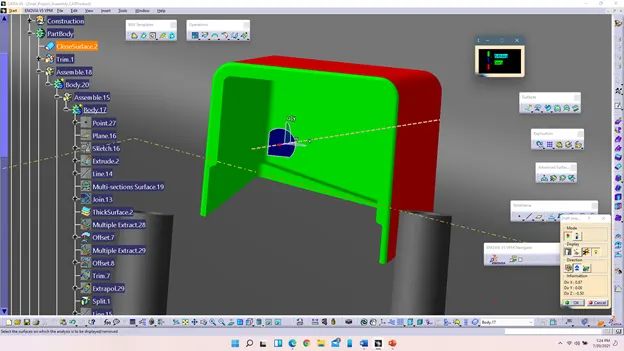
Draft analysis for the heat stakes, flanges and ribs was performed along with the components. Draft analysis for the dog house inner part will be shown below:
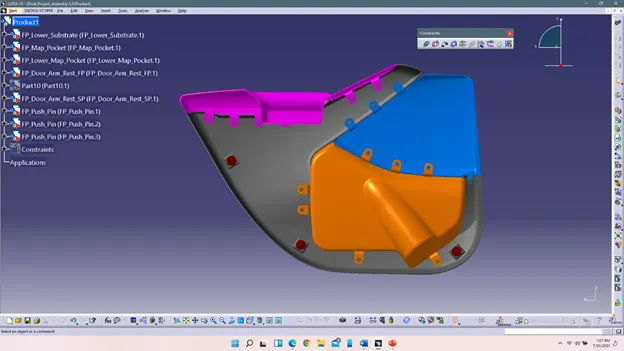
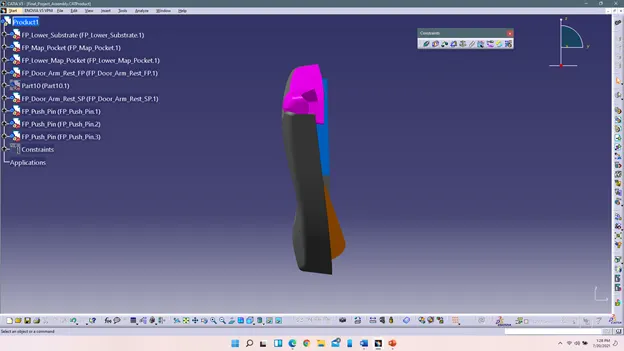
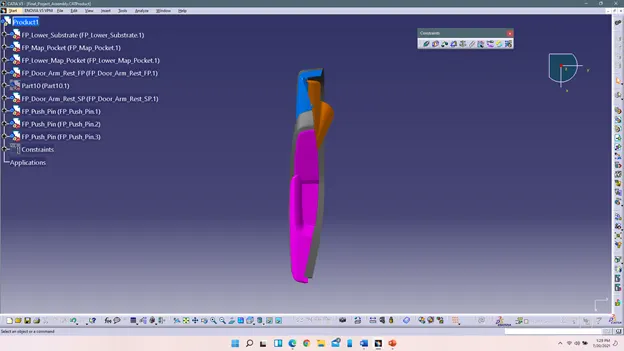
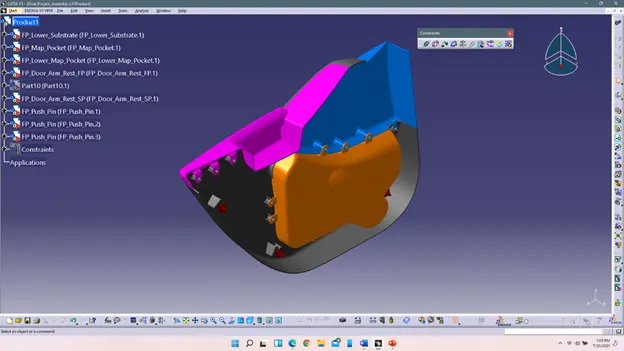
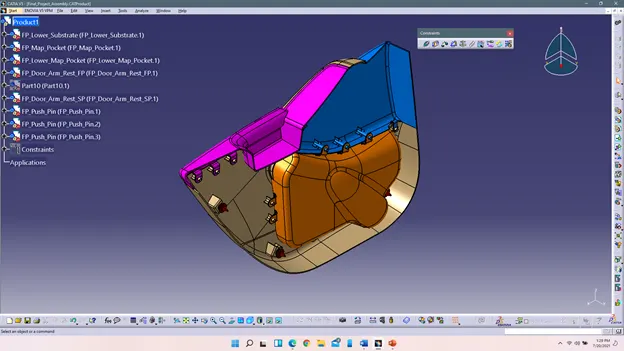
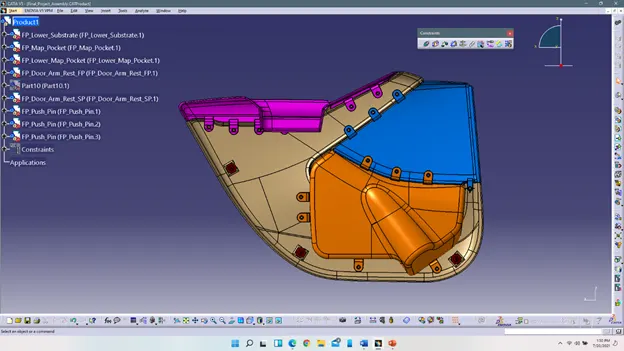
Images of final interior door trim panel:
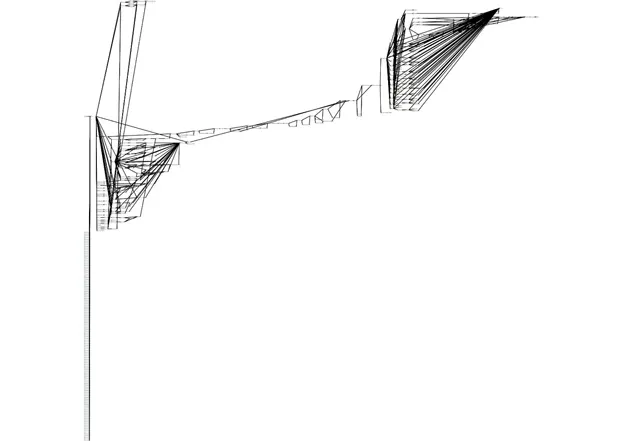
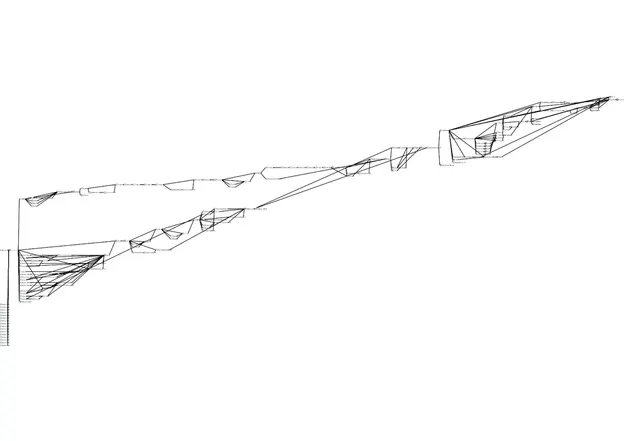
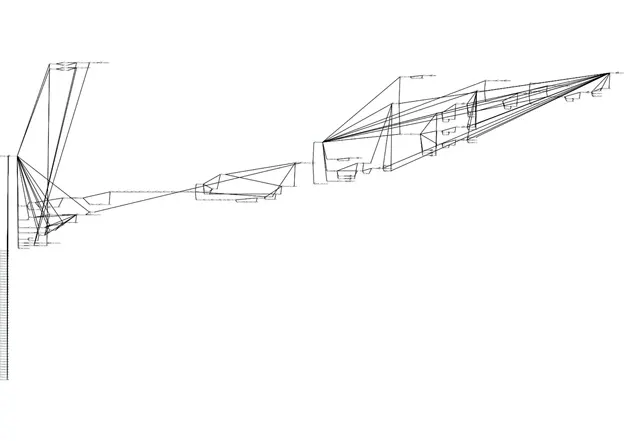
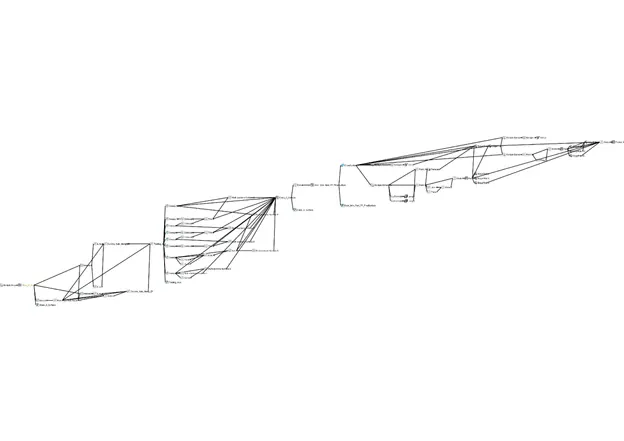
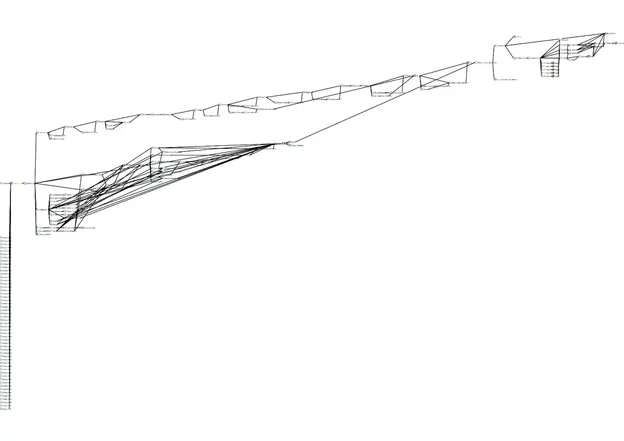
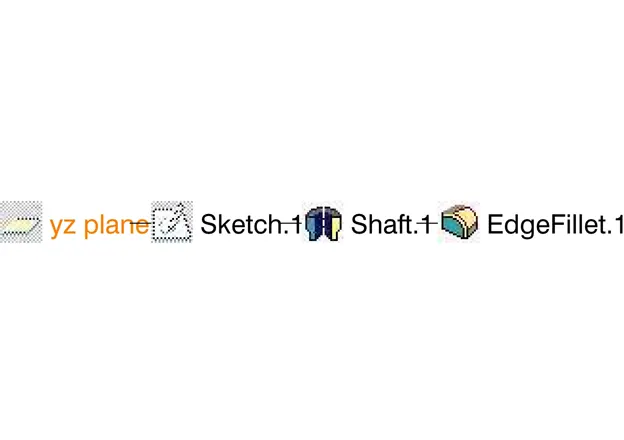
Feature Design Tree Diagram:
Lower substrate:
Map Pocket:
Bottle holder:
Door arm rest FP:
Door arm rest SP:
Push pin:
Conclusion:
All the door interior trim panel components were designed and converted them into solids and provided the required engineering features and performed draft analysis for all the components.