Hood design-Week 2
Hood Report
Aim: To design the hood of a car based on the given design considerations and other safety factors using Siemens NX 11.0.
Hood: The hood or bonnet is the hinged cover over the engine of motor vehicles. Hoods can open to allow access to the engine compartment for maintenance and repair.
Hood is an important component which protects the vehicle from collision and also dissipate the heat from the engine. A hood design engineer must consider opening angle of hood and design according to it and also, he must consider the head injury criteria. Hood design engineer must consider the both hinge reinforcement axis and latch & striker trajectory.
Hood is made up of steel, aluminum, fiberglass, carbon fiber. Companies produce replacements for steel hoods in fiberglass or carbon fiber to make the vehicle lighter.
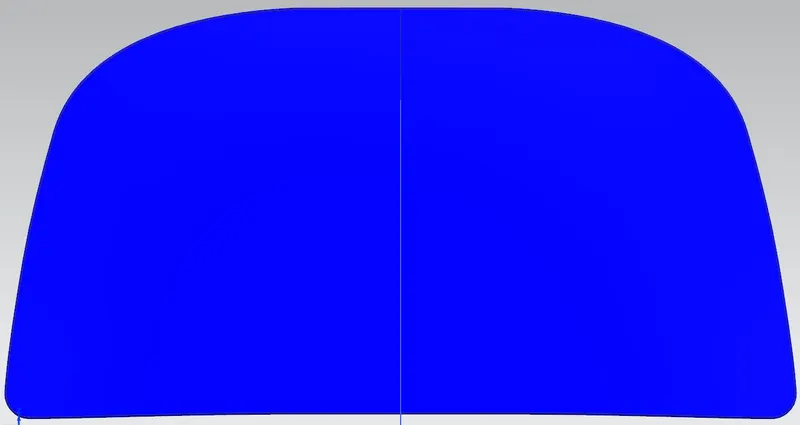
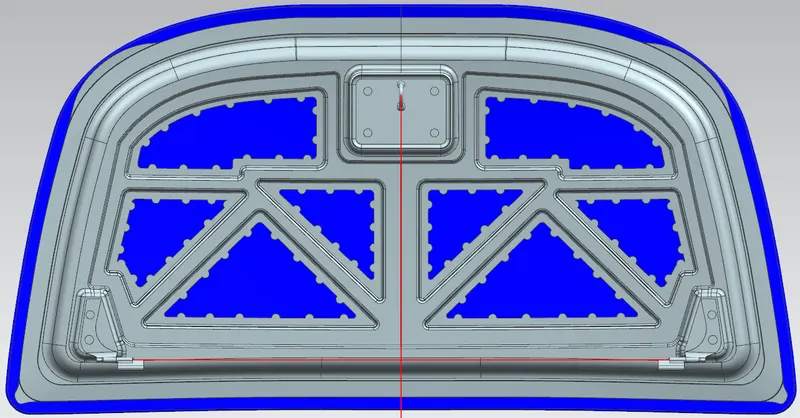
Components:
- Hood Outer Panel.
- Hood Inner Panel.
- Hinge Reinforcement.
- Latch Reinforcement.
These are the components of the hood.
- Hood Outer Panel:
Hood outer panel is the surface which is visible for the user, these are generally painted and do not contains any welding, this surface is used for hemming process. Hood outer panel thickness and design varies from one company to other. This outer panel is provided by the styling team.
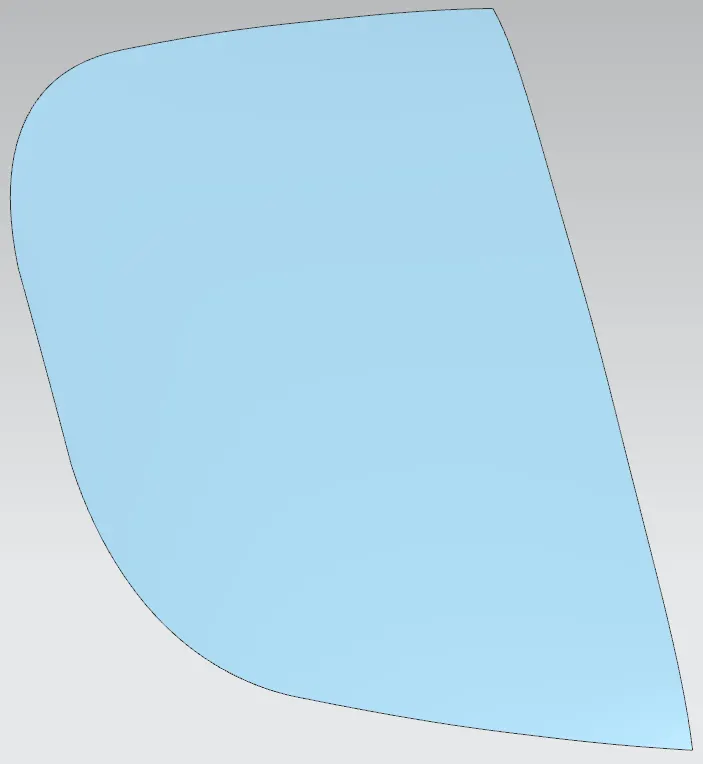
- Hood Inner Panel:
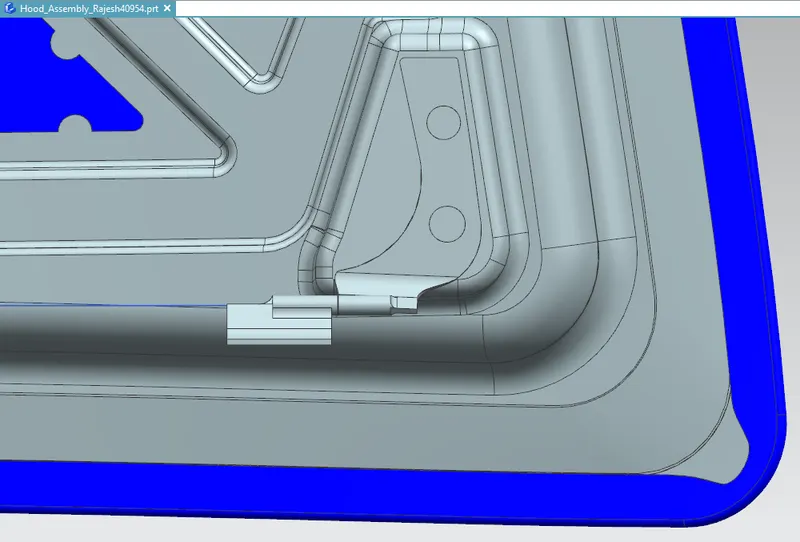
Hood inner panel will be designed by the hood engineer with the help of the outer panel, this inner panel should be provided with mastic points, embosses, reliefs and provision for hinge reinforcement and latch & striker reinforcement.
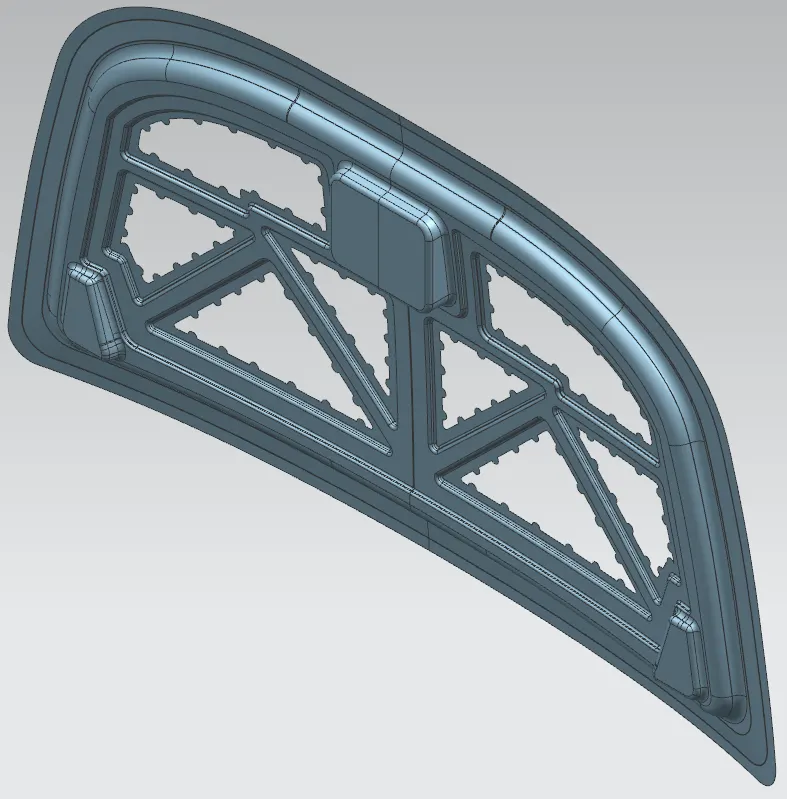
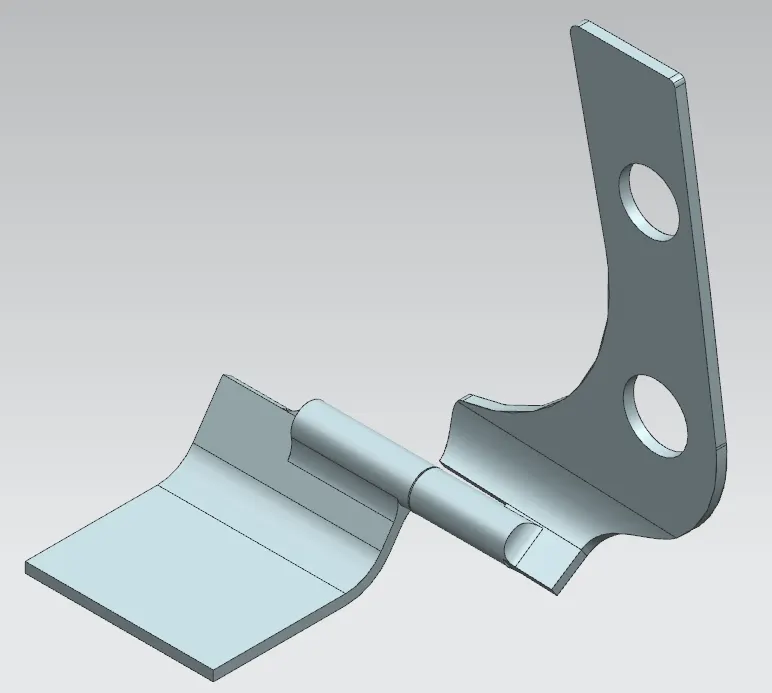
- Hinge Reinforcement:
Hinge reinforcement is provided to attach the hood to the body of the vehicle.
- Latch & Striker Reinforcement:
Latch reinforcement is provided to the inner panel of the hood which helps in opening and closing the hood.
Design Inputs:
Hood Thickness Information
- Outer panel thickness: 0.75mm.
- Inner panel thickness: 0.75mm.
- Reinforcement thickness: 1.5mm.
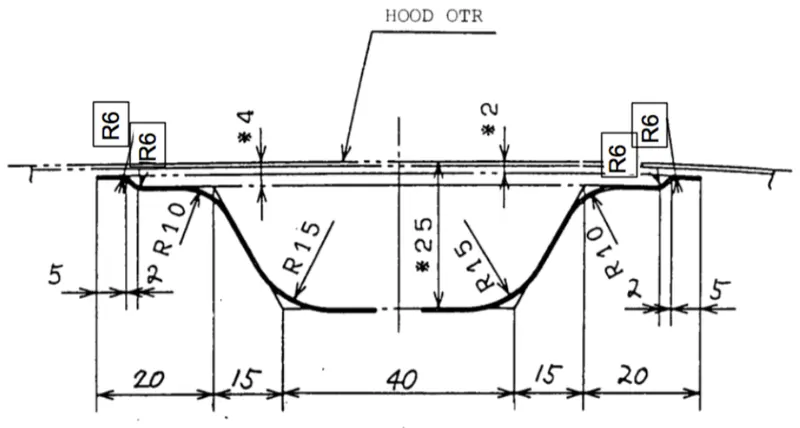
Master Sketch:
Latch & Striker Trajectory:
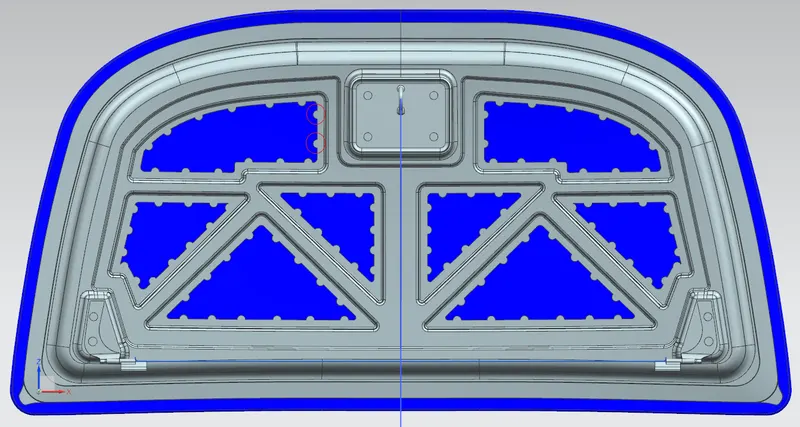
Latch & Striker trajectory can be defined with the help of the hinge reinforcement axis. This trajectory is perpendicular to the hinge axis. This consideration is crucial in designing the hood. Latch and striker trajectory is given in circle.
Mastic Points:
Mastic points are provided to reduce the noise, vibration and harness. These mastic points are provided to the inner panel and outer panel. These mastic points improve the strength of the hood.
Mastic Data are given in red circles which can cover the area about 80mm.
Embosses:
Embosses are the extruded or protruded parts, these helps to dissipate the force when the vehicle is under collision.
Embosses with varying depths (5mm, 7mm, 9mm, 13mm) are provided to improve the strength of the inner panel.
Deep Drawing:
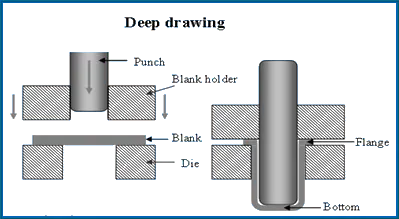
Deep drawing is a sheet metal forming process in which a sheet metal blank is radially drawn into a forming die by the mechanical action of a punch. It is thus a shape transformation process with material retention. The process is considered "deep" drawing when the depth of the drawn part exceeds its diameter. This is achieved by redrawing the part through a series of dies. The flange region experiences a radial drawing stress and a tangential compressive stress due to the material retention property. These compressive stresses result in flange wrinkles. Wrinkles can be prevented by using a blank holder, the function of which is to facilitate controlled material flow into the die radius.
Hemming:
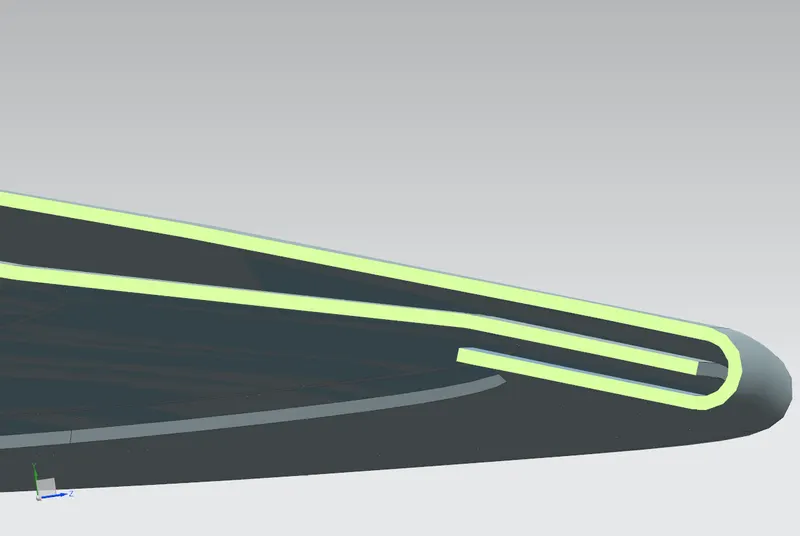
Hemming is a sheet metal forming process in which sheets are joined by bending it usually to 180°. Automotive body panels and automotive parts such as deck-lids, trunk-lids, doors, hoods and tailgates are formed by hemming process.
Hood inner surfaces and outer surfaces will be undergone hemming process using rollers to provide firm attachment between them.
Relief:
Conclusion:
Hood is designed according to the given design considerations and standards using Siemens NX.